
You've just left a laser tattoo removal appointment. The area feels warm, looks red, and may already be swelling or developing small blisters. You know the laser did its job, but you may not know what to do tonight, what changes are normal, or when your skin will be ready for another session.
Good post laser tattoo removal aftercare protects the treated skin while your body clears fragmented pigment. The right plan depends on your skin type, tattoo location, ink density, colour, treatment depth, and whether you want complete removal or only enough fading for a cover-up. Healing is part of the treatment, not an afterthought. For broader planning, including how treatment choices affect overall tattoo removal costs in London, it helps to discuss your skin and tattoo goals with a qualified provider.
Table of Contents
- Understanding Post Laser Tattoo Removal Aftercare
- Immediate Aftercare Essentials
- Healing Timeline and What to Expect
- Adjusting Care for Skin Types and Tattoo Goals
- Recognizing Complications and When to Seek Help
- Planning Clinic Follow-Ups and Next Sessions
Understanding Post Laser Tattoo Removal Aftercare
Laser treatment creates a controlled inflammatory response in the skin. Immediately afterward, redness and swelling are common, while frosting, blistering, and crusting can also occur. These reactions don't automatically mean something has gone wrong. They do mean the area needs protection from friction, heat, moisture, and unapproved products.
The treated skin must close and settle before you judge the cosmetic result. Ink fading continues gradually as the body processes the disrupted pigment, so the tattoo may look much the same at first and then become lighter over the following weeks. Picking at a blister or scab can interrupt that process and increase the chance of delayed healing or textural change.
What shapes your recovery
Skin type matters because pigment-producing cells can respond differently to laser-induced inflammation. Tanned or darker skin generally needs more cautious pigment management, particularly when the treatment area receives sun exposure. Tattoo size, colour complexity, ink density, and location also influence how much inflammation develops and how long the surface takes to recover.
A dense black tattoo on an ankle may behave differently from a small, lightly inked design on the upper arm. Clothing, movement, circulation, and repeated rubbing all affect the practical aftercare plan. Your clinician should assess the area before each session rather than treating a calendar date as automatic clearance.
Practical rule: The next appointment should follow skin readiness, not impatience.
A useful written plan should tell you how to cleanse the area, what dressing or ointment to use, what activities to avoid, and which changes require contact with the clinic. EradiTatt's aftercare guidance can help you review those basics between appointments, but personalised clinical advice takes priority when your reaction is unusual.
Immediate Aftercare Essentials
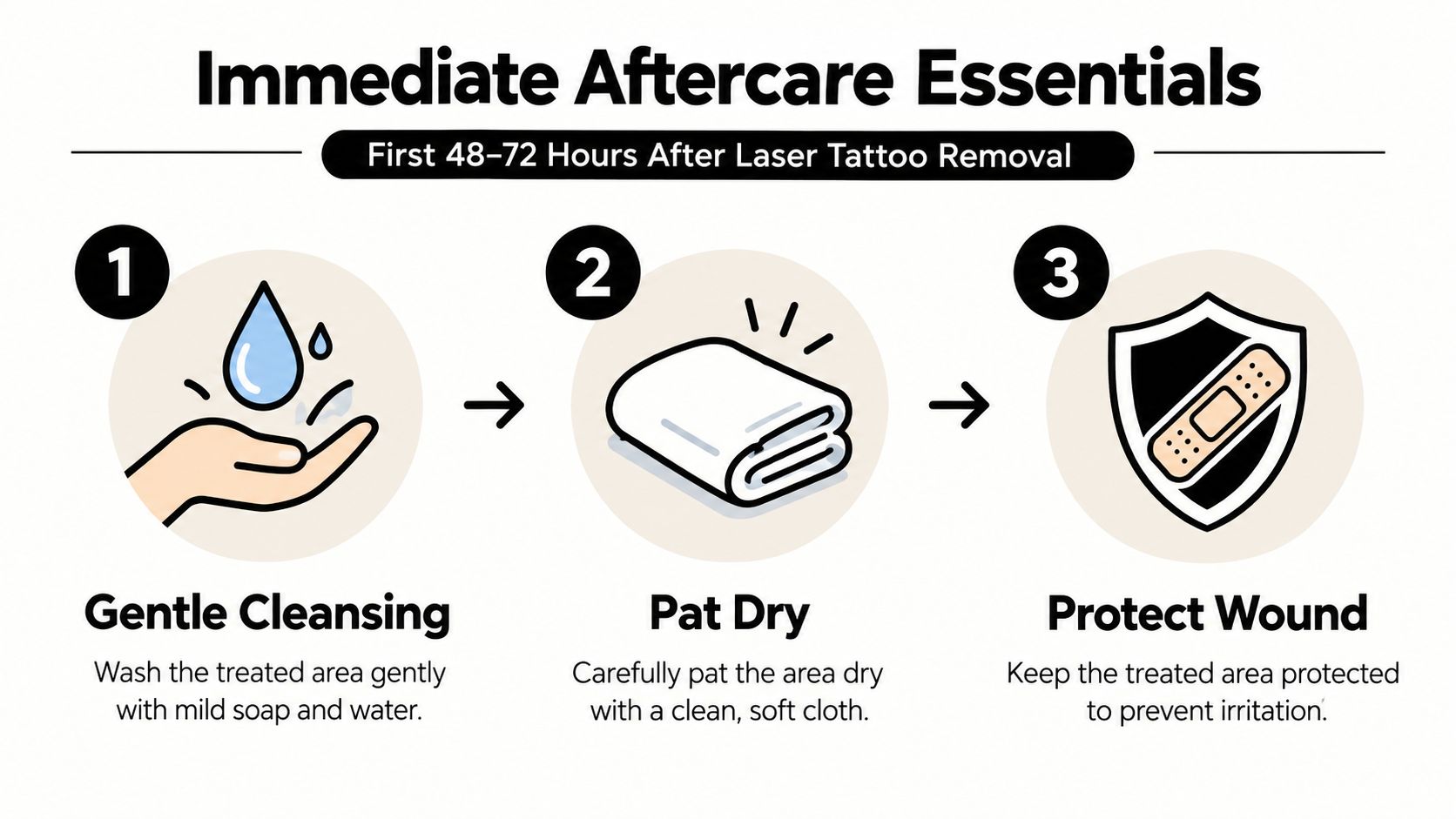
Treat the first 48 to 72 hours as a period for controlling inflammation. Keep the treated skin clean, dry, covered as advised, and away from unnecessary heat, pressure, and friction. Your provider should determine the dressing and topical product, especially if blistering or an open area is present.
Follow a gentle care sequence
- Clean carefully: Wash the area gently with mild soap and water. Avoid flannels, exfoliating mitts, and cleansing brushes. For an ankle tattoo treated with a PiQo4 session, let lukewarm water flow over the skin rather than directing a forceful spray at it.
- Pat, don't rub: Use a clean, soft cloth or sterile gauze to pat the skin dry. Rubbing can disturb fragile crusts and add irritation.
- Apply only the recommended topical: Your clinician may prescribe an antibiotic ointment or recommend a simple emollient for 10 to 14 days. Use a thin layer and follow the stated frequency. A BIOVELVET™ skin burn guide also outlines general first steps for freshly irritated skin, but laser-treated tattoo sites require the instructions from your treating professional.
- Protect the surface: Use a sterile dressing when your provider advises it, particularly where clothing may rub. Change it with clean hands and avoid trapping excess moisture.
- Use cold compresses briefly: Apply a cold compress for short intervals with fabric between it and your skin. Never place ice directly on the treatment area. This can ease swelling without exposing the skin to cold injury.
- Raise the area when practical: If the tattoo is on an arm or leg, raise it while resting. This may make early swelling easier to manage.
- Avoid soaking: Do not use baths, swimming pools, hot tubs, saunas, or other submersion until the surface has healed. Showering may be suitable if high-pressure water does not hit the site, but follow your clinic's timing.
Choose loose clothing and lighter activity while tenderness and surface irritation remain. Heat, exercise, shaving, scratching, tight fabric, and irritating products can increase sweating or friction. These choices also matter for long-term pigment management: protecting the area during healing helps preserve the skin condition needed for a planned fading course or complete removal, particularly when your skin is prone to pigment changes. Respect the treatment plan rather than adding products or extending activity because the area feels comfortable.
Healing Timeline and What to Expect
Healing follows a pattern, but not a fixed schedule. A tattoo may look darker, lighter, patchier, or more inflamed before the skin settles. Judge progress by improving symptoms, an intact surface, and gradual fading, not by one early photograph. This distinction matters whether your goal is complete removal or controlled fading for a cover-up.
Days 1 through 7
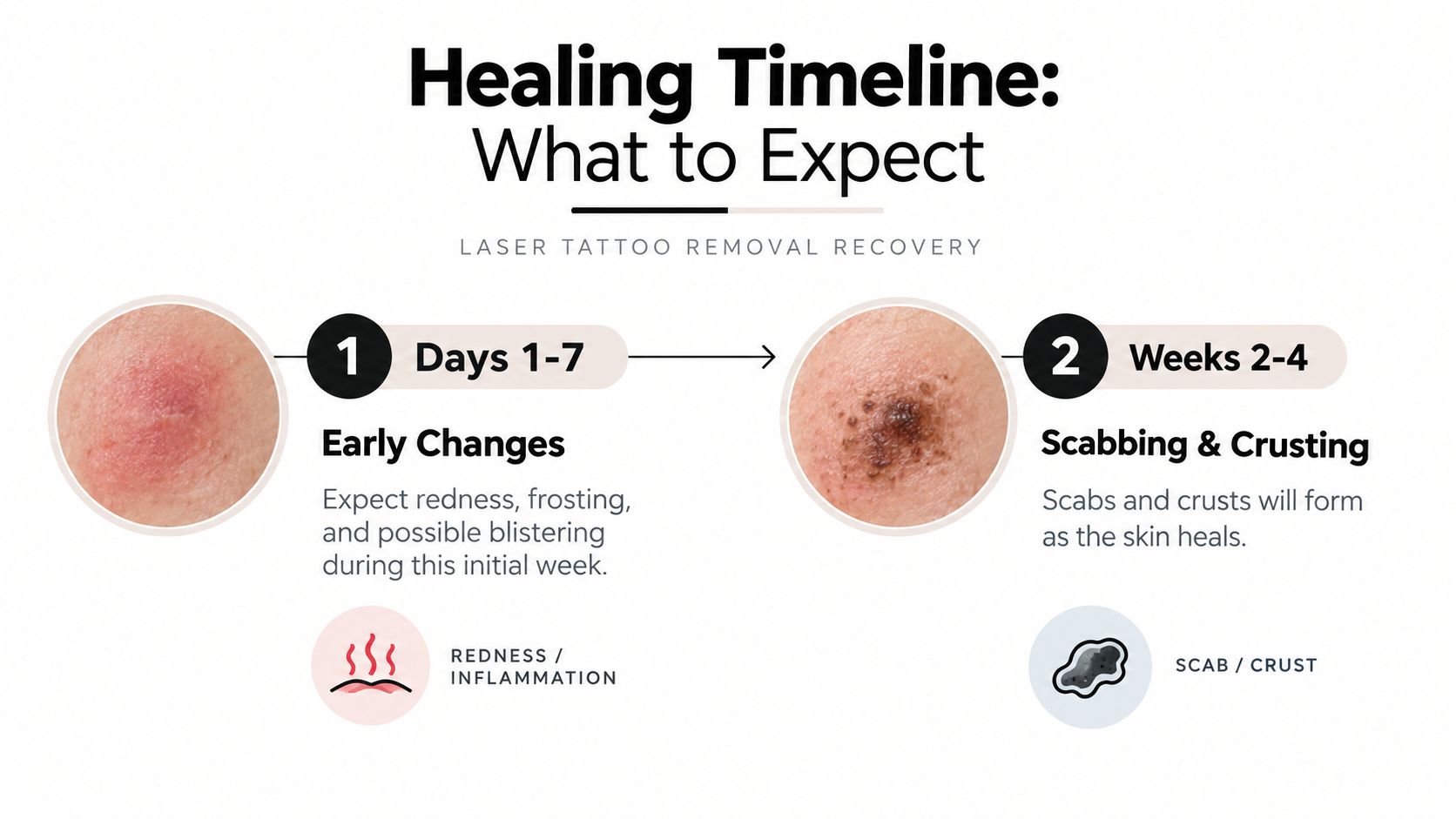
Redness, warmth, swelling, and frosting can appear immediately. Blistering or pinpoint surface changes may develop during the first few days. Peeling or blistering can begin between 8 and 72 hours, with scabs and crusting also appearing during that period, as described in a dermatology recovery guide.
Protect the area even when discomfort is mild. Low pain does not mean the skin is ready for shaving, swimming, vigorous exercise, or exfoliation. Leave blisters intact unless a medical professional instructs you otherwise.
Weeks 2 through 4
As the surface repairs, crusts may dry, loosen, and shed. Itching is common, while scratching can reopen the area and prolong recovery. Let flakes come away naturally, and apply only the moisturiser or emollient approved by your provider.
By this stage, the surface may appear closed while deeper pigment processing continues. Temporary colour mismatch can be part of recovery, but persistent darkening, lightening, texture change, or thickened scar tissue needs clinical review. Longer-term outcomes can include scarring and hyperpigmentation, hypopigmentation, or other pigment colour changes. Review skin changes after tattoo removal with your provider to compare expected fading with changes that need attention.
Several weeks to three months and beyond
Ink clearance continues after the surface looks healed. Fading may remain uneven because colours, pigment depths, and concentrations respond differently. Pigment changes may become more visible later, so long-term follow-up matters, particularly for skin that marks easily or for clients planning complete removal.
Take photographs in consistent lighting to compare progress, but do not treat one image as a diagnosis. Your clinician may adjust energy settings, session spacing, or sun precautions when colour mismatch persists or when the plan shifts from fading toward complete removal.
Adjusting Care for Skin Types and Tattoo Goals
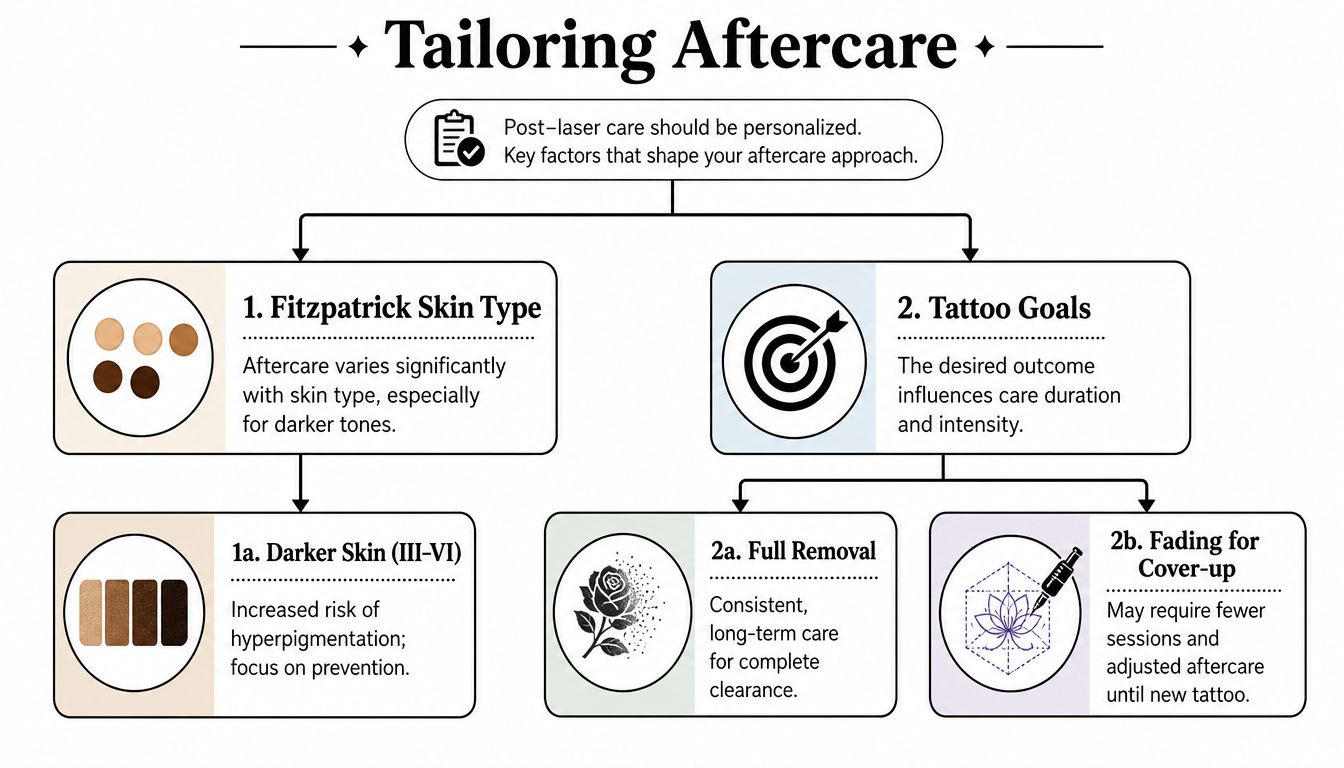
Aftercare shouldn't be identical for every client. Fitzpatrick skin type, recent tanning, tattoo location, and your desired endpoint all change the balance between effective treatment and pigment risk.
Darker skin tones, particularly types III to VI, require careful observation for post-inflammatory colour changes. A clinical source reports post-inflammatory hyperpigmentation in about 13% of patients and hypopigmentation in 20% at three months, with darker skin at higher risk clinical evidence on pigment changes. Those figures describe a specific clinical context, not a prediction for every individual, but they explain why long-term monitoring matters.
Compare the practical priorities
| Situation | Main aftercare priority | What to discuss at review |
|---|---|---|
| Darker or recently tanned skin | Reduce irritation and protect the area from sun exposure after the surface has healed | Whether pigment-prevention measures or a gentler treatment plan are appropriate |
| Lighter skin without a tan | Protect the healing surface and avoid friction | Whether redness and crusting have fully settled |
| Complete removal | Maintain consistent care between sessions and monitor gradual fading | Whether residual pigment, skin texture, or colour changes affect the next treatment |
| Fading for a cover-up | Preserve healthy, even skin rather than rushing to remove every trace | Whether the remaining design is light enough for the planned cover-up |
For darker or recently exposed skin, sun avoidance and clinician-approved broad-spectrum sunscreen after healing become especially important. Don't apply sunscreen directly to an open, blistered, or crusted wound unless your provider specifically says to do so. During active healing, physical coverage and shade are safer practical tools.
A fading plan may stop earlier than a complete-removal plan, but that doesn't mean aftercare becomes optional. The skin still needs to recover fully before a new tattoo is placed. A cover-up artist and laser clinician should coordinate timing so a new design isn't applied over irritated or pigment-unstable skin.
Long-term view: A healthy, even skin tone can be a more valuable milestone than the fastest possible reduction in visible ink.
Recognizing Complications and When to Seek Help
Blistering, swelling, redness, and crusting can be expected after treatment. The concern is a reaction that becomes increasingly painful, spreads beyond the treated margins, produces worsening drainage, or fails to improve.
A practitioner-reported dataset estimated complications in 8.1% of treatment sessions, including oedema at 3.0%, blistering at 1.9%, and haematoma at 0.7% reported complication data. These figures reinforce why basic wound protection matters, but they can't determine whether your individual reaction is safe.
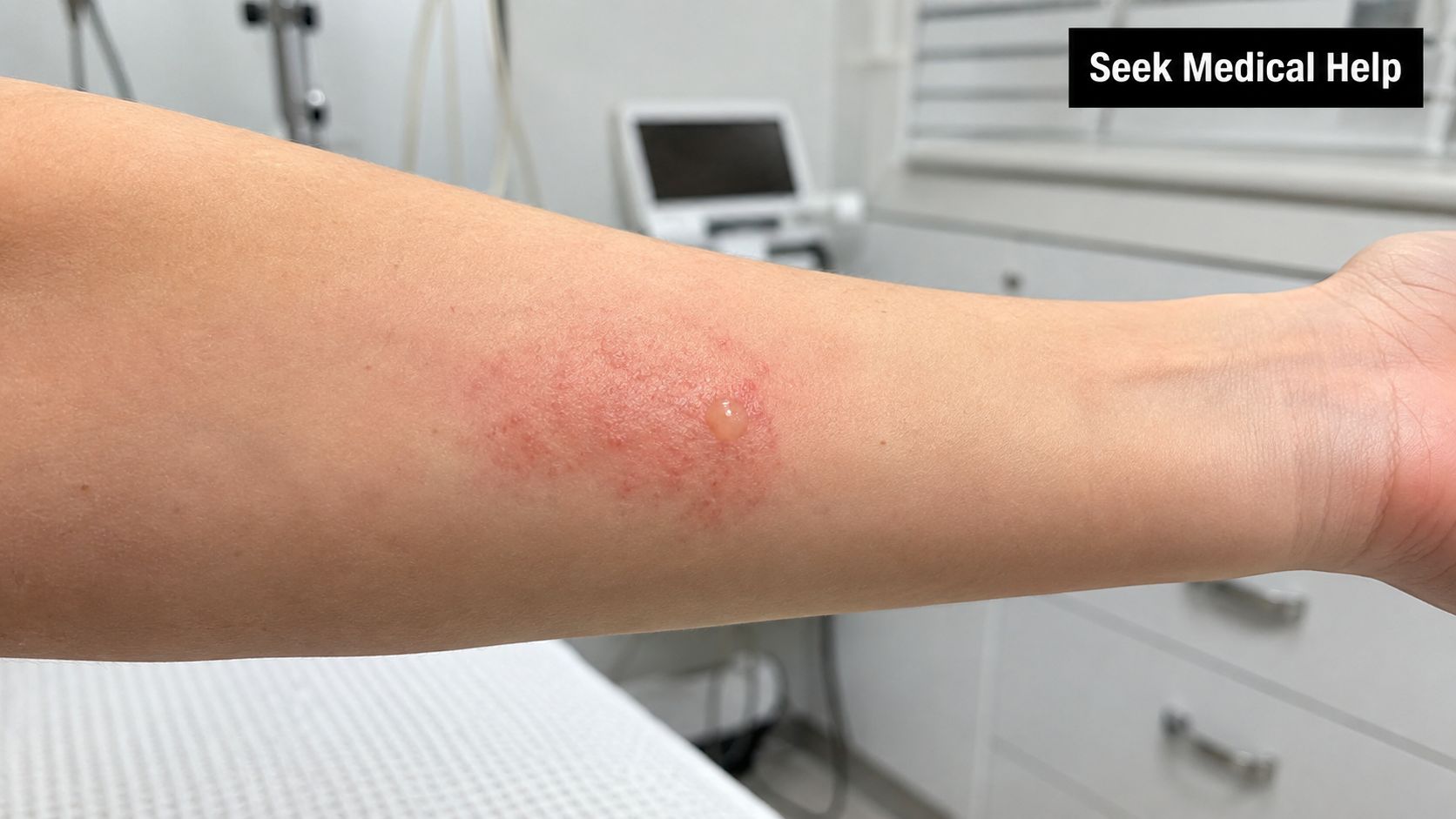
Contact your clinic promptly if you notice
- Spreading redness: Redness that extends beyond the treated area, especially when it feels hot or increasingly tender, needs assessment.
- Worsening pain: Discomfort should generally become easier to manage as early inflammation settles. Pain that intensifies deserves a call.
- Persistent or enlarging blisters: Don't pop, drain, or peel them yourself. A clinician can advise on protection and dressing changes.
- Pus or worsening drainage: Thick discharge, an unpleasant smell, or a wound that looks increasingly wet may indicate infection.
- Unusual swelling or bruising: Marked swelling or a growing area of bruising can represent oedema or haematoma and shouldn't be ignored.
- Systemic symptoms: Fever, chills, faintness, breathing difficulty, or widespread hives require urgent medical attention.
If you're unsure whether a change is normal, photograph the area in good light and contact the treating clinic rather than searching for reassurance online. The signs of infection after tattoo removal are worth reviewing, but a clinician must assess a concerning wound.
Planning Clinic Follow-Ups and Next Sessions
A follow-up schedule often begins at 6 to 8 weeks, but the calendar alone does not determine readiness. The treated skin should be fully re-epithelialised, with no active crusting, blistering, or weeping, and stable enough to tolerate another session.
An ankle tattoo may need more recovery time because walking, footwear, dependent swelling, and friction can prolong irritation. Clinical recovery information describes persistent redness after 4 weeks in some ankle treatments, while one case required a 13-week skin-care regimen before full re-epithelialisation and improved texture clinical recovery information.
Use the review appointment to decide
- Is the surface closed? Open, crusted, blistered, or wet skin is not ready for another laser session.
- Has inflammation settled? Ongoing redness or tenderness may justify extending the interval.
- Is pigment changing? Document new or continuing colour mismatch before treatment resumes, particularly for darker skin types.
- Does the goal remain the same? Complete removal may require a longer course than fading a tattoo for cover-up work. Agree on the stopping point before continuing.
A reported series involving Ethiopian patients with skin types V to VI and blue or black tattoos found clearance after several treatments, with sessions spaced at least 8 weeks apart and an average of 3.6 treatments clinical series summary. This reflects multiple healing cycles, not a guarantee for every tattoo or skin type.
Plan around weddings, travel, work, or enlistment deadlines, and keep recovery time in reserve. A slower, skin-led schedule protects long-term pigment management better than treating an area that is still repairing.
EradiTatt Tattoo Removal provides personalised plans for complete clearance or cover-up fading, with aftercare guidance based on skin type, tattoo location, and healing progress. Visit EradiTatt Tattoo Removal to arrange a consultation and discuss your next session.
6 Responses