
You get home after a laser session, look at the treated area, and immediately start checking every little change. Is that redness normal? Is the skin supposed to feel warm? Should that blister be there?
That uncertainty is common. The healing in the days after often presents more challenges than the treatment itself.
The good news is that healing after laser tattoo removal usually follows a recognizable pattern. When you know the baseline, it's much easier to spot the true signs of infection after tattoo removal without panicking over changes that are expected. A calm, informed check is far more useful than guessing.
Your Tattoo Removal Healing Journey Explained
The first evening after treatment is often the hardest. You look at the area, see redness or swelling, and your mind jumps straight to infection. In many cases, what you are seeing is your body doing the early repair work it is supposed to do.
Laser tattoo removal works by creating a controlled, targeted injury in the inked skin. The laser breaks tattoo pigment into smaller fragments, and your body begins clearing those fragments away over time. At the same time, the surface of the skin starts repairing itself. Those two processes happen together, which is why healing can look active before it looks calm.
A simple way to understand it is this: your skin reacts like it has been stressed on purpose, while your immune system starts cleanup in the background. That reaction can look dramatic at first, even when healing is on track.
Why the area can look worse before it looks better
Right after treatment, the skin may seem more irritated than expected. Your immune system responds quickly to the laser's effect on the pigment and nearby tissue. That early response is often visible.
Common changes in the first stage of healing can include:
- Pink or red skin, often similar to a mild sunburn
- Tenderness, especially if clothing rubs the area
- Swelling, which can stand out more on wrists, ankles, or other bony areas
- Blistering or scabbing, which can act like a natural protective covering while the skin repairs
Early healing is not a good time to judge whether something is wrong.
What helps most is having a baseline. If you know what normal healing usually looks and feels like, you have something steady to compare against. That makes it easier to spot a true change, instead of reacting to every expected symptom. If this is your first treatment, our guide on what to expect after your first laser tattoo removal session gives a broader view of the recovery pattern.
The goal during healing
Try to follow a simple three-step check:
- Know the usual healing pattern
- Notice changes that move away from that pattern
- Get help early if the area starts heading in the wrong direction
That approach keeps you grounded. It helps you avoid dismissing a real problem, and it also helps you avoid treating normal healing like an emergency.
What Normal Healing Looks and Feels Like
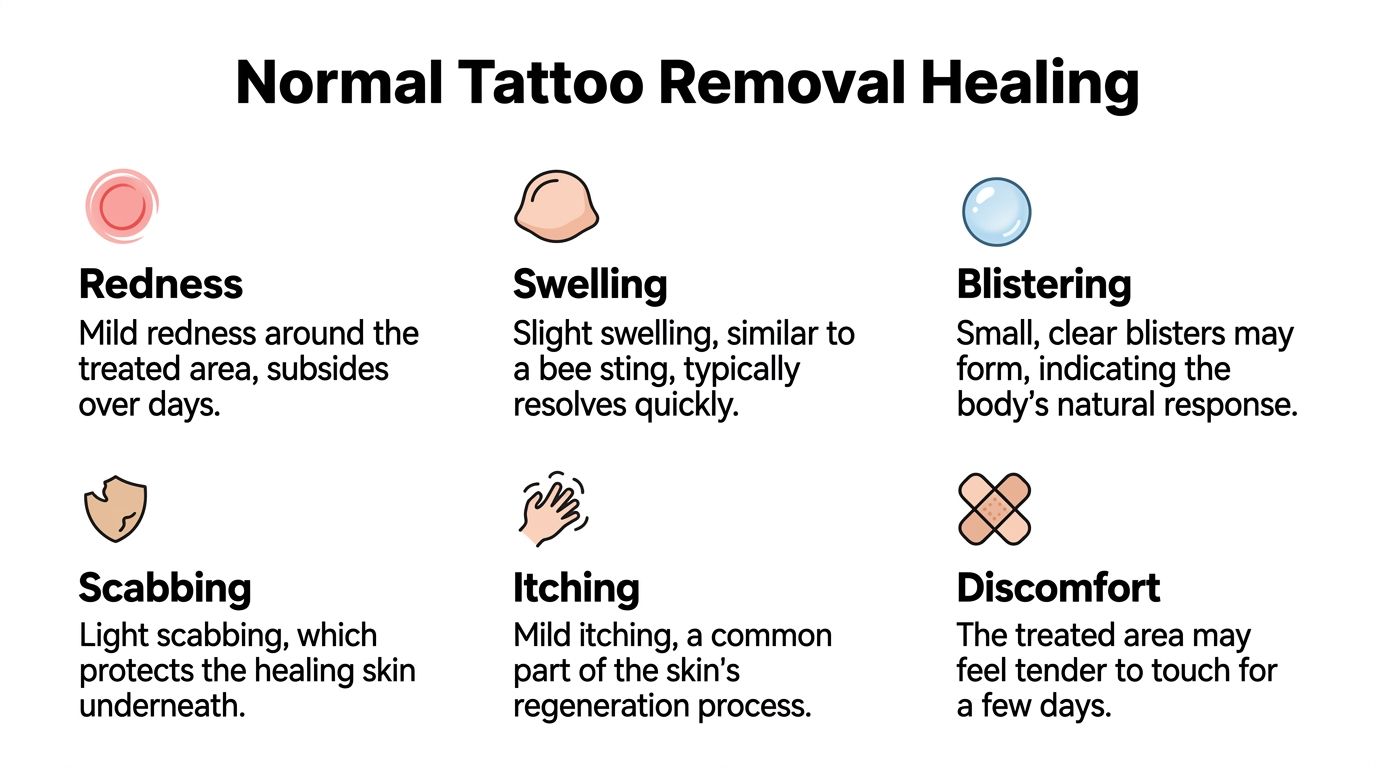
A lot of anxiety comes from not knowing what your skin is supposed to do next. After laser tattoo removal, the treated area can look dramatic while still healing in a normal, healthy way. The key is to compare what you see against a baseline. Healthy healing usually stays contained to the treated skin and gradually becomes less intense over time.
Immediate changes that are usually expected
One of the first things people notice is frosting. This is the temporary whitening that can show up right after the laser passes over the tattoo. It fades. It is a treatment reaction, not pus.
From there, the skin often behaves like a superficial wound that is closing and protecting itself. You may notice:
- Redness around the treated area
- Mild swelling
- Tenderness when touched or rubbed by clothing
- Small clear blisters
- Light scabbing
- Itching later in the healing process
These changes can look messy. That alone does not mean something is wrong.
If this is your first session and you want a fuller walkthrough of the recovery pattern, our guide on what to expect after the first session of laser tattoo removal with PiQo4 gives more context.
A simple timeline to compare against
The easiest way to judge healing is to ask one question. Is the area calming down, even if slowly?
| Time after treatment | Often normal |
|---|---|
| Right after treatment | Frosting, redness, warmth, mild swelling |
| First 24 hours | Sunburn-like soreness, sensitivity, puffiness |
| Next few days | Clear blisters, light scabbing, itching as the skin repairs |
| Early healing period | Redness and swelling should start settling rather than spreading |
That pattern matters more than whether the skin looks perfect on any single day. Healing skin often has ups and downs, but the overall direction should be steadier and less inflamed.
What normal fluid looks like
Fluid causes a lot of confusion. A blister may hold clear or lightly yellow-tinted fluid, and that can still be part of routine healing. The body often sends this fluid to protect the area while the top layer of skin repairs itself.
What deserves a closer look is a change in character. Thick drainage, a strong odor, or fluid that keeps increasing instead of drying up can suggest the area is moving away from the normal baseline. If you want a general medical reference on how to tell if a wound is infected, that guide can help you compare common wound warning signs.
A simple rule helps. If the reaction stays close to the tattoo, looks less angry with time, and becomes easier to ignore day by day, you are usually seeing normal healing.
Key Signs of Infection After Tattoo Removal
Sometimes the hardest part is knowing whether you are seeing a normal bump in healing or a real problem. A helpful way to judge it is to compare today with yesterday. Healthy healing usually settles in stages. Infection usually does the opposite and starts pushing the skin in a more inflamed direction.
Skin changes that deserve attention
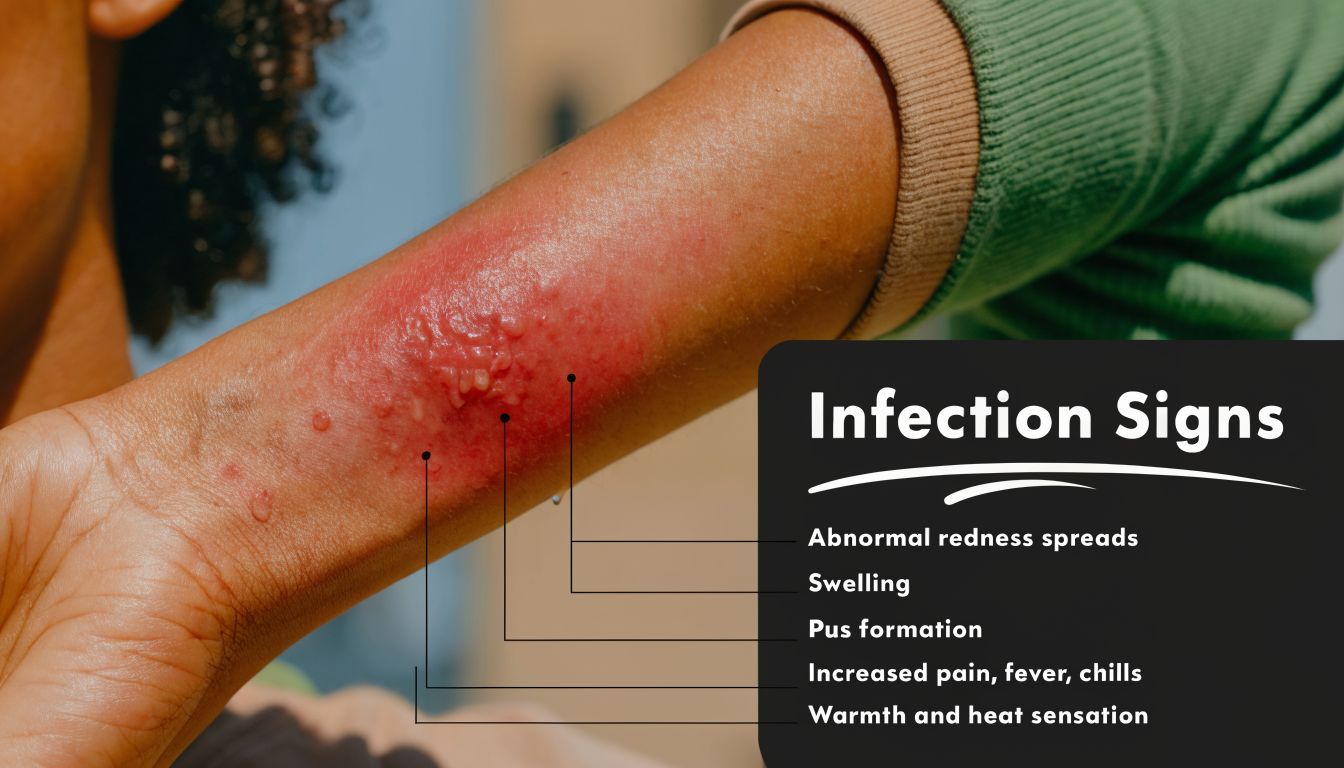
Start with the edges of the treated area. Normal post-treatment redness usually stays close to the tattoo, like a border around the skin that was treated. Infection-related redness often spreads past that border and looks less contained over time.
Pay close attention if you notice:
- Redness that keeps expanding
- Heat that feels stronger instead of fading
- Swelling that becomes firm, tight, or more painful
- Pain that starts throbbing or intensifying
- Tenderness that spreads into nearby skin
A simple test can help. Ask yourself whether the area is becoming easier to ignore each day, or whether it is demanding more of your attention. If pain, heat, and swelling are all increasing together, that pattern deserves prompt attention.
One point often confuses people. Warm skin right after laser treatment can be normal. Skin that feels hot several days later, especially with spreading redness and worsening tenderness, is more concerning.
Drainage that is not part of routine healing
Fluid can be tricky because some fluid is part of repair. Clear blister fluid is often the skin's protective response. Trouble signs usually show up when the fluid changes in color, thickness, smell, or amount.
Watch for:
- Thick cloudy drainage
- Yellow or green discharge
- Pus under broken skin
- A foul smell
- Wet, sticky, or honey-colored crusting
Scratching, picking, or friction can also turn an irritated healing area into one that looks infected. If the surface breaks down and starts producing thicker drainage instead of drying out, the skin may need medical review.
Whole-body symptoms matter too
The skin is the main clue, but it is not the only one. If your body starts acting sick along with the tattooed area, take that seriously.
Signs that raise concern include:
- Fever
- Chills
- Body aches
- Feeling suddenly ill or run-down
- Swollen, tender lymph nodes
For a general wound-care reference to compare symptoms, this urgent care guide on how to tell if a wound is infected can help.
One sign that should never be ignored
Red streaks traveling away from the treatment site need urgent medical attention. They can mean the infection is moving into the lymphatic system.
That is not a wait-and-see symptom. If you notice red streaking, get emergency care.
Why Infections Happen and When They Appear
You leave your appointment expecting the area to feel warm, tender, and a little angry for a day or two. Then, on day three or four, it starts looking worse instead of calmer. That change in direction is often what makes clinicians pay closer attention.
Laser tattoo removal creates a controlled skin injury so the body can clear shattered ink particles. A useful comparison is a scraped knee. The skin is still doing repair work, but until that surface closes and settles, germs have an easier path in.
Why the risk goes up during healing
The laser does not "cause" an infection on its own. The risk comes from the short window afterward, when the treated skin is irritated, more fragile, and easier to contaminate.
During that window, bacteria that normally sit harmlessly on skin or nearby surfaces can get into tiny openings. Common bacteria in skin infections include Staphylococcus aureus and Streptococcus pyogenes. Other organisms can be involved in certain settings, especially if healing skin is exposed to contaminated water, dirty materials, or repeated friction.
That is why aftercare matters so much. The goal is simple. Protect the skin until its barrier is strong again.
How infections usually start
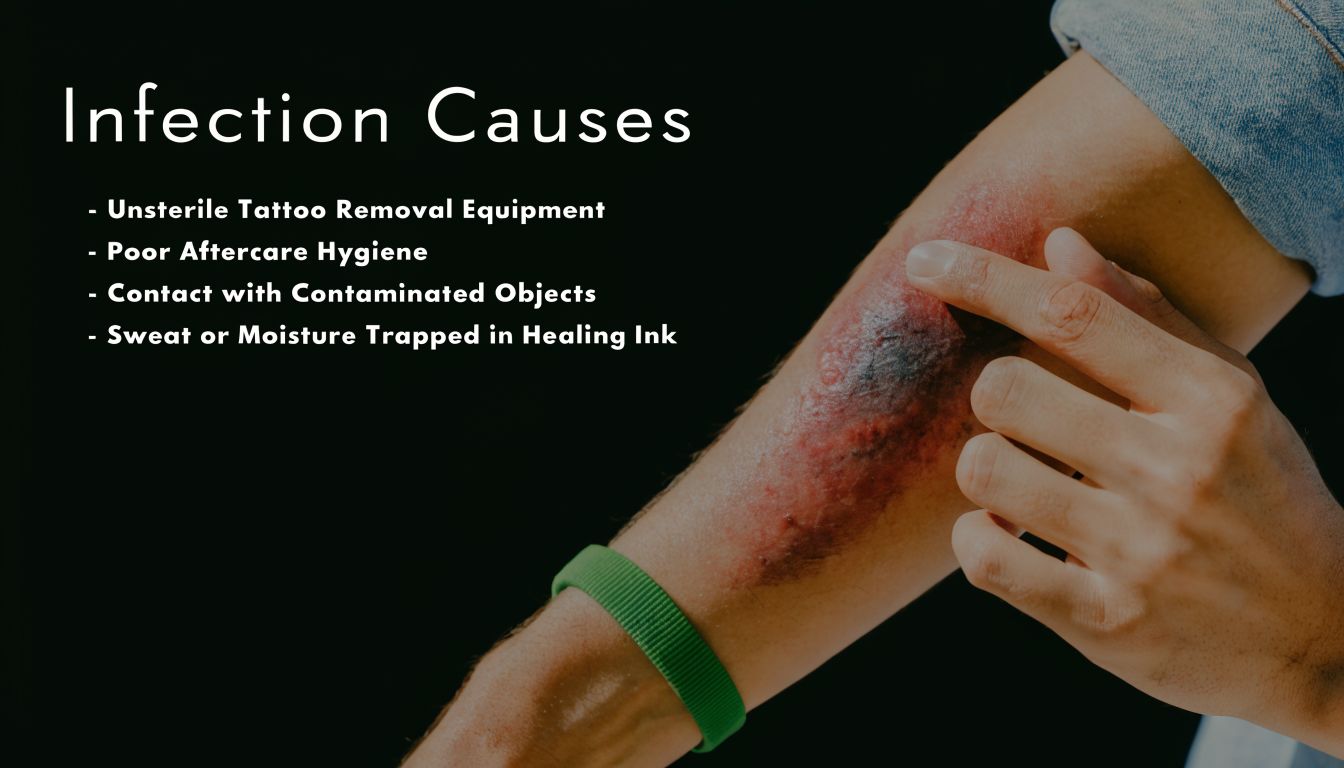
Infections after tattoo removal usually follow a clear chain of events rather than happening at random. The area gets itchy or irritated. Someone scratches it, picks at a blister, reuses an unclean towel, or exposes the site to water before the surface has sealed.
Common routes include:
- Touching the area with unwashed hands
- Scratching or rubbing itchy skin
- Picking scabs or breaking blisters
- Using unclean towels, sheets, or dressings
- Swimming, soaking, or using a hot tub too early
- Keeping the area too moist for too long
Moisture is a common point of confusion. Healing skin needs gentle care, not a constantly wet environment. If the area stays soggy under heavy ointment, a tight covering, or prolonged soaking, the skin can soften and break down more easily.
When infections tend to appear
Timing helps you compare what you are seeing against the normal healing baseline discussed earlier. Right after treatment, redness, heat, swelling, and tenderness are expected. Those early changes should gradually level off.
An infection often shows a different pattern. Instead of improving day by day, the area begins to worsen after the first couple of days, or it improves briefly and then flares again. That delayed worsening matters because normal inflammation usually fades in a steady direction, while infection tends to interrupt that pattern.
A simple rule helps here. Skin that is healing normally may look dramatic early, then calmer later. Skin that is becoming infected often looks more aggressive with time.
Why this section matters
People often get anxious because normal healing and infection can overlap at first glance. The key is not to judge one symptom by itself. Look at the full picture: the skin barrier is temporarily weakened, bacteria need an opening, and the timing usually shifts from early irritation to later deterioration.
If you are unsure, that is a good reason to check in with your EradiTatt specialist. Reassurance is part of good aftercare, and it is always better to ask early than wait for a clear problem to grow.
What to Do Immediately If You Suspect an Infection
You check the treated area before bed and something feels different from the healing pattern you expected. The skin looks angrier instead of calmer, or the tenderness has increased instead of easing. That is the moment to keep things simple.
Your job is to protect the skin, avoid adding irritation, and get a clear read on what is changing. Treat the area like a fresh scrape that needs a clean, gentle environment while you contact the right person.
Start with this simple response
Stop using heavy ointments unless a medical professional specifically told you to keep using one. Thick products can hold in moisture and make the area harder to assess.
Wash gently with mild, fragrance-free soap and lukewarm water. Use clean hands only. Skip washcloths, sponges, and anything abrasive.
Pat the skin dry with a clean paper towel or gauze. Rubbing can pull at fragile skin and reopen irritated spots.
Cover it lightly with a sterile, non-stick dressing if the area is open, weeping, or rubbing on clothing. The goal is protection, not a tight seal.
Take a photo in good lighting. Try to use the same angle each time so you can tell whether redness is spreading or staying in place.
One photo now can save a lot of guessing later.
Avoid home treatment mistakes that can make things worse
People often get into trouble by over-treating a healing area. More products do not mean better healing.
Do not:
- Pop blisters
- Pick scabs
- Use alcohol or hydrogen peroxide
- Apply leftover antibiotic creams or random skin products
- Keep the area under a tight, airless bandage for too long
- Soak the area in a bath, pool, or hot tub
A light, clean covering can protect vulnerable skin. A dressing that stays tight, damp, and unchanged for too long can create the kind of environment irritated skin does not handle well.
If you are unsure whether you are seeing infection, irritation, or normal texture changes, our guide to laser tattoo removal scars and healing changes can help you compare what you are seeing.
Keep your next step focused
After you clean the area and document it, reach out. Contact your EradiTatt clinic and share the photo, when your treatment was done, and what has changed since yesterday. That timeline matters because infection often shows up as a shift away from the normal healing baseline, not just one isolated symptom.
If the skin is worsening quickly, do not keep testing home remedies. Get medical guidance right away.
When to Call a Doctor or Your EradiTatt Specialist
You had a session, followed the aftercare steps, and now the area looks a little different today than it did yesterday. That can feel unsettling. The easiest way to lower the guesswork is to compare what you see to your healing baseline. If the skin is changing in a mild or unclear way, your EradiTatt specialist is the right first contact. If the skin is worsening quickly or you feel sick overall, get medical care.

Contact your tattoo removal provider for non-emergency concerns
Contact your specialist when the area seems off, but you are not seeing signs of a fast-moving infection. A clinic team can often tell the difference between expected inflammation, friction irritation, and something that needs a doctor's review.
Common reasons to call your EradiTatt clinic include:
- Redness that is lingering instead of gradually fading
- Blisters that seem larger, tighter, or more irritated than expected
- Scabs that were drying out but now look wetter, more inflamed, or newly tender
- Uncertainty about whether a texture change is part of healing or something else
That last point matters. Healing skin can look uneven, shiny, raised, or temporarily darker, and those changes do not always mean infection. If you want help comparing irritation, scarring, and normal recovery changes, this guide to laser tattoo removal scars and healing changes can help.
For direct support, EradiTatt's central number is 844-ERADITATT, with clinics in Orlando, Tampa, St. Petersburg, Bradenton/Sarasota, and Palm Harbor.
Go to urgent care or the ER for serious warning signs
Some symptoms point to a problem that should be assessed by a medical professional the same day.
Seek urgent medical care if you have:
- Red streaks moving away from the treated area
- Rapidly spreading redness
- Significant swelling with increasing pain
- Fever or chills
- You feel systemically ill
- Drainage that looks like pus and the area is worsening quickly
A simple way to think about it is this. Normal healing stays local. Infection can start to spread or affect how your whole body feels.
Why speed matters
Early treatment is usually simpler than delayed treatment. Skin infections can become harder to manage if they are allowed to progress, which is why a quick phone call or same-day medical visit can make a real difference.
Your EradiTatt specialist can help with triage and next steps, but a doctor should evaluate symptoms that are spreading, intensifying, or paired with fever. Good hygiene also lowers future risk. For general prevention habits, this reference explains how to prevent Staphylococcus aureus.
EradiTatt's Protocol for Preventing Infection
Good prevention starts with a simple idea. Healing skin needs a calm, clean environment so it can rebuild its barrier.
After laser tattoo removal, the treated area acts a bit like skin with a temporary gap in its outer shield. Your job at home is to protect that shield while it closes. The goal is not to do more. It is to avoid the few habits that commonly interfere with normal healing.
The habits that protect healing skin
Use this short checklist after each session:
- Clean the area gently: Wash only as directed, using clean hands and mild soap.
- Keep it dry between cleanings: Water that sits on healing skin can soften fragile tissue.
- Stick to approved aftercare only: New creams, ointments, or home remedies can irritate the area or trap moisture.
- Wear loose clothing: Friction from sleeves, waistbands, bras, or straps can reopen delicate skin.
- Leave scabs and blisters alone: They work like a natural cover while the skin underneath repairs itself.
- Limit sun exposure: Freshly treated skin is easier to irritate and more likely to react.
Small choices matter here. A single scratch, a tight shirt rubbing all day, or an unapproved product can turn normal irritation into a bigger setback.
Two mistakes that cause trouble more often than people expect
Water exposure is one of them. Showers are usually fine when done as instructed, but soaking in pools, hot tubs, lakes, or bathtubs can expose healing skin to germs before the surface has closed.
Scratching is the other. Itching can be part of normal healing, but scratching creates tiny breaks in the skin that bacteria can use as an entry point. For general hygiene habits that help prevent Staphylococcus aureus, that guide gives useful everyday prevention tips.
Why EradiTatt emphasizes consistency
A good aftercare routine lowers infection risk, but it also helps your skin settle in a more predictable way between sessions. That makes it easier for your specialist to judge healing, time your next treatment appropriately, and keep your removal plan on track.
If you want a closer look at how home care affects recovery between visits, read our guide on why aftercare is important after laser tattoo removal.
Good aftercare protects healing skin, reduces avoidable irritation, and helps each session build on the last.
Frequently Asked Questions About Tattoo Removal Healing
Is Neosporin a good idea after laser tattoo removal
Not always. Many people assume any antibacterial ointment is automatically helpful, but that's not necessarily true. Some topical products can irritate healing skin or trigger a rash that looks a lot like infection.
If your provider or doctor didn't specifically tell you to use a product, don't add it on your own just because the area looks angry.
What if a blister pops by accident
Don't panic. Gently wash the area with mild soap and water, pat it dry with a clean paper towel, and protect it with a sterile non-stick dressing if needed.
Don't peel the loose skin off unless a clinician tells you to. That top layer still acts like a natural cover.
Will an infection ruin my tattoo removal results
Not automatically. A properly treated infection can resolve without permanently derailing your removal goals. The bigger concern is delay, because your skin may need more time to settle before another session is safe.
How do I know if it's itching or infection
Itching alone can happen in normal healing. Infection is more concerning when itching shows up with spreading redness, heat, worsening pain, pus, or feeling unwell.
Should I cover the area all the time
No. Clean protection can help early on, especially if clothing will rub the area, but keeping skin sealed too long can create problems. Use dressings thoughtfully and change them when needed.
What if I'm still unsure
When you're uncertain, take a photo and ask. A quick message or phone call is better than guessing for two days while the area gets worse.
If you're planning removal or fading for a cover-up, EradiTatt Tattoo Removal offers support across Florida with a straightforward, client-friendly approach. You can explore locations, learn more about the process, and reach the team for personalized guidance on treatment and aftercare.
One Response