
A fresh start sounds exciting until the second you start reading horror stories about burns, scars, and skin color changes. Individuals who consult me are not trying to be dramatic, they're trying to make a careful decision about something permanent-looking on their skin. That caution is healthy, because laser tattoo removal risks are real, but they're also highly dependent on the provider, the device settings, your skin, and how well you follow aftercare.
Modern treatment is a very different world from older destructive methods, and that matters. With the right plan, most of the risk conversation turns into a safety conversation, which is where it belongs.
Table of Contents
- Understanding the Real Risks of Tattoo Removal
- A Breakdown of Potential Complications
- Why Complications Happen Key Risk Factors
- How to Minimize Risks With Proper Aftercare
- Choosing a Qualified Provider Is Your Best Defense
- When to Contact a Professional After Treatment
- Begin Your Tattoo Removal Journey with Confidence
Understanding the Real Risks of Tattoo Removal
A woman comes in with a tattoo she got years ago and says the same thing I hear all the time. She wants it gone, but she has seen enough online to worry that removal could leave her with something worse than the tattoo itself. That fear is understandable, and it is exactly why the conversation has to be honest from the start.
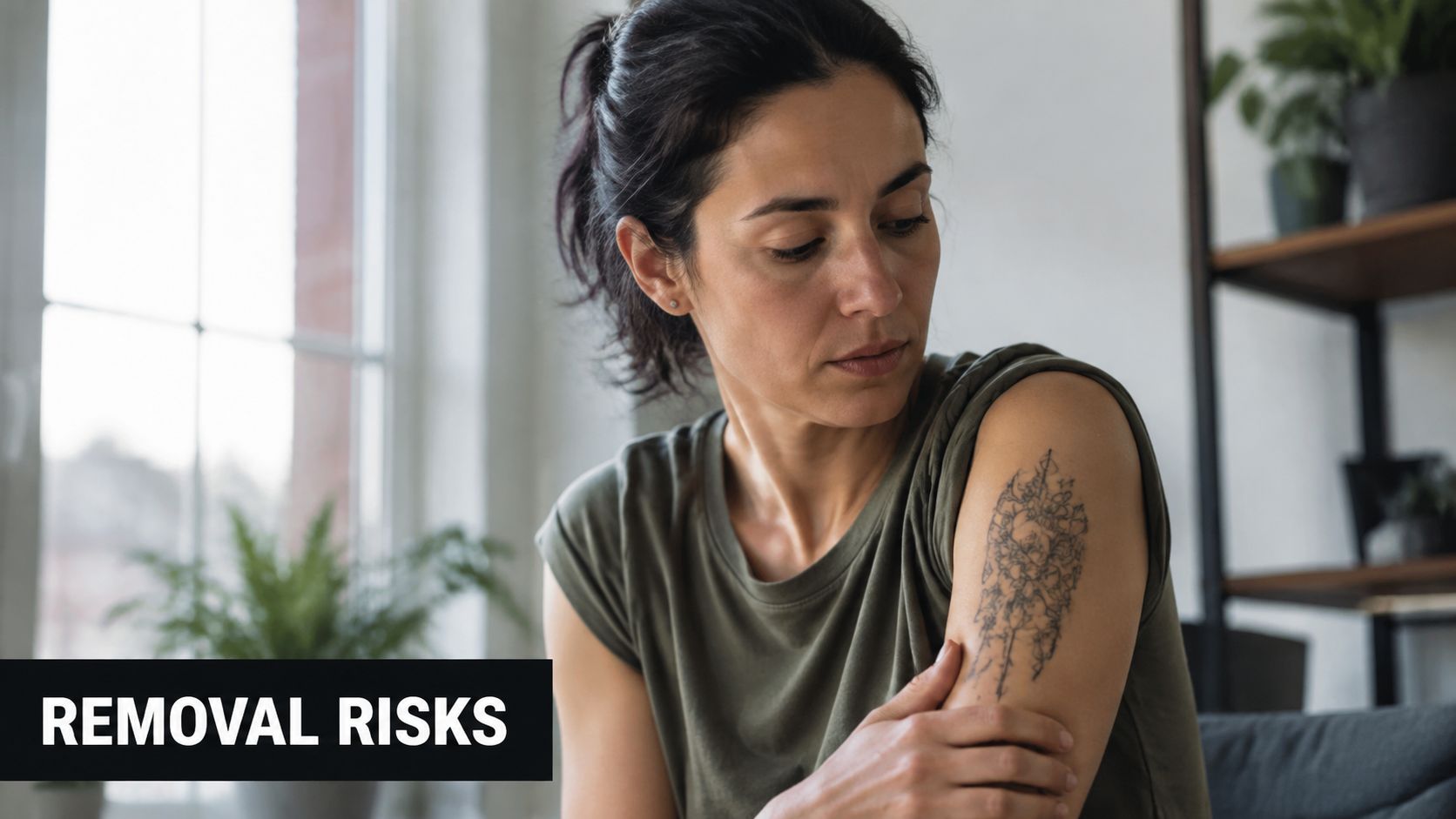
Modern Q-switched lasers are far safer than older methods, but they are not risk-free. A review source found complications in a small share of cases, with pigmentary changes the most common issue, and more recent practitioner-reported session data found complications in a similar minority of sessions. That does not mean the process is dangerous by default. It means risk depends on judgment, restraint, and a technician who knows when less energy is safer than more.
Practical rule: the best safety outcomes usually come from controlled settings, careful skin assessment, and realistic expectations, not from trying to force rapid fading in one session.
The reassuring part is also the practical part. The main risks are usually temporary inflammation and longer-term pigment changes, with serious injury remaining uncommon. That is why a good consultation matters so much. You are not just booking a laser session, you are choosing how much risk to accept, how aggressively to treat, and whether your tattoo should be fully removed or gradually lightened for a cover-up.
If you are nervous, that does not mean you are a bad candidate. It means you are paying attention, and that is a good place to begin.
A Breakdown of Potential Complications
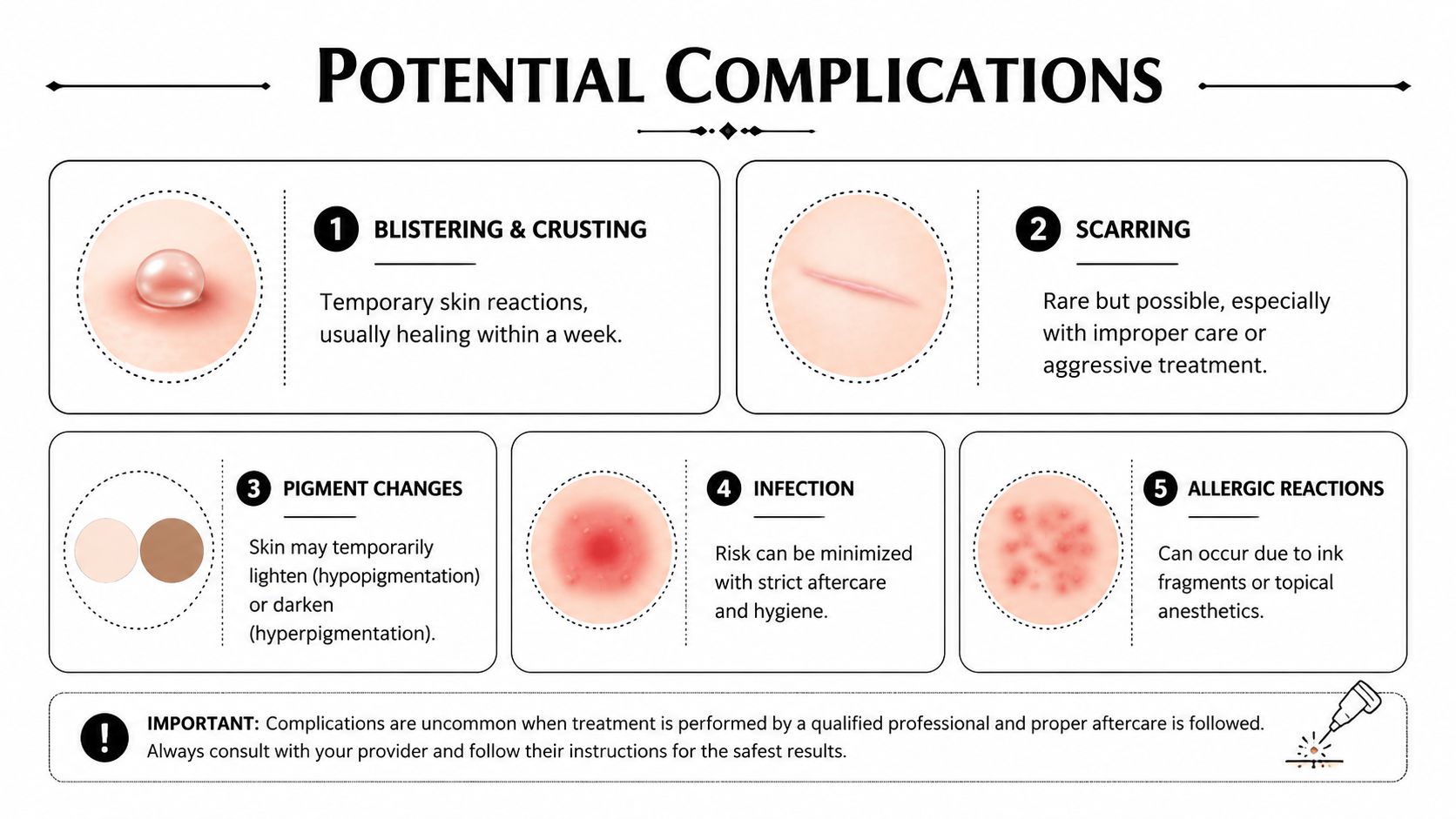
A client can do a lot to shape the outcome of laser tattoo removal. The biggest differences usually come from the provider's judgment, the laser settings, the tattoo itself, and how closely aftercare is followed. laser tattoo removal risks are still real, but the controllable factors matter more than people expect.
Short-term reactions are usually the first thing clients notice. Redness, swelling, blistering, crusting, and tenderness can all appear as the skin responds to treatment. Longer-term concerns are more about pigment shifts and scarring, which is why technique and healing discipline matter so much.
Pigmentary changes
Pigment changes are the long-term complication I discuss most often. Skin can end up lighter or darker in spots, and those changes can linger when laser settings are not matched carefully to the skin type and tattoo characteristics (clinical update, FDA warning). A survey summarized in StatPearls summary reported hypopigmentation often enough that I always talk through tone changes and healing expectations before treatment begins.
The mechanism is straightforward. Laser energy is aimed at breaking up ink, but it can also affect the skin's natural melanin. Darker or tanned skin needs more careful planning because the margin for error is narrower, not because it cannot be treated (clinical update).
Scarring and textural changes
Scarring is less common than pigment change, but it is the complication many clients fear most. A survey cited in StatPearls summary described visible scars in some participants, while a practitioner-reported study recorded hypertrophic scarring at low rates across the data it reviewed (practitioner-reported study). Those outcomes vary because skin response, treatment intensity, and aftercare are never identical from one person to the next.
Healing quality also affects how the skin feels and looks afterward. For a practical look at irritated skin during recovery, I often point clients to Mesoderm RX's skin health insights. If the treated area feels hotter, rougher, or more reactive than expected, that is a sign to slow down and protect the skin barrier. For a separate clinical explanation of scar outcomes, see this EradiTatt guide on tattoo removal scars.
Infection
Infection is uncommon, but it still needs respect. The FDA notes that laser tattoo removal can involve infection, pinpoint bleeding, redness, and soreness (FDA warning). A clinical review also points out that infection can delay wound healing, which is why clean hands, clean dressings, and careful aftercare matter more than many clients realize (2024 review).
Allergic reactions
Allergic reactions are less common, but they do happen. Practitioner-reported data describes allergic reactions as an occasional outcome in treatment sessions (practitioner-reported study). The trigger can be ink fragments or, in some cases, topical products used during care. That is one reason I ask about skin sensitivity before treatment and review anything that has irritated your skin in the past.
Paradoxical darkening
Some inks can darken instead of fading, especially certain cosmetic pigments. Practitioner-reported data has also described paradoxical darkening as a possible outcome in a small number of cases (practitioner-reported study). If a clinic understands your ink type and treatment history, it can plan around that risk instead of discovering it after the fact.
Why Complications Happen Key Risk Factors
A complication usually starts with a controllable mismatch, the wrong settings for the skin, the wrong timing for the session, or the wrong aftercare once the client leaves. That is why two people with similar tattoos can heal very differently, even if the device is the same.
Skin type and melanin load
Darker or tanned skin needs more careful treatment because the laser can be absorbed by the skin's own melanin, not only by the tattoo pigment. If the settings are too aggressive for that skin type, the surrounding skin can be injured and leave lasting light or dark marks. The Fitzpatrick scale helps guide that decision, because skin tone changes how cautiously a technician should approach fluence and wavelength.
Ink color, tattoo age, and location
Colored tattoos, cosmetic tattooing, and previously treated tattoos are more likely to raise planning challenges, especially when the ink behaves unpredictably under laser energy. Tattoo age also matters, because older work and newer work do not always respond the same way.
Location matters too. Thinner or more sensitive areas, including the neck and shoulders, tend to carry more scarring risk in clinical reviews. A skilled provider adjusts the approach based on where the tattoo sits, not just what the ink looks like.
Device quality and operator judgment
A good laser matters, but it is only part of safe treatment. The operator still decides how much energy to use, how far apart sessions should be, and whether the skin is ready for another pass. Burns and blistering usually come from poor judgment, not from the idea of laser removal itself.
That is why I start with treatment planning before I talk about clearance. If you are choosing a provider, look for one who explains skin type, ink behavior, and aftercare clearly, like the standards outlined in this guide to laser tattoo removal qualifications. Careful technique reads the skin in real time, instead of treating every tattoo the same way.
How to Minimize Risks With Proper Aftercare
The part you control starts the moment you leave the clinic. Good aftercare doesn't just help comfort, it helps the skin heal cleanly and reduces the chance that a temporary reaction turns into a bigger problem. The simplest goal is to keep the treated area calm, clean, and protected while the skin does its repair work.
What to do before the session
Sun exposure is one of the easiest things to avoid, and one of the easiest ways to lower risk. Tanned or sunburned skin is more reactive, so I'd rather reschedule than push through and create a healing problem. The same goes for any fresh irritation, because inflamed skin is already working harder than it should.
Practical rule: treat the skin like it's already in recovery before you arrive. Calm skin is easier to treat safely.
What to do after treatment
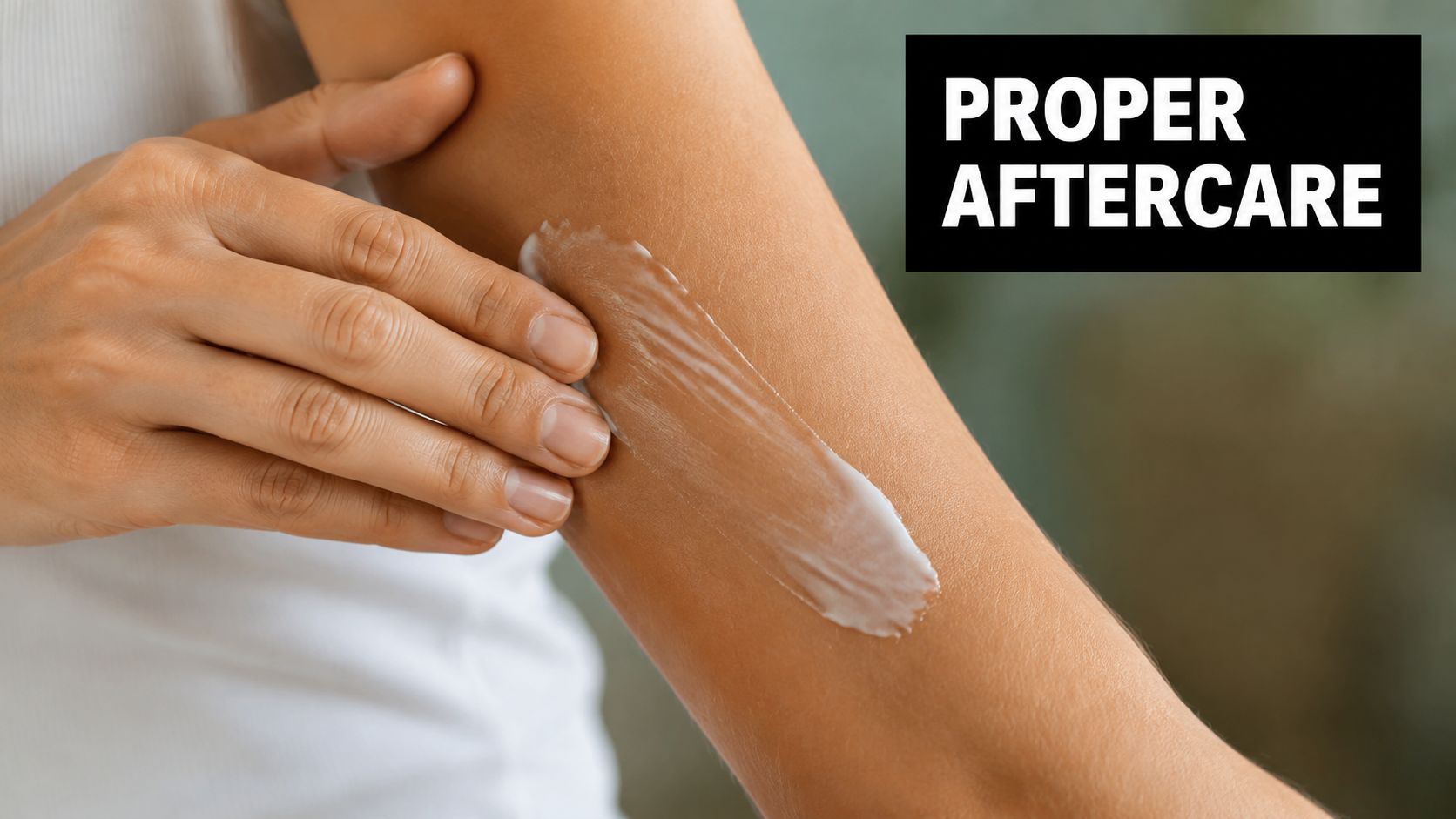
Keep the area gently clean, dry, and lightly moisturized with only the products your provider recommends. Don't pick at crusting, scabs, or blisters, even if they look annoying or uneven. Picking lifts the skin before it's ready and raises the chance of pigment change or scarring.
Avoid pools, hot tubs, and soaking until the skin is sealed and calm. Friction from tight clothing can also irritate the area, so loose fabric is a better choice while the skin settles. If you want a more detailed breakdown of recovery habits, the ultimate post-treatment care guide is a useful reference for the healing mindset that works best after treatment.
What not to do
- Don't scratch healing skin. Even a small scratch can reopen the area and slow repair.
- Don't use random creams. Fragrance, acids, and active ingredients can sting healing skin.
- Don't assume more redness means better fading. Irritation is not the goal.
- Don't rush the next session. Skin needs time to settle before you treat it again.
The safest clients are the ones who follow instructions exactly, not the ones who try to “help” the healing process with extra products or too much hands-on care. Clean, calm, protected skin almost always heals better than busy skin.
Choosing a Qualified Provider Is Your Best Defense
A careful provider lowers much of the risk in laser tattoo removal risks. Technique, timing, equipment choice, and the quality of the consultation all shape how much stress the skin takes during treatment. If you want a more predictable outcome, judge the clinic as carefully as you judge the decision to remove the tattoo itself.
What a strong consultation looks like
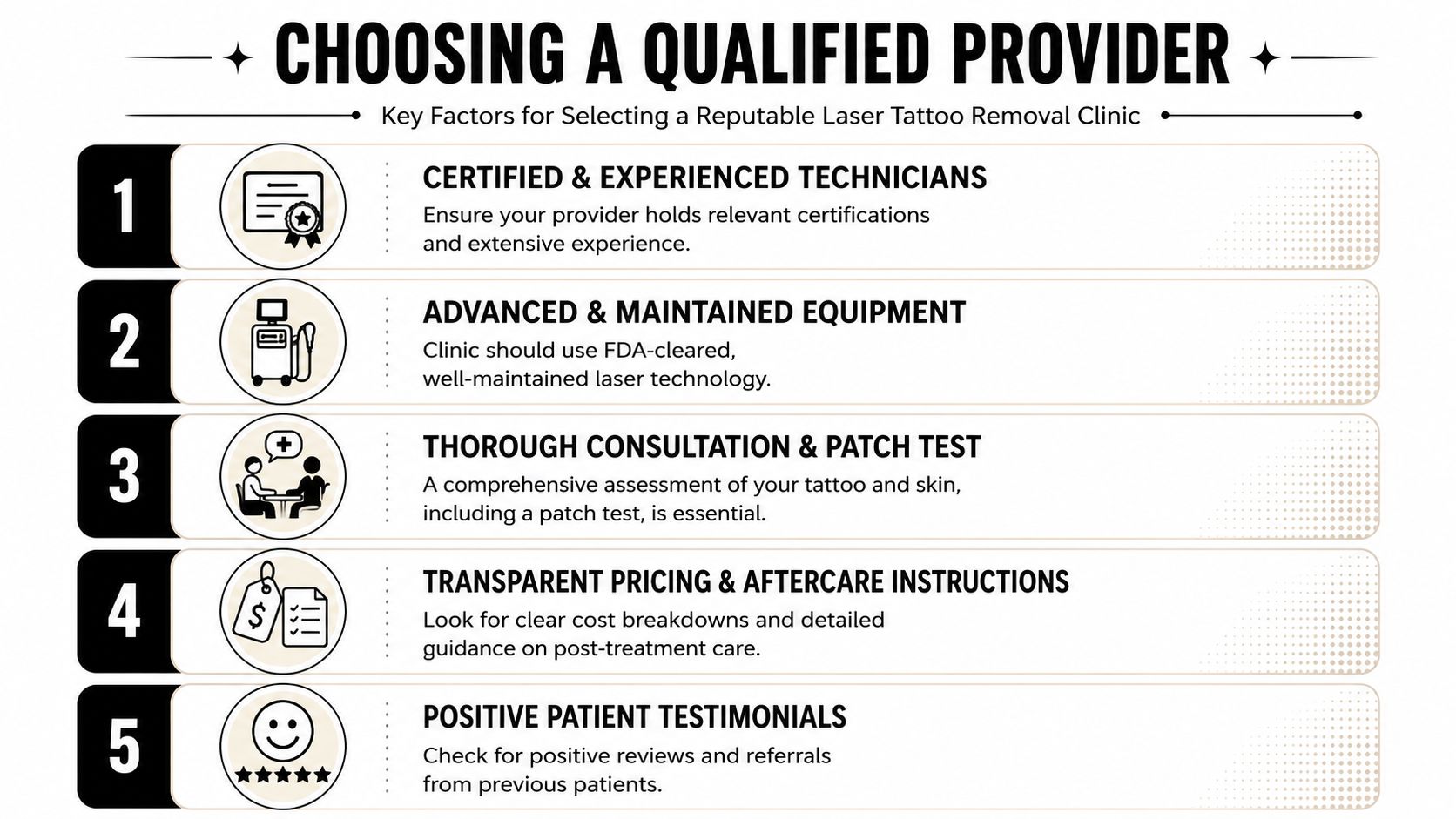
A thorough consultation should cover your tattoo's age, color, location, your skin type, and your healing history. It should also include a discussion of realistic fading, possible pigment shifts, and whether complete removal or partial fading is the smarter goal. A good provider does not promise a perfect outcome, because perfect is not how skin biology works.
What to ask before you book
- Certified and experienced technicians. Ask who performs the treatment and how long they have worked with tattoo removal.
- Advanced and maintained equipment. The clinic should use modern, well-maintained laser technology suited to different skin and ink types.
- Patch test and planning. A small test spot can show how your skin responds before a full session.
- Transparent aftercare. You should leave with written or clearly explained healing instructions.
- Real patient feedback. Reviews and referrals help show whether the clinic communicates well and follows through.
Provider skill and device settings matter, and the wrong settings can raise the chance of burns, blistering, and scarring in sensitive areas. That is why the clinic matters as much as the laser itself, and why the provider should explain how they adjust treatment for skin tone, ink depth, and body location.
EradiTatt Tattoo Removal offers consultations across Florida, and its treatment approach is built around matching sessions to skin type, tattoo size, color complexity, and fading goals. If you are comparing providers, the consultation is the place to ask the hard questions and see whether the answers feel careful or rushed. For a closer look at what credentials and experience should include, see this EradiTatt guide on tattoo removal qualifications.
When to Contact a Professional After Treatment
A little redness, soreness, and swelling can be part of normal healing after laser tattoo removal. The concern starts when the reaction grows instead of settles down, or when the skin starts behaving in a way that does not match a typical recovery pattern.
Laser treatment can lead to scarring, infection, pinpoint bleeding, redness, soreness, and permanent lightening of the treated skin. If the area looks worse over time, reach out to your provider instead of waiting and hoping it settles on its own. Early contact usually makes it easier to address a problem before it becomes harder to treat.
Call your provider if you notice
- Increasing pain. Discomfort should taper off as the skin calms down.
- Spreading redness. A red border that keeps widening can point to irritation or infection.
- Pus or unusual drainage. Normal healing does not usually produce thick drainage that increases over time.
- Fever or feeling unwell. Skin changes together with whole-body symptoms deserve prompt review.
- Severe itching with rash. That can signal an allergic reaction or a sensitivity that needs attention.
- Excessive blistering. A small blister can happen, but a reaction that grows or covers a wider area should be assessed.
If you are watching for infection symptoms, this guide to signs of infection after tattoo removal can help you tell the difference between expected healing and a problem that needs a professional look.
I tell clients to trust their instincts here. If you are unsure, send a message or call. A good clinic should welcome those questions, and early contact often makes aftercare simpler and safer.
Begin Your Tattoo Removal Journey with Confidence
Laser tattoo removal risks are manageable when you understand what's normal, what's not, and what lowers the odds of trouble. The biggest levers are simple to name, even if they take skill to apply well, choose a qualified provider, respect your skin type, and follow aftercare without shortcuts.
If you're in Florida and thinking about removal or fading, schedule a consultation and talk through your tattoo, your skin, and your goals before you commit to a treatment plan. That conversation is where safer decisions start.
EradiTatt Tattoo Removal helps clients across Florida plan tattoo removal with a focus on skin type, tattoo characteristics, and safe session planning. If you're ready to talk through your options and understand the risks before treatment, visit EradiTatt Tattoo Removal and schedule a consultation.
3 Responses