
Elective laser tattoo removal should be postponed during pregnancy and breastfeeding because pregnancy-specific safety studies don't exist. Some clinicians also recommend waiting 3 to 6 months after childbirth, with additional time if you're breastfeeding, before restarting treatment according to clinical guidance on tattoo removal and pregnancy.
But what happens if you've already started a removal series and discover you're pregnant? The practical answer isn't “wait.” You need to pause correctly, document your last session, understand what your providers need to evaluate, and choose whether your eventual goal is complete removal, cover-up fading, or a temporary cosmetic solution.
Table of Contents
- Is Tattoo Removal While Pregnant Safe
- How Laser Tattoo Removal Works
- Known and Theoretical Risks During Pregnancy
- What If You Find Out You Are Pregnant Mid Treatment
- Tattoo Removal and Breastfeeding
- Realistic Alternatives to Consider Right Now
- Questions to Ask Before You Schedule a Session
- A Simple Path Forward
Is Tattoo Removal While Pregnant Safe
Is tattoo removal while pregnant safe? No elective laser tattoo removal during pregnancy. Clinics defer it because pregnancy-specific studies have not established that the procedure is safe. The Society for Laser Surgery and Medicine's clinical guidance on tattoo removal and pregnancy safety supports treating it as a non-urgent cosmetic procedure, so postponement avoids unnecessary uncertainty.
This recommendation reflects precaution, not proof that one session causes fetal harm. The key fact is the lack of pregnancy-specific research. Ethical limits make controlled trials difficult, and delaying an elective procedure is practical.
What the recommendation includes
Use the pause to make a clear plan:
- Laser sessions: Do not book or attend elective tattoo removal while pregnant.
- Numbing products: Tell the clinic about your pregnancy before anyone considers topical or injectable anesthetic.
- Postpartum recovery: Ask your obstetric provider and laser clinician when your skin and general recovery support restarting.
- Breastfeeding: Some clinicians advise waiting until breastfeeding has ended because medication absorption and pigment clearance remain uncertain.
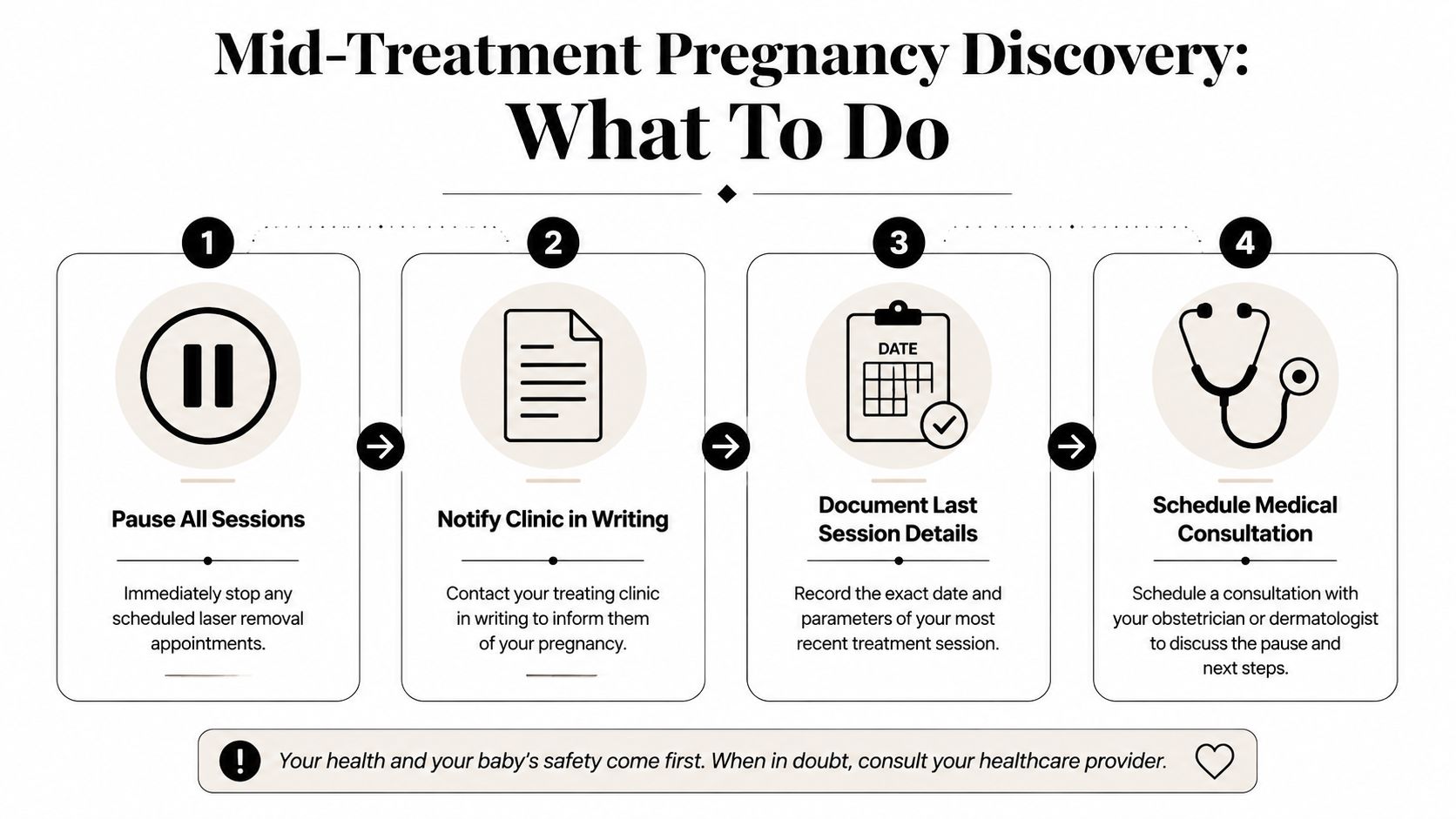
If you discover a pregnancy during a treatment series, stop future sessions, record the date and settings of your last treatment, and notify the treating clinic and obstetric provider. Do not try to maintain the schedule or switch devices without their review. A later restart can follow the same plan whether your goal is complete removal or lightening for a cover-up. The pregnancy-related safety question stays the same; only the endpoint changes.
A laser procedure for a genuine medical reason may receive a different assessment from a qualified clinician. Removing an unwanted decorative tattoo has no comparable urgency. Guidance on pregnancy and cosmetic laser guidance advises avoiding cosmetic lasers until after delivery because the safety evidence is limited, while distinguishing some medically indicated laser uses with indirect exposure.
While waiting, keep tattooed skin care simple and pregnancy-appropriate. The guide to pregnancy body care from The Happy Bump Co offers routine care ideas without turning tattoo fading into another treatment project.
How Laser Tattoo Removal Works
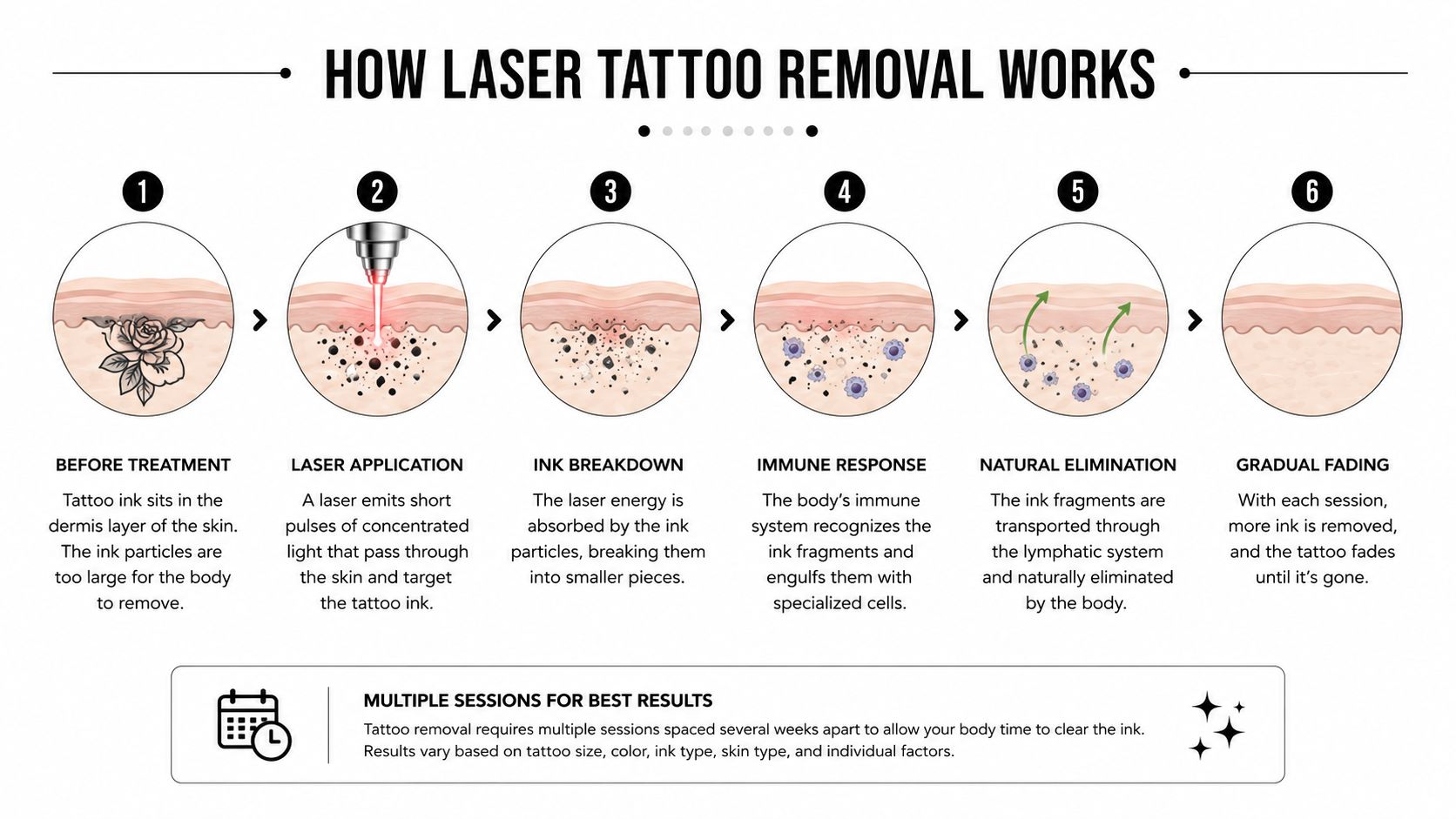
When you book your first session, the clinician examines the tattoo, your skin type, pigment colors, depth, and treatment history before choosing settings. During treatment, the device sends short pulses of targeted light into the tattoo. That energy breaks larger ink deposits into smaller particles. Your immune and lymphatic systems gradually process and clear them while the skin recovers. A first-timer's breakdown of laser tattoo removal explains the appointment process in more detail.
Common platforms include Q-switched Nd:YAG, picosecond, and ruby lasers. The device and settings depend on the tattoo and the surrounding skin. The basic process stays consistent, controlled energy targets pigment while limiting unnecessary exposure to nearby tissue.
Why treatment happens as a series
Ink clearance takes time, and the skin must heal between appointments. Clinics therefore plan removal across multiple sessions, commonly spaced 6 to 8 weeks apart. Pregnancy can pause that schedule without wasting the progress from earlier treatments.
The relevant safety question covers the full treatment cascade. Laser energy fragments pigment, the body responds to controlled skin injury, and the treated area heals. Clinics may also use products to manage discomfort and recovery. Pregnancy can alter skin sensitivity, healing, and irritation tolerance, so elective treatment is generally postponed rather than continued.
Numbing requires separate review. A clinic may use a topical cream or, in some cases, a local injectable anesthetic. These substances can be absorbed systemically, so your provider must assess the anesthetic plan independently from the laser itself. If pregnancy is confirmed during a series, pause the next appointment and ask both clinicians when treatment can resume.
Known and Theoretical Risks During Pregnancy
Is laser tattoo removal during pregnancy proven to harm a fetus? No. Is it supported by enough pregnancy-specific evidence to recommend? Also no. Current clinical guidance identifies an inadequate safety dataset, so elective removal should be postponed clinical guidance on laser tattoo removal during pregnancy.
What clinicians can and can't confirm
The clearest issue is the evidence gap. Professional ethics guidelines do not permit researchers to expose pregnant participants to an elective cosmetic procedure solely to build a safety database. Providers must therefore rely on indirect evidence, product information, and precautionary practice.
Several concerns remain plausible, not proven:
- Topical anesthetic exposure: Lidocaine-prilocaine products can be absorbed through the skin. Product labeling includes methemoglobinemia warnings, while absorption varies with the product, dose, skin condition, treatment area, and application method.
- Pregnancy-related skin changes: Increased photosensitivity, melasma, and altered healing can make pigmentation changes or scarring harder to predict.
- Pain and positioning: Laser treatment can hurt, and staying in one position may become uncomfortable as pregnancy progresses.
- Fragmented pigment: Pregnancy-specific pharmacokinetic data do not clearly show whether tattoo particles or their metabolites cross the placenta.
These points support delaying treatment. They do not establish fetal injury. Medical guidance, medication information, and device safety documentation therefore place elective tattoo removal in the deferred category rather than describing it as universally dangerous. Pregnancy Birth and Baby's guidance on cosmetic procedures similarly advises waiting when safety information is limited.
| Risk Category | Evidence Status | Practical Concern |
|---|---|---|
| Pregnancy-specific laser safety | No direct clinical safety dataset | Providers cannot establish a reliable risk profile for elective tattoo removal |
| Numbing agents | Absorption and labeling concerns are known | Your obstetric provider should review any topical or injectable product |
| Skin sensitivity and healing | Pregnancy can alter skin behavior | Irritation, pigmentation changes, or scarring may be harder to predict |
| Pain and positioning | Procedure-related considerations are recognized | Treatment may be physically uncomfortable or poorly timed |
| Fragmented pigment metabolites | Pregnancy-specific placental data remain uncertain | Clinicians avoid unnecessary exposure while the question remains unanswered |
The practical recommendation is straightforward: uncertainty is a reason to wait when treatment is not medically necessary. Pause the series during pregnancy, keep your treatment records, and ask your obstetric and laser providers when resuming is appropriate. For further treatment-specific concerns, review this guide to laser tattoo removal risks.
What If You Find Out You Are Pregnant Mid Treatment
What should you do if you discover you are pregnant during a laser tattoo removal series? Stop arranging new sessions immediately. Do not book one last appointment or restart because the gap feels inconvenient. Pause the series, document the last treatment, and let your prenatal provider decide whether any follow-up is needed.
Follow this sequence
- Pause all sessions immediately. Cancel upcoming appointments and avoid further laser exposure.
- Notify the clinic in writing. Email the provider so the pregnancy disclosure and treatment pause are documented.
- Record the last session. Note the treatment date, laser type if known, settings, tattoo location, treated area, numbing product, and any skin reaction.
- Contact your obstetric provider. Share the treatment record and ask whether additional follow-up is appropriate.
- Ask the laser provider to assess the skin. A clinician can check whether blistering, crusting, pigment change, or delayed healing needs attention.
A single session before you knew you were pregnant is unlikely to be a medical crisis, but continuing treatment is the wrong response. Tell your prenatal provider what happened, particularly if the session involved topical or injected numbing medication, an unusual reaction, or a large treatment area.
Use the last-session date to plan
If the last session occurred before conception, give your providers its date and complete treatment details. If it occurred after you could have conceived, provide the same information without trying to interpret the exposure yourself. Your obstetric provider decides whether your pregnancy care needs to change.
Resume treatment only after pregnancy has ended and your care team agrees that recovery is appropriate. If you are breastfeeding, keep the pause in place until lactation has concluded unless your obstetric or dermatology providers advise otherwise. Some clinicians also recommend waiting through an additional postpartum recovery period, which may extend for several months after childbirth. Use this postpartum tattoo removal timing guidance when discussing timing with your care team.
Before restarting, the provider should review immune response, remaining pigment, skin integrity, and healing behavior. Skin can appear healed while still responding differently after pregnancy-related changes. Bring your session record to the consultation rather than relying on memory. If completing the removal series no longer suits your timeline, ask whether limited fading for a future cover-up is a better option after clearance.
Tattoo Removal and Breastfeeding
Is laser tattoo removal automatically appropriate after delivery? No. Many clinicians keep the pause in place during breastfeeding because the remaining questions concern lactation, medication absorption, and how practical wound care will be with a newborn.
The laser energy does not stay in the body, so pumping and dumping does not remove or neutralize the laser treatment. The product used around the appointment matters more, especially topical lidocaine-prilocaine or an injectable anesthetic. Ask the prescribing or treating clinician whether that exact product is compatible with breastfeeding.
Why providers may recommend waiting
Conservative advice usually rests on three points:
- Numbing medication: Topical anesthetics can enter the bloodstream through the skin. Absorption varies with the product and how it is applied, so “topical” does not automatically mean risk-free.
- Pigment clearance uncertainty: Lasers fragment tattoo pigment, but evidence specific to breastfeeding and the movement of pigment metabolites into breast milk remains limited.
- Newborn-care demands: Treated skin may need dressings, reduced friction, irritation checks, and infection precautions. Those tasks can be difficult while caring for a newborn.
The FDA retired its letter-category system in 2015 and replaced it with newer pregnancy and lactation labeling. The old categories do not provide a universal clearance for laser tattoo removal during breastfeeding. Medication labeling also cannot answer every question about the procedure, wound response, or pigment clearance. Use the specific product information and the judgment of your clinicians.
Set a clear cutoff: wait until breastfeeding has ended and weaning is confirmed before resuming, unless your obstetric provider and a qualified treatment provider jointly recommend another plan. If feeding routines are still developing, guidance on how to latch and pump from Milk&Lace is more useful now than restarting cosmetic treatment.
For lactation-specific timing questions, review this guide to laser tattoo removal while breastfeeding. Keep your treatment paused until your care team confirms that restarting is appropriate.
Realistic Alternatives to Consider Right Now
Pregnancy doesn't require you to abandon your tattoo goal. It does require you to separate planning from treatment. You can research providers, define the finish line, and decide whether you want complete removal or enough fading for a new design, while postponing elective laser exposure.
Compare the available paths
| Option | Typical Commitment | Best Fit For |
|---|---|---|
| Delay complete removal | A full future treatment plan after pregnancy and the recommended lactation pause | People who want the tattoo gone and can tolerate a longer overall timeline |
| Fade for a future cover-up | A targeted plan after breastfeeding that lightens selected pigment without pursuing complete clearance | People who want more design flexibility with fewer treatment goals |
| Temporary cover-up | Cosmetic or fabric-based coverage during pregnancy and breastfeeding | People who need short-term concealment for work, events, or personal comfort |
Complete removal gives you the broadest future choices, but it demands patience and repeated appointments after your waiting period ends. Starting with a consultation can still help you understand likely treatment phases, skin considerations, and scheduling constraints without receiving laser treatment.
Cover-up fading is the most useful middle path for many people. Instead of chasing every trace of ink, you and a tattoo artist can identify which sections need lightening so a new design can cover them cleanly. That approach may require fewer sessions than full removal, but it still must wait until treatment is appropriate after pregnancy and breastfeeding.
Temporary coverage works as a stopgap. Paramedical makeup, fabric patches, and long-wear body cosmetics can hide the tattoo without altering the skin. Test any cosmetic on a small area first, follow pregnancy-appropriate product advice, and don't apply products over irritated or healing skin.
The key decision is whether you need a permanent result now or only a temporary change in appearance. During pregnancy, temporary concealment is the only immediate option that avoids elective laser treatment.
Questions to Ask Before You Schedule a Session
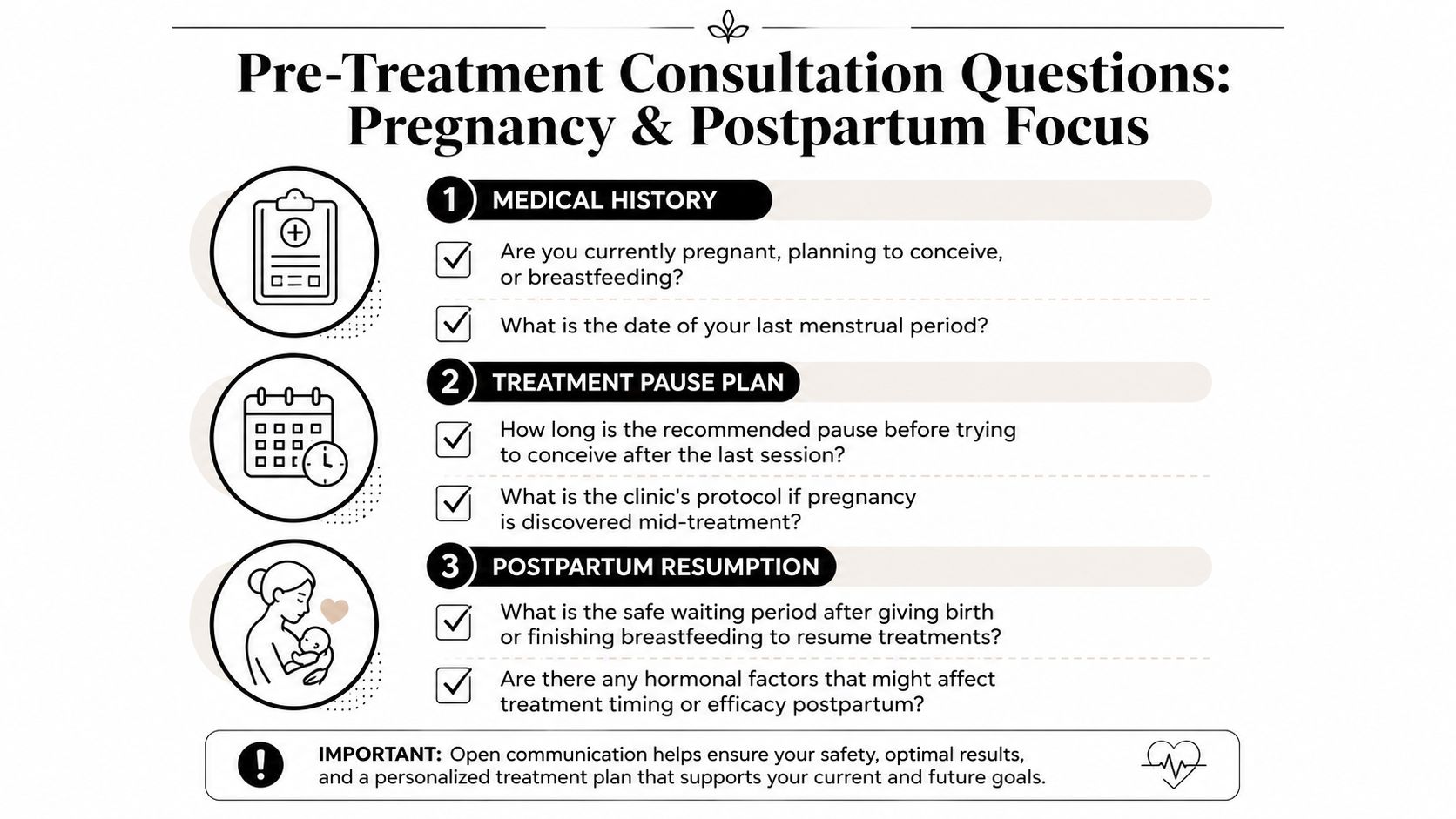
A good consultation should produce a pause-and-resume plan, not just a price or device name. Tell the provider whether you're pregnant, breastfeeding, planning to conceive, or uncertain about your timing. That information changes the appropriate schedule.
Ask about your skin and medical history
Discuss prior pregnancies, current skin changes, melasma, unusual pigmentation, keloid or raised-scar history, allergies, immune conditions, and previous laser reactions. Show the provider any photos or records from earlier sessions, especially if another clinic treated the tattoo.
Ask:
- Skin response: How might my current pigmentation or healing pattern affect treatment?
- Scarring history: Does my history of keloids or raised scars change the recommendation?
- Treatment area: Is the tattoo location prone to friction, delayed healing, or difficult aftercare?
- Medical coordination: Do you need written clearance from my obstetric or dermatology provider?
Clarify the treatment objective
Decide whether you want complete removal or fading for a cover-up. Ask how the plan changes for each goal, how sessions will be spaced after the waiting period, and what factors could cause the provider to adjust settings.
Also ask:
- Which laser platform will you use, and why is it suitable for my pigment and skin type?
- What numbing options are available, and which products would be avoided during pregnancy or breastfeeding?
- What eye protection is used?
- Which aftercare products are recommended?
- What happens if I become pregnant during the series?
- How will you document the last treatment before a planned pause?
- When will you reassess the skin before restarting?
Request written informed-consent documentation and a written pause policy. The paperwork should identify who to contact, what information to record, and what the clinic needs before resuming treatment.
Before you leave, request a printed or emailed aftercare plan suited to your skin type and tattoo location. It should explain cleansing, protection, warning signs, and whom to contact if the area becomes unusually painful, swollen, or slow to heal.
A Simple Path Forward
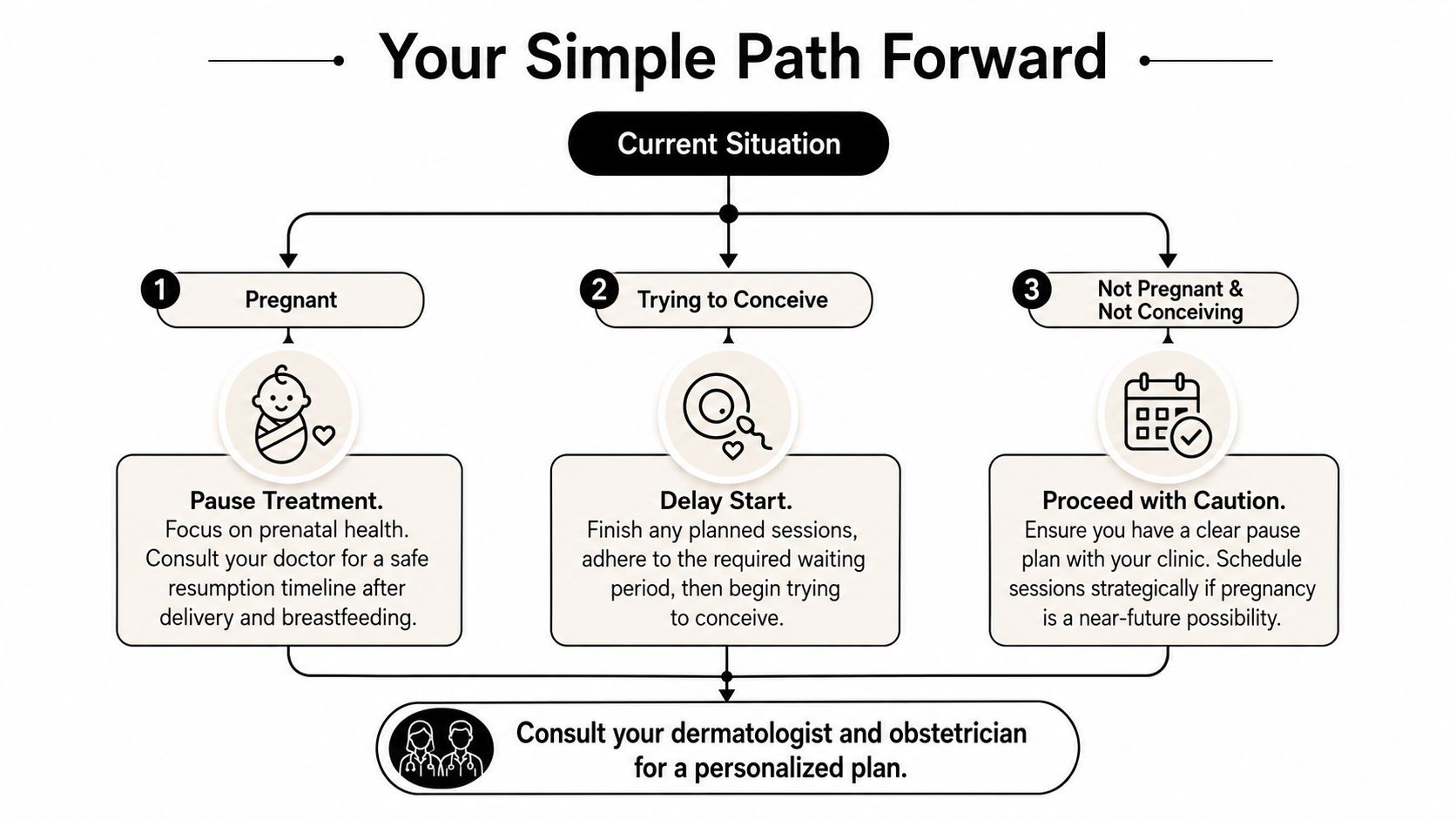
Your current situation determines the next move.
- If you're pregnant: Don't schedule or attend elective laser sessions. Pause treatment, focus on prenatal care, and ask your obstetric and laser providers to create a resumption plan for after delivery and breastfeeding.
- If you're trying to conceive: Discuss timing before starting. If you're already in a series, finish only the sessions your clinicians consider appropriate, then follow the clinic's required pause plan before trying to conceive.
- If you're postpartum and breastfeeding: Wait until breastfeeding has ended and weaning is confirmed. Ask whether your providers recommend an additional recovery buffer, particularly if your skin still shows pigmentation shifts, irritation, or altered healing.
- If you're neither pregnant nor trying to conceive: A standard consultation is reasonable. Still, ask for a clear pause protocol if pregnancy becomes possible during the series.
Cover-up fading remains the productive middle option. You can plan a future design now, identify which ink needs lightening, and avoid treating during pregnancy. Temporary makeup or fabric coverage can handle immediate appearance concerns while you wait.
The safest decision pathway is conservative because tattoo removal is elective, pregnancy-specific safety research is absent, and the procedure includes more than laser energy. Confirm your personal timeline with a qualified laser practitioner and your prenatal care provider before booking.
If you're pregnant or have discovered a pregnancy mid-treatment, EradiTatt Tattoo Removal can help you plan a safe pause and decide between future complete removal and cover-up fading. Visit EradiTatt Tattoo Removal to discuss your treatment history, timing, and next appropriate consultation.
2 Responses