Tattoo Removal in Orlando, FL
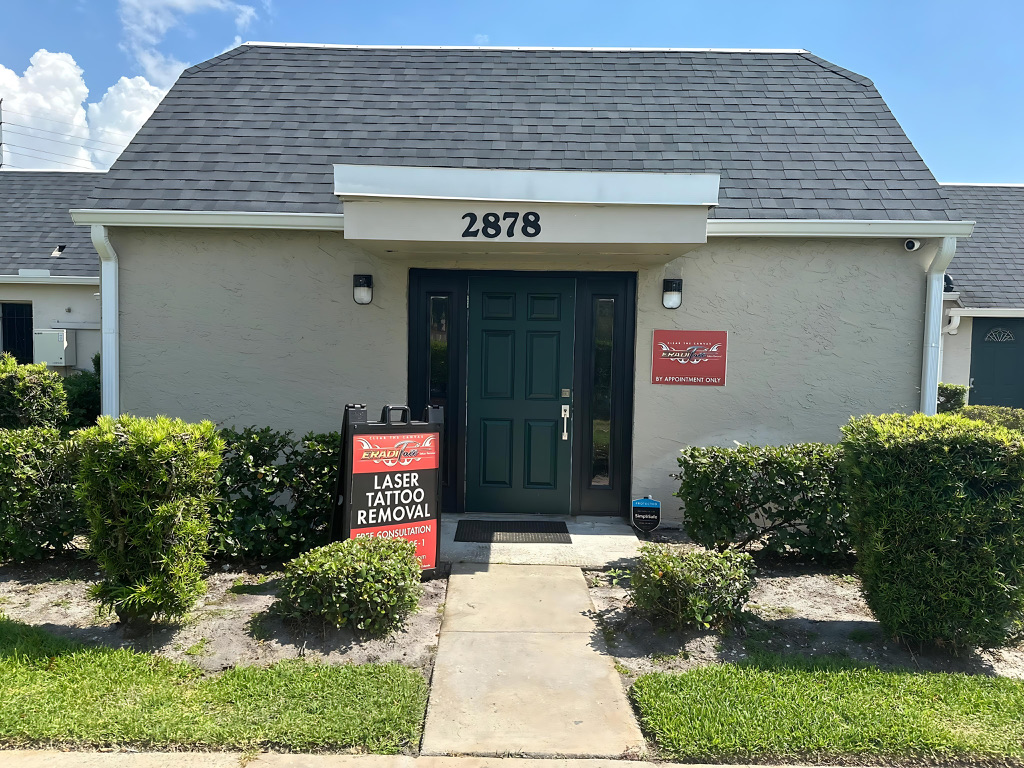
EradiTatt provides specialized laser tattoo removal in Orlando, FL, from our private office in the Dr. Phillips area near Orlando Health Dr. P. Phillips Hospital. Treatments are performed by owner and nurse practitioner Melissa Hoperich, FNP, who has more than six years of tattoo-removal experience and has completed thousands of treatment sessions.
Using the PiQo4 laser system with multiple wavelengths and Zimmer cold-air technology, we treat black and multicolored body tattoos, cosmetic eyebrow tattoos, microblading and powder brows. Whether your goal is complete removal or fading for a future cover-up, every treatment plan is individualized according to your tattoo, ink colors, skin type and removal goals.
Our Orlando tattoo-removal office serves patients from Dr. Phillips, Windermere, Winter Garden, Hunters Creek, Kissimmee, Ocoee, Winter Park and surrounding Central Florida communities. Complimentary phone consultations are available, and in-office treatments are scheduled by appointment on select treatment dates.
Why Choose Eraditatt Orlando
Patients choose EradiTatt Orlando for specialized laser tattoo removal, experienced medical care and treatment plans tailored to their individual tattoos, skin types and removal goals.
- Our PiQo4 laser system uses multiple wavelengths to treat black, multicolored and layered tattoo ink.
- We provide body tattoo removal, cosmetic eyebrow and microblading removal, and tattoo fading for future cover-ups.
- Treatments are performed by Melissa Hoperich, FNP, an experienced nurse practitioner who has completed thousands of laser tattoo removal sessions.
- The Zimmer Cryo 6 cold-air system supports patient comfort during treatment.
- We provide clear pricing, honest assessments and complimentary consultations without pressure.
- Our Orlando office is conveniently located in the Dr. Phillips area near Orlando Health Dr. P. Phillips Hospital, with garage parking available.
Areas We Serve
EradiTatt Orlando serves patients from Orlando, Dr. Phillips, Windermere, Winter Garden, Hunters Creek, Kissimmee, Ocoee, Clermont and surrounding Central Florida communities.
Meet Your Orlando Team
At Eraditatt Orlando, your treatment is in the hands of medical experts who specialize in tattoo removal and skin safety.
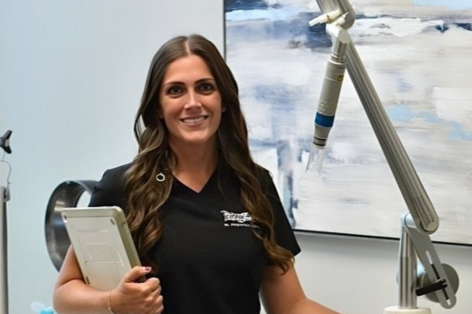
Owner and Nurse Practitioner
Melissa performs all laser tattoo removal treatments at EradiTatt. With more than six years of specialized experience and thousands of completed sessions, she creates individualized treatment plans using the PiQo4 laser system with a focus on skin safety, honest expectations and patient education.
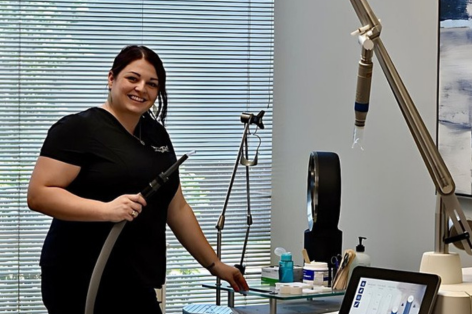
Administrative Technician
Erica is a familiar and trusted part of each patient’s experience. She assists with consultations, scheduling, paperwork and appointment coordination, while also supporting patient comfort during treatments by operating the Zimmer and assisting with post-treatment bandaging. Her warm, attentive approach helps patients feel comfortable and cared for throughout their tattoo removal journey.
From the first appointment to your final clearance, our Orlando team is committed to providing an experience that’s professional, personalized, and respectful.
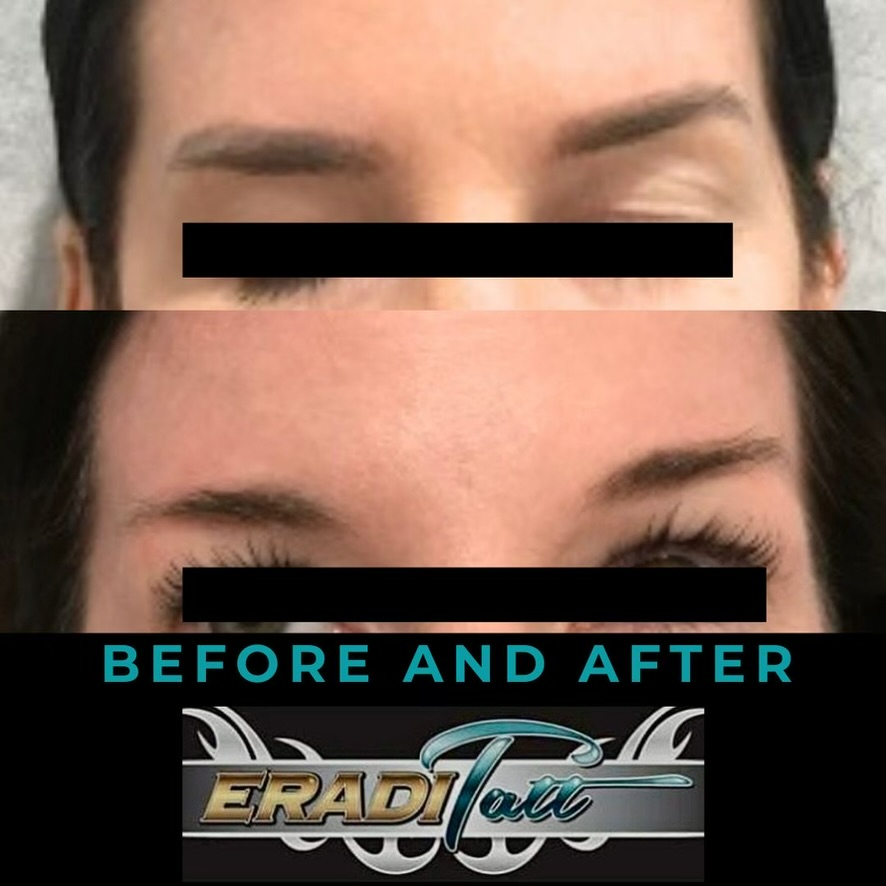
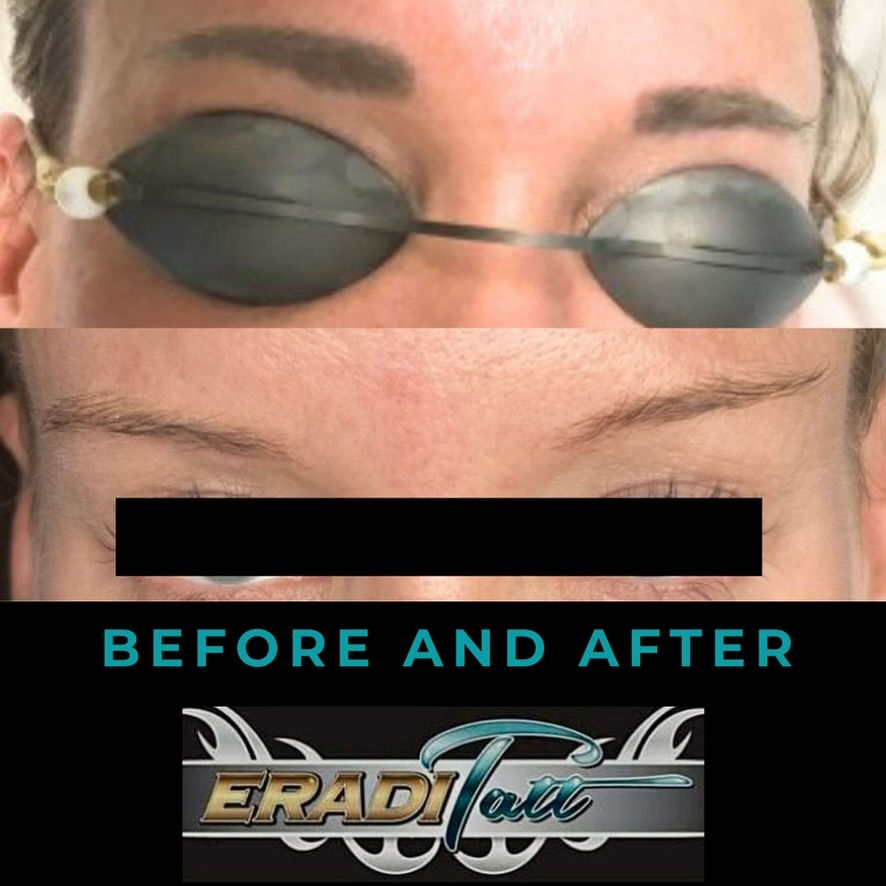
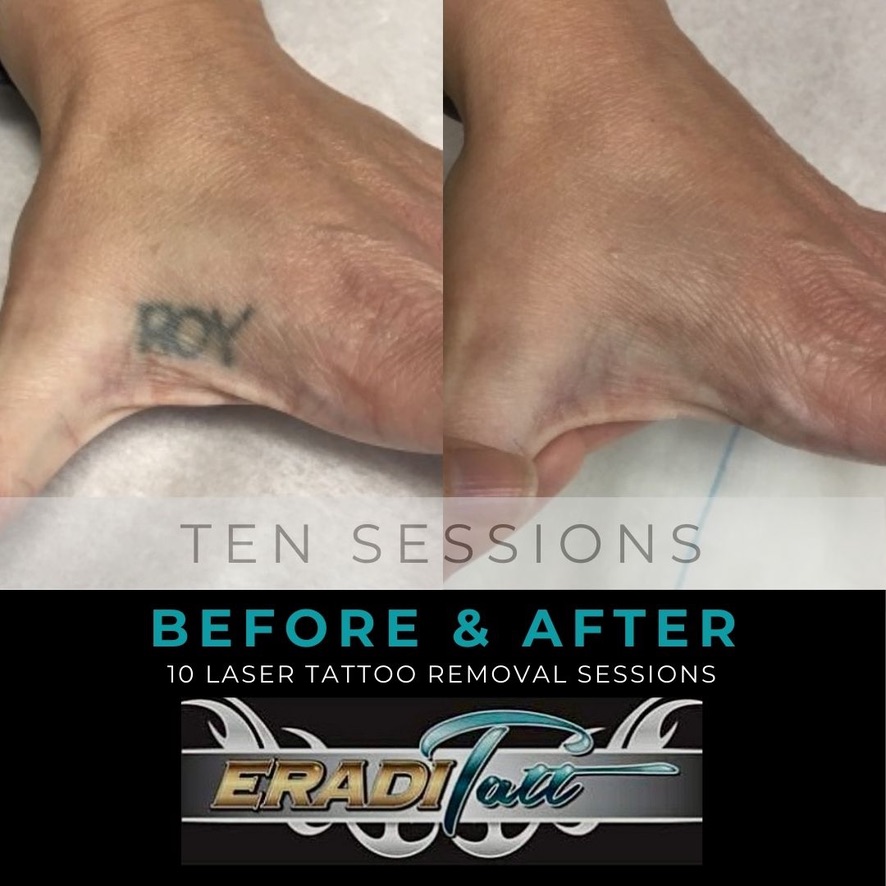
Real Results from Orlando Clients
Every tattoo has a story—and so does every removal. Below are real before and after results from clients treated at our Orlando clinic using the PiQo4 laser system.
Curious what your results could look like?
How Much Does Tattoo Removal Cost in Orlando?
Pricing at our Dr. Phillips clinic is published and based only on the size of the tattoo. Pay per session, or prepay for four sessions and save 20%:
| Size | About the size of | Per session | 4 sessions (20% off) |
|---|---|---|---|
| XX-Small | Smaller than a quarter | $100 | $320 |
| X-Small | Smaller than a credit card | $175 | $560 |
| Small | Smaller than a dollar bill | $225 | $720 |
| Medium | Smaller than a CD | $300 | $960 |
| Large | Smaller than a DVD case | $400 | $1,280 |
| X-Large | Up to a sheet of paper | $600 | $1,920 |
Not sure of your size? Send a photo for a free quote and we’ll estimate your size and how many sessions to plan for. Military members and veterans get 15% off, and every referral earns you a $50 credit. See the full tattoo removal price list or read why laser tattoo removal costs what it does.
What to Expect at Your Orlando Appointment
1. Free consultation. We look at the ink colors, how old and dense the tattoo is, where it is and your skin type. You get an honest plan, whether you want full removal or a fade for a cover-up, and you don’t have to commit to a package to get started.
2. A quick, cooled treatment. The Zimmer Cryo 6 blows cold air on your skin while the PiQo4 laser breaks up the ink. Most sessions take 5 to 15 minutes.
3. Easy aftercare. Keep the area covered for 2 to 3 days and skip workouts for 24 hours. Theme park days and pool time are fine once the skin has healed, but keep treated skin covered in the sun and avoid tanning for at least 4 weeks before each session.
4. Sessions 6 to 8 weeks apart. Most clients need 8 to 12 sessions. Read more about how long tattoo removal takes and tattoo removal on darker skin.
We can’t treat you during pregnancy, within 6 months of taking Accutane, on blood thinners, with certain autoimmune conditions or over a fresh tan.
What Orlando Clients Say
“I had a tattoo that I was constantly hiding because it didn’t age well. So glad I decided to finally get it removed! The sessions were quick, not too painful, and the recovery was a breeze. I had 6 sessions and am really pleased with the result.”
Dawn Dragone, Google review
“Melissa and Erica are very kind and welcoming. They make sure I am as comfortable as I can be during my sessions. Best part… the laser is affective… Second best part is the cold air. It really helps with the discomfort.”
Jaqueline V, Google review
“I began the journey of removing an old eyebrow tattoo that I had become really self-conscious about. From the beginning, they have been completely honest and transparent about the process… After a few sessions, it’s really fading, and my face looks so much better.”
Yoly Svolto, Google review
Getting to Our Dr. Phillips Clinic
EradiTatt Orlando is at 9430 Turkey Lake Rd, Suite 116, Orlando, FL 32819, in the Dr. Phillips area. We’re open Monday to Friday 10 am to 6 pm and Saturday 10 am to 3 pm. Call (407) 278-7066.
- Downtown Orlando, Winter Park and Altamonte Springs: take I-4 west to the Sand Lake Rd exit, then head west to Turkey Lake Rd.
- Kissimmee and Hunters Creek: take I-4 east toward Orlando to Sand Lake Rd, or come up John Young Pkwy. See our Kissimmee tattoo removal guide.
- Windermere, Winter Garden and Ocoee: head east on Conroy-Windermere Rd or Sand Lake Rd to Turkey Lake Rd.
- Clermont: take SR 429 or SR 408 east, then follow Sand Lake Rd or Conroy Rd to Turkey Lake Rd.
- MetroWest and International Drive: Turkey Lake Rd runs between them, so we’re a few minutes away.
More Orlando Tattoo Removal Guides
Popular reads before an Orlando consultation:
- Eyebrow tattoo removal in Orlando
- Tattoo removal in Kissimmee
- Can you fully remove a tattoo?
- Microblading removal with the PiQo4
- Tattoo removal for military members and veterans
- Before and after results
On the Gulf Coast? EradiTatt also has clinics in Tampa, St. Petersburg, Palm Harbor and Bradenton/Sarasota.
Orlando Tattoo Removal FAQs
Where is EradiTatt's Orlando clinic?
We’re at 9430 Turkey Lake Rd, Suite 116, Orlando, FL 32819, in the Dr. Phillips area. We’re open Monday to Friday 10 am to 6 pm and Saturday 10 am to 3 pm. Call (407) 278-7066.
Do you see clients from Kissimmee, Windermere and Winter Garden?
Yes. Our Orlando clinic sees clients from Dr. Phillips, Windermere, Winter Garden, Ocoee, Hunters Creek, Kissimmee, Clermont and the rest of the Orlando area.
How much does laser tattoo removal cost in Orlando?
Sessions cost $100 to $600 depending on the size of the tattoo. A tattoo smaller than a dollar bill is $225 per session, and a 4-session package saves 20%. The consultation and photo quote are free.
Do I have to buy a package?
No. You can pay one session at a time. Prepaying for four sessions saves 20% if you’d like to lock in the discount.
Does laser tattoo removal hurt?
It stings, and many clients compare it to a rubber band snap. The Zimmer Cryo 6 cools the skin with cold air during treatment, and most sessions take only 5 to 15 minutes.
Can you remove eyebrow tattoos and microblading?
Yes. We remove cosmetic eyebrow tattoos, microblading and powder brows, along with black and colored body tattoos.
How many sessions does tattoo removal take?
Most clients need 8 to 12 sessions, spaced 6 to 8 weeks apart. The number depends on ink color and density, the tattoo’s age, where it is on your body and your skin type.
Get in Touch
Complete the form to the right with your details and inquiries, and we’ll get back to you within 24 business hours.
For any questions or to request more information, please email us at info@eraditatt.com. We aim to respond to all emails promptly.
Prefer to speak with someone directly? Give us a call at (844) 237-2731. Our friendly team is available to assist you and provide the information you need.
Your satisfaction and comfort are our top priorities. Don’t hesitate to reach out—our team is ready to provide you with the information and support you need.
Thank you for considering EradiTatt for your tattoo removal needs. We look forward to assisting you!
We’re here to help you on your journey to clear skin. Contact us today!