
If you have dark skin and you're thinking about removing a tattoo, you've probably already heard the warnings. People mention scarring, light spots, uneven tone, or a result that looks worse than the tattoo itself. Those concerns are valid.
Tattoo removal on dark skin isn't something to approach casually. The good news is that it can be done safely when the provider understands melanin, uses the right wavelength, and follows conservative protocols instead of chasing fast fading.
Most problems don't happen because dark skin can't be treated. They happen because the treatment plan ignored how dark skin responds to light and heat. That's the difference new clients need to understand. The safest path isn't guesswork. It's careful laser selection, test spots, spacing sessions properly, and respecting the skin's healing timeline.
Your Guide to Safe Tattoo Removal for Dark Skin
The first question many clients ask isn't really about the tattoo. It's about their skin.
They want to know whether removal will leave a mark that's harder to live with than the ink. That's the right question to ask first. With melanin-rich skin, safety has to come before speed.
A safe treatment plan starts with a simple principle. The laser should target the tattoo ink, not your natural pigment. When that distinction is respected, tattoo removal on dark skin becomes much more predictable.
What usually works best is not the most aggressive setting. It's the most appropriate one. For darker skin tones, the 1064nm Nd:YAG laser is considered the gold standard because it reaches further and is better suited to black and dark gray ink while avoiding unnecessary interaction with epidermal melanin, as noted in this discussion of safe removal for melanated skin and wavelength selection.
Practical rule: If a provider can't clearly explain why they're choosing a specific wavelength for your skin tone and ink color, keep asking questions.
You should leave a consultation understanding three things. Which laser is being used, why that wavelength is safest for your skin, and what trade-offs apply to your tattoo's colors. If you know those answers, you're already in a better position than most clients who walk in focused only on session count.
Why Dark Skin Requires a Specialized Approach
A client with dark skin can have the same tattoo, in the same location, as someone with lighter skin and still need a different treatment plan. The reason is simple. The laser does not only "see" tattoo ink. It also interacts with melanin in the skin.
Melanin absorbs light energy. The more epidermal melanin present, the less room there is for careless settings, rushed treatment intervals, or the wrong wavelength. In practice, that is why dark skin requires more than a standard protocol with the power turned down.
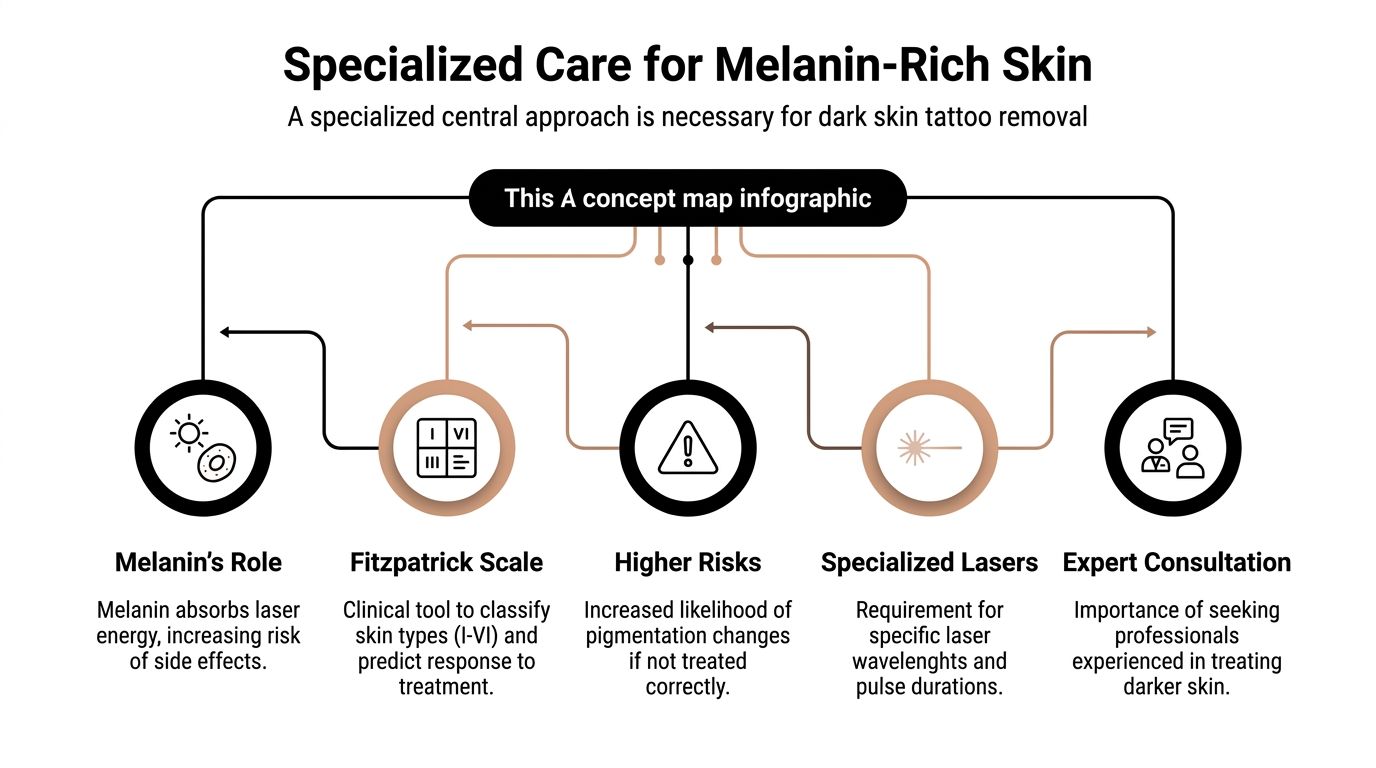
The Fitzpatrick scale matters in real treatment
Providers use the Fitzpatrick Scale to estimate how skin responds to UV exposure and how much pigment risk a laser plan carries. For tattoo removal, types IV to VI need closer attention because higher baseline melanin increases the chance of unwanted light absorption near the surface.
That affects real decisions in the treatment room. Settings that may be tolerated on lighter skin can trigger hypopigmentation, hyperpigmentation, or textural injury on darker skin if the provider pushes too hard or treats too frequently. A safe clinic accounts for your skin type before discussing speed, package pricing, or predicted session count.
Why wavelength choice changes the risk
The challenge is selectivity. The laser should deposit enough energy into tattoo pigment to fracture ink particles while limiting absorption by surrounding melanin.
A crowded-room comparison gets close, but the science is more useful than the analogy. Shorter wavelengths are more readily absorbed by melanin near the surface, so they carry a higher risk on dark skin. If too much energy is captured in the epidermis, the skin can lose pigment or become inflamed even when the tattoo starts to fade.
This is also why newer devices are not automatically safer just because they are newer. The right question is whether the platform gives the provider precise control over wavelength, fluence, spot size, pulse duration, and cooling. If you want a plain-English overview of how newer platforms differ, our guide to new tattoo removal technology and what it changes in treatment planning breaks that down.
What specialized care should look like
Specialized care shows up in the protocol, not in the sales pitch.
Look for these signs:
- Skin typing before treatment: The provider should assess your Fitzpatrick type and ask how your skin reacts to sun exposure, acne marks, cuts, and prior procedures.
- Test spots when appropriate: A conservative test area can reveal how your skin handles the planned settings before a full pass.
- Ink-specific planning: Black ink, red ink, green ink, and cosmetic pigment do not carry the same safety profile on dark skin.
- Longer spacing between sessions: Darker skin often benefits from giving inflammation more time to settle before the next treatment.
- Clear discussion of trade-offs: Safer settings may mean more sessions, especially if the goal is fading the tattoo while protecting natural skin tone.
I tell clients this often. Fast is not the same as safe. On melanin-rich skin, the best result usually comes from a provider who respects the biology, explains each setting choice, and is willing to leave some speed on the table to protect your skin.
The Best Laser Technology for Melanin-Rich Skin
A client with dark skin can sit in two different clinics, hear the same promise of “safe tattoo removal,” and get two very different treatments. The difference usually comes down to wavelength choice, pulse type, and how carefully the provider respects melanin.
For melanin-rich skin, the safest standard starting point for black or very dark ink is usually 1064nm Nd:YAG.
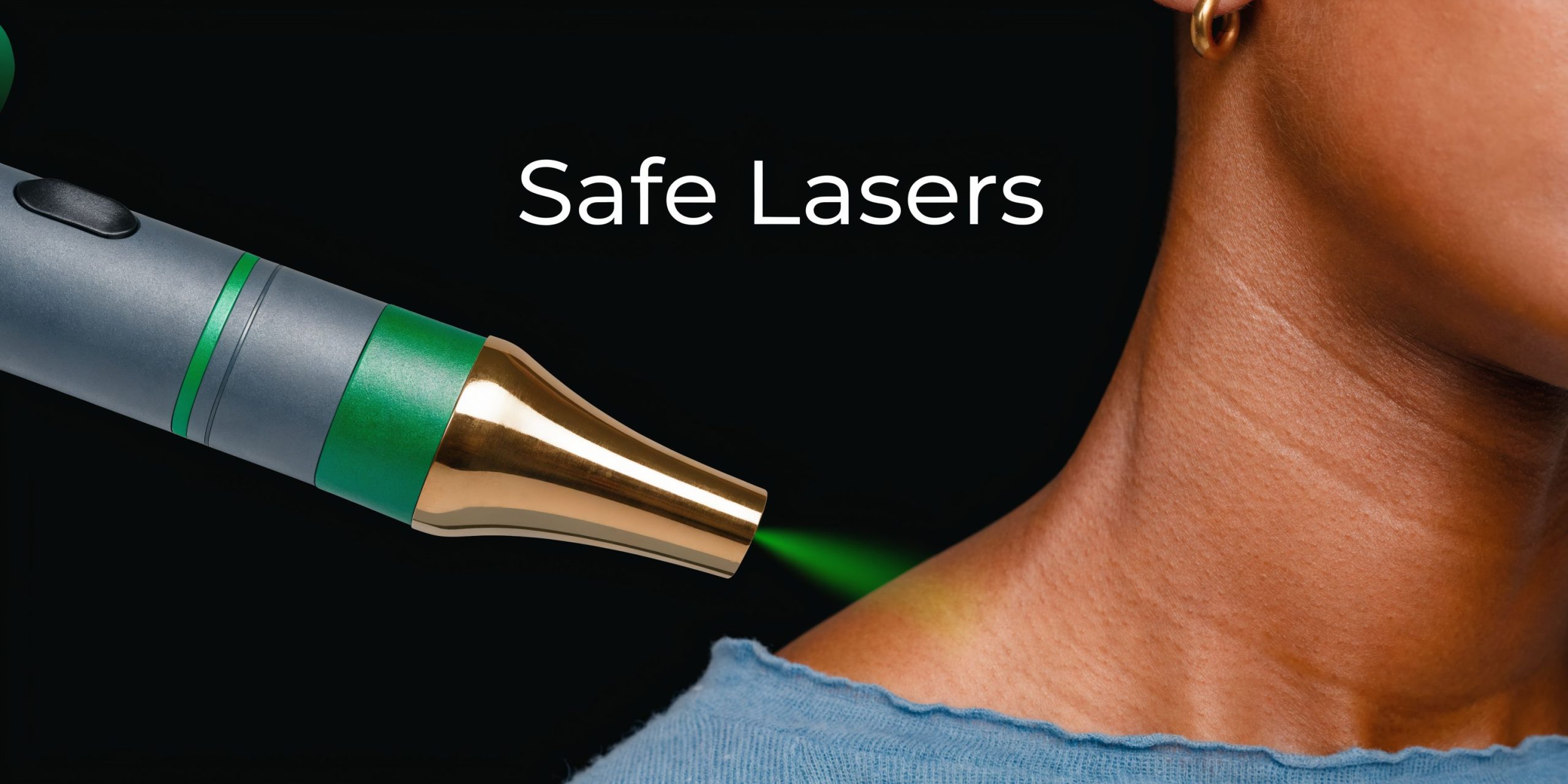
Why 1064nm is the workhorse
Dark skin contains more epidermal melanin. Melanin can absorb laser energy right along with tattoo pigment if the wavelength is a poor match or the settings are too aggressive. That is why shorter wavelengths create less margin for error on darker skin.
1064nm sits in a better range for this job. It penetrates deeper and is absorbed less by epidermal melanin than shorter tattoo-removal wavelengths, so more of the treatment can be directed toward the ink and less toward the natural pigment in the skin. That selectivity matters on dark skin because there is less tolerance for unnecessary heat in the epidermis.
In practice, I look at 1064nm as the platform that gives a skilled provider more control, not unlimited freedom. Good technology lowers risk. It does not erase it.
Nanosecond versus picosecond pulses
Pulse duration also matters. A nanosecond laser can still produce good results on dark skin if the settings are chosen carefully and the provider is willing to work at a measured pace.
A picosecond system delivers energy in a shorter pulse. That can break pigment into smaller particles with less thermal spread, which is one reason many experienced providers prefer it for darker skin types. The advantage is not hype. The advantage is that less stray heat usually means less inflammation, and less inflammation means fewer pigment problems during healing. If you want a practical comparison of platform differences, our guide to new tattoo removal technology and what it changes in treatment planning explains that in plain English.
The trade-off is cost and judgment. A picosecond device is not automatically safer in careless hands.
What good equipment selection looks like
The right machine is the one your provider can set conservatively and explain clearly. For dark skin, that usually means discussing:
- Why 1064nm is being used first: For black ink, there should be a clear explanation tied to melanin safety, not a vague claim that it is “best.”
- Whether your tattoo has colors that change the risk profile: Black is usually the most straightforward. Reds, greens, blues, and cosmetic pigments can require a different discussion.
- How aggressively they plan to treat: Lower starting fluence, appropriate spot size, and patience between sessions often protect skin tone better than chasing faster clearance.
- Whether they use test spots in higher-risk cases: This is often a smart way to see how your skin responds before treating the full piece.
Clients also ask what they can do if they are prone to post-inflammatory dark marks. Good laser settings come first, but skin recovery matters too. General skincare guidance on best ingredients for hyperpigmentation can help you understand which topical ingredients are commonly used to support uneven pigment after irritation, though your provider should tell you when those products are safe to start.
The best technology for melanin-rich skin is the technology that lets the provider protect your natural pigment while still targeting the tattoo. If a clinic cannot explain the “why” behind its wavelength and settings, keep looking.
Understanding and Preventing Pigmentation Risks
The fear most clients carry into tattoo removal on dark skin isn't pain. It's discoloration.
That's understandable because pigment change is the complication people notice first. It can outlast the redness, and on darker skin it tends to be more visible.
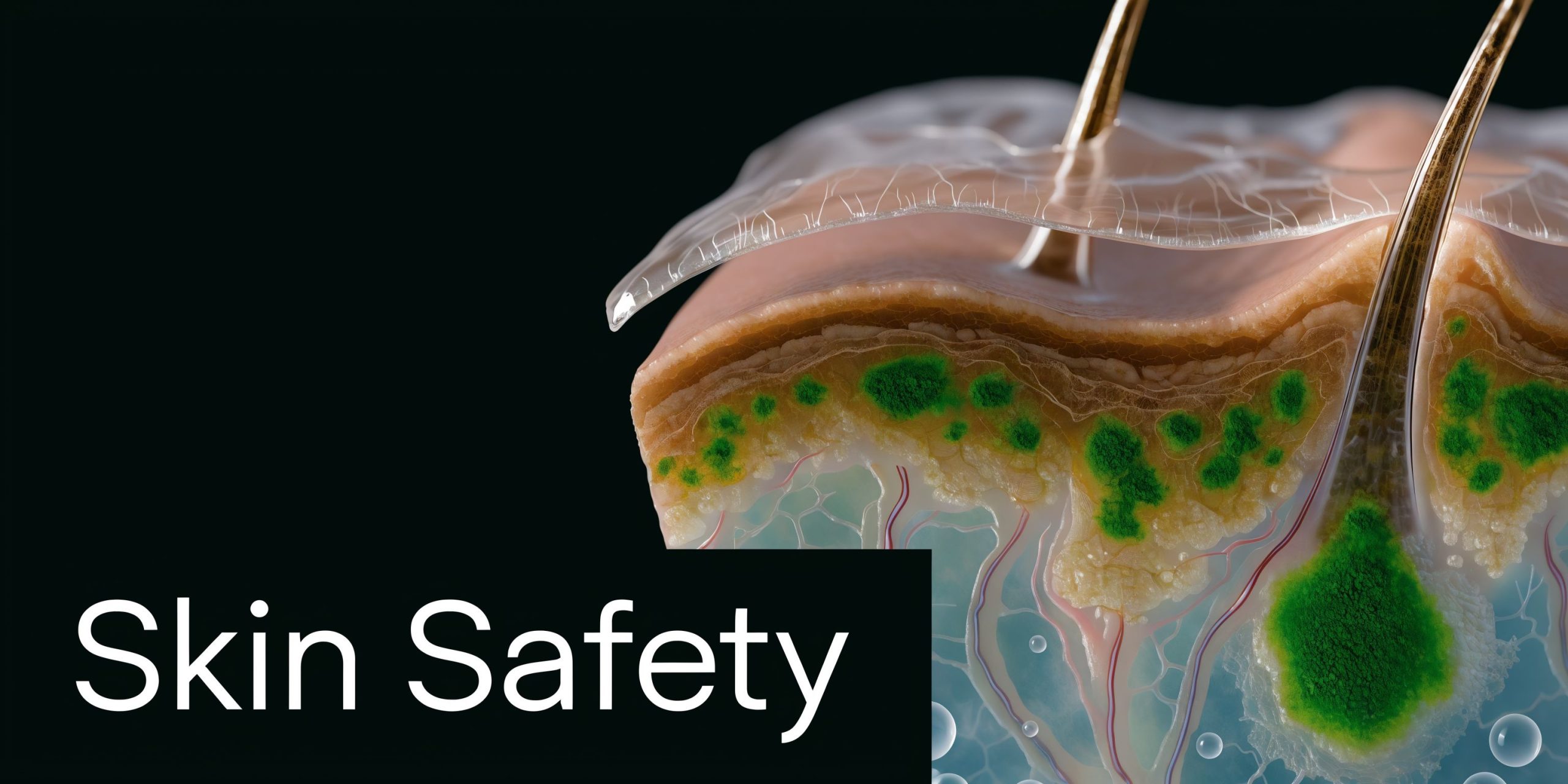
Hyperpigmentation and hypopigmentation are not the same
Hyperpigmentation means the skin darkens after treatment. This usually happens because the skin responds to inflammation by producing more pigment during healing.
Hypopigmentation means the skin becomes lighter. That happens when pigment-producing cells are damaged.
Those outcomes aren't equal. Hyperpigmentation is often part of an inflammatory healing response. Hypopigmentation is the more serious concern because it can be long-lasting or permanent if melanocytes have been injured.
Permanent light spots are linked to provider error more than to skin tone alone. As explained in this discussion of tattoo removal on dark skin and hypopigmentation risk, permanent hypopigmentation is a significant risk tied to inexperienced providers because misdirected laser energy can destroy melanin-producing cells.
What causes these complications
The common assumption is that dark skin itself is the problem. It isn't.
The primary problem is mismatch. Wrong wavelength. Excess energy. Poor cooling. Ignoring how the skin reacted last time. Treating every session as if more aggression equals better progress.
That approach can create a visible outline where the tattoo used to be. Clients often describe it as a ghost image. The ink may fade while the skin tone becomes uneven.
Clinical priority: Preserving skin integrity is more important than forcing faster ink clearance.
Prevention starts before the first full session
A safer provider builds in friction. That means checkpoints instead of rushing.
Good prevention usually includes:
- A test patch first: Small-area treatment can reveal how your skin responds before a larger pass.
- Conservative settings: Dark skin often does better with a gradual plan than a maximal one.
- Adequate spacing: The skin needs time to settle before the next exposure.
- Heat management: Cooling and careful endpoint reading reduce unnecessary inflammation.
- Strict aftercare: Sun exposure and irritation after treatment can worsen color change.
For clients who do develop temporary darkening, skin-calming care matters. If you want a practical overview of topical options used to support uneven tone, this guide to best ingredients for hyperpigmentation can help you understand the ingredient side of recovery conversations.
If you're also concerned about whether an existing mark is scar tissue or pigment change, this resource on laser tattoo removal scars is worth reviewing before treatment.
Your Tattoo Removal Journey What to Realistically Expect
Tattoo removal on dark skin works best when you think in phases, not single sessions.
A black tattoo may respond well, but that doesn't mean the first appointment will produce dramatic visible change. Fading is usually incremental. The skin also has its own timeline, and on dark skin that healing timeline deserves respect.
The first consultation and test patch
The process normally starts with a skin assessment and a discussion about tattoo age, density, placement, and color mix. Darker skin adds another layer. The provider should also ask how your skin tends to heal and whether you've had previous pigment issues.
If the clinic moves straight to full treatment without a thoughtful review, that should make you pause.
A test patch gives useful information. It shows whether your skin darkens, lightens, blisters heavily, or heals cleanly with the selected settings. That response helps shape the full plan.
What treatment day often looks like
During a session, the laser targets the tattoo in short bursts. Immediately after, the area may look frosted, red, raised, or mildly swollen. That isn't unusual.
Over the next days, the skin may feel warm, dry, tender, or tight. Some clients develop pinpoint scabbing or small blisters. The important part is not to mistake normal healing signs for a reason to interfere with the site.
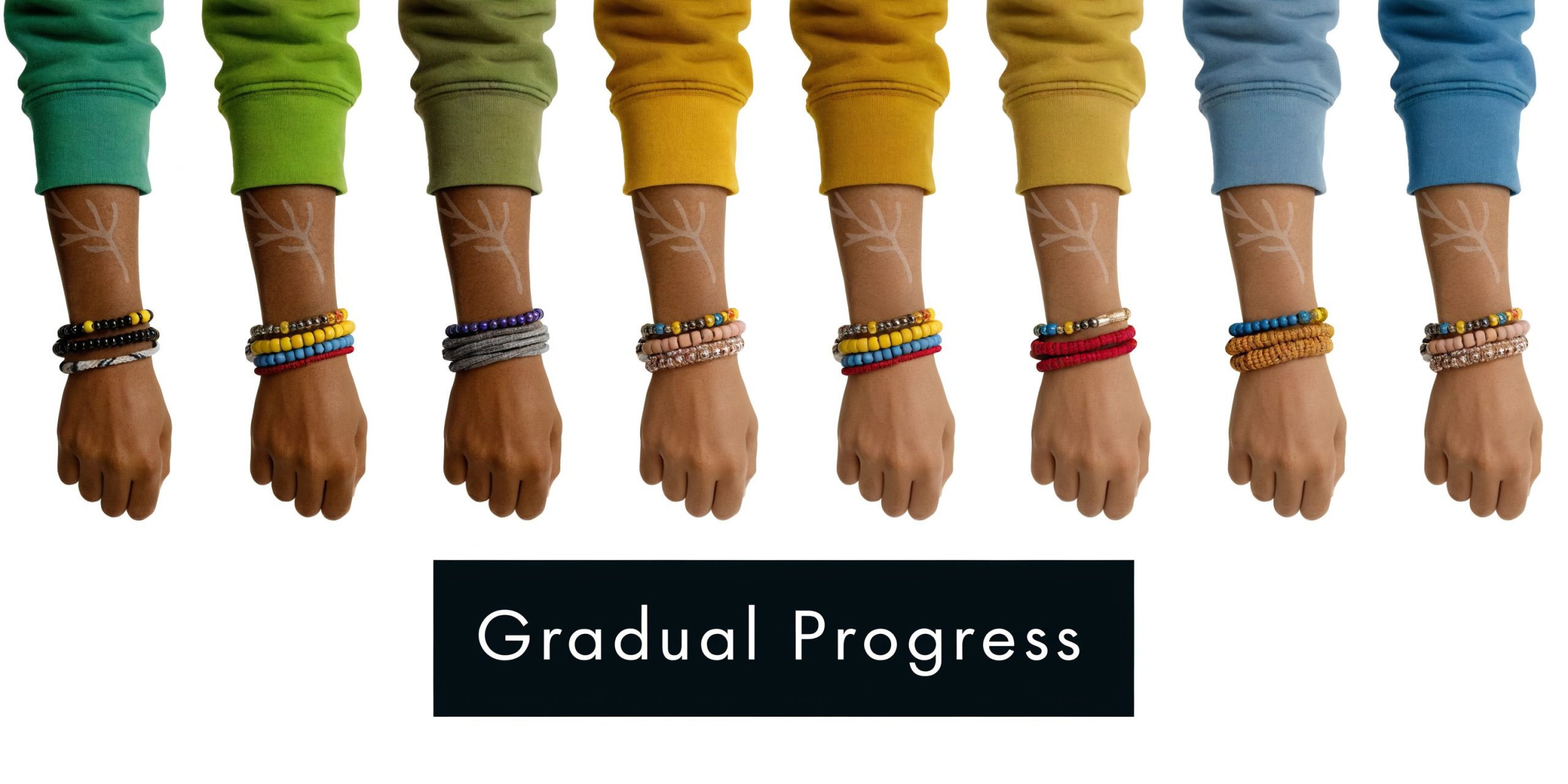
What fading looks like over time
A lot of clients expect the tattoo to lift away in obvious layers. Sometimes it does. More often, the change is subtler.
You might see:
- Softening at the edges before you notice major overall fading
- Patchy lightening where some pigment fragments clear faster than others
- Temporary darkening of the skin even while the ink is breaking down
- A lingering shadow after most visible pigment is gone
For dark skin, patience isn't just emotional advice. It's part of safety. Sessions need enough spacing to allow both immune clearance and pigment recovery.
The timeline is rarely linear
Some sessions seem to produce a clear jump in fading. Others look quiet.
That doesn't always mean the treatment failed. Ink fragmentation can continue between visits as the body clears particles over time. Skin tone can also fluctuate during healing, which can make progress harder to judge in the short term.
Patients should go into treatment expecting a long arc. According to this discussion of tattoo removal timelines and dark skin healing, post-inflammatory hyperpigmentation typically resolves within 6-12 months after the final treatment session with proper aftercare.
One of the most common mistakes is judging the final cosmetic result too early. The skin often needs more time than the tattoo does.
A realistic journey is slower than most social media clips suggest. It is also safer, especially when the goal is clear skin tone, not just lighter ink.
How to Prepare for Treatment and Perfect Your Aftercare
Preparation and aftercare shape the result more than many clients expect. The laser session is only part of the job. What you do before and after affects inflammation, healing comfort, and the chance of pigment issues.
Before your session
Arrive with the skin in its calmest possible state.
Use this checklist:
- Keep the area out of the sun: Tanned or recently irritated skin is harder to treat safely.
- Show up with clean skin: Skip lotions, oils, self-tanner, and fragranced products on the area that day.
- Report anything new: Let your provider know about recent skin irritation, illness, medication changes, or active breakouts on the site.
- Don't pick at the tattoo beforehand: Broken skin changes how treatment should be approached.
Right after treatment
The area needs protection, not friction.
Basic aftercare usually includes keeping the site clean, avoiding heat and rubbing, and following the clinic's instructions for dressings or ointment. If blistering occurs, don't peel the skin roof off. Intact blistered skin protects the tissue underneath while it heals.
Tattoo Removal Aftercare Do's and Don'ts for Dark Skin
| Do | Don't |
|---|---|
| Keep it clean with gentle washing as instructed | Don't scrub the treated area |
| Protect it from sun exposure while healing | Don't tan or expose healing skin to direct sun |
| Let blisters settle naturally unless your provider gives other instructions | Don't pop, peel, or pick at blisters or scabs |
| Use only approved products recommended for the area | Don't experiment with acids, bleaching products, or harsh exfoliants |
| Watch for unusual healing and contact the clinic if needed | Don't assume severe irritation will fix itself |
| Be patient between sessions | Don't push for earlier retreatment just because the ink is still visible |
What dark skin especially needs during healing
Melanin-rich skin doesn't respond well to repeated irritation. That means even well-intentioned home care can backfire if it's too aggressive.
Avoid anything that adds extra inflammation. Friction, scratching, hot water, scented products, and unapproved brightening products can all make tone changes more noticeable.
A client who follows aftercare well gives their skin a better chance to return to baseline between treatments. That creates room for the next session.
Choosing Your Tattoo Removal Provider in Florida
The safest laser in the wrong hands can still produce a poor result. Choosing a provider is less about who promises the fastest fade and more about who can explain the reasoning behind every safety step.
What to ask in consultation
A serious provider should welcome detailed questions.
Bring a checklist like this:
- How often do you treat Fitzpatrick IV, V, and VI skin?
- Which wavelength do you use for black ink on dark skin, and why?
- Do you require a consultation and test patch before full treatment?
- How do you adjust settings if the skin darkens or lightens after a session?
- Can you show healed results on darker skin tones, not just immediate after photos?
If you'd like a structured way to organize those questions before your appointment, this Tattoo Consultation template can help you walk in prepared.
Signs of a safer clinic
The best consultations tend to feel unhurried and specific.
Look for a provider who does these things:
- Explains trade-offs clearly: Especially if your tattoo contains more than black ink
- Talks about skin response, not just machine specs: Technology matters, but settings and judgment matter more
- Documents carefully: Good providers track healing and adjust from session to session
- Sets realistic expectations: They don't treat caution as a sales obstacle
Florida clients often benefit from narrowing the search to clinics that regularly treat diverse skin tones and can discuss both full removal and fading for cover-ups. If you're comparing local options, this guide to the best tattoo removal clinic in Tampa gives a useful framework for evaluating providers.
You are not being difficult when you ask technical questions. You are doing what dark-skin clients should do before anyone points a laser at your skin.
A good consultation should leave you feeling informed, not rushed. If the answers sound vague, rehearsed, or overly confident about every color and every outcome, keep looking.
Frequently Asked Questions About Dark Skin Tattoo Removal
Can dark skin be treated safely?
Yes, with the right assessment, laser choice, and settings.
The reason clinics need a different protocol for dark skin is straightforward. Melanin absorbs laser energy too. If a provider treats your skin as if melanin is not part of the equation, the risk of pigment change goes up. Safe treatment depends on how well the provider separates ink targeting from unnecessary heat in the surrounding skin.
Is black ink easier to remove than colored ink?
Usually, yes.
Black ink responds best because the safest wavelengths for melanin-rich skin also tend to work best on black pigment. Colored inks are more complicated. Some colors require wavelengths that give a provider less margin for error on darker skin, so the plan often has to be more conservative.
Does that mean colorful tattoos can't be treated?
Some can. Some should only be faded. Some are poor candidates for aggressive removal.
That is the trade-off many clients need explained clearly. A safe provider should tell you which colors are realistic to pursue, which ones may need slower progress, and when stopping at partial clearance protects your skin better than chasing a perfect endpoint.
What does it feel like?
Clients usually describe it as fast snaps of heat against the skin.
Location matters. Dense professional ink usually feels stronger than lighter amateur work, and areas over bone tend to be more uncomfortable. Sessions are often short, but comfort support still matters, especially if we are using cautious settings and planning multiple visits.
Will I scar?
Properly performed treatment does not usually cause scarring, but the risk is real if the skin is overtreated or repeatedly irritated during healing.
I pay close attention to any sign that a tattoo already sits in scar tissue. Raised lines, firm texture, or a history of keloids changes the conversation. Those details do not always rule treatment out, but they do affect settings, expectations, and how closely healing needs to be monitored.
How many sessions will I need?
No honest provider can give a meaningful exact number without examining the tattoo and your skin.
Session count depends on ink load, tattoo age, placement, layering, color, and how your skin responds after each visit. On dark skin, the safer plan often means accepting a slower pace so the skin has time to recover and show us how much energy it tolerated.
Why are sessions spaced so far apart?
Because clearance happens in stages, and your skin needs time to show its true response.
The laser shatters pigment during the appointment. Your body then spends weeks clearing part of that fragmented ink. On darker skin, that waiting period also lets melanocytes recover so the next treatment can be based on healed skin, not on temporary inflammation that can hide early pigment change.
If my skin darkens after treatment, should I panic?
No.
Post-inflammatory hyperpigmentation can happen, especially in melanin-rich skin. The main question is whether the color change is fading as healing progresses and whether the treatment plan is being adjusted appropriately. Skin lightening is a separate concern and should be reviewed early, because it can signal that the skin received more energy than it could safely handle.
Can I remove a tattoo for a cover-up instead of full clearance?
Yes, and that is often the smarter goal.
For many dark-skin clients, fading a tattoo enough for a cover-up reduces risk, lowers total cost, and avoids pushing into settings that may not be worth the added clearance. The laser provider and tattoo artist should agree on the target. "Lighter" is too vague. A specific endpoint leads to better decisions.
How is cost determined?
Price is usually based on tattoo size, ink colors, placement, and the complexity of the treatment plan.
A small black tattoo with clear edges is very different from a large, layered piece with multiple colors and scar tissue. Dark skin can also require a more cautious schedule, test spots, and closer follow-up, which affects the overall plan. The right question is not who charges the least. It is who can treat your skin responsibly and explain why their protocol fits your tattoo.
If you're ready to talk through your options with a team focused on safe, personalized treatment, EradiTatt Tattoo Removal can help you evaluate your tattoo, your skin type, and whether full removal or fading makes the most sense. With multiple Florida locations and consultation support, it's a practical next step for anyone seeking tattoo removal on dark skin with a clear plan and realistic expectations.
3 Responses