
You get home, the numbing cream has worn off, and the treated patch starts to crawl. The itch can feel unfairly personal, like your skin has decided to argue with you just when you're trying to be careful. If you've been searching laser tattoo removal itchy, you're probably trying to answer one simple question, is this normal, or is something wrong?
The short answer is that itching after laser tattoo removal is usually part of healing, but the reason it happens can change over time. Early itch often comes from inflammation and barrier repair, while later itch can reflect dryness, scabbing, pigment clearance, or, less commonly, an allergic reaction to tattoo pigment. A calm, stepwise understanding helps you protect the skin, avoid scarring, and know when to call a clinician instead of guessing.
Table of Contents
- That First Itch After Your Laser Session
- How Laser Tattoo Removal Triggers Itching
- A Day-by-Day Healing Timeline You Can Trust
- Aftercare Do's and Don'ts That Calm the Itch
- When Itch Signals Allergy Instead of Healing
- Layered Relief Strategies From Cool Compress to Clinician
- When to Call EradiTatt or a Medical Professional
- Frequently Asked Questions About Itching After Laser Tattoo Removal
That First Itch After Your Laser Session
Three days after a PiQo4 session, the story often starts the same way. The treated skin looked calm at first, then it began to feel warm, tight, and strangely noticeable. By evening, even a light touch from clothing can make the area seem more sensitive than the rest of the body.
That reaction usually points to healing, not failure. After laser tattoo removal, pruritus is a common short-term inflammatory response, and it often appears alongside erythema and edema. Medical references describe that pattern as part of the early recovery process, with itch often showing up within the first day and then settling over the next stretch of healing (NLM clinical reference). For a plain-language explanation of how the laser breaks pigment apart and why the skin reacts this way, see this breakdown of how tattoo removal works.
Practical rule: if the itch stays in one area, behaves like healing, and slowly eases, it usually fits normal recovery.
The sensation can still feel sharp, especially when you keep checking the skin. People often get caught between two wrong assumptions. One is that any itch means infection. The other is that every itch is just dryness, so a warning sign gets brushed aside. Either mistake can lead to scratching, and scratching is one of the fastest ways to turn short-lived irritation into a longer recovery.
The safer way to read it is step by step. Itching is usually layered, not caused by one thing alone, and the early phase can include inflammation, swelling, barrier repair, and the body's cleanup response to fragmented ink. Once that is clear, the sensation is easier to place in context and less alarming.
How Laser Tattoo Removal Triggers Itching
A laser does not erase ink outright. It breaks pigment into smaller fragments that the body can clear, and that process can make the skin feel as if it is under a controlled alarm. The tattoo particles are being shattered, but the surrounding tissue also reacts, and the brain may register that reaction as itch.
The main triggers usually work together. The laser creates heat in the pigment, then the pulse also produces a brief pressure-based disruption that helps fragment the ink. The skin then responds with erythema, edema, and pruritus, the same short-term changes many first-timers notice after treatment. As the surface begins to settle, the itch often changes character, moving from a hot, swollen feeling to a drier, tighter one.
That shift can be confusing if you are expecting one single cause. A helpful way to understand it is to separate the laser event from the healing response. The first is the immediate breaking apart of pigment, and the second is the body's repair work, which can continue after the area looks calmer. For a plain-language overview of the removal process itself, this first-timer guide explains the steps in more detail.
Modern device choice can also affect how itchy the area feels. In a prospective split study comparing picosecond and nanosecond lasers, the picosecond side produced shorter and less pronounced transient adverse reactions, especially blistering, pruritus, and burning sensation, and it caused significantly less pain than the nanosecond side, with P < 0.001 (split study). EradiTatt uses the PiQo4 platform, a picosecond device, so the expected feel is still recovery, but often a less lingering one than older nanosecond systems.
That is why the same tattoo can feel different from one day to the next. Early on, the treated area may look pink, puffy, or slightly raised. Later, the itch may come more from barrier repair and dryness than from the initial heat response, which is why the sensation can fade in layers instead of stopping all at once.
A Day-by-Day Healing Timeline You Can Trust
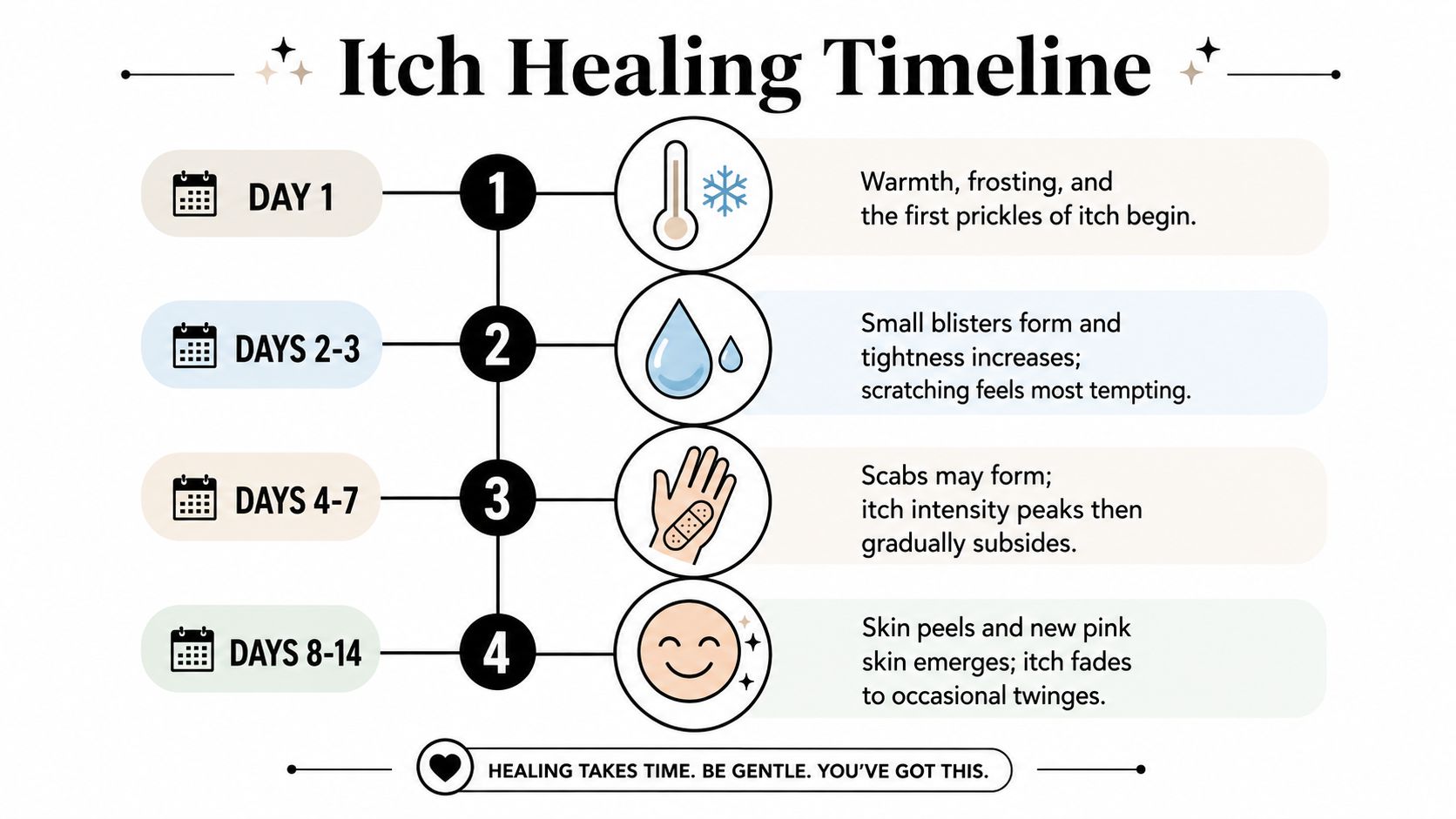
The first day often feels deceptively simple. You leave the session, the area may look frosted or warm, and the first prickles of itch can start once the skin settles. That doesn't mean you should expect the same sensation for the next two weeks, because the pattern usually changes as the skin moves through recovery.
Early phase
During days 2 to 3, small blisters can appear and the skin often feels tighter. That's the moment people most want to scratch, because the combination of swelling and friction makes the area feel irritated with every movement. A little discomfort here can still be routine, but pain that climbs sharply instead of leveling off deserves attention.
By days 4 to 7, scabs and flaking are more likely, and itch often shifts from “hot and swollen” to “dry and annoying.” That change matters. Dryness can make the surface feel worse even when deeper inflammation is already improving.
What to watch: itch that slowly softens is one thing. Itch that becomes broader, more aggressive, or more painful is another.
Later phase
In the weeks after treatment, the ink is still clearing and the skin can keep sending occasional twinges or flashes of itch. That later itch doesn't automatically mean the surface is infected. It can mean the immune system is still carrying out cleanup beneath the skin, which is why some people notice symptoms well beyond the first week.
A structured timeline helps you judge your own healing without guessing. If your recovery mirrors the common arc, you're probably in ordinary post-laser repair. If it diverges, especially with spreading redness, pus, or a reaction that intensifies after it should be easing, that's a different conversation.
For a photo-oriented overview of what skin tends to look like after treatment, this skin-after-removal reference can help you compare appearance with sensation.
Aftercare Do's and Don'ts That Calm the Itch
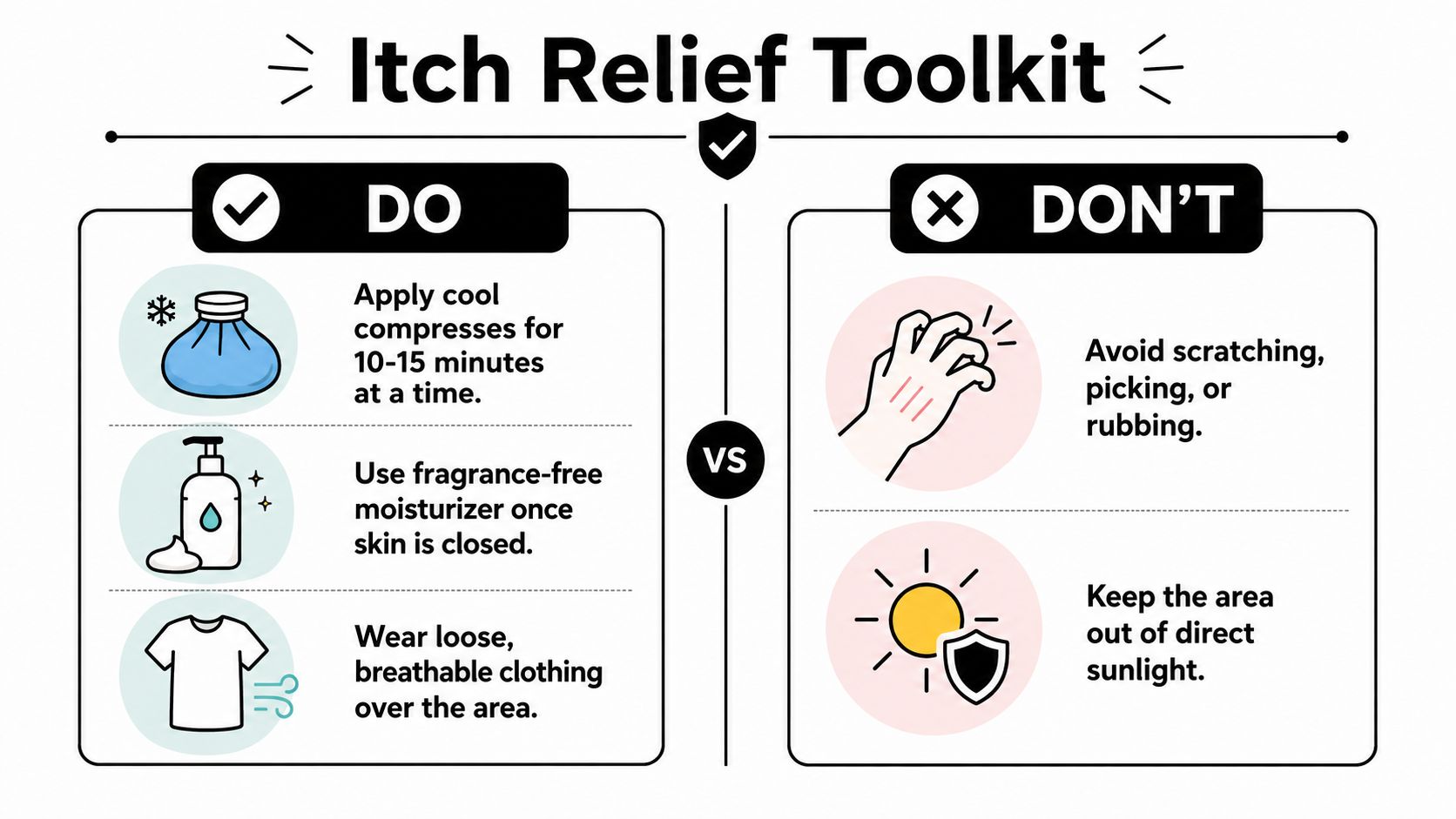
A fresh laser tattoo removal itchy flare often feels worse than it looks, and the first job is to calm the skin without aggravating it. A cool compress for 10 to 15 minutes can reduce that prickly, restless feeling, while loose clothing lowers friction and keeps the area from getting re-irritated with every movement. Once the skin is closed, a fragrance-free moisturizer can help with the dry, tight sensation that often drives the urge to scratch.
Gentle cleansing also helps the itch settle. Lukewarm water and a light touch remove sweat and debris without stripping the skin's barrier, which is especially useful on areas that bend and rub a lot, like an arm or calf. When the surface is already sensitive, even small amounts of repeated rubbing can make the itch feel louder than the underlying healing process really is.
Skip anything that irritates the barrier. Scented oils, essential balms, hot tubs, baths, and sun exposure can all make a healing patch more reactive.
Scratching and picking cause the most trouble because they can reopen fragile skin and turn a healing itch into a longer recovery. BacteriaFAQ.com's MRSA safety advice is a useful reminder that clean hands, clean surfaces, and avoiding skin trauma matter during healing (MRSA prevention guidance). The practical rule is simple, if a product, habit, or activity makes the skin hotter, wetter, or more rubbed, it is usually working against recovery.
The controlled energy used with PiQo4 does not remove the need for aftercare, it just makes the recovery process more predictable than many older approaches. That still leaves your day-to-day choices as the main variable. Scratching is the single habit most likely to leave a lasting mark.
When Itch Signals Allergy Instead of Healing
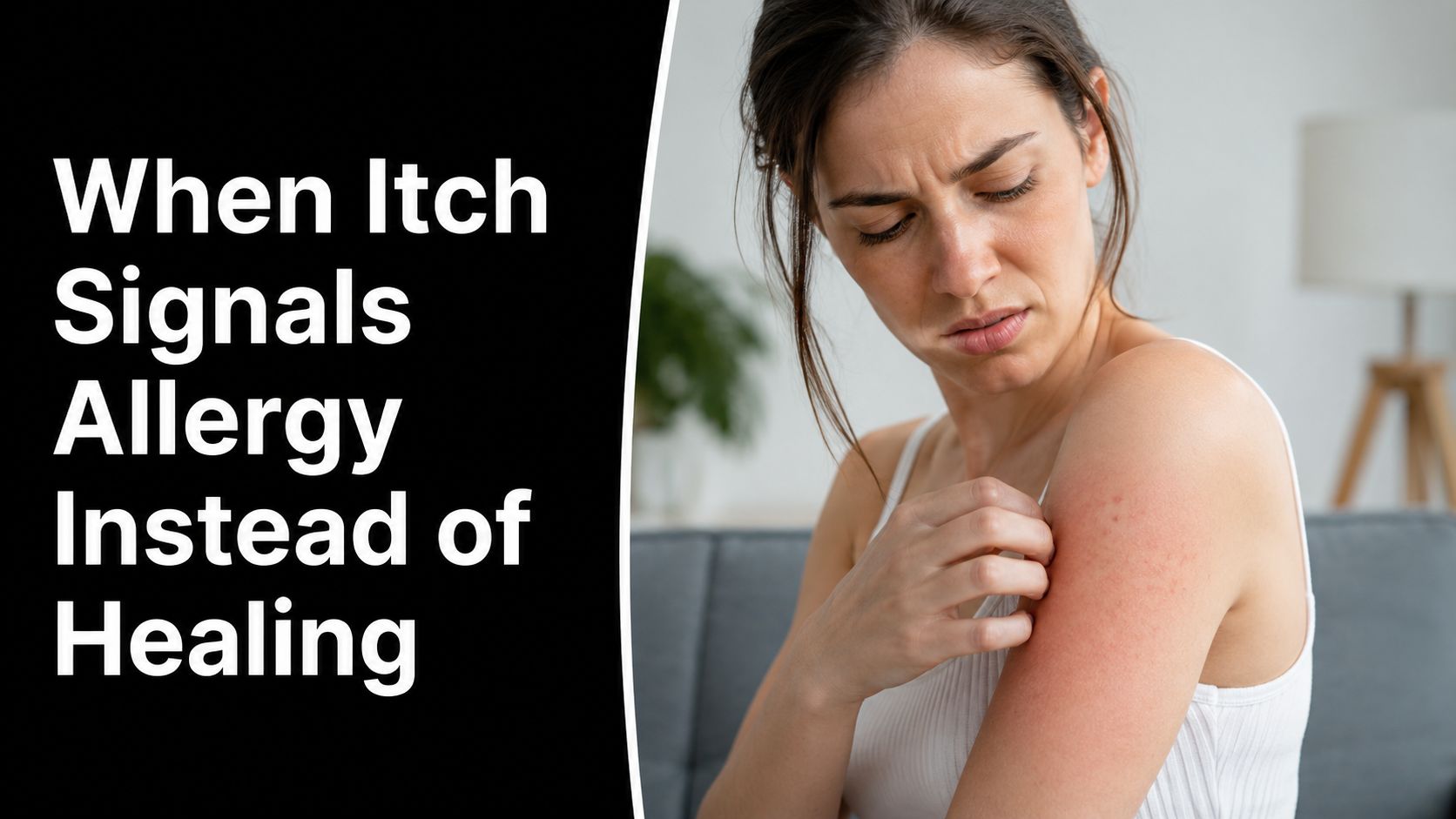
A healing tattoo usually itches in a narrow, local way. The feeling stays close to the treated skin and eases as the surface settles. Allergy behaves more like a flare-up. It can spread beyond the tattoo, climb quickly instead of fading, and bring hives, swelling, redness, or intense burning itch rather than the dry, tight itch that comes with ordinary recovery.
The pigment matters because some colors are more likely to provoke a reaction than others. Red and yellow inks are the inks most often tied to this problem, especially when they contain metal-based ingredients. Once laser energy breaks an allergenic pigment into smaller pieces, those fragments may become easier for the immune system to notice, which can trigger symptoms within minutes to hours in rare immediate reactions. A delayed Type IV hypersensitivity reaction can also appear days or even weeks later, so late-onset itch is not automatically harmless if it keeps getting worse. The tattoo complication review notes that red and yellow pigments can lead to pruritic papules, nodules, or scaly plaques, sometimes months after treatment (tattoo complication review).
A concrete example helps. Titanium dioxide has been linked with a documented diffuse urticarial reaction after laser tattoo removal, which shows that a pigment reaction can go beyond simple surface irritation. In rare cases, the reaction can move from itch to urticaria and even anaphylaxis. If you are looking for a calmer, skin-soothing approach for other itchy areas, the principles behind natural relief for vulvar itching can help illustrate how careful barrier support matters, even though tattoo reactions need their own medical judgment (allergic tattoo reaction review).
The pattern is the part to watch. Routine healing itch stays near the treated skin and slowly settles. Allergy-driven itch may cross the tattoo border, form welts, or feel more intense after the first week instead of less intense. Widespread itching is not the same as a dry patch, and a reaction that keeps spreading should be treated as something more than ordinary recovery.
Layered Relief Strategies From Cool Compress to Clinician
Start with the lowest-intensity tools first. Cooling, fragrance-free moisturizing, and loose clothing address the part of itch that comes from heat, dryness, and friction. If the area is already closed, a plain moisturizer can soften the tightness without adding extra chemical irritation.
If the itch still keeps you awake, an over-the-counter antihistamine may help when the sensation is histamine-driven. People commonly ask about cetirizine or loratadine at night, but those should be discussed with a clinician or pharmacist if you take other medications or have conditions that make sedation or interactions a concern. Antihistamines can reduce histamine-based itch, but they won't do much for a patch that's mainly dry or mechanically irritated.
For more stubborn reactions, a clinician may recommend a topical steroid or decide the area needs a closer look for allergy or pigment-driven inflammation. That's where the conversation changes from comfort care to medical evaluation. If the itching is still present weeks later but is steadily fading, that can still fit the broader immune-clearance process.
People often worry that persistent itch means something is wrong. Sometimes it does. Sometimes the body is just still clearing fragmented pigment. The safest move is to let a clinician sort out which story the skin is telling.
If you want a separate perspective on itch relief in sensitive skin, this guide on natural relief for vulvar itching shows how gentle, low-irritation thinking can be applied to skin that's already reactive.
When to Call EradiTatt or a Medical Professional
Call the clinic the same day if the skin is changing in a way that doesn't fit ordinary healing. Spreading redness, pus, fever, intense pain, hives beyond the treated area, or itch that wakes you at night and doesn't respond to cooling and moisturizer all deserve a review. Those signs are more concerning than simple post-treatment dryness.
A PiQo4-trained clinician can look at the area, compare it with the expected healing pattern, and decide whether the next session should be adjusted. EradiTatt's Florida locations are Orlando, Bradenton/Sarasota, St. Petersburg, Palm Harbor, and Tampa, and the central phone line is 844-ERADI-TATT. A pre-booked consultation is often easier than waiting until you're already worried.
If the skin is spreading, draining, or feeling worse instead of calmer, don't try to self-diagnose for long.
For a focused checklist on infection warning signs after treatment, this infection guide gives a practical point of comparison. If you're unsure whether a symptom is infection, allergy, or routine recovery, that uncertainty alone is reason enough to ask for a professional look.
For families or patients who want an additional way to triage questions quickly, a resource on 24/7 medical inquiry automation can be useful as a starting point, but it should never replace direct care when warning signs are present.
Frequently Asked Questions About Itching After Laser Tattoo Removal
How long does itching usually last after a session?
Routine itching often starts after the skin begins reacting to the treatment and may show up within the first day. For many people, it gradually settles over the next week or two as the area dries, peels, and calms. If the itch is easing a little each day, that usually fits ordinary healing. If it keeps getting stronger instead of quieter, the pattern deserves a closer look.
Is it safe to take antihistamines or use hydrocortisone?
Antihistamines may help when the itch is being driven by a histamine response, which is why they are often used for nighttime comfort. Hydrocortisone, or other prescription steroid creams, should be used only with clinician guidance, especially if the skin is blistered, open, or may be reacting as an allergy. Dry, tight skin often responds better to a bland moisturizer than to either of those options.
Can itch come back weeks or months later, and what does that mean?
Yes, it can return later in the healing process. That may happen while pigment is still being cleared, or it may reflect a delayed sensitivity reaction, especially if a pigment color is more reactive for that person. A simple healing itch usually feels local and fades. Itch that returns with a rash, raised welts, or a spreading edge points to something beyond routine recovery.
Will scratching really scar, or is that overstated?
It is a real concern. Scratching can reopen skin that is still repairing itself, and that can raise the risk of scarring or infection. WebMD guidance warns against it for that reason. If the urge is strong, use cooling and moisturizer first, then contact a clinician if the itch still will not settle.
If these answers sound close to what you are feeling, schedule a consultation at the nearest EradiTatt clinic so someone can examine the area before the next session.