
You've just left a tattoo appointment, or perhaps a laser removal session, and the advice was brief: keep the area clean, don't pick, and let it heal. At home, you're looking at several cleansers, creams, bandages, and sunscreens, wondering what belongs on the skin today and what should wait.
A tattoo aftercare kit works best when it follows the skin's changing needs. The right cleanser, dressing, moisturizer, and sun protection matter, but timing matters just as much. This phase-based approach helps you use less product, avoid common irritants, and recognize when normal peeling has crossed into a problem.
Table of Contents
- What a Tattoo Aftercare Kit Actually Does
- Core Products Every Kit Needs
- Tattoo-Specific vs General Skincare Products
- Matching Products to Each Healing Stage
- Your Daily Aftercare Rhythm
- Common Mistakes That Slow Healing
- Building or Buying Your Kit
What a Tattoo Aftercare Kit Actually Does
A client once left our clinic after laser treatment with red, swollen skin and one understandable question: “What do I do tonight?” The instruction to “keep it clean” wasn't wrong, but it left too much room for improvisation. Freshly treated skin needs a simple plan, not a crowded bathroom shelf.
Tattooing and laser removal create different types of skin trauma, but both can leave the barrier vulnerable. During tattoo healing, the skin needs gentle washing, controlled moisture, and protection from friction and sunlight. After laser removal, the area may also blister or swell, so the treating clinician's instructions take priority over any general kit.
A useful kit assigns one job to each item:
- Cleanser removes plasma, residue, and everyday contamination without aggressive scrubbing.
- Ointment or balm limits cracking during the earliest stage when a thin protective film is appropriate.
- Lighter moisturizer supports comfort as peeling and tightness develop.
- Sterile dressings reduce contact with clothing and bedding when coverage is recommended.
- Sunscreen protects healed skin and pigment from ultraviolet exposure.
Medical guidance consistently emphasizes gentle washing and moisturizing. Cleveland Clinic's tattoo aftercare guidance recommends washing twice daily with mild, fragrance-free antibacterial soap and warm water, moisturizing twice daily, and avoiding tight clothing, scrubbing, and soaking until the tattoo has healed.
Practical rule: Every product should solve a specific problem without creating another one. If it stings, smells strongly, feels excessively heavy, or encourages you to touch the area repeatedly, it probably doesn't belong in the early routine.
Random products fail when they target the wrong phase. Fragrance, alcohol, exfoliating acids, and thick layers of occlusive product can irritate compromised skin or trap excess moisture. The same principle applies to intimate aftercare, where gentle care and avoiding unnecessary irritants are also central, as discussed in this resource on practicing safe sex and protecting your pH.
For product-specific guidance, review this practical explanation of tattoo aftercare ointment. A coordinated kit reduces guesswork, limits cross-contamination, and keeps expectations realistic. It won't stop every itch or prevent every period of peeling, but it can make the recovery process more consistent.
Core Products Every Kit Needs
A reliable kit doesn't need a long ingredient list. It needs a small number of products that match the healing task in front of you.
Start with gentle cleansing
Choose a fragrance-free, mild cleanser that rinses clean and doesn't leave the skin tight. Cleveland Clinic recommends washing a fresh tattoo twice daily with mild, fragrance-free antibacterial soap and warm water, while Mayo Clinic's tattoo guidance also advises gentle washing, patting dry, and avoiding rubbing.
Use clean hands, lukewarm water, and light fingertip pressure. Don't use a loofah, exfoliating glove, washcloth, or scrub. A cleanser marketed specifically for tattoos may be useful if its label is transparent and free from unnecessary fragrance, but the label matters more than the tattoo graphic on the packaging.
Use early protection sparingly
For the earliest stage, keep a healing ointment or balm available. The purpose is to maintain a comfortable, flexible surface and reduce cracking, not to create a thick waterproof coating. Clinical aftercare guidance recommends a thin film of non-perfumed emollient or tattoo ointment, with overuse discouraged because excessive petroleum can interfere with healing. See the clinical aftercare instructions reviewed in this guidance for the moist-but-not-wet principle.
As the skin begins peeling, move toward a light, fragrance-free moisturizer. Ingredients such as glycerin, dimethicone, ceramides, or hyaluronic acid may support hydration, but the formula should be non-comedogenic and comfortable on recently healed skin. A useful overview of what a barrier repair moisturizer is can help you understand why lighter barrier-supporting formulas become more appropriate later.
Add clean handling supplies
Keep sterile non-stick gauze and breathable medical tape available if your artist or clinician recommends dressing changes. Don't reuse a soiled covering, and don't apply adhesive directly over irritated skin unless the treating professional has approved it.
Also include:
- Disposable paper towels, or a freshly laundered, lint-free towel for patting dry.
- A clean pillowcase, especially if the tattoo may contact bedding.
- Loose, breathable clothing that won't rub against the area.
- Mineral sunscreen, broad-spectrum SPF 30 or higher, for healed skin that tolerates sun protection.
The American Academy of Dermatology recommends broad-spectrum sunscreen with SPF 30 or more, applied before sun exposure and reapplied regularly, while warning that tanning beds and sunlamps can fade tattoo ink and harm skin. Don't place sunscreen on an open, blistered, or actively peeling area unless your clinician specifically directs you to do so.
The covering question depends on the dressing and the tattoo's condition. Use your artist's or clinician's timing, and consult this guide on how long to keep a tattoo covered when you need to think through the practical details.
Tattoo-Specific vs General Skincare Products
The “tattoo-specific” label can be useful, but it isn't a medical guarantee. During the open-wound phase, a carefully formulated tattoo cleanser or balm may justify its price when it avoids fragrance, dyes, and known sensitizers. A regular body wash containing parfum or a harsh detergent is a poor choice because it was already in your shower.
Once the surface has closed and the skin is tolerating moisturizer, the gap often narrows. A trusted, unscented drugstore moisturizer can provide the same basic hydration functions as a tattoo-branded lotion when both use familiar barrier-supporting ingredients. Mineral sunscreen follows the same logic. A broad-spectrum SPF 30 or higher formula using zinc oxide or titanium dioxide doesn't become more protective because it appears in a tattoo aisle.
Compare the decision by phase
| Healing Phase | Tattoo-Specific Advantage | Drugstore Alternative Acceptable? |
|---|---|---|
| Early cleansing and dressing | May offer a deliberately simple, low-irritant formula and packaging suited to fresh skin | Yes, if it's mild, fragrance-free, rinses clean, and follows professional guidance |
| Early ointment use | Can provide a thin, spreadable protective layer without added scent | Yes, if the formula is non-perfumed and used sparingly |
| Peeling and barrier recovery | May be easier to match to tightness, flaking, or sensitivity | Yes, a fragrance-free, non-comedogenic moisturizer is generally practical |
| Long-term maintenance | Often emphasizes tattoo care in its marketing and texture | Yes, ordinary moisturizer and sun protection can work well |
| Sun protection after healing | May be packaged for tattooed skin or cosmetic finish | Yes, broad-spectrum SPF 30 or higher is the meaningful benchmark |
Some people need more specialized medical guidance because they have eczema, contact dermatitis, or a history of reacting to skincare. That's different from automatically needing an expensive product. A plain-language resource on prescription-strength skincare can help distinguish everyday skincare from treatment that requires professional oversight.
The honest buying rule is simple: spend attention, not necessarily more money, on the first phase. Read the ingredient list, avoid fragrance and unnecessary antibacterial ingredients, and choose a later moisturizer based on tolerance, texture, and consistency.
Matching Products to Each Healing Stage
A phase-based kit prevents the most common error, applying a product because you own it rather than because the skin needs it. The schedule below applies to general tattoo aftercare. After laser removal, follow the treating clinic's instructions, especially if blisters, significant swelling, or open areas develop.
Days 1 through 3
The first window is about protection and restraint. The surface may be tender, warm, swollen, or weeping small amounts of fluid. Follow the artist's dressing instructions, then use a mild cleanser with lukewarm water when it's time to wash.
Pat dry with a clean paper towel and apply only a thin film of non-perfumed ointment or a suitable tattoo balm if recommended. Don't layer moisturizer, serum, sunscreen, and ointment together. Heavy creams, exfoliating products, alcohol-based toners, and sunscreen should stay out of this early routine.
Your aim isn't to make the tattoo glossy or wet. It's to prevent uncomfortable dryness while allowing heat and excess fluid to escape.
Days 4 through 14
Peeling, itching, and tightness often become more noticeable as new surface skin forms. Transition from ointment to a light, fragrance-free moisturizer when the skin begins to crust or flake, unless your artist or clinician has given different directions.
Don't pull loose flakes or scratch through itching. Keep clothing loose, and avoid soaking in pools, hot tubs, lakes, or baths until the area has recovered. Silicone gel patches may be considered for a raised, fully closed line, but they don't belong over open, wet, or blistered skin.
Week 3 onward
Once the surface is closed and no longer tender or peeling, the focus shifts to maintenance. Use broad-spectrum sunscreen on exposed tattooed skin, and continue with a moisturizer that doesn't cause bumps or irritation. A hydrating serum containing hyaluronic acid or niacinamide may fit into the routine if your skin already tolerates it, but it isn't essential.
Avoid persistent friction from straps, tight waistbands, or rough fabrics. For a useful explanation of whether tattoos fade during healing, remember that a temporarily dull or milky appearance isn't the same as immediate pigment failure. Don't judge the final result while the deeper tissue is still settling.
Your Daily Aftercare Rhythm
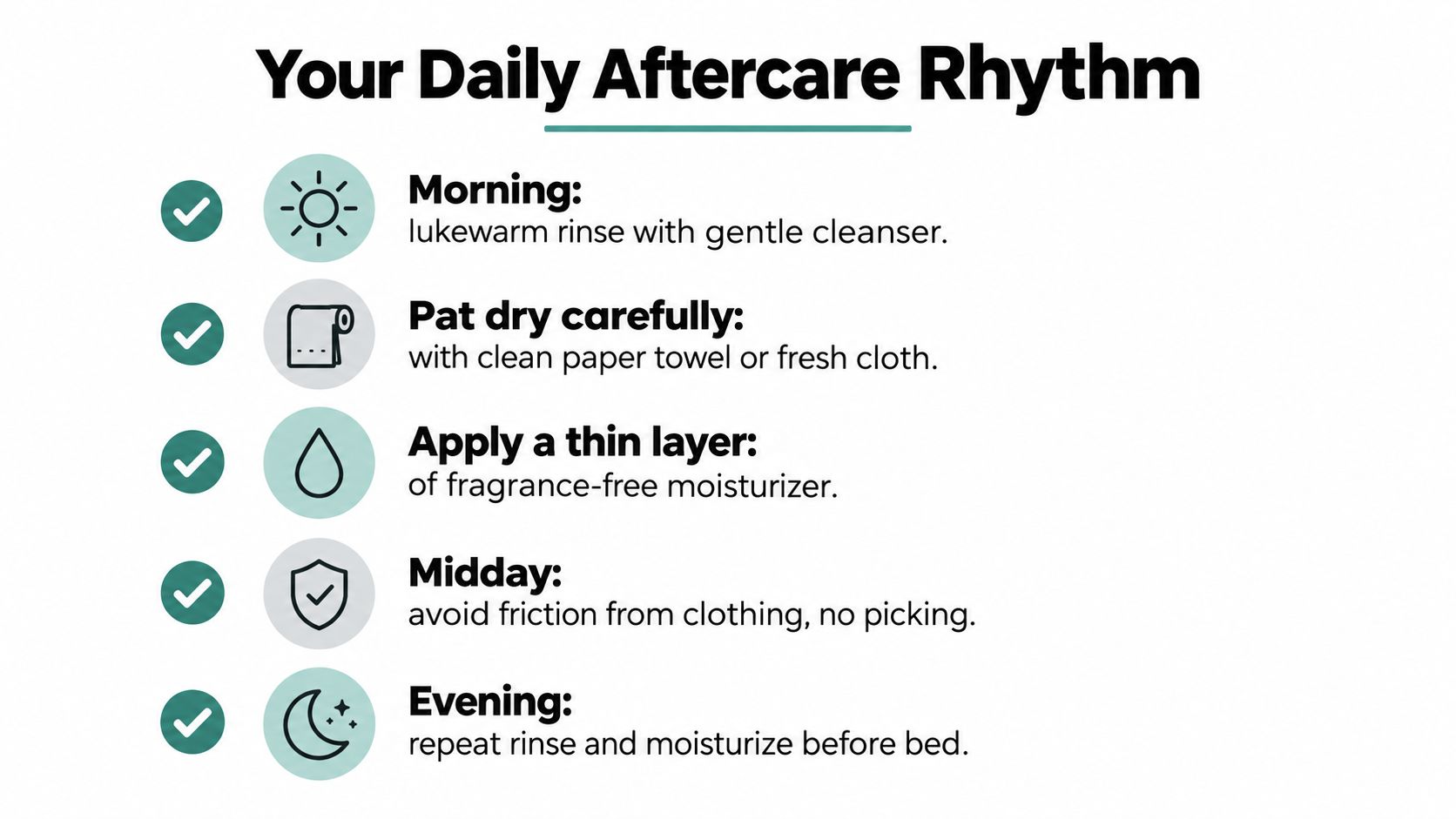
Recovery becomes easier when the routine is boring and repeatable. In the morning, wash with lukewarm water and a gentle cleanser, pat the area dry, and wait until the surface is fully dry before applying a thin moisturizer layer.
If the tattoo is healed and exposed, apply broad-spectrum sunscreen before going outdoors. The American Academy of Dermatology's sun-safety guidance recommends applying sunscreen before exposure and reapplying at least every two hours, with additional application after swimming or sweating.
A practical morning pattern
- Cleanse gently: Use lukewarm water and a fragrance-free cleanser. Don't scrub.
- Pat dry: Use a clean paper towel or fresh, lint-free cloth.
- Moisturize lightly: Apply a thin layer after the area is fully dry.
- Protect healed skin: Use sunscreen on exposed tattooed skin once the surface has closed.
- Reduce contact: Keep straps, tight clothing, and dirty surfaces away from the area.
In the evening, repeat the cleansing and drying steps. Replace sunscreen with a light moisturizer, or use a richer balm only if the skin remains tight and the product is appropriate for that stage. Give each layer a short interval to settle instead of smearing several products together.
As healing becomes established, many people can reduce cleansing to once daily while continuing moisturizer according to dryness and comfort. The same rhythm can help between laser removal sessions, although any dressing, blister, or wound-care direction from the treating clinic overrides a general routine.
Common Mistakes That Slow Healing
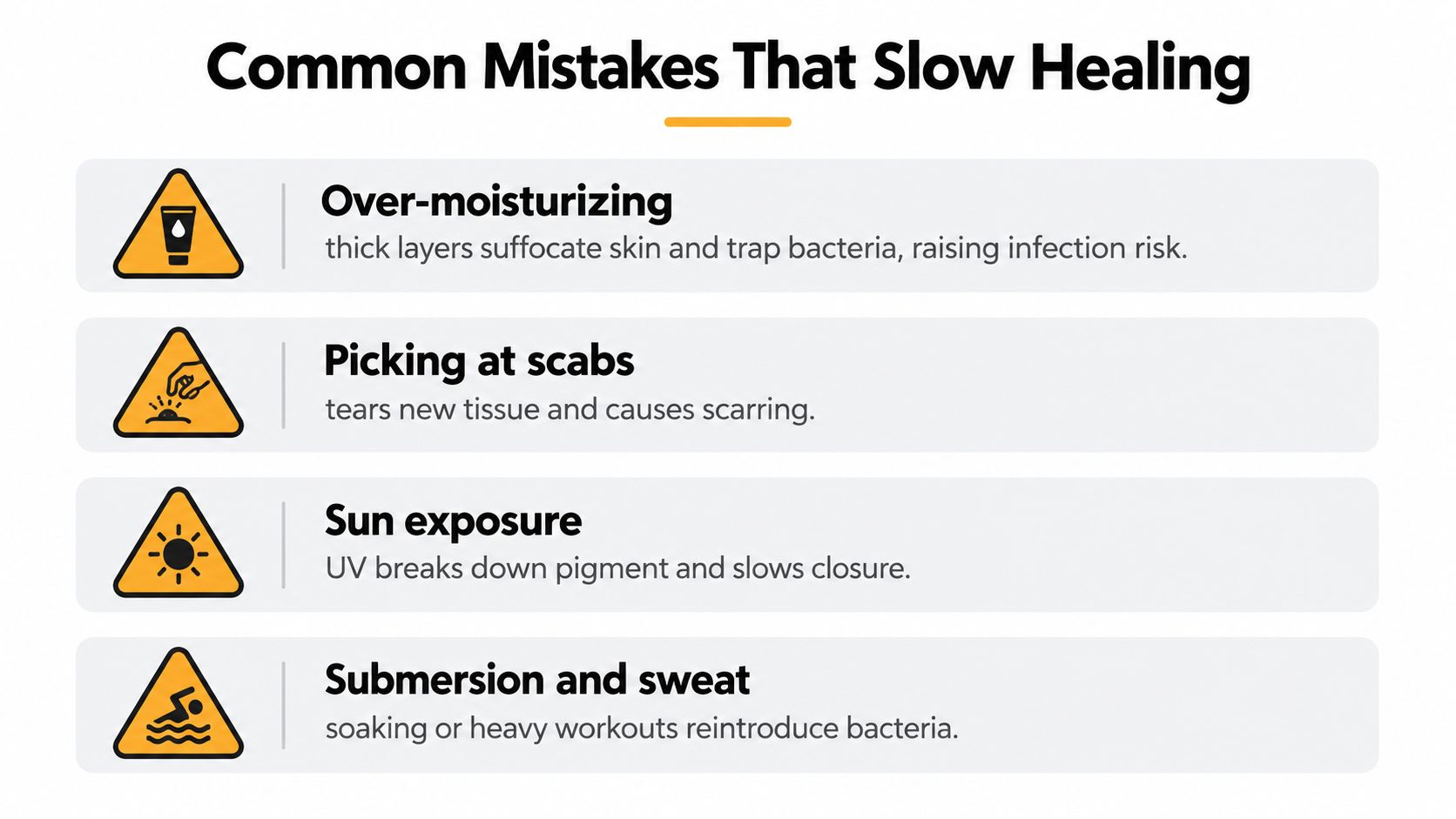
A thicker layer doesn't mean better protection. Over-moisturizing can leave the skin wet, trap heat and bacteria, and contribute to clogged follicles or irritated bumps. The practical correction is to use less product and apply it more evenly, rather than responding to every feeling of tightness with another heavy coating.
Picking is another mistake that feels productive because it removes flakes. It also pulls away tissue that hasn't finished forming. Peeling skin should detach on its own, and scabs should be left alone, even when the edge looks ready to lift.
The habits that cause avoidable trouble
- Skipping sun protection: Ultraviolet exposure can fade ink and irritate recovering skin. The AAD recommends broad-spectrum SPF 30 or higher for tattooed skin, while Cleveland Clinic advises avoiding sun during healing.
- Using scented lotion: Fragrance can provoke irritation or contact dermatitis when the barrier is vulnerable. Choose fragrance-free rather than relying on a pleasant smell as a sign of cleanliness.
- Applying alcohol or acids: Alcohol-based toners, scrubs, AHAs, retinoids, and similar actives can disrupt fragile new skin. Save them until the area has fully recovered and your clinician agrees.
- Covering with friction: Tight waistbands, backpack straps, and compression clothing can rub the surface and worsen irritation. Loose, breathable fabric is the safer option.
- Soaking too early: Pools, hot tubs, baths, rivers, and lakes expose healing skin to prolonged moisture and contamination. Mayo Clinic specifically advises avoiding these environments while a tattoo heals.
The CDC's sterile ink and water guidance establishes the broader hygiene principle behind tattoo safety. Aftercare can't correct unsafe tattooing, but clean hands, clean supplies, and sensible dressing practices reduce avoidable exposure after the appointment.
Keep the rule set short: thin layers, clean hands, breathable clothing, no picking, and patience. If redness spreads, pain becomes severe, swelling escalates, the area feels increasingly hot, or discharge appears, contact a healthcare professional rather than adding another product.
Building or Buying Your Kit
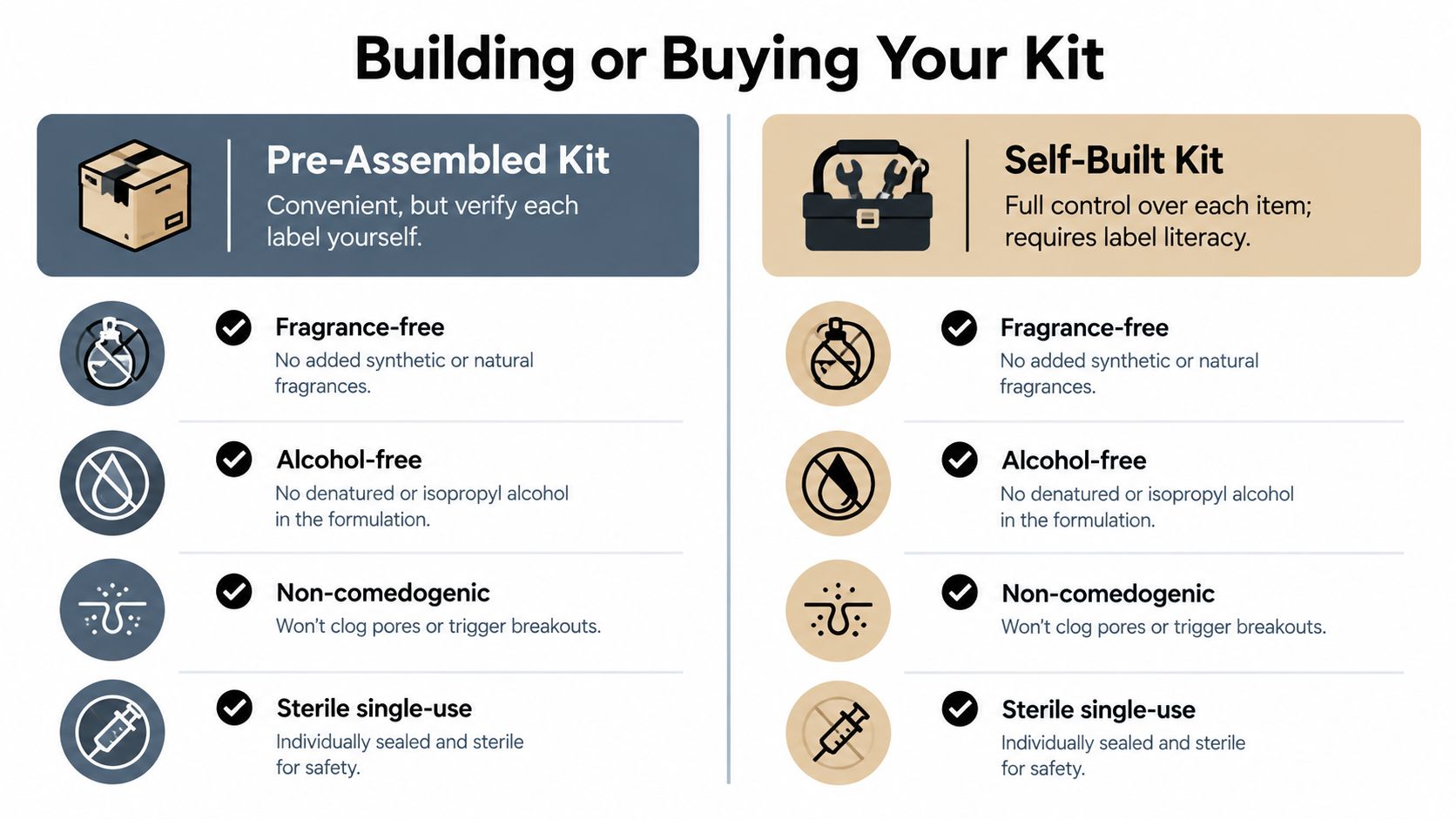
A pre-assembled kit saves time, but it doesn't remove the need to read labels. Treat the box as a starting point, not proof that every included product suits your skin.
What to check before opening the package
Look for:
- Fragrance-free wording: Avoid products that list parfum, fragrance, or essential oils when the area is freshly treated.
- Hypoallergenic positioning: This can be helpful for sensitive users, but it isn't a guarantee that you won't react.
- Non-comedogenic formulation: Prefer this for larger areas or skin that tends to develop clogged follicles.
- Ingredient transparency: You should be able to identify the cleanser, moisturizer, ointment, and any preservatives.
- Sterile single-use supplies: Use sterile gauze or dressings when coverage is part of the professional plan.
A self-built kit offers more control. Someone with lanolin sensitivity, eczema, fragrance reactions, or previous contact dermatitis may be better served by choosing each item separately. A time-poor client may prefer a pre-assembled option, provided the contents are sealed, clearly labeled, and divided logically by use.
Where quality actually changes
Packaging matters when it limits contamination. A tube can be easier to keep clean than an open jar, while a pump can reduce repeated finger contact. Neither format automatically makes a formula safer, so inspect the seal, expiration date, storage instructions, and texture before applying anything.
The product doesn't need to be expensive. It needs to be appropriate for the phase, tolerated by your skin, and used in the correct amount. Tattoo-specific branding may offer convenience and clearer sequencing, but a carefully selected general cleanser or moisturizer can perform the same practical role.
Before putting the kit away, confirm that:
- Every item is sealed and within its expiration date.
- The ingredient list is clear and free from avoidable irritants.
- The products match your allergies and skin history.
- Dressings are clean, non-stick, and suitable for the recommended coverage.
- Sunscreen is reserved for healed skin unless a professional tells you otherwise.

EradiTatt Tattoo Removal provides a full aftercare kit with laser tattoo removal sessions, alongside post-treatment guidance suited to the treated area. If you're considering removal, fading for a cover-up, or help with recovery between sessions, visit EradiTatt Tattoo Removal to review treatment options and arrange a consultation. Their clinics serve clients across Florida, including Orlando, Bradenton/Sarasota, St. Petersburg, Palm Harbor, and Tampa.