
Initial bandages are typically removed within 2 to 10 hours, while specialized protective films may remain on for 3 to 7 days. The right answer depends less on the tattoo itself than on the material covering it, how your skin is reacting, and the instructions provided by your tattoo professional.
You may be standing outside the studio right now, looking at a fresh tattoo beneath plastic or transparent film and wondering whether to sleep with it covered, wash it immediately, or leave it alone until morning. That uncertainty is understandable. A new tattoo is a controlled skin injury, and the covering has a temporary job: reduce friction and contamination while the surface begins responding to the needle work.
The immune system is already active beneath the dressing. It's managing inflammation, sealing damaged tissue, and interacting with the microscopic ink particles deposited in the dermis. Keeping the area covered forever doesn't improve that process. The useful question is not “how long should you keep a tattoo covered,” but which covering are you wearing, what is happening beneath it, and when does protection become an obstacle?
Table of Contents
- Understanding Your Initial Bandage Timeline
- Navigating the First Week of Healing
- Deep Healing and Immune Clearance
- Protecting Your Ink During Daily Activities
- When to Re-cover or Seek Professional Care
- Summary of Best Practices for Coverage
Understanding Your Initial Bandage Timeline
The first decision is to identify the dressing. Traditional cling wrap and specialized adhesive films follow different schedules, and confusing them is one of the most common causes of poor aftercare.
Traditional plastic wrap is a short-term barrier. Public aftercare guidance commonly places its useful window at 2 to 10 hours, with some recommendations suggesting around 3 hours or more, depending on the tattoo's size and other circumstances (Healthline's tattoo aftercare guidance). It protects the fresh wound while you travel home, change clothes, and settle into a clean environment. It isn't designed to remain sealed against the skin for several days.
A second-skin film is different. These transparent adhesive products are designed to stay in place while the skin begins closing, and independent aftercare guidance commonly gives them a wear period of 3 to 5 days, with some products advising a maximum of 7 days (this protective-film aftercare timeline). A clinical-style NHS leaflet also describes dressings remaining for 24 hours or several days when the covering is comfortable and isn't leaking fluid (NHS medical tattooing guidance).
Make the material-based decision
Use this simple sequence as soon as you leave the studio:
- Look at the surface. Loose, ordinary plastic wrap held by tape is generally a short-term dressing. A thin, transparent film with an adhesive border is likely a specialized product.
- Follow the artist's written timing. The artist knows which product was applied and how the tattoo was prepared. That instruction should take priority over generic online advice.
- Inspect the seal. A specialized film should remain comfortable and intact. If it leaks, lifts, causes significant irritation, or collects fluid beyond the protected area, contact the artist for direction.
- Plan the first wash. With standard wrap, that usually happens after you get home and within the initial few hours. With a suitable adhesive film, washing may wait until the recommended removal time.
Practical rule: A longer covering period is only appropriate when the material is designed for longer wear.
Leaving ordinary plastic wrap in place beyond its useful window can trap blood, plasma, and excess ink against the wound. That warm, moist environment can increase irritation and contamination risk, while delayed cleaning may interfere with the normal transition from an oozing surface to routine breathable aftercare. The issue isn't that every covered tattoo will develop a problem. The issue is that the wrong material removes your ability to inspect and clean the skin when it needs it.
Before removing any dressing, wash your hands. Peel slowly rather than ripping it away, and use lukewarm water to loosen stubborn adhesive. Afterward, gently wash the tattoo with clean hands and a mild cleanser, rinse thoroughly, and pat it dry with a clean disposable towel. Don't automatically re-wrap it. Some public-health guidance discourages re-bandaging after the first removal, because the tattoo generally needs a clean, breathable environment rather than indefinite occlusion.
If you're still choosing a studio or preparing for your first appointment, reviewing practical preparation advice such as these things to know before getting a tattoo can help you ask about the exact dressing before you leave.
Navigating the First Week of Healing
The first week often looks more dramatic than it feels. A tattoo can appear red, swollen, glossy, and damp at first, then become tight, itchy, flaky, or lightly scabbed as the surface repairs itself. Those changes are expected only when they gradually settle rather than spread or intensify.
The first few days
On the first day, the tattooed skin behaves like a wound. Mild soreness, localized redness, swelling, and fluid made up of plasma, blood, and excess ink can appear beneath the initial dressing or on clean tissue after removal. Wash gently with lukewarm water and clean hands, then pat dry. A thin layer of the aftercare ointment recommended by your artist can reduce uncomfortable dryness, but heavy application is counterproductive because it leaves the surface greasy and overly occluded.
By the next day, the tattoo may feel warm or tight. That sensation doesn't automatically indicate infection. The important pattern is whether the discomfort is becoming more manageable and the redness remains limited to the tattooed area. Avoid scratching, rubbing, exfoliating tools, sponges, and rough towels. Fresh sheets and loose clothing also reduce accidental contact while you sleep.
A little irritation can be part of healing. Escalating pain, spreading redness, or worsening heat deserves professional attention.
Between the early and middle part of the week, the surface often begins to dry and peel. The tattoo may look duller because flakes temporarily obscure the ink. That doesn't mean the pigment has disappeared. Let loose skin shed naturally, and don't pull at scabs, since mechanical disturbance can reopen fragile tissue.
The remainder of the week
As the skin tightens and itching becomes more noticeable, shift toward a light, fragrance-free moisturizer when the surface no longer needs the heavier ointment routine. Apply enough to relieve dryness, not enough to create a glossy coating. If clothing sticks, don't pull it away dry. Moisten the fabric with lukewarm water and separate it carefully.
Keep the tattoo out of submerged water during this phase. Medical aftercare guidance varies, but one NHS sheet advises keeping the area dry for 7 days and avoiding showering, swimming, saunas, and hot tubs (NHS medical tattooing aftercare). Another public-health recommendation advises avoiding submersion for 3 to 6 weeks, apart from washing (public-health water-exposure guidance). Because those recommendations differ, use your artist's instructions and the more cautious option when the tattoo remains open, scabbed, or sensitive.
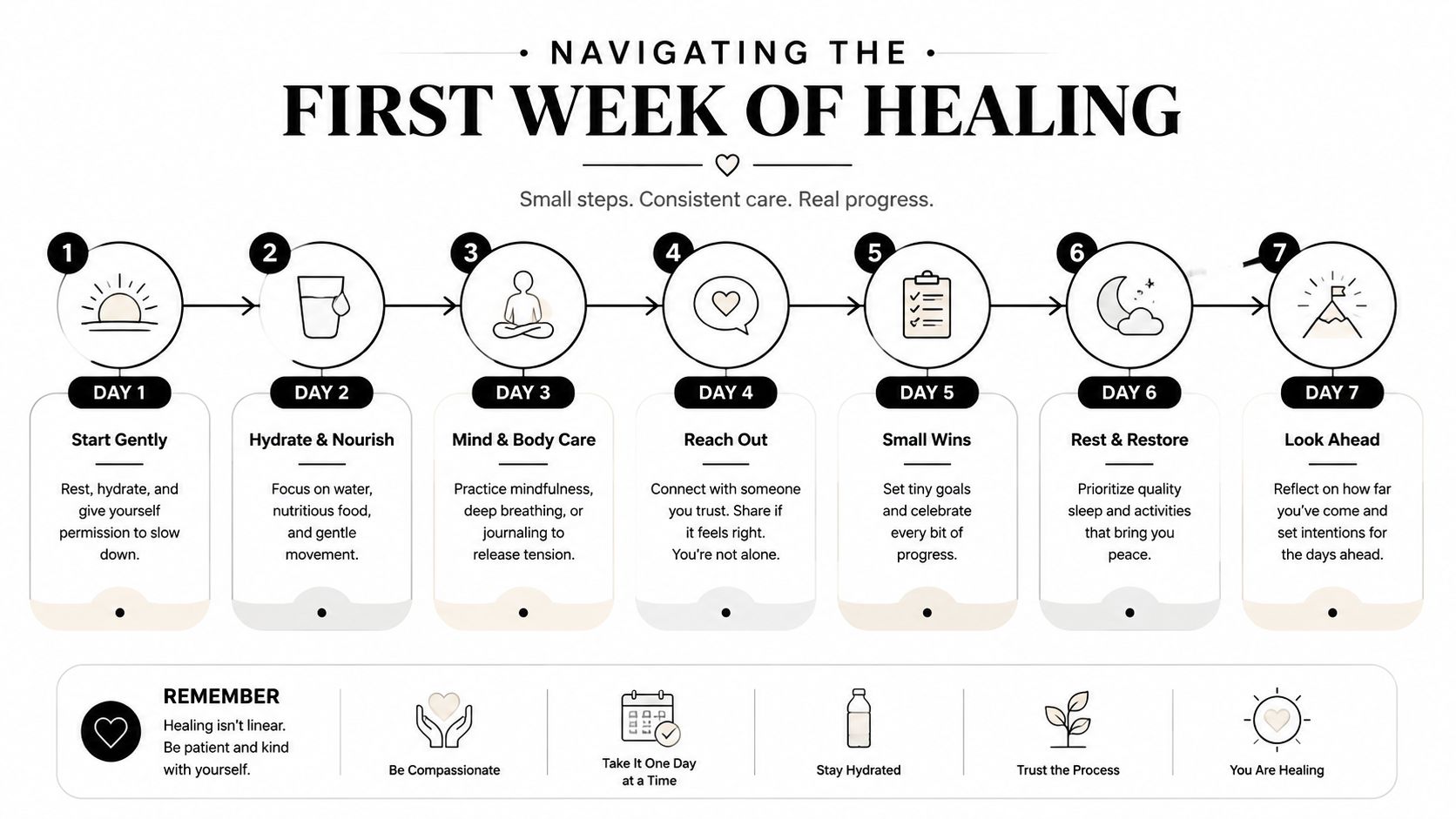
Quick showers are safer than baths, pools, or hot tubs. Direct sunlight should also be avoided while the skin is healing. Cover the area with loose clothing rather than applying sunscreen to broken or peeling skin, and continue gentle washing and light moisturizing until the surface is calm.
Deep Healing and Immune Clearance
A tattoo can look settled while deeper repair continues. The surface may appear healed in about two months, but the deeper skin can take several months to complete its recovery, according to dermatology aftercare guidance from Cleveland Clinic. That distinction matters because a smooth-looking surface doesn't prove that the dermis has finished repairing itself.
Tattoo pigment sits in the dermis, below the outermost layer of skin. The body's immune system recognizes the needle injury and the introduced particles, then sends immune cells to manage inflammation and tissue repair. Macrophages, a type of white blood cell, engulf microscopic ink fragments. Some pigment remains in place inside these cells, while other particles can gradually be transported away or redistributed as immune activity continues.
Why coverage can't replace healing
A dressing protects against early friction and contamination. It doesn't stop the immune response, accelerate deep dermal repair, or permanently lock ink into position. Once the initial dressing period ends, the useful routine becomes gentle cleaning, sensible moisture control, and protection from avoidable irritation.
Sun protection matters after the surface has healed because ultraviolet exposure can damage skin and contribute to tattoo fading. During active healing, use clothing and shade rather than sunscreen on compromised skin. After the tattoo is fully closed and no longer peeling or tender, sunscreen can become part of long-term skin care.

The same patience applies when a person later decides that unwanted ink needs treatment. Laser tattoo removal also relies on the body processing fragmented pigment over time, which is why aftercare following laser tattoo removal focuses on protecting the treated skin while it recovers. The procedures differ, but the underlying lesson is similar: visible surface changes don't tell the whole biological story.
Protecting Your Ink During Daily Activities
Once the initial covering comes off, clothing becomes your practical protective layer. Choose the fabric and fit according to placement, not fashion.
A back tattoo may rub against bedding, so clean sheets and a sleeping position that avoids direct pressure are useful. A tattoo on the inner arm or thigh needs loose sleeves or trousers that won't stick to the damp surface. For a lower leg, breathable trousers can shield it from sunlight and dirty surroundings, but tight athletic fabric may create repeated friction. Soft, clean, breathable material is preferable to rough fabric that catches on flakes.
Match the strategy to the activity
At home, an uncovered tattoo is often easier to monitor. You can see whether redness is settling, wash it when needed, and avoid the moisture buildup that comes from unnecessary wrapping.
At work, loose clothing can provide protection from dust, surfaces, and accidental contact. If the tattoo is exposed to a setting where contamination is likely, ask your artist or a healthcare professional whether a sterile, breathable, non-stick dressing is appropriate. Don't improvise with used plastic wrap or a household adhesive.
During exercise, sweat, rubbing, shared equipment, and stretching can all irritate fresh skin. Postpone activities that repeatedly contact the tattoo, and clean the area gently afterward if sweating occurs. Covering it tightly to get through a high-friction workout usually creates more problems than it solves.
Outdoors, loose clothing and shade are better than exposing a healing tattoo to direct sunlight. Sunscreen belongs on fully healed skin, not on an open, weeping, peeling, or scabbed surface.
Covering is a tool for a specific hazard, not a substitute for cleaning and observation.
Re-covering may make sense after accidental contamination or minor contact with a dirty surface, but only with a clean, sterile, breathable dressing that won't adhere to the wound. It should be temporary and guided by the artist or clinician. If the tattoo is uncomfortable because it feels dry, adding another layer of plastic isn't the answer. Gentle cleansing, careful drying, and a light moisturizer are more appropriate once the initial dressing has completed its job.
When to Re-cover or Seek Professional Care
Normal healing can include localized redness, mild swelling, soreness, itching, peeling, and small amounts of plasma or excess ink. Those symptoms should trend toward improvement. A tattoo that becomes increasingly hot, painful, swollen, or wet requires a different response.
| Normal Healing | Warning Signs |
|---|---|
| Redness remains localized and gradually settles | Redness spreads beyond the tattoo or intensifies |
| Mild soreness or tightness improves | Pain becomes severe, unusual, or progressively worse |
| Light plasma or ink residue early on | Persistent oozing, pus, or unusual discharge |
| Peeling and itching as the surface dries | Increasing heat, marked swelling, or worsening tenderness |
| Small scabs that loosen naturally | Wound breakdown, extensive bleeding, or rapidly changing skin |
Use re-covering sparingly
A sterile, breathable, non-stick dressing may be useful when the tattoo is still open or weeping and clothing keeps rubbing against it. It can also protect the area after accidental contamination or minor trauma. That decision should come from your tattoo professional or a healthcare provider, especially if the skin is worsening.
Don't seal a concerning tattoo at home and hope the covering fixes it. A dressing can hide changes that a clinician needs to see, trap moisture against irritated skin, and delay appropriate care. Avoid picking, aggressive washing, harsh antiseptics, and thick layers of ointment while you're deciding what to do.
The safest escalation path is direct: contact your artist for product or technique questions, and contact a healthcare professional for possible infection or an unusual reaction. Guidance about signs of infection after tattoo removal concerns a different treatment context, but the monitoring principle is useful here too. Worsening symptoms deserve assessment rather than another round of home experimentation.
Seek prompt medical advice if redness spreads, pain escalates, the area becomes increasingly hot, discharge develops, swelling is pronounced, or you feel generally unwell. If you have a known adhesive allergy and the film causes a rash or burning sensation, remove it according to professional advice and ask about a suitable alternative.
Summary of Best Practices for Coverage
The assumption that a tattoo heals better when sealed continuously sounds protective, but it ignores the difference between short-term shielding and prolonged occlusion. Coverage is temporary protection, not permanent treatment.
Use this framework:
- Identify the dressing. Traditional wraps are generally removed within 2 to 10 hours, while specialized adhesive films may remain for 3 to 7 days when they stay comfortable and don't leak, as summarized by public tattoo aftercare guidance.
- Wash after the initial period. Clean hands, lukewarm water, gentle cleanser, and careful patting are more useful than repeatedly sealing the area.
- Let the skin transition. Once the dressing comes off, use breathable clothing, light moisturizing, and protection from friction.
- Respect water limits. Avoid swimming, soaking, hot tubs, and similar exposure until the tattoo is fully healed or your clinician and artist provide a safer timeline.
- Monitor the trend. Mild irritation can be normal, but spreading redness, worsening pain, heat, persistent discharge, or significant swelling calls for professional care.
The immune system needs time to repair the dermis and process ink fragments. Your job is to keep the early wound clean, avoid unnecessary mechanical stress, and protect the healed skin from environmental damage. Thoughtful aftercare gives the artwork a stable foundation and helps you recognize when ordinary healing has moved outside a safe pattern.
If you're considering complete tattoo removal or fading an existing tattoo before a cover-up, EradiTatt Tattoo Removal offers consultations and personalized treatment plans across convenient Florida locations. Visit the clinic to discuss your tattoo, skin, goals, and the aftercare needed to keep treated skin protected while it heals.
2 Responses