
You've got a wedding date, a dress or suit selected, and one detail that keeps appearing in every mental rehearsal: the tattoo. Maybe it shows beneath a strapless gown, catches the camera at the altar, or sits exactly where a formal sleeve won't cover it. You don't need a vague promise that it can be “fixed.” You need to know what can realistically happen before the calendar runs out.
A tattoo cover up for wedding plans succeeds when it starts with the deadline, not the preferred treatment. Same-day concealment, laser fading, and full removal solve different problems, and choosing the wrong one can leave you with irritated skin, an unfinished tattoo, or coverage that fails during the reception.
Table of Contents
- What You Are Really Deciding Between
- Wedding Day Concealment With Makeup
- Counting Backward From the Wedding Date
- Laser Fading Compared to a Cover-Up Tattoo
- Choosing the Right Clinic or Cover-Up Artist
- Aftercare for Fading Sessions and New Cover-Ups
- Putting Your Plan Together
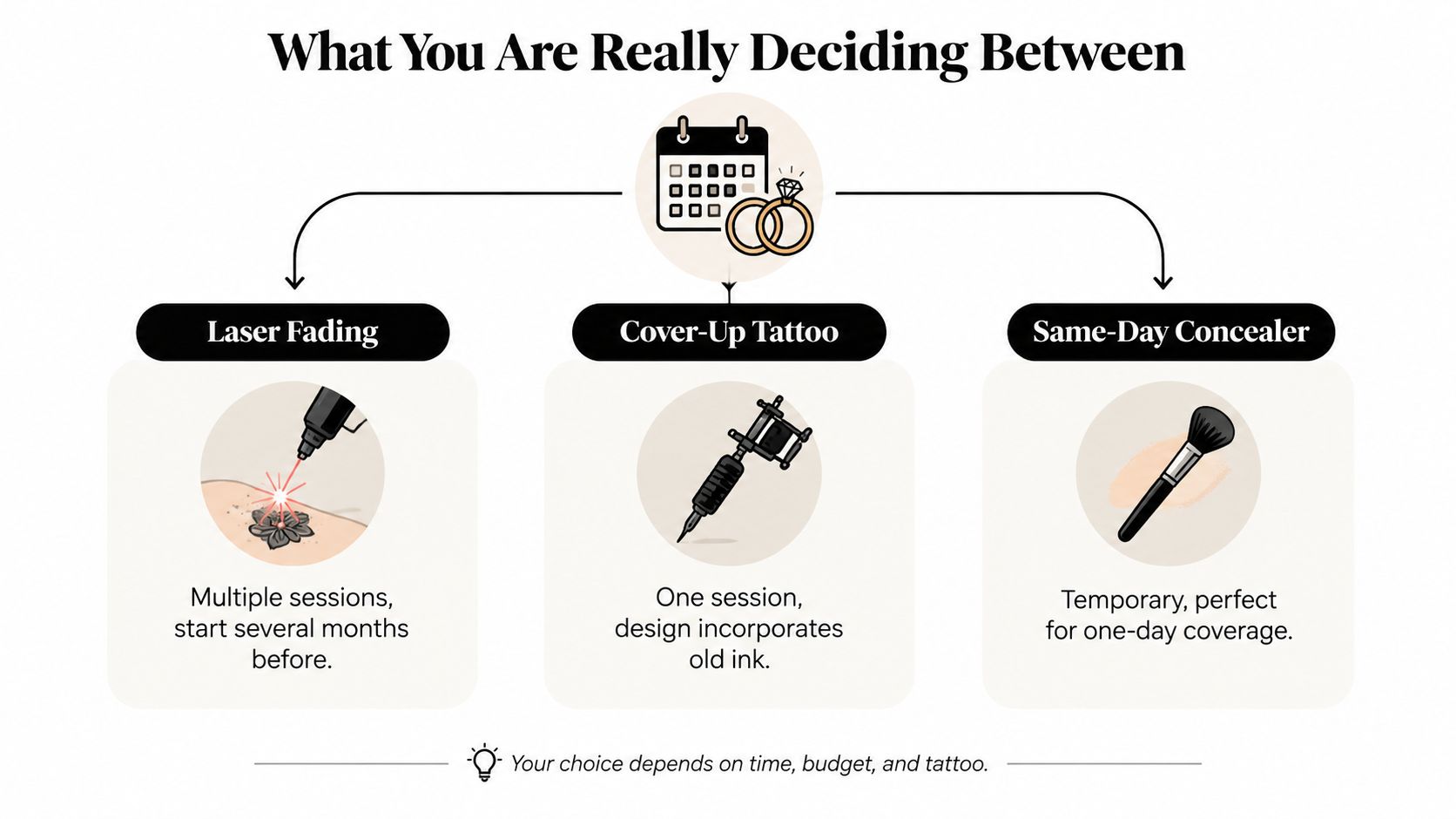
What You Are Really Deciding Between
Your wedding date sets the limit. Choose the plan by the time available, not by which option sounds most appealing.
Full-coverage makeup on the wedding day is the direct solution when the date is close. It hides existing ink for the ceremony, photographs, and reception, but it does not alter the tattoo. This route avoids laser appointments and tattoo healing, making it suitable when you have weeks rather than months, or when the tattoo is already healed and you want your usual appearance afterward. Book a serious trial in heat, movement, and clothing that matches the wedding outfit. Makeup can hold through a full day when applied and set properly, but it still needs testing.
Laser fading works when you have months to spare and want a better surface for a new design. Several treatments lighten the existing pigment without requiring complete removal. Black and dark-blue pigments generally respond more readily, while green, yellow, and some red or orange pigments can resist treatment, as described in clinical guidance on laser tattoo removal and cover-up preparation. The skin also needs time between sessions, so this option is unsuitable for a last-minute wedding plan.
Full laser removal demands the longest runway. Mayo Clinic describes tattoo removal as a progressive option for people who regret existing ink or want it to suit a new image (Mayo Clinic's tattoo removal overview). A clinical source reports an average of 6 sessions, with a range of 2 to 20 sessions. Wedding-industry planning guidance commonly estimates 6 to 12 sessions spaced 6 to 8 weeks apart, so complete removal can require roughly 9 months to 18 months or more, depending on the tattoo and your response. Treat those figures as planning guidance, not a promise that the ink will be gone by the wedding.
Tattoo concealment is now a common wedding concern across generations. A 2010 Pew Research Center report cited by The New York Times found that nearly 40% of Millennials and one-third of Generation X had at least one tattoo, helping explain why couples may seek temporary coverage instead of permanent removal (The New York Times reporting on wedding tattoo concealment).
If the wedding is near, choose tested makeup. With substantial lead time, arrange a consultation for fading or removal. For a direct comparison, read tattoo removal versus a cover-up. Your decision should answer one question: which option can heal, settle, and perform before the wedding date?
Wedding Day Concealment With Makeup
Wedding makeup needs more than ordinary foundation. Tattoo ink can show through because it has stronger color and density than typical facial discoloration, so a successful application depends on thin, layered coverage, not one thick coat.
Build the coverage in the right order
Start with clean, dry skin. Use a grippy silicone-based primer to create a stable base and reduce sliding. Follow with a high-pigment, full-coverage cream or liquid foundation that matches the surrounding skin. A shade that's too light can look orange or pale against the rest of the body, especially in flash photography.
Next, apply a thin color corrector only where the ink remains visible. Red, blue, and yellow tones need different neutralizing approaches, so don't cover the entire area with a heavy corrector. Press the product into the tattoo rather than rubbing it across the skin. Add a second, controlled pass of foundation to restore the skin tone.
Finish with finely milled setting powder, pressed in with a sponge, followed by a long-wear setting spray intended for heat, tears, and movement. Bridal guidance commonly recommends cleansing, correcting the ink tone, building coverage in thin pressed layers, and setting the result with powder and spray (layered tattoo makeup technique for weddings). A bridal guide also discusses using three concealer shades, applied from lightest to darkest, before setting the area (wedding tattoo concealment makeup guidance).
Test the actual routine
Do a full trial on the tattoo weeks before the ceremony. Wear the same type of clothing you'll use for the wedding and test the layers for several hours. Sweat, humidity, hugs, sleeve friction, and dancing create conditions that a quick bathroom test won't reveal.
Practical rule: If the coverage hasn't been tested on the actual tattoo, under movement and heat, it isn't ready for the wedding.
The common mistakes are predictable. Skipping primer weakens adhesion. Rubbing breaks up the layers. Incomplete drying between products creates patchiness. Oil-heavy moisturizer can make the base slide. For additional guidance on extending wear across a long event, review this makeup that won't budge guide.
Makeup can conceal ink for the ceremony and photographs, but it isn't permanent camouflage. Plan a touch-up kit and tell your makeup artist exactly where the covered area will contact fabric or skin.
Counting Backward From the Wedding Date
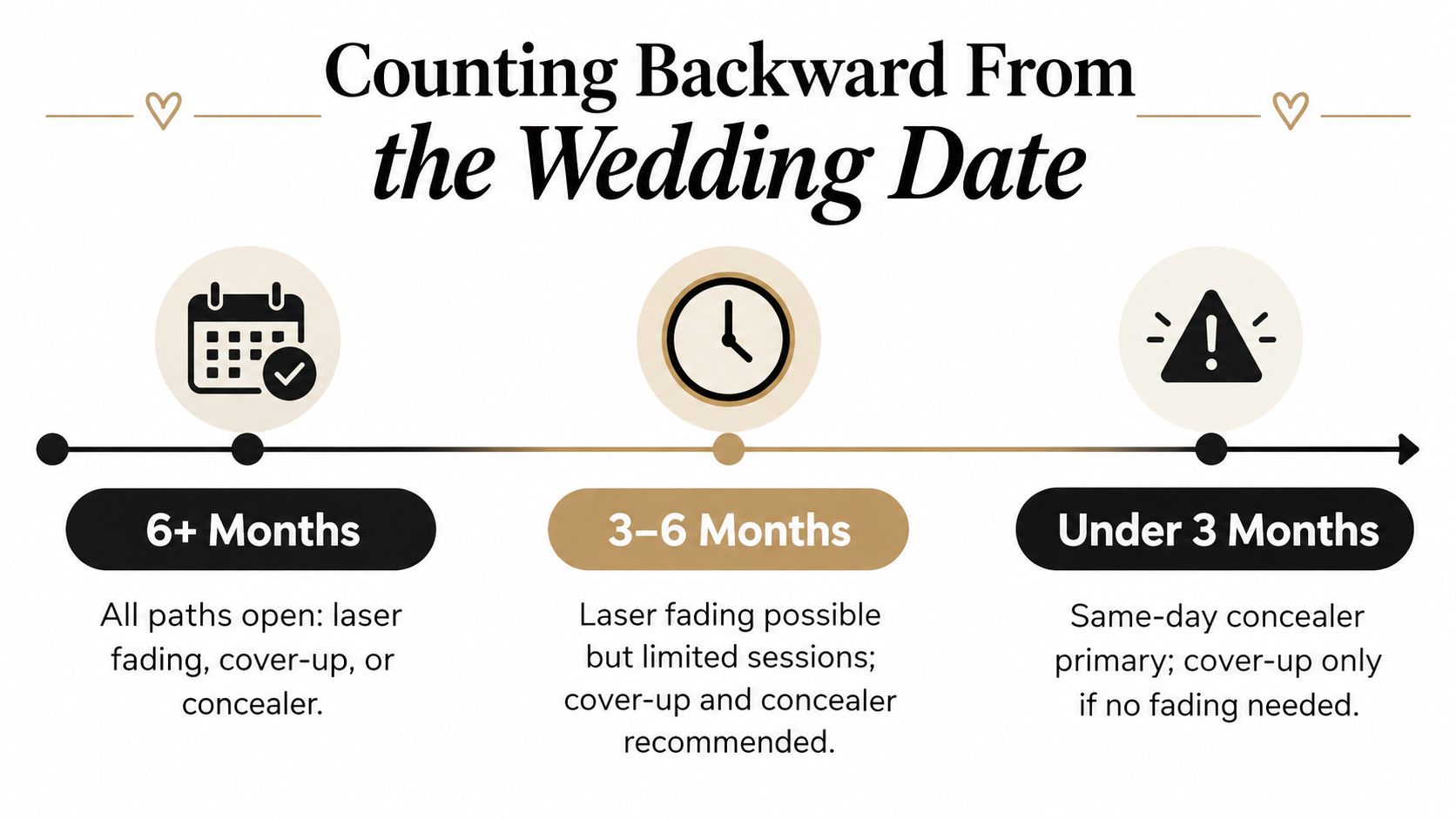
Your wedding date is the hard deadline. Mark today on the calendar, then work backward from the ceremony, allowing time for treatment, healing, and any delays. Choose the option your skin can finish safely, not the design that sounds most appealing.
Under three months
With under three months remaining, professional concealment is usually the only realistic route. Laser treatment can leave the area healing when it needs to be camera-ready, while a new tattoo adds another healing period. A rushed project can create more visible problems in wedding photographs.
A dress, sleeve, shawl, glove, or planned hairstyle can support makeup coverage. The priority is a tested concealment routine that can last through the event, not an unfinished medical or tattoo process.
Three to nine months
With three to nine months, limited laser fading may be possible. Cover-up preparation guidance commonly describes 2 to 4 fading sessions, often spaced 6 to 8 weeks apart, although the plan depends on tattoo size, ink density, color, location, skin, and response (laser fading preparation guidance).
A small cover-up tattoo may heal within this window, but the remaining ink will restrict the design. Have the cover-up artist and laser provider coordinate before either treatment begins. The wedding date determines whether fading, a cover-up, or concealment is workable.
Nine to eighteen months
With nine to eighteen months, a longer fading plan becomes practical. Clinical reviews and wedding-planning guides generally estimate that full removal requires multiple sessions over several months. One systematic review summary reports that complete clearance varies and often requires around 6 to 10 or more treatments, depending on the tattoo and technology. Partial fading may be enough to give the cover-up artist more design choices without waiting for complete removal.
More than eighteen months
With more than eighteen months, full removal becomes a genuine option for some tattoos. It is still not guaranteed. Ink depth, color, skin type, tattoo size, and treatment response affect the result. A clean canvas may be possible, but the clinic must assess the tattoo and build a schedule with room for delayed sessions or slower fading.
Use your wedding preparation timeline alongside the tattoo plan. Then review how long tattoo removal can take before booking. The calendar should decide whether you fade, cover, or conceal.
Laser Fading Compared to a Cover-Up Tattoo
Laser fading and a direct cover-up address different problems. Fading lightens the existing ink before a new design is planned. A direct cover-up changes the artwork sooner, but the replacement design must hide everything underneath it. Your wedding date should decide which route is practical.
| Factor | Laser Fading Then Cover-Up | Direct Cover-Up Tattoo |
|---|---|---|
| Wedding timeline | Requires several months and carefully spaced sessions | Faster if the existing tattoo suits a cover-up and the new tattoo can heal before the event |
| Session count | Cover-up preparation is often described as 2 to 6 sessions. Full removal estimates range from 8 to 15 sessions, depending on tattoo characteristics (cover-up fading versus full removal session guidance) | Usually one tattoo session, followed by the artist's healing instructions |
| Expected fading | Partial fading is the practical target before a wedding. The result depends on ink, depth, color, skin type, and treatment response | No fading is required, but the old ink remains beneath the new design |
| Spacing and downtime | Sessions are spaced weeks apart, and the skin needs time to recover between treatments | The tattoo must heal before wedding-day makeup, photography, or heavy fabric contact |
| Final design | Fading can make lighter colors, finer details, and broader concepts more achievable | Darker, denser, or more strategically placed elements may be needed to mask the old tattoo |
| Main risk | Underestimating the number of treatments available before the deadline | Choosing a design that cannot fully contain the old ink |
Why fading often wins for complex ink
Laser fading seldom creates a completely clean canvas before a wedding, particularly with a short timeline. It can still give the artist more control over contrast, negative space, and color placement. Partial fading may turn a restrictive design into one the artist can work with.
Ink color affects the schedule. Black and dark blue often respond better than green, yellow, and some red or orange pigments. Dense amateur work and multicolor tattoos may take longer to fade, so have the provider assess the actual tattoo rather than accept a generic promise.
If you have only a few months left, book a consultation first. Do not start sessions without confirming that the final treatment leaves enough recovery time before the wedding.
Why direct cover-ups need more room
A cover-up generally needs to be larger than the original tattoo, often described as 1.5 to 2 times larger in wedding cover-up guidance (wedding cover-up planning guidance). That matters on shoulders, wrists, ribs, and other areas visible in bridal photographs. A design that appears manageable during consultation may extend into a noticeable part of the outfit.
Choose fading when the tattoo is dark, dense, or restrictive and the wedding date leaves enough months for treatment and healing. Choose a direct cover-up only after the artist has examined the tattoo and shown a design that works without relying on wishful thinking. With a tight deadline, a well-planned cover-up is often safer than beginning a fading course that cannot finish in time.
Choosing the Right Clinic or Cover-Up Artist
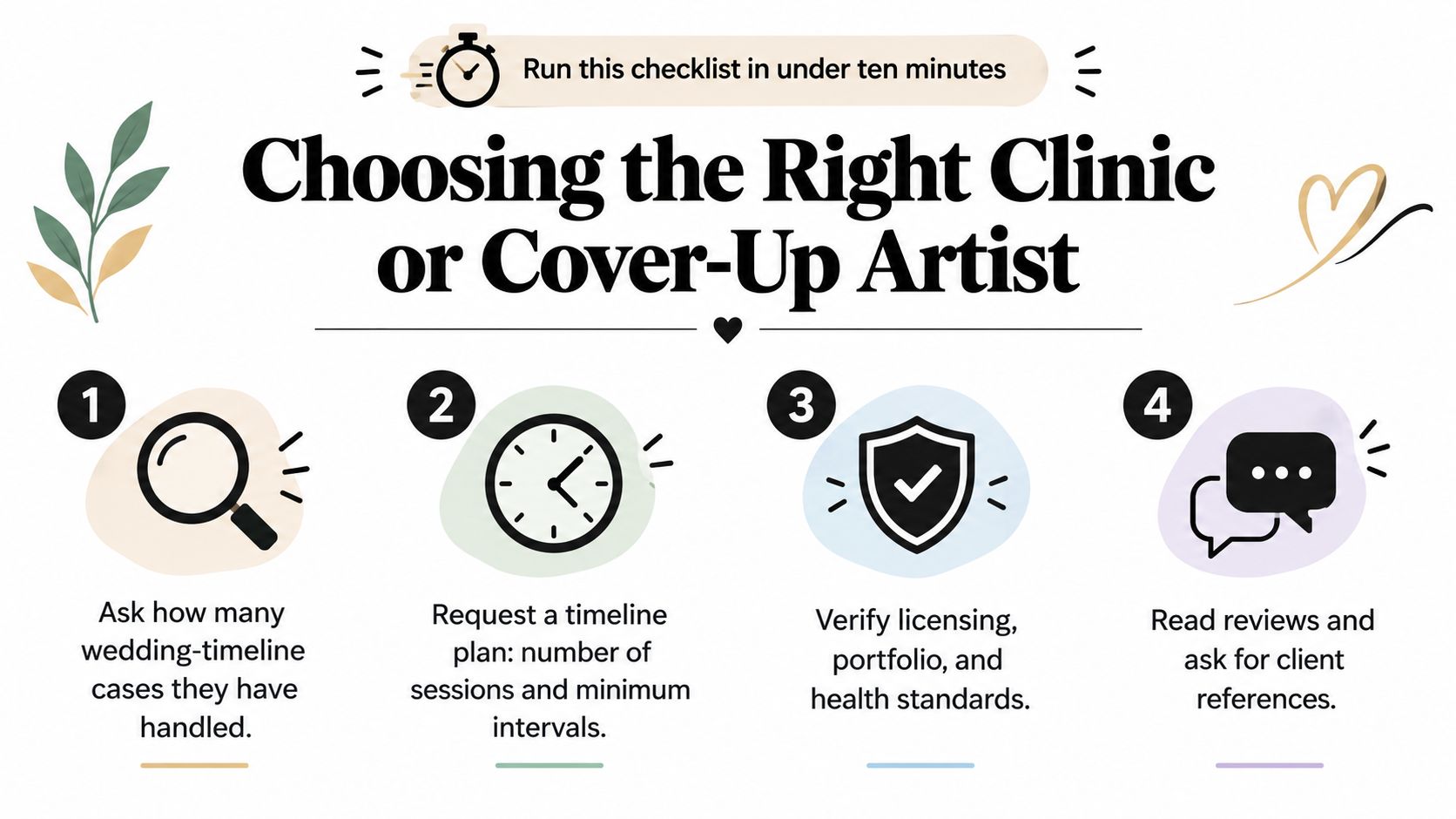
You can screen a provider quickly if you ask focused questions. The consultation should produce a timeline, not just enthusiasm.
Ask the clinic these questions
Start with the provider's experience. Ask how many wedding-timeline cases they've handled and whether they've prepared tattoos for fading rather than only pursuing complete removal. Ask which laser platform they use, including whether it's a picosecond or Q-switched system, and ask how that choice relates to your ink colors and skin type.
Then ask for a written schedule. It should identify the estimated number of sessions, the minimum interval between them, and the latest safe treatment date before the wedding. Don't accept a guaranteed minimum fading percentage unless the provider can explain how they define and assess it. No responsible clinic can know the final response without examining the tattoo and skin.
Vet the artist's actual cover-up work
A cover-up portfolio should show before-and-after work on tattoos similar to yours in size, darkness, color, placement, and skin tone. A portfolio filled with fresh standalone tattoos doesn't prove that the artist can hide existing ink.
The artist should inspect the tattoo before accepting the project. Ask what happens if the proposed design doesn't fully cover after fading, whether the design can be modified, and how the artist coordinates with the laser provider. Don't book a complex cover-up sight unseen.
Walk away from these red flags
- No meaningful consultation: A provider who won't assess the tattoo, skin, and deadline can't build a reliable plan.
- No written aftercare: You should leave knowing how to protect the treated area.
- Pressure to book immediately: A wedding deadline requires urgency, not rushed consent.
- No health and equipment information: Laser treatment should involve appropriate medical-grade equipment, trained staff, and clear safety standards.
- Unclear failure policy: The provider should explain what happens if the fading or cover-up plan needs adjustment.
A reputable professional won't promise a perfect wedding result without examining the tattoo. They'll tell you what the deadline allows, what it doesn't, and where makeup or clothing should remain the backup.
Aftercare for Fading Sessions and New Cover-Ups
Aftercare is part of the wedding plan, not an afterthought. Treating the area carelessly can extend irritation, affect the artwork, or make makeup unsafe.
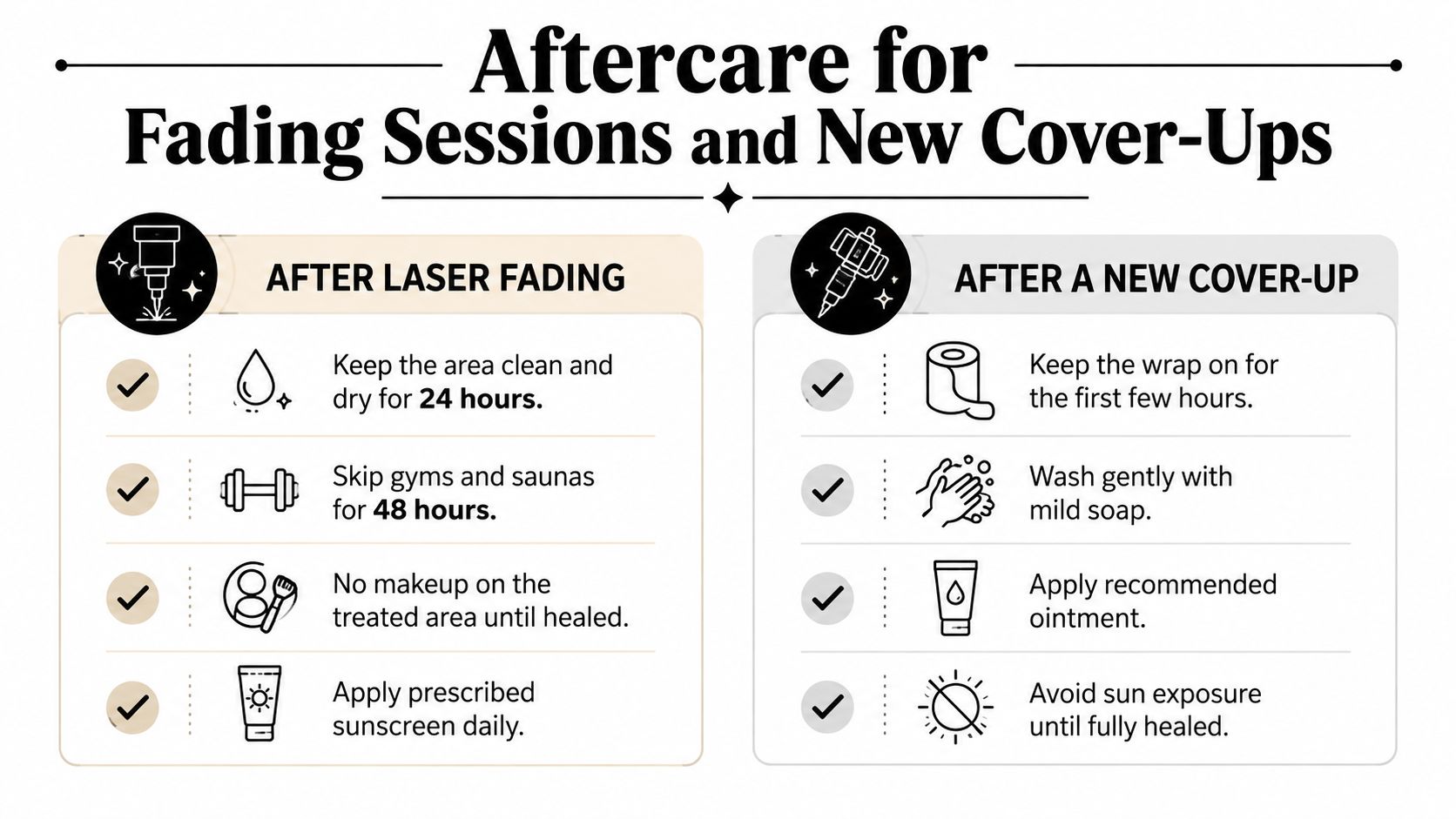
After laser fading
Save this list with your appointment details:
- Keep it clean and dry: Follow that approach for 24 hours after treatment.
- Avoid heat and heavy exertion: Skip gyms and saunas for 48 hours.
- Keep makeup away: Don't apply makeup to the treated area until it's fully healed.
- Protect exposed skin: Use strict SPF 30+ protection as directed for exposed areas.
- Respect the final buffer: Don't schedule a fading session within two weeks of the wedding.
The last point protects your photographs and your peace of mind. A session that looks manageable at booking can leave the skin unsuitable for concealment later.
After a fresh cover-up
Keep the second-skin dressing or bandage on for the period your artist directs. Once it's removed, wash gently with fragrance-free soap, pat the area dry, and apply thin layers of the recommended ointment.
Avoid direct sun completely for four weeks, and don't retouch, exfoliate, or schedule a photoshoot over unhealed skin. Your artist's specific instructions take priority because dressing types and skin responses vary.
For additional guidance on protecting treated skin, review skin care after tattoo removal. Never apply wedding-day makeup over an unhealed cover-up tattoo. That can raise infection risk and damage the new artwork, as bridal tattoo guidance explains (healing and makeup safety for tattoo cover-ups).
Putting Your Plan Together
Use the remaining time as your decision filter.
Under six months: Book a professional makeup trial now and find a bridal concealment specialist. If the tattoo touches clothing, sits in a high-friction area, or has dense dark ink, test the coverage for several hours with movement. Keep sleeves, a shawl, gloves, or strategic styling available as backup.
Six to twelve months: Consult a cover-up artist and ask for a design that accounts for the remaining ink. If you choose a new tattoo, lock in the session date at least eight weeks before the wedding so healing isn't competing with final fittings and photographs.
Twelve to eighteen months: Consult a laser clinic about fading. A plan of six to eight sessions spaced six weeks apart may be workable for some tattoos, with the last session finishing eight to twelve weeks before the wedding. The exact schedule still depends on the tattoo assessment and healing response.
Eighteen months or more: Full removal becomes a realistic option if the timeline, budget, and tattoo characteristics support it. Don't assume a long lead time guarantees clearance. Use it to create breathing room for a personalized plan.
Book consultations this week. Strong cover-up artists and reputable laser clinics can fill appointments months ahead, and delaying the first assessment reduces your options. The wedding date is fixed, so every treatment, healing period, makeup trial, and backup plan must work backward from it.
Call or book online for a tattoo cover-up consultation, or request a fading assessment, whichever matches your timeline. EradiTatt Tattoo Removal offers laser tattoo removal for complete removal or progressive fading before a cover-up, with consultations focused on the tattoo, skin type, ink complexity, and wedding schedule.