
Laser hair removal in Central Florida usually means $75 to $250 for small areas, $200 to $600 for medium areas, $400 to $900 for large areas, and a typical commitment of 6 to 8 sessions. That's the realistic budget and timeline most first-time patients should have in mind before they book.
If you live here, you already know why the decision doesn't feel abstract. Underarm shadow shows up right before a dinner out, bikini-line irritation lingers through pool season, and upper-lip regrowth doesn't stay hidden for long in Florida sun. The right plan isn't just about removing hair, it's about picking a schedule that still works when beach days, theme-park weekends, and everyday UV exposure keep happening.
Table of Contents
- Why Central Florida Patients Are Booking Laser Hair Removal Right Now
- How Laser Hair Removal Works
- Who Makes a Good Candidate in Central Florida
- Sessions, Spacing, and Realistic Results
- What Laser Hair Removal Costs in Central Florida
- Scheduling Around Florida Sun and Daily Life
- Choosing a Safe Central Florida Provider
- Local Questions Central Florida Patients Ask Most
Why Central Florida Patients Are Booking Laser Hair Removal Right Now
Central Florida patients are booking laser hair removal for a simple reason. The climate keeps hair removal decisions in front of you all year, so the usual cycle of shaving, irritation, and last-minute planning gets old fast. Between pool days, beach weekends, and the way tan lines show up here, people want a routine that cuts down on constant upkeep.
The market backs that up. Industry estimates place laser hair removal at USD 1.58 billion in 2025 and project growth to about USD 8.13 billion by 2034, with a 17.8% CAGR over the forecast period. In Florida, the service looks established and crowded, with 156 verified med spas offering it and an average of 4.91 stars across 40,801 Google reviews in one statewide pricing survey, plus a per-session range of $77 to $816 (Precedence Research). For clinics that want to boost medical practice bookings, that kind of demand rewards clear education and easy scheduling.
That matters because it changes the way patients shop. Laser hair removal is no longer treated like a risky experiment, and local patients have enough options to compare devices, treatment plans, and provider skill instead of settling for the first place they see. In a market this busy, vague promises get ignored.
The Florida buyer is usually solving a small but constant problem
Most Central Florida patients book because they are tired of repeating the same grooming chores. If you shave every other day, deal with bikini irritation through much of the year, or keep covering upper-lip stubble with makeup, laser starts to look practical, not indulgent.
Search behavior around laser hair removal Central Florida reflects that mindset. People want one direct answer, whether the treatment is worth it in a place where sun exposure, outdoor plans, and skin tone changes are part of everyday life. It usually is, if the hair pattern is a good fit and the clinic plans sessions around Florida sun instead of pretending it does not matter.
Practical rule: book only if you are ready to commit to a series, not a one-off fix. Laser works best when the plan stays consistent from the start.
The main point for patients is simpler. If you keep returning to the same grooming problem, laser deserves a serious consultation. That is the decision many are really making.
How Laser Hair Removal Works
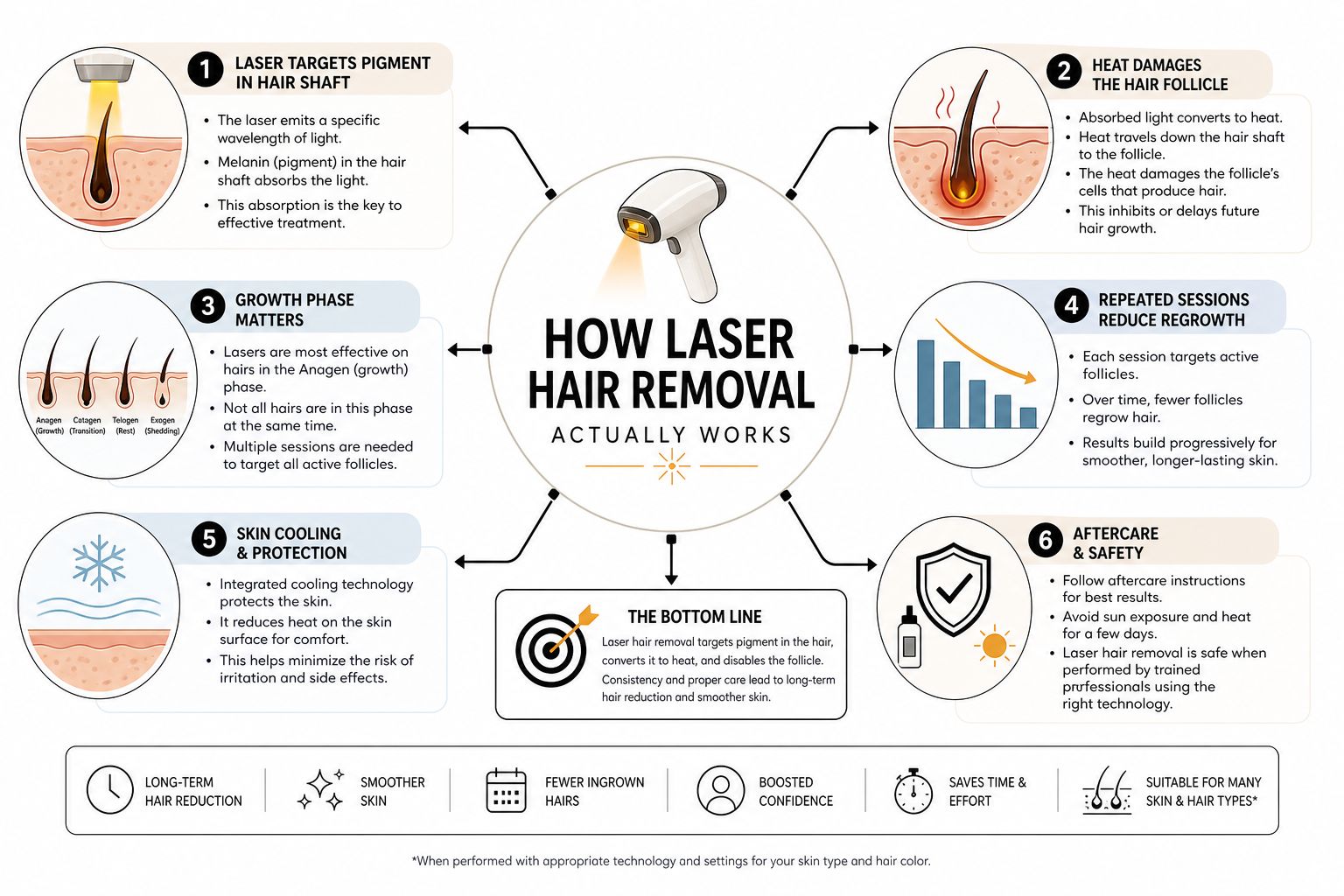
Laser hair removal sends focused light energy into the pigment in the hair follicle. The light converts to heat, the follicle is disrupted, and the hair weakens over time. Clinics describe the process this way because the laser depends on pigment contrast, which is also why darker, coarser hair usually responds more predictably than lighter hair (Arsenault Aesthetics).
In Central Florida, that matters because sun exposure changes the equation fast. A tan can reduce contrast and raise the risk of irritation, so the safest timing usually starts with a skin check, not with a quick booking. If you are planning treatment around beach days or pool season, you should ask how the office handles recent UV exposure before they touch a device.
Only hair in an active growth phase is a good target at any given visit. The rest of the follicles are out of sync, which is why one appointment can reduce visible growth but will not finish the job.
4 to 8 treatments spaced several weeks apart is a common treatment plan, and results can last for months or sometimes years with maintenance still possible, according to the Mayo Clinic. That same source notes that laser hair removal can greatly reduce growth, but it does not guarantee permanent regrowth prevention.
Laser hair removal gives long-term reduction, not a promise that every follicle stays quiet forever.
The practical takeaway is simple. The laser is very good at reducing density and softening regrowth, but it works as a series, not as a single fix. If you are comparing options for the first time, ask how the clinic adjusts settings for your skin tone, how they time sessions around sun exposure, and whether the plan changes if you are carrying tan lines from normal Florida life. For a broader look at how local patients think through treatment timing, see laser hair removal in Florida.
Who Makes a Good Candidate in Central Florida
Candidacy starts with three things, skin tone, hair color, and how much sun your skin has recently seen. If you've just been on a beach trip, tanning bed, or even a stretch of intense outdoor time, your provider should slow down and think carefully before firing a laser. Recent sun exposure raises the odds of burn and pigment-change problems, which is why timing matters so much here.
The best candidates usually have hair with enough pigment for the laser to target. Gray, white, very blonde, or fine red hair often responds poorly because the pigment target just isn't there in a useful amount. In those cases, electrolysis is often the smarter first move, especially for small stubborn areas like the chin or upper lip, where precision matters more than speed.
Bring the right history, not just a wish list
A useful consultation should include more than “I want less hair.” Bring your grooming pattern, any history of PCOS, thyroid changes, pregnancy-related shifts, and any medications that increase photosensitivity. Those details matter because hormonal drivers can keep pushing new growth even after a solid series.
If you've been told you're a bad candidate before, don't assume that answer is final. Ask what part of the picture caused concern. Skin tone, tan level, hair color, or medication can each change the decision, and a good provider should explain which one matters in your case.
The most useful rule is simple. Laser is the right tool for pigment-rich hair and controlled skin conditions. It's the wrong tool for light, sparse, or nonpigmented hair, and it's not the treatment to force when the hair color is fighting the technology. If your hair is a poor fit, you'll save time by hearing that early instead of after a package sale.
The internals of local treatment planning are discussed well in this Florida laser hair removal guide, but the decision still comes down to one question, can the laser see the target? If not, choose a different method.
Sessions, Spacing, and Realistic Results
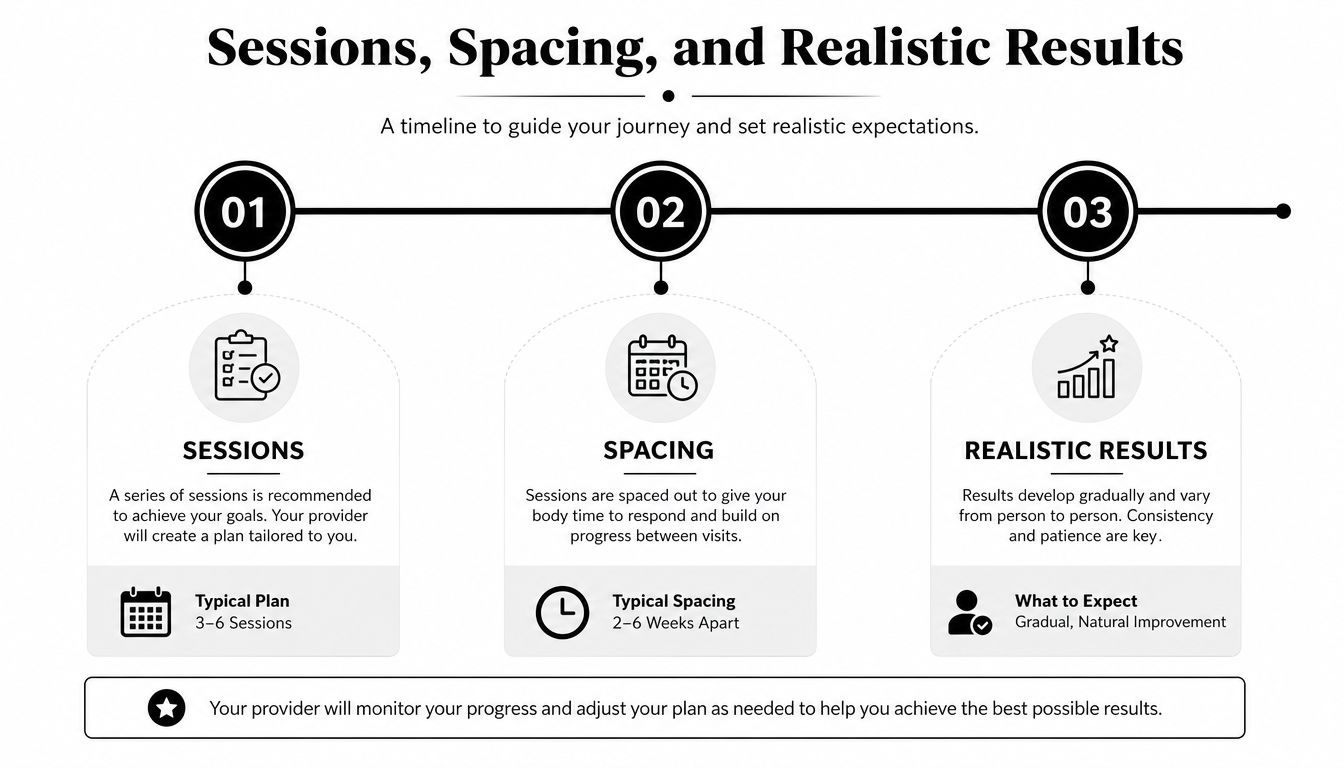
For Orlando-area patients, a realistic plan usually means 6 to 12 sessions spaced 4 to 6 weeks apart. Some clinics recommend at least 8 sessions per area for stronger results (Bella Derma Clinic). That schedule is not a sales gimmick. It tracks with the hair-growth cycle, since only part of the follicle population is in the right phase at any given visit.
What progress should look like
You should see change before you see perfection. After the first couple of sessions, regrowth usually slows and the hair comes back in a patchier pattern. Midway through the series, the hair should feel finer and look less dense. By the end of treatment, the area should look noticeably lighter, even if you still need occasional maintenance.
Florida clinics also publish practical benchmarks. One treatment plan says 6 treatments can permanently remove hair in the treated area in an ideal situation with no hormonal issues and full adherence. Another Florida provider says 6 to 8 sessions spaced 4 to 6 weeks apart is a common cadence for reaching 80 to 90% permanent hair reduction (Florida Aesthetics).
That is the kind of answer you should expect in a consultation. If a clinic cannot tell you how many visits they expect or how they set the spacing, you are being sold optimism instead of a plan.
Good planning beats optimism. If a clinic can explain why your interval timing changes with the treated area, that is a better sign than a polished sales pitch.
For a first-time patient in Central Florida, the right goal is steady reduction, not instant perfection. If your clinic can explain the timeline clearly, that is a good sign. If they avoid the calendar question, keep looking.
What Laser Hair Removal Costs in Central Florida
A fair price in Central Florida depends on the size of the area, the device being used, and how the clinic structures the visit. A statewide pricing guide from Precedence Research shows broad session pricing across verified med spas, and that spread matches what patients see locally. Small areas usually cost less, while larger areas and clinics that bundle more advanced treatment plans cost more.
For Orlando-area patients, the usual tiers are straightforward. Small areas often fall around $75 to $250, medium areas around $200 to $600, and large areas around $400 to $900. If you are budgeting for a face, bikini, underarm, or full-body plan, the total course can land anywhere from $450 to $4,500, depending on how many visits are included and whether the clinic sells packages or prices each appointment on its own.
Typical Orlando laser hair removal pricing by area
| Treatment Area | Typical Per-Session Range | Example Provider Price |
|---|---|---|
| Upper lip | Small area pricing | $125 |
| Face | Medium area pricing | $250 |
| Chin | Small area pricing | $150 |
| Lip and chin | Small area bundle | $175 to $200 |
| Bikini | Medium area pricing | $250 |
| Underarms | Small area pricing | $175 |
| Underarms and bikini combo | Combo pricing | $350 to $395 |
Those examples come from a Florida dermatology pricing page (Minars Dermatology). The value there is not the exact dollar figure. It is the way the pricing breaks down by area and bundle, which is how many clinics in Florida quote treatment.
What actually drives the spread
Device choice matters. So do the provider's credentials, the level of supervision, and whether you are paying per session or buying a package. A lower sticker price can turn into a worse deal if the device is underpowered or the plan is too thin and leaves you paying for more visits later.
Ask three questions before you book. What is included in the quote, how many sessions do they expect for your hair and skin type, and what happens if you need more work than the original plan covered? Those answers tell you more than a polished sales page ever will.
For a broader local pricing frame, this Clearwater-focused guide gives a useful comparison point. For Central Florida patients, the smarter move is to compare the full series, not the entry price.
Scheduling Around Florida Sun and Daily Life
Florida sun changes the whole conversation. Winter can be the cleanest treatment window, because your skin is less likely to be fighting active tan lines, and summer demands stricter discipline before and after every visit. If you're booking laser hair removal Central Florida style, you need a plan that respects pool days, beach weekends, and sudden vacation invites.
Recent sun exposure raises the risk of burns and pigment changes, so any good clinic should ask about tanning before it treats you. That includes tanning beds, intentional sunbathing, and the kind of outdoor exposure that doesn't feel dramatic at the time but still darkens the skin enough to matter.
The prep that protects your result
Orlando-area guidance says to shave the treatment area 12 to 24 hours before treatment and avoid waxing, plucking, or electrolysis for several weeks beforehand (Central Florida Gyn). The reason is straightforward. The laser needs the follicle target present under the skin, and those removal methods pull the target out before the laser can reach it.
That means your calendar has to work backward from your next session. If you're going on vacation, your best option is often to finish with a clean shave, stay out of intense sun, and return after your skin settles rather than trying to squeeze in treatment between beach days.
- Protect your skin first. If you're tan, recently sunburned, or planning to be in the sun hard, postpone the session.
- Shave, don't pluck. Shaving keeps the follicle in place and lowers surface irritation.
- Avoid last-minute removal methods. Waxing and plucking remove the target the laser needs.
- Plan your summer thoughtfully. If you know beach season is nonstop, leave more room between sessions and be stricter with sunscreen.
Most local guides stay too generic, and that's a mistake. Sun timing is the Florida issue, not whether the treatment room has good lighting. For people who live outdoors half the year, the safest plan is the one that respects your actual schedule instead of pretending you can behave like a winter-only patient.
Choosing a Safe Central Florida Provider
A Florida clinic with medical supervision is the standard I'd trust first, especially in a place where sun exposure changes the risk profile all year. State guidance treats laser and IPL services as medical treatments, and Florida's legislative analysis says laser hair removal or reduction must run under the direct supervision of a licensed physician trained in the procedure. That is the line that separates a safe visit from a rushed one that can leave you with burns, pigment changes, or a weak result.
Florida also limits who can legally perform the work. Physicians, physician assistants, ARNPs, and some electrologists can operate Class II or higher devices in the state, while estheticians cannot perform laser hair removal unless they also hold an Electrologist license and meet the required training or delegation rules (Florida legislative analysis). If a clinic cannot explain that clearly, keep looking. You want someone who knows the rule and follows it.
What to ask before you book
A good intake call should give you useful answers fast.
- Ask who supervises the clinic. You want a direct answer, not vague language about “medical oversight.”
- Ask which device is being used. The device should be named, not described as “advanced” and left there.
- Ask who performs the session. The operator should fit Florida's rules for the service.
- Ask how they handle pigment changes or burns. A clinic that dodges complication questions is not ready for your skin.
- Ask for before-and-after photos of similar skin types. If they cannot show relevant examples, they may not treat your profile often.
- Ask how they schedule around sun exposure. In Central Florida, that question matters as much as the device choice because tan lines, pool time, and beach weekends can change whether your skin should be treated now or later.
A clinic that answers well before you pay is usually a clinic that will be organized after you pay too. If the front desk sounds unsure, keep your money in your pocket. That is usually the fastest way to avoid a bad appointment.
For readers who want to compare how a local provider presents screening and patient flow, this local clinic resource is worth a look. It shows why the setting matters in Florida, where sun, skin tone, and timing all affect the visit. If you want one more practical check on clinic operations, the AI receptionist guide for clinics is useful for seeing how organized communication supports safer scheduling and faster answers.
I would rather see you choose a clinic that explains its process plainly than one that sells comfort and stays vague about safety. In Central Florida, the right provider is the one that talks about supervision, operator credentials, and whether your skin has had too much sun lately. Safety is the whole point.
Local Questions Central Florida Patients Ask Most
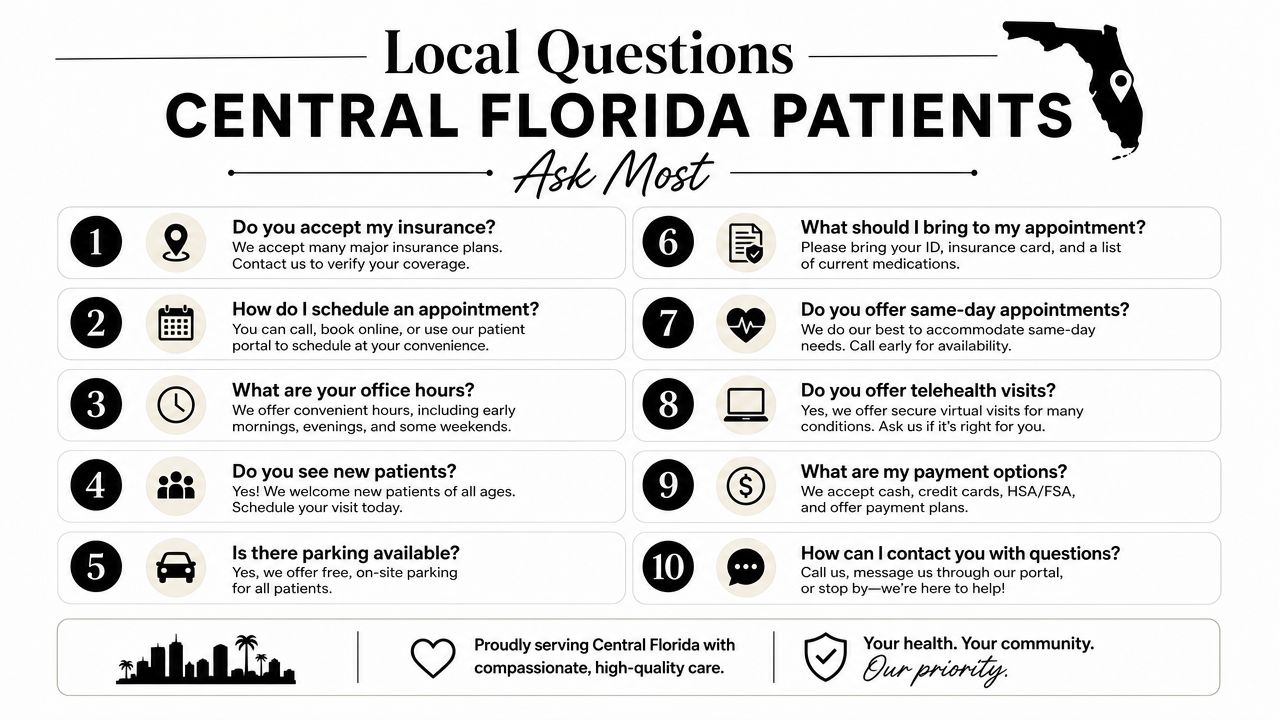
How many sessions do most Orlando patients finish? Usually 6 to 8, and some plans run longer depending on the area and hair pattern. A clinic should tell you whether that range fits your hair, your skin tone, and the body area you want treated. If they cannot explain the finish line, keep shopping.
Does gray or red hair rule you out? Often, yes for laser. The pigment target is the problem, so electrolysis may be the better choice. Book a consultation that talks about hair color instead of assuming laser works for everyone.
What if hormones keep driving regrowth after a full course? Expect maintenance instead of perfection. Hormonal patterns can keep new growth active, so ask whether the provider adjusts the plan or recommends a different approach for stubborn zones.
How does it feel? It is generally described as tolerable heat or a snapping sensation, depending on the device and the area. If you are anxious, ask what cooling method they use before you commit.
Central Florida patients also need a real sun plan. If you are coming off a beach week, pool time, or a fresh tan line, ask whether the appointment should wait so your skin is not overheated or recently exposed. That question matters as much here as the device itself.
Florida law also matters. Providers should be able to tell you who is supervising the treatment, who is allowed to perform it, and what credentials that person has. If the answer sounds vague, treat that as a warning and keep looking.
For extra context on growth and clinic operations, read the Journal on small business growth if you want to understand why organized scheduling and patient communication matter so much in service businesses. The same logic applies here, a clinic that responds clearly usually manages treatment more cleanly.
If your results stall, do not keep paying blindly. Pause, ask whether your tan level, device choice, interval timing, or hair color is limiting progress, then decide whether to continue, switch, or stop. If you are ready to compare your options in person, book a consultation with a medically supervised Florida clinic and ask the hard questions before you buy a full package.