
You're standing in the bathroom before a beach weekend, shaving the same spots again and thinking there has to be a better way. In Florida, that thought comes up a lot, because sun, humidity, swimsuits, and constant grooming all push people toward a longer-lasting solution. Laser hair removal in Florida isn't about instant perfection, it's about reducing hair growth over time so shaving, waxing, and ingrown-hair battles stop running your schedule.
If you're trying to decide whether it's worth it, the answer depends on a few very Florida-specific details, including year-round UV exposure, your skin tone, the device used, and who's allowed to perform the treatment under state rules. Florida also has a crowded market, so pricing and quality vary a lot. The sections below break down how the treatment works, what results usually look like, what it costs, and how to choose a clinic without getting talked into a plan that doesn't fit your skin or your calendar.
Table of Contents
- Why Laser Hair Removal Is Booming Across Florida
- How Laser Hair Removal Works
- Matching the Right Laser to Your Skin and Hair
- How Many Sessions You Really Need
- What Laser Hair Removal Costs in Florida
- Safety, Side Effects, and Florida-Specific Aftercare
- Who Can Legally Perform Laser Hair Removal in Florida
- How to Choose a Reputable Florida Clinic
Why Laser Hair Removal Is Booming Across Florida
A lot of people start with one familiar moment. It is the Friday before a beach trip, you are shaving again, and you already know the smooth feeling will fade before the weekend is over. Laser hair removal appeals because it is designed to reduce the hair that keeps returning, especially in places that need repeated upkeep.
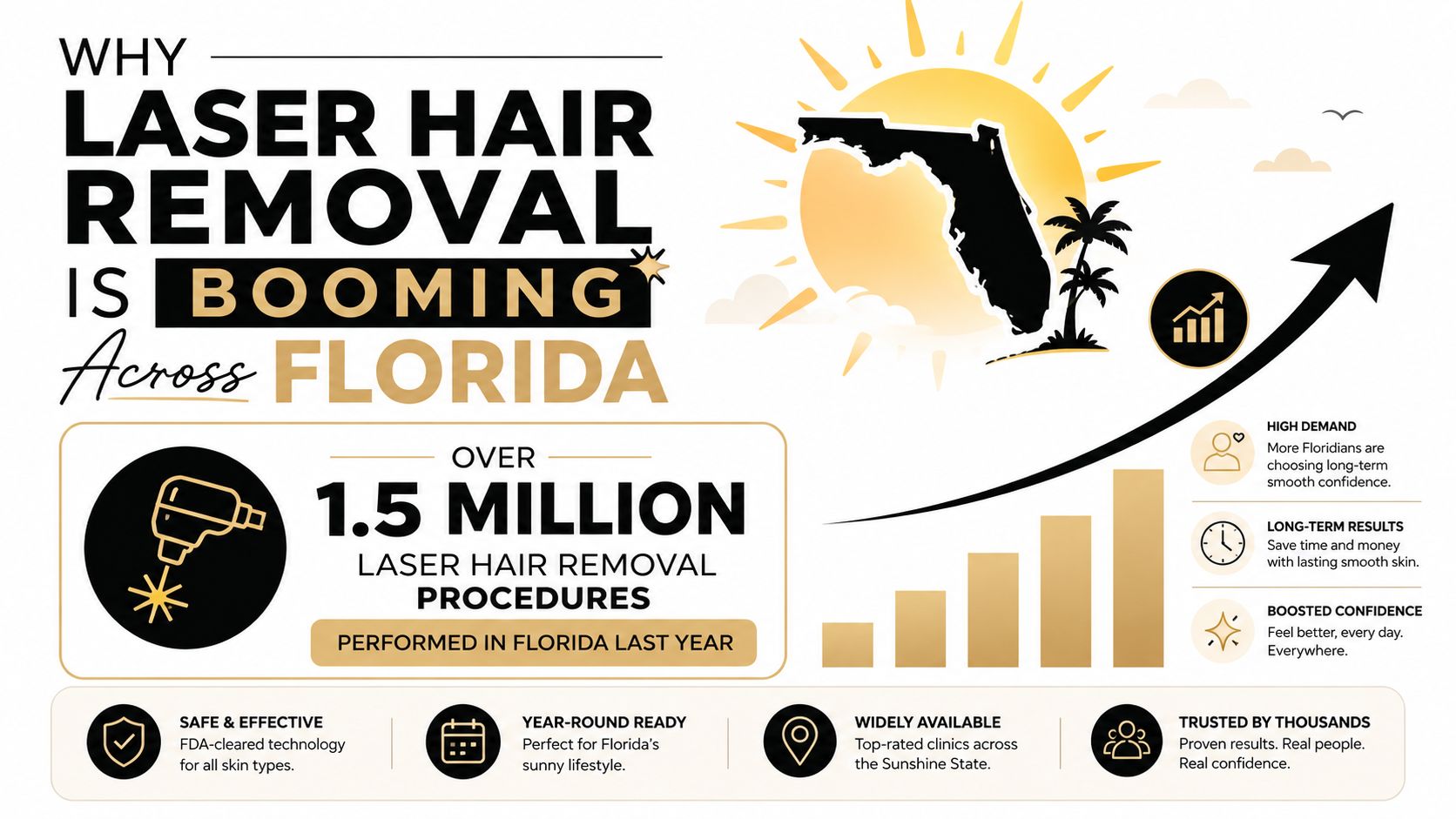
Florida is a major U.S. market for the service. MedSpa Scout lists 156 verified med spas in Florida offering laser hair removal, with an average of 4.91 stars across 40,801 Google reviews as of 2026, which points to a mature and highly competitive market. Their Florida pricing estimate also spans $77 to $816 per session, with common large-area packages like a 6-session full-body package costing $2,000 to $5,000. Those numbers point to steady demand, and they also show that provider experience, device choice, and treatment planning can vary a lot from one clinic to another. Florida laser hair removal pricing and review data
What people usually want from it
The reasons are practical. Some people want smoother skin for summer, some are tired of ingrowns, and some need a grooming routine that fits career or lifestyle expectations. Others just want to stop scheduling their week around shaving.
Practical rule: if you are expecting permanent, instant hair-free skin after one visit, you are likely being oversold. The core benefit is gradual reduction that fits your skin, your hair, and your sun exposure.
Florida adds a few layers that generic national advice often skips. Year-round UV exposure means many patients arrive with recently tanned skin or a higher risk of pigment changes, so timing and aftercare matter more than they do in cooler states. The mix of skin tones across the state also affects device selection, because the laser has to target hair pigment without putting too much heat into the surrounding skin. Licensing matters too, since who can treat you and how closely a clinic follows state rules can change the quality and safety of the visit.
That is why this guide starts with Florida realities instead of a generic sales pitch. You will see how the laser works, why darker or recently tanned skin needs different planning, what the usual session count looks like, what Florida pricing really means, and why state licensing matters more than many clinic websites admit. The goal is to help you choose a treatment plan with your eyes open, not to sell you a package before you understand it.
How Laser Hair Removal Works
A laser hair removal visit starts with a simple target. The device sends concentrated light into the hair, the pigment in the hair absorbs that light, and the resulting heat injures the follicle so it cannot support the same level of regrowth. The surrounding skin is supposed to absorb as little energy as possible, which is why the settings have to match the person in the chair. Laser hair removal mechanism and preparation basics
Why the follicle has to be there
The laser needs a hair in the follicle to find its target. That is why shaving is encouraged before a session, while waxing and plucking are not, because those methods remove the hair from the follicle and leave the laser with nothing to aim at. Clinicians also ask patients to avoid sun exposure and tanning, because extra pigment in the skin can compete with the hair pigment and increase the risk of burns or uneven results.
Only hairs in the active growth phase respond well, so one appointment cannot clear everything at once. That point trips up many first-time patients. Hair follicles do not all follow the same schedule, so the provider has to treat different hairs over time.
What that means in real life
You will not walk out hair-free. The usual pattern is shedding later, then slower, sparser regrowth over time. The goal is progressive reduction, not a one-visit reset.
The process works best when the skin is prepped, the follicle stays intact, and the patient expects multiple visits instead of a single transformation.
That cycle explains why prep, timing, and device choice matter so much in Florida, where sun exposure can change skin tone from one season to the next. It also explains why a clinic may ask more questions about recent tanning, skin sensitivity, and hair color before it treats you. If you want to compare YAG laser platforms, compare YAG laser platforms can help you see how deeper skin tones are typically approached.
Matching the Right Laser to Your Skin and Hair
The device on the wall matters as much as the quote on the wall. In Florida, that point matters more because many people have regular sun exposure, and sun exposure can change both skin tone and skin sensitivity. A clinic that chooses the wrong platform for your complexion can make treatment less comfortable and less predictable, especially if your skin tone has shifted since your last beach day, outdoor shift, or weekend sport.
The main device families
A simple way to sort the common platforms used in Florida clinics starts with skin tone, then hair color. Alexandrite and diode often fit lighter skin with darker hair. Nd:YAG uses a longer wavelength and is generally preferred when deeper skin types need a safer option. IPL sits in a broader middle ground, but it is not the same thing as a true laser, and it is not always the right match for every skin-hair combination. Clinical literature notes that effective hair reduction depends on matching wavelength and settings to skin type, and that longer wavelengths such as Nd:YAG are preferred for safer treatment in darker skin types (FST IV-VI). PubMed review on skin type, wavelength choice, and UV exposure
| Laser Type | Best For Skin Types | Best For Hair Colors |
|---|---|---|
| Alexandrite | Lighter skin tones | Dark, coarse hair |
| Diode | Light to medium skin tones | Dark hair |
| Nd:YAG | Deeper skin tones | Dark hair |
| IPL | Varies, often used flexibly | Dark hair, but results vary |
The skin side of the equation is only half the story. Hair still has to give the laser enough contrast to target, so dark, coarse hairs tend to respond better than fine or very light ones. That is why two people can come in with the same complaint and still need different devices, different settings, or both.
Why Florida changes the conversation
A lot of guides skip the sun issue, but Florida residents cannot. If you tan easily, work outdoors, or spend a lot of time outside, your skin tone may shift enough that safety matters more than brand names or package language. That is why a good consultation should talk about recent sun exposure and the device, not just the price.
Short wavelength devices can work well on lighter skin, but deeper or recently tanned skin usually needs a more cautious approach. That is the practical reason longer wavelengths come up so often in Florida consults, because they can be better suited to skin that has more pigment on board right now. The choice is less about marketing and more about avoiding unnecessary heat in the skin.
If you want to compare device families before a consultation, a resource like compare YAG laser platforms can help you see why longer wavelengths come up so often for deeper skin tones.
Bottom line: the “right” laser is the one that matches your skin, hair, and amount of sun exposure right now.
How Many Sessions You Really Need
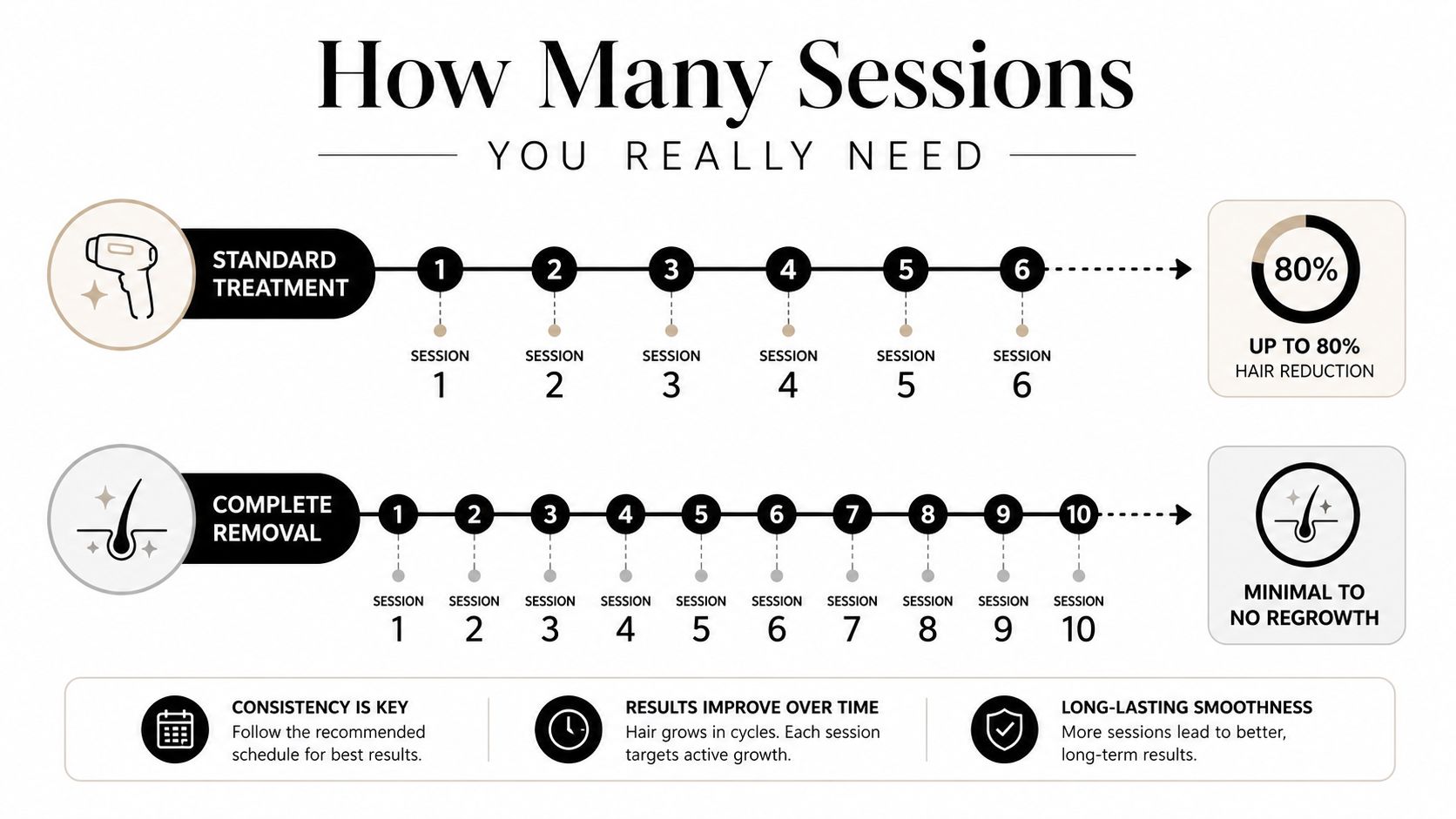
The honest answer is that laser hair removal takes patience. Results build over time because only a portion of your follicles are active in each session. Clinical guidance from UF Health says you can see up to 80% hair reduction after 4 to 6 visits. Other Florida-facing clinical guidance notes that appropriate patients often achieve 85 to 95% long-term reduction over 8 to 10 sessions, usually completed in about 10 to 12 months, followed by 1 to 2 maintenance visits per year. UF Health laser hair removal guidance
A realistic treatment rhythm
StatPearls reports that the initial phase typically takes 4 to 6 sessions spaced 4 to 6 weeks apart, with maintenance sometimes needed every 6 to 12 months because small vellus hairs can regrow. StatPearls on session spacing and maintenance
A Florida-focused industry guide gives area-specific spacing that helps set expectations. Facial areas are usually treated every 4 to 6 weeks, body areas every 6 to 8 weeks, and legs or back every 8 to 10 weeks. Florida treatment interval guide
How to read those numbers
If you're treating a face, appointments come sooner because the growth cycle there tends to move faster. Larger zones need more time between visits. That's why a provider who promises the same schedule for every area usually isn't explaining the biology very well.
The NIH review in PMC also notes that a single treatment can reduce hair by 10% to 40%, repeated treatments can reduce hair by as much as 90%, and results may persist for up to 12 months. NIH review on repeated treatment outcomes
Expect repetition, not perfection after visit one. A clinic that says otherwise is selling fantasy, not follicle science.
If you go in with the right timeline in mind, the process feels manageable. If you go in expecting instant removal, the same schedule will feel frustrating.
What Laser Hair Removal Costs in Florida
A first quote can be useful, but only if you know what it includes. In Florida, the price often shifts based on the area being treated, the device the clinic uses, the provider's training, and whether the practice is built for high-volume cosmetic care or a more medically supervised setting. If you are comparing clinics in a city like Clearwater, a local Clearwater laser hair removal resource can help you see how one office explains its pricing and what it includes.
What drives the spread
The biggest variable is treatment area. A small zone, such as the underarms, usually costs less than full legs or a larger body plan because it takes less time and covers less skin. The equipment matters too, since a clinic that uses more specialized technology or maintains tighter medical oversight may have higher overhead.
The quote itself can hide a lot if you do not ask the right follow-up questions. A lower session price may look appealing, but it can become the more expensive choice if the clinic expects more visits, uses older technology, or does not adjust settings carefully for your skin tone and hair type. That matters in Florida, where sun exposure and mixed skin tones can affect how conservative a provider needs to be.
How to compare quotes wisely
Start with the total plan, not the advertised session price. One number on a flyer rarely tells you what you will spend from start to finish. Ask how many treatments the clinic expects, whether the price covers only one area or several, and whether touch-ups are priced separately.
Hidden costs are easier to spot when you ask about them directly. Some clinics charge for consultations, some bundle numbing cream or post-care products into the package, and some treat maintenance as a separate service after the first course is done. If a quote seems unusually low, ask what is missing before you assume it is a better deal.
Ask who performs the treatment, because staffing can affect both safety and cost. A clinic should be able to explain whether the person handling your sessions is a technician, nurse, or other licensed professional, and how that affects the plan they recommend. That also helps you compare places that sound similar on paper but operate very differently in practice.
- Ask what the full plan costs: One visit can sound affordable, but the total course matters more.
- Ask what area is included: “Body” can mean different things at different clinics.
- Ask about maintenance pricing: Touch-ups can change the long-term budget.
- Ask who performs the treatment: Credentialing can affect both safety and cost.
Safety, Side Effects, and Florida-Specific Aftercare
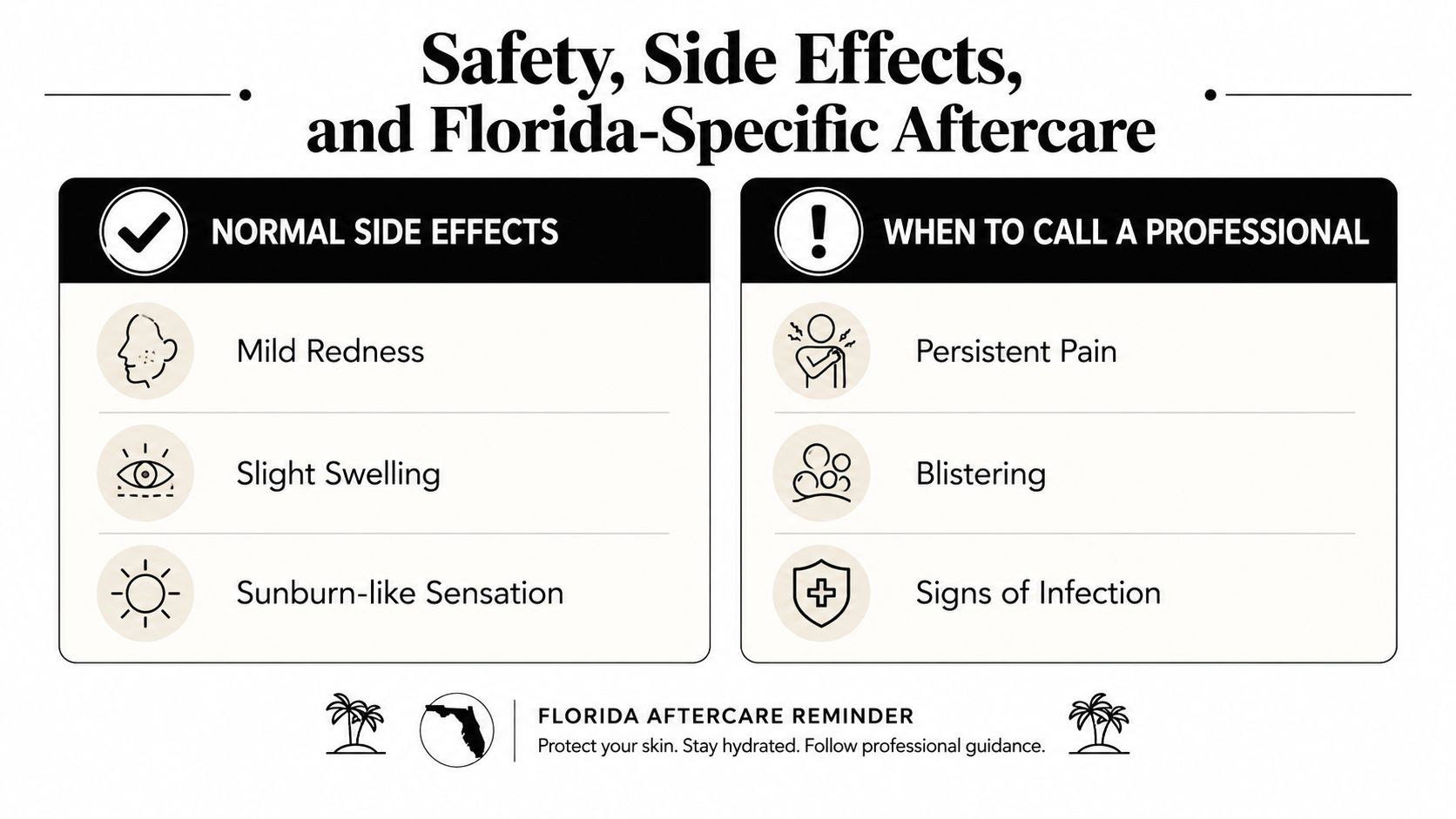
A first session often feels straightforward, then the skin reacts a little like it would after a mild sun exposure. Redness, swelling, and a warm, tender feeling are common right after treatment, and they usually fade with simple care. Persistent pain, blistering, or anything that looks infected should be reported to the clinic rather than watched at home.
Florida changes the risk picture
Florida sun changes the math. Skin that has been recently tanned absorbs more energy, which can raise the chance of burns or pigment changes, especially in deeper skin tones or when a clinic uses the wrong laser for the person sitting in front of them. That is why wavelength choice matters, and why darker skin types are often treated more conservatively with longer wavelengths such as Nd:YAG.
The practical takeaway is simple. Avoid sun exposure and tanning beds before and after treatment, because fresh UV exposure makes the skin less predictable. If your clinician asks you to pause retinoids or exfoliants for a few days, follow that instruction on the treated area. Do not wax or pluck between visits, because the follicle needs to stay intact for the laser to target it.
A simple aftercare checklist
- Use cool compresses: This can calm the treated skin when it feels hot or tight.
- Clean gently: A mild cleanser is usually enough.
- Wear loose clothing: Friction can irritate skin that is already reactive.
- Apply broad-spectrum SPF: Florida sun can undo careful treatment if you skip daily protection.
- Delay beach and pool time: Give the skin time to settle before adding heat, salt, or chlorine.
For more post-treatment reminders, patients often review laser aftercare guidance.
The same habit of reading the fine print matters in a different way for the clinic itself. If you are also sorting out a clinic's website policies, the 2026 privacy policy requirements are a separate issue, but they are part of how a professional practice shows basic order and care.
If the skin looks angrier than expected, don't guess. Call the clinic and describe what you see.
Good aftercare is not complicated, but it does require consistency. In Florida, that consistency matters because the skin keeps meeting sun, humidity, and day-to-day irritation long after you leave the treatment room.
Who Can Legally Perform Laser Hair Removal in Florida
Florida treats laser hair removal as the practice of medicine, so there isn't a standalone laser technician license the way some people assume. The permitted operators include physicians, PAs, ARNPs, RNs and LPNs working under delegation, licensed electrologists with laser training, or trained laser technicians operating under direct physician supervision on premises. That regulatory structure matters because it determines who sets the settings, who handles adverse events, and how much medical oversight you get during treatment. Florida laser hair removal technician guide
What that means for patients
A licensed electrologist can legally perform laser and pulsed-light hair removal under Florida law, and the legislative analysis says they must maintain a nationally recognized certification to use those devices. Florida's 2019 HB 329 analysis also states that laser hair removal or reduction may be performed only by, or under the direct supervision of, a licensed electrologist. Florida HB 329 legislative analysis
That's not just paperwork. It affects how quickly a clinic can schedule you, how they price the service, and how they respond if your skin needs a parameter change or a follow-up.
Questions worth asking before you book
- Who will hold the handpiece?
- What training does that person have on this device?
- Is there physician oversight on-site or only off-site?
- What device are you using for my skin type?
- How do you handle side effects if they happen?
For a related example of how privacy and compliance language can affect consumer-facing websites, see 2026 privacy policy requirements.
If a clinic can't answer those questions plainly, keep looking. The person treating your skin should be able to explain their role without hiding behind marketing language.
How to Choose a Reputable Florida Clinic
The consultation tells you almost everything you need to know. A good one includes a skin and hair assessment, a discussion of recent sun exposure, an honest estimate of session count, and a clear explanation of total cost. If the clinic mentions a patch test when indicated, that's a good sign they're thinking about your skin instead of pushing everyone through the same setup. For an example of how a Florida practice presents location and service details, some readers also compare local pages like this Largo laser hair removal resource.
Green flags and red flags
A reputable clinic usually shows real before-and-after photos, names its devices, and explains who provides the treatment. Cleanliness matters too, because you're not buying a commodity, you're letting someone work on living skin. Transparent pricing is another strong sign, because hidden fees often show up when the clinic is more focused on selling packages than on planning care.
Red flags are easier to spot if you slow down. Vague credentials, unusually low pricing, pressure to prepay immediately, or promises of one-and-done removal usually mean the consultation is optimized for sales, not skin safety. If the provider won't discuss sun exposure, skin tone, or the likely number of sessions, that's a problem.
A framework from the marketing world can help here too. Before you commit to any service purchase, tips from Mr. Green Marketing, LLC can sharpen how you evaluate transparency, process, and trust signals.
What to do before your first appointment
Shave the day before. Skip the gym and hot shower right after treatment if your provider tells you to. Plan around beach days and outdoor events for the first part of your course, because Florida sun is not something you can ignore and still expect clean results.
A good clinic won't rush you. It'll explain the plan, match the device to your skin, and tell you what success should look like: gradual, measured reduction, not a miracle on day one.
If you're ready to stop guessing and get a plan that fits your skin, your schedule, and Florida's sun, reach out to EradiTatt Tattoo Removal. Their Florida team can help you understand whether laser treatment is a good fit, what kind of maintenance to expect, and how to book an appointment that respects both your goals and your calendar.