You're standing in a Manhattan bathroom or a Brooklyn apartment, looking at a tattoo that used to feel right and now feels like a relic from another life. Maybe it's tied to a relationship, a job you left, or a version of yourself that doesn't fit anymore. If you're searching for laser tattoo removal New York, you probably want two things at the same time, a real reset and a process that won't leave you guessing about pain, cost, safety, or how long it'll take.
Table of Contents
- Starting Your Tattoo Removal Journey in NYC
- How Laser Technology Erases Tattoo Ink
- Estimating Costs and Sessions in New York for 2026
- A Realistic Timeline What to Expect at Each Stage
- How to Choose a Qualified Provider in New York
- Essential Aftercare and Managing Potential Risks
- New York Laser Tattoo Removal FAQ
Starting Your Tattoo Removal Journey in NYC
In a city where people change apartments, jobs, and entire neighborhoods without blinking, it makes sense that a tattoo can stop matching your life too. I hear versions of the same story all the time. The design is still technically good, but it no longer feels like yours, and now you're trying to figure out whether fading it, removing it, or preparing it for a cover-up is the smarter move.
That decision usually starts with a few practical questions. How many visits will it take, what does it cost in New York, and how do you avoid a place that talks more about marketing than medical oversight? Those are the right questions, because tattoo removal in this market isn't just about convenience, it's about choosing a provider who understands skin type, ink color, and safe laser use under New York rules.
The good news is that laser tattoo removal is the standard approach in major U.S. markets, and it's designed for gradual clearing rather than a one-and-done fix. Modern systems such as Q-switched and picosecond lasers are used because they fragment ink into smaller pieces that the body can clear over time, which is why the process usually unfolds over multiple sessions rather than a single appointment (AP News).
If you want a local plan that feels clear instead of confusing, start with the basics, what the laser can do, what it can't do, and what a safe consultation should cover. For a closer look at newer device options, see this overview of new tattoo-removal technology.
How Laser Technology Erases Tattoo Ink
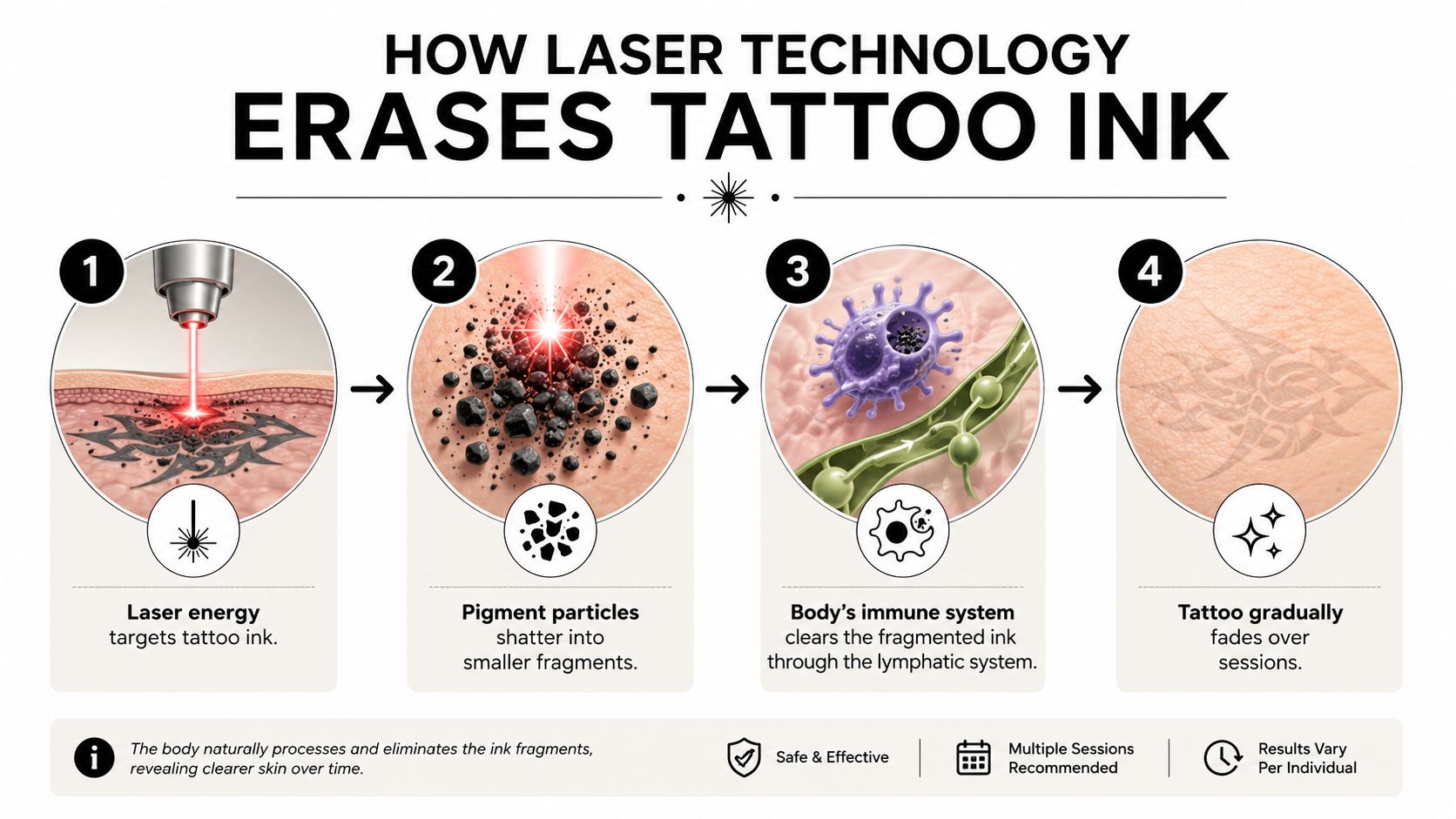
Laser removal works because it treats tattoo ink like a cluster of rocks, not a stain. The pulse hits the pigment, breaks it into much smaller fragments, and leaves the body to do the cleanup. That's why visible fading happens gradually, and why the process depends on your immune system as much as it depends on the machine.
Why sessions are spaced out
In NYC clinical practice, sessions are typically spaced 4 to 8 weeks apart so the body has time to clear fragmented ink before the next treatment (Dermatology and Laser Group). That gap isn't a marketing tactic, it's part of how the biology works. If you treat the same area too soon, you're not giving the lymphatic system enough time to clear the debris from the prior session.
Practical rule: if a clinic promises rapid back-to-back sessions, ask why. Tattoo removal should respect healing time, not rush through it.
Why different lasers matter
Different devices use different pulse durations and wavelengths, and that matters because ink color and skin tone respond differently. A Manhattan dermatology source identifies PicoSure as delivering picosecond pulses, described there as one trillion pulses per second, which helps explain how modern systems break pigment into smaller particles for clearance (Plastics and Derm). Clinical literature also notes that Q-switched ruby, alexandrite, and Nd:YAG remain established tools, while picosecond systems and multi-pass approaches are newer strategies meant to improve effectiveness across different tattoos (PMC clinical review).
That doesn't mean the newest machine is automatically the right one. The better question is whether the provider understands which laser fits your tattoo's pigment, your skin type, and your goal, full removal or fading for a cover-up.
Estimating Costs and Sessions in New York for 2026
The biggest budgeting mistake is assuming tattoo removal behaves like a fixed-price service. In New York, the more accurate way to think about it is as a series of medically guided sessions, each priced separately and each influenced by what's in the skin. For urban markets like New York, 2026 pricing often ranges from $400 to $700 per session, and the total session count averages 7 to 10 for many tattoos (AP News).
A simple NYC estimate table
| Tattoo Size / Type | Average Cost Per Session (NYC) | Estimated Total Sessions |
|---|---|---|
| Small tattoo | Lower end of the urban market range | Fewer sessions if the ink is light and simple |
| Medium tattoo | Mid-range pricing is common | Often falls near the middle of the typical session range |
| Large or dense tattoo | Higher end of the urban market range | Usually needs more visits because of pigment load and complexity |
The exact number won't be the same for everyone. Dense ink, deeper placement, multicolor designs, and tattoos on areas that clear more slowly can all increase the total course. Professional tattoos also tend to take longer than amateur work, because the ink is usually packed more uniformly and positioned further below the surface.
What changes the total bill
A consultation should break down the variables, not just quote a flat number. The main drivers are tattoo size, color, depth, age, and how your skin responds over time. Black ink usually clears more predictably than some brighter shades, which is why a provider should talk through your design instead of giving you a generic promise.
If you're trying to compare payment options, it helps to look for flexible financing rather than assuming you have to cover the full plan up front. One useful resource is how to finance treatments at Ayla Aesthetics, which gives readers a sense of how some clinics structure payment planning around multi-session care.
Budgeting tip: ask for the likely total range, not just the per-session price. In tattoo removal, the real number is the full course, not the first visit.
A Realistic Timeline What to Expect at Each Stage
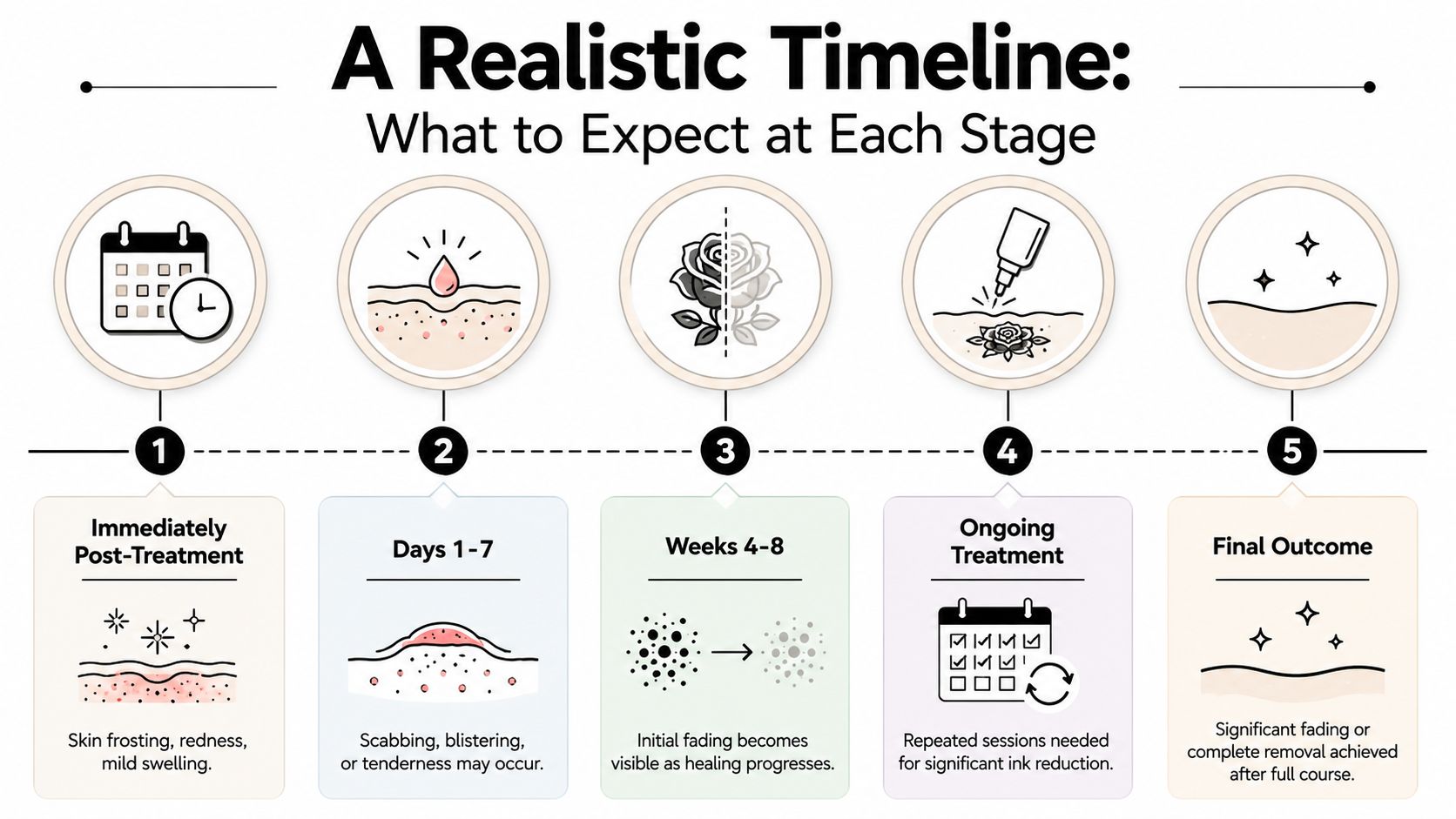
The first appointment usually feels more decisive than dramatic. You show up with a tattoo that's been bothering you, the area gets assessed, and the actual laser time is often much shorter than people expect. A Manhattan source says many professional tattoos are removed in 6 to 8 treatments spaced 4 to 6 weeks apart, while amateur tattoos often need around 3 to 4 treatments (Plastics and Derm).
What the skin does after treatment
Right after the session, the skin can look frosted, red, and a little swollen. That's a normal response to the laser energy, not a sign that anything went wrong. Over the next several days, you may see tenderness, mild blistering, or scabbing as the area heals and the body begins clearing fragmented pigment.
A consultation should also make clear that fading doesn't show up all at once. Some people notice early change after healing settles, but the bigger shifts usually build over repeated visits as the treated ink keeps breaking down. That's why patients in New York often think in terms of a course of care, not a single transformation.
How long the journey feels in real life
If you're using tattoo removal to prep for a cover-up, the visible goal may be lighter shading rather than complete clearance. If you want full removal, the process can stretch across months because each treatment only moves the ink part of the way out. The key is consistency, spacing, and realistic expectations.
For a deeper look at treatment length and pacing, this guide on how long tattoo removal takes can help you think about the process in practical terms.
How to Choose a Qualified Provider in New York
In New York, provider choice matters as much as laser choice. Under New York State law, the use of lasers for procedures like tattoo removal is considered the practice of medicine, which means consumers should verify that treatment is performed under proper medical supervision (New York State Education Department). That's the part a lot of consumer pages skip, and it's the part that matters most for safety, complication management, and compliance.
What to ask before you book
Start with the person, then move to the equipment. A strong consultation should answer these questions clearly:
- Who supervises the treatment? You want to know whether the procedure is being run under appropriate medical oversight, not just sold as a cosmetic add-on.
- What laser do you use for my ink colors? The right answer should connect the device to your specific tattoo, not just repeat the word “advanced.”
- How do you handle darker skin tones? Experience with Fitzpatrick IV-VI skin types matters because the risk-benefit balance changes by skin tone and ink composition (PMC clinical review).
- What side effects should I expect, and what happens if something unusual shows up? A credible provider should explain normal healing, warning signs, and follow-up steps.
- How many similar tattoos have you treated? You're looking for experience with multicolor ink, cover-up fading, and dense professional tattoos.
Why licensing and supervision aren't optional
If you want a plain-English starting point on technician qualifications, New York laser technician licensing is a useful reference for understanding the broader credentialing conversation. It's not enough to see a modern machine in the room. You need a provider who knows how to match that machine to skin type, ink, and healing risk.
A clean clinic with polished branding doesn't guarantee safe laser use. Ask who is medically responsible before you ask about package pricing.
If you're comparing providers, you can also review tattoo removal qualifications to see how consultation quality, oversight, and treatment planning should come together.
Essential Aftercare and Managing Potential Risks
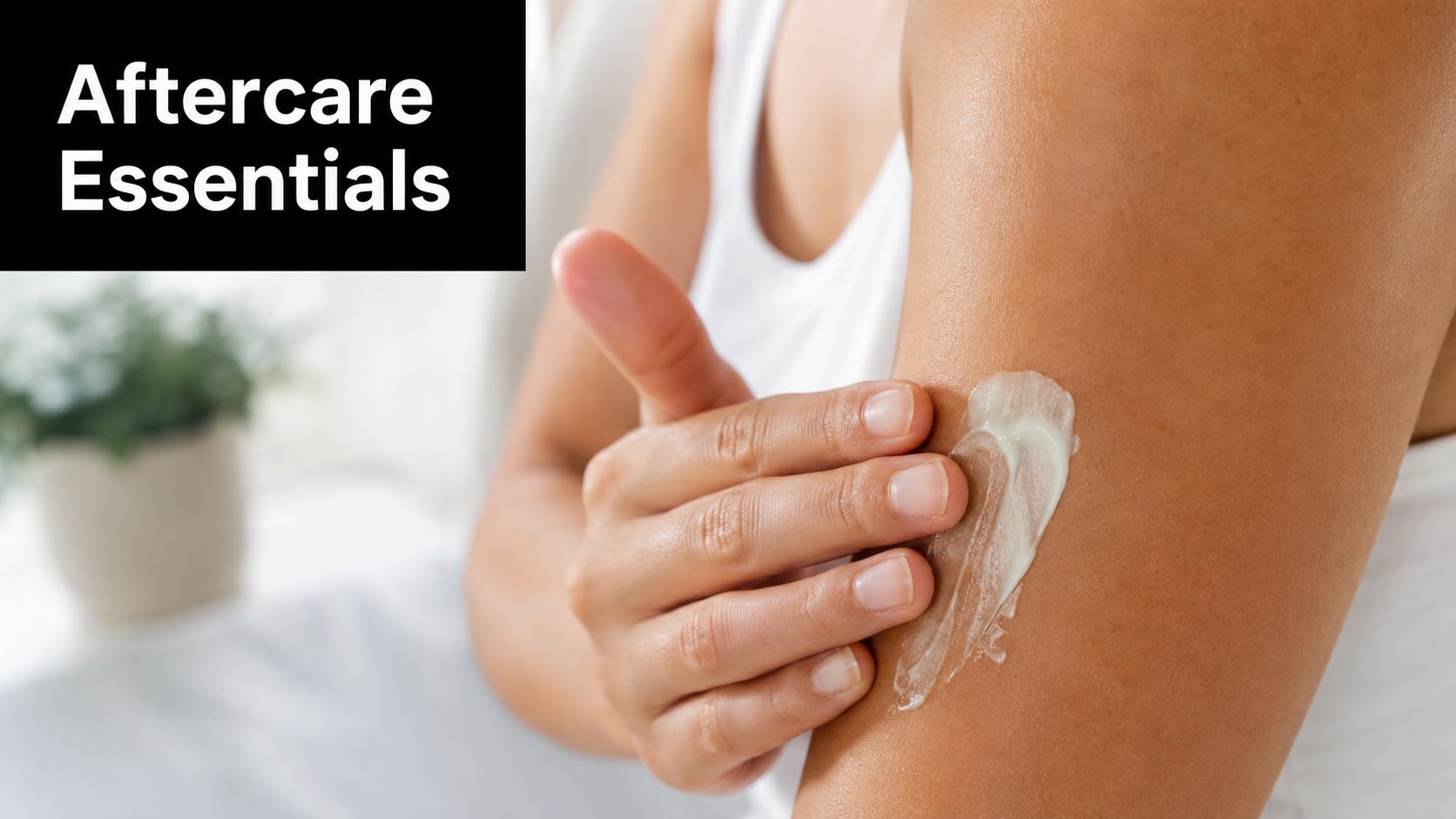
Good aftercare protects both your skin and your result. Keep the area clean and dry, use only the products your provider recommends, and protect the treated skin from sun exposure. If the skin gets irritated by friction, workouts, soaking, or harsh products, healing can take longer and the next session may need to wait.
Do's and don'ts that actually matter
- Do keep it clean: Gently wash as directed so the skin stays protected while it heals.
- Do avoid the sun: UV exposure can irritate freshly treated skin and complicate recovery.
- Do follow product instructions: If your provider recommends ointment or moisturizer, use only that plan.
- Don't pick at scabs or blisters: That raises the risk of poor healing and pigment changes.
- Don't treat redness as a surprise: Mild redness, swelling, and tenderness are common early reactions.
For a broader burn-and-skin-injury perspective, BIOVELVET™ burn recovery advice is a helpful reminder that clean wound care and infection awareness matter any time skin barrier recovery is involved.
Normal healing usually settles gradually. What you don't want is spreading redness, worsening pain, pus, fever, or a rash that seems to be escalating instead of easing. If anything seems off, contact the treating clinic promptly so they can tell you whether it's within normal recovery or needs medical attention.
New York Laser Tattoo Removal FAQ
Does laser tattoo removal hurt? It's often described as uncomfortable but manageable. Clinics often use cooling and other comfort measures, and the sensation can feel sharp and quick rather than prolonged.
Can all ink colors be removed? Not equally. Black ink usually responds more predictably, while greens, blues, and yellows can take longer to clear, so your results depend on the ink mix and the device used.
Can I just fade a tattoo for a cover-up? Yes. Fading for a cover-up is a common goal, and it often takes a different endpoint than full removal, so say that clearly during consultation.
Does skin tone matter? Yes, a lot. Effectiveness still varies by pigment and skin tone, and provider experience with Fitzpatrick IV-VI skin types can matter more than having the latest laser (PMC clinical review).
What should I look for in a New York clinic? Look for medical supervision, clear explanations, the right laser for your tattoo, and a provider who doesn't rush the consultation.
If you're ready to take the next step, book a consultation with EradiTatt Tattoo Removal and ask the questions that matter most, your skin type, your ink colors, your timeline, and how the clinic handles safety from the first session to the last.