
You're probably here because you've looked in the mirror, noticed acne scarring, rough texture, or early lines, and started searching for a treatment that works without putting your life on hold for a week. That's where microneedling often enters the conversation. For many Orlando patients, the questions aren't abstract. They're practical. What does it cost here? Who's legally qualified to perform it in Florida? And how do you choose a provider without getting distracted by polished marketing?
Those are the right questions.
Microneedling can be an excellent treatment when it's matched to the right skin concern, performed at the right depth, and done by a qualified professional. It can also disappoint when someone expects one session to fix deeper scars, or when a provider glosses over Florida regulations and aftercare. If you're researching Microneedling Orlando FL, clarity matters more than hype.
Table of Contents
- What Is Microneedling and How Does It Work
- Key Benefits and Ideal Candidates for Treatment
- Your Microneedling Journey From Start to Finish
- Understanding Microneedling Costs in the Orlando Area
- How to Choose the Right Microneedling Provider in Florida
- Microneedling Compared to Other Skin Treatments
- Your Next Steps and Frequently Asked Questions
What Is Microneedling and How Does It Work
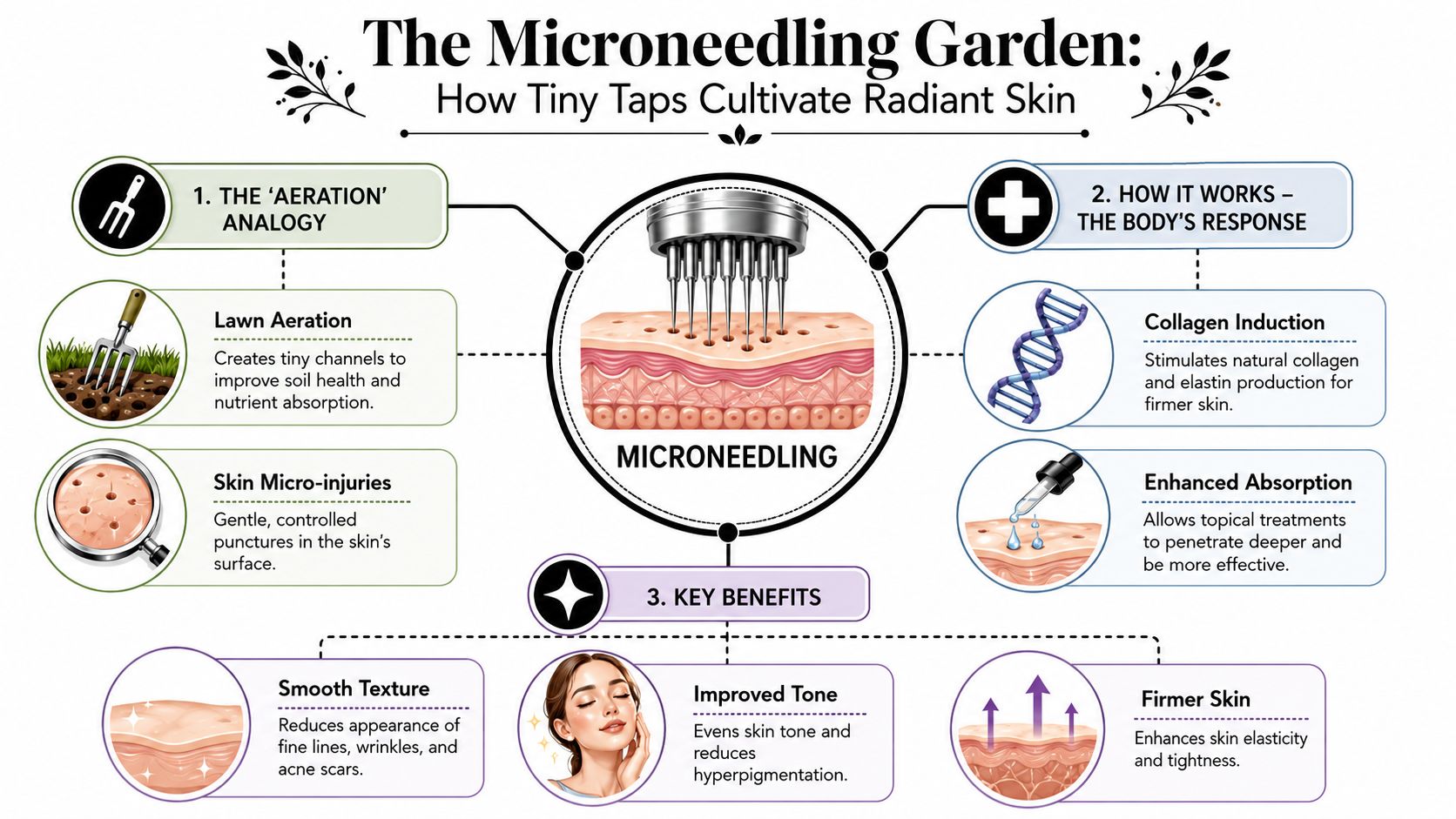
Microneedling sounds more intimidating than it is. A simple way to understand it is to think of lawn aeration. When tiny openings are made in compacted soil, water and nutrients move in more effectively, and healthier growth follows. Skin responds in a similar way.
Microneedling, also called collagen induction therapy, uses fine needles to create controlled micro-injuries in the skin. Those tiny channels signal the body to begin repair. That repair response is the whole point. The treatment is designed to encourage fresh collagen and elastin, which help skin look firmer, smoother, and more refined.
What happens in the skin
Microneedling works in a sequence, not all at once.
- The device creates precise channels in the treatment area.
- The skin recognizes controlled injury, not random trauma.
- Fibroblasts become active and begin building structural proteins.
- New collagen and elastin develop over time, improving the surface and supporting layers.
A key clinical detail is depth. Microneedling creates controlled micro-injuries from 0.25 mm to 2.5 mm deep, which stimulates fibroblast activity to synthesize type I and III collagen. Because it's a mechanical process rather than a thermal one, it's considered safe for all Fitzpatrick skin types and avoids the hyperpigmentation risks associated with some laser-based treatments, as outlined in this Florida microneedling legal and clinical guide.
Practical rule: The treatment should look deliberate and medical in its precision, not aggressive for the sake of being aggressive.
Why this mechanism matters
Patients usually care less about the word “fibroblast” and more about whether their skin will change. The reason microneedling helps texture, pores, and scarring is that it doesn't just exfoliate the top layer. It prompts a repair response deeper in the skin.
That distinction matters. Superficial treatments can brighten. Microneedling aims to remodel.
A second advantage is product penetration. After those micro-channels are created, professional-grade soothing and supportive topicals can be applied more effectively. That doesn't mean every serum belongs on freshly treated skin. It means the provider needs to choose carefully and avoid anything irritating.
What microneedling does not do
It's not an instant resurfacing shortcut. It won't replace surgery for significant laxity, and it won't erase deep scarring in a single visit. If someone promises dramatic overnight change, that's a red flag.
A better expectation is gradual improvement with a treatment plan that matches the condition being treated.
Key Benefits and Ideal Candidates for Treatment
In practice, microneedling works best when the concern is structural or textural. That includes surface irregularities that improve when the skin rebuilds itself more evenly.
In Orlando, microneedling is commonly used to address acne scars, surgical scars, enlarged pores, fine lines, and uneven texture, and patients typically describe the treatment as mildly uncomfortable pressure and light pricking, with maintenance sessions every 3–6 months often recommended to preserve results, according to this Orlando microneedling overview.
Who tends to do well with microneedling
The strongest candidates usually share a few traits:
- They want texture improvement: Acne scarring, roughness, and visible pores respond better than concerns that need lifting or volume replacement.
- They're comfortable with a series: Microneedling rewards consistency. Patients who expect staged progress usually end up happier than patients chasing a one-time miracle.
- They can follow aftercare: Sun protection, gentle skincare, and patience make a visible difference in healing quality.
- They want an option suitable across skin tones: For many patients, that broad compatibility is a major reason to consider microneedling.
Some patients also pair in-office treatment with smarter lifestyle choices that support collagen quality between sessions. If you want a useful background read on that side of the conversation, this guide to natural collagen production offers a helpful overview.
Concerns that may need a different plan
Microneedling isn't the best fit for every face on every day.
Active breakouts, skin infection, or a compromised barrier should slow the process down. Treat the inflammation first. Needle later.
You may need to postpone or rethink treatment if you have active acne in the area, significant irritation, a current rash, or a medical history that affects healing. The consultation matters because skin goals alone don't determine candidacy. Skin condition on the day of treatment matters just as much.
A provider should also be honest about the difference between improvement and resolution. Fine lines and mild acne scarring often respond well. Extensive tethered scars or substantial skin laxity may need combination treatment or a different primary procedure.
A quick self-check
This table gives a practical way to think about fit.
| Situation | Microneedling may fit well | You may need caution or another option |
|---|---|---|
| Texture concerns | Yes, especially for roughness and superficial scarring | Less ideal if texture issues are secondary to active inflammation |
| Skin tone | Often a strong option across skin types | Still needs skilled technique and proper aftercare |
| Downtime tolerance | Good if you can handle short-term redness | Harder if you need zero visible recovery immediately |
| Expectations | Best if you understand collagen builds gradually | Poor fit if you expect one session to solve deeper issues |
A good consultation should leave you feeling informed, not “sold.”
Your Microneedling Journey From Start to Finish
You book a treatment because your skin looks uneven in the mirror, but the main questions are practical. How long will you be red, what will the appointment feel like, and how do you fit recovery into a workweek in Orlando heat and sun? A good provider should answer those clearly before a device ever touches your skin.
The consultation and prep phase
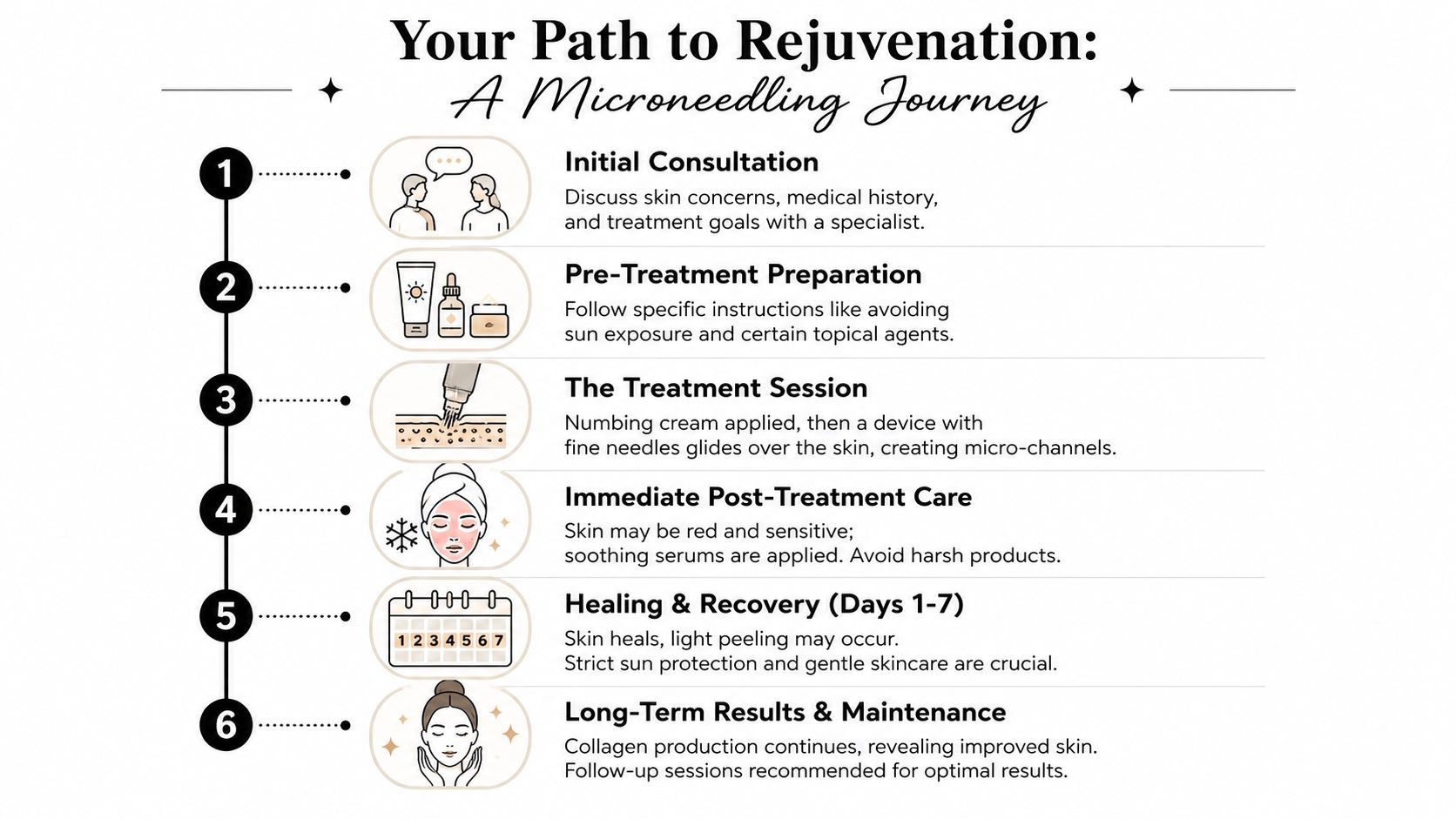
A proper consult starts with skin behavior, not marketing promises. Your provider should review pigment history, acne activity, past procedures, medications, healing patterns, and the products you use at home. Under Florida practice standards, credentials and supervision matter too, especially if you are considering a deeper or more aggressive treatment.
Treatment planning also needs to match your actual goal. Someone focused on early acne marks may need a different depth, schedule, and aftercare plan than someone trying to improve crepey texture or mild laxity. If RF microneedling is being discussed, ask why it is being recommended and what trade-off comes with it. Higher intensity can mean more swelling, more downtime, and a higher price.
Preparation is usually simple. Your provider may ask you to pause retinoids, exfoliating acids, and any product that leaves your skin irritated. Sunburned or wind-chapped skin should wait. For patients coordinating several cosmetic appointments at once, this guide on how to prepare for tattoo removal shows the same principle. Calm skin generally heals better than stressed skin.
What treatment day actually feels like
Most appointments begin with photos, a fresh cleanse, and one more skin check. If the skin looks inflamed that day, a careful provider may adjust the plan or reschedule. That protects your results.
Topical numbing is often applied first, then removed before treatment starts. During the procedure, the pen is moved methodically across the skin, with settings adjusted by area. The forehead, cheeks, nose, and scarred zones usually do not get the same depth. That level of detail matters more than a fast treatment time.
Patients usually describe standard microneedling as scratchy with pressure. RF microneedling often feels hotter and more intense, even with numbing. According to the American Society of Plastic Surgeons' overview of what to expect during and after microneedling, temporary redness and mild sensitivity are common after treatment, and social downtime is often brief.
Healing and when results show up
Right after treatment, skin usually looks pink to red and feels warm, similar to a moderate sun exposure. By the next day or two, that heat settles down. Some patients notice a rough, dry feel for several days as the surface turns over.
Early improvement and collagen remodeling are not the same thing. The fresher look can show up first because swelling and hydration change the way light reflects off the skin. Structural improvement takes longer. Texture, acne marks, and fine lines tend to shift gradually over a series, not overnight.
A practical recovery timeline looks like this:
| Timeframe | What you may notice | What helps |
|---|---|---|
| First 24 to 48 hours | Redness, warmth, tightness, mild swelling | Gentle cleanser, bland moisturizer, strict sun protection |
| Days 3 to 7 | Dryness, light flaking, skin that feels slightly rough | Avoid scrubs, acids, retinoids, and heavy sweating if advised |
| Following weeks | Gradual improvement in tone and texture | Follow the treatment plan and keep expectations realistic |
Aftercare has a direct effect on comfort and pigment risk, especially in Florida where UV exposure is hard to avoid. These essential dos and don'ts for recovery are a useful supplement to the written instructions your provider gives you.
One final point matters. Good microneedling should feel organized from start to finish. Clear screening, sterile technique, realistic timing, and precise aftercare usually tell you more about a provider than before-and-after photos alone.
Understanding Microneedling Costs in the Orlando Area
A patient in Orlando books a low-priced microneedling session, then learns at consultation that numbing, growth factor serums, neck treatment, or scar work cost extra. That kind of pricing is common enough that the better question is not just “What does microneedling cost?” but “What does that fee include?”
In Central Florida, pricing usually reflects the device being used, the area treated, the time built into the appointment, and whether the treatment is being performed in a medical setting. For a single session, standard microneedling often falls in the lower hundreds, while RF microneedling sits much higher because the equipment, treatment planning, and recovery profile are different. The American Society of Plastic Surgeons lists a national average physician fee for microneedling, which is a helpful baseline, but Orlando pricing still varies by practice model and treatment goals, as shown in this microneedling cost overview from ASPS.
Why prices vary in Orlando
Two clinics can both advertise microneedling and deliver very different treatments.
A lower fee may cover a straightforward cosmetic-depth treatment on the face only. A higher fee may include scar-focused technique, a larger treatment area, stronger clinical oversight, or a more advanced device. That difference matters if your concern is acne scarring, textural irregularity, or early laxity rather than general refreshment.
Common reasons one quote comes in higher than another include:
- Device type: Standard microneedling and RF microneedling are different categories of treatment.
- Treatment area: Face-only sessions cost less than face and neck, body areas, or focused scar revision.
- Provider time and setting: Medical practices generally build in more consultation, charting, sterile setup, and supervision.
- What is bundled: Some offices include post-care products or add-on serums. Others price them separately.
- Series planning: A package may reduce the per-session rate, but only if the treatment plan fits your skin and timeline.
Standard microneedling versus RF microneedling
Here is the practical difference in how patients usually budget for these options in Orlando.
| Option | Typical cost pattern in Orlando | Best suited for |
|---|---|---|
| Standard microneedling | Lower per-session cost | Texture, visible pores, mild acne marks, early fine lines |
| RF microneedling | Higher per-session cost | Skin tightening goals, deeper textural change, more advanced remodeling |
Standard microneedling is often the better value for patients who want to improve surface texture and post-acne unevenness without stepping into a more intensive treatment category. RF microneedling can make sense, but only when the added expense matches the problem being treated.
That distinction matters for scar work too. Patients comparing options for acne scars sometimes also look at treatments used for ink or pigment concerns, and the cost structure is very different from services such as tattoo removal in Orlando, where pricing is often tied more directly to size, ink density, and number of sessions.
How to judge value, not just price
The best quote is the one that matches your skin concern, your downtime tolerance, and the level of expertise the treatment requires.
Ask what is included before you book. Does the fee cover consultation, numbing, aftercare instructions, and follow-up? Is the provider adjusting depth and technique based on acne scars, melasma history, or skin sensitivity, or is every patient getting the same pass with the same settings?
A bargain session can become expensive if it produces little change, triggers irritation, or sends you elsewhere for correction. A well-planned series, done by the right provider, usually gives better value than chasing the lowest introductory price.
How to Choose the Right Microneedling Provider in Florida
If you remember one thing while comparing providers, remember this: in Florida, credentials and supervision are not side details. They're central to safety.
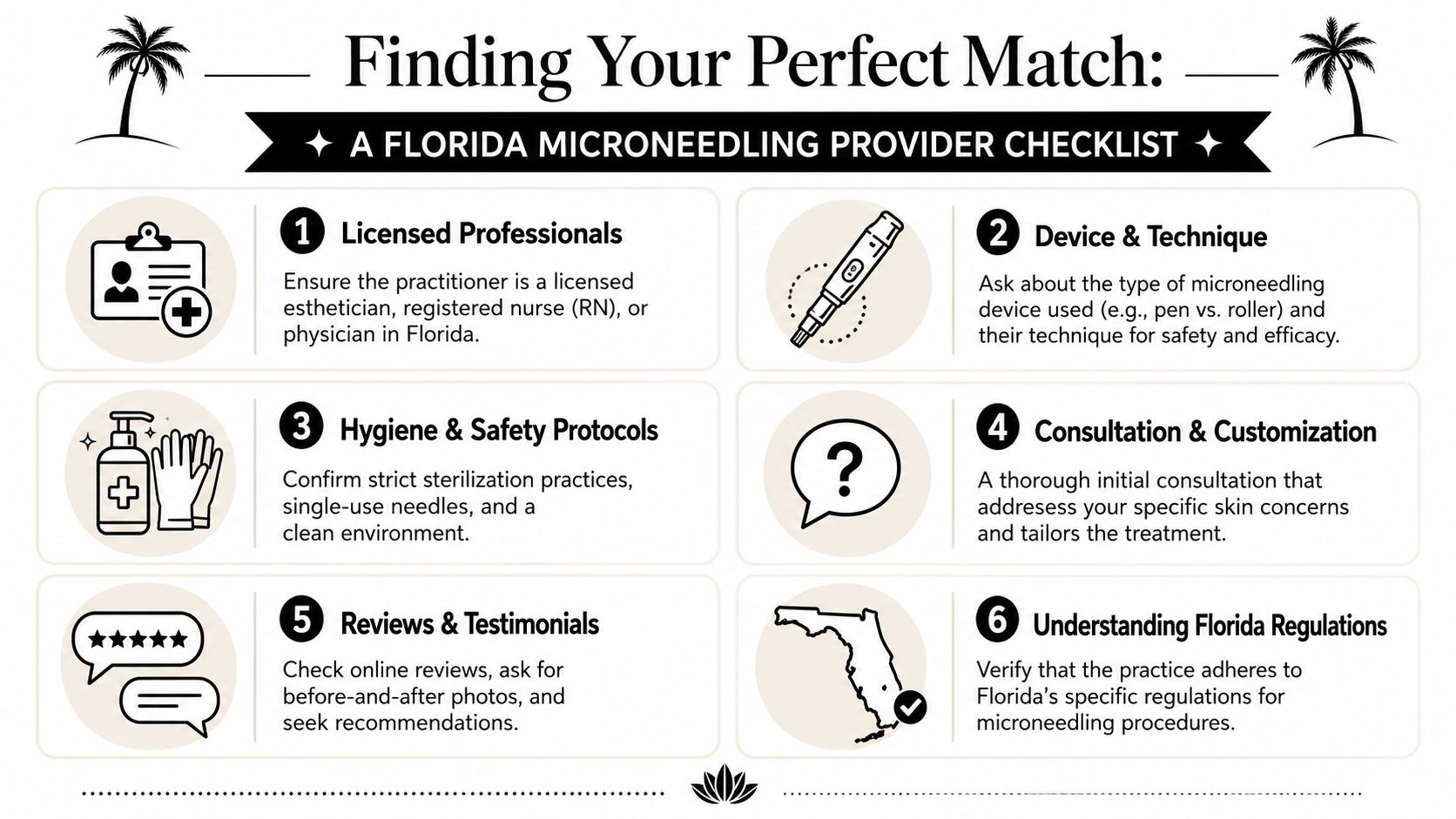
Florida's Board of Cosmetology treats microneedling performed deeper than 0.5 mm as a medical procedure, which means it must be done within a medical practice under physician supervision and falls outside the scope of a standard esthetician license, as explained in this Florida microneedling regulation summary.
What to ask before you book
A consultation should answer these questions clearly:
- Who will perform the treatment: Ask for the provider's license type and role in the practice.
- What depth is being used: This tells you whether the treatment is cosmetic-depth or medical-grade.
- How is supervision handled: If the procedure crosses into medical territory, oversight should be easy to explain.
- What device is used: A professional microneedling pen is very different from low-control tools and rollers.
- How are needles handled: Single-use cartridges and clean technique are basic requirements, not premium upgrades.
- How is treatment customized for your skin type and concern: Scar revision, pore refinement, and skin tightening don't all require the same approach.
If a provider gets vague when you ask about licensing, supervision, or needle depth, keep looking.
Signs of a stronger provider
Good providers usually do a few things consistently. They examine your skin in person. They discuss what microneedling can't do, not only what it can. They set expectations around a series instead of implying one appointment will solve everything.
It also helps to compare a clinic's professionalism across services. Even if you're researching skin rejuvenation rather than ink removal, this local example of what patients look for in the best tattoo removal in Orlando reflects the same decision standards: qualified staff, transparent consultation, appropriate technology, and clear aftercare.
A short provider checklist
| Question | Why it matters |
|---|---|
| Are you licensed for this level of treatment in Florida? | Confirms legal scope and patient safety |
| Is physician supervision required for my treatment depth? | Clarifies whether the setting is compliant |
| What device do you use? | Better tools usually allow more control |
| How do you tailor treatment for scars, pores, or sensitivity? | Shows whether the plan is individualized |
| What should I expect after treatment? | Reliable providers prepare you for recovery, not just booking |
Choose the provider who answers directly and doesn't rush the conversation.
Microneedling Compared to Other Skin Treatments
Microneedling is a strong option, but it isn't the only option. The better question is not “What's the best treatment?” It's “What's the best treatment for my skin goal, downtime tolerance, and risk profile?”
Where microneedling stands out
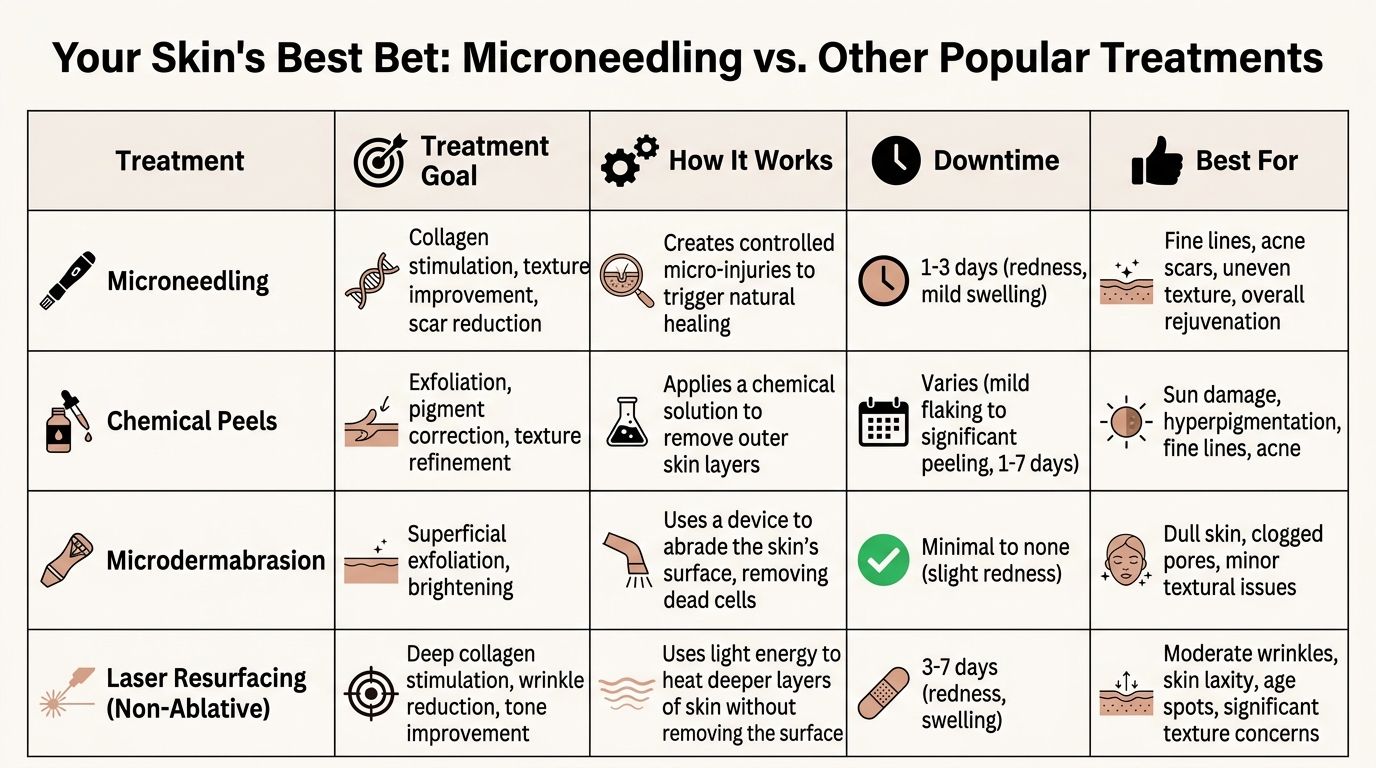
Microneedling is especially useful when the target is texture, acne scarring, fine lines, pores, and overall skin quality. Because it's mechanical rather than heat-based, many patients see it as a safer path across a wider range of skin tones than some energy-based procedures.
Chemical peels work differently. They remove or accelerate shedding of outer skin layers and can be a good fit for pigment, dullness, and superficial refinement. Microdermabrasion stays even more surface-level and is usually best for mild roughness and brightness rather than structural remodeling.
Non-ablative laser resurfacing often aims deeper than microdermabrasion and can support collagen stimulation and tone improvement, but it brings a different risk-benefit conversation, especially for patients with pigment concerns.
A practical comparison
| Treatment | Best for | Main trade-off |
|---|---|---|
| Microneedling | Texture, scars, pores, rejuvenation | Results build gradually and often require a series |
| Chemical peels | Pigment, dullness, superficial texture | Peel strength and downtime vary widely |
| Microdermabrasion | Mild roughness, quick refresh | Limited impact on deeper scars or lines |
| Non-ablative laser resurfacing | Tone, wrinkles, deeper rejuvenation goals | Not every patient is an ideal candidate |
How to decide
If your skin concern is mostly structural, such as acne scarring or crepey texture, microneedling usually deserves serious consideration. If your concern is mostly surface pigment or dullness, a peel may be the more direct route. If you want the lightest possible intervention, microdermabrasion may be enough.
Patients comparing multiple cosmetic services often find it helpful to look at technology side by side, even outside facial rejuvenation. For another example of evaluating device-based aesthetics by mechanism and trade-offs, this overview of laser hair removal in Clearwater, Florida shows the same principle at work: the right device only matters when it matches the right candidate.
Your Next Steps and Frequently Asked Questions
You have looked at the benefits, the trade-offs, and the treatment options. The last step is choosing a provider who can assess your skin carefully and give you a plan that fits your goals, budget, and downtime tolerance here in Orlando.
Microneedling works best when the decision is specific. Florida patients often ask the same practical questions: Who is performing the treatment, what level of training they have, how aggressive the plan should be, and whether standard microneedling or RF microneedling makes more sense for the concern being treated. If you are still comparing modalities, this article on evaluating skincare device technologies is a useful outside reference.
Frequently asked questions
Is microneedling painful
Most patients describe treatment as tolerable. With prescription-strength or clinical numbing, the sensation is usually pressure, scratching, and vibration rather than sharp pain. Areas around the mouth, nose, and forehead can feel more intense, which is one reason treatment settings and technique matter.
Can I wear makeup after treatment
Give your skin time to recover first. Freshly treated skin has thousands of microchannels, and makeup can increase irritation or introduce bacteria if you apply it too soon. I usually tell patients to follow their provider's aftercare timeline closely instead of guessing based on how the skin looks that evening.
Are at-home microneedling tools safe
They are not equivalent to an in-office procedure. Home rollers and pens vary widely in needle quality, depth control, and sanitation, and poor technique can lead to irritation, infection risk, or post-inflammatory pigment problems. In darker skin tones, that trade-off matters even more.
How do I know if RF microneedling is worth it
RF microneedling can be a strong option if you want more tightening or deeper remodeling. It also comes with a higher price point and a different risk profile, so it is not automatically the better choice. For early texture changes, enlarged pores, or mild acne scarring, standard microneedling is often the more sensible place to start.
What should I ask at a consultation in Florida
Ask who will perform the procedure, what their license or medical oversight looks like under Florida law, what device they use, how they choose needle depth, how they reduce pigment risk, and what your total expected cost will be for a full series, not just one session.
Choose a provider who answers those questions clearly and without pressure. Good microneedling in Orlando is not about the lowest advertised price. It is about safe technique, honest guidance, and a treatment plan built for your skin.
If you're also thinking about tattoo fading or full removal, EradiTatt Tattoo Removal offers Florida clients a straightforward path to either complete removal or light fading for a cover-up. With multiple locations, flexible scheduling, and a supportive approach, the team helps you understand your options and move forward with a treatment plan that fits your skin, your goals, and your timeline.