
You might be reading this with an old tattoo in mind. Maybe it was right for a different season of life. Maybe the artwork aged poorly, the meaning changed, or you want clean skin again. Some people want total removal. Others just need enough fading to give their artist a better canvas for a cover-up.
That difference carries more weight than often acknowledged. In Kansas City, a smart tattoo removal plan starts with one question: Are you trying to erase the tattoo, or lighten it? Your answer changes the number of sessions, the cost, the healing timeline, and the kind of result you should expect.
For tattoo removal in Kansas City, you deserve more than a generic FAQ. You need a practical explanation of how laser removal works, what treatment feels like, how long the process usually takes, what affects cost, and how to choose a provider who will be honest with you from the start.
Table of Contents
- Is It Time for a Fresh Start
- How Laser Tattoo Removal Actually Works
- Fading for a Cover-Up vs Complete Removal
- Your Tattoo Removal Journey What to Expect
- Understanding Tattoo Removal Cost in Kansas City
- How to Choose a Reputable KC Provider
- Your Tattoo Removal Questions Answered
Is It Time for a Fresh Start
If you've been staring at the same tattoo for months or years and feeling stuck, that's common. People outgrow tattoos for all kinds of reasons. A name no longer fits. A design looks darker or blurrier than it used to. A visible tattoo starts to feel out of step with work, family, or how you see yourself now.
Wanting it gone doesn't mean getting it was a mistake. It usually means your life changed.
For many first-time clients, the hardest part is not the treatment. It's the uncertainty before the first consultation. They want to know if removal is possible, whether it will hurt, how much it may cost, and whether they're signing up for a very long process without understanding the end result.
Practical rule: Decide on your goal before you book. Full removal and cover-up fading are not the same plan.
That single decision makes everything clearer. If you want a fresh canvas for a new tattoo, your provider can focus on reducing the old ink enough for your artist to work with it. If you want the tattoo fully gone, the plan becomes more patient and more complete.
Kansas City clients also tend to have the same early concerns:
- Pain: Clients often seek an honest answer, not a sales answer.
- Price: They want to know what drives the bill up or down.
- Time: They want to know why treatment isn't instant.
- Safety: They want reassurance that the provider has a real process, not just a laser.
A good consultation should leave you feeling informed, not pressured. By the end of this guide, you should know what the laser is doing, why your body needs time between sessions, what healing can look like, and how to judge whether a clinic is giving you realistic expectations.
How Laser Tattoo Removal Actually Works
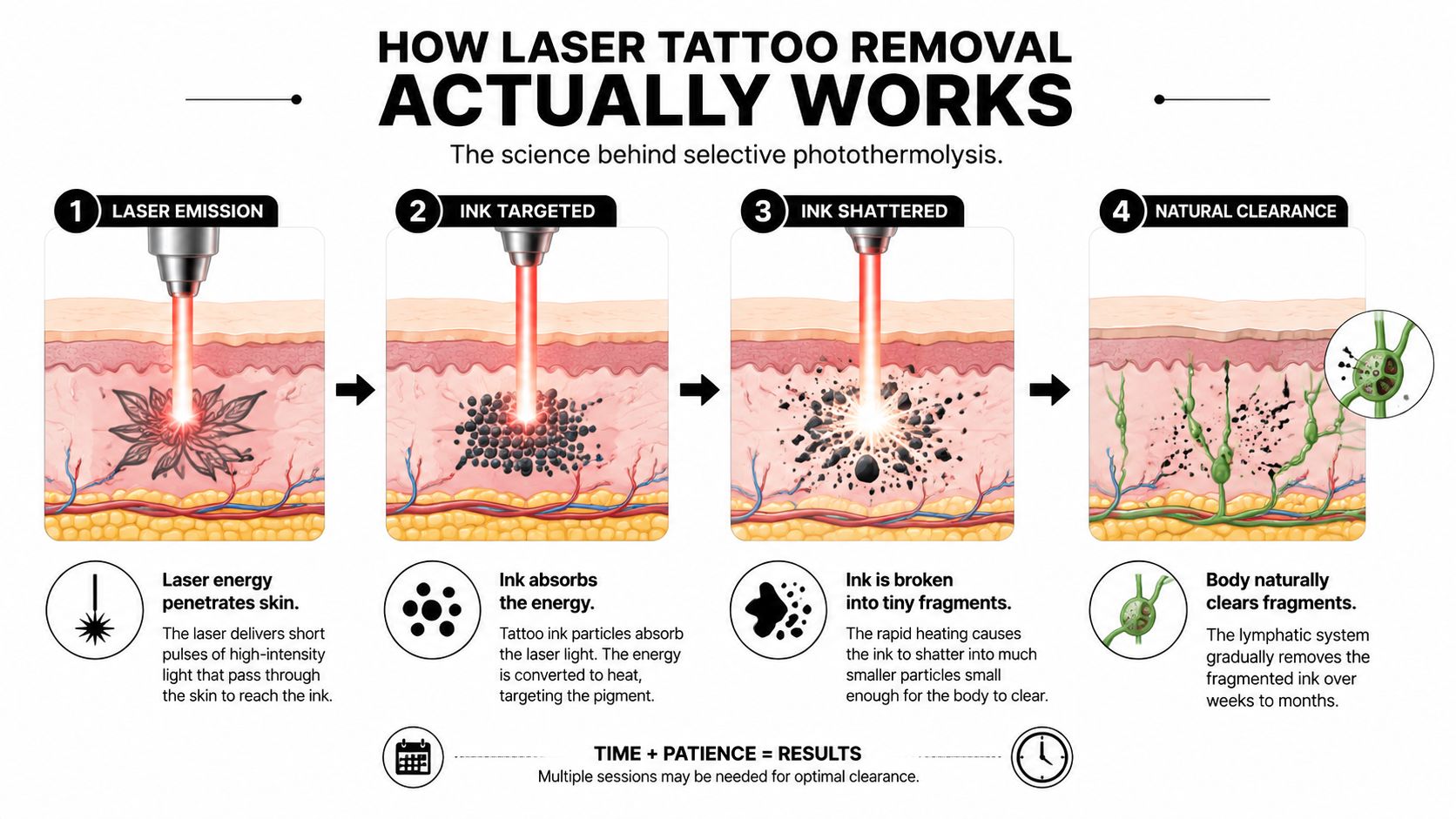
A lot of first-time clients expect the laser to erase ink on contact. The process is more like cracking a stain into tiny pieces so your body can carry it away over time.
The laser targets pigment, not the whole skin surface
Tattoo ink sits below the outer layer of skin. During treatment, short bursts of laser energy are directed at that pigment. Dermatology guidance from the American Society for Dermatologic Surgery explains laser tattoo removal as a process that uses light energy to break tattoo pigment into smaller fragments, which the body can then clear gradually.
A rock-and-pebble comparison fits well here. Large ink particles are harder for the body to remove. After the laser breaks them into smaller pieces, your immune system has a better chance of clearing them in the weeks that follow.
That gradual clearing is why the tattoo usually looks lighter little by little, not all at once when you stand up from the chair.
Different lasers also matter because different ink colors absorb light differently. Black ink often responds well. Lighter colors, mixed pigments, and older cover-ups can be less predictable. If you want a plain-language overview before your visit, this first-timer tattoo removal breakdown explains what happens before, during, and after treatment.
Your body does part of the work between sessions
The laser starts the breakdown. Your body handles the cleanup.
That point causes a lot of confusion. Clients sometimes assume that booking sessions very close together will speed everything up. In practice, the skin needs time to recover and the body needs time to move out shattered ink particles. The Mayo Clinic's overview of tattoo removal methods notes that laser treatment is usually done over a series of sessions rather than in one visit.
Here is the process in plain English:
- The laser pulse hits the ink
- The ink breaks into smaller fragments
- Your immune system begins clearing those fragments
- The area heals before the next treatment
Pain and healing fit into this same logic. The session itself is often described as quick snaps against the skin, similar to grease popping or a rubber band flicking repeatedly. Then the treated area can feel warm, tender, or sunburned for a short period. That reaction does not mean something went wrong. It usually means the skin is responding to treatment.
Results also vary for reasons that are easy to overlook. Dense ink, scar tissue, layered tattoos, and locations with slower circulation can all make removal take longer. That does not mean you are a bad candidate. It means a careful provider should set your plan based on your tattoo, your skin, and your goal, especially since full removal and fading for a cover-up are two different projects with two different stopping points.
Fading for a Cover-Up vs Complete Removal
Many Kansas City tattoo removal conversations go wrong at this point. People ask, "How many sessions will I need?" before they answer the more important question: "What result am I after?"
Two different goals
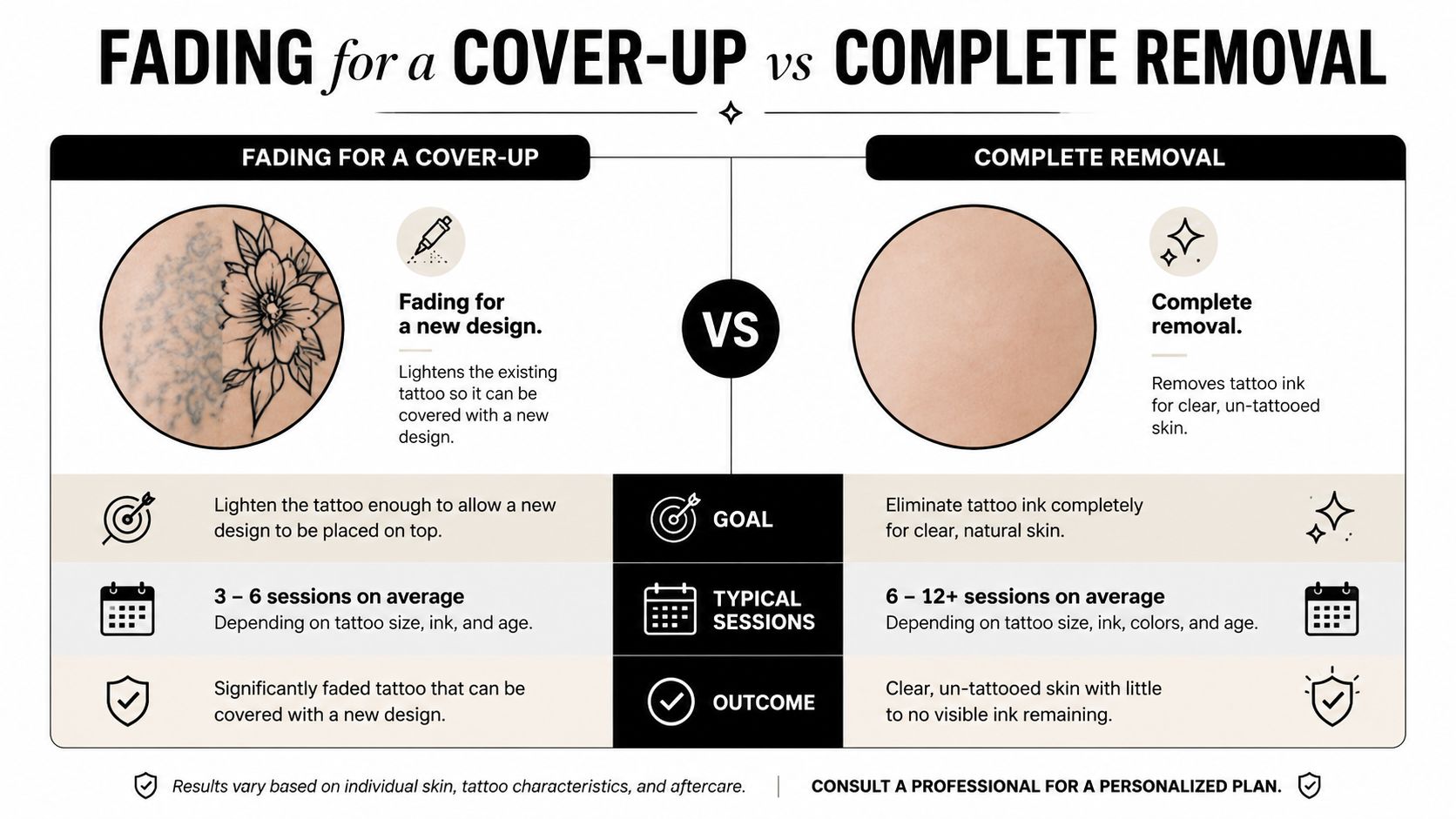
If your plan is a new tattoo over the old one, you often don't need every trace of ink removed. You just need enough fading to stop the old design from fighting the new design. An industry source notes that fading for a cover-up often takes only 2 to 3 laser sessions, while full removal commonly requires 5 to 10 treatments, and stubborn or layered tattoos may need 10+ sessions, as explained in this cover-up versus full removal FAQ.
That's a major difference in planning.
A client who wants a cover-up is usually buying a better starting point for their tattoo artist. A client who wants complete removal is buying progressive clearance until the remaining ink is as minimal as possible.
For that reason, your consultation should include your tattoo artist if you're planning a cover-up. Some artists want the old piece much lighter than others. Some can work with partial fading. Others want the previous design softened more aggressively before they start.
If you want ideas on building that kind of plan, this cover-up fade strategy guide is useful because it focuses on matching the fading goal to the new design.
A simple side-by-side view
| Goal | Typical path | Outcome |
|---|---|---|
| Cover-up fading | Lighten the old tattoo enough for new artwork | Old ink becomes less dominant |
| Complete removal | Keep treating until the tattoo is largely cleared | Skin moves toward a clean look |
The emotional side is different too. Cover-up clients often feel relief sooner because they can see the next step ahead. Full-removal clients usually need more patience because the win is slower and more gradual.
If your real goal is a cover-up, don't let anyone sell you a full-removal timeline.
That doesn't mean fading is casual or rushed. It still needs thoughtful treatment and healing time. It just means the finish line is different. Once you know which path you're on, the whole process starts to make sense.
Your Tattoo Removal Journey What to Expect
The first treatment usually feels less mysterious after the first few minutes. Most clients are tense before the session because they don't know what the laser sensation will be like or what their skin will look like afterward.
During the appointment
A typical visit starts with reviewing the tattoo, cleaning the area, and protecting your eyes. Then the provider delivers short bursts of laser energy over the ink. Many people describe the feeling as sharp and snappy, similar to repeated rubber-band flicks. It's uncomfortable, but the sensation is brief and focused.
If pain control is one of your biggest worries, ask in advance what options the clinic allows and how to use them safely. Some clients also look into effective lidocaine solutions so they can have a more informed conversation before treatment day.
Right after the session, the area may look pale, raised, red, or irritated. That's a normal immediate skin response. You may also notice warmth, tenderness, or swelling.
The days after treatment
Healing is where patience matters. The tattoo doesn't just disappear after the appointment. The visible change usually unfolds over time as your body processes what the laser disrupted.
With modern PicoSure technology, patients should typically expect 20% to 25% removal after each treatment, and an average-size tattoo may be 90% removed in as little as 4 treatments, while older laser approaches might achieve only about 50% removal after 20 treatments, according to this PicoSure treatment explanation.
That doesn't mean every tattoo follows the same pattern. It means progress is usually incremental, not dramatic after one visit.
Aftercare is where experienced clients separate themselves from frustrated ones. Your provider may advise you to keep the area clean, avoid friction, leave blisters alone if they occur, and protect healing skin from unnecessary irritation. Follow those instructions closely. The laser treatment is only part of the job. Good healing supports a better result.
A realistic mindset helps:
- First days: Expect tenderness, redness, and a "recently treated" look.
- Following weeks: The tattoo may start to soften or lighten gradually.
- Between sessions: Your skin is recovering even when nothing obvious seems to be happening.
Don't judge your result by the first 24 hours. Tattoo removal is usually more visible in the weeks that follow.
If you tend to heal slowly, have dense ink, or had the tattoo reworked, ask your provider to explain how that might change your pace. Honest timeline management is part of quality care.
Understanding Tattoo Removal Cost in Kansas City
A lot of first-time clients ask about price before anything else. That makes sense. You are not buying one appointment. You are planning a series of treatments, and the total depends on your goal.
What local pricing usually looks like
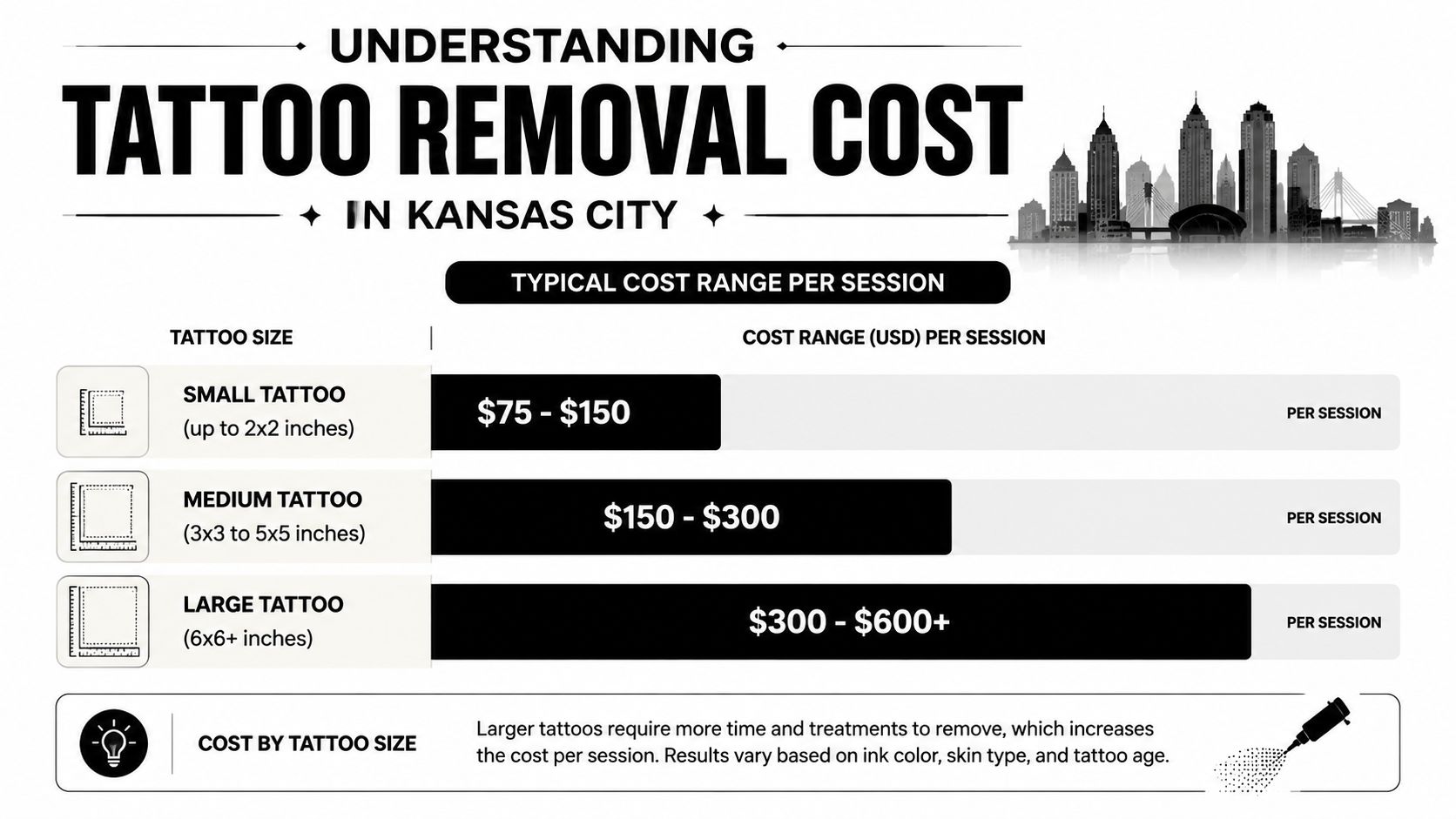
Kansas City pricing is often quoted per session, but that number only tells part of the story. A small, lightly inked tattoo being faded for a cover-up may need a much shorter plan than a dense, older piece you want fully gone.
That is the part many guides blur together. Your budget changes based on the finish line.
For a practical benchmark, the American Society for Aesthetic Plastic Surgery treatment cost overview explains why laser pricing varies by treatment area, provider, and the number of visits needed. Tattoo removal works the same way. The session fee matters, but the larger question is how many sessions your skin and ink will need to reach your goal.
If you want a plain-language breakdown of why one tattoo can cost far more than another, this guide to tattoo removal pricing factors explains the main cost drivers clearly.
Why one tattoo costs more than another
During a consultation, a provider is usually estimating time, difficulty, and endpoint.
Here are the biggest factors:
- Size and surface area: Larger tattoos take more treatment coverage.
- Ink density: Heavy, saturated ink usually needs more work than lighter ink.
- Layering or rework: Cover-ups, touch-ups, and scarred areas can slow progress.
- Placement on the body: Some areas clear more slowly because circulation differs from one body part to another.
- Your goal: Fading for a cover-up often costs less overall than full removal because you are stopping earlier.
A simple way to picture it is sanding paint off wood. If you only need to lighten the surface so a new coat will hold, the job is shorter. If you want every trace removed, you keep going.
Full removal vs fading costs
This is the cost distinction Kansas City clients need to hear clearly.
Fading for a cover-up usually means fewer sessions, a lower total spend, and a shorter timeline. The tattoo does not need to disappear. It only needs to become light enough for your artist to work over it cleanly.
Full removal usually means more sessions, more healing cycles, and a higher total cost. You are asking for the ink to be reduced as far as your skin will allow, not just softened.
Ask your provider for two estimates if you are undecided:
- one plan for cover-up fading
- one plan for complete removal
That side-by-side quote gives you a realistic plan instead of one vague number.
| Question | Why it affects cost |
|---|---|
| Am I fading or fully removing this tattoo? | Your endpoint changes the number of sessions |
| How dense or layered is the ink? | More stubborn tattoos usually take longer to break down |
| Can I space treatments properly? | Healing time affects how quickly you can move through the plan |
Some Kansas City clinics offer package pricing or payment options. Ask for the full math in writing. A good consultation should leave you with a per-session estimate, a likely session range, and a clear explanation of why your quote looks different from someone else's.
How to Choose a Reputable KC Provider
The right clinic should make you feel calmer by the end of the consultation, not more confused. You should leave knowing who will treat you, what your goal requires, and whether you are building a plan for full removal or for fading before a cover-up. That distinction matters in Kansas City because those are two different projects, with different timelines and different total costs.
Questions to ask at the consultation
A good consultation should feel like a fitting, not a sales pitch. The provider is matching the treatment plan to your skin, your ink, and your end goal.
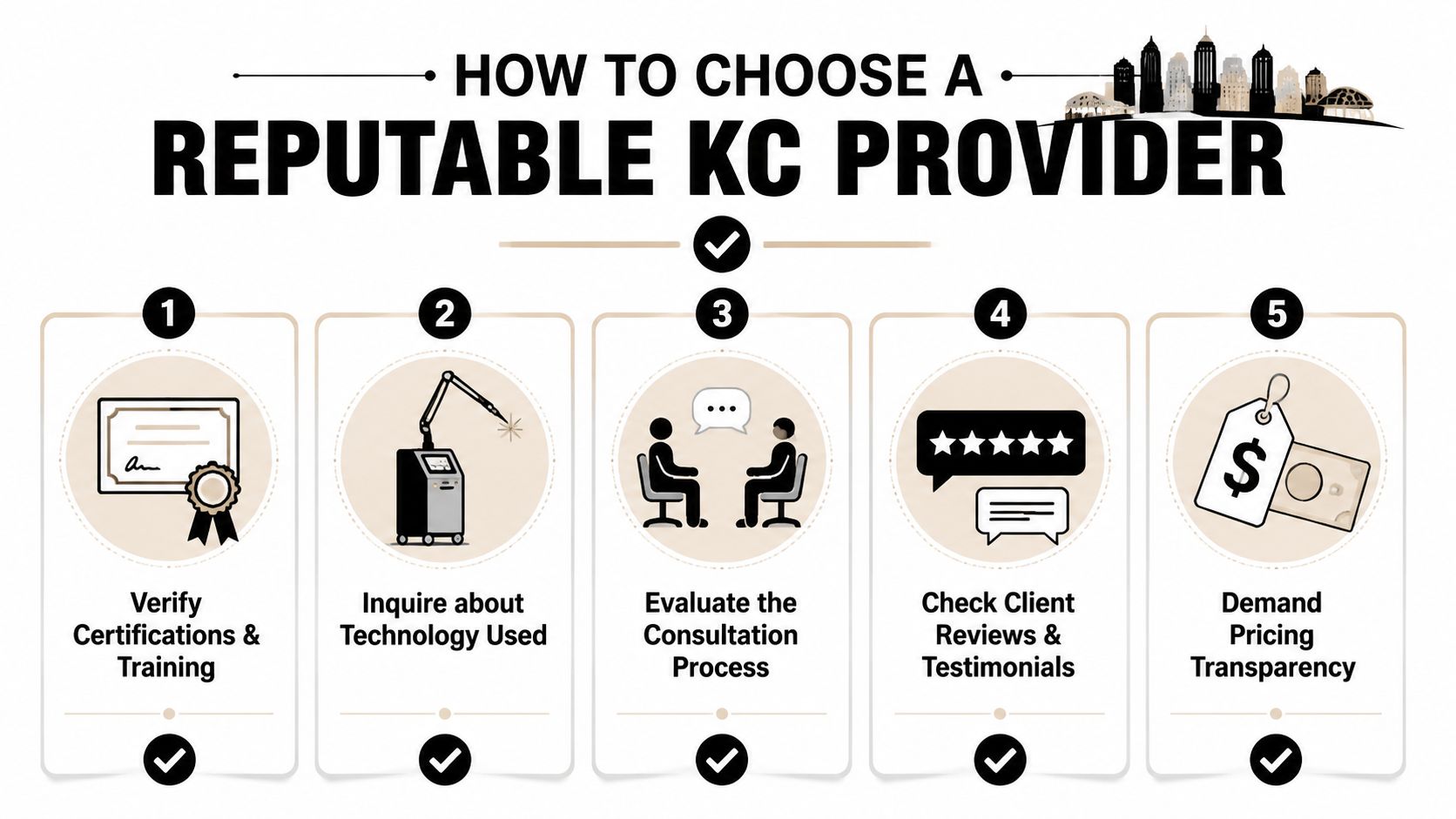
Ask these questions and pay attention to how clearly they answer:
- Who performs the treatment? Ask about training, supervision, and how often they work on tattoos like yours.
- What laser technology do you use? You do not need a technical lecture. You do need a plain explanation of why that device fits your tattoo colors and skin tone.
- Can I see real before-and-after examples? Look for tattoos with similar placement, ink density, and age.
- How do you decide between fading and full removal? A provider should ask about your goal before talking about sessions.
- What does aftercare involve? Healing is part of the treatment, not a footnote.
Listen for specifics. If every answer sounds generic, or if the provider jumps straight to a package price without learning what you want, keep looking.
What a solid treatment plan should include
A useful plan reads like a map. It shows where you are starting, where you want to end, and what could slow the trip down.
For example, someone fading a forearm tattoo for a cover-up needs a different plan than someone trying to remove an old name tattoo completely. The first person may only need enough fading for a tattoo artist to work cleanly. The second person is asking the skin to keep clearing ink over a longer period. A reputable provider should explain that difference in plain language and give you a quote that matches the goal.
Here are green flags to look for:
- They set expectations with care. They explain that results build over time and that no one can promise a fixed number of sessions on day one.
- They explain the process in normal language. You should understand what the laser is targeting, what healing looks like, and why spacing matters.
- They discuss risks and skin reactions openly. Redness, swelling, frosting, and temporary pigment changes should be explained before treatment, not after.
- They separate your end goals clearly. Cover-up fading and full removal should be discussed as different treatment paths, with different likely costs and timelines.
- They give you pricing you can follow. You should hear the per-session cost, the likely range, and what could change the estimate over time.
One more clue matters. A careful provider will not rush to treat you on the spot if your tattoo, skin, or expectations need a closer review first. That kind of patience usually leads to better decisions.
If you compare clinics, take notes right after each visit. Write down who answered your questions, whether they explained pain and healing clearly, and whether they treated your tattoo like an individual case or just another appointment slot.
The best choice is usually the provider who makes the process easy to understand and gives you an honest plan you can live with, financially and mentally.
Your Tattoo Removal Questions Answered
Can you remove a very new tattoo
Most providers will want to evaluate how fully the tattoo has healed before starting laser work. Fresh tattoos need time to settle. If you try to rush the process, you make it harder to judge the ink and the skin's condition accurately. Ask for a consultation, but expect the provider to prioritize healing first.
Will laser tattoo removal leave a scar
Modern treatment is designed to target pigment, not carve into the skin. That said, skin condition matters. Some tattoos already have scar tissue from the original tattooing process, and some people heal more reactively than others. The safest path is proper settings, good aftercare, and realistic spacing between sessions.
Which ink colors are hardest to remove
In general, some inks respond more easily than others, but your provider should assess your specific tattoo rather than making blanket promises. Density, layering, and the age of the tattoo all affect difficulty. This is one reason consultations matter so much. Two tattoos that look similar at a glance can behave very differently over time.
Can you work out after a session
A provider may ask you to be careful with anything that causes heavy rubbing, sweating, or irritation around the treated area right away. The goal is to let the skin calm down. Follow the aftercare instructions you receive for your specific treatment site. That's more reliable than using gym advice from a friend who had a different tattoo in a different location.
If you're considering tattoo removal in Kansas City, the biggest step is getting a consultation that matches your goal. Don't settle for vague answers. Ask whether you're a better fit for cover-up fading or full removal, ask how your provider builds the timeline, and ask what success should realistically look like for your tattoo.
If you want a straightforward next step, EradiTatt Tattoo Removal provides laser tattoo removal for both complete removal and fading for cover-ups. You can use their site to learn how the process works, compare treatment goals, and book a consultation when you're ready to discuss a personalized plan.