
You're probably looking at a tattoo you don't want anymore and asking two practical questions. Will this work, and can I afford it? In St. Petersburg, that's where many get stuck. They can find ads for consultations and broad promises about removal, but not many clear explanations of what the process costs over time.
That gap matters. A low session price can sound good until you realize tattoo size, color mix, skin tone, and your actual goal all shape the full cost. If you want fading for a cover-up, the plan may look very different than a full removal. If you want a straightforward starting point, this guide on how to get rid of a tattoo in St. Petersburg is a useful companion.
Table of Contents
- Your Guide to Tattoo Removal in St Petersburg
- How Laser Tattoo Removal Actually Works
- Decoding the Cost of Tattoo Removal in St Petersburg
- How EradiTatt Makes Tattoo Removal Affordable
- Your Removal Journey with EradiTatt St Petersburg
- Aftercare and Watching Your Tattoo Fade
- Frequently Asked Questions About Tattoo Removal
Your Guide to Tattoo Removal in St Petersburg
If you're searching for affordable laser tattoo removal in St. Petersburg, you probably don't want a sales pitch. You want honest answers about price, process, discomfort, timing, and whether your tattoo is a good candidate for full removal or just enough fading for a cover-up.
That's the right way to approach it. Tattoo removal works best when the plan matches the tattoo and your goal. A tiny black symbol on the wrist is a different project than layered color work on the forearm. So is fading an old name just enough for a new design.
People often focus on the first number they see. In practice, affordability is more about the full plan than the headline price. A cheaper session isn't automatically the better value if resistant ink, poor treatment selection, or avoidable skin issues lead to more visits.
Practical rule: Judge tattoo removal by total progress, not just the opening offer.
Clear decision-making starts with a few basics:
- Your end goal matters first. Full removal, partial removal, and cover-up fading are different paths.
- Your tattoo details shape the plan. Size, color mix, ink density, and placement all affect how treatment is mapped out.
- Your skin matters too. Safe settings and the right laser approach are part of value, not separate from it.
- Your budget should be discussed openly. Monthly structures, package options, and pacing all matter when you're trying to make this manageable.
A good clinic should explain those trade-offs in plain English. This straightforward communication is what individuals desire when searching for affordable laser tattoo removal in St. Petersburg.
How Laser Tattoo Removal Actually Works
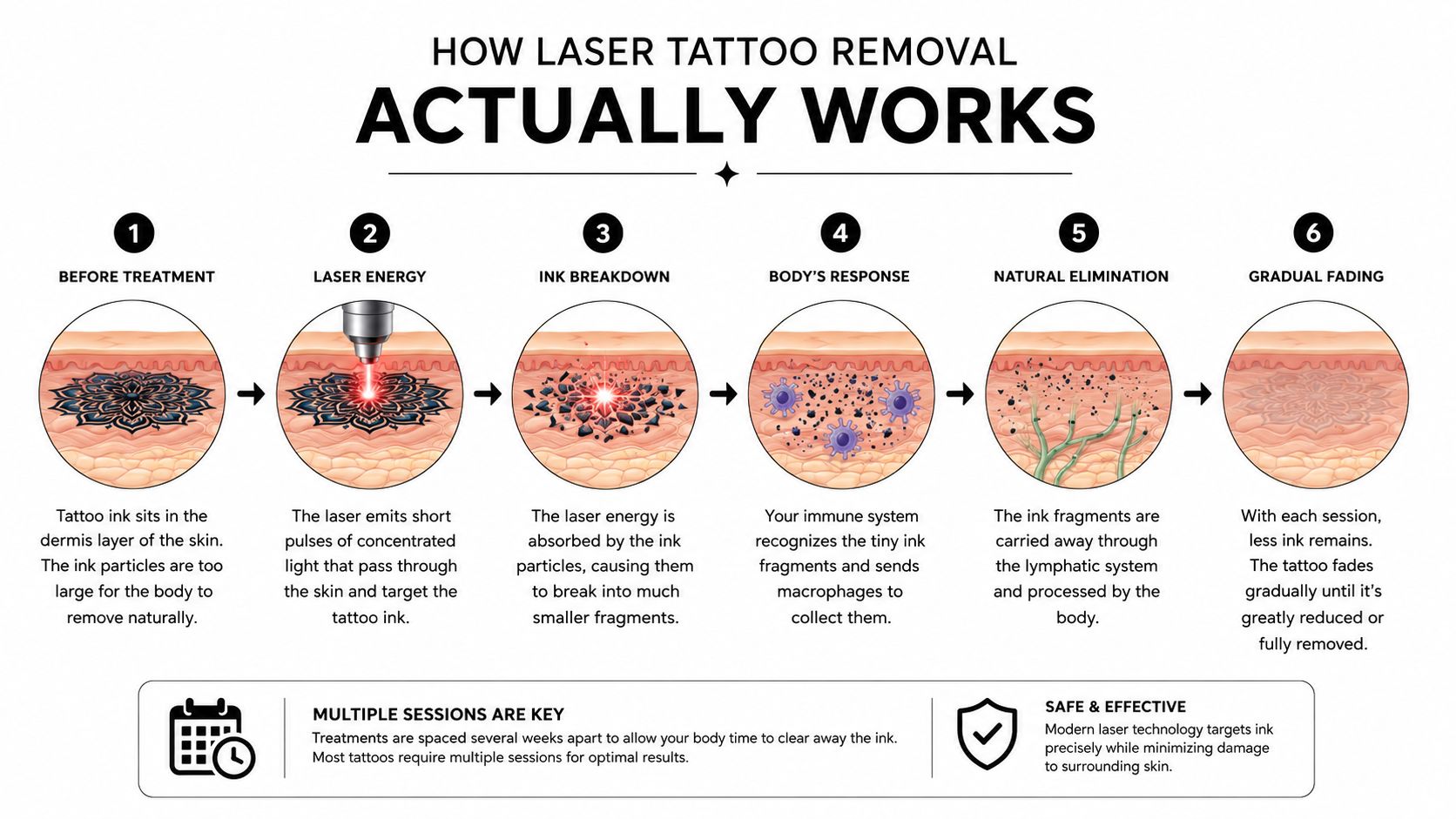
Laser tattoo removal sounds complicated until you strip it down to the core idea. The laser doesn't “erase” a tattoo in one pass. It breaks ink into smaller fragments, and then your body clears those particles over time.
What the laser is doing
Think of tattoo ink like a pile of rocks buried in the skin. The laser's job is to break large rocks into much smaller pieces. Once the pieces are small enough, your immune system can gradually carry them away. That's why removal happens in stages rather than all at once.
The technical foundation is laser fragmentation. Modern systems use targeted wavelengths to break up pigment more selectively, which is why tattoo removal expanded from a niche service into a standard cosmetic treatment. If you want a deeper look at newer equipment and treatment advances, this overview of new tattoo removal technology adds useful context.
Why different wavelengths matter
Not all tattoo ink responds the same way. The foundation of modern removal is laser fragmentation, and advanced platforms like the PiQo4 use specific wavelengths, such as 1064 nm for dark inks and 532 nm for brighter colors, to selectively break down pigment particles that the immune system clears over time, as described in this overview of wavelength-based tattoo removal technology.
That matters in real life because black and gray tattoos behave differently from multicolor work. The right wavelength selection can make treatment more precise, especially when a tattoo includes both darker and brighter pigments. If you're comparing styles and wondering why some dense designs fade differently, it helps to explore blackwork tattoo styles and see how saturation and coverage affect what's sitting in the skin.
Some tattoos fade evenly. Others clear in patches at first. That doesn't always mean something is wrong. It often reflects how the ink was packed and which colors were used.
What doesn't work is expecting one visit to solve everything. Removal is a process because the body needs time between treatments to respond to the fragmented ink. Good planning starts with that reality, not with marketing shortcuts.
Decoding the Cost of Tattoo Removal in St Petersburg
The biggest mistake people make is treating tattoo removal like a flat-price service. It isn't. The better question is, what will my full treatment course likely involve, and what drives that total?
What affordable really means
Nationally, laser tattoo removal sessions commonly average $175 to $600, and complete-removal packages are often priced by size rather than a flat fee. One national provider notes plans starting at $69/month for tattoos under 1 sq in and rising to $216/month for larger pieces under a 24-month plan. That same cost guide notes that complete removal typically requires 5-10 sessions spaced 6-8 weeks apart, which means budgeting usually needs to account for a course of treatment rather than a single appointment, according to this laser tattoo removal cost guide.
Those numbers aren't a quote for every tattoo in St. Petersburg. They're a framework. They show why “affordable” often means lower monthly payments or size-based planning, not necessarily a small total bill.
Key Factors Influencing Your Tattoo Removal Cost
Some factors raise cost because they make treatment more involved. Others affect value because they influence how efficiently the tattoo can be treated.
Key Factors Influencing Your Tattoo Removal Cost
| Cost Factor | Why It Matters | Impact on Price |
|---|---|---|
| Tattoo size | Larger tattoos cover more skin and usually need more treatment time | Usually increases total cost |
| Ink color | Dark inks and brighter inks respond differently and may need different wavelength strategies | Can increase complexity |
| Ink density | Heavily saturated tattoos have more pigment to break down | Often raises total treatment needs |
| Skin type and tone | Safe treatment settings and pigment-change risk matter when planning sessions | Can affect approach and value |
| Tattoo goal | Full removal and cover-up fading are not the same endpoint | Changes overall plan |
| Placement on the body | Some areas can be slower to clear than others | May influence timeline and spend |
A plain-language quote should account for all of those. If it doesn't, it's hard to know whether you're comparing apples to apples. That's one reason so many people feel confused when searching locally. They find convenience-focused pages instead of budgeting guidance.
For a closer look at why tattoo removal pricing varies so much, this article on why tattoo removal is so expensive is useful background reading.
A lower session price can still become the more expensive route if it leads to a less efficient plan.
There's also a practical difference between paying for complete removal and paying for strategic fading. If your real goal is to lighten an older tattoo enough for new artwork, you may not need to budget for the same endpoint as someone seeking full clearance. That's one of the most important affordability questions to settle early.
How EradiTatt Makes Tattoo Removal Affordable
Individuals don't need vague reassurance. They need a way to connect treatment goals to a payment structure they can live with. That's where affordability becomes practical instead of promotional.
Budgeting by outcome, not by ad copy
A major gap in local content is explaining true affordability. Many people search for budget-friendly options but end up reading marketing copy instead of getting useful planning guidance, which makes it hard to compare a per-session price with the cost of a full treatment course, as noted on this page about tattoo removal in St. Petersburg.
That's why the first budgeting question shouldn't be, “What's the cheapest session?” It should be, “What am I trying to accomplish?” Full removal, partial removal, and cover-up fading don't carry the same scope.
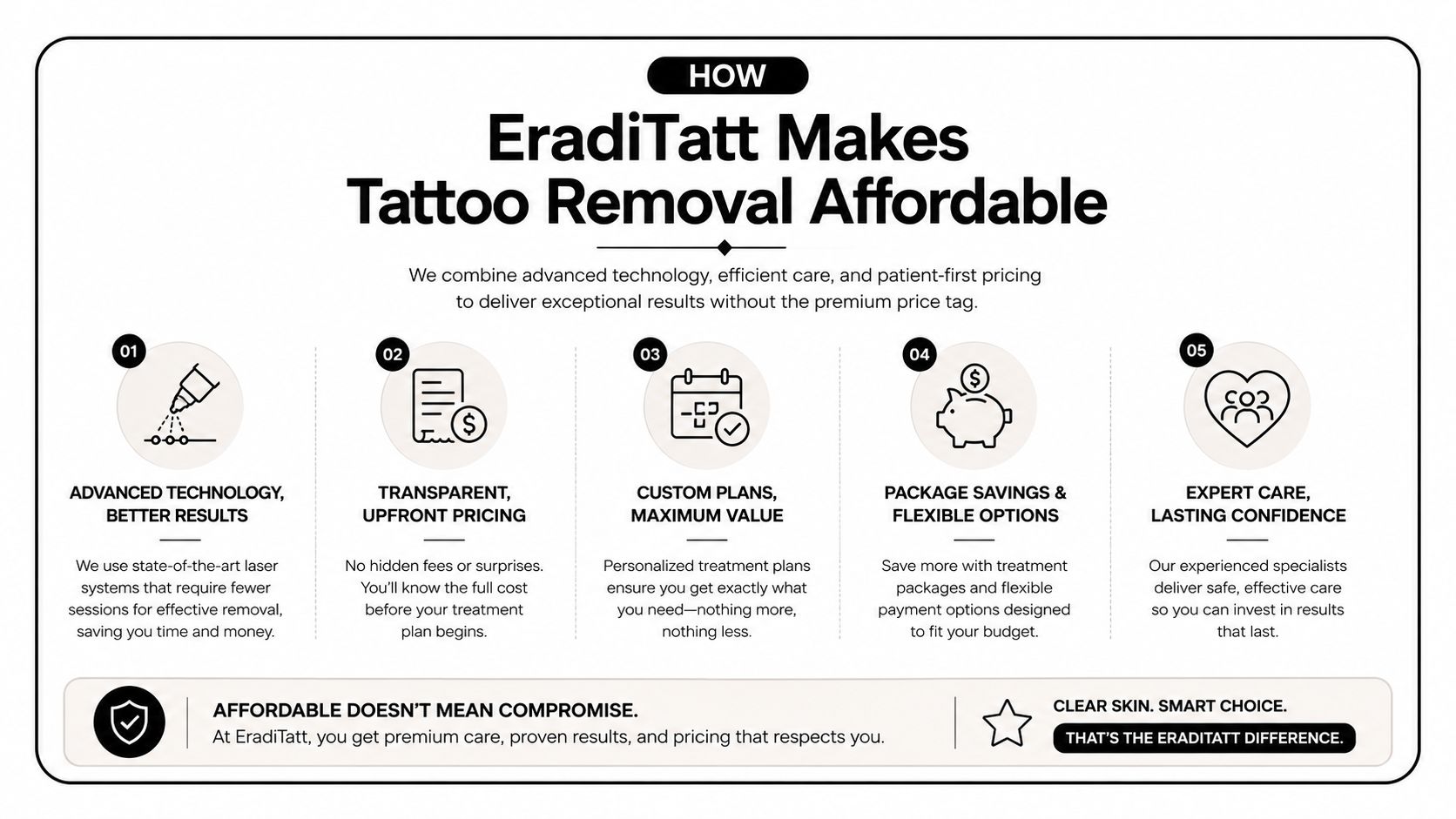
The provider's job is to translate that into a realistic plan. EradiTatt Tattoo Removal offers laser tattoo removal with consultations that help map out whether you're a better candidate for complete removal or for staged fading before a cover-up. That distinction matters because it changes what “affordable” means for your situation.
What to ask for in a quote
A useful quote should answer these questions clearly:
- What goal is this price based on. Full removal, partial fading, or cover-up prep.
- How is the tattoo being evaluated. Size, color variation, density, and skin considerations should all be part of the conversation.
- Are there payment options. A manageable monthly structure can be more realistic than paying for everything upfront.
- What could change the plan. Resistant colors, old cover-up layers, or a cautious approach for pigment safety can all affect the path.
A good affordability conversation feels specific. It doesn't rely on one eye-catching number. It gives you enough detail to decide whether the plan fits your budget and your timeline.
Your Removal Journey with EradiTatt St Petersburg
Most first-time clients are less worried about the laser itself than about the unknowns around it. They want to know what happens when they walk in, what the treatment feels like, and whether the visit will be awkward or rushed.
What happens at the first visit
The visit usually starts with a close look at the tattoo and a direct conversation about your goal. If you want total removal, the treatment map is built around that. If you only want enough fading to make a cover-up easier, the plan is narrower.
This early conversation matters more than people think. It's where a specialist identifies the practical issues that change treatment, such as dense black fill, mixed colors, layered work, or skin considerations that call for a more careful pace.
The best consultations are specific. You should leave knowing what you're treating, why that matters, and what kind of plan makes sense.
A good appointment also gives you room to ask the questions people are sometimes embarrassed to ask. Will this scar? Is my tattoo too old or too saturated? If I'm on a budget, can I pace treatments in a sensible way? Those are normal questions, and they should be answered directly.
What treatment day feels like
The treatment itself is quick compared with the full journey. During the session, the laser targets the tattooed area in short bursts. The sensation is generally described as sharp and fast, closer to repeated snaps than a lingering pain. The experience varies by placement and by how much saturated ink is in the skin.
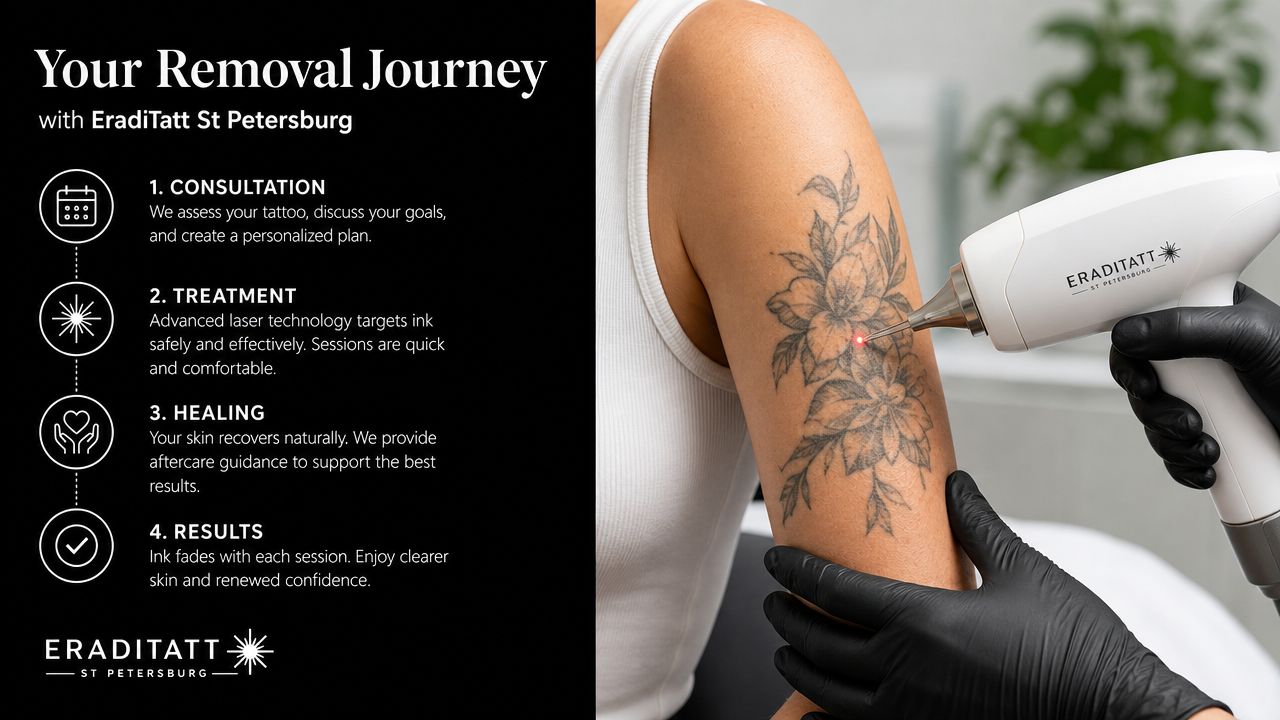
After the laser pass, the treated area is usually cooled and protected, and you're given aftercare instructions for the next stage. That part is easy to underestimate. The in-office treatment is only one piece of removal. Your skin's response over the following weeks is part of the result.
Clients often expect dramatic fading right away. Sometimes there's visible change early, but tattoo removal is usually more gradual. The body continues clearing fragmented pigment after the appointment ends, which is why patience is part of the process.
People also feel better when they know the visit doesn't lock them into a mystery. A clear plan should tell you what the goal is, how treatment will be approached, and what the next checkpoint looks like before you leave the office.
Aftercare and Watching Your Tattoo Fade
A lot of clients leave their first appointment expecting the laser to do all the work that day. It does not. The treatment breaks up the ink, but the fading happens over the following weeks as your body clears that pigment away. That timeline matters because "affordable" removal is never just about the price of one visit. It is also about healing well, staying on schedule, and avoiding setbacks that can add time and cost.
Good aftercare keeps the process on track.
For the first part of healing, the goal is simple. Keep the area clean, protect it from unnecessary irritation, and let the skin recover without picking, scrubbing, or testing home remedies. I tell clients the same thing every day. Do not try to speed up fading by being aggressive with the treated skin. That usually creates more problems, not better results.
A few habits make the biggest difference:
- Follow your aftercare instructions closely. Use only the products recommended for healing.
- Avoid friction and unnecessary heat. Tight clothing, scratching, and heavy rubbing can irritate the area.
- Leave any blistering or scabbing alone. Your skin heals better when it is not disturbed.
- Watch for anything that seems off. If healing looks unusual or feels worse instead of better, contact the clinic.
The fading itself is gradual. Some tattoos show a visible shift after one session. Others change more subtly at first, especially dense or layered pieces. That does not mean the treatment failed. It means the body is working through fragmented ink at its own pace.
This is one of the biggest cost misunderstandings in tattoo removal. Chasing the cheapest session price means very little if poor aftercare, missed timing, or unrealistic expectations turn a straightforward plan into a longer one. Total treatment cost is shaped by the full process, not just the number on day one.
If you want a personalized plan, book a free consultation at our St. Petersburg location and talk through your tattoo, your goal, and your budget. You can also call (844) 237-2731 to get started.
Frequently Asked Questions About Tattoo Removal
Is laser tattoo removal safe for darker skin tones
It can be, but provider experience matters. The FDA notes that tattoo removal can be influenced by skin color because lasers can cause pigment changes. That's why choosing someone experienced with diverse skin tones is important for both safety and value, especially when trying to reduce the risk of hyperpigmentation, as noted on this page discussing tattoo removal and skin tone considerations.
Does tattoo removal hurt more than getting tattooed
It depends on the area and the tattoo, but the sensation is different from tattooing. Removal is often described as quick, sharp bursts rather than the steady feeling of having a tattoo applied. The short duration helps, and knowing what to expect usually reduces anxiety a lot.
Can every tattoo be completely removed
No. Outcomes vary with tattoo characteristics, and removal may not fully erase every tattoo. That's one reason honest treatment planning matters. Some tattoos are good candidates for full removal, while others are better approached as fading projects for a cover-up.
If you're ready for clear answers instead of vague pricing, schedule a consultation with EradiTatt Tattoo Removal. You'll get a realistic look at your tattoo, your options, and what affordability looks like for your situation in St. Petersburg.