
You've just left your first laser tattoo removal appointment. The treated area is covered, your skin feels warm and tender, and the aftercare sheet lists products without explaining which one matters first. You may be wondering whether you need a specialized balm, an antibiotic cream, a moisturizer, or sunscreen, and whether using the wrong product could slow healing.
The answer becomes clearer when you match each product to the skin's healing stage. Tattoo removal aftercare products aren't interchangeable. A thin occlusive ointment supports the earliest wound-care phase, gentle cleansing and non-stick protection help while the surface is vulnerable, a fragrance-free moisturizer becomes useful after closure, and broad-spectrum sunscreen protects the recovering skin between sessions and after treatment ends. This post-laser tattoo removal aftercare guide can sit beside your clinic's instructions as you work through the next few weeks.
Table of Contents
- Walking Out of Your First Session Knowing What to Do Next
- How Your Skin Heals After Laser Removal
- Occlusive Ointments and Petrolatum-Based Products
- Cleansers, Moisturizers, and Bandage Care
- Sun Protection as Long-Term Risk Control
- Products and Ingredients to Avoid During Healing
- Warning Signs That Mean Call Your Clinic
- Putting It All Together and Frequently Asked Questions
Walking Out of Your First Session Knowing What to Do Next
The first evening may feel unfamiliar. You leave the clinic with a dressing over the tattoo, written instructions in hand, and skin that feels warm, tender, or more exposed than expected. Mild redness, pinpoint bleeding, or clear weeping can make simple tasks, such as changing clothes or showering, feel uncertain.
Begin with the dressing your provider applied. One aftercare source recommends leaving the initial bandage in place for about 2 to 3 hours, then applying a thin layer of petroleum jelly, Aquaphor, or an antibiotic ointment 2 to 3 times daily. A sterile non-stick bandage can be changed daily or as needed until the area heals (post-treatment dressing and ointment guidance). Follow your clinic's directions if they differ, particularly when the treated area is large, highly sensitive, or covered with a specialized dressing.
Practical rule: Choose the simplest product that fits the skin's condition. A longer ingredient list or thicker coating does not automatically provide better care.
Match each product to the skin's job
Early on, clean skin may need a thin occlusive layer of white petrolatum or a petrolatum-based ointment. This coating works like a light protective seal. It reduces water loss, supports a moist healing environment, and helps new surface cells grow across the treated area. Apply it thinly so the dressing does not trap unnecessary moisture or increase friction (petrolatum guidance for tattoo removal aftercare).
As tenderness settles and the surface begins rebuilding, gentle cleansing and non-stick protection do more for the skin than active skincare ingredients. Once the surface is fully closed, a bland, fragrance-free moisturizer can relieve tightness. Sunscreen belongs later, on healed exposed skin, because recovering areas remain more vulnerable to UV-related inflammation and pigment changes. For a clinic-aligned overview of the sequence, review this post-laser tattoo removal aftercare guide.
Organize care by healing stage
Use the products as a sequence rather than choosing from a shopping list:
- Early wound care: Apply a petrolatum-based ointment thinly to clean skin.
- Surface protection: Use gentle cleansing and a non-adherent dressing while the area is open, weeping, blistered, or scabbed.
- Barrier support: Add a fragrance-free moisturizer after the surface closes.
- Long-term risk control: Apply broad-spectrum SPF 30 or higher to fully healed, exposed skin, and use physical coverage when practical.
This order prevents a common mistake: placing sunscreen or cosmetic products on open skin, or continuing a heavy ointment after the surface has already closed. The right product changes as healing progresses.
How Your Skin Heals After Laser Removal
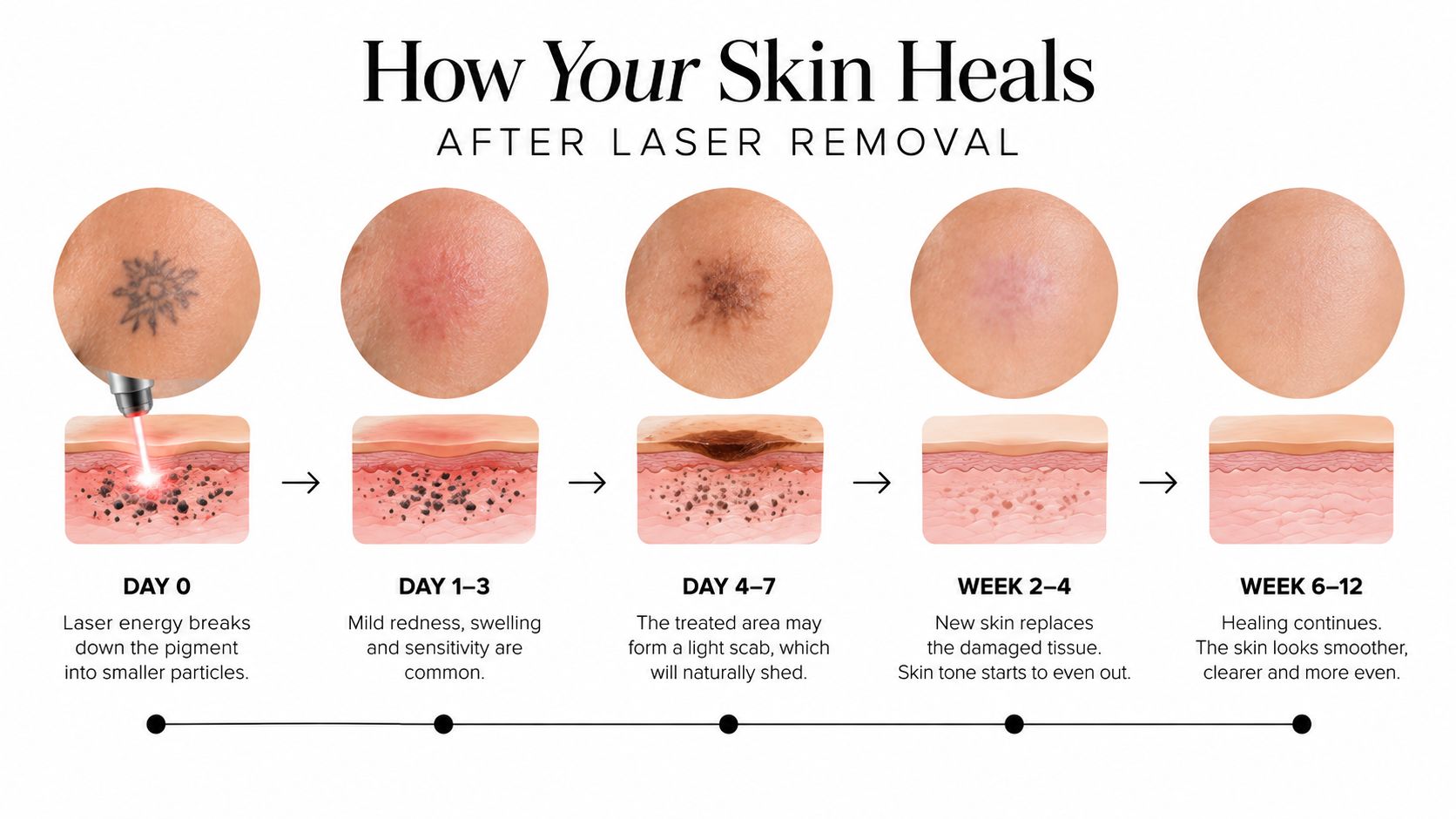
Product selection makes more sense when you identify what the skin is doing. Laser exposure creates a controlled injury, so the treated area moves through inflammation, barrier rebuilding, and longer-term remodeling. The timing varies from person to person, but the care principle stays consistent: protect the surface first, support the barrier next, then control UV exposure.
Phase one is the acute inflammatory window
The first 24 to 72 hours are the most delicate period described in the provided aftercare guidance. The treated area may be open, weeping plasma, blistered, warm, or tender. The skin barrier isn't functioning normally, which is why a clean surface, thin occlusive ointment, and protection from friction matter more than cosmetic appearance.
Avoid treating this stage like ordinary dry skin. Don't scrub, exfoliate, apply perfume, or place sunscreen over an open wound. A non-stick dressing can reduce contact with clothing and help protect the area from unnecessary handling.
Phase two is proliferative healing
During approximately days 3 through 14, new skin cells rebuild the surface barrier. Itching, tightness, peeling, scabbing, and mild residual discoloration can occur as the area repairs itself. The surface may look better before it's fully resilient, so “it feels fine” isn't always a reason to restart retinoids, acids, makeup, or vigorous rubbing.
This is the stage for gentle cleansing and, after closure, a simple moisturizer. Readers who want a broader explanation of skin recovery can also review this complete tattoo healing advice, while keeping in mind that laser-treated skin has its own wound-care considerations.
Phase three is remodeling
Remodeling extends through the following weeks, commonly described as weeks 2 through 12 in the healing framework provided for this article. Collagen reorganizes and the skin can remain photosensitive even when the surface appears normal. Broad-spectrum sunscreen and physical coverage become the key tools during this period, particularly for tattoos on visible areas.
| Healing stage | What the skin needs most | Product focus |
|---|---|---|
| Acute inflammation | Moisture retention and protection | Thin petrolatum-based ointment |
| Barrier rebuilding | Low-friction cleansing and support | Gentle cleanser, non-stick dressing, then moisturizer |
| Remodeling | UV risk control | Broad-spectrum sunscreen after closure |
Occlusive Ointments and Petrolatum-Based Products
After your first laser session, the treated skin may feel tender, warm, or unusually exposed. A thin layer of white petrolatum works like a temporary raincoat for the surface. It reduces water loss, maintains a moist healing environment, and supports re-epithelialization when applied to clean skin. Its role is physical protection, not antibiotic treatment, as described in this technical aftercare guidance on petrolatum.
Moisture also helps keep the surface from drying, cracking, and catching on a dressing. Petroleum jelly may be used when a topical antibiotic is not suitable because it helps maintain wound moisture. That does not mean every wound needs an ointment indefinitely. The goal is a protected surface during the early stage, followed by lighter care as the skin closes, consistent with this petroleum jelly and wound moisture guidance.
Apply less than you think
A thin film is enough. A thick coat can hold excess moisture and heat against the skin, while also increasing friction beneath a dressing. Treat the ointment like a light protective layer, not a mask.
Use this routine:
- Wash your hands before touching the treated area.
- Clean gently with cool or lukewarm water and the cleanser recommended by your clinic.
- Pat dry with a clean towel or sterile material. Do not rub.
- Apply a very thin film of white petrolatum or a petrolatum-based ointment.
- Cover with a non-stick dressing if your provider has instructed you to keep the area bandaged.
Medical-grade petroleum products serve the same general occlusive purpose. This skin protectant for post-surgery care illustrates the type of simple barrier product used to protect vulnerable skin, but your removal clinic should confirm whether it suits the treated site. For another product-focused explanation, review this tattoo aftercare ointment guidance alongside the instructions from your appointment.
Antibiotic ointment is not automatically necessary
Some clinics recommend an antibiotic ointment, while others prefer plain petrolatum. Antibiotics may fit particular situations, but they are not automatically better for routine care. Unnecessary topical antibiotics can cause contact sensitivity, so do not add bacitracin or another antibiotic because the area looks raw. Ask the treating clinic whether one is appropriate for your skin and treatment response.
Reduce the occlusive product once the skin has closed and stopped weeping. A heavy ointment can then feel uncomfortable and collect residue, while a bland moisturizer may better support the recovering barrier.
Cleansers, Moisturizers, and Bandage Care
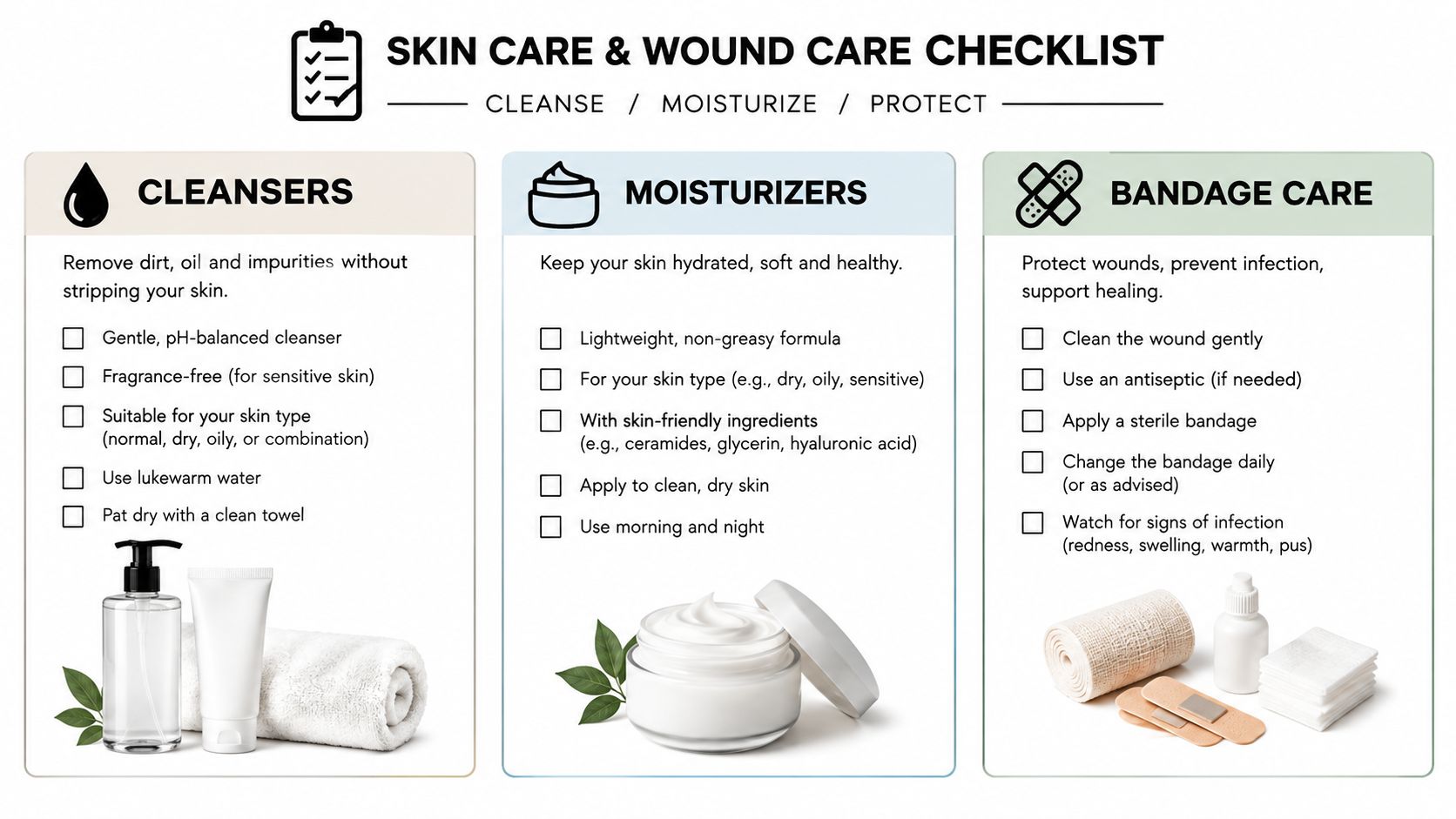
Cleansing should remove sweat, residue, and surface debris without stripping or scraping the fragile barrier. Use lukewarm water, clean hands, and a gentle, fragrance-free cleanser. Examples include CeraVe Hydrating Cleanser and La Roche-Posay Toleriane, but the specific choice matters less than the formula's simplicity and your clinic's approval.
Around days 3 to 5, once the initial tenderness has eased, many people can begin shifting toward routine gentle cleansing, provided the skin's condition allows it. Don't use a washcloth, brush, exfoliating glove, or vigorous stream of water. Pat the area dry rather than rubbing it.
Know when moisturizer becomes appropriate
Moisturizer belongs after the surface has closed, not over an actively open or draining wound unless your provider specifically directs it. Once the area is intact, tight, or flaky, choose a bland, hypoallergenic, fragrance-free option such as Vanicream Daily Lightweight or Cetaphil Moisturizing Lotion.
Apply enough to relieve tightness without leaving a greasy film. Reapplication can be useful when the skin feels dry, but don't use moisturizer as a reason to massage or pick at loose flakes.
A product label may mention ingredients associated with barrier support, including citric acid in certain formulations. If you want to understand that ingredient in a broader skincare context, this discussion of how citric acid supports your barrier is a useful reference. For freshly treated skin, however, simplicity still matters more than an impressive ingredient list.
Keep dressings clean and non-adherent
Leave the original bandage in place for the period your provider recommends. Afterward, use a fresh non-adherent pad secured with paper tape when the site needs protection from clothing or accidental contact.
A practical routine is:
- Before every change: Wash your hands.
- During the first week: Change the dressing daily or whenever it becomes wet or soiled.
- For comfort: Use loose, soft clothing that won't pull across blisters or scabs.
- When the surface closes: Ask whether you can stop covering the area and continue with gentle skincare.
Never pull a dressing aggressively from stuck tissue. Moisten it as directed by your clinic so you don't tear newly forming skin.
Sun Protection as Long-Term Risk Control
Once the skin surface is fully closed, broad-spectrum sunscreen is the highest-value aftercare product. UV exposure can prolong inflammation and worsen dyspigmentation in treated skin, which makes sunscreen a risk-control step rather than a cosmetic extra (post-laser sunscreen guidance).
Use SPF 30 or higher every day on exposed, fully healed skin. Physical coverage still matters between sessions and for months after the final treatment, especially when the tattoo sits on an arm, hand, neck, or another area that receives regular daylight. Never apply sunscreen directly to an open wound, blister, or actively scabbing surface.
Mineral and chemical formulas aren't identical
Mineral formulas use filters such as zinc oxide or titanium dioxide that sit on the skin's surface. Chemical filters absorb UV energy within the product and skin. The best choice is the formula you can apply consistently without irritating the healed area, but mineral sunscreen is often a comfortable starting point for pigment-sensitive skin.
| Feature | Mineral, zinc or titanium | Chemical filters |
|---|---|---|
| How it protects | Sits on the skin and helps shield it from UV exposure | Absorbs UV energy through chemical filters |
| Best timing | After the surface has fully closed | After the surface has fully closed |
| Skin feel | May leave a visible cast or feel more noticeable | Often spreads transparently |
| Selection priority | Fragrance-free, broad-spectrum, SPF 30 or higher | Fragrance-free, broad-spectrum, SPF 30 or higher |
| Important caution | Don't apply over open or weeping skin | Don't apply over open or weeping skin |
Darker skin tones can be particularly vulnerable to visible pigment disruption after inflammation. That makes disciplined daily protection especially important when the treated area contrasts with the surrounding skin. Clothing, a wide-brim hat, or another physical barrier can help when sunscreen isn't practical.
Sunscreen doesn't replace your clinic's healing instructions. It becomes part of the routine only after closure, then remains relevant throughout the removal process and beyond.
Products and Ingredients to Avoid During Healing
A product can be gentle in ordinary skincare and still be too active for recently treated skin. The main question isn't whether a label says “sensitive skin.” It's whether the product could irritate, peel, sensitize, or deposit color while the barrier is rebuilding.
Avoid fragranced lotions, alcohol-heavy products, retinoids, acids, exfoliants, self-tanner, and makeup until healing is complete. Guidance on products to avoid also highlights the tradeoff between elaborate “healing” products and simple, fragrance-free barrier care, with no clear reason to assume a luxury tattoo balm is automatically better than a basic alternative (products to avoid after laser tattoo removal).
Why familiar skincare can cause trouble
Retinoids, including retinol, tretinoin, and adapalene, increase cell turnover. On fragile, recently treated skin, that activity can contribute to peeling and irritation, which may disturb the developing surface and encourage pigment shifts.
Exfoliating acids such as glycolic, salicylic, lactic, and mandelic acid create a similar problem from another direction. They can disrupt the new epithelial layer before it has matured enough to tolerate active exfoliation.
Fragrance is another common trap. Fragranced lotions, body sprays, and essential-oil blends can contain sensitizing components that provoke irritation or contact reactions. A “natural” label doesn't guarantee that a product is suitable for an open or newly healed treatment site.
Self-tanners and DHA-based bronzers deserve separate caution. They deposit color into the outer skin while the treated area is still reactive, which can create uneven tone and make pigment changes harder to evaluate. Makeup should also wait until the skin is fully closed, with no open areas, blisters, or scabs.
Mechanical irritation counts too
Physical scrubs, loofahs, dry brushing, waxing, and shaving can pull at new tissue or remove flakes before they release naturally. Don't scratch an itch through clothing, and don't pick at a scab because it looks ready to come off. Let the barrier recover before returning to normal hair removal or exfoliation.
Warning Signs That Mean Call Your Clinic
Healing skin can look dramatic without being infected. Mild swelling, redness, tenderness, itching, pinpoint bleeding, clear weeping, blistering, and scab formation may occur after treatment. The more useful question is whether the symptom is gradually settling or becoming more intense and expansive.
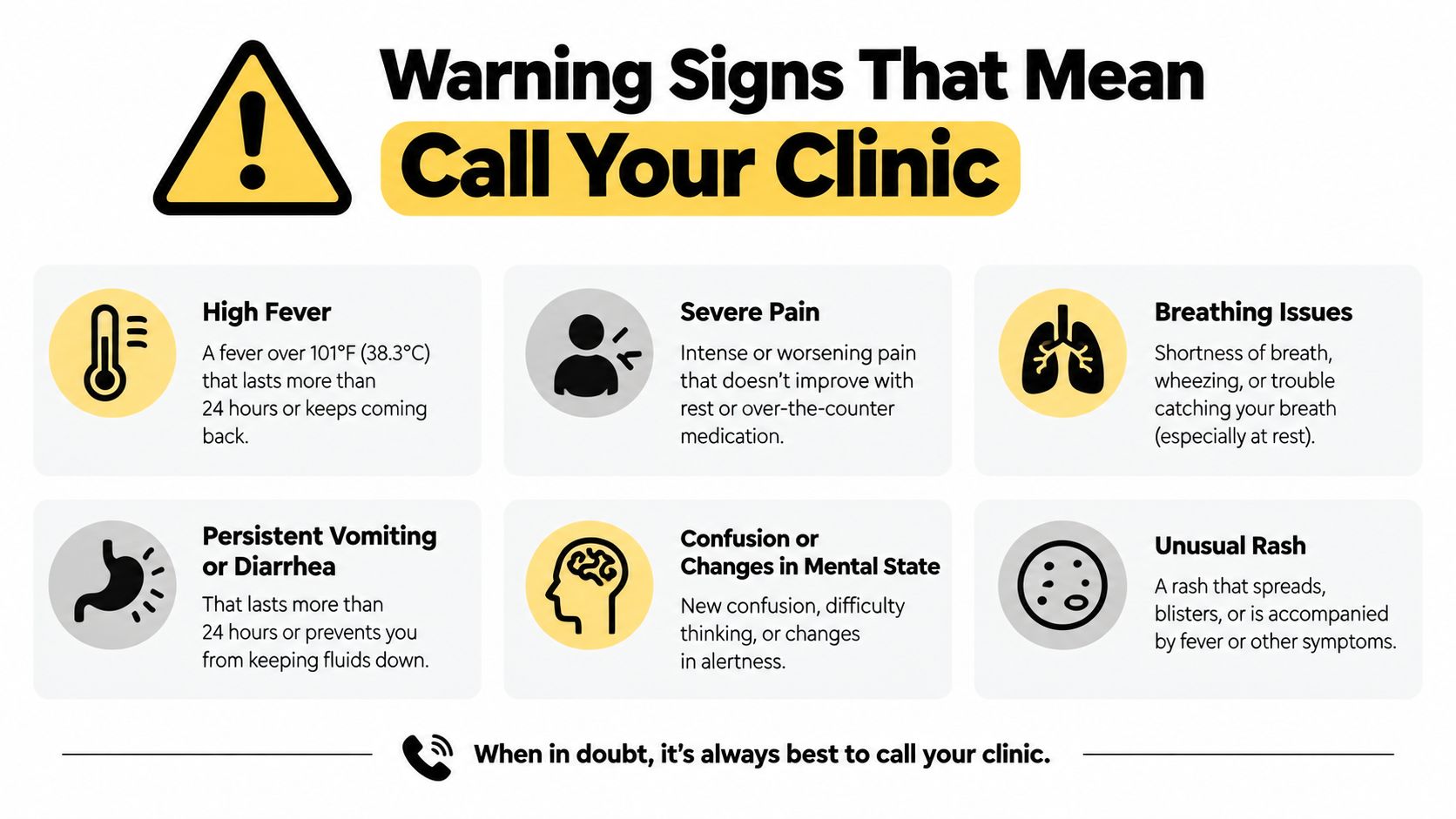
Contact your removal clinic or a doctor promptly if you notice redness that spreads or worsens, unusual heat, increasing pain, pus or yellow-green discharge, red streaks, fever, or chills. These warning signs are identified across medical aftercare guidance as reasons to seek professional assessment (infection warning signs after tattoo removal).
Compare the direction, not just the appearance
A treated area can remain pink or mildly swollen while it heals. That's different from swelling that continues to worsen, redness that expands beyond the original area, or pain that becomes stronger instead of easing.
Watch for:
- Pain: Increasing or escalating pain needs attention, especially when the area was becoming more comfortable.
- Redness and heat: Spreading redness, defined expanding borders, or unusual warmth can signal a complication.
- Drainage: Thick yellow or green discharge, pus, or a foul odor isn't routine clear weeping.
- Systemic symptoms: Fever, chills, or feeling generally unwell warrants prompt contact.
- Red streaking: Streaks moving away from the treated site should be assessed without delay.
Itching is often part of repair, but a persistent rash, widespread hives, or rapidly increasing irritation can indicate a reaction to a product or dressing. Stop adding products and call the clinic for advice. Breathing difficulty or widespread swelling requires urgent medical care.
Blisters should be left intact unless a clinician tells you otherwise. A blister that repeatedly refills, becomes increasingly painful, or is accompanied by spreading redness deserves same-day guidance rather than home experimentation. If one opens on its own, keep the area clean, avoid removing attached skin, cover it with a non-stick dressing, and report concerning changes.
Make the call easier
Take a clear photograph in good light. Write down when the change began, which products touched the area, whether the redness is expanding, and whether pain or drainage is increasing. Then call the clinic with those details instead of waiting for the next appointment. For another focused reference, review these signs of infection after tattoo removal.
Putting It All Together and Frequently Asked Questions
The simplest routine is a staged one. During the first 24 hours, follow the dressing instructions, keep the area clean, and use a thin petrolatum-based ointment on clean skin if your provider recommends it. During the first week, continue gentle cleansing and use a non-stick dressing when the site needs protection from clothing or friction.
By weeks two through four, the surface may be calmer but still sensitive. Once it's fully closed, move from wound ointment to a fragrance-free moisturizer for tightness and dryness. Broad-spectrum SPF 30 or higher then becomes the long-term anchor for exposed skin, with physical coverage whenever possible.
Common questions
When can makeup resume?
Wait until the skin is fully closed, with no open areas, blisters, or scabs. Your clinic can confirm when cosmetic coverage is appropriate for the specific treatment response.
How long should you wait between sessions?
The next appointment should be based on complete surface healing and your provider's assessment, not on how quickly the tattoo appears to fade. Treating skin that's still inflamed or repairing can add irritation and complicate recovery.
Can silicone scar sheets help?
Don't place silicone sheets over open, blistered, draining, or scabbed skin. Ask your clinic or a medical professional whether they're appropriate after closure, particularly if you develop raised or thickened scar tissue.
What should you do about itching?
Don't scratch, scrub, or peel. Keep intact skin comfortable with the simple products your clinic approves, and ask for medical guidance if itching becomes severe, spreads, or appears with a rash.
Should you buy a tattoo-specific balm?
Not automatically. The evidence-supported priorities are a thin petrolatum-based occlusive layer during early wound care, gentle cleansing, a bland moisturizer after closure, and broad-spectrum sunscreen once the surface is healed. A product's branding matters less than its ingredients, texture, cleanliness, and fit with your provider's protocol.
Keep the routine consistent, resist the urge to pick, and contact the clinic when healing moves in the wrong direction. The right tattoo removal aftercare products support the skin while your body continues processing the fragmented ink.
EradiTatt Tattoo Removal provides progressive laser tattoo removal sessions with aftercare guidance for the treated area, skin type, tattoo characteristics, and personal goals. Visit EradiTatt Tattoo Removal to explore treatment options and arrange a consultation for complete removal or fading before a cover-up.