
Most laser tattoo removal sessions last about 10 to 30 minutes of actual lasing time, while the full clinic visit typically runs 30 to 60 minutes once preparation, numbing, and aftercare are included. The appointment is short compared with the overall journey, because tattoo removal usually requires multiple visits spaced weeks apart.
You may be asking because you have an appointment coming up and need to know whether you'll be in and out during a lunch break, or whether you should plan more time. The answer depends on what you mean by “session.” The laser-on-skin portion is only one part of the visit. Check-in, assessment, skin preparation, cooling, comfort measures, photographs, and aftercare can take just as much planning as the treatment itself.
A tiny, lightly shaded tattoo may need only a brief treatment, while a dense, multicolored design can require more passes over a larger area. The number of future sessions is a separate question again. A clinical review reports that amateur tattoos often need 5 to 10 sessions, while professional tattoos commonly need 15 to 20, with rare cases reaching 25 sessions (clinical review in PubMed Central).
Table of Contents
- Walking In for Your First Session
- What Actually Shapes Session Length
- A Minute by Minute Look at the Visit
- Small Tattoo vs Full Sleeve Timing
- Healing Time Between Sessions
- Why Shorter Sessions Often Work Better
- What to Bring and How to Prepare
- Putting Your Session Length Plan Together
Walking In for Your First Session
You walk into a Florida clinic with your sleeve pulled up and a little uncertainty about what happens next. At the front desk, someone confirms your appointment and gives you a clipboard with client information forms. You sit in the waiting area while the technician reviews your paperwork, and then you get your first look at the laser room, with its protective eyewear, treatment bed, cooling equipment, and organized supplies.
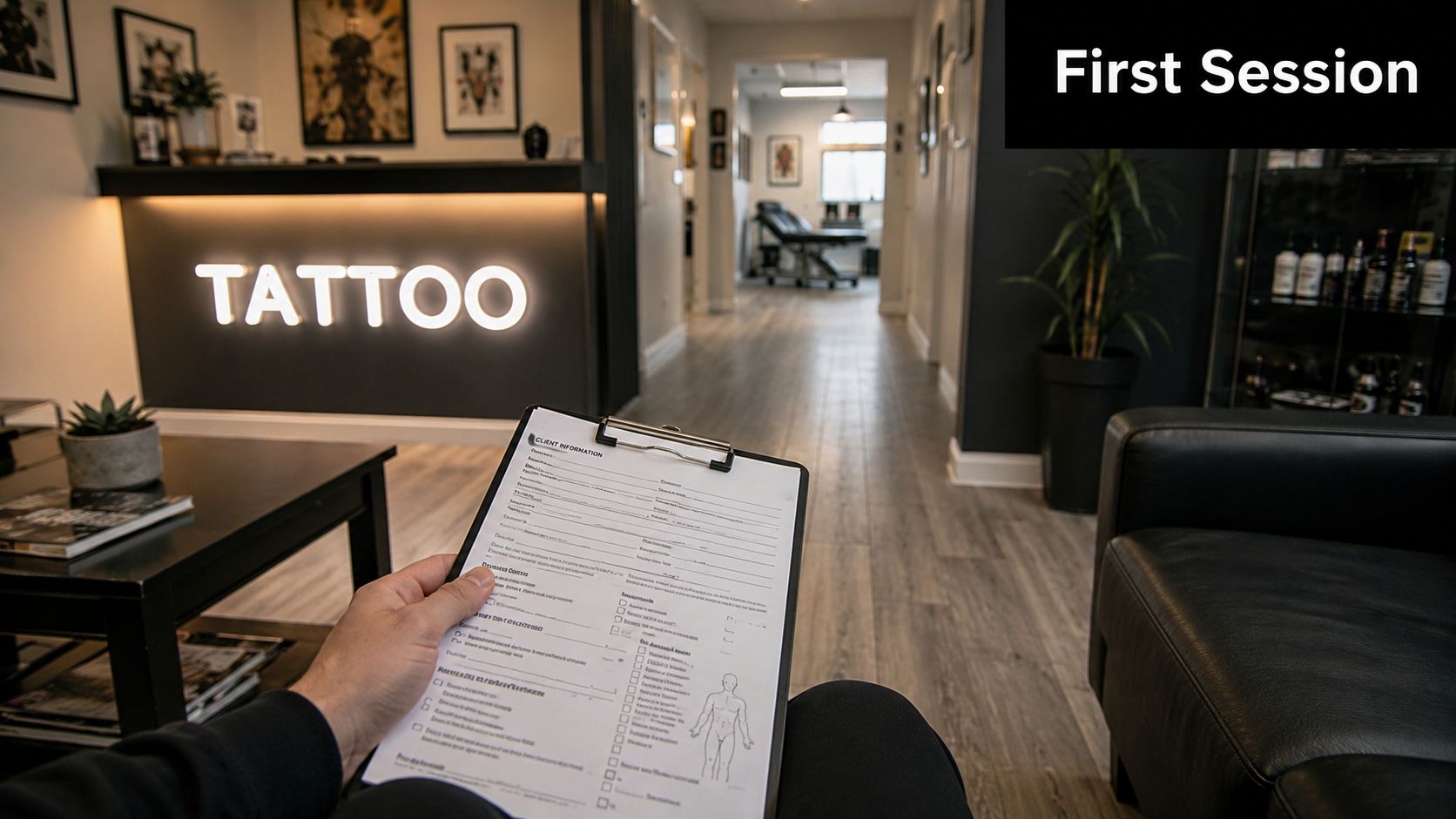
That first visit often feels longer emotionally than it does physically. You may have questions about discomfort, skin reactions, and whether the tattoo will disappear completely. A calm intake gives the technician time to understand your goals, inspect the tattoo, and explain what the visit will involve. If you're still unsure about the process, this first laser tattoo removal session guide can help you know what to expect before arriving.
The concrete timing is straightforward. Actual lasing commonly takes about 10 to 30 minutes, especially when the tattoo is larger or contains more pigment (session-time guidance). The full clinic visit generally takes 30 to 60 minutes, because the appointment also includes preparation, numbing when appropriate, skin protection, cooling, and aftercare (appointment-time explanation).
Practical rule: Plan for the whole appointment, not just the minutes when the laser touches your skin.
The rest of your timing depends on four visible factors: the tattoo's size, its color and ink density, your skin, and the device selected for the work. You'll also need to understand the minute-by-minute flow and the healing time between visits, because a short appointment can still be part of a months-long plan.
What Actually Shapes Session Length
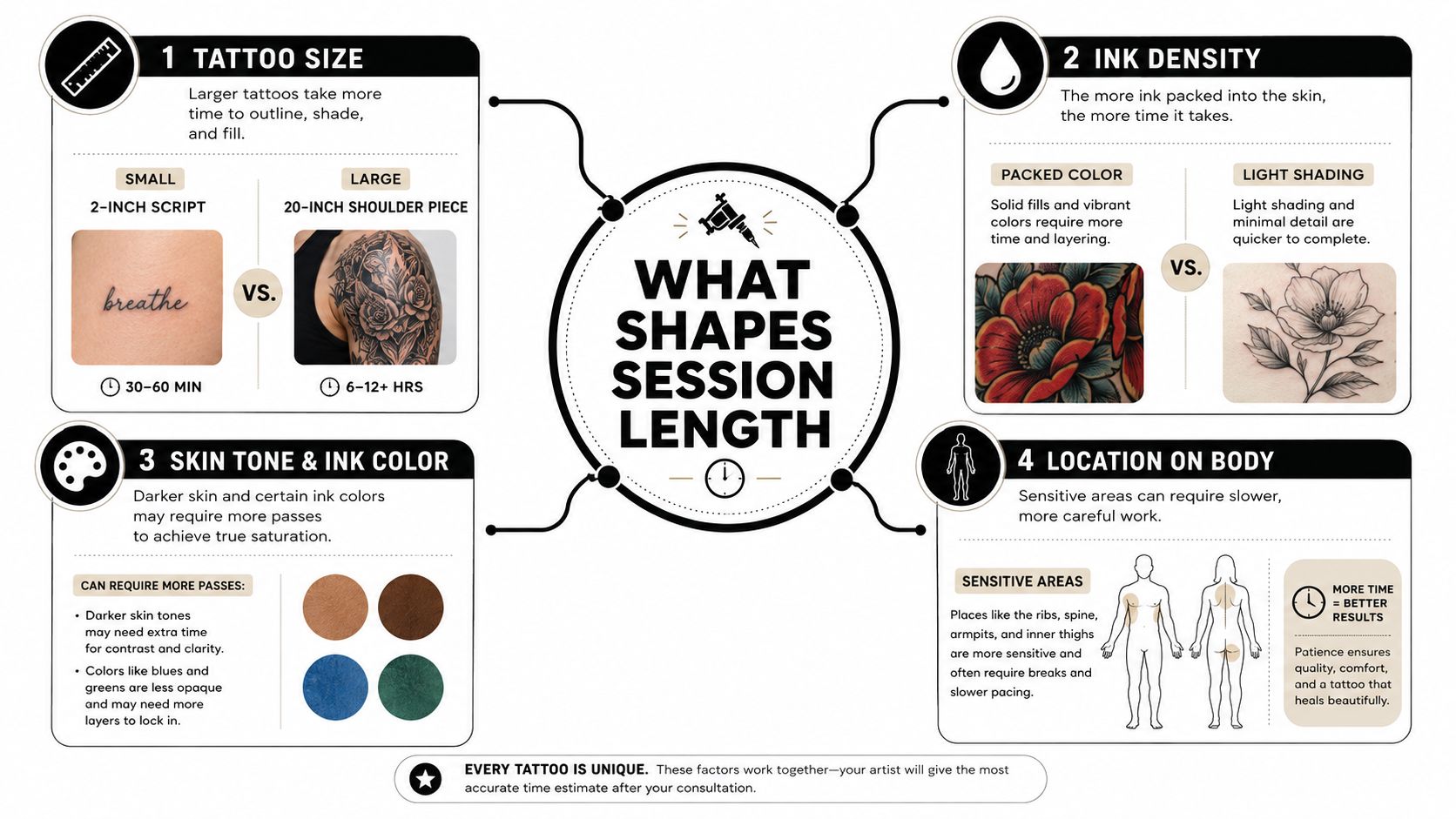
A technician usually estimates timing by looking at four practical variables. You can often identify them yourself before the consultation.
Tattoo size and ink density
A 2-square-inch name tattoo covers far less skin than a 20-square-inch shoulder piece, so the laser has fewer areas to treat. More surface area means more passes, and more passes usually mean more lasing time. A lightly shaded design may move efficiently, while densely packed ink requires repeated attention across the same region.
Ink load matters as much as the outline. A large tattoo with sparse shading may take less time than a smaller tattoo filled with solid color. The treatment guide on laser tattoo removal session length identifies surface area and pigment load as major practical drivers.
Color complexity
Black pigment often responds more predictably than a design containing layered reds, yellows, blues, or greens. A multicolored tattoo may require the technician to adjust the wavelength or make separate passes for different pigments. That can extend the appointment even when the tattoo doesn't look especially large.
Skin tone and comfort
The technician also considers how your skin responds to laser energy. More melanin can require conservative settings and careful assessment, which may add mapping or preparation time. Sensitive locations, such as ribs or areas close to bone, may also require slower work and more comfort breaks.
If you're reviewing comfort options before your visit, a clinician-approved discussion with your provider matters more than copying someone else's routine. A general non-prescription pain relief guide can provide background, but your clinic should confirm what's appropriate for your skin and treatment.
Device selection
The device affects how the technician approaches different pigments and skin types. Modern platforms such as PiQo4 and other multi-wavelength systems can target several colors in one treatment plan, although the device doesn't erase the need for careful assessment. A suitable platform may make the workflow more efficient, but tattoo size, density, color, and skin remain central to the estimate.
A Minute by Minute Look at the Visit
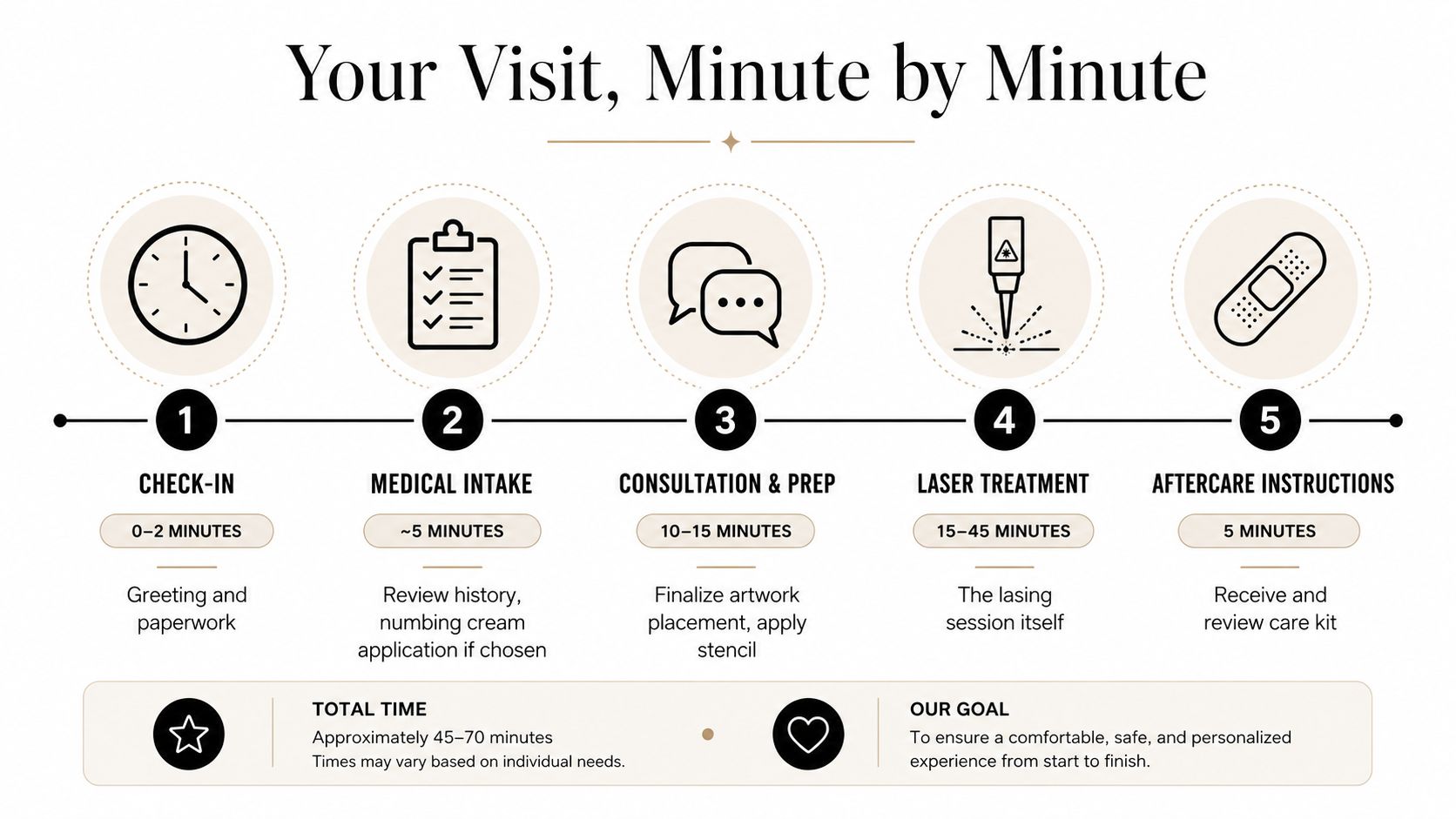
You check in, confirm your information, and explain what you want from the appointment. The initial paperwork and medical intake may take about 5 minutes, especially when the clinic already has your consultation notes. The technician reviews relevant health information, asks about your goals, and confirms the tattoo area.
Next comes a consultation that may take about 10 minutes. The technician measures the tattoo, takes baseline photographs, checks the skin, and outlines the treatment approach. A simple black wrist tattoo and a layered shoulder design begin to receive very different time estimates.
The preparation window
Skin cleansing, protective eyewear, positioning, and optional numbing can take roughly 5 minutes as part of the treatment setup. The exact process varies by clinic and tattoo location. You may also receive cooling before, during, or after the laser passes.
Then comes the part many wonder about when they ask, “How long is a session?” The laser may work for 10 to 30 minutes, with short pauses between passes as the technician checks the skin and moves across the design (laser treatment timing overview). A small tattoo may take only a few minutes of lasing, while a larger or denser piece can approach the longer end of that range.
Before you leave
After treatment, the technician explains cooling, bandaging, and first-day skin care. Allow about 5 minutes for this debrief, although questions can make it longer. Your total building time is therefore longer than the laser time, with many visits fitting within the 30 to 60 minute appointment range.
Small Tattoo vs Full Sleeve Timing
Consider two clients arriving for treatment. One has a small, black name tattoo on the wrist. The other has a quarter-sleeve of layered color across the shoulder. Their appointments won't feel alike because the four timing variables change at once: size, density, color, and the amount of skin requiring careful passes.
The small tattoo has limited surface area and one dominant pigment. Its pulse time may be brief, while paperwork, numbing, positioning, and aftercare make up much of the visit. A sleeve spreads the work across a larger area, and reds, greens, and blues may require different treatment approaches. Dense shading can push even a modest design into a longer appointment bracket.
The table below shows the practical contrast described in the treatment plan examples. These are planning illustrations, not promises for any individual tattoo.
| Variable | Small, 1 inch, black | Full sleeve, color |
|---|---|---|
| Treatment area | Small wrist design | Large shoulder and upper-arm area |
| Ink pattern | Single-color name or simple script | Layered reds, greens, blues, and shading |
| Lasing time | Brief, potentially only a few minutes | Longer, potentially approaching the upper treatment range |
| Comfort needs | Short positioning and cooling period | More repositioning and comfort checks |
| Full visit | Often shaped mostly by intake and aftercare | Preparation and treatment can both be substantial |
A one-inch black tattoo may involve around 5 minutes of pulse time and about 20 minutes in the clinic in a simple appointment example. A large color piece can require 45 minutes or more of laser work and a longer overall visit. Those examples illustrate the spread, but only an in-person assessment can account for your exact pigment load and skin response.
Healing Time Between Sessions
The minutes you spend in the chair are only one part of the timing question. After each treatment, the skin needs to recover and the body needs time to clear fragmented pigment. Expert literature describes treatment intervals ranging from 4 weeks in some split-laser protocols to 6 to 12 weeks or longer in clinical guidance, with professional tattoos often requiring 12 to 20 sessions overall (expert literature on treatment intervals).
A simple timeline helps. Session one starts the pigment-fragmentation process. During the following weeks, the skin repairs itself while immune cells gradually remove pigment debris. The fade may become easier to judge later in the cycle, and the next appointment is scheduled when the skin and clearance process are ready for another treatment.
Why the calendar matters
Clinics may use different spacing based on tattoo age, pigment depth, healing, and response. A recent clinical evaluation described professional tattoo removal as a lengthy process that often required 12 to 16 sessions, with some cases needing up to 20 sessions, and treatments commonly performed every 6 weeks (2024 clinical evaluation).
That doesn't mean every tattoo follows the same path. The same research source discusses a separate predictive-model study in which the average number of sessions was 6, with a range of 2 to 20, showing how widely treatment burden can vary. The appointment may be short, but the complete plan is governed by healing and pigment clearance.
The body does much of the work between visits. A longer gap can be part of an efficient plan, not a sign that treatment has stalled.
For practical skin-care reminders after treatment, review this guide to skin after tattoo removal. Following the clinic's instructions helps protect the treated area while it heals.
Why Shorter Sessions Often Work Better
A longer appointment isn't automatically a better appointment. The laser breaks pigment into smaller fragments, but your body still needs time to process those fragments and recover the treated skin. Extending treatment aggressively can increase irritation and may create more discomfort without giving the body a faster clearance pathway.
Technicians balance energy, coverage, and skin response rather than chasing the longest possible chair time. Conservative treatment can make sense when the tattoo is dense, the area is sensitive, or the skin needs careful protection. The goal is progressive fading over the entire plan, not dramatic over-treatment during one visit.
Think of the process like a savings account. Each appropriate session makes a measured deposit, then the body has time to process the change. A large, rushed deposit doesn't necessarily produce a faster result, and it may create a setback if the skin isn't ready for the next round.
A better question than “Can we make this session longer?” is “What timing allows my skin to recover and the pigment to clear safely?”
That perspective also explains why two people with similar tattoos may receive different schedules. The technician is considering the response of your skin, not just the amount of ink visible on the surface.
What to Bring and How to Prepare
A little preparation can keep the appointment focused and reduce avoidable delays. Use this checklist the night before and confirm any clinic-specific requirements before you arrive.
- Bring identification: Pack your ID, insurance card if relevant, and any prior treatment records if you're changing clinics.
- List medications: Write down current medications and products you use on or near the tattoo so the technician can review them.
- Wear loose clothing: Choose dark, comfortable clothing that exposes the tattoo without rubbing against it afterward.
- Choose easy footwear: Slip-on shoes can help when the tattoo sits on your foot or ankle.
- Eat lightly and hydrate: Have a light meal and drink water so you feel steady during the visit.
- Skip irritants: Avoid caffeine and alcohol on the morning of treatment, unless your clinician gives different instructions.
- Pause strong skin products: Don't use retinoids or exfoliants on the treatment area for 48 hours before the appointment.
- Avoid cosmetic barriers: Skip fake tan and heavy lotion over the tattoo.
- Protect exposed skin: Apply sunscreen to an exposed tattoo if you'll be traveling to the clinic.
You may want numbing cream, but use it only as directed by the clinic. If your provider plans to use numbing cream or sedatives, ask whether you'll need someone to drive you home rather than making that decision at the last minute. This tattoo removal preparation guide offers a useful starting checklist, while your treating professional should provide the final instructions.
Preparation won't change a large tattoo into a small one, but it can make check-in and setup smoother. Arriving with clean, accessible skin and the right clothing lets the technician spend the appointment on assessment, treatment, and aftercare instead of solving preventable practical problems.
Putting Your Session Length Plan Together
Start with the narrowest answer. A single laser treatment commonly involves 10 to 30 minutes of lasing, while the complete clinic visit often takes 30 to 60 minutes with preparation and aftercare included (laser session timing guidance). Small tattoos can take less treatment time, and large, dense pieces can take longer.
Then separate the appointment from the calendar. Professional tattoos may require 12 to 16 sessions, with some cases reaching 20, while a separate predictive-model study reported an average of 6 sessions and a range of 2 to 20 (clinical evaluation and predictive-model study). These findings don't create a personal guarantee. They show why a technician needs to assess your tattoo rather than relying on one average.
Your plan connects four variables to two different kinds of time:
- Size and density influence how many areas and passes the technician treats during each visit.
- Color affects the treatment approach and may require attention to multiple pigments.
- Skin type and location influence conservative settings, comfort, and recovery decisions.
- Device choice helps the technician select an appropriate approach for the tattoo's colors and your skin.
The interval between appointments completes the picture. Clinical guidance describes visits spaced weeks apart because pigment clearance and skin recovery continue after you leave the clinic (clinical review on tattoo removal). Your first consultation is separate from treatment day in some clinics, so ask whether your assessment and first laser appointment happen together.
The most useful next step is a personalized consultation. Bring clear information about the tattoo's age, colors, location, and previous treatments, then ask for an estimate of both chair time and total visit time.
EradiTatt Tattoo Removal offers consultations and progressive tattoo-removal treatments across convenient Florida locations, with plans shaped around tattoo size, color, skin type, and personal goals. Visit EradiTatt Tattoo Removal to discuss how long your appointment may take and build a realistic schedule for the full journey.