
You’ve finally decided that the tattoo doesn’t belong in your life anymore.
For some people, that moment comes before a job interview. For others, it happens after a breakup, before a wedding, after military planning, or just on an ordinary Tuesday when the mirror catches something that no longer feels like you. The decision can feel simple and heavy at the same time. Relief shows up first. Then the questions follow. How many sessions will this take? What should I do before I start? Am I too late to get good results?
How to prepare for tattoo removal matters more than is often acknowledged. Good preparation doesn’t guarantee a perfect outcome, but it does improve the odds that your skin handles treatment well, your schedule stays realistic, and your expectations match what laser removal can do.
The Moment You Decide A New Chapter Begins
A lot of clients arrive at this stage carrying more than tattoo regret. They’re also carrying urgency.
Maybe the tattoo sits on a wrist, hand, neck, or forearm and has started to feel louder than they want it to. Maybe they’ve covered it for years with sleeves, makeup, watches, or strategic photos. Maybe they don’t hate the tattoo itself. They just don’t want it attached to the next version of their life.
That emotional shift matters. Removal isn’t only a skin procedure. It’s often tied to identity, work, relationships, confidence, and timing. If you’re in a season of change, it can help to support your mindset the same way you support your skin. Resources on how to maintain mental health during major life transitions can be useful when the tattoo is just one part of a bigger reset.
You don’t need to feel 100 percent certain about every detail before you book a consultation. You do need to be honest with yourself about why you want removal and how patient you’re willing to be.
Clients often think the first appointment is where removal begins. In practice, it starts earlier. It starts when you gather your medical history, stop tanning, think through your schedule, and decide whether you want full removal or just enough fading for a cover-up.
What usually helps right away
- Name your reason clearly. Career change, personal closure, cleaner skin for a cover-up, or a major event all lead to different priorities.
- Decide how visible the tattoo is in daily life. A tattoo on the hand or forearm may change your timeline planning more than one hidden under clothing.
- Think in phases, not one finish line. Focusing on the next session, not the final result, often proves more effective.
A calm plan beats a rushed start. That’s true for your skin, your budget, and your stress level.
Prepare for Your Consultation Like a Pro
A strong consultation saves time, avoids preventable delays, and gives you a plan that fits your skin, your health history, and your real goal.
Many new clients come in focused on one question: “How many sessions will this take?” That matters, but it is rarely the best place to start. The better starting point is accuracy. If the technician has a clear picture of your tattoo, your medical background, and your expectations, the plan gets safer and more realistic from day one.
Bring every detail you know. Approximate dates are fine. Old photos help. If the tattoo was reworked, covered up, done by more than one artist, or has areas that healed thick or shiny, mention that early. Ink depth, layering, scar tissue, and color mix can change how a tattoo responds.
What to bring with you
Treat this appointment the way you’d prepare for any meaningful medical visit. A quick guide on how to prepare for a doctor appointment can help if you tend to forget medications, questions, or timelines once you’re in the room.
Bring or note the following:
- Tattoo history. Rough age, professional or amateur work, any touch-ups, cover-up work, and whether parts of the tattoo were packed more heavily than others.
- Changes in the skin. Raised lines, firm spots, patchy fading, itching in the past, delayed healing, or any area that looks scarred.
- Your medical list. Prescription medications, supplements, blood thinners, acne medications, steroid use, diabetes, autoimmune conditions, seizure history, clotting concerns, and any history of keloid scarring.
- Recent health changes. Pregnancy, breastfeeding, a recent illness, a new diagnosis, or a medication change can affect timing or aftercare decisions.
- Your actual goal. Full removal, partial fading for a cover-up, or lightening one section only.
- Your schedule. Work travel, weddings, beach trips, sports, or anything else that could affect healing windows.
Medication review gets overlooked more often than it should. Some medications and supplements can increase bruising, slow healing, or raise light sensitivity. That does not always mean you cannot be treated. It means your technician needs the full picture before a laser is used.
Mental preparation matters too. Removal is a process, not a one-visit fix, and it helps to say out loud what you are hoping will change. Some clients want a clean slate. Others want enough fading to make a cover-up easier. Some are excited. Some feel embarrassed, relieved, or conflicted. All of that is normal, and being honest about it usually leads to better decisions about pacing, visibility, and expectations.
If you want a clearer sense of what the treatment does before you walk in, read how tattoo removal works for first-timers. Clients who understand the basics usually ask sharper questions and feel less anxious during the consult.
Questions worth asking at your consultation
| Category | Question to Ask |
|---|---|
| Goal setting | Is this tattoo a realistic candidate for full removal, or should I plan for fading? |
| Ink assessment | Which sections may clear faster, and which parts could be stubborn because of color, layering, or density? |
| Device choice | What laser wavelengths fit my tattoo colors and skin type? |
| Skin risk | Do you see signs of scar tissue, oxidation risk, or healing concerns that could change the plan? |
| Medical review | Are any of my medications, supplements, or health conditions a concern before treatment? |
| Session timing | Based on the tattoo location and my skin response, how much time should I leave between sessions? |
| Comfort | What can be used to reduce discomfort during treatment? |
| Healing | What is normal after treatment, and what signs mean I should call the clinic? |
| Daily life | Will my job, workouts, travel, or hobbies affect healing or scheduling? |
| Budget planning | What could make this take more sessions than expected? |
One question I always like clients to ask is: what could slow my progress? That opens a more useful conversation than price alone. It brings out key trade-offs, such as layered ink, resistant colors, scar tissue, inconsistent aftercare, or health factors that affect healing.
What helps and what causes problems
- Helpful: Specific tattoo history, honest medical disclosure, a written medication list, and a clear end goal.
- Less helpful: Guessing on major details, hiding supplements or prescriptions, or assuming your tattoo will respond like someone else’s.
A good consultation should leave you feeling informed, not rushed. At EradiTatt, that means giving straight answers, flagging possible setbacks early, and helping you decide whether now is the right time to start.
Ready Your Skin for Optimal Laser Performance
Two clients can walk in with the same tattoo and leave with very different treatment plans because their skin is in different condition that day. The laser settings matter, but the skin we are treating matters just as much.
Calm, intact skin gives us the best starting point
The goal before treatment is simple. Show up with skin that is healthy, uninjured, and as close to its baseline tone as possible. Tanned, sunburned, chafed, recently exfoliated, or irritated skin is harder to treat safely and may force us to postpone.
Sun exposure is the issue I correct most often. A fresh tan can increase the chance of unwanted pigment changes and can make it harder to choose settings confidently. If the tattoo gets regular sun, start protecting it well in advance with clothing and consistent sunscreen use, and avoid intentional tanning before your appointment.
The same caution applies to skin trauma that people forget to mention. Razor burn, bug bites, healing scratches, adhesive irritation, active rashes, and even a bad reaction to a new body product can change what we can do that day.
Keep your prep routine boring
Clients sometimes assume they should "get the skin ready" with scrubs, acids, retinoids, or heavy moisturizing masks. That usually backfires. For laser removal, boring is better.
Use a simple routine in the week leading up to treatment:
- Keep the area protected from UV exposure. Clothing is often more reliable than hoping sunscreen stays perfectly applied.
- Avoid products that irritate the skin. Skip harsh exfoliants, retinoids, strong acids, and fragranced products over the tattoo if they tend to make you red or sensitive.
- Moisturize if the area runs dry. Soft, comfortable skin is easier to assess than flaky, irritated skin.
- Shave carefully if hair needs to be removed. Do not wax, use depilatory creams, or do anything that can inflame the area.
- Arrive with clean skin. No lotion, makeup, deodorant, self-tanner, numbing cream unless we told you to use one, or any residue over the tattoo.
If a product stings, heats up the area, or leaves it red, stop using it.
Medication prep deserves more attention than people expect
Skin prep is not only about products and sun. It is also medical. Before treatment, review what you take regularly, including prescriptions, over the counter pain relievers, supplements, acne medications, and anything that affects bleeding, photosensitivity, or healing.
Some medications and supplements can increase bruising. Others can make skin more light-sensitive or slower to recover. That does not always mean you cannot be treated. It means your technician needs the full picture so the timing and aftercare make sense for you. Never stop a prescribed medication on your own just to fit an appointment. Ask the prescribing clinician and tell the removal clinic exactly what you are taking.
Alcohol matters too. If you are prone to flushing or bruising, drinking close to your session can make treatment day less straightforward. This laser tattoo removal preparation guidance also notes that clinics may advise avoiding alcohol and aspirin before treatment because they can increase bruising risk.
Know the limits of the ink, not just the laser
Ink color affects how easily a tattoo responds. Black usually clears more efficiently than lighter or more resistant shades. Green, yellow, bright red, and some cosmetic or flesh-toned pigments often need a longer plan and closer monitoring. Flesh-toned inks deserve special caution because certain pigments can darken after laser exposure.
This is useful to know before the first session because it changes expectations. Harder colors are not a sign that treatment is failing. They often just need more sessions, different wavelength choices, or a slower pace to keep the skin safe.
At EradiTatt, I would rather delay a session than treat skin that is irritated or guess around an undisclosed medication. Good prep protects your skin first. Better clearance follows from that.
Lifestyle Adjustments That Boost Removal Results
Laser removal doesn’t end when the appointment ends. Your body does a large part of the work afterward. That’s why daily habits matter more than people expect.
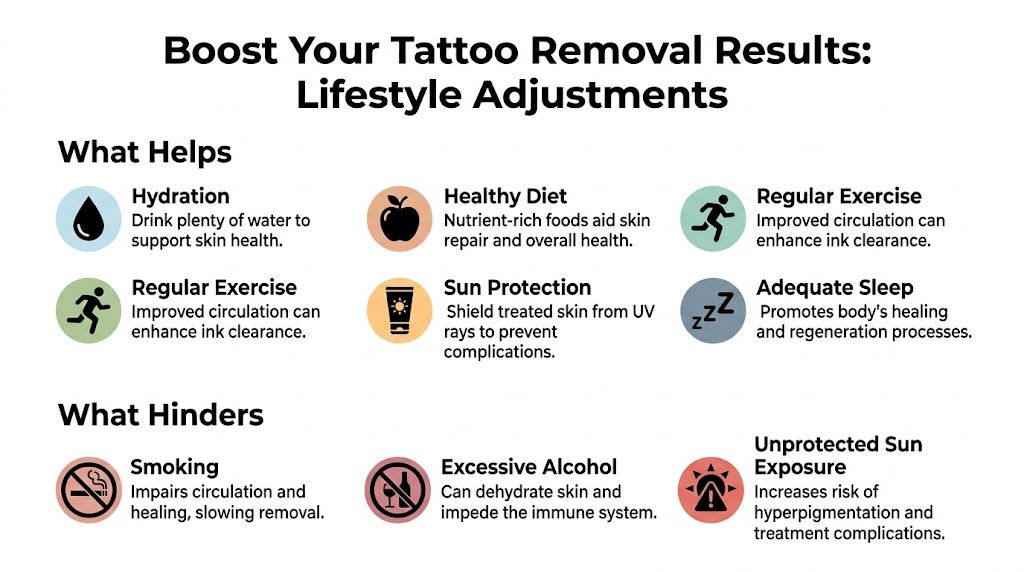
Smoking is one of the biggest obstacles
If you smoke, this is the habit most important to discuss. Research cited by Westlake Dermatology’s review of removal success factors found that smokers had a 70% lower rate of tattoo ink clearance after 10 sessions compared with non-smokers. Even a temporary quit can improve how your body heals and clears fragmented ink.
This makes sense clinically. Laser breaks up ink, but your body still has to process and remove that debris. Anything that impairs circulation, healing, or lymphatic function can slow visible progress.
Medication and supplement prep needs more nuance
The usual advice is to avoid blood-thinning medications or supplements when medically appropriate. That’s a start, but it’s not the whole picture.
Some clients have conditions that change how we think about healing, bruising, inflammation, and aftercare. Diabetes, autoimmune issues, clotting disorders, skin conditions, and a history of difficult wound healing all belong in the consultation. Don’t stop prescribed medication on your own. Bring the full list, then ask whether you should also check with your primary care physician.
A practical resource in this category is the Aesthetic Society’s preparation guidance for tattoo removal procedures, especially if you want a checklist mindset before your visit.
Habits that help and habits that get in the way
Some clients want a secret trick that speeds removal. There isn’t one. There are, however, patterns that consistently help.
Helpful
- Steady hydration: Supports normal skin recovery and the body’s clearing process.
- Reasonable exercise: Good circulation can support overall recovery.
- Adequate sleep: Healing is harder when your body is run down.
- Protecting the area from UV exposure: Keeps the skin more stable between sessions.
Unhelpful
- Smoking: Slows the body’s ability to clear ink effectively.
- Heavy drinking close to treatment: Can contribute to dehydration and bruising concerns.
- Rushing sessions: Skin needs time to recover and process pigment.
- Hiding medical details: That creates avoidable risk.
If you want a plain-English overview of the variables that change fading speed, these tattoo removal progress factors are worth reviewing before you commit to a schedule.
The clients who do best usually aren’t the ones chasing the fastest possible calendar. They’re the ones who stay consistent and let healing do its part.
Prepare Mentally for the Tattoo Removal Journey
A lot of frustration in tattoo removal has nothing to do with the laser. It comes from expectation mismatch.

You may feel ready for the first session and still feel discouraged halfway through the process. That’s normal. The fading stage can be emotionally awkward. The tattoo no longer looks the way it used to, but it isn’t gone either. For professionals, job seekers, or anyone planning around a milestone, that in-between period can feel longer than expected.
The psychological side is often under-discussed. One review on preparation gaps noted that most guidance focuses on physical prep while overlooking anxiety, expectation management, and body image concerns during a process that can last 6 to 12+ sessions. That gap matters because it affects satisfaction and whether people stick with treatment, as discussed in this article on preparing for a tattoo removal session.
What mental preparation looks like in real life
Mental prep doesn’t need to be dramatic. It needs to be honest.
Ask yourself:
- Why am I removing this now?
- Am I aiming for full erasure or enough fading for a cover-up?
- How will I feel if progress is steady but not fast?
- What will help me stay committed between sessions?
Clients who answer those questions early usually handle the process better than clients who focus only on the finish line.
Ways to keep the process manageable
A few simple habits can make a big difference:
- Track progress with photos. Day-to-day changes are easy to miss. Monthly photos in similar lighting help.
- Schedule with your calendar, not your emotions. If you book around work, travel, and events realistically, you’re less likely to get frustrated.
- Plan for the awkward middle. Covering a partially faded tattoo may still matter for work or social comfort.
- Address fear directly. If pain is your main worry, it helps to read practical explanations like whether laser tattoo removal hurts before your first session.
Some discomfort is manageable. Uncertainty is usually what makes people most tense. Clear expectations lower that stress fast.
Don’t ignore the body image side
There’s a strange emotional phase that can happen during removal. Even if you don’t want the tattoo anymore, you may still feel odd seeing it change. That doesn’t mean you made the wrong decision. It means your body image is adjusting in real time.
Treat that as part of the process, not a setback.
Your Day Of Appointment Checklist
The day of treatment should feel boring in the best way. No scrambling. No guesswork. No last-minute skin mistakes.
Before you leave home
Eat a normal meal or light snack and drink water. Clients tend to feel better during appointments when they don’t arrive hungry, dehydrated, or running on caffeine alone.
Wear clothing that gives easy access to the tattoo and won’t rub afterward. A loose T-shirt works better than a tight sleeve for an upper-arm tattoo. Shorts or loose pants work better than leggings for a lower-leg piece.
What the treatment area should look like
Keep the tattoo area clean and product-free. That means no lotion, oils, deodorant, makeup, or fragrance on the treatment site.
If you shaved, make sure the skin isn’t irritated. If you’re unsure whether to shave at all, ask ahead rather than risking razor burn.
What to bring mentally and practically
- Your updated medication list
- Any new health changes since the consultation
- Questions about aftercare or scheduling
- Comfortable clothing for the ride home
Arrive a little early if it’s your first session. Extra time lowers stress and gives you room to ask last-minute questions without feeling rushed.
One more practical point. Don’t stack your session on top of a beach day, intense workout, or anything that will leave the treated area hot, sweaty, sun-exposed, or irritated right after.
Frequently Asked Questions About Removal Prep
Can I start removal if I only want a cover-up later
Yes. Some people don’t want complete removal. They want enough fading to give a tattoo artist more freedom for a cleaner cover-up. Say that at the consultation, because the treatment goal changes the plan.
Should I stop my medications before treatment
Not on your own. Some medications and supplements can affect bruising or healing, but decisions about stopping them should be made with proper medical guidance.
Do bigger tattoos always take longer
Not always in the way people expect. Ink density, layering, color, age, and location can matter as much as size.
Is it a problem if I’m nervous before the first session
No. That’s common. The best fix is preparation. Knowing what the appointment will feel like, what healing looks like, and what kind of timeline is realistic usually lowers anxiety fast.
What’s the biggest mistake before a first session
Showing up with sun exposure, irritated skin, or unrealistic expectations. Those are the issues that create the most avoidable setbacks.
If you’re ready to take the next step, EradiTatt Tattoo Removal offers consultations so you can review your tattoo, health history, timeline, and treatment goals before starting. That conversation can help you decide whether you’re aiming for full removal or strategic fading, and what preparation will give your skin the best chance to respond well.
5 Responses