
You peel back the bandage the morning after laser treatment, and there it is, a small clear blister on skin that was tender only hours ago. That moment can feel alarming, but tattoo removal blisters are a known part of the healing pattern for many clients, not a sign that something has gone wrong by default. The key is learning which changes fit normal recovery, which ones need simple home care, and which ones deserve a call to the clinic.
Table of Contents
- What You're Seeing and Why It Matters
- How Laser Energy Creates a Blister
- The Healing Timeline From Hour One to Week Two
- Safe At-Home Care Without Making It Worse
- Normal Healing Versus Warning Signs
- Risk Factors You and Your Technician Can Control
- When Blisters Point to Something More Serious
- Your Next Step and How EradiTatt Helps
What You're Seeing and Why It Matters
A client calls the morning after treatment and says the skin looks “like a tiny water balloon.” That reaction is common. A small fluid-filled blister usually means the skin had a controlled response to laser heat, not a crisis.
Tattoo removal is not only about breaking up ink. The laser also creates a temporary wound in the treated skin, and that wound can show up as blistering, crusting, redness, or swelling. In the best available practitioner survey I found, complications were estimated in 8.1% of laser tattoo-removal sessions, with blistering accounting for 1.9% of sessions and edema for 3.0% (a PubMed review of laser tattoo-removal complications). That does not mean every blister is expected, but it does mean blistering belongs in the normal conversation about recovery.
Why this feels scarier than it is
The skin changes fast after a session, and that catches people off guard. A blister can look dramatic even when the underlying issue is just fluid collecting under the top layer of skin while the tissue settles. Earlier clinical literature also described large bulla formation as uncommon in supervised Q-switched practice, and the same PubMed review reports that severe blistering remained rare across older procedures.
Practical rule: a small, clear blister with mild tenderness is usually a healing problem, not an emergency.
That distinction matters because what you do next can either support healing or make the area harder to recover. The rest of this guide gives you a triage framework for separating a normal healing blister from a complication that needs clinical review.
How Laser Energy Creates a Blister
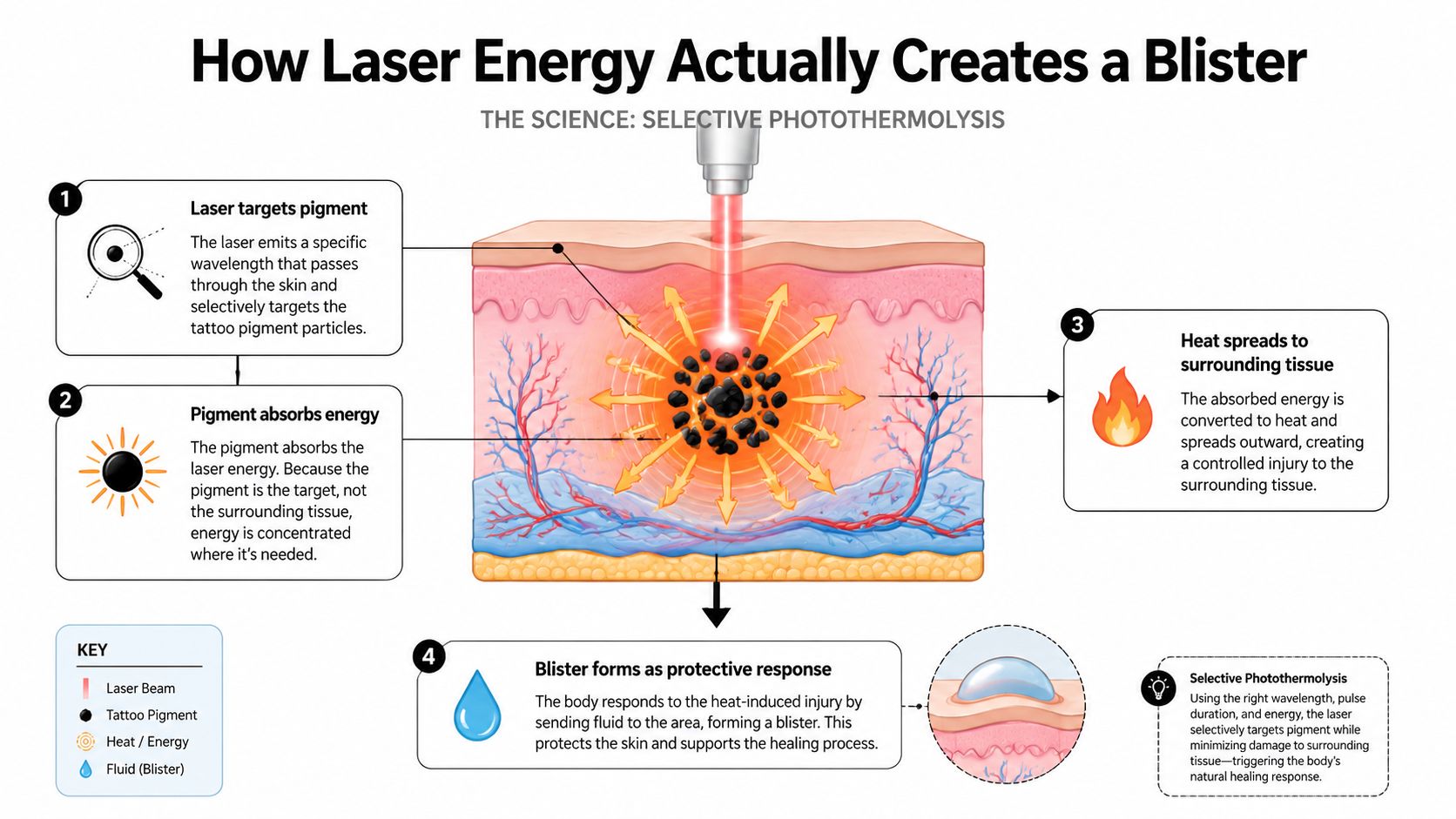
Laser tattoo removal works by selective photothermolysis, which means the device aims at pigment while trying to spare the surrounding tissue. The beam breaks tattoo ink into smaller particles, and the body clears those particles through normal healing processes. When the energy stays mostly where it should, recovery is straightforward.
From pigment targeting to surface damage
The part clients do not see is the thermal side of the process. If enough energy reaches the epidermis, the skin above the tattoo heats up. That heating can injure surface cells, and once the upper layer separates from what is underneath, fluid collects in that space and forms a blister. A published case report on large post-removal bullae attributed the blisters to thermal injury from the laser treatment, not to a separate skin disease process.
That is why I tell clients to treat a blister as a signal of overlap. The laser did its job on the pigment, but some of that energy also reached the skin barrier. Heavily inked areas, higher settings, and sensitive skin can all make that response more likely.
Why the skin makes a blister at all
A blister is the body's way of protecting damaged tissue while it repairs itself. Fluid cushions the raw area, reduces friction, and helps the surface reform. In tattoo removal, that response can be useful as long as it stays contained and clean.
A blister does not automatically mean the treatment went wrong. It means the skin experienced enough heat to respond defensively, and the aftercare phase matters more than ever. That is why advice like “don't pop it” is more than a generic warning. It helps keep a controlled injury from becoming a larger wound.
For a visual breakdown of how this happens, see the infographic showing laser tattoo removal energy, controlled heat, and blister formation. For a practical look at how the skin can appear after treatment, this guide on skin after tattoo removal shows the range of expected surface changes.
The recovery discussion also depends on what the skin is doing, not just how it looks. If you want a broader context for normal skin repair, the VitzAi insights on skin renewal can help frame why treated skin sometimes reacts with redness, swelling, or blistering before it settles.
The Healing Timeline From Hour One to Week Two
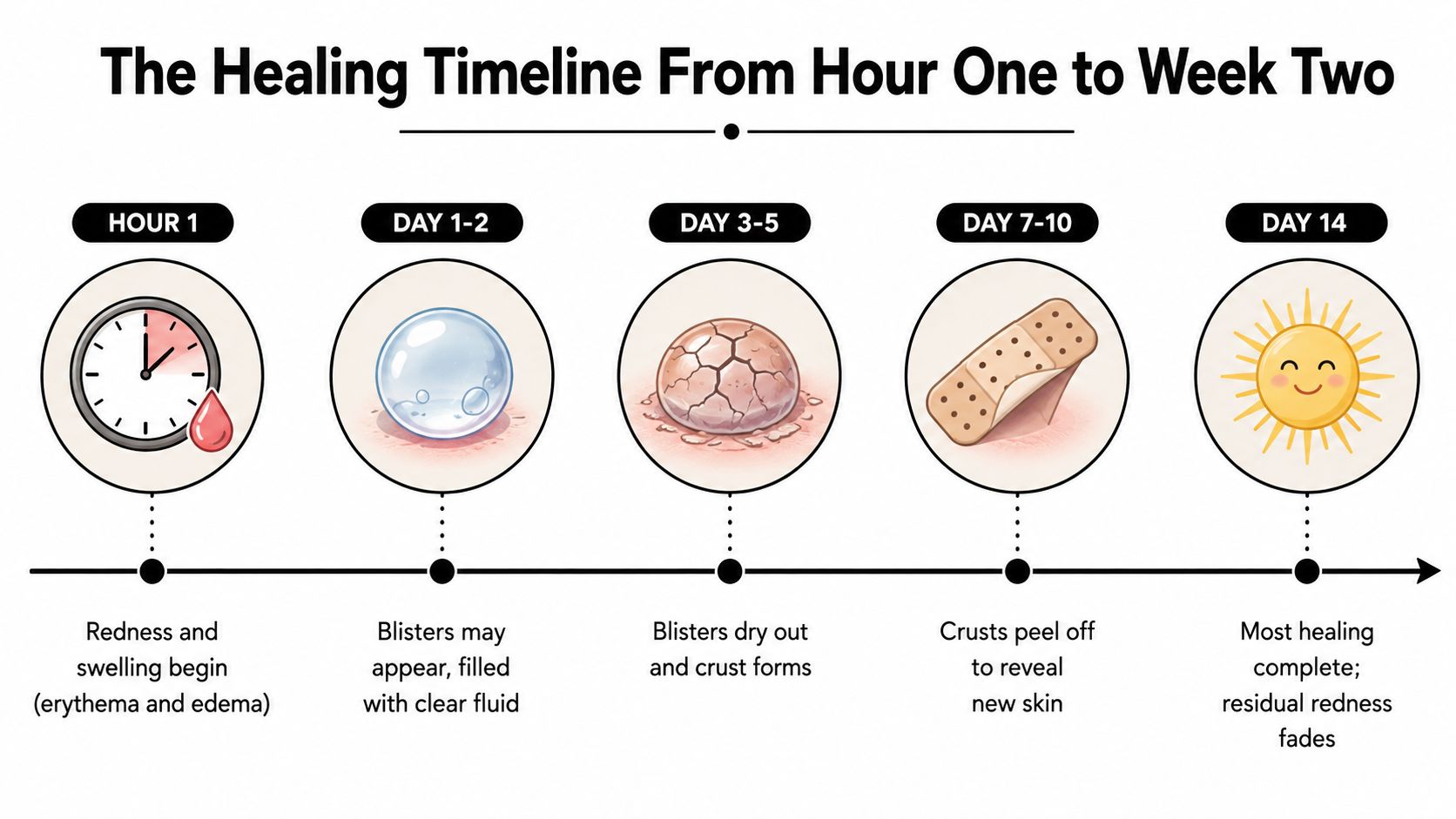
The first thing clients ask is how long the skin will look strange. That answer depends on the size of the reaction, but the published clinical window gives you a reliable frame. The StatPearls/NCBI clinical review states that edema, erythema, and pruritus commonly develop within the first 24 hours and typically subside within 1 to 2 weeks (NCBI Bookshelf). It also notes that smaller blisters usually resolve spontaneously within a few days, while larger blisters may be drained if uncomfortable.
What usually happens first
In the first day, the skin often looks red, swollen, or itchy. That's the inflammatory phase, and it can feel more dramatic than it looks medically. If a blister appears during this window, it often contains clear fluid and sits on top of mild redness rather than spreading heat across the whole limb or patch.
By days two to four, smaller blisters often begin to dry, flatten, or crust. That's the point where clients get tempted to pick, peel, or “help” the process along. Resist that impulse. The skin is already doing the work.
What a longer recovery can still look like
Larger blisters can take longer because the fluid needs time to reabsorb. One patient-facing medical source notes that blister fluid can persist until reabsorption, sometimes taking up to two weeks, and that timing can vary by skin response and treatment intensity (VitzAi insights on skin renewal). For a broader skin-repair perspective, that fits with how treated skin rebuilds its barrier over time.
A helpful way to think about the window is this, if the skin is improving, even slowly, that's usually reassuring. If it's getting hotter, more painful, or more swollen instead of settling, that's a different pattern.
For a practical reference on the post-laser surface changes people commonly notice, the guide at https://eraditatt.com/2026/07/28/skin-after-tattoo-removal/ can help set expectations without overreacting to every change.
Safe At-Home Care Without Making It Worse
A blister after tattoo removal can look alarming, and the home routine matters because the wrong move can turn a normal healing response into a longer problem. Clean gently, protect the area, and leave the blister alone. When clients keep the process simple, they usually avoid the two biggest problems I see, secondary infection and mechanical damage from picking or friction.
A no-drama care routine
Cleanse gently. Use a fragrance-free soap and lukewarm water, then pat the skin dry with a clean towel. Don't scrub the area, and don't use exfoliants or rough washcloths.
Apply only what your technician recommended. If you were given an ointment or dressing plan, follow that exact routine. If you need guidance on topical products, the 2026 Neosporin alternatives guide is a useful reminder that “antibiotic ointment” is not the same thing as “any ointment.”
Leave the blister intact. The skin roof protects the tender tissue underneath. Popping it turns a contained blister into an open wound.
Keep the area protected. A clean, sterile bandage can reduce friction from clothing and accidental rubbing, especially in the first few days.
Avoid soaking. Baths, hot tubs, and pools can expose healing skin to bacteria and soften the surface too much.
What causes avoidable damage
The habits that create trouble are usually the ones that feel active. Picking, peeling, and scratching are the fastest ways to create scarring or pigment loss. Sun exposure on fresh skin can also worsen discoloration and make the area more fragile. Tight clothing adds repetitive friction, which is a small problem once and a bigger problem if it keeps happening all day.
Simple rule: if the skin needs to stay sealed, don't let heat, water, friction, or fingers work against it.
EradiTatt's aftercare guidance reflects the same practical approach. Blisters or scabs can form, and they should be left alone so they can heal on their own. If you want a fuller explanation of why aftercare matters, EradiTatt's laser tattoo removal aftercare guide lays out the same basic principle clearly. That is the mindset that keeps a normal blister from becoming a stubborn complication.
Normal Healing Versus Warning Signs
Most clients don't need a debate, they need a fast decision. Small, clear-fluid blisters with mild soreness are usually part of normal recovery. Hot, spreading, or pus-filled blisters are not.
| What You See | Normal Healing | Call the Clinic |
|---|---|---|
| Blister size | Small and localized | Rapidly enlarging or very tense |
| Fluid | Clear or lightly colored | Yellow, green, cloudy, or foul-smelling |
| Skin feel | Mild tenderness | Hot, throbbing, or sharply painful |
| Redness | Light and fading | Spreading, deepening, or streaking |
| Timing | Appears soon after treatment or within the first few days | Appears days later with worsening symptoms |
| General symptoms | No fever, no chills | Fever, chills, or feeling unwell |
The pattern matters as much as the blister
A normal blister tends to settle. It may look more noticeable on day one than it does on day three, but the overall direction is calmer, not angrier. Warning signs move the other way. The skin gets hotter, the pain ramps up, or discharge starts to appear.
That difference is why clients should trust the trend, not just the snapshot. A single photo can be misleading. A worsening timeline is harder to ignore.
When to stop watching and start calling
If the blister is hot, red, throbbing, swollen, or filled with pus, treat that as a clinical review problem. Those features can point to infection or excess thermal injury. Same-day contact is especially important if the blister grows dramatically, new blisters appear later than expected, or the surrounding skin starts looking increasingly inflamed.
A lot of anxiety comes from not knowing which change is “normal weird” and which change is “call now weird.” The table above is the practical line. If the skin is healing, monitor it. If the pattern is clearly worsening, get help.
Risk Factors You and Your Technician Can Control
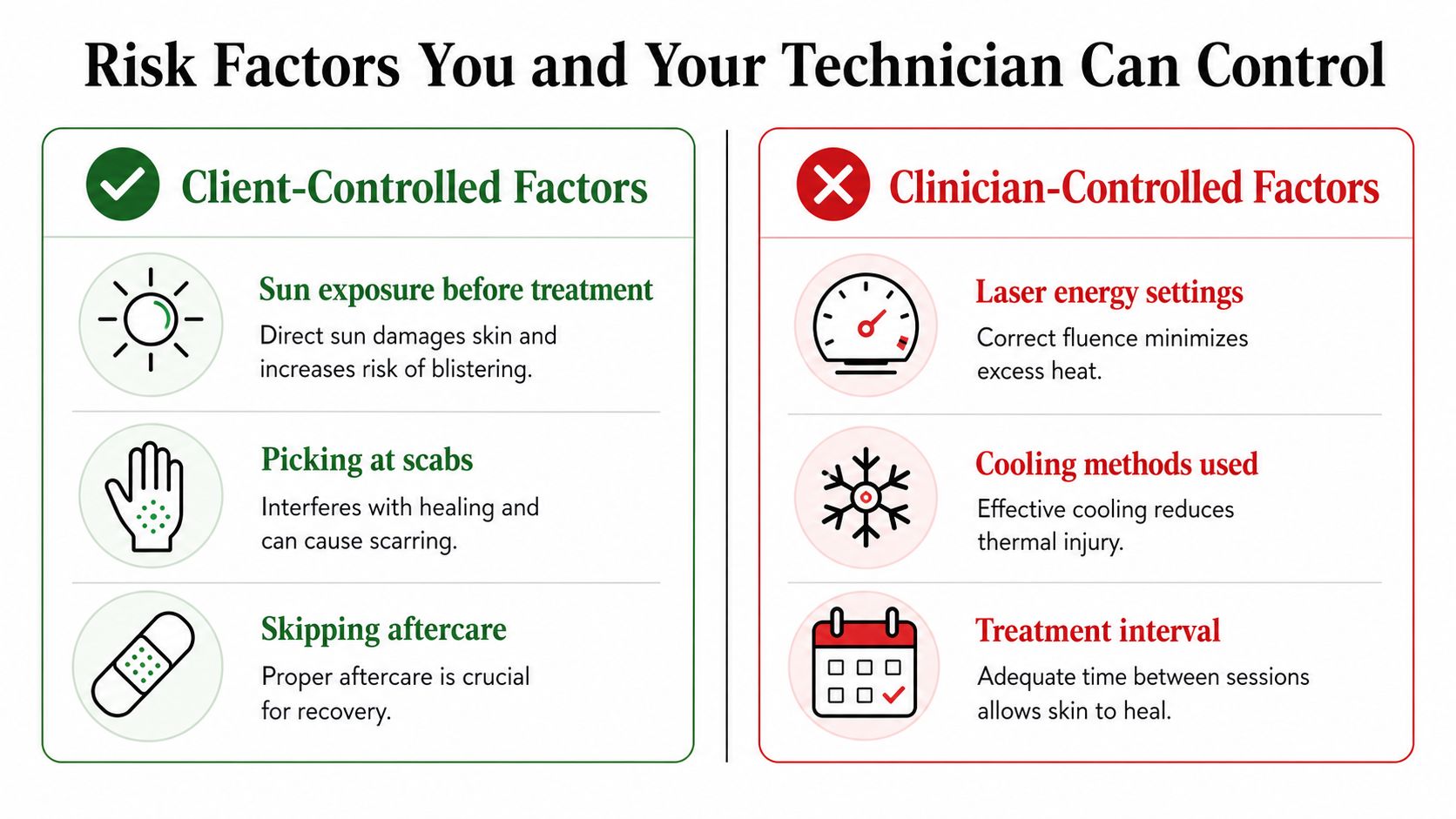
Not every blister is random. Some risk factors belong to the client, and some belong to the clinician. The best outcomes happen when both sides control what they can.
Client-controlled risks
Sun exposure before treatment makes the skin more reactive, so protection matters before and after the session. Picking at scabs, squeezing blisters, or skipping aftercare only raises the chance of scarring. I also tell clients to speak up if they've had a lot of recent sun, because that changes how cautiously we approach the next session.
Clinician-controlled risks
The clinician controls the fluence, wavelength, cooling approach, device choice, and the time between sessions. Higher fluence can create more heat, which is why blistering is more common with stronger settings and in darker skin types, according to the comparative and review data in the PubMed-linked literature (picosecond comparison and clinical review). A larger, denser, or more saturated tattoo may also require more energy, which means more careful calibration.
Ink color and tattoo density matter
Black ink, heavy saturation, and red, green, or blue pigments can blister more readily because they absorb more delivered energy, according to clinical guidance summarized in patient-facing medical material (tattoo-removal blister guidance). That doesn't mean those colors can't be treated. It means the settings and expectations need to fit the ink.
If you're choosing a clinic, ask how they adjust for skin type and ink density. If you're the client, follow the pre-session instructions closely and don't treat sun damage, friction, or missed aftercare as minor details. They're part of the risk equation.
When Blisters Point to Something More Serious
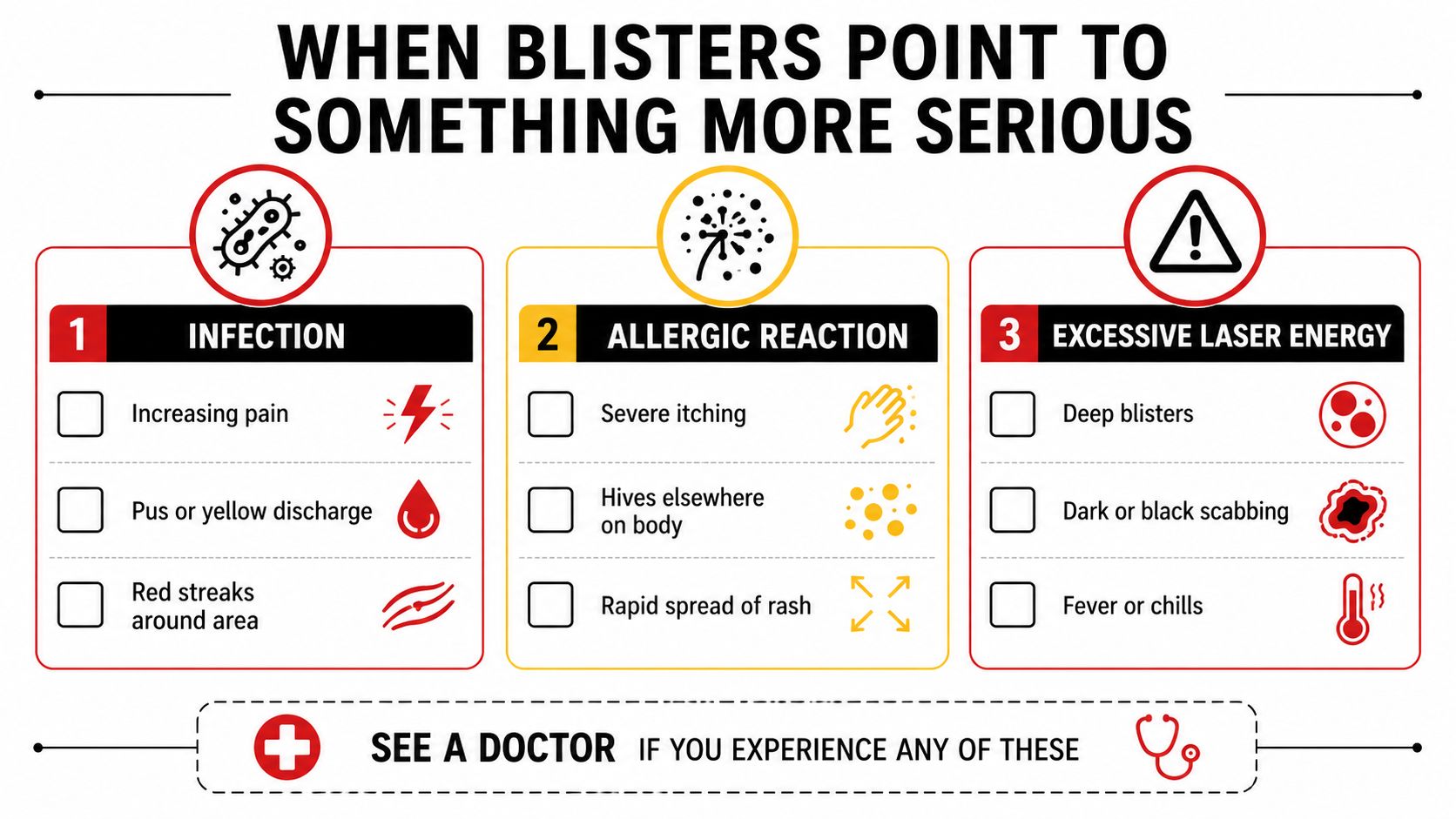
Most blisters heal cleanly. A smaller number signal infection, allergic reaction, or excessive laser energy, and those are the cases that deserve faster attention.
Three patterns that need a closer look
Infection usually shows up as increasing pain, pus or yellow discharge, red streaks around the area, or worsening warmth and swelling. If the skin starts to feel worse instead of better, don't wait for it to “settle.”
Allergic reaction can be linked to tattoo pigment and tends to show up with severe itching, hives elsewhere on the body, or a rash that spreads quickly. Red or yellow pigment is the classic concern in many clinical discussions of tattoo reactions.
Excessive laser energy can create deeper blisters, dark or black scabbing, prolonged pain, or systemic symptoms such as fever or chills. That pattern deserves prompt review because it suggests the skin took more thermal stress than it should have.
What the decision point looks like
If the blister is small, clear, and improving, home care is usually enough. If symptoms are spreading, becoming painful, or showing discharge, the clinic should hear from you the same day. If you have fever, chills, or a rapidly worsening rash, that's no longer a routine aftercare issue.
For clients who want another practical reference point, the guide at signs of infection after tattoo removal reinforces the same threshold, worsening redness, drainage, and systemic symptoms are the ones that matter most.
Don't wait for a bad blister to become a bigger problem. Early review protects both the skin and the final result.
Your Next Step and How EradiTatt Helps
A good consultation should leave you with a plan, not just a date. Bring photos of the tattoo, a list of current medications, and a clear note about recent sun exposure so the clinician can judge your blister risk and healing needs more accurately.
Questions worth asking before the next session
Ask what device will be used, how the settings are chosen for your skin type, and what level of blistering risk is realistic for your tattoo's color and density. Also ask what aftercare products the clinic wants you to use, and what symptoms should trigger a call. If the answers feel vague, that's a sign to keep asking until they're not.
EradiTatt Tattoo Removal works across Orlando, Bradenton/Sarasota, St. Petersburg, Palm Harbor, and Tampa, with a central 844 scheduling line for clients across Central and West Florida. That access matters when you're trying to move from worry to an actual plan, especially if you need a follow-up look at a healing blister.
What a strong next step looks like
You don't need to guess whether the blister is “fine enough.” You need a clinic that can review the skin, explain the next 48 hours, and adjust treatment if your tattoo, skin type, or healing pattern calls for it. A personalized plan is the difference between staying calm and cycling through uncertainty after every session.
If you're dealing with a blister after laser treatment or you want a safer plan before your next appointment, schedule a consultation with EradiTatt Tattoo Removal. The team can review your skin, explain what's normal for your tattoo, and help you move forward with clear aftercare and realistic expectations.
2 Responses