
You look at the tattoo and already know the story. It made sense when you got it. Now it doesn't fit your work, your style, your relationship status, or the way you want to show up in photos. Maybe you don't even hate it. You're just done with it.
That's where Orlando tattoo removal stops feeling abstract and starts becoming practical. You don't need to guess how lasers work, how many visits you might need, or whether fading for a cover-up is enough. You need a clear explanation from someone who treats this like a process, not a mystery.
In Orlando, tattoo removal is established enough that even the labor market reflects a mature specialty. A 2026 Orlando salary benchmark for tattoo removal work lists average annual pay at $99,754 and about $47.96 per hour, with a wide local range from $27,072 to $370,140. That doesn't measure patient volume directly, but it does show this is no longer a fringe service. It's a recognized medical-aesthetic offering with trained providers, modern equipment, and a steady stream of people looking for a fresh start.
Table of Contents
- Your Fresh Start Is Closer Than You Think
- How Laser Technology Erases Unwanted Ink
- The Tattoo Removal Journey What to Expect Session by Session
- Key Factors That Influence Your Removal Results
- How to Prepare for Your Appointment and Care for Your Skin After
- Choosing the Right Tattoo Removal Clinic in Orlando
- Frequently Asked Questions About Orlando Tattoo Removal
Your Fresh Start Is Closer Than You Think
A lot of people come in with the same first sentence. “I should've done this sooner.”
Sometimes it's a name on the wrist. Sometimes it's a large shoulder piece that no longer matches the person wearing it. Sometimes it's not regret at all. It's timing. A new career. A wedding. Military plans. A cover-up idea that needs a lighter canvas before an artist can work cleanly.
The biggest shift usually happens when the process gets explained in plain English. Once you understand that tattoo removal happens gradually, and that your body plays a real role in clearing shattered ink, the whole thing feels less intimidating. It becomes a treatment plan instead of a leap into the unknown.
Practical rule: Most tattoos don't disappear in one visit. Good removal is usually progressive, deliberate, and customized to the tattoo in front of you.
That's also why Orlando tattoo removal shouldn't be judged by flashy promises. The right standard is safer than that. A strong clinic evaluates your ink colors, where the tattoo sits on the body, how dense the pigment looks, and whether you want complete removal or just enough fading for a cover-up.
If you're starting this process now, you're not behind. You're at the point where asking better questions makes a real difference. The rest comes down to understanding the laser, the session schedule, and what your skin needs between visits.
How Laser Technology Erases Unwanted Ink
Think of ink like gravel under the skin
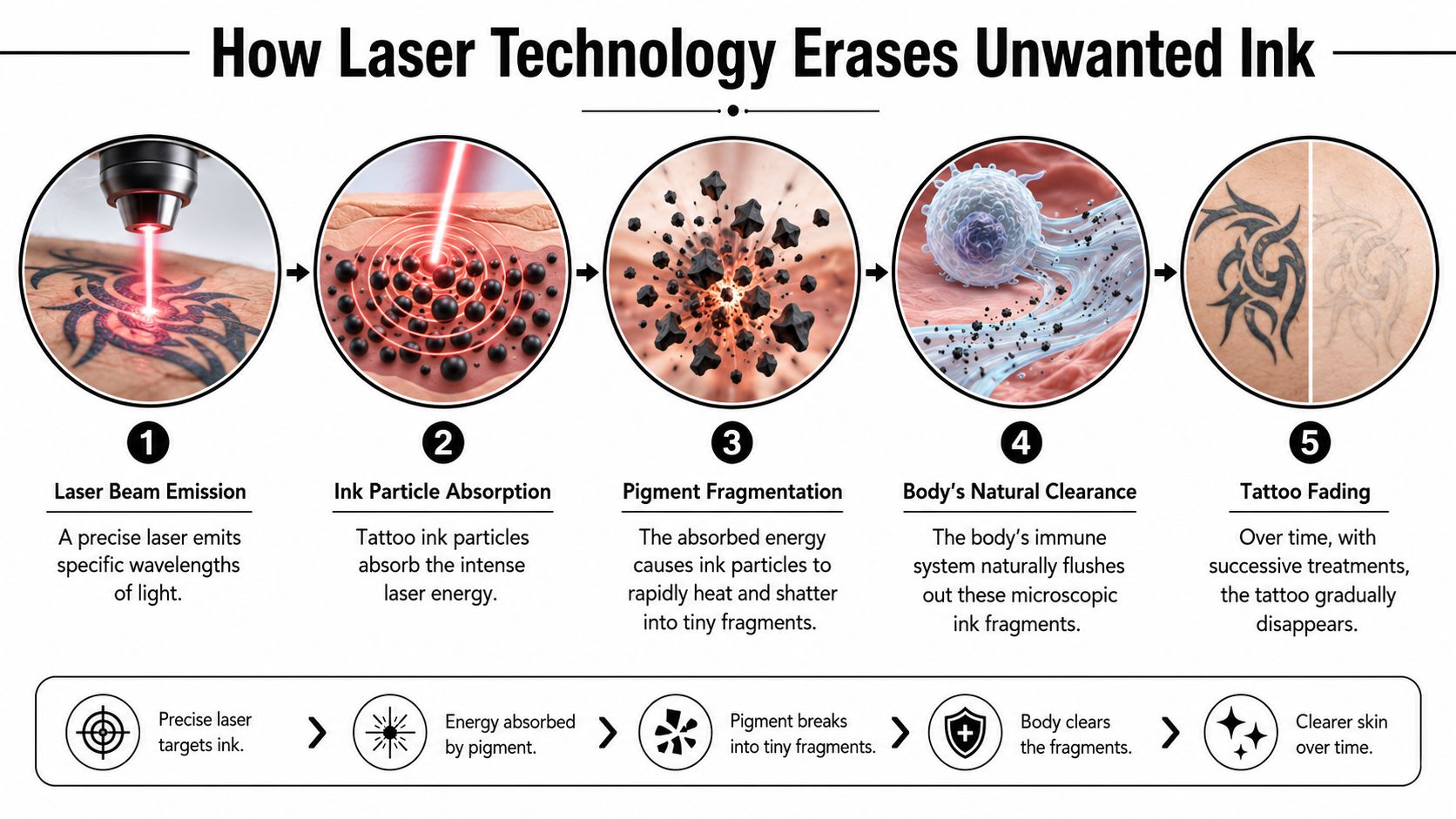
Laser tattoo removal works because the laser doesn't “scrape” the tattoo off. It delivers light energy into the pigment. The pigment absorbs that energy, breaks apart, and then your body clears those smaller fragments over time. The FDA's tattoo removal guidance explains that laser energy shatters ink into particles that the immune system can remove, and that treatment usually requires multiple sessions spaced a few weeks apart.
A simple way to picture it is this. Think of the tattoo ink like a pile of gravel buried in the skin. The laser turns bigger chunks into much smaller pieces. Once those pieces are small enough, your body can gradually carry them away.
That's why fading continues after the appointment ends. The treatment happens in the room, but the clearing happens afterward as your body processes what the laser broke up.
Why wavelength matters
Not all tattoo ink behaves the same way. Different colors respond to different wavelengths of light, so laser choice matters. This is why clinics that use multi-wavelength systems can often treat a wider variety of pigments more effectively than clinics relying on older single-purpose equipment.
The FDA-linked evidence also notes that picosecond systems can clear some colors faster, with a 755 nm laser reported to produce 75% or greater clearance of stubborn blue and green tattoos in one or two treatments in one cited context within that guidance. That doesn't mean every blue or green tattoo clears that quickly. It means the device and wavelength can make a major difference for specific pigments.
Here's the part that confuses people most. Better technology can improve targeting, but it doesn't replace biology. The laser can fracture the ink. Your immune system still has to do the cleanup.
For that reason, the best question isn't “What's your newest machine?” It's “Is this the right wavelength setup for my tattoo colors and skin type?” If you want a clearer sense of how newer devices are changing treatment options, this overview of new technology in tattoo removal is a useful place to start.
- Black ink usually responds well because it absorbs laser energy efficiently.
- Blue and green pigments often need more specific wavelength targeting.
- Dense professional tattoos may hold pigment in a more even, deeper pattern.
- Session spacing matters because the body needs time to clear the fragmented particles.
The laser starts the removal. Your body finishes it.
The Tattoo Removal Journey What to Expect Session by Session
Your first consultation
The first visit is where most uncertainty disappears. A technician looks at the tattoo itself, not just the size. Color mix, layering, placement, skin tone, age of the tattoo, and your goal all affect the plan. Full removal is different from cover-up fading, and both require a realistic schedule.
A clinical study on tattoo removal outcomes found an average of 6 sessions, with outcomes ranging from 2 to 20. The same study reported that people aged 18–39 made up two-thirds of tattoo-removal seekers, and that black ink remains the most commonly removed pigment. That wide range is exactly why a consultation matters. Two tattoos that look similar from a distance can behave very differently once treatment starts.
What happens during treatment
On treatment day, the area is cleaned and assessed. The laser is then applied in controlled passes based on the plan created for your tattoo. Right after treatment, many people notice immediate whitening or “frosting,” followed by temporary redness, swelling, and gradual fading over the weeks after the session.
You won't judge success by what you see in the first hour. You judge it by how the tattoo changes during healing and over the interval before the next appointment.
If you've looked into other light-based cosmetic procedures and want a broader safety mindset, it's worth reading about potential IPL treatment risks. IPL is not the same treatment as laser tattoo removal, but understanding how skin can react to energy-based procedures helps people ask better aftercare and provider-safety questions.
Factors That Determine Your Number of Sessions
| Factor | Impact on Sessions (Fewer vs. More) | Why It Matters |
|---|---|---|
| Ink color | Fewer for simpler responsive colors, more for stubborn mixed colors | Some pigments absorb laser energy more readily than others |
| Ink density | Fewer for lighter amateur work, more for dense professional work | Heavier pigment loads leave more ink to fragment and clear |
| Tattoo age | Often fewer when ink has already softened over time, more when it remains dense | Older tattoos may already show natural fading |
| Body location | Fewer in areas that tend to clear well, more in areas that clear slowly | Circulation affects how efficiently fragmented ink is removed |
| Skin type | Depends on how conservative settings need to be | Safe treatment planning may require more gradual progress |
| Goal | Fewer for cover-up fading, more for complete removal | Lightening enough for new artwork is different from clearing all visible pigment |
The rhythm between appointments
A removal plan has a cadence. Treatment. Healing. Fading. Reassessment. Then the next session.
That in-between time matters more than people expect. If sessions are stacked too aggressively, the skin gets more stress without giving the body enough time to carry away what the laser has already broken apart. Orlando tattoo removal works best when the plan respects both the machine and the healing timeline.
Key Factors That Influence Your Removal Results
Location changes the timeline
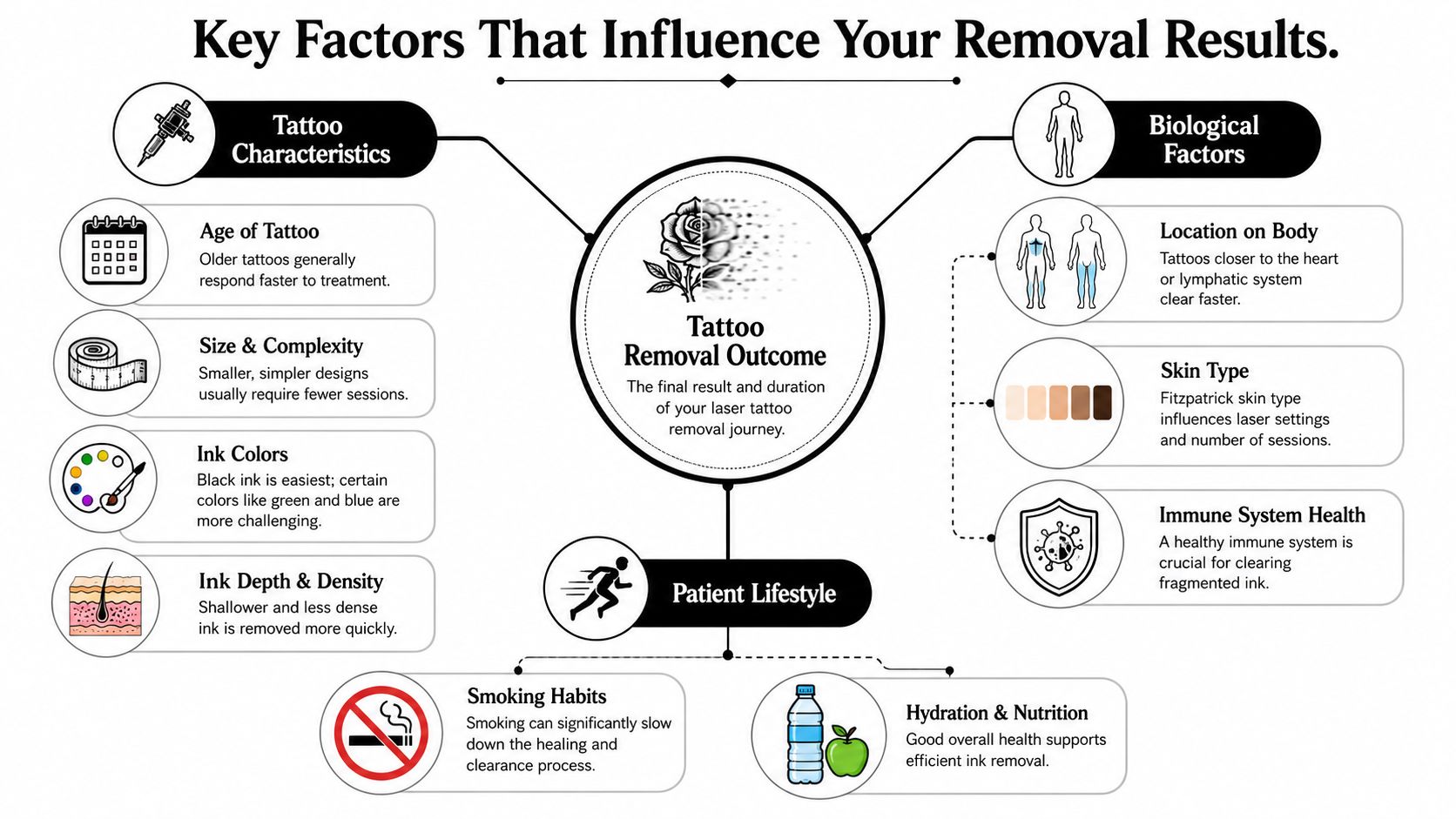
Two tattoos with the same ink can fade at different speeds because they sit on different parts of the body. According to medical guidance on tattoo location and removal response, tattoos closer to the heart often respond faster, while lower-leg and ankle tattoos may clear more slowly because circulation is less favorable there. That same guidance notes a typical treatment series can range from 2 to 10 sessions spaced 6–8 weeks apart.
That one detail explains a lot of frustrating comparisons. Someone may show you their forearm progress online, but your ankle tattoo won't necessarily behave the same way. Placement changes the timeline.
Skin type color and ink density all matter
Skin type matters because technicians need settings that target ink while protecting surrounding skin. Darker background skin may call for a more careful, staged approach. That doesn't mean removal can't be done. It means planning matters more than one-size-fits-all settings.
Ink density matters for a different reason. Professional tattoos often place pigment more consistently and at a greater depth than lighter amateur work. Multicolor tattoos can also require a more selective strategy because the same wavelength won't treat every pigment equally well.
A useful way to judge your own tattoo is to think through these questions:
- Where is it located on the body, and does that area usually heal and circulate well?
- How packed is the ink in the darkest areas?
- Is it mostly black, or are there several colors layered together?
- Do you want full clearance or just enough fading for a tattoo artist to work over it?
A chest tattoo and an ankle tattoo may not be on the same calendar, even if the design size looks similar.
Your body is part of the treatment
People often talk about laser settings as if the machine does everything. It doesn't. Your body clears the fragmented ink after each appointment, so overall health, healing habits, and consistency with aftercare all influence what happens next.
That's why good Orlando tattoo removal isn't about chasing the fastest possible appointment schedule. It's about matching the treatment pace to the way your tattoo and your skin are responding.
How to Prepare for Your Appointment and Care for Your Skin After
Before your appointment
Preparation is simple, but it matters. Show up with clean skin and avoid arriving with fresh irritation, sun stress, or anything that makes the treatment area harder to assess. If you're unsure what your clinic wants you to do before the visit, this guide on how to prepare for tattoo removal gives a practical checklist.
Use this as your pre-appointment baseline:
- Keep the area clean: Skip heavy lotions, oils, or products that leave residue on the skin.
- Protect from sun exposure: Tanned or irritated skin can complicate treatment planning.
- Wear easy clothing: If the tattoo is on the back, thigh, shoulder, or rib area, choose something that allows access without friction.
- Ask about medications: If you take anything that affects skin sensitivity or healing, raise it before treatment rather than after.
Aftercare in the first days and weeks
Right after treatment, it's normal to see temporary skin reactions such as frosting, swelling, redness, and sometimes blistering as the area begins to heal. That doesn't mean something went wrong. It means the skin has been treated and now needs a calm recovery window.
The basic job of aftercare is to protect the area, reduce irritation, and let the skin recover without extra stress.
- Be gentle when cleansing: Use mild cleaning methods instead of scrubbing the area.
- Don't pick or peel: Scabs, flakes, or blisters need to resolve on their own.
- Reduce friction: Tight waistbands, rough fabric, and repeated rubbing can slow healing.
- Stay consistent with sun protection: Freshly treated skin is more vulnerable to discoloration when exposed.
Healing is part of the result. A rushed recovery can slow progress just as much as a rushed treatment plan.
What people often get wrong
Most problems between sessions come from doing too much, not too little. People scrub, over-apply products, go back into heavy sun, or test the area to see “how healed” it feels. Simpler is better.
If you treat the skin like it's healing from a controlled injury, your decisions get easier. Keep it clean, keep it protected, and let the fading happen over time.
Choosing the Right Tattoo Removal Clinic in Orlando
What to look for before you book
A strong clinic should be able to explain its laser technology in plain terms, not just in marketing language. Recent guidance on newer multi-wavelength tattoo removal systems notes that modern technology can target a wider range of colors more effectively in fewer sessions, while also stressing that healing and clearance still take time. That's the balance you want. Updated equipment plus realistic expectations.
You should also expect a consultation that feels specific to your tattoo. If the conversation skips over body location, color mix, skin background, and whether you want complete removal or a fade for a cover-up, the plan probably isn't individualized enough.
A broader resource on how aesthetic providers present safety, consultation, and treatment planning can also be useful when comparing clinics. Even outside tattoo removal, browsing how an Aesthetics Clinic communicates patient care can help you spot the difference between education and hype.
A practical Orlando checklist
When you compare options for Orlando tattoo removal, use a checklist instead of a vibe.
- Modern laser platform: Ask whether the clinic uses a multi-wavelength system suited to different ink colors.
- Clear session expectations: You want realistic timelines, not instant-clearance promises.
- Comfort with cover-up goals: Fading for a tattoo artist requires a different endpoint than full removal.
- Aftercare support: The clinic should tell you what normal healing looks like and when to call with concerns.
- Accessible scheduling: Easy booking and clear communication matter because removal is a series, not a one-time visit.
If you're comparing local options and want a concise view of what to look for in a provider, this guide to the best tattoo removal in Orlando covers the practical criteria that matter most. Among Orlando providers, EradiTatt Tattoo Removal offers laser tattoo removal at its Orlando location and uses PiQo4 technology for this service, with treatment plans that vary by tattoo size, color complexity, skin type, and whether the goal is full removal or fading for a cover-up.
Frequently Asked Questions About Orlando Tattoo Removal
Does laser tattoo removal hurt
It is generally described as uncomfortable rather than unbearable. The sensation is brief and treatment-focused, and the exact feel depends on the location of the tattoo, your skin sensitivity, and how large the area is. Places with thinner skin or more nerve sensitivity usually feel sharper than fleshy areas.
Will tattoo removal leave a scar
A properly planned treatment aims to remove ink while preserving skin texture. Existing scar tissue inside the tattoo can still show after the ink fades, and poor aftercare can create extra healing problems. That's why provider technique and what you do between sessions both matter.
How much does tattoo removal cost in Orlando
Pricing depends on the tattoo's size, complexity, color mix, and the number of sessions your plan is likely to require. A small black tattoo being faded for a cover-up won't be priced the same way as a larger, multicolor professional piece being fully removed. The most useful number is the one tied to your consultation, because that reflects the actual work involved.
Can I fade a tattoo for a cover-up instead of fully removing it
Yes. Many people don't need total clearance. They just need enough lightening to give a tattoo artist cleaner space to work with. That's often the right move when the old tattoo is too dark or busy for a new design to sit well over it.
How long should I wait between sessions
Your clinic will set the timing based on how your tattoo and skin respond, and that spacing is part of the treatment plan. What matters most is allowing enough time for healing and ink clearance before the next visit.
If you're still comparing providers, this article on tips for safe laser skin care treatments is a useful general checklist for evaluating consultation quality, safety habits, and provider communication. Those same standards matter in tattoo removal.
The best next step is a consultation where someone looks at your tattoo itself, not just a photo and not just a generic size chart. That's how you get a plan that matches your skin, your ink, and your timeline.
If you're ready to talk through your options for fading or full removal, EradiTatt Tattoo Removal offers consultations so you can get a personalized treatment plan based on your tattoo's location, colors, density, and your end goal.