You look at the tattoo and already know why you're here. It might be tied to a version of you that doesn't fit anymore. It might get in the way of work, a cover-up plan, a wedding, military goals, or just how you want to feel in your own skin.
Palm Harbor has no shortage of tattoo removal options, but the hard part isn't finding a clinic. It's figuring out which one will treat your skin carefully, choose the right laser for your ink, and give you an honest picture of what the process will look like from consultation to final fading.
Table of Contents
- Your Guide to a Fresh Start in Palm Harbor
- Understanding Modern Laser Tattoo Removal Technology
- Your Consultation Checklist What to Ask a Palm Harbor Clinic
- Decoding the Treatment Process Sessions Costs and Results
- Essential Aftercare for Safe Healing and Best Results
- Begin Your Tattoo Removal Journey with Confidence
Your Guide to a Fresh Start in Palm Harbor
A tattoo can stop feeling like self-expression and start feeling like visual clutter. That shift happens all the time. People outgrow names, old styles, rushed decisions, and even well-done tattoos that don't belong in the next chapter of their lives.
The good news is that removal has changed. Today's process is more precise, more customizable, and much better suited to real-world goals like full removal or fading for a cover-up. The bigger challenge is choosing carefully, because the best laser tattoo removal in Palm Harbor isn't just about finding a place with a laser. It's about finding a provider who knows how to match technology, settings, skin type, and expectations.
A strong clinic should help you think through practical issues, not just sell a session. That includes the likely pace of fading, what your tattoo colors mean for laser choice, how healing affects scheduling, and what kind of result makes sense for your specific piece.
What a smart buyer looks for
- Technology that fits the ink: Black, blue, green, and multicolor tattoos don't respond the same way.
- A customized plan: Skin tone, tattoo depth, and your end goal should shape the treatment approach.
- Clear preparation advice: Good outcomes start before the first pulse of the laser.
- Realistic expectations: If someone promises instant clearance, keep asking questions.
Practical rule: The right provider should make the process easier to understand, not more mysterious.
If you're getting ready to book, it helps to review how to prepare for tattoo removal before your first appointment. Preparation affects comfort, healing, and how smoothly your consultation goes.
Understanding Modern Laser Tattoo Removal Technology
Laser tattoo removal sounds simple from the outside. In practice, the result depends on how well the provider matches the laser to the tattoo in front of them.
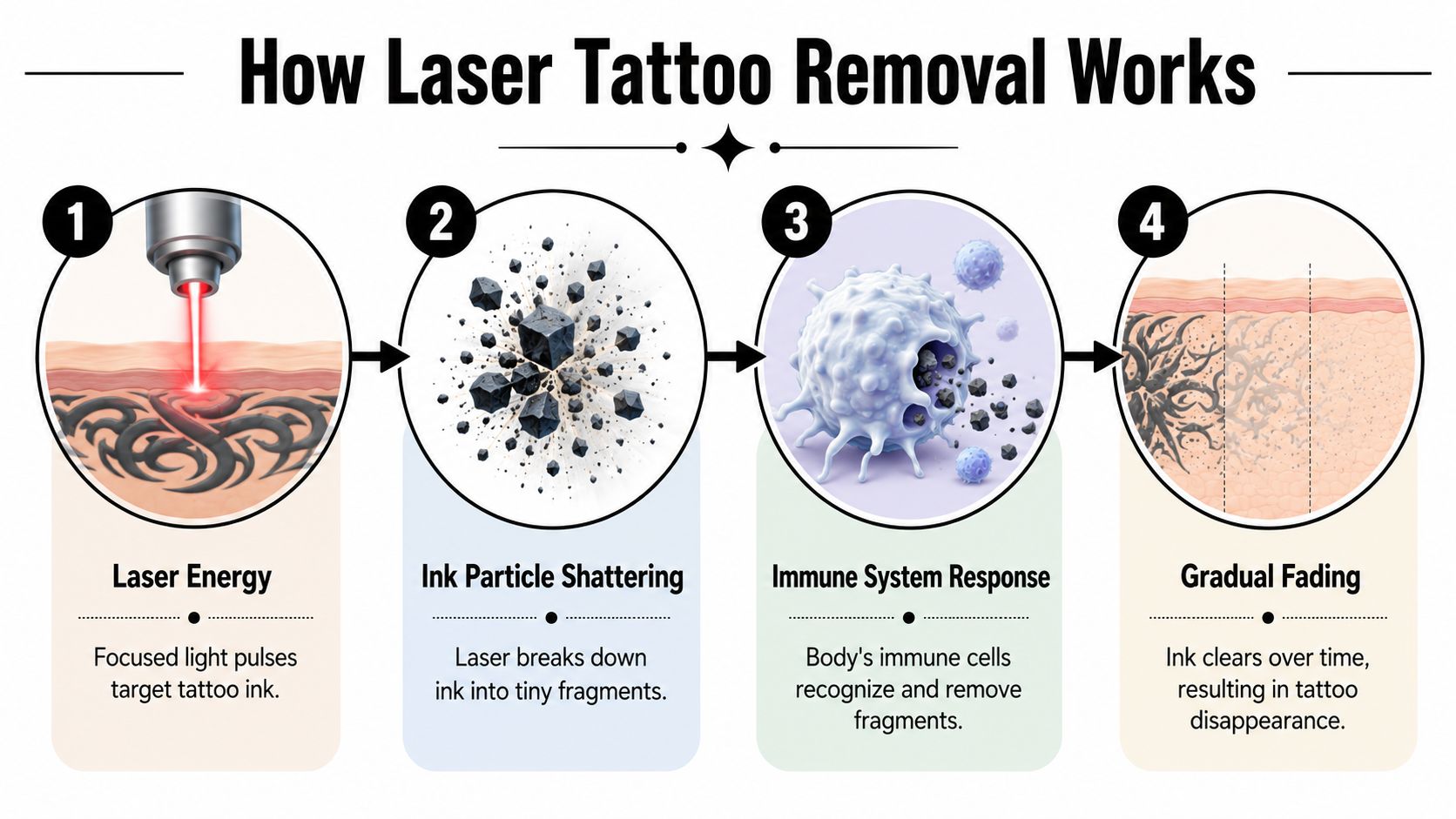
According to this Palm Harbor tattoo removal overview, laser tattoo removal uses high-intensity light to break tattoo pigment into smaller particles that the body then metabolizes. That same source explains why black ink is the easiest to treat because it absorbs all laser wavelengths, while other colors need specific lasers matched to the pigment. It also notes that a single session should create progressive lightening, not instant full clearance.
What the laser is actually doing
The laser isn't scraping the tattoo off the surface. It's targeting pigment beneath the skin with short bursts of light energy. Those pulses break larger ink deposits into smaller fragments. After that, your body does the cleanup work over time.
That's why removal is a process, not a one-day event. The visible change after treatment is only the beginning. The fading continues between visits as your body clears what the laser disrupted.
Here's the process in a simple visual.
Why the machine matters
Older equipment can still work for some tattoos, especially darker ink, but modern platforms give technicians more control. That matters when a tattoo has mixed colors, denser saturation, or a goal that isn't full removal but strategic fading.
A published overview discussed in this article on modern clinic technology reported 96% good-to-complete clearance of lesions, 86% patient satisfaction, and treatment times that were typically under 20 minutes for PicoWay-based tattoo removal. The same page explains that PiQo4 systems can use both nano- and picosecond pulse options, which is useful because treatment plans often need adjustment based on skin tone, ink density, and whether the goal is full removal or cover-up fading.
That's why clinics using advanced multi-wavelength systems can often make better decisions across a wider range of tattoos. One practical example is new tattoo removal technology explained in plain language, which helps clients understand why wavelength flexibility matters.
A good technician doesn't just ask, “How big is the tattoo?” They ask what colors are in it, how dense it is, where it sits on the body, and what result you actually want.
Your Consultation Checklist What to Ask a Palm Harbor Clinic
A consultation shouldn't feel like a sales script. It should feel like a proper evaluation of your tattoo, your skin, and your end goal.
If a provider rushes through that first meeting, gives a generic answer for every tattoo, or talks more about booking than assessment, that's useful information. You're trusting someone with your skin. Ask direct questions and listen for direct answers.
Questions that reveal real expertise
Start with the laser itself. Ask what machine they use, what wavelengths are available, and how they decide which setting fits your tattoo. If your tattoo includes multiple colors, they should be able to explain how those colors affect the plan.
Then ask how they assess candidacy. A serious provider should review skin type, ink density, tattoo age, placement, any scar tissue, and whether you want full clearance or just enough fading for a cover-up.
A clinic should also be comfortable talking about trade-offs.
- Ask about customization: How will they adjust treatment based on your skin tone and the tattoo's colors?
- Ask about experience: Who will perform the treatment, and what specific training do they have with tattoo removal systems?
- Ask about photo evidence: Can they show before-and-after results from their own client work rather than stock imagery?
- Ask about limits: Which colors or tattoo styles tend to be more stubborn, and what does that mean for your expectations?
If the answer to every question is “It depends,” but they never explain what it depends on, you still don't have a real consultation.
Strong clinics also think about how patients find and evaluate providers online. If you want a sense of how reputable aesthetic brands present trust signals, reviews, education, and credibility, these proven strategies for med spas are worth scanning. It helps you spot the difference between clear patient education and pure promotion.
If cost comes up early, that's normal. It also helps to understand why tattoo removal can get expensive over the course of a treatment plan, because pricing makes more sense once you connect it to technology, session count, and customization.
Key Questions for Your Tattoo Removal Consultation
| Category | Question to Ask |
|---|---|
| Laser technology | What laser system do you use, and how do you match it to my tattoo colors? |
| Treatment planning | Are you aiming for full removal or fading for a cover-up, and how does that change the plan? |
| Skin assessment | How does my skin tone affect settings, healing, and risk? |
| Tattoo variables | How do tattoo age, ink density, and placement change results? |
| Provider skill | Who performs the treatment, and what tattoo removal training do they have? |
| Safety | How do you reduce the risk of skin injury and unwanted pigment change? |
| Expectations | What kind of fading should I expect after one visit versus several? |
| Documentation | Do you have real before-and-after photos of tattoos similar to mine? |
| Pricing | Do you charge per session, by size, or by a treatment package? |
| Aftercare | What healing instructions do you give, and what should I avoid after treatment? |
Decoding the Treatment Process Sessions Costs and Results
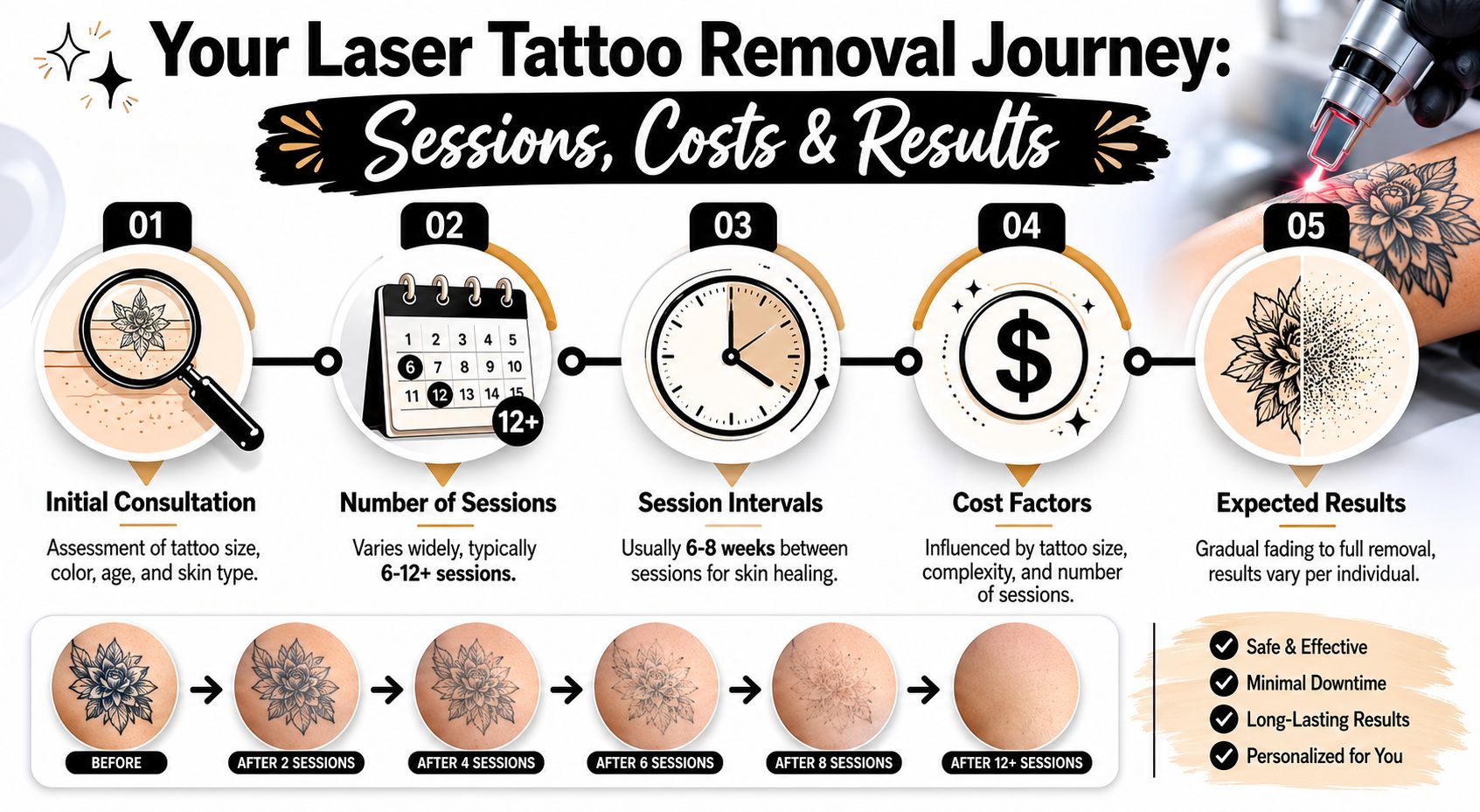
The question clients usually ask first is how long it will take. The honest answer is still the right one. It depends on the tattoo.
Palm Harbor pages often talk about convenience and safety but skip the details people need. According to this Palm Harbor service page, a major underserved topic is how many sessions, how much pain, and how long it takes for a specific tattoo to clear. That same page notes that outcomes vary by ink color, tattoo depth, skin type, and whether the goal is full removal or cover-up fading.
What changes your timeline
A lightly applied older tattoo and a dense professional multicolor tattoo aren't on the same schedule. Neither are tattoos on different parts of the body. Some areas heal and clear more predictably than others, while others require more patience.
The biggest drivers usually include:
- Ink color: Some pigments are easier to target than others.
- Ink depth and density: Professional tattoos often sit deeper and carry more packed-in pigment.
- Your skin characteristics: Settings must respect skin type and healing response.
- Your goal: Full clearance usually asks more of the process than softening a tattoo for a cover-up artist.
Results also arrive in layers. A session may make a visible difference, but no ethical provider should frame one visit as the finish line. Fading builds over time, and the body needs room to process what each treatment breaks apart.
This overview helps people visualize the process from assessment to visible change.
What honest pricing conversations sound like
Pricing should be specific enough to help you plan, even if the final number depends on the tattoo. A clinic might charge by size, by session, or through a package structure. What matters is whether they explain what you're paying for and how treatment scope affects the total.
A vague “we'll see how it goes” isn't good enough when you're evaluating a multi-visit cosmetic procedure. You should leave the consultation understanding the likely path, what could change it, and how your budget fits that path.
The cheapest session isn't always the lowest total cost. Poor laser matching, weak settings, or sloppy planning can waste visits.
Ask for a treatment estimate in writing if possible. Even if some variables change, written expectations make it easier to compare providers fairly and spot who's being transparent.
Essential Aftercare for Safe Healing and Best Results
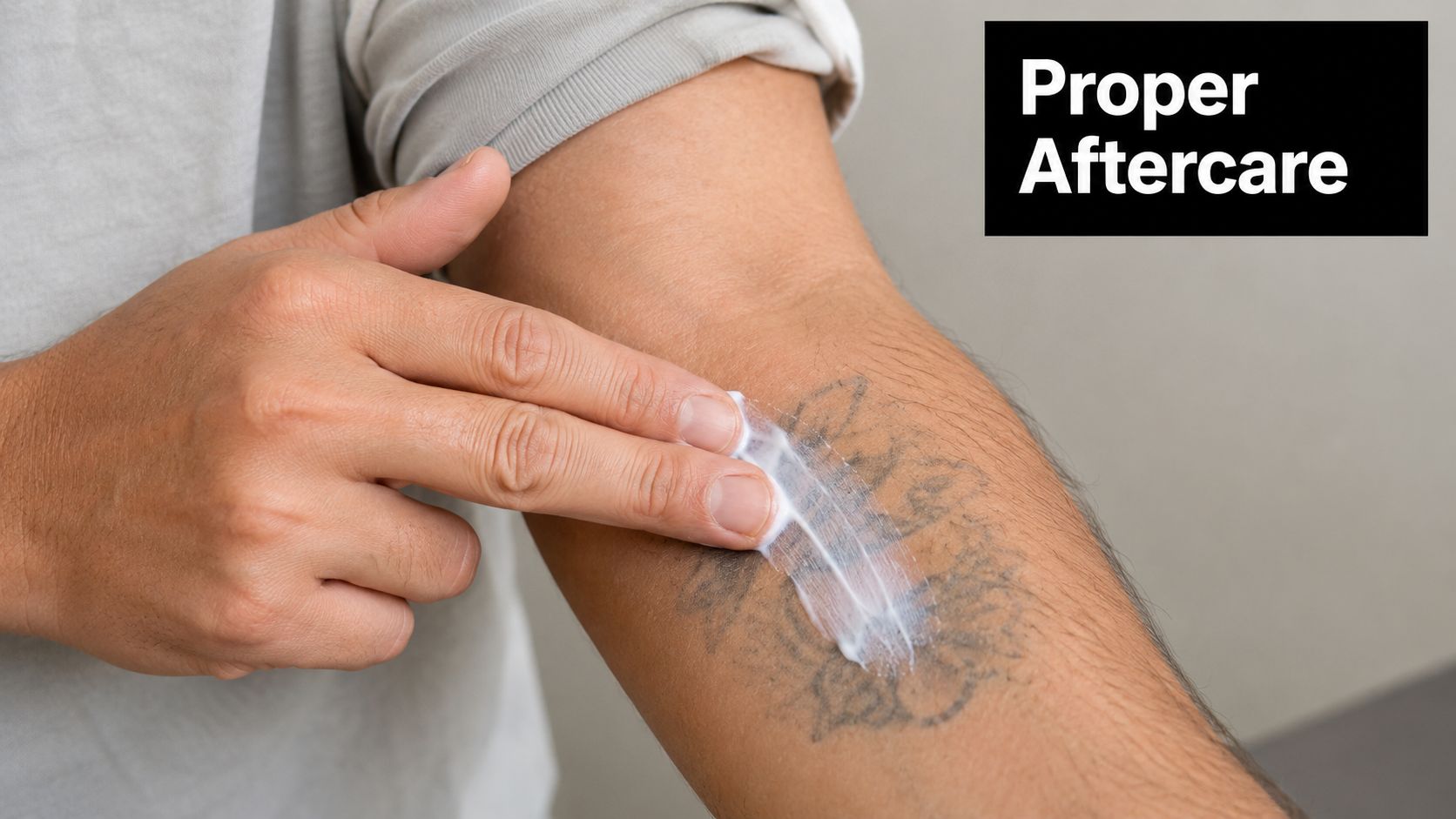
The treatment doesn't end when the laser stops. Aftercare shapes how your skin settles, how comfortably you heal, and whether you protect the progress you just paid for.
For best-practice tattoo removal, a systematic review indexed on PubMed found that picosecond lasers are superior for blue, green, and yellow tattoos, while Q-switched Nd:YAG systems remain effective for black tattoos. The same review noted that R20 and R0 techniques can sometimes reduce total treatment time by using repeat passes in a single visit, but that approach has to be balanced against skin type and the risk of dyspigmentation. That balance is one reason aftercare and provider judgment matter so much.
What normal healing looks like
Right after treatment, it's common for the area to look irritated. Redness, swelling, tenderness, and a temporary frosted look can happen. That early reaction doesn't usually mean something has gone wrong. It means the skin has just been treated and needs calm, careful recovery.
Over the next stretch of healing, you may also notice dryness, sensitivity, or blistering. Blisters can look alarming if you weren't expecting them, but they're often part of the normal healing response. The key is to leave them alone.
What helps and what slows you down
Your provider's instructions should always come first, but the basics are straightforward.
- Keep it clean: Wash gently with mild soap and water, then pat dry.
- Protect the surface: Use the recommended ointment or dressing if your technician advises it.
- Leave blisters intact: Don't pop, peel, or pick at healing skin.
- Avoid extra heat and friction: Hot tubs, pools, heavy rubbing, and unnecessary irritation can slow recovery.
- Keep sun off the area: Freshly treated skin doesn't need UV exposure.
Healing skin wants consistency. Gentle care beats over-treating it.
Clients sometimes sabotage good work by scratching, over-applying random products, or returning to sun exposure too soon. The safest path is usually the simplest one. Follow the written aftercare, keep the area protected, and give your skin time to do its job.
Begin Your Tattoo Removal Journey with Confidence
Choosing the right clinic usually comes down to a few practical filters. Does the provider use modern equipment that can handle your tattoo colors? Do they explain trade-offs clearly? Do they assess your skin and goals before talking about sessions? Do they prepare you for a process instead of selling a fantasy?
Those questions matter more than polished branding. The best laser tattoo removal in Palm Harbor should feel methodical, individualized, and honest from day one.
What strong providers have in common
A quality clinic tends to do the same core things well.
- They match the laser to the tattoo instead of forcing every tattoo into one method.
- They explain fading as a staged process, not instant erasure.
- They discuss safety in practical terms, including skin tone, pigment behavior, and healing.
- They make space for both goals: complete removal and cover-up preparation.
One provider serving this market is EradiTatt Tattoo Removal, which offers Palm Harbor tattoo removal using PiQo4 technology. As noted earlier, that platform can use nano- and picosecond pulses, which gives technicians more flexibility when treating different ink densities and skin tones.

Clinical context also supports why modern picosecond platforms remain central to current removal practice. The Palm Harbor-focused overview discussed earlier reported 96% good-to-complete clearance of lesions and 86% patient satisfaction with modern picosecond-based tattoo removal systems, while highlighting the value of customizable pulse options for different treatment goals.
Palm Harbor contact information
If you're ready to get answers based on your tattoo instead of generic promises, a consultation is the right next step.
EradiTatt Palm Harbor
Address: 31975 US Hwy 19 N, Palm Harbor, FL 34684
Phone: (727) 288-4228
Bring photos if you have them. Bring your questions. Bring your ultimate goal, whether that's complete removal or just enough fading for a cleaner cover-up.
If you want a straightforward consultation and a personalized treatment plan, contact EradiTatt Tattoo Removal to discuss your tattoo, your skin, and the safest path toward fading or full removal.