
Patients in Bradenton should expect about 8 to 12 sessions for complete removal of a typical multi-colored tattoo, with a precise estimate only possible after a consultation. If your goal is fading for a cover-up rather than full removal, you may need fewer sessions.
For those wondering how many sessions tattoo removal Bradenton usually takes, the inquiry is often a practical one, rather than just cosmetic. Understanding the timeline helps clarify what to expect for your schedule, your skin, and how long you will be looking at that tattoo before it is sufficiently faded or completely gone to meet your goal.
That matters because tattoo removal isn't just counted in visits. It's measured in calendar time. A treatment plan can look manageable on paper, then stretch across seasons once healing intervals are factored in. The underlying question isn't only how many sessions you'll need. It's how long the full process will take from your first appointment to your last.
Table of Contents
- Your Tattoo Removal Journey in Bradenton Starts Here
- Why Tattoo Removal Is a Process Not a Single Event
- Key Factors That Determine Your Session Number
- Your Timeline From Fading to Full Removal
- What to Expect at Your Bradenton Appointment
- Start Your Tattoo Removal in Bradenton Today
Your Tattoo Removal Journey in Bradenton Starts Here
A common starting estimate for complete tattoo removal in Bradenton is 8 to 12 sessions with 6 to 8 weeks between visits. On the calendar, that often means many months of treatment, and in some cases more than a year.
That timeline catches people off guard. Session count is only part of the commitment. The bigger question is how removal fits into your real schedule, especially if you want the tattoo faded before a wedding, a new job, beach season, or a cover-up appointment.
Two tattoos can look similar and still clear at different speeds. Ink depth, color blend, saturation, placement on the body, and how your skin recovers between treatments all affect the pace. If you want a clearer breakdown of why removal happens in stages, this explanation of why tattoo removal takes multiple sessions covers the process in plain language.
Some clients want full removal. Others want enough fading to give their artist a cleaner base for new work. Those goals lead to different treatment plans, different stopping points, and different total timeframes.
A practical way to think about your estimate
The most useful way to read the 8 to 12 session range is as a planning baseline. It sets expectations, but it does not guarantee a finish line on a fixed date. In clinic, the better estimate comes from matching your goal to your tattoo and then mapping that onto a realistic calendar.
Your consultation should answer questions like:
- Are you aiming for full removal or cover-up fading: Full clearance usually requires more time than partial lightening.
- How dense or layered is the tattoo: Heavy packing and reworked pieces often need more sessions.
- How well does your skin recover between visits: Safe spacing depends on healing, not impatience.
- Does the tattoo include multiple colors: Some pigments respond faster than others.
At EradiTatt in Bradenton, that conversation matters. We use PiQo4 technology because it allows us to treat a wide range of ink colors with very short, targeted pulses while keeping skin safety front and center. Even with advanced equipment, the right plan is the one your skin can handle well over time.
If you need the tattoo gone by a specific date, plan around months, not just appointments. That approach is more realistic, and it leads to better decisions from the start.
Why Tattoo Removal Is a Process Not a Single Event
Tattoo removal works in stages because the laser doesn't lift the ink out in one pass. It breaks pigment into smaller fragments, and then your body clears those fragments gradually. That's why removal happens over a series of treatments instead of one long appointment.

What the laser actually does
A simple way to picture it is chipping away at a large rock. One strike changes the surface. Repeated, controlled strikes make the rock smaller and easier to clear away. Tattoo ink behaves similarly.
The PiQo4 system used for tattoo removal works by delivering very short pulses of energy into the pigment. Those pulses fragment the ink so your immune system has a chance to do the cleanup over the following weeks. If you want a deeper explanation of that step-by-step biology, this explanation of why tattoo removal takes multiple sessions walks through it clearly.
Why waiting helps results
Spacing matters because your body needs time to process what the laser breaks apart. Bradenton guidance notes that shorter intervals can reduce efficacy, and local providers state that complete removal typically requires a minimum of 8 sessions because pigment clearance depends on this biological process, as noted in local tattoo removal timing guidance for the Bradenton and Sarasota area.
That waiting period can feel slow when you're eager to see change. But rushing doesn't usually help. Treating again before the skin has recovered and the body has done its share of clearing can work against the result you're trying to get.
Removal works best when the laser session and the healing phase are treated as one combined cycle.
What tends to work well in real life:
- Follow the spacing plan: Let the skin recover fully before the next visit.
- Keep expectations progressive: Fading usually builds over time, not all at once.
- Treat the skin gently between sessions: Irritated skin doesn't put you ahead.
- Judge progress over multiple visits: One session rarely tells the full story.
What doesn't work is expecting instant erasure, stacking treatments too close together, or assuming a strong first response means the rest will move at the same pace. Tattoo removal is deliberate because that's how safe, even fading usually happens.
Key Factors That Determine Your Session Number
A consultation becomes much more accurate when you understand what drives session count. Geography isn't the main variable. Your tattoo's characteristics are.
A 2025 clinical study of 116 patients treated with picosecond lasers found the average number of sessions was 6, with a range from 2 to 20, and the strongest predictor of treatment length was ink density. Low-density tattoos averaged 3.2 sessions, while high-density tattoos averaged 9.0 sessions. Body location also mattered, with the upper trunk averaging 4.3 sessions and hand or finger tattoos averaging 7.8 sessions, according to the 2025 picosecond laser tattoo removal study published on PMC.
The biggest variables
Some of these factors help a tattoo fade faster. Others slow the process down.
- Ink density: This is one of the most important variables. Dense, packed-in pigment usually takes longer than lighter saturation.
- Body location: Areas with different circulation and healing patterns can respond differently. Hands and fingers are often more stubborn than areas on the upper trunk.
- Tattoo age: Older tattoos may behave differently than newer ones because the pigment and skin have changed over time.
- Color complexity: Multi-color work tends to be more demanding than simpler pigment patterns.
- Professional versus lighter work: Tattoos with heavier, deeper, more uniform ink placement are often more involved to remove.
When two people both ask, "How many sessions tattoo removal Bradenton usually takes," they can get different honest answers because their tattoos are different jobs.
How tattoo characteristics impact removal sessions
| Factor | Easier to Remove (Fewer Sessions) | Harder to Remove (More Sessions) |
|---|---|---|
| Ink density | Lower-density pigment | Higher-density pigment |
| Body location | Upper trunk type placement | Hands and fingers |
| Color mix | Simpler pigment profile | Multi-colored or complex pigment profile |
| Tattoo age | Some older tattoos may clear more readily | Newer or still-dense tattoos may take longer |
| Ink load | Lighter ink amount | Heavy saturation or layered ink |
That table isn't a substitute for an assessment, but it does show why a fixed answer doesn't work. Session count is built from the tattoo in front of the technician, not from a generic citywide average.
One more practical point matters here. If your goal is only to lighten the tattoo enough for a new design, you may not need to chase complete clearance. In many cases, that changes the treatment plan more than any other single decision.
Your Timeline From Fading to Full Removal
A common Bradenton scenario goes like this. Someone wants a tattoo gone before a wedding, a new job, military processing, or a cover-up session, then finds out the actual commitment is measured on a calendar, not by counting appointments. Sessions are usually spaced weeks apart, so even a moderate removal plan can take many months, as outlined in tattoo removal timeline guidance from Revive Tattoo Removal. That spacing gives the skin time to recover and gives the body time to clear fragmented ink.
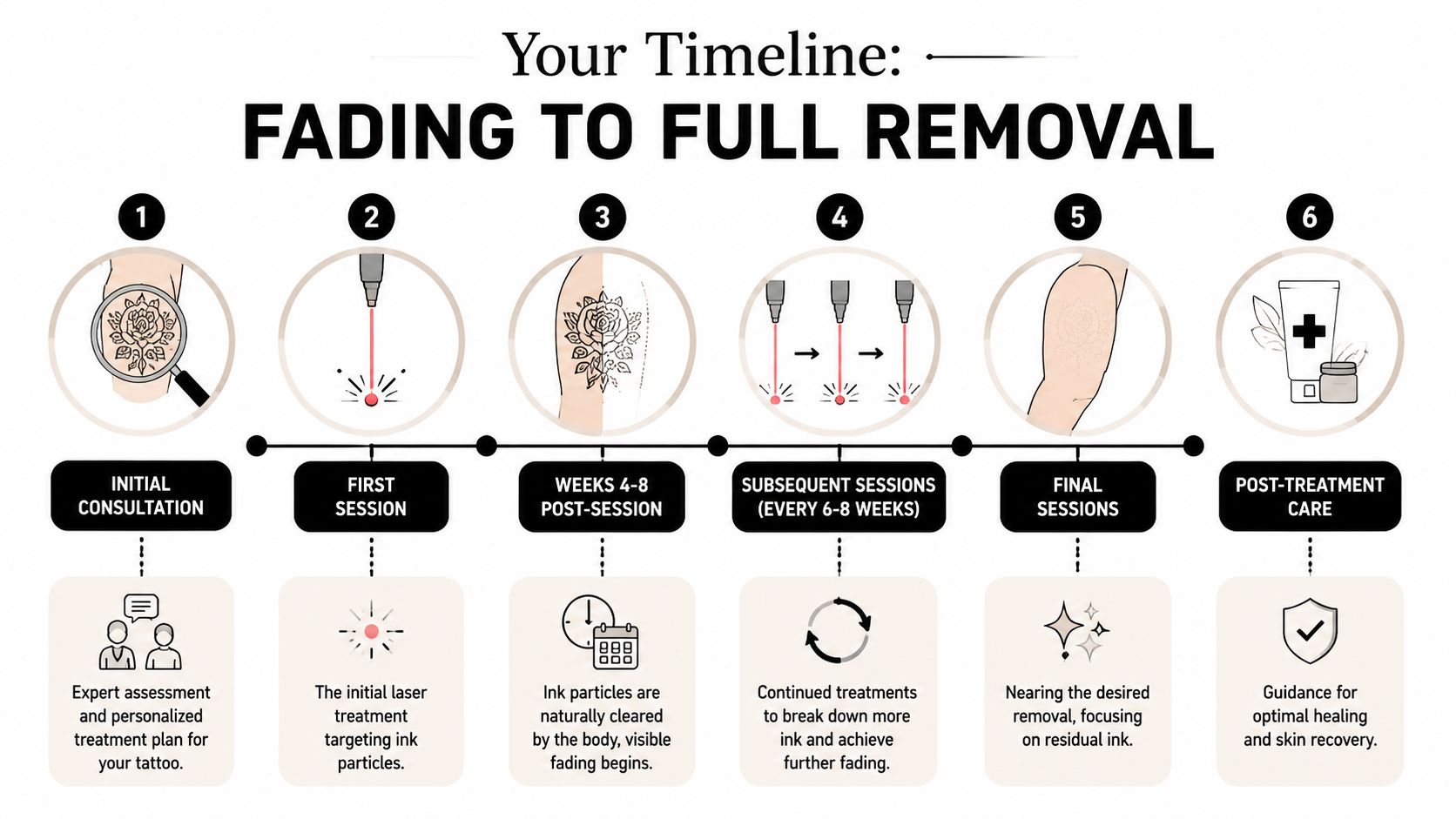
Fading and full removal are different goals
The timeline changes a lot based on the finish line.
For cover-up prep, the target is often controlled fading. The old tattoo only needs to lighten enough for your artist to work with better contrast, cleaner line placement, or a broader color range. That can shorten the overall schedule.
Full removal asks more of your skin and your patience. Early sessions often produce the most visible change. Later sessions can feel slower because the remaining pigment is lighter, patchier, or deeper in the skin. That is normal, and it is one reason I tell clients to judge progress over months, not week to week.
At EradiTatt Tattoo Removal, treatment planning with PiQo4 laser technology is built around your endpoint. If you want full clearance, the schedule reflects that. If you need enough fading for a cover-up by a certain date, the plan reflects that instead.
Think in months, not appointments
The best way to plan removal is to put your goal date on the calendar first, then work backward. You need room for treatment sessions, healing time, and the uneven pace that tattoo fading often follows. This Bradenton tattoo removal timeline guide can help if you are trying to line treatment up with a deadline.
A few calendar realities come up all the time:
- Cover-up prep: Partial fading may fit the goal faster than complete removal.
- Work or enlistment deadlines: Your skin still needs recovery time between treatments.
- Travel and events: You may not want a fresh session right before beach time, photos, or formal events.
- Late-stage fading: The last bit of ink often takes longer than people expect.
The most workable tattoo removal plan matches two things at once. Your end goal and the amount of calendar time your skin needs.
What to Expect at Your Bradenton Appointment
A first appointment usually feels easier once you know the sequence. It is common to want to know three things right away. How long they'll be there, what the treatment feels like, and what the skin will look like afterward.

What happens when you come in
The visit starts with a close look at the tattoo itself. Size, ink amount, color mix, body location, and your skin all matter because they shape both the treatment plan and the likely pace of fading.
A Bradenton dermatologist reports that each session commonly lasts 15 to 30 minutes, showing that appointment time scales with tattoo complexity rather than a fixed one-size-fits-all process, as noted in Classic Ink's laser treatment overview.
During treatment, many clients describe the sensation as quick, sharp snaps against the skin. After the laser pass, it's normal to see temporary whitening, redness, and general irritation in the area. Those changes usually mean the skin has reacted to treatment, not that anything has gone wrong.
Aftercare affects your progress
What you do next matters. Good aftercare supports healing and helps keep the process on track between sessions.
- Keep the area clean: Treated skin does better when it's protected from unnecessary irritation.
- Avoid picking or friction: Disturbing the area can slow recovery.
- Protect healing skin from excess exposure: Irritated skin doesn't respond well to added stress.
- Follow the instructions you were given: Personalized aftercare matters because tattoos and skin areas vary.
Most appointments are straightforward. The harder part for many clients isn't the visit itself. It's being patient between visits.
If you're anxious, that's normal. A well-run appointment should feel organized, calm, and clear from start to finish, with enough explanation that you know what's happening and what to do when you leave.
Start Your Tattoo Removal in Bradenton Today
The honest answer to how many sessions tattoo removal Bradenton takes is that the initial estimation often starts with a broad range, then narrows down after an in-person assessment. Your tattoo's ink density, color complexity, location, treatment goal, and healing pattern all shape the final number. The bigger planning issue is usually the calendar commitment attached to that number.
That's why a consultation matters. It tells you whether you're planning for fading or full removal, whether your deadline is realistic, and what kind of spacing your skin is likely to need. It also helps you avoid the mistake of assuming every tattoo follows the same pace.
If you're also trying to budget for the process, this Bradenton tattoo removal cost guide can help you think through the financial side alongside the treatment timeline.
If you're ready to start, bring your questions, your deadline if you have one, and a clear idea of whether you want full clearance or just enough fading for a cover-up. That's usually the fastest way to get a realistic plan instead of a vague estimate.
If you're ready to take the next step, schedule a consultation with EradiTatt Tattoo Removal. You'll get a personalized look at your tattoo, a realistic timeline based on your goal, and clear guidance on what your removal process is likely to involve.