
In Bradenton, tattoo removal usually costs about $200 to $500 per session, and full removal often lands somewhere between $1,000 and $10,000 depending on your tattoo’s size, colors, and how many sessions it takes. That’s the information often sought first, but the total price is personal, and the smartest way to estimate it is the same way a practitioner does during a consultation.
Many individuals who search for tattoo removal cost Bradenton are in the same spot. They’re looking at an older tattoo, a name, a faded piece that no longer fits, or ink that needs to go before a job change, a wedding, or a cover-up. The first instinct is to ask for one number. The problem is that tattoo removal doesn’t work like buying a haircut or a pair of shoes.
A practitioner doesn’t price removal by guesswork. We look at the tattoo the way a contractor looks at a house before quoting a renovation. Surface area matters. So does what’s underneath. Ink density, color mix, location on the body, and how your skin responds all change the timeline, and in tattoo removal, the timeline is what drives cost.
That’s why a useful estimate starts with understanding the tattoo itself. If you’ve been comparing clinics online, you’ve probably noticed that clear pricing is rare. The same thing happens in other local service businesses, which is one reason many small brands focus on better communication and visibility through resources like local online marketing strategies. In tattoo removal, clarity matters just as much. You deserve to know what affects the price before you ever book an appointment.
Thinking About Tattoo Removal in Bradenton
You look at your tattoo and try to price it out before ever stepping into a clinic. A small name on the wrist feels manageable. A colorful ankle piece with older cover-up work feels like a bigger project. That instinct helps, but it only gets you part of the way.
At EradiTatt, cost estimates start the same way a real consultation starts. We look at what is in the skin, not just what shows up in a mirror or a phone photo. Two tattoos can appear close in size and still land in very different price ranges because the ink load, color mix, placement, and treatment goal are different.
Why an online quote has limits
Photos help with rough sizing. They do not show ink depth clearly, how heavily the artist packed the pigment, whether the piece was touched up, or how the skin healed afterward. Those details affect how the laser interacts with the ink and how long the project is likely to take.
A fair estimate is a clinical judgment. It is based on the tattoo itself, the area of the body, and how your body is likely to clear the fragmented ink between sessions.
That is why broad online price ranges should be treated as a starting point, not a promise. They can help you budget, but they cannot replace an in-person assessment from someone who removes tattoos every day.
Clear communication matters here. The same way other local service businesses work to explain pricing and build trust through better visibility, often with resources like local online marketing strategies, tattoo removal clinics should explain what drives cost before you book.
What a practitioner is really estimating
Before giving a useful quote, I want three answers to be clear:
- What each session is likely to cost, so you can plan visit by visit.
- How many sessions the tattoo may require, so the total investment is realistic.
- Whether you want full removal or enough fading for a cover-up, because that choice changes the budget.
Those questions give you a better way to think about price. Instead of asking for one flat number, ask what your tattoo is likely to require and why. That is how a professional estimate is built.
The Core Factors That Determine Your Total Cost
When I price a tattoo removal case, I am estimating workload, not just square inches. Two tattoos can measure about the same and still end up on very different treatment plans because the ink, placement, and treatment goal are different.
Size still matters first because it affects how much area has to be covered in a session. A small tattoo usually costs less per visit than a large one. But size only gives me a starting range. It does not tell me how stubborn that tattoo will be or how many appointments it may take to reach your goal.
Size is the starting point
A larger tattoo takes more laser passes, more treatment time, and more cooling and aftercare attention. That increases the cost of each appointment.
Small pieces are not always simple, though. A compact professional tattoo with heavy saturation can take more effort than a larger but lightly shaded design. That is why an accurate quote comes from looking at the tattoo itself, not from asking for a flat rate by phone.
Color affects how efficiently the tattoo responds
Black ink is usually the most straightforward to treat. It tends to respond more predictably than bright, layered colors. Green, blue, turquoise, and some mixed pigments often take more patience because they may need different settings and can fade unevenly from one area to the next.
That matters for cost in a practical way. More color complexity often means more sessions, slower progress, or both.
If you want a better sense of how session planning works, our guide to how many laser tattoo removal sessions you may need explains what changes the timeline.
Ink density changes the project
Dense ink is expensive to remove because there is more pigment in the skin. Cover-ups, reworked tattoos, and pieces that were touched up several times usually fall into this category. The laser can break that ink apart, but your body still has to clear it between visits, and that takes time.
Older tattoos often have one advantage. Some have already faded from years of sun exposure and natural skin turnover, which can make them easier to treat than a newer tattoo with fresh, tightly packed pigment.
Body placement and skin type affect how carefully we treat
Placement matters because healing and ink clearance are not equally fast everywhere. Areas with better circulation often respond more predictably. Hands, feet, fingers, ankles, and lower legs can be slower. Those tattoos are treatable, but they usually call for more patience and more realistic spacing between sessions.
Skin tone matters too. Safe treatment means choosing settings that target ink while protecting the surrounding skin. In practice, that can affect how aggressively we treat and how quickly we increase energy over time.
| Factor | Lower Cost Tendency | Higher Cost Tendency |
|---|---|---|
| Tattoo size | Small area with limited coverage | Large area needing more treatment time |
| Ink color | Mostly black or dark gray | Multiple colors or stubborn pigments |
| Tattoo age | Older, already faded tattoo | Newer, more saturated tattoo |
| Ink density | Light or moderate pigment load | Heavy, layered, or touched-up pigment |
| Body location | Areas that often clear more predictably | Hands, feet, ankles, or lower legs |
| Skin considerations | Straightforward treatment planning | More cautious setting adjustments for safety |
A simple way to pre-estimate your own cost
Before your consultation, sort your tattoo into one of these rough buckets:
- Lower-range candidate: Small, older, black tattoo with lighter saturation.
- Middle-range candidate: Medium tattoo with some shading or moderate density.
- Higher-range candidate: Large, colorful, densely packed tattoo, especially on a slower-clearing area.
The more hard factors your tattoo has, the less useful the low end of any online price range becomes.
That is the part many clinics skip. A useful estimate should explain why your tattoo sits in a certain range, so you can budget with fewer surprises.
How Many Sessions Will You Need for Full Removal
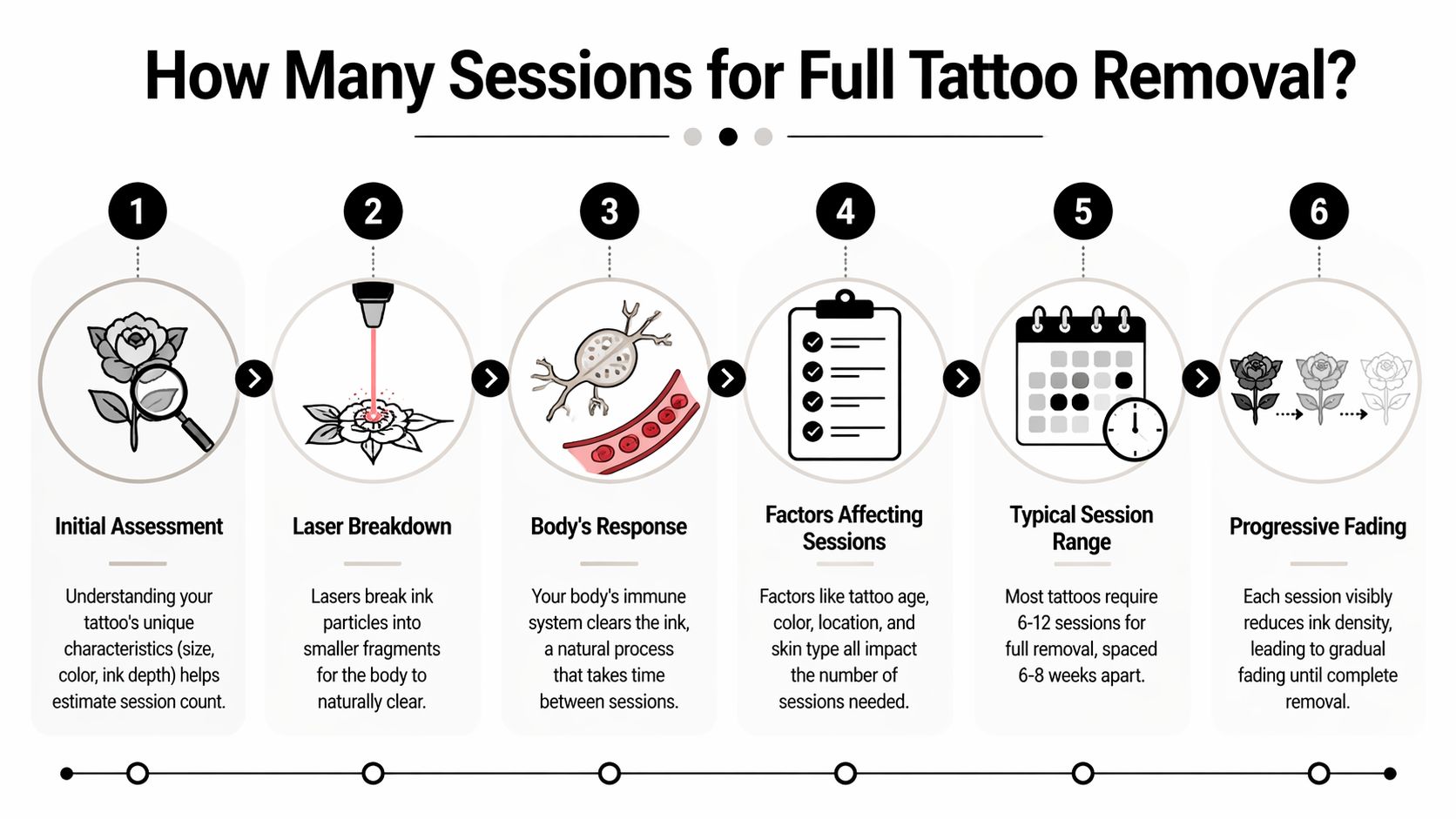
The laser doesn’t erase a tattoo in one appointment. It breaks ink into smaller fragments, and then your body clears those fragments gradually over time. That’s why removal happens in stages instead of all at once.
Industry data shows that around 70% of clients need 6 to 10 sessions for satisfactory removal, and tattoos with multiple vibrant colors often cost about 20% more than simple black ink tattoos because they require more sessions with different wavelengths, according to the American Society of Plastic Surgeons tattoo removal cost page.
Why session count drives the budget
If you want to understand the total cost, focus on one thing first: how many treatments your tattoo will need. Per-session pricing matters, but session count is usually the larger variable.
A good way to picture it is a rock-breaking process. One strike doesn’t turn a large rock into sand. It turns it into smaller pieces. Each later strike breaks those pieces down further, and between treatments your body clears what’s already been fractured.
Why spacing matters
People often want to come back too soon because they’re eager to finish. That usually doesn’t help. Your body needs time after each appointment to process and carry away the broken ink particles. Skin also needs time to recover before the next treatment.
That’s why treatment plans are paced instead of rushed. If you want a deeper explanation of that timeline, this guide on how many laser tattoo removal sessions walks through the treatment journey in more detail.
What changes the session count
A full-removal estimate usually shifts up or down based on a few practical realities:
- Black linework clears faster because it responds well to common laser wavelengths.
- Color complexity slows things down because different pigments respond differently.
- Dense or layered tattoos need more work because there’s more ink to dismantle.
- Your immune response matters because clearance happens in your body, not just under the laser.
The treatment only happens in the room. The fading happens afterward.
That’s why honest quotes always include a range, not a promise that every tattoo will finish on the exact same visit number.
Complete Removal vs Fading for a Cover-Up
A lot of Bradenton clients come in with a clear goal. They do not want bare skin. They want room for better artwork.
That changes how I estimate cost. For a cover-up, the target is not complete clearance. The target is enough fading that the old tattoo stops dictating the new design. In practice, that often means fewer sessions and a lower total bill than full removal.

Full removal gives you the most flexibility
Full removal makes sense if you want the tattoo gone with no replacement planned. It is also the better choice if the tattoo is in a highly visible area and you do not want to depend on new ink to solve the problem.
The trade-off is time and cost. The first stage of treatment usually reduces the obvious bulk of the tattoo. The last stage is slower because we are working on lighter residual pigment that still shows in certain lighting or at close range. If your goal is clear skin, those extra sessions matter.
Fading for a cover-up often costs less
Fading is usually the smarter financial option when you already know a new tattoo is coming. Your artist does not need a blank canvas. They need a workable one.
That distinction matters during consultation. A heavy black name on the forearm may need several sessions before a floral cover-up will sit cleanly. A lighter, older tattoo may only need modest reduction. Color, placement, ink density, and the style of the planned cover-up all affect where that stopping point is.
This is why I often tell clients to choose the new tattoo first, then build the removal plan around it.
Which option fits your goal
Use this as a practical guide:
- Choose full removal if you want clear skin, do not want another tattoo in that spot, or need the tattoo gone without relying on a cover-up design.
- Choose fading if you already plan to replace the tattoo and want to reduce the old pigment enough for your artist to work cleanly.
- Get input from your tattoo artist if you are undecided. Some cover-ups can work after moderate fading. Others need much more lightening to avoid muddy results.
A good cover-up plan starts with the final design.
That one decision can prevent paying for sessions you do not need.
Putting It All Together Case Study Pricing Examples
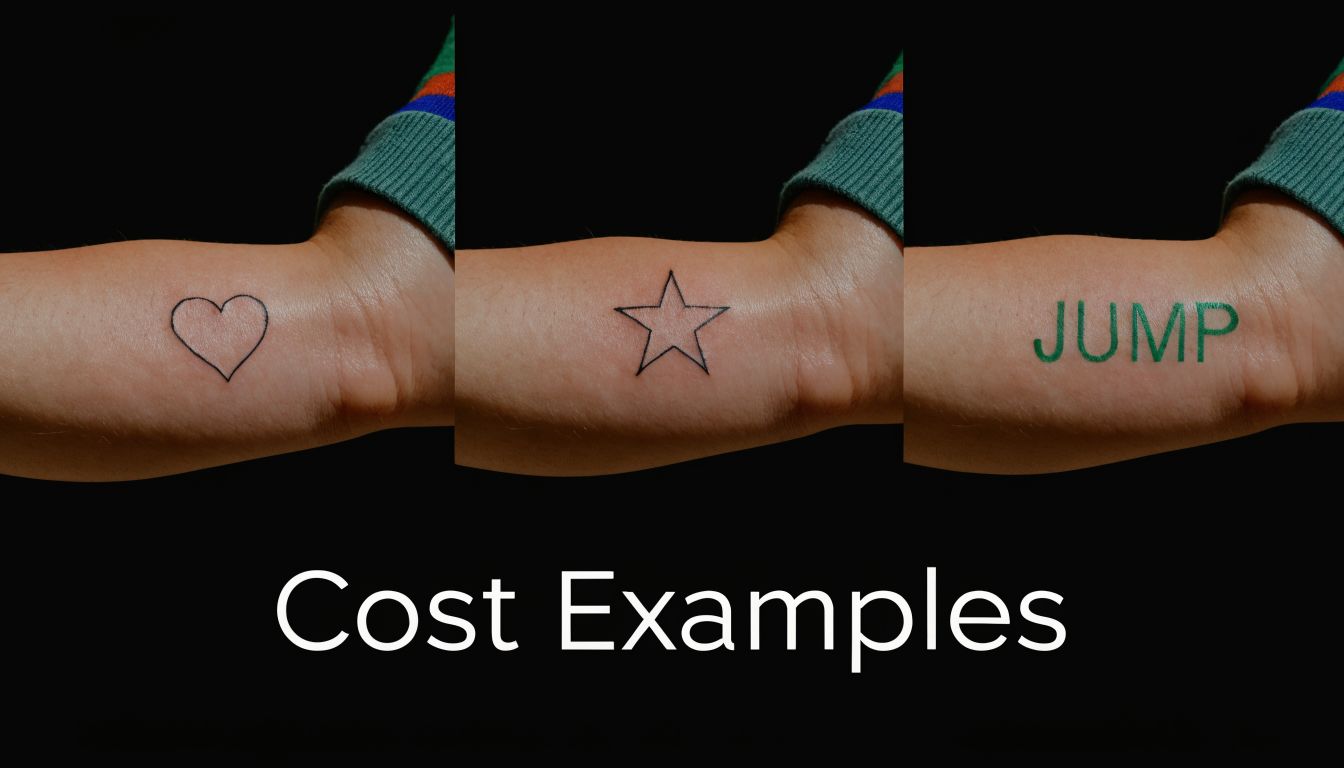
A consultation usually gets clearer once we apply the pricing logic to a few realistic tattoos. These are not actual client charts. They are the kind of examples I walk through with people in Bradenton when they want to know where their own tattoo might fall.
Example one
A client comes in with a small black script tattoo on the wrist. It is older, lightly applied, and sits in the small treatment category.
That usually starts in the lower price range we covered earlier for small tattoos. It also has several traits that tend to work in your favor. Black ink often responds well, older tattoos can break up more predictably, and thin script usually gives us less dense pigment to treat than heavy shading or solid fill.
If I were estimating this in a consult, I would still avoid promising a short plan too quickly. Wrist placement can behave differently from person to person, and even simple tattoos sometimes leave faint residual pigment that takes extra patience to clear.
Example two
Now take a medium multicolor tattoo on the ankle.
This is the kind of case that looks straightforward at first glance, then gets more expensive than the client expected. The size is only part of the story. Color adds complexity, and ankles often clear more slowly than areas with stronger circulation.
A tattoo like this may begin in the medium session-price range established earlier in the article, but the total budget often rises because the treatment course is less predictable. If someone asks me for a ballpark, I explain that they should budget based on the hardest feature of the tattoo, not the easiest one.
Example three
A third client has a large upper-arm tattoo with heavy shading and sections of color.
Large pieces cost more per visit because they require more treatment area and more laser time. They also tend to involve more total sessions, especially when the original work is saturated. In practice, package planning gains importance because the full cost is shaped as much by session count as by the single-session price.
If you are comparing options, it helps to review affordable laser tattoo removal options before your consult so the payment side does not catch you off guard.
What these examples actually show
The useful takeaway is not small equals cheap and large equals expensive. A better estimate comes from stacking the traits that affect difficulty.
- Example one trends lower because the tattoo combines easier features, small size, black ink, lighter density, and older age.
- Example two can cost more overall because location and color may stretch out the treatment plan even though the tattoo is not large.
- Example three needs the widest budget range because surface area, shading, and color often increase both the session price and the number of visits.
When I talk clients through pricing at EradiTatt, I want them to leave with a realistic range, not a hopeful guess. If you compare your tattoo to these examples, use the toughest part of your tattoo as your reference point. That approach usually gets you much closer to the final cost.
Affordable Options Financing and Package Deals
A common consultation question is simple: how do I make this fit my budget if the tattoo needs a series of visits?
The answer depends on your goal and how certain the treatment plan looks after the tattoo is assessed. If a tattoo is a good candidate for a longer removal plan, package pricing can reduce cost uncertainty and make budgeting easier. If the goal is partial fading for a cover-up, a rigid package can be less useful because you may only need a few sessions before your artist can rework the area.

Some clinics also offer monthly payment plans. In the market, those plans often start with lower monthly payments for very small tattoos and rise with size and expected session count. The key question is not whether a payment looks low on paper. The key question is what that payment covers.
What to look for in a payment option
At EradiTatt, I tell clients to read the pricing structure the same way they would read a treatment estimate. Look for clear terms.
- For full removal, ask whether the package is built around the likely number of sessions or only gives a discount on a limited block of visits.
- For cover-up fading, ask whether you can stop once the tattoo is light enough without losing the value of what you already paid.
- For larger tattoos, ask whether the per-session rate improves when you commit to a plan, or whether you are prepaying the same price.
- For any financing option, ask about interest, late fees, expiration dates, and what happens if your skin needs longer healing gaps between sessions.
If you want a clearer sense of budget planning before your consult, review these affordable laser tattoo removal options.
A low advertised session price can still lead to a higher total spend if the estimate is vague or the clinic avoids discussing likely session range. Clear pricing matters more than a tempting starting number.
That same principle shows up in other local service industries. Businesses that explain costs and process clearly tend to earn more trust, a point often discussed in articles about local SEO strategies. Tattoo removal is no different. Clients usually feel more comfortable committing when they understand both the treatment plan and the payment plan.
Your Next Step Get an Accurate Quote in Bradenton
Once you understand the pricing logic, the next step is simple. Get the tattoo looked at in person.
A true quote comes from direct assessment. Photos flatten detail. They don’t reliably show layering, scar tissue, saturation, or how much of the tattoo has already faded naturally. A practitioner needs to see the area, examine the skin, and ask a few questions about the tattoo’s history before giving a realistic price path.
What happens during a consultation
A useful consultation is straightforward:
- The tattoo is measured and evaluated for size, color, density, and body location.
- Your goal is clarified so the plan fits either full removal or fading for a cover-up.
- A treatment estimate is discussed in plain language, including what may push the plan higher or keep it lower.
- Pricing is given with context so you understand the cost per session and the likely range of total visits.
That process is more valuable than an online ballpark because it replaces assumptions with a real clinical read.
Why local clarity matters
In local services, trust is built when businesses explain their process clearly before asking for a commitment. That same principle shows up in resources about local SEO strategies, where visibility and clear information shape whether people feel confident enough to contact a business at all.
For tattoo removal, the same idea applies. The more transparent the evaluation, the easier it is to make a calm decision instead of a rushed one.
Where to go from here
If you want a precise answer for your own tattoo removal cost Bradenton, the practical next move is to book an in-person assessment through tattoo removal in Bradenton Sarasota FL. That gives you a quote based on your tattoo, your skin, and your goal, not a generic internet estimate.
The most accurate tattoo removal price is the one attached to your treatment plan, not the one attached to a headline.
If you’re ready to stop guessing and get a real plan, contact EradiTatt Tattoo Removal. A consultation can give you a clear estimate, realistic expectations, and a treatment path that fits whether you want full removal or fading for a cover-up.