You're probably here because a tattoo that once felt right doesn't fit anymore. Maybe it's tied to a past version of you. Maybe you need it faded for a cover-up. Maybe work, enlistment, or a major life change has made that ink feel more urgent than sentimental.
If you're searching for tattoo removal specialists Bradenton, you don't need vague promises. You need clear answers about what works, what healing looks like, what affects timing, and how to choose a provider who treats this like a medical process instead of a quick cosmetic add-on.
That's what this guide is for. It's written the way I'd explain tattoo removal to someone sitting in our Bradenton office for the first time. Straightforward, realistic, and focused on what helps you make a confident decision.
Table of Contents
- Considering Tattoo Removal in Bradenton
- How Modern Laser Tattoo Removal Works
- Your Tattoo Removal Journey from Start to Finish
- Factors That Influence Your Treatment Plan and Cost
- Preparing for Your Consultation and First Session
- Why Choose EradiTatt for Tattoo Removal in Bradenton
- Frequently Asked Questions About Tattoo Removal
Considering Tattoo Removal in Bradenton
Deciding to remove a tattoo is usually less impulsive than getting one. Many individuals sit with the idea for a while. They cover it with clothing, think about a redesign, or keep searching until they find someone local who explains the process in a way that feels honest.
In Bradenton, that local part matters. You want appointments that are practical to keep, guidance you can follow, and a specialist who understands the difference between full removal and strategic fading. Those are not the same goal, and they shouldn't be treated the same way.

What most people want to know first
A few questions come up in almost every conversation:
Will it fade enough for my goal That depends on the ink, your skin, where the tattoo sits on the body, and whether you want complete clearance or just enough fading for a cover-up.
How long is this going to take
Tattoo removal works in stages. The laser session is quick. The fading happens gradually while your body clears shattered pigment over the following weeks.Am I going to be left with damaged skin
Safe treatment is about the right technology, the right settings, and proper spacing between sessions. Rushing usually causes more problems than it solves.
Practical rule: If a clinic gives you a one-size-fits-all answer before looking closely at your tattoo and skin, that's not a real treatment plan.
People seek removal for personal reasons, professional reasons, and plain old life reasons. All of them are valid. What matters is getting a plan that fits your timeline, your skin, and your end goal instead of chasing a generic promise.
How Modern Laser Tattoo Removal Works
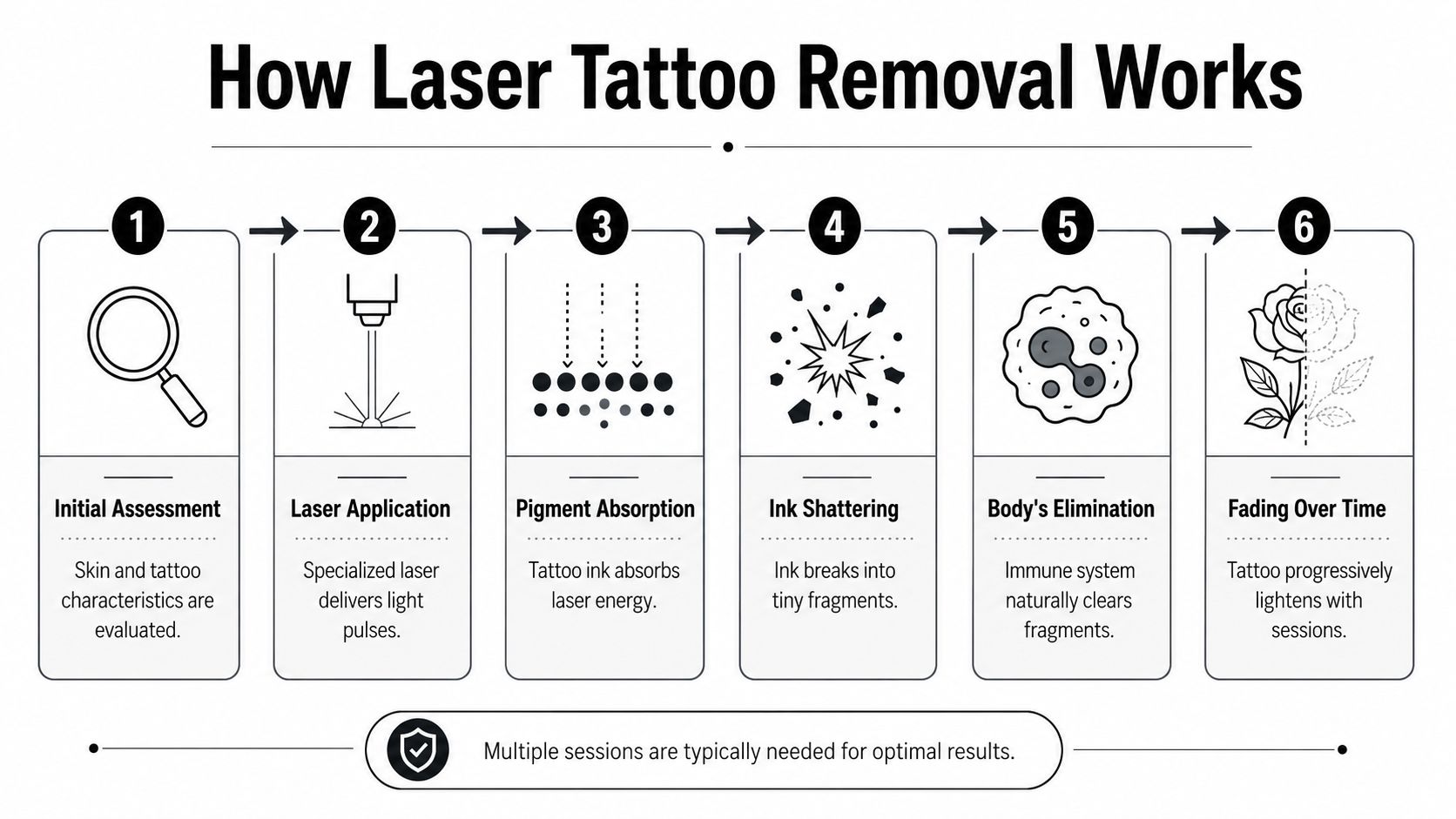
A laser removal session starts a biological process. The laser does not “erase” a tattoo on contact. It breaks tattoo pigment into smaller particles, and your body clears those particles gradually during healing.
That distinction matters because it explains why modern removal is done in stages and why the right settings matter so much.
Why picosecond technology matters
Modern systems such as the PiQo4 deliver energy in extremely short pulses. In practice, that gives us better control over ink disruption while reducing unnecessary heat in the surrounding skin.
For clients, that usually means a better approach for stubborn pigment, layered tattoos, and color mixes that older systems often struggled to treat well. It does not mean every tattoo comes off quickly. Dense professional work, cover-ups, and certain colors can still take time. The difference is that newer picosecond technology gives us more precision in how we treat them.
At EradiTatt, that matters every day. The goal is not to chase aggressive settings. The goal is to break up ink effectively while protecting the skin so the area can heal and continue fading between visits.
What the laser is actually doing
Tattoo pigment sits in the skin in particles your body does not clear easily on its own. During treatment, laser light is absorbed by that pigment. The energy breaks the ink apart into smaller fragments, and your immune system removes those fragments over time.
Several factors change how that process looks from one tattoo to another:
Ink color
Black ink often responds more predictably than lighter or more complex colors. Reds, blues, greens, and mixed pigments may respond at different rates.Ink density and layering
A cover-up or heavily saturated professional tattoo usually needs a more customized approach than a lighter tattoo with less packed-in pigment.Tattoo location
Areas with stronger circulation often fade more steadily than areas farther from the heart, such as hands, feet, or ankles.Your skin response
Removal is not only about the laser. It also depends on how your skin heals and how efficiently your body processes fragmented ink.
Visible progress happens after the appointment, during the healing and clearance phase.
Why modern removal is different from older methods
Older tattoo removal methods relied more heavily on damaging the skin surface. Modern laser treatment is designed to target the pigment while leaving surrounding tissue as undisturbed as possible.
That is a real improvement, but it still requires judgment. Good treatment is not about using the highest energy possible or booking sessions too close together. In our field, rushed treatment tends to create more irritation, more downtime, and worse healing without improving the result.
Modern laser tattoo removal works best when the technology matches the tattoo and the treatment plan respects how skin heals. That is why a proper assessment matters before the first pulse is ever delivered.
Your Tattoo Removal Journey from Start to Finish
Most clients do better when they stop thinking about tattoo removal as one appointment and start thinking about it as a sequence. There's the consultation, the treatment itself, the immediate skin response, the healing period, and then the fading that shows up gradually.
That timeline surprises people. They expect the visible change to happen during the appointment. What really happens is that the appointment starts the process, then your body carries it forward.
What happens at the first visit
The first visit is about assessment. A specialist looks at the tattoo's size, color mix, saturation, age, placement, and how your skin responds. The goal isn't to sell a number of sessions on the spot. The goal is to map out a realistic direction.
If you want full removal, the plan is built around maximum clearance. If you want fading for a cover-up, the plan is different because the target isn't bare skin. It's enough lightening to give your tattoo artist a better surface to work with.
A lot of the trust in this process comes from hearing an honest answer like, “This one should respond well,” or “This area may move slower.”
What a treatment session feels like
On treatment day, the area is cleaned and prepped. During the laser pass, many clients describe the sensation as quick snapping heat. It's uncomfortable, but it's brief. The exact feeling depends on placement, your pain tolerance, and how dense the tattoo is.
Right after treatment, it's common to see a whitening effect called frosting. That's an expected skin response. The area can also look pink, raised, or mildly swollen at first.
Don't judge your result by the first hour. Early skin response is not the same thing as final fading.
After the session, aftercare becomes important. Keep the area protected, avoid picking or friction, and let the skin move through the healing cycle without interference.
Typical Healing Timeline After a Laser Session
| Timeframe | What to Expect | Care Instructions |
|---|---|---|
| First 24 hours | The area may look white, pink, or slightly raised. Warmth and tenderness are common. | Keep the area clean and protected. Follow the dressing instructions you were given. |
| Days 2 to 3 | Redness may settle. The site can feel dry or irritated. | Avoid rubbing, soaking, and unnecessary heat exposure. Wear loose clothing over the area if possible. |
| Days 4 to 7 | You may notice flaking, mild scabbing, or a rough texture as the skin repairs itself. | Don't pick, scrub, or shave over healing skin. Let any dry skin shed naturally. |
| Weeks 2 to 4 | Surface healing usually improves. The tattoo may not look dramatically lighter yet. | Keep protecting the area and avoid sun exposure on healing skin. |
| Weeks 4 and beyond | Fading becomes easier to notice as the body clears more fragmented ink. | Stay consistent with aftercare and return on the spacing recommended for your treatment plan. |
What progress usually looks like
Tattoo removal isn't linear. One session may create obvious change, then the next phase feels quieter. Some portions of a tattoo clear faster than others. Outlines may linger after shaded areas fade. Dense sections may hold on longer.
That's normal.
The people who get the best outcomes usually do three things well:
They space sessions properly
Skin needs time to recover, and the body needs time to clear pigment.They follow aftercare closely
Healing skin responds better when it isn't being picked at, overexposed to the sun, or repeatedly irritated.They stay focused on the end goal
Full removal, partial fading, and cover-up prep all have different finish lines.
Factors That Influence Your Treatment Plan and Cost
People often want a price before anything else. That makes sense. But tattoo removal isn't a haircut or a standard facial. Cost depends on how much work the tattoo requires, how your skin responds, and what result you're trying to reach.
The biggest mistake is comparing tattoos by size alone. A small, heavily saturated tattoo can be more stubborn than a larger piece with lighter shading.

Your goal changes the plan
This is one of the most overlooked parts of tattoo removal. The client's goal shapes the entire treatment strategy.
Data cited on Classic Ink's laser information page notes that 40% of tattoo removals are for cover-up preparation, which often takes fewer sessions than complete removal, and 22% are motivated by professional appearance policies. If your goal is to lighten a tattoo enough for new work, that usually calls for a different stopping point than someone who wants total removal.
That's why a consult should begin with your reason for doing this. Not just the tattoo itself.
What affects sessions and pricing
Several factors influence how long treatment may take and what it may cost overall:
Ink density
Packed, professional ink generally takes more work than lighter or more uneven pigment.Color mix
Some tattoos respond more predictably than others depending on the colors used.Age of the tattoo
Older tattoos may already show natural fading, which can help treatment.Location on the body
Areas with different circulation patterns can fade at different speeds.Skin type and skin condition
Safe settings and session timing should match the person, not just the tattoo.
For a closer look at what goes into pricing, this guide on tattoo removal cost in Bradenton breaks down the practical considerations in more detail.
What works: a custom quote after a real assessment.
What doesn't: assuming someone else's tattoo, timeline, or budget will map neatly onto yours.
A consultation is where those variables become a plan. That's where realistic timing, likely fading patterns, and your actual endpoint get sorted out.
Preparing for Your Consultation and First Session
The easiest way to feel calmer walking into a tattoo removal appointment is to show up prepared. Good consultations are collaborative. You should leave understanding the technology being used, the expected treatment rhythm, and how to care for your skin afterward.
If you feel rushed or vague answers keep replacing direct ones, keep asking questions.
Questions worth asking at the consult
Bring questions that help you evaluate both safety and fit:
What laser system are you using on my tattoo
You want to know the exact technology, not just that it's “advanced.”How are you deciding between full removal and fading
That answer tells you whether the provider is planning around your goal or applying the same approach to everyone.What changes should I expect after one session
Honest providers will talk about gradual fading, not instant clearance.What are the aftercare rules for my skin
The best settings in the world can be undermined by poor healing habits afterward.
A practical prep checklist can help before your appointment. This how to prepare for tattoo removal guide is a useful place to start if you want a quick reference.
How to show up ready for treatment
In the days before your appointment, protect the tattooed area from unnecessary irritation. Sun exposure, friction, and inflamed skin can all make treatment planning harder. Arrive with clean skin and avoid applying products over the tattoo unless your provider specifically tells you to use something.
On the day of treatment, wear clothing that makes the area easy to access. That sounds minor, but it matters. A shoulder tattoo under a tight top or an ankle tattoo under snug denim can turn a simple visit into an awkward one.
Come in with realistic expectations and a clear goal. That combination makes the first session much easier.
It also helps to plan your day with healing in mind. If the area will sit under tight gear, rub against a waistband, or get heavy sun right after treatment, that's worth thinking through before your appointment starts.
Why Choose EradiTatt for Tattoo Removal in Bradenton
You are not looking for another generic med spa page. You want a clear answer on whether your tattoo can be fully removed, lightened for a cover-up, or treated more cautiously because of the way it sits in your skin.
That is the work we do every day at EradiTatt in Bradenton.
Our Bradenton and Sarasota team uses the PiQo4 laser for tattoo removal, and treatments are performed by licensed medical professionals in a private, appointment-only setting. That matters because good removal is not just about owning a laser. It is about choosing settings carefully, watching how your skin responds over time, and adjusting the plan when the tattoo fades unevenly, contains stubborn pigment, or shows signs of prior scarring. You can learn more about our tattoo removal services in Bradenton and Sarasota.
Clients often come to us after spending too much time comparing websites that all sound the same. A better question is simpler. Who will examine your tattoo, explain the likely trade-offs, and give you a plan that matches your goal?
Our office is at 3825 E State Rd 64, Suite 200, Bradenton, FL 34208. You can call (941) 866-6744 or (844) 237-2731 to schedule a free consultation.
If you found us through search and want to judge local businesses carefully, this overview of master local business SEO can help you understand how credible location pages are built and how to spot clear service information online.
A consultation at EradiTatt is where the guessing stops. We look at the tattoo in person, talk through your target outcome, and tell you what looks realistic before treatment starts.
Frequently Asked Questions About Tattoo Removal
How much does tattoo removal hurt
Many individuals describe the sensation as a quick, sharp snapping rather than long-lasting pain. The discomfort is real, but the treatment window is usually brief. Placement matters significantly. Areas over bone or thinner skin often feel more intense than fleshier areas.
Is scarring guaranteed
No. Existing scar tissue from the tattoo itself can still be visible as ink fades, and poor aftercare can create problems, but scarring is not the automatic outcome people often fear. Good treatment planning and letting the skin heal properly make a big difference.
Can you remove a brand new tattoo
Fresh tattoos need time to heal before removal is considered. Treating brand new ink too early doesn't give the skin a fair chance to recover from the original tattooing process. A proper consultation is where timing gets determined safely.
Can every tattoo be fully removed
Not every tattoo clears the same way. Some can be removed very successfully. Others may leave behind faint residual pigment, texture changes from the original tattooing, or areas that clear unevenly. The most accurate answer always comes from seeing the tattoo in person and matching the plan to your actual goal.
If you're ready for clear answers and a treatment plan built around your skin and your tattoo, schedule a consultation with EradiTatt Tattoo Removal. Whether you want full removal or fading for a cover-up, you'll get a straightforward assessment, realistic expectations, and a next step you can feel good about.