
You’re probably here because a tattoo that once felt right doesn’t fit anymore. It might be a name, an old style, a rushed decision, or ink that no longer matches how you want to show up at work, at home, or in photos.
That feeling is common. About 25% of individuals with tattoos eventually seek removal for personal, professional, or lifestyle reasons, according to Crowe’s Ink’s overview of tattoo removal in the Bradenton and Sarasota area. The good news is that modern removal isn’t what many people imagine. It’s more precise, more skin-conscious, and far more strategic than the old stories people still repeat.
If you’re searching for the best laser tattoo removal Bradenton has to offer, the smartest place to start is with realistic expectations. Not every tattoo clears at the same pace. Ink color matters. Skin type matters. Placement matters. The laser itself matters a lot. A black tattoo on the upper arm behaves very differently from a layered green-and-red tattoo on the ankle.
This guide addresses the question clients commonly pose during a consultation. How long will my tattoo take, and what kind of result should I expect?
Considering Tattoo Removal in Bradenton? Here’s Where to Start
Many potential clients delay tattoo removal because the process feels hard to predict. In practice, the starting point is simpler than people expect. The first step is to decide what result you want, because full removal and cover-up fading are different treatment plans.
Some clients want the tattoo gone as completely as their skin and ink will allow. Others only need enough lightening to give their tattoo artist room to work. That distinction affects how aggressive the treatment plan should be, how many sessions may be needed, and what level of fading counts as success.

Why people decide to remove a tattoo
The reason is usually practical, not dramatic. A tattoo can stop fitting your life even if you do not hate the artwork.
- Career changes: Visible ink may create issues when workplace expectations change.
- Life changes: A name, symbol, or style tied to an earlier chapter can start to feel out of place.
- Better cover-up options: Pre-fading gives the next artist more flexibility and usually leads to a cleaner result.
- Style changes: The tattoo may be well done, but no longer feel like you.
Laser removal is the standard option because it targets ink under the skin without the added recovery demands of cutting or sanding the skin. That does not mean every tattoo clears easily. It means the process can be planned with much more precision than older removal methods allowed.
A good consultation focuses on specifics. Ink color. Ink density. Layering. Location on the body. Your skin tone. Your goal.
Those details matter because they shape the answer to the question nearly every client in Bradenton asks: how long will my tattoo take to fade on my skin? A small black tattoo on the shoulder often behaves very differently from a multicolored older tattoo on the ankle. Skin type also affects how conservatively settings should be chosen to protect normal pigment while still breaking up ink effectively.
A better first question
Instead of asking, “Can this be removed?”, ask, “What is the safest plan for this tattoo, and what result is realistic?”
That question leads to better decisions. An experienced provider should explain trade-offs clearly, including whether your tattoo is a strong candidate for near-complete removal, whether fading for a cover-up is the smarter endpoint, and which colors or skin factors may slow the timeline. If you are meeting with EradiTatt in Bradenton, that consultation should give you a practical map of the process, not a vague promise.
Understanding the Science Behind Fading Ink
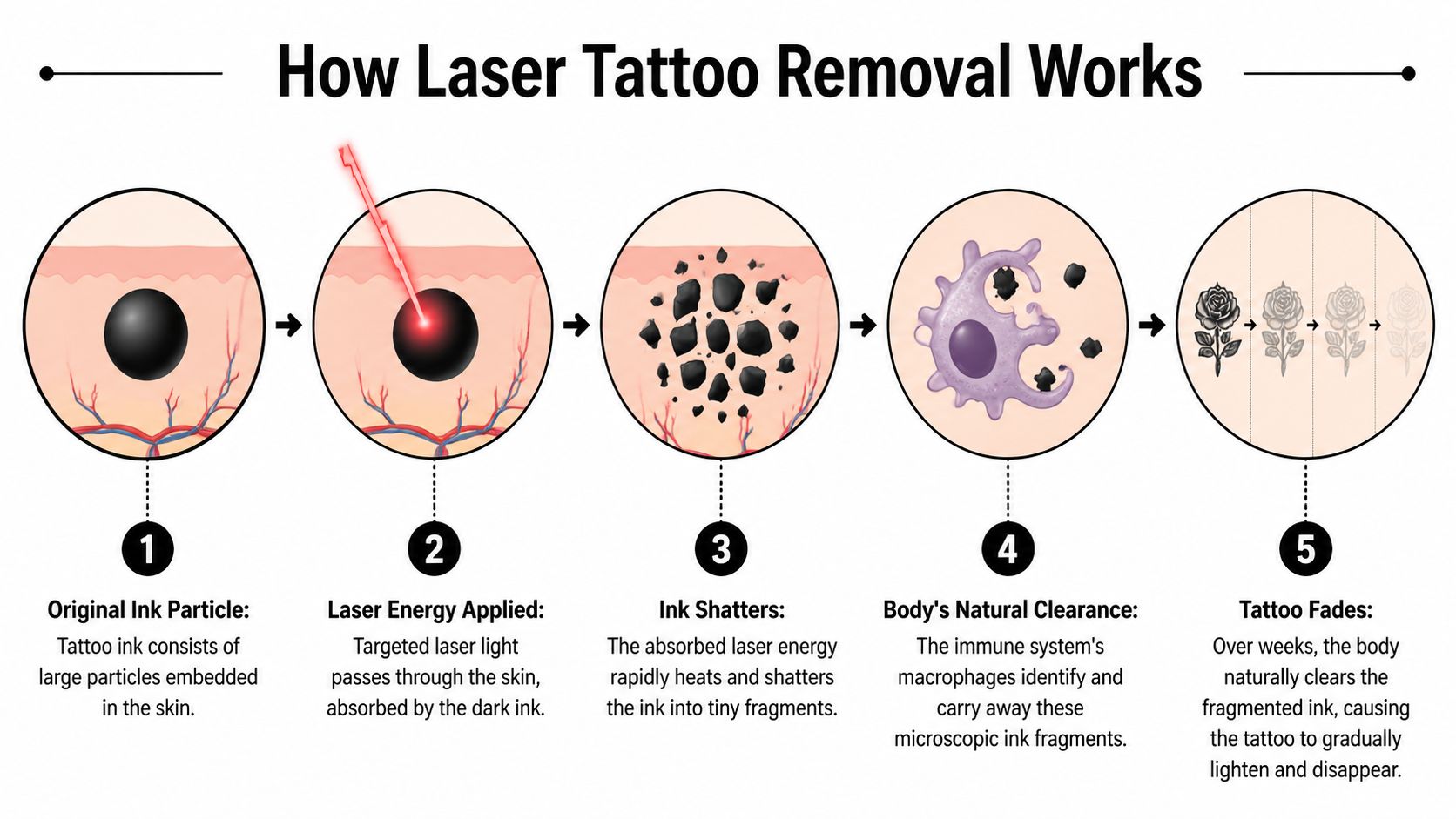
Laser tattoo removal works because the laser targets pigment in the skin without cutting the skin open. The easiest way to understand it is to think of tattoo ink like a pile of rocks buried in the dermis. The body can’t clear those large pieces efficiently on its own. The laser’s job is to break those rocks into much smaller fragments so the body can gradually carry them away.
That’s why removal is never one-and-done. The laser does the shattering. Your immune system does the clearing.
What modern lasers are doing differently
Older systems relied more heavily on heat. Modern systems are more refined. Advanced lasers use photoacoustic shockwaves, not just heat, to shatter ink particles into micro-fragments. This minimizes thermal damage to surrounding skin and reduces risks like blistering or hypopigmentation, especially for darker skin tones, according to EradiTatt’s explanation of tattoo removal technology in Bradenton and Sarasota.
That difference matters in real treatment rooms. When a system uses energy more precisely, providers can focus on breaking ink apart while being more protective of the surrounding skin.
What happens after the laser pulse
The visible fading doesn’t happen in the chair. It happens in the weeks after.
A typical sequence looks like this:
- Laser energy passes through the skin: The pigment absorbs that energy.
- Ink fragments break apart: Larger particles become much smaller pieces.
- The immune system responds: The body starts clearing those fragments over time.
- The tattoo lightens gradually: This continues between sessions, not just during them.
The appointment is only part of the work. Your body finishes the job after the session.
Why spacing matters
People sometimes want to book treatments too close together because they’re eager to get the tattoo gone. That usually doesn’t help. The body needs time to process and remove fragmented pigment. When sessions are spaced properly, you give the skin time to recover and the immune system time to do its part.
Modern removal is less about blasting the tattoo repeatedly and more about delivering the right energy, then allowing a controlled healing cycle.
What Determines Your Tattoo Removal Timeline and Results
Two tattoos can be the same size and still respond very differently. That’s why broad guesses are usually wrong. A proper assessment looks at skin type, tattoo location, color complexity, and ink density, all of which shape the number of sessions needed for complete removal versus fading for a cover-up, as noted in Classic Ink’s explanation of laser tattoo removal factors.
The four factors that change everything
Some variables are obvious. Others surprise people.
Skin type
Skin tone affects how cautiously settings need to be selected. The goal is always to target the ink while protecting the surrounding skin. This becomes even more important when the tattoo contains mixed colors or when the client wants a clean fade with minimal textural change.
Tattoo location
Location affects circulation. Areas with stronger circulation usually clear ink more efficiently than areas farther from the body’s core. In practical terms, a tattoo on the torso or upper arm often behaves more predictably than one on the ankle, wrist, or foot.
Ink density and layering
Professional tattoos often carry more densely packed pigment. Cover-ups and reworked tattoos can be slower because the skin may contain more than one layer of ink. If the tattoo was heavily saturated at the start, it generally asks for more patience.
End goal
Full removal and cover-up fading are not the same target. If your goal is to lighten the tattoo enough for new work, the timeline is often shorter than if you want every visible trace addressed as far as possible.
A realistic plan starts with the endpoint. “Gone enough for a cover-up” and “as clear as possible” are different treatment paths.
Ink color is the detail most people overlook
Removal timelines are personal. Black ink usually responds more readily because it absorbs laser energy well. Once a tattoo shifts into colors like green, yellow, and some brighter blends, removal often becomes less straightforward.
That doesn’t mean those colors can’t be treated. It means they may require more selective wavelengths, more patience, and more careful expectations.
Here’s a practical way to think about color response.
| Ink Color | Laser Response | Typical Session Estimate |
|---|---|---|
| Black | Usually the most responsive | Often on the lower end of the typical treatment range |
| Dark blue | Often responds well | Often similar to black, but can vary |
| Red | Treatable, but may need more planning | Often mid-to-higher range depending on density |
| Orange | More variable | Often needs a more tailored approach |
| Green | Commonly more stubborn | Often on the slower end |
| Yellow | Frequently challenging | Often among the slowest to fade |
| Multi-color tattoos | Mixed response across the same design | Timeline usually depends on the hardest color present |
Why one part of a tattoo may fade before another
Clients often notice patchy progress at first and worry something is wrong. Usually, it’s normal. Different pigments absorb energy differently. Different parts of the same tattoo may also sit at different depths, especially if the artist used varying pressure or if the tattoo was reworked later.
That’s why good removal planning isn’t based on wishful thinking. It’s based on how your skin and your pigment are likely to respond over a series of sessions.
Choosing the Best Technology for Safe and Effective Removal
Technology decides a lot of the outcome before the first pulse is fired. If you’re comparing options for the best laser tattoo removal Bradenton clients can access, the question isn’t just whether a provider offers laser. Rather, the question is what kind of laser they use, how many ink colors it can target well, and how safely it performs across different skin types.
Why wavelength range matters
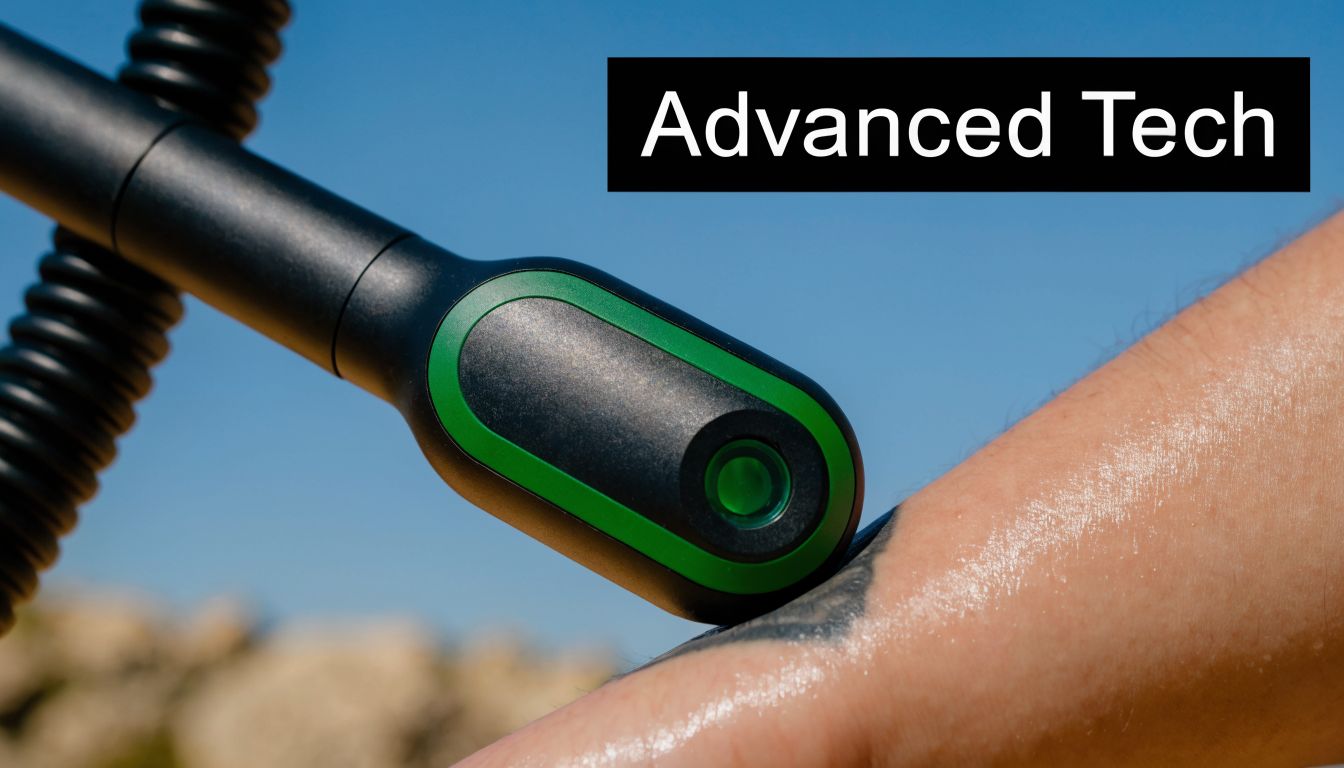
The PiQo4 uses four wavelengths, 1064 nm, 532 nm, 585 nm, and 650 nm, and it can achieve up to 40 to 50% ink reduction per session for black inks, which helps reduce the total number of treatments compared with older systems, according to EradiTatt’s PiQo4 tattoo removal overview.
That wavelength flexibility matters because tattoos rarely behave as a single-color problem. Even a tattoo that looks mostly black can contain undertones, shading variation, or mixed pigments that respond differently during treatment.
What better technology solves
A more capable system helps with three practical problems:
- Color variety: Multi-wavelength platforms can address a broader range of pigments.
- Skin protection: Better energy delivery helps minimize unnecessary heat exposure.
- Efficiency: Stronger response per session can mean a shorter path for the right tattoo.
One option available locally is EradiTatt Tattoo Removal, which uses the PiQo4 platform in Bradenton and Sarasota for all ink colors and skin types.
If a tattoo has multiple colors, the laser shouldn’t be forced to treat every pigment the same way. Better systems give providers more control.
Where older tools still fall short
Older nanosecond systems can still remove tattoos, especially darker ink. But they often become less ideal when the tattoo is colorful, layered, or sitting on more melanated skin where heat management matters more.
The right technology doesn’t guarantee instant clearance. It gives you a safer, more precise path, especially when the tattoo isn’t an easy black outline on light skin.
Preparing for Your Sessions and What to Expect
A first session usually feels easiest when you know what will happen before you walk in. Clients often arrive focused on one question, how many treatments will this take, but the first practical step is simpler. We examine the tattoo closely, confirm that the skin is in good condition to treat, and set expectations for how your specific ink colors, depth, and placement may affect progress from session to session.

That visit is not just paperwork. It is where the treatment plan gets more specific. A small black forearm tattoo usually behaves differently from a dense multicolor cover-up on the ankle, and darker skin tones often require a more careful pace to protect normal pigment while still breaking up ink effectively.
Before your appointment
Good preparation helps us treat safely and keeps avoidable delays off your calendar.
- Stay out of the sun: Tanned, burned, or irritated skin increases risk and can push a session back.
- Come with clean skin: Skip lotion, self-tanner, makeup, or numbing products unless your provider told you to use them.
- Follow any shaving instructions: Hair in the treatment area can interfere with comfort and skin contact.
- Choose your timing carefully: Avoid booking right before pool days, beach trips, intense workouts, or anything likely to rub and heat the area.
If you want a practical checklist before you come in, this guide on how to prepare for tattoo removal covers the basics clearly.
During the treatment
The laser portion is usually quick. The feeling is sharp and repetitive, more like brief snaps than lingering pain. Areas with thinner skin or more nerve density, such as ribs, fingers, ankles, and near joints, tend to feel stronger than fleshy spots like the upper arm.
Right after treatment, the skin may turn white for a few minutes. That frosting response is common. Redness, warmth, mild swelling, and tenderness are also expected early on. Those visible reactions are part of the immediate skin response, not the final result. The actual fading happens over the following weeks as the body clears disrupted pigment.
Aftercare that makes a difference
Aftercare does not remove ink on its own. It helps the skin recover cleanly so the next session can be done on healthy tissue.
A solid routine usually includes:
- Cool the area if advised: Short periods of cooling can reduce heat and early swelling.
- Use the recommended ointment or dressing: Protection matters most in the first part of healing.
- Leave blisters or scabs alone: Picking increases the chance of irritation and texture changes.
- Keep sun off the area: Freshly treated skin is more reactive and more likely to develop unwanted pigment changes.
- Watch for friction: Waistbands, sports gear, and tight clothing can irritate treated skin more than clients expect.
This is one place where provider instructions matter more than generic internet advice. If you are comparing clinics and trying to judge whether their education is useful or just polished, broader articles on med spa marketing strategies can help you spot the difference.
The emotional side is real too. Clients seek removal for all kinds of practical reasons. A job change, a divorce, a cover-up plan, or being tired of explaining an old tattoo are all common. There is nothing unusual about wanting your skin to match your life now.
Booking Your Consultation with EradiTatt in Bradenton
A strong tattoo removal plan comes down to three things. The technology has to match the tattoo. The provider has to build a realistic timeline around your skin and your colors. The aftercare has to be followed closely enough that each session builds cleanly on the one before it.
The session calendar matters too. For healing and effectiveness, treatments are typically scheduled 6 to 8 weeks apart so the body has time to clear shattered ink particles, as noted earlier in the science section. That spacing can feel slow when you’re eager to move on, but it’s part of what makes removal safer and more productive.
What to bring to a consultation
Come in ready to answer a few practical questions:
- Your goal: Full removal or fading for a cover-up.
- Tattoo history: Whether it’s original work, a cover-up, or a rework.
- Your deadline: Job change, wedding, enlistment, or no hard deadline at all.
- Any recent sun exposure: This affects timing and safety.
If you’re comparing providers and trying to evaluate how clinics present their expertise online, broader resources on med spa marketing strategies can help you spot the difference between polished messaging and useful education.
EradiTatt Bradenton contact details
If you’re ready to talk through your own tattoo, the Bradenton and Sarasota location is:
- Address: 3825 E State Rd 64, Suite 200, Bradenton, FL 34208
- Phone: (941) 866-6744
If cost is one of the factors holding you back, it also helps to review a local breakdown of tattoo removal cost in Bradenton before booking.
A consultation is where the process becomes concrete. You stop guessing, stop comparing your tattoo to somebody else’s online, and get an actual treatment plan based on the ink you have, the skin you’re in, and the result you want.
If you’re ready for a clear, personalized plan, schedule a consultation with EradiTatt Tattoo Removal. You can discuss your tattoo, your timeline, and whether full removal or cover-up fading makes more sense for you.