
You're staring at an unwanted tattoo and wondering whether removal is possible, or whether “permanent” means you're stuck with it forever. The honest answer to laser tattoo removal, does it work? is yes, but not as an instant eraser. The laser breaks ink into smaller fragments, then your immune system gradually carries those fragments away.
That partnership explains both the progress you'll see and the patience the process requires. Modern laser technology can target tattoo pigment while limiting injury to surrounding skin, but the outcome depends on the ink, your skin, the tattoo's history, and the treatment plan. Complete clearance is commonly achievable, although no responsible clinician can promise that every tattoo will disappear completely.
Table of Contents
- Understanding How Laser Tattoo Removal Actually Works
- The Science of Shattering Ink Particles
- Key Factors That Determine Your Success Rate
- Navigating Skin Types and Safety Considerations
- Estimating Your Treatment Timeline and Sessions
- The Evolution from Heat to Picosecond Precision
- Optimizing Results with Personalized Care Plans
Understanding How Laser Tattoo Removal Actually Works
A patient often arrives after months of covering a name, symbol, or design with clothing. They may have searched “laser tattoo removal does it work” late at night and found conflicting answers. One page promises effortless clearance, while another makes the procedure sound risky. The useful answer sits between those extremes.
Tattoo ink remains visible because pigment particles are deposited in the dermis, a deeper layer of skin. Your body recognizes some material as foreign, but the particles are too large for immune cells to remove efficiently. The tattoo therefore remains even as the surface skin renews itself.
Laser treatment changes the size of the problem. A controlled pulse delivers energy into the pigment and breaks larger particles into much smaller fragments. Immune cells can then process and transport those fragments away through the body's natural clearance pathways. The laser starts the work, but your biology completes much of it.
The practical answer: Laser removal doesn't pull ink out in one appointment. It creates conditions that let your body clear the pigment progressively.
That's why the tattoo may look similar immediately after a session, then gradually fade during the following weeks. Each appointment addresses pigment that remains, while the body continues responding to earlier treatment. The process is better understood as repeated reduction than instant deletion.
You can explore the broader process in this guide to what tattoo removal involves, but the central principle is simple. Advanced light energy and the immune system perform different jobs, and both must work together for meaningful clearance.
The result also varies from person to person. Ink color, skin type, tattoo age, ink density, placement, scarring, and layering all influence how efficiently the pigment responds. A small, lightly applied tattoo may fade more readily than a dense professional piece, even when both use the same laser technology.
The Science of Shattering Ink Particles
The clinical term for targeted laser treatment is selective photothermolysis. In plain language, the practitioner selects light that the tattoo pigment absorbs more readily than the surrounding skin. The pulse reaches the ink, creates a rapid reaction within the pigment, and limits unnecessary energy exposure to nearby tissue.
Think of a large boulder lodged in the skin. Your immune system can't easily move that boulder, but it may handle many small pebbles. The laser acts like a controlled tool that fractures the boulder into fragments, and the body's immune and lymphatic processes help clear those fragments over time.
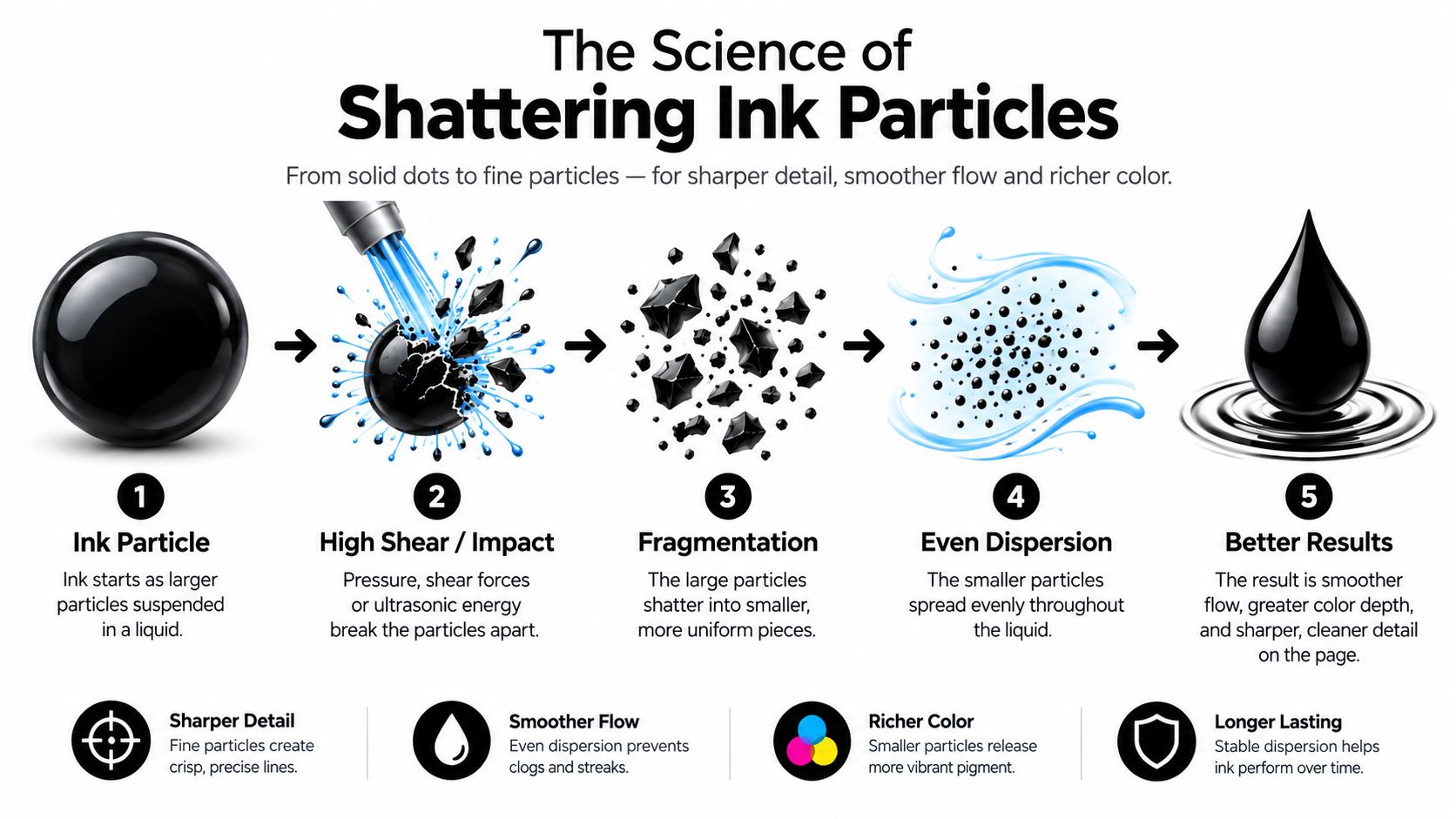
Why wavelength matters
Laser tattoo removal works by matching laser wavelength to ink absorption. 1064 nm Q-switched Nd:YAG is typically strongest for black and blue pigments, 532 nm is used for red and orange, and 755 nm or 694 nm can address green and purple inks, as described in this clinical review of laser wavelengths and tattoo pigments.
The laser's color shouldn't match the tattoo pigment like a paint swatch. The goal is to choose a wavelength that the ink absorbs effectively while reducing absorption by melanin and surrounding tissue. This is one reason a consultation matters. A multicolored tattoo may need different settings or wavelengths across the same design.
Heat versus acoustic energy
Older approaches relied more heavily on heat. Excessive thermal energy can injure surrounding tissue, which helps explain why earlier methods were associated with more damaging results. Modern systems, including the PiQo4 laser, use ultra-short picosecond pulses to create a photoacoustic effect. That rapid mechanical action helps shatter pigment rather than relying only on prolonged heating.
A clinician still has to select appropriate energy, spot size, wavelength, and technique. An advanced device doesn't remove the need for assessment. Skin tone, pigment depth, ink density, and previous treatment all affect how safely the practitioner can approach the tattoo.
For a clearer comparison of available approaches, review these types of laser tattoo removal. The right choice isn't determined by a product name alone. It depends on how the device interacts with your particular ink and skin.
Key Factors That Determine Your Success Rate
A small, faded amateur tattoo and a dense, multicolored sleeve can require very different plans. The clinician assesses both the ink and the person carrying it, then estimates whether the goal is complete clearance or enough fading for a cover-up.
Laser energy starts the process, but your immune system completes much of the work. The pulses break ink into smaller fragments, and the body gradually carries those fragments away. Clearance therefore happens between appointments, not immediately during one session.
Black ink often responds more predictably, especially on fair skin. Expert reviews report that carbon-based black tattoos in fair-skinned patients treated with Q-switched ruby, alexandrite, or Nd:YAG lasers have a greater than 90% chance of clearance. Across all tattoo types, complete clearance is closer to the 50% range, according to this review of tattoo removal outcomes. These figures explain why a blanket promise about every tattoo would be misleading.
Amateur and professional tattoos can also behave differently. 78% of amateur tattoos showed substantial lightening or complete removal, compared with 23% of professional tattoos. Professional tattoos required an average of 8.5 treatments, compared with 4.6 treatments for amateur tattoos, as reported in this medical summary of laser tattoo removal.
Tattoo Clearance Variables
| Factor | Impact on Removal | Expected Outcome |
|---|---|---|
| Ink color | Pigments absorb different wavelengths | Black and blue often respond well to 1064 nm treatment, while red, orange, green, and purple need targeted wavelength choices |
| Ink density | Dense pigment leaves more particles for the body to clear | Fading may be slower and the treatment course longer |
| Application style | Professional tattoos commonly contain deeper, denser, more consistent ink | Amateur tattoos may respond more readily than dense professional work |
| Tattoo age | Older tattoos may have faded naturally | Age can help, but it does not override color, density, or skin factors |
| Skin type | Melanin affects wavelength selection and pigment-change risk | Darker skin may require conservative treatment and additional sessions |
| Location | Circulation, tissue characteristics, and placement influence clearance | Some areas respond more slowly or present greater complication concerns |
| Layering and scarring | Cover-ups add pigment, while scar tissue can alter ink distribution | Layered or scarred tattoos often need a cautious, individualized plan |
These six factors that can affect tattoo removal progress can help you prepare for a consultation. A table cannot predict your exact result. The practitioner must inspect the tattoo, ask about previous treatments, and consider how your skin may respond.
Your treatment plan should match the tattoo in front of you. A black amateur tattoo may be a relatively straightforward candidate for fading, while a dense multicolor design may require careful staging and an honest discussion about remaining pigment.
Navigating Skin Types and Safety Considerations
A patient with recently tanned skin may be ready to remove an unwanted tattoo, yet the same laser settings used on untanned skin could create unnecessary risk. The question is therefore “can it be treated safely on my skin?” as well as whether the tattoo will fade. Melanin absorbs some of the same wavelengths as tattoo ink, so skin tone and recent tanning influence the treatment plan.
The main concern is pigmentary change. Hypopigmentation leaves the treated area lighter, while hyperpigmentation makes it darker. These effects occur more often in darker skin types. Scarring risk can also increase with high fluence, darker or tanned skin, and areas such as the neck and shoulders. Practitioner-reported data describes more frequent complications in Fitzpatrick skin types III and above, colored tattoos, permanent makeup, previously treated tattoos, and tattoos younger than one year, as discussed in this review of complications and risk factors.
Comparing older and newer approaches
Early heat-heavy methods delivered energy less selectively. Modern Q-switched and picosecond systems use shorter, targeted pulses. With appropriate settings, this can limit unwanted heat reaching surrounding skin. The technology does not remove risk. It gives the practitioner finer control over the trade-off between breaking apart pigment and protecting the skin.
A 2026 review reports that darker skin types often need more sessions and face greater risks of pigmentary change. It identifies the Q-switched 1064 nm Nd:YAG laser as a generally safer choice for these patients, according to this review of Nd:YAG tattoo removal.
The consultation should cover tanning, medical history, previous laser work, scarring tendencies, and the tattoo's age and composition. The practitioner may lower fluence, select a wavelength with less melanin absorption, or postpone treatment until recently tanned skin is closer to its usual tone. After the laser fragments the ink, your immune system still has to clear those particles, so safe treatment supports a gradual biological process rather than an instant result.
Safety isn't a footnote. Your skin type changes the treatment strategy, the likely pace, and the risk-benefit calculation.
Follow aftercare instructions closely, and contact the clinic if the reaction seems unexpected. Do not treat a changing area aggressively until the skin has recovered and the practitioner has reassessed it.
Estimating Your Treatment Timeline and Sessions
People often want one number of sessions before they begin. A responsible clinician instead builds a range from several features that influence pigment clearance. Clinical updates report that an average of 7 to 10 treatments is often needed for complete clearance, with scoring systems estimating sessions from skin phototype, location, color, ink amount, scarring, and layering, as explained in this clinical update on laser tattoo removal.
How clinicians estimate the journey
Skin phototype comes first because it influences both settings and safety. A darker phototype may need a more conservative approach, which can lengthen the process while protecting against unwanted pigment changes.
Location matters because tattoos on different parts of the body may not clear at the same pace. The clinician also considers whether the area has existing tissue change or scarring.
Color determines the wavelength strategy. Black, blue, red, orange, green, and purple pigments don't respond identically, so a multicolor tattoo may require different treatment decisions within one design.
Ink amount and density indicate how much pigment the body must process. A lightly applied amateur tattoo and a saturated professional tattoo create very different workloads.
Scarring and tissue change can affect how the pigment is distributed and how the skin tolerates treatment. Layering adds another complication because a cover-up can place new pigment over older ink.
Complete removal versus cover-up fading
The destination changes the plan. Complete removal asks the clinician to continue until the remaining pigment is no longer visible or clinically meaningful. Cover-up preparation has a different endpoint. The aim is to lighten the existing work enough for a tattoo artist to create a new design with greater flexibility.
Treatments also need recovery time. The skin must heal, and the immune system needs time to process the fragmented ink before another session can add useful progress. Stacking treatments too closely can increase irritation without giving the body adequate time to clear what the previous session disrupted.
A forecast should therefore include more than an appointment count. Ask what level of fading is realistic, which colors may remain stubborn, how your skin type affects the plan, and what signs would cause the clinician to pause or modify treatment.
The Evolution from Heat to Picosecond Precision
Laser tattoo removal became a modern medical technique through a clear sequence of milestones. The first laser was built in 1960, the first reported laser use for tattoo removal came in 1965, and the first commercially available Q-switched ruby laser for tattoo removal appeared in 1983, according to this historical medical overview.
Those milestones matter because they mark a change in treatment philosophy. Early heat-based methods were less selective and could transfer damaging energy to surrounding skin. Q-switched technology made it possible to deliver short, targeted pulses that better matched the pigment's absorption properties.
Picosecond systems take that precision further by delivering ultra-short pulses. The desired effect is a rapid photoacoustic response that fractures pigment with less dependence on sustained heat. The device still needs to match the ink and skin, but the technology gives practitioners another tool for managing difficult colors and dense pigment.
Why personalization remains essential
Advanced equipment doesn't turn tattoo removal into a uniform procedure. A practitioner must still determine which wavelength to use, how much energy the skin can tolerate, whether the tattoo contains multiple pigments, and whether previous treatment has changed the tissue.
A specialized plan also protects the patient from a common mistake, treating every appointment as an opportunity to increase intensity. More aggressive isn't automatically more effective. The clinician has to balance pigment disruption against healing, especially when the skin contains more melanin or the tattoo includes a difficult color.
The strongest reason to value modern technology is not the promise of effortless results. It's the ability to make more informed decisions. A careful assessment, appropriate wavelength selection, controlled energy, and patient-specific spacing create a safer path than relying on a generic protocol.
Optimizing Results with Personalized Care Plans
A productive removal plan starts with a clear goal. Tell the clinician whether you want complete clearance, selective removal, or fading for a cover-up. That decision shapes the endpoint and prevents you from judging progress against the wrong standard.
After treatment, protect the area and follow the clinic's wound-care instructions. Keep the treated skin clean, avoid picking at crusting or irritated areas, and protect healing skin from unnecessary sun exposure. Contact the clinic if you're concerned about how the area is healing rather than changing the care routine on your own.
The immune system does much of the cleanup after the laser pulse. Give it time, attend sessions according to the practitioner's schedule, and disclose any tanning, new medication, or skin reaction before the next appointment. EradiTatt Tattoo Removal offers personalized laser tattoo removal with the PiQo4 system, including plans for complete removal or fading before a cover-up, across locations serving Central and West Florida.
Visit EradiTatt Tattoo Removal to schedule a consultation and discuss how your skin type, ink colors, tattoo density, and personal goal affect the removal plan. Their team can help you choose a realistic path toward complete clearance or purposeful fading with clear guidance throughout the process.