
Tattoo removal with a Q-switched laser usually costs $200 to $500 per session, with a widely cited national average of $423 per session. For a business-card-sized tattoo, many clinics estimate 8 to 12 sessions, which often puts the full course around $2,000 to $4,000, while very small tattoos can start around $75 to $200 per session.
For a single tattoo you no longer want, the first frustrating thing you'll notice is that clinics rarely give one neat price that applies to everyone. One place lists a starting rate. Another talks about tiny tattoos. Another gives a total that seems much higher than you expected.
That doesn't mean pricing is random. It means Q Switch laser tattoo removal cost works more like an equation than a sticker price.
A simple example helps. A small faded black symbol on the wrist doesn't budget the same way as a dense multicolor forearm piece. Even if both are treated with the same kind of laser, the time per visit, the number of visits, and the settings used can change the total.
For Florida readers, that matters because you're not just planning for a single appointment. You're planning for a series of appointments that fit your schedule, sun exposure habits, and budget. If you live in Orlando, Tampa, St. Petersburg, Palm Harbor, or the Bradenton and Sarasota area, you also want a quote that makes sense for your local clinic options and your real goal, whether that's full removal or fading for a cover-up.
The easiest way to budget tattoo removal is to separate two numbers: what you pay per session, and how many sessions your tattoo is likely to need.
Once you do that, the confusing online ranges start to make more sense. Size matters. Ink colors matter. Tattoo density matters. Body placement matters. Your goal matters too. Someone aiming for partial fading may spend far less than someone trying to clear every trace possible.
Table of Contents
- Introduction to Q Switch Laser Tattoo Removal Cost
- How Q Switched Laser Technology Works and Why Pricing Is Per Session
- What to Expect to Pay Per Session and for a Full Course
- Key Factors That Change Your Total Tattoo Removal Cost
- How Q Switched Compares on Value and When Total Cost Converges
- How to Choose a Florida Clinic and Plan Payment Options
- Planning Your Budget and Next Steps With Confidence
Introduction to Q Switch Laser Tattoo Removal Cost
Most people start with the same question. “How much is this going to cost me?” What they really need is a better question. “What will my tattoo likely cost from first session to final result?”
That shift helps right away.
Think in budget pieces, not one big mystery number
A Q-switched tattoo removal quote usually has a few moving parts:
- Session price: what one appointment costs
- Session count: how many treatments your tattoo may need
- Add-on fees: consultation, test patch, numbing, or aftercare if a clinic charges separately
- Goal: full removal or just enough fading for a cover-up
When readers get overwhelmed, it's often because they're comparing one clinic's minimum fee to another clinic's total-course estimate. Those aren't the same thing.
A more useful way to look at it is this: if a small tattoo starts low but needs repeated visits, the full cost can still add up. If a larger tattoo has a higher visit price, the quote should still be understandable if the clinic explains how session count affects the total.
A Florida example readers recognize
Say you live in Central or West Florida and you want to remove a name tattoo before a wedding, a job change, or a cover-up appointment. You're probably checking your calendar, your monthly budget, and your tolerance for surprises.
That's where a personalized cost equation helps:
Tattoo size + ink colors + density + body location + estimated sessions + clinic pricing model = your likely budget
Online averages are useful for orientation. They aren't your personal quote.
For Q Switch laser tattoo removal cost, the smart move isn't chasing the lowest advertised starting price. It's asking for a breakdown you can use. How much per session? How many sessions for your tattoo type? Are there minimum fees? Are numbing and consultation included?
Readers in Florida often want the same thing. A plan that feels predictable.
How Q Switched Laser Technology Works and Why Pricing Is Per Session
A Q-switched laser sends extremely short bursts of energy into tattoo pigment. The goal is selective targeting. Ink absorbs that energy more readily than the surrounding skin, so the pigment breaks into smaller pieces while nearby tissue is exposed to less heat.
The simplest way to picture it
Tattoo ink works like colored pebbles buried in the skin. A Q-switched laser does not lift those pebbles out in one pass. It breaks them into much smaller fragments.
Then your body takes over.
After treatment, the immune system gradually clears away some of those smaller ink particles. That cleanup is slow, which is why fading happens between visits, not just during the appointment itself. If you want more background on the treatment method, this overview of Q-switched laser uses explains the broader medical and cosmetic role of the technology.
Why appointments are spaced out
Tattoo pigment sits in the dermis, below the surface layer of skin. Once the laser fragments the ink, the skin needs time to recover and the body needs time to process what was broken up.
That waiting period is part of the treatment, not a delay around it.
This helps explain the cost structure. Clinics charge per session because each appointment is one step in a series. You are paying for repeated passes that build on each other, with healing and fading happening in between.
Why per-session pricing is common
Per-session pricing matches how unpredictable tattoo fading can be. Two tattoos that look similar at a glance may respond differently because the ink was packed at different depths, the color mix is different, or the tattoo sits on an area with slower clearance.
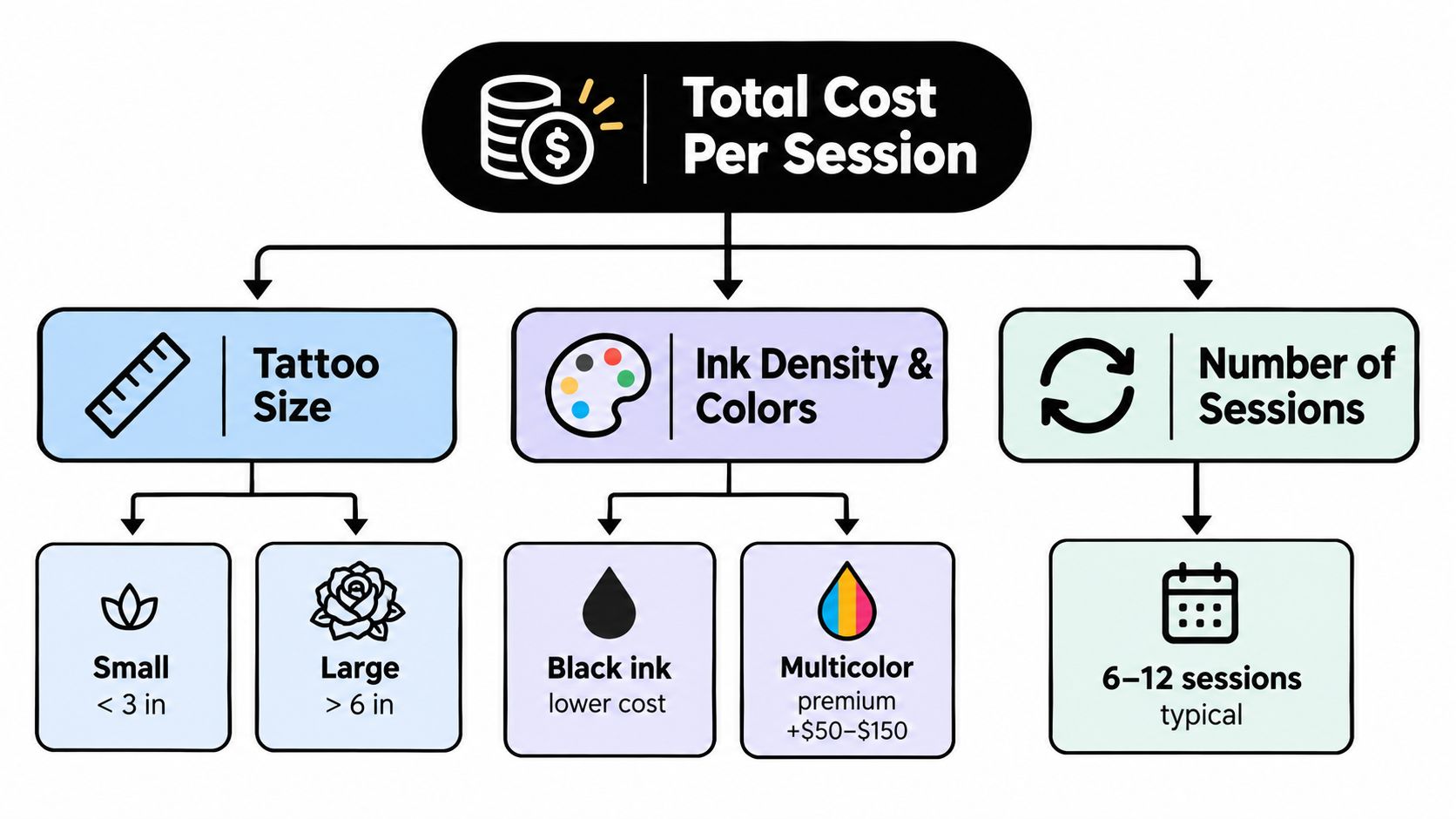
That matters for budgeting in a very practical way. Session cost reflects treatment time and complexity. Total cost reflects how many of those sessions your tattoo needs.
A simple way to frame it is:
Per-session price × number of sessions = total removal budget
For Florida readers comparing clinics, that equation is usually more useful than a low starting price by itself. A small black tattoo may need shorter appointments and fade steadily. A denser multicolor tattoo may require more visits even if the quoted session fee seems reasonable at first.
So the logic behind Q switch laser tattoo removal cost is fairly straightforward. The laser does the breaking. Your body does the clearing. The clinic charges by session because removal happens in stages, and your full price depends on how many stages your tattoo requires.
What to Expect to Pay Per Session and for a Full Course
A Florida patient might hear two quotes that sound far apart at first glance. One clinic says the tattoo will be priced like a small treatment area. Another says the same tattoo may take longer because the ink is dense. Both can be reasonable, because tattoo removal pricing works more like a custom estimate than a flat retail tag.
The easiest way to read the cost is like a budget equation:
tattoo size + ink complexity + expected sessions + local clinic pricing = your total plan
That equation matters more than any single advertised starting price. A low per-session number can still lead to a higher total if the tattoo needs many visits. A higher session fee can end up costing less overall if the treatment plan is shorter or your goal is partial fading for a cover-up.
What the invoice usually reflects
Clinics often build the session fee around treatment area and treatment time. A tiny black symbol may be priced at the low end because it takes less laser time. A larger piece, or a smaller tattoo packed with heavy color, can move up because the appointment is more involved.
A published clinical benchmark gives a useful reality check. It describes pricing that can range from about $100 per session for a small single-color tattoo to about $500 per session for larger multicolored tattoos, with larger multicolored work sometimes needing 8 or more visits, as explained in this clinical cost discussion.
Typical Q Switched Cost by Tattoo Size
| Tattoo Size | Per Session Range | Typical Total for 8-12 Sessions |
|---|---|---|
| Small | $75 to $200 | $600 to $2,400 |
| Business-card-sized | $200 to $400 | $2,000 to $4,000 |
| Larger pieces | $400 to $800 or more | $3,200 to $9,600 or more |
Use that table like a rough worksheet, not a promise.
A small tattoo can still cost more than expected if the ink is layered, unusually dense, or made up of stubborn colors. A larger tattoo can cost less than full removal if the goal is only to lighten it enough for new artwork. That is why the total matters more than the headline session fee.
A simple way to budget before your consultation
Start with the likely size tier. Then multiply the clinic's per-session quote by the estimated number of sessions. After that, ask what sits outside the base price, such as consultation fees, numbing, or pricing changes for larger treatment zones.
Here is what that looks like in plain math:
- Small tattoo: $100 per session x 6 sessions = about $600
- Medium tattoo: $250 per session x 8 sessions = about $2,000
- Larger tattoo: $500 per session x 10 sessions = about $5,000
Those are examples, but they show how the budget forms. Per-session price tells you the speedometer. Session count tells you the distance. You need both to know the full trip cost.
For Florida readers, this is also a good moment to compare quotes in context. Ask whether the clinic is pricing for complete removal or just fading, whether your colors are expected to need extra work, and whether the estimate reflects the full course or only the first visit. That turns a vague quote into a budget you can use.
Key Factors That Change Your Total Tattoo Removal Cost
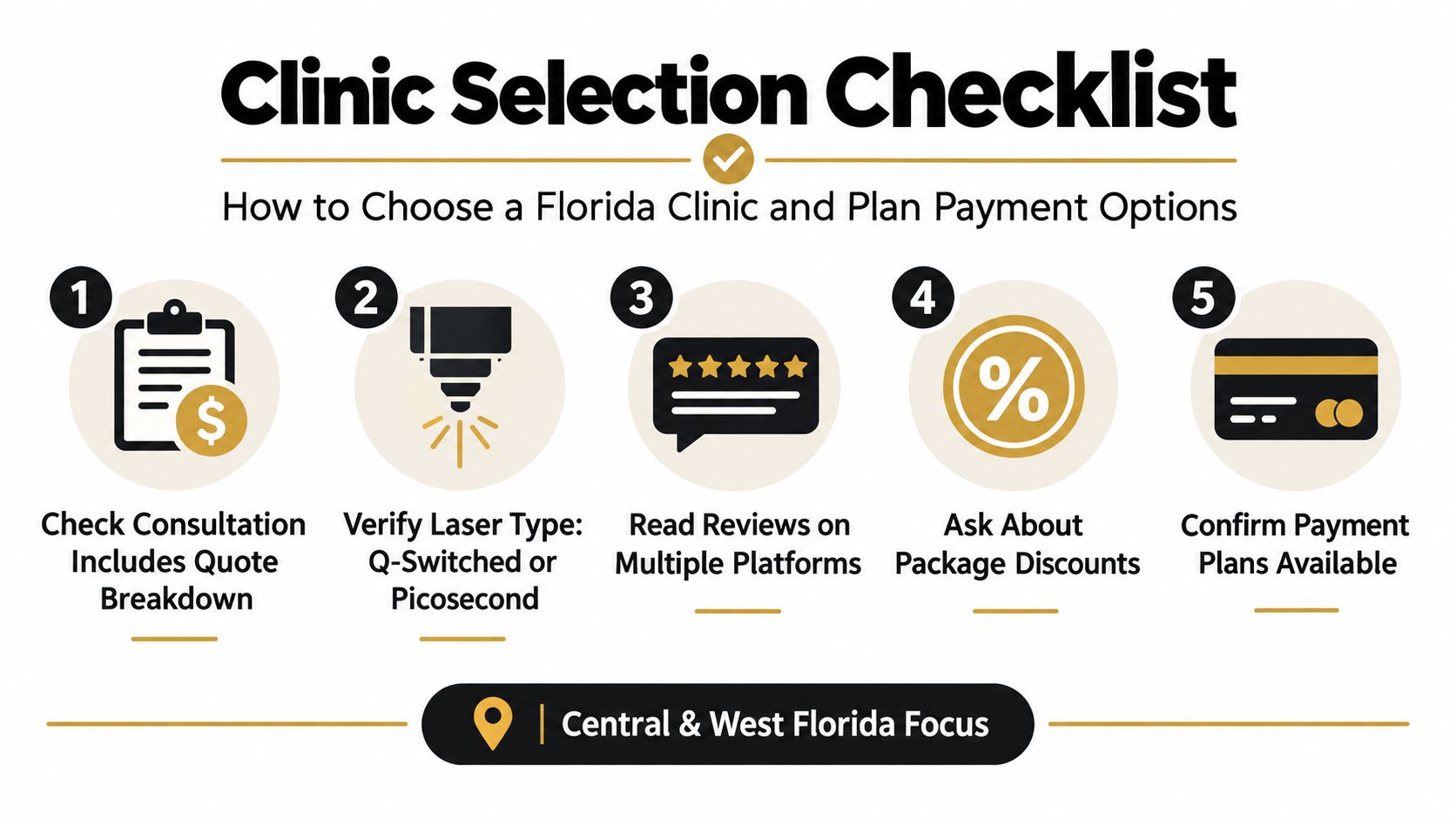
Two people can walk into the same Florida clinic, each with a tattoo that looks similar at first glance, and leave with very different quotes. That is normal. Q Switch laser tattoo removal cost works more like a budget equation than a flat menu price. Size matters, but so do color, placement, treatment goal, and how many sessions your tattoo is likely to need.
Size and ink density
Size is the easiest part to see, so it often gets the most attention. A larger tattoo usually costs more per visit because the provider has more skin to treat.
But coverage is only half the story.
Ink density changes the workload too. A light fine-line design and a heavily packed solid tattoo can be the same size, yet the denser piece often needs more passes over more visits. It helps to picture two walls painted the same width. One has a thin wash of color. The other has several thick coats. The thicker wall takes longer to strip back.
Color complexity
Black ink is often more straightforward to treat than a tattoo with several bright colors. Once multiple colors are involved, the plan can become more complex, and the tattoo may respond unevenly from one area to another.
That can affect both chair time and session count. A quote for a simple black design is not a reliable shortcut for a green, blue, red, and black piece of the same size.
Number of sessions and treatment goal
Session count is where the total cost really takes shape. Full removal usually means a longer project. Fading for a cover-up can cost less because the stopping point comes earlier.
That distinction matters during budgeting. You are not only paying for one appointment. You are paying for the whole path to your goal.
If you want a plain-English overview of why some tattoos fade faster than others, this guide on factors that affect tattoo removal progress gives helpful background.
Body location and circulation
Placement on the body can change the pace of removal. Areas with better circulation often clear fragmented ink more efficiently, while hands, feet, and ankles can test your patience.
So a small tattoo on the ankle may end up needing more visits than a similar tattoo on the upper arm. The session fee may stay similar, but the total budget can still grow because the timeline is longer.
Skin type and conservative settings
Skin type also shapes pricing indirectly. Some patients need a more cautious treatment approach to protect the surrounding skin and lower the risk of pigment changes.
That does not mean something is wrong. It means the clinic is adjusting the plan for safety. In practical terms, safer settings can stretch treatment across more sessions, which changes total cost even if the per-session quote looks reasonable.
Geography and local market conditions
Clinic location affects price too. Rent, staffing, device mix, and local competition all influence what a practice charges. Broad city-to-city comparisons show how much tattoo removal pricing can vary by market, according to this city pricing comparison.
For Florida readers, the useful question is not "What does tattoo removal cost somewhere else?" It is "What does my tattoo cost here, with my colors, my goal, and this clinic's treatment plan?" A Jacksonville quote, a Miami quote, and an Orlando quote may all be built differently.
Put the pieces together like a budget equation
A simple way to read your estimate is:
Total cost = per-session price x expected sessions + any added treatment fees
Then ask what is driving each part of that equation. Is the quote higher because the tattoo is large, because the colors are slower to clear, because the body location may need more sessions, or because you want full removal instead of cover-up fading?
That turns a vague number into something you can compare. It also helps you spot the Florida clinic that is explaining the plan clearly, instead of handing you a price without the math behind it.
How Q Switched Compares on Value and When Total Cost Converges
Two clinics can quote very different prices and still land in almost the same total range by the end. One may charge less per visit with Q switched treatment, while another charges more per visit with a newer platform. The difference often shrinks once session count is added to the math.
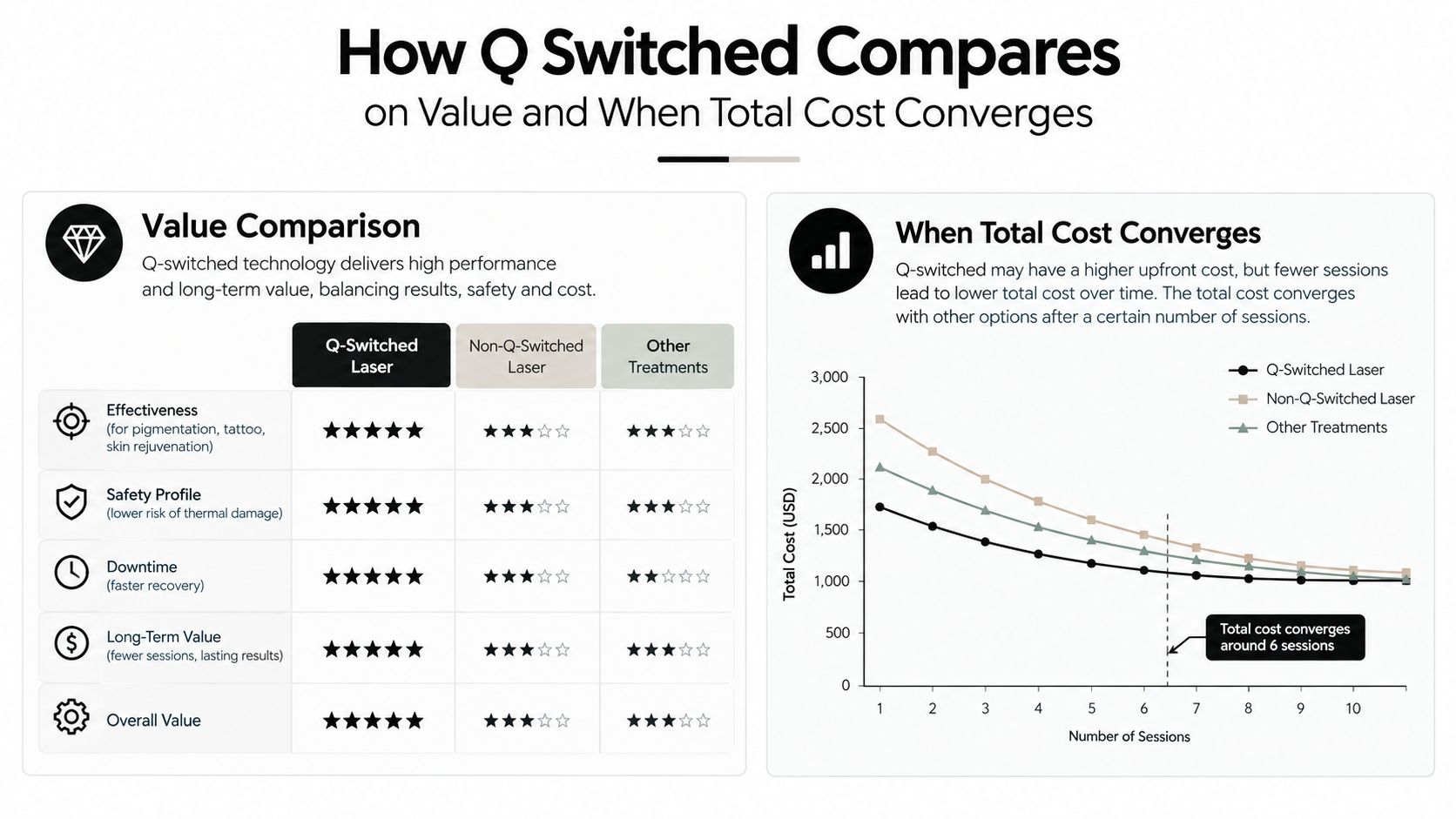
Q switched treatment often starts out looking like the budget-friendly option because the per-session price is usually lower. Many 2026 market comparisons place Q switched sessions around $150 to $400 per session, while some newer alternatives are priced higher, as summarized in this laser comparison guide.
A lower visit price is only one part of the budget equation.
The other part is how many visits your tattoo needs. Black ink on a smaller, simpler tattoo may clear on a cost path that keeps Q switched very competitive. Dense color, layered ink, or a tattoo that has already been reworked can push treatment into more sessions. In those cases, the same comparison guide notes that total course cost can start to look similar across different laser types.
That is why total cost can converge. A clinic charging less each time may still reach a similar final number if the plan takes more appointments. It works like buying a cheaper plane ticket with extra connection fees. The first number looks better, but the full trip cost is what matters.
Equipment pricing helps explain why Q switched sessions are often quoted lower in the first place. Market summaries in this equipment cost overview describe a wide range for Q switched Nd:YAG systems, from lower-spec products up to higher-end multi-wavelength platforms. Because many of these systems cost clinics less than some newer alternatives, practices can often keep session prices in a lower band. The same equipment pricing discussion helps explain why.
For Florida readers, this comparison is most useful when you turn it into simple math. A clinic in Tampa or Orlando might offer a lower Q switched session price that fits your monthly budget better, even if the full removal takes longer. A Miami clinic using a different device might quote a higher visit price but estimate fewer sessions. Neither quote is automatically the better value. The better value is the one that matches your tattoo, your cash flow, and your removal goal.
Q switched often makes sense when:
- Your tattoo is relatively straightforward: less color complexity usually means a clearer cost path.
- You prefer pay-as-you-go budgeting: lower per-session pricing can be easier to fit into monthly spending.
- You are comparing realistic totals, not just the first quote: the best choice depends on the full estimate, not the cheapest single visit.
The useful question is not which laser sounds newer. It is which treatment plan gives you the clearest cost equation for your tattoo.
How to Choose a Florida Clinic and Plan Payment Options
Cost matters, but the way a clinic explains cost matters just as much. A quote should feel clear enough that you can repeat it back in plain English.
What to ask during a Florida consultation
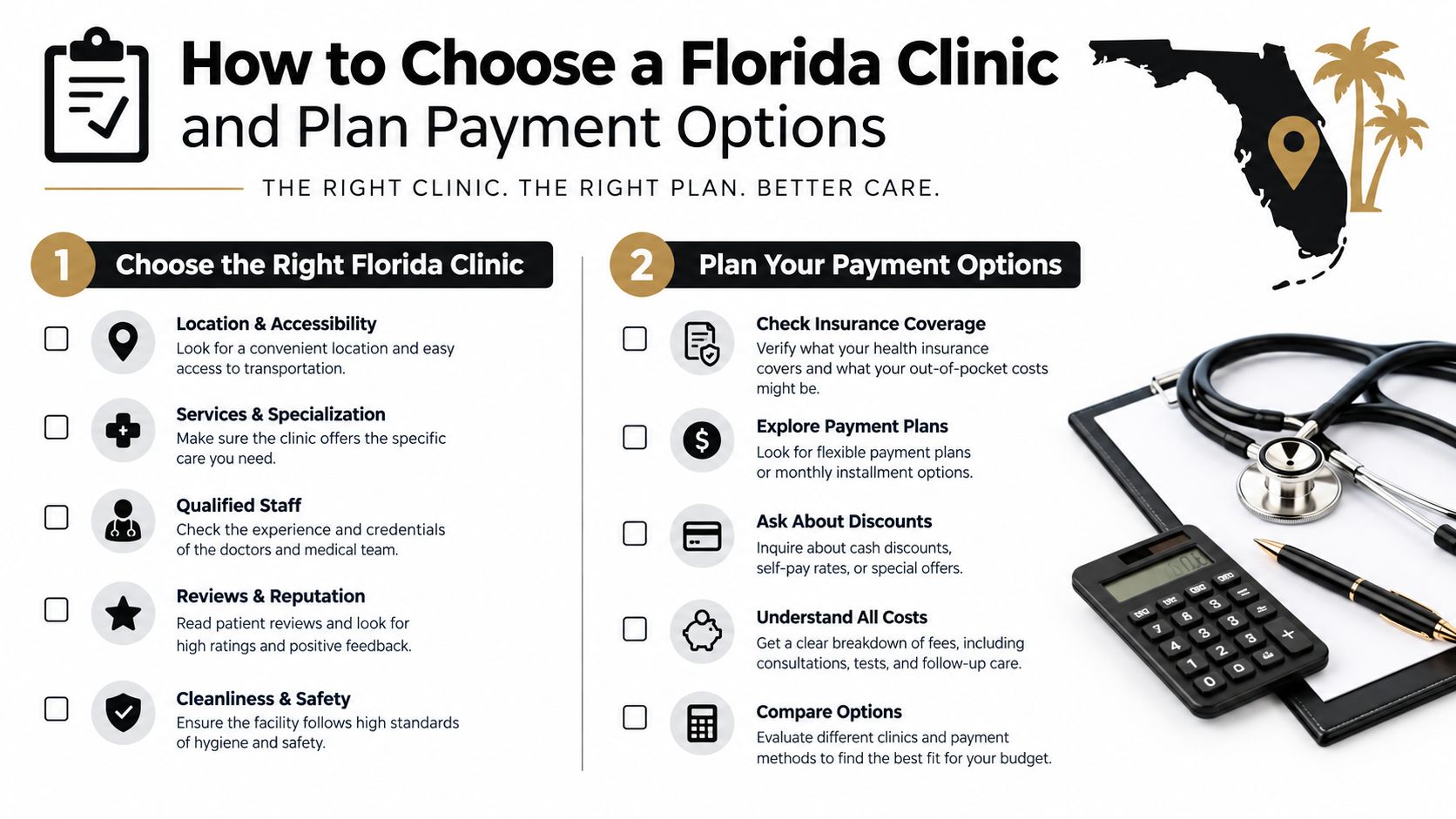
If you're comparing clinics in Orlando, Tampa, St. Petersburg, Palm Harbor, or the Bradenton and Sarasota area, ask for a quote that breaks out the practical pieces.
- Session pricing: Ask whether the quote is per visit, by size tier, or part of a package.
- Estimated treatment count: You want a realistic range, not a vague promise.
- Extra fees: Ask about consultation, test patches, numbing, and aftercare products.
- Goal-based planning: Full removal and cover-up fading should be quoted differently.
- Skin and color experience: Ask how the clinic adjusts treatment for your skin tone and tattoo colors.
North Bristol NHS Trust provides a good example of transparent fee structure in principle. It says an initial specialist consultation costs £120 and tattoo-removal laser treatments start from £70 per session, as shown on its tattoo treatment page. Even though that's UK pricing, the useful lesson is the format. Separate the consultation from the treatment price.
Why line-item transparency matters
Another published example comes from Salisbury NHS Laser Clinic, which lists fixed treatment bands such as £55 for a test patch, £55 for tattoos up to 2 cm by 2 cm, £110 up to 5 cm by 5 cm, £165 up to 10 cm by 10 cm, £220 up to 20 cm by 20 cm, and £250 for greater than 20 cm, with larger areas needing a double appointment, according to its laser clinic price list.
Its later price list also states a minimum charge of £55 and that topical anaesthetic is available for an additional £20, as shown in this updated clinic pricing sheet.
You may not pay those exact numbers in Florida, but this kind of breakdown is what you want.
Planning payment options without guesswork
Some people prefer pay-as-you-go because it spreads cost over time. Others want to ask about package pricing if they already know full removal is their goal.
A practical payment conversation should include:
- Your target outcome. Complete removal or fading for a cover-up.
- Your monthly comfort level. What feels manageable between sessions.
- Your scheduling reality. Work, travel, sun exposure, and event deadlines.
- Your willingness to pause. Flexibility matters if life gets busy.
For readers comparing Florida options, EradiTatt review information may help you understand how to evaluate patient experience alongside pricing details.
In Florida, EradiTatt Tattoo Removal is one provider with locations in Orlando, Tampa, St. Petersburg, Palm Harbor, and Bradenton/Sarasota, and its multi-location setup can be relevant if convenience affects how easily you can stay consistent with sessions.
Planning Your Budget and Next Steps With Confidence
The easiest way to think about Q Switch laser tattoo removal cost is this. Don't shop for one number. Shop for a usable plan.
That plan starts with your likely per-session rate. Then it adds the treatment count your tattoo probably needs. Then it checks for anything else that changes the out-of-pocket total, like consultation fees, numbing, or a larger treatment area.
A simple budgeting framework that works
Use this checklist when you're ready to get serious:
- Know your tattoo profile: size, colors, density, and placement
- Ask for the session range: not just the cheapest visit price
- Separate base price from extras: avoid quote confusion
- Match the plan to your goal: full removal costs differently than fading
- Choose a clinic that explains the math clearly: clarity is part of good care
One more helpful reminder. Budgeting for removal isn't only about what you can afford today. It's about whether the pace, quote format, and clinic access make it realistic to stay consistent until you reach your goal.
A calm, transparent consultation is often the moment tattoo removal starts to feel manageable.
If you go into that appointment knowing the main cost drivers, you'll ask better questions and get a quote you can trust.
If you're weighing session price against total treatment cost, EradiTatt Tattoo Removal offers Florida-based tattoo removal care focused on personalized treatment plans, transparent next-step discussions, and convenient access across multiple locations. If you want a quote that fits your tattoo, your timeline, and whether you want full removal or cover-up fading, visiting their site is a practical place to start.
One Response