
You're three sessions into laser tattoo removal, checking the same black design under the bathroom light and wondering whether anything is happening. The outline may look slightly softer, but the dense areas appear unchanged. That frustration is common, and it usually doesn't mean the laser has failed. It often means the treatment plan hasn't matched the ink, the skin, and the body's clearance process closely enough.
The most reliable way to make laser tattoo removal more effective is to focus on three levers: wavelength-matched energy, enough immune-clearance time, and skin that's ready to tolerate treatment. Tattoo age, location, depth, density, and layering also shape the outcome, but careful planning can improve the factors you can control.
Table of Contents
- Why Some Tattoos Fade Faster Than Others
- Pre-Treatment Prep That Sets You Up for Better Results
- Choosing the Right Laser Technology and Provider
- Session Spacing and the Cumulative Strategy
- What to Do During Each Session
- Aftercare That Protects the Fade You Just Earned
- Lifestyle Factors and Realistic Expectations
Why Some Tattoos Fade Faster Than Others
A black tattoo on the upper back and a multicolored design on the foot can look comparable in a photograph, yet respond very differently to treatment. Ink density, depth, location, age, and the artist's technique all affect progress, as shown by a predictive model of tattoo-removal outcomes. Distal sites, dense pigment, larger designs, smoking, and some colors have also been linked with slower response in clinical data.
Three levers explain much of that difference: wavelength-matched energy, immune clearance time, and skin readiness.
The first is wavelength-matched energy. The laser must deliver light that the target pigment absorbs efficiently. A named clinical study reported the strongest lightening for red, orange, and rose inks at 532 nm, brown at 1064 nm, yellow and green at 448 nm, and blue at 600 nm. Its findings also linked efficiency to choosing a wavelength that produces minimal pigment reflection (study PDF). These figures describe that study's tested combinations, not a universal prescription. A modern plan may therefore use different wavelengths across one multicolored tattoo, while black ink requires its own wavelength and settings.
Practical rule: One wavelength and one fixed setting cannot treat every tattoo well.
The second lever is immune clearance time. Laser energy breaks pigment into smaller particles, but macrophages and the lymphatic system must transport and remove them. Frosting is an immediate skin response, not proof that all useful work is finished. Fading can continue between appointments as clearance proceeds.
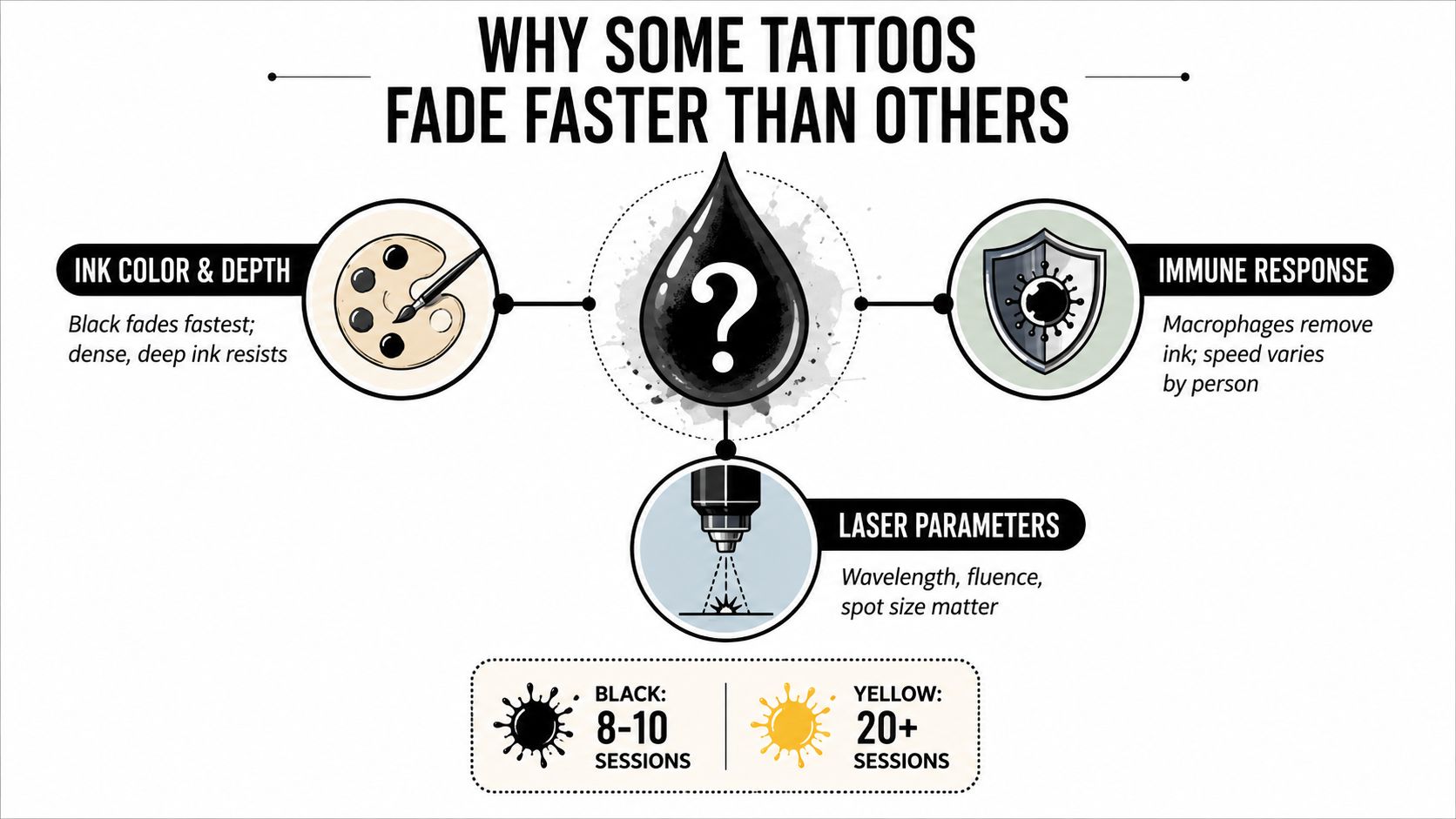
The third lever is skin readiness. Tanning, sun damage, increased melanin activity, irritation, or poor healing can limit the energy a provider can use safely. The original ink depth and technique cannot be changed. Protect the area, disclose relevant health information, follow aftercare, and allow enough time for clearance. Reviewing these factors that affect tattoo-removal progress can help you judge whether a fixed schedule makes sense.
Pre-Treatment Prep That Sets You Up for Better Results
Preparation isn't cosmetic housekeeping. It changes how safely the laser can deliver energy and how well the skin can recover afterward.
Start with ultraviolet exposure
Keep the treatment area out of direct sun and away from tanning beds before an appointment. Tanned or sunburned skin absorbs more of the laser's energy, which can increase the risk of blistering, pigment changes, and delayed healing. A conservative clinic may postpone treatment until the skin returns to its usual tone, so don't try to hide a tan before your appointment.
The requested visual recommends a four-to-six-week sun and tanning window, while many clinical plans use a minimum of four weeks for the area. Your provider's assessment should decide whether the skin is ready, particularly if you burn easily or have recently used a self-tanner.
Simplify your skincare
Pause retinoids, exfoliating acids, scrubs, and self-tanners before treatment according to your provider's instructions. Irritated or thinned surface skin has less tolerance for heat and mechanical stress, and self-tanner can make it harder to judge your natural skin tone. Shaving can be appropriate for some body areas, but waxing may irritate the skin and remove the hair that helps preserve cosmetic tattoo pigment in certain treatments.
- Disclose medications: Tell the provider about blood thinners, antibiotics, isotretinoin, St. John's wort, and every prescription, supplement, or topical product you use. The clinic can decide whether timing or treatment needs to change.
- Arrive nourished and hydrated: Drink normally, eat a meal, and avoid arriving depleted. Hydration supports circulation and general recovery, although it can't replace adequate spacing or correct wavelength selection.
- Keep the area clean: On the appointment day, skip lotions, oils, makeup, deodorant, and fragrance over the tattoo unless the clinic directs otherwise.
- Wear practical clothing: Choose loose fabric that won't rub against the treated area after the appointment.
For a more detailed appointment checklist, see this guide on how to prepare for tattoo removal. Each step protects one of the three key levers: clean skin improves treatment access, undamaged skin expands the safe treatment window, and good general care supports the body's work after the laser session.
Choosing the Right Laser Technology and Provider
Picosecond and nanosecond devices can both be useful, but the label on the machine shouldn't make the decision for you. Wavelength coverage, pulse duration, operator judgment, and the tattoo's pigment profile matter more than marketing language.
Nanosecond Q-switched systems, including Nd:YAG and alexandrite platforms, have a long clinical track record. Picosecond devices deliver shorter pulses and can produce a stronger photoacoustic effect, breaking some pigment into smaller particles. A randomized study reported at least 75% color-intensity reduction in 33% of picosecond-treated tattoos versus 14% with nanosecond treatment, while monochromic black or blue tattoos exceeded 75% improvement in 34% versus 9%, respectively, in the tested groups (prospective and randomized study).
| Feature | Nanosecond Q-switched | Picosecond |
|---|---|---|
| Pulse duration | Longer pulse than picosecond platforms | Shorter pulse duration |
| Main effect | Established photothermal and photoacoustic pigment disruption | Strong photoacoustic disruption for selected pigment |
| Clinical role | Useful across established wavelength protocols | Often useful for resistant pigment and efficiency-focused plans |
| Main limitation | May require more sessions for some tattoos | Results still depend on wavelength, settings, skin, and operator skill |
Wavelength matching still comes first. Reviews describe 1064 nm as mainly used for black ink, 532 nm for red, yellow, and orange, and 755 nm for blue, green, and purple (multicolor tattoo laser review). A clinic with only one handpiece may struggle with a tattoo containing black, red, green, and yellow pigment.
Ask direct questions before booking:
- Which wavelengths do you use for each color in my tattoo?
- How do you adjust fluence for pigment density and depth?
- Do you test a small area before treating the entire design?
- Can you show results on tattoos with similar colors and skin tone?
- What happens if my skin response requires a longer interval?
A provider who can explain equipment clearly is easier to evaluate. If you're comparing clinic-service resources or need help assessing how a provider presents its technology, Leaping Lemur Media offerings can provide useful context on professional service communication. For tattoo-specific technology considerations, review new technology in tattoo removal.
Session Spacing and the Cumulative Strategy
The fastest plan usually isn't the one with the most frequent appointments. Each session creates fragmented pigment, and the body needs time to move that material away through immune and lymphatic processes. Clinical evidence supports intervals of six to eight weeks in many protocols, while intervals of eight weeks or less have been associated with reduced response in older clinical data (clinical update and treatment evidence).
A prospective study of 30 subjects with 52 decorative tattoos used treatments every six to eight weeks for up to six sessions. By the end of treatment, 88.5% of tattoos reached at least 75% clearance, and more than 36% exceeded that threshold, according to the same clinical review. Earlier controlled data also showed that fluence and repeated sessions matter. In 39 blue-black or multicolored tattoos treated at three-to-four-week intervals, 77% of black tattoos achieved an excellent response after four sessions, while more than 95% black-ink clearance occurred in 28% of tattoos when fluence reached 10 to 12 J/cm².
Those findings don't justify rushing. They show that spacing, energy, and cumulative treatment must be considered together.
| Tattoo Profile | Recommended Interval | Reasoning |
|---|---|---|
| Fresh, highly saturated tattoo | Often toward the longer end of the provider's schedule | Dense pigment and stronger skin response may require more recovery and clearance time |
| Older, lighter tattoo | Often around a six-week cycle when the skin is ready | Existing fading may allow a shorter interval, subject to clinical assessment |
| Dense professional tattoo | Commonly eight weeks or longer | Deeper, layered pigment can continue clearing well after visible surface healing |
| Multicolored tattoo | Set by the slowest-clearing color and skin response | Different pigments require different wavelengths and may not fade evenly |
Patients often see dramatic change after the first few treatments, then feel progress has stalled. The outer pigment may clear first, exposing deeper or more densely packed ink. Standardized photographs taken under the same lighting every eight weeks make gradual improvement easier to judge than daily mirror checks. Research also shows that complete clearance is session-dependent, with systematic review evidence reporting more than 70% pigment clearance after one to ten treatments across the reviewed tattoos (clinical review of laser parameters and endpoints).
What to Do During Each Session
A well-run appointment should begin with an assessment, not a race to the laser. The provider should review healing from the previous treatment, inspect your skin tone and current exposure, and consider a test spot before treating a larger area. Test spots are especially useful when the skin is darker, the pigment is resistant, or the tattoo contains colors with greater risk of unwanted darkening.
Numbing choices require an honest discussion. Topical lidocaine can improve comfort, but some clinicians prefer to apply it with enough time for effect and remove it before treatment. Injected anesthetic may be appropriate in selected situations. Don't apply an unapproved product or leave cream on the area without asking, because the provider needs to know exactly what is on the skin.
Protective eyewear is mandatory. Cold air or a Zimmer cooling device can reduce discomfort between passes and help limit heat in the surrounding tissue. Tell the provider when pain suddenly spikes. A concentrated ink pocket may need a pause, cooling, or a parameter adjustment, not more aggressive treatment.
A useful boundary: More energy in one appointment doesn't automatically mean faster clearance. Frosting, the immediate ash-white response, is the recognized endpoint, and pushing beyond an appropriate response can increase injury without improving the result.
Leave with the area protected and written aftercare instructions. If anyone pressures you to over-treat a single sitting or dismisses your skin response, that's a treatment-quality warning, not a sign that you need to tolerate more.
Aftercare That Protects the Fade You Just Earned
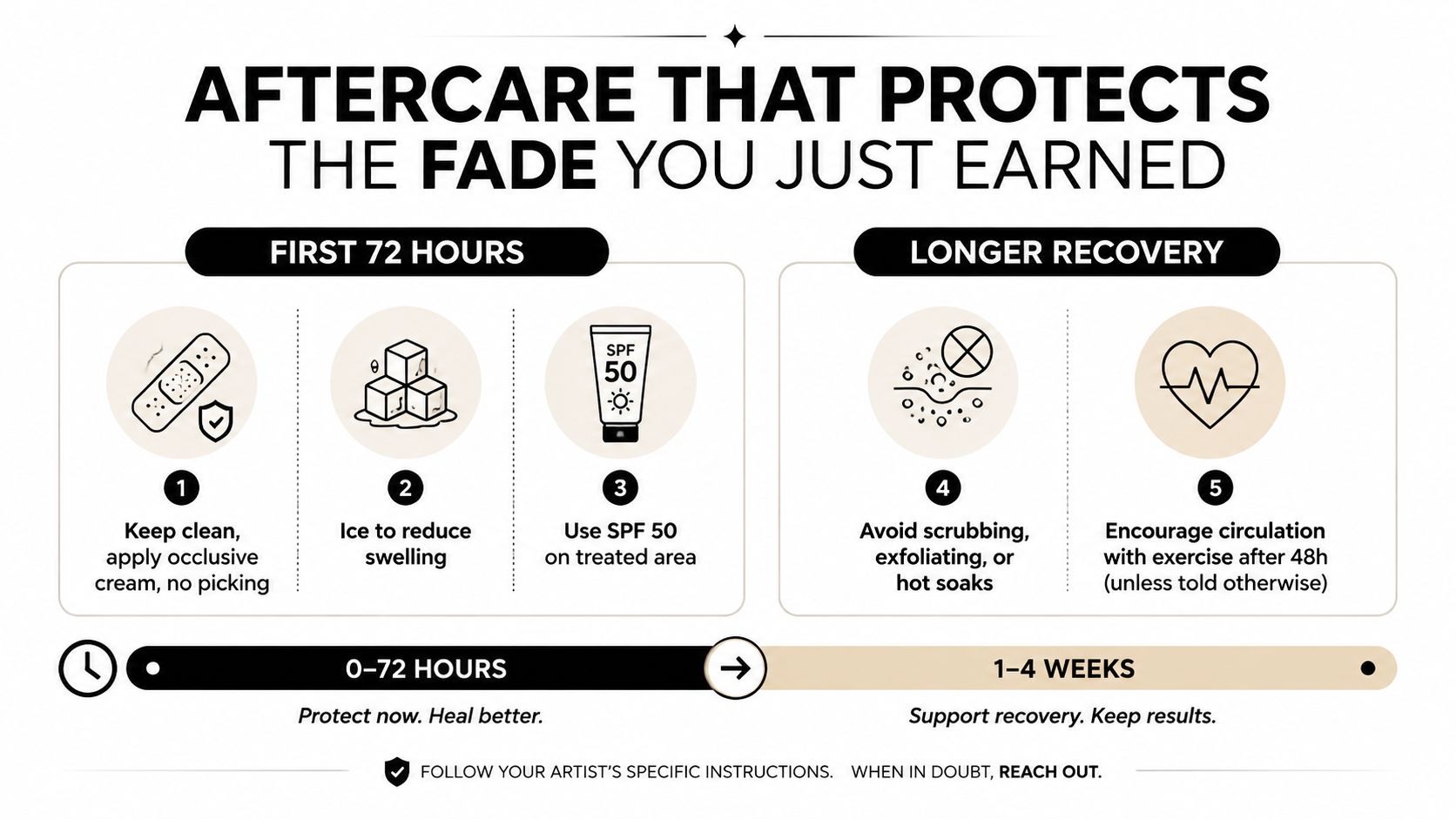
The first 72 hours deserve the most attention because the skin may be swollen, frosted, tender, or dotted with small areas of bleeding. Keep the area clean, use the dressing or occlusive covering provided by the clinic, and change it exactly as directed. Don't pick at blisters, crusts, or scabs. Removing them early can delay healing and increase the chance of pigment or textural changes.
The first several days
Once your provider allows the dressing to come off, wash gently with mild soap and lukewarm water. Pat the area dry rather than rubbing it, then apply a thin layer of plain petroleum jelly or the healing ointment recommended by the clinic. Avoid antibiotic ointments unless prescribed, because ingredients such as neomycin can trigger contact allergy.
Cold packs wrapped in clean fabric can help with swelling. Don't place ice directly on the skin, and don't seal a wet or irritated area under an improvised covering.
The longer recovery period
Hold retinoids, AHAs, vitamin C products, scrubs, and other active skincare until the surface has fully re-epithelialized. This often takes 10 to 14 days, but your provider should make the final call if blistering or crusting persists.
Sun protection remains essential throughout the treatment course. Use SPF 30 or higher on healed skin every day, cover the area with clothing when practical, and avoid deliberate tanning. Ultraviolet exposure can inflame healing skin and contribute to unwanted pigment changes.
Skip baths, pools, hot tubs, and other soaking for at least two weeks, or longer if the skin hasn't closed. Avoid workouts that drench or rub the area for 48 to 72 hours. Aftercare doesn't remove pigment directly, but it prevents avoidable inflammation from limiting the next safe treatment.
Lifestyle Factors and Realistic Expectations
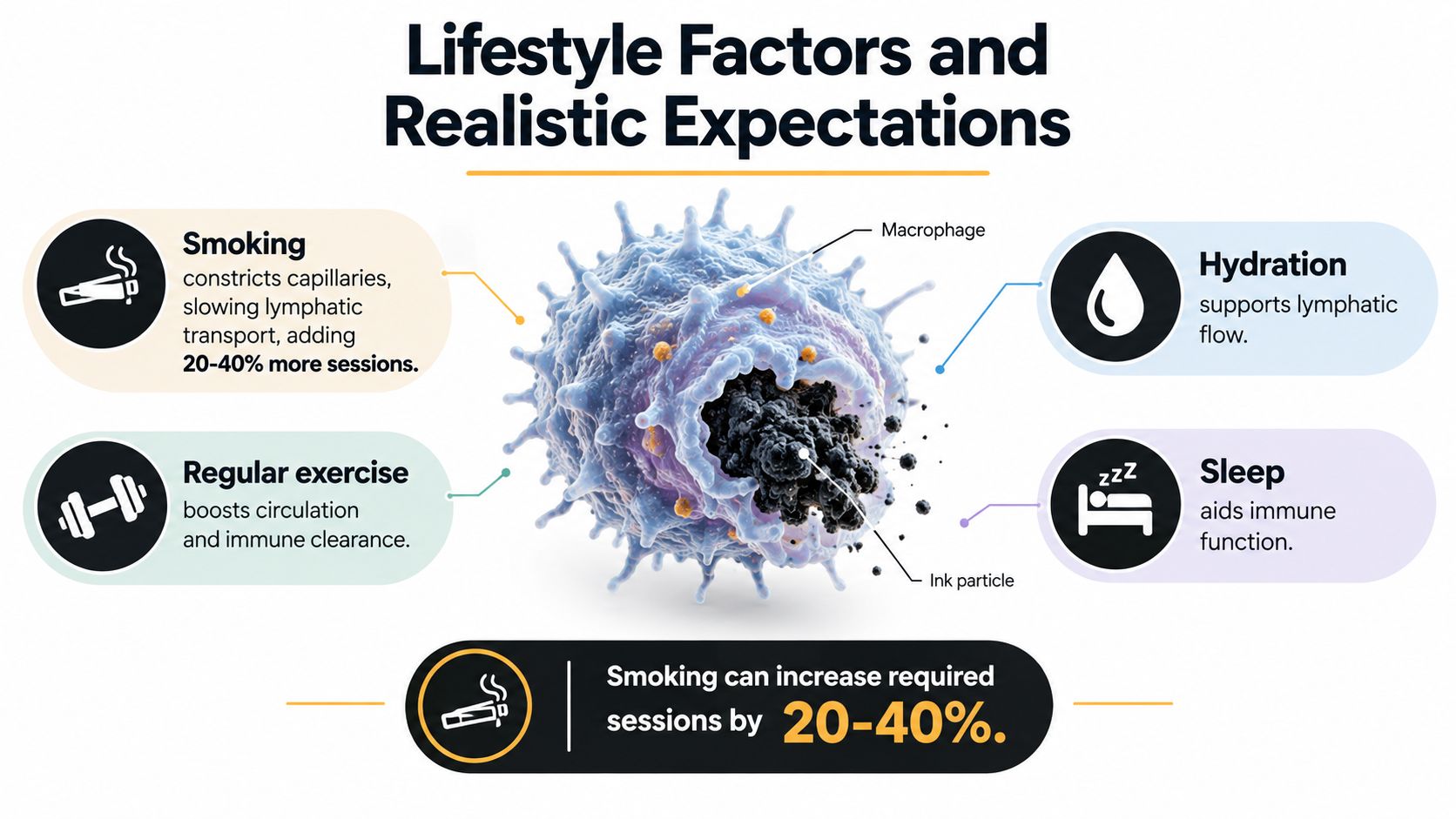
The laser fragments the ink, but your immune system clears the debris. Macrophages collect those fragments, while lymphatic transport helps move them away from the treatment area. Smoking can constrict blood vessels and reduce circulation, which may work against that clearance process. Quitting, or reducing smoking when quitting is not immediately possible, can support a longer treatment plan.
Lifestyle habits support recovery, but they cannot correct a poorly matched wavelength or compensate for sessions scheduled too close together. Eat enough protein, include foods that provide vitamin C and zinc, drink fluids normally, and protect your sleep. Regular movement supports general circulation and wellbeing, yet it will not erase ink by itself. Follow the clinic's restrictions during immediate healing rather than trying to “sweat out” pigment.
Build the plan around the tattoo, not a promise
Ink depth, color spectrum, density, layering, and body location all shape the likely response. Black ink often responds more predictably than green, yellow, and some blue pigments, although dense or deeply deposited black ink can still fade slowly. Fingers, ankles, feet, and legs may respond more slowly than areas closer to the torso because circulation and lymphatic drainage vary across the body.
Older tattoos may have a head start if they have already faded. Fresh, saturated professional work can require a longer course. A commonly cited planning rule places amateur tattoos at about five to ten sessions, while professional tattoos often need 15 to 20 sessions and may require up to 25 in rare cases (planning guidance for tattoo removal sessions). These ranges help with planning, not guarantees. A cover-up may need only enough fading to soften the existing design, while complete removal requires a different endpoint.
Questions patients ask in consultation
Does numbing cream stop the laser from working? Most topical lidocaine is considered compatible when used according to clinic instructions, although some providers prefer injected anesthetic or specific timing. Disclose any product before treatment.
Can I exercise after treatment? Exercise soon afterward can increase sweat, friction, and blood pressure around healing skin. Many clinics advise waiting 24 to 48 hours, with longer restrictions if the area is blistered or heavily irritated.
Why did the tattoo get darker? Some white and pastel inks containing titanium compounds can darken through oxidation after laser exposure. Your provider should identify this risk before treatment and adjust expectations.
Do fading creams remove dermal ink? No. Over-the-counter creams cannot reach pigment deposited in the dermis, and irritating products may make laser treatment less safe.
Will every trace disappear? Complete removal is not guaranteed. Some tattoos leave faint residual pigment, shadowing, or uneven color after a full protocol.
The practical priorities stay clear: choose wavelength-matched energy, allow adequate spacing for immune clearance, and keep the skin ready for the next safe treatment. Lifestyle habits can support that process, but no supplement, cream, or aggressive session replaces those three levers.
EradiTatt Tattoo Removal offers personalized laser treatment for complete removal or cover-up fading, with plans adjusted for skin type, tattoo size, color complexity, and lifestyle goals across its Florida locations. To request a consultation and discuss a realistic session strategy, visit EradiTatt Tattoo Removal.
One Response