
You're staring at a lip blush that healed darker than expected, or a lip liner that no longer matches your face. Maybe the color has faded unevenly, leaving a gray, blue, or muddy border that makeup only partly hides. The safest answer to how to get rid of a lip tattoo usually involves a specialist consultation and gradual laser treatment, but the right plan depends heavily on the pigment, tissue involved, skin tone, and your healing history.
Lip tattoo removal isn't the same as removing black ink from an arm. Cosmetic pigments can behave unpredictably, the lips are highly visible and sensitive, and treatment can sometimes make certain colors look darker before they improve. A cautious assessment matters more than an aggressive first session.
Table of Contents
- Why Lip Tattoos Are Harder to Remove Than Body Ink
- What Happens During Your Initial Consultation
- The Laser Removal Process and Session Timeline
- Risks and Complications Specific to Lip Tissue
- Aftercare and Healing for Lip Tattoo Removal
- Deciding Between Full Removal and Fading for a Cover-Up
Why Lip Tattoos Are Harder to Remove Than Body Ink
A client may arrive after lip blush has healed with a simple request: “I just want the color gone.” The original rose tone may have become cool, uneven, or more defined than expected. An inner-lip novelty tattoo may also blur over time. Both cases need a plan suited to lip tissue, pigment chemistry, and the location being treated.
Lip tissue is delicate and highly vascular, so swelling, crusting, and color changes are more noticeable and less forgiving than on an arm. Cosmetic pigment is often a blend rather than a single black or dark blue ink. That mixture determines how laser energy interacts with each particle.
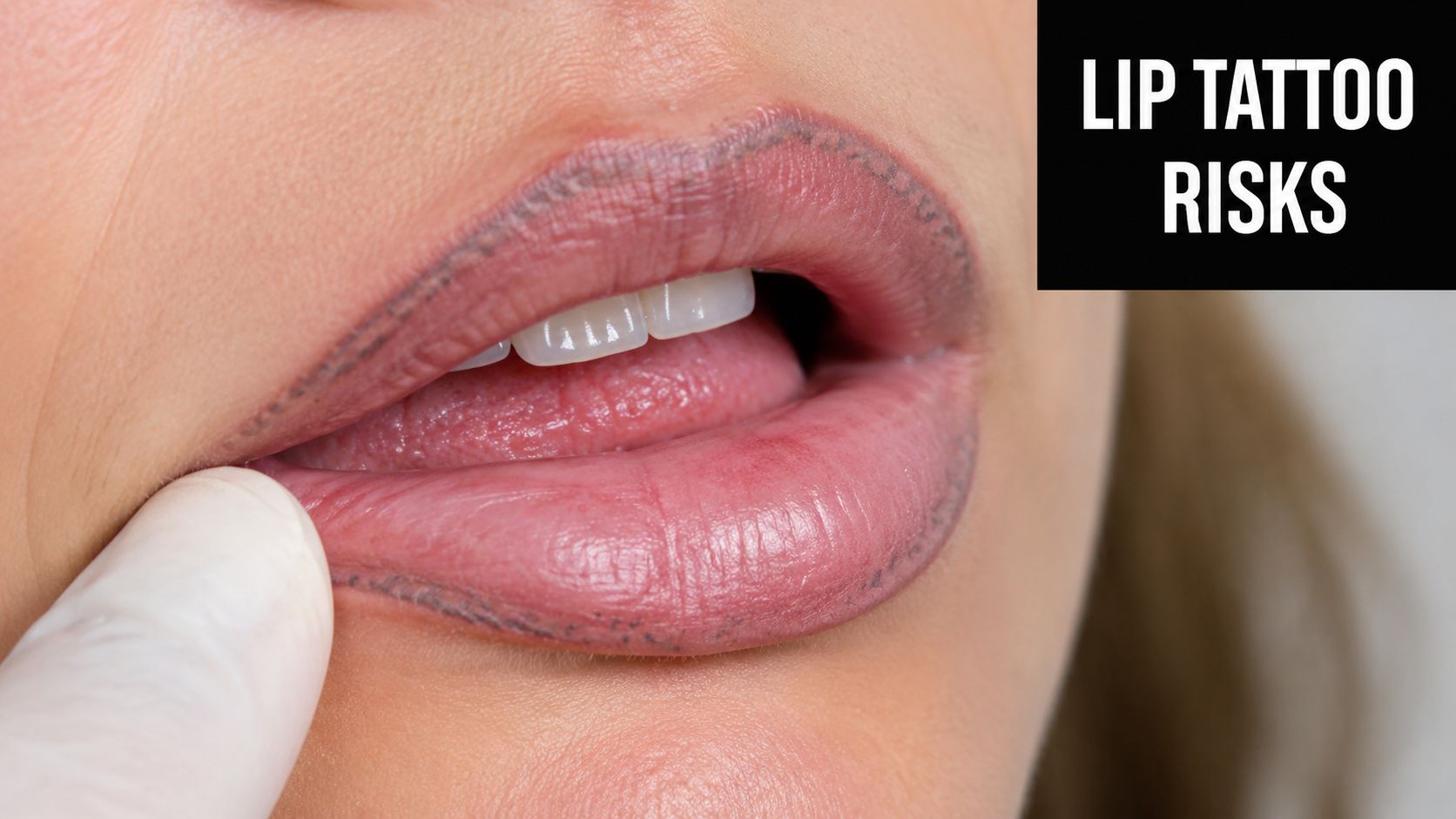
Cosmetic pigment behaves differently
Lip blush, permanent lip liner, and mucosal tattoos are not interchangeable. The practitioner must establish whether pigment sits on the outer lip skin, along the vermilion border, or on the inner oral mucosa. Cosmetic formulas may contain red, flesh-toned, white, or titanium-dioxide-containing components. Some fade gradually. Others can shift toward gray, blue, or black after laser exposure.
That reaction is called paradoxical darkening. It is especially important with titanium-dioxide blends and explains why a provider should not promise complete clearance after one appointment. The FDA lists possible laser-removal reactions including lighter skin, scarring, infection, pinpoint bleeding, redness, and soreness in its tattoo-removal guidance.
Practical rule: A small lip tattoo still needs an individualized plan. Pigment chemistry matters more than visible size alone.
Why a body-tattoo strategy can fail
A body tattoo usually gives the technician more working room and greater tolerance for temporary reactions. On the lips, an aggressive single treatment can produce unnecessary swelling, blistering, or pigment disturbance without clearing the color faster. Progressive treatment is safer. The provider should reassess the tissue and remaining pigment after each healing cycle before choosing the next setting.
Cold-sore history also affects planning. Laser irritation around the lips can reactivate HSV-1, so clients with previous cold sores should disclose that history during assessment and follow the provider's prevention protocol.
Inner-lip tattoos can respond to laser treatment, but their mucosal location requires specific experience. A published oral mucosal tattoo report describes Q-switched laser treatment as a safe and very effective option for cosmetic oral mucosal tattoos. The report also summarizes marked improvement one month after treatment in two patients without scarring or dyspigmentation, as described in the published oral mucosal tattoo report. These findings do not remove the need for caution. They show why treatment should be selected for the exact pigment and tissue involved.
What Happens During Your Initial Consultation
A safe consultation begins with the pigment, tissue, and your medical history, not a laser setting chosen from a photograph. The practitioner should examine your lips in natural light, ask where and when the tattoo was applied, identify the original artist or clinic, and request pigment details if you have them. Bring photographs of the original colour and any records from previous procedures.
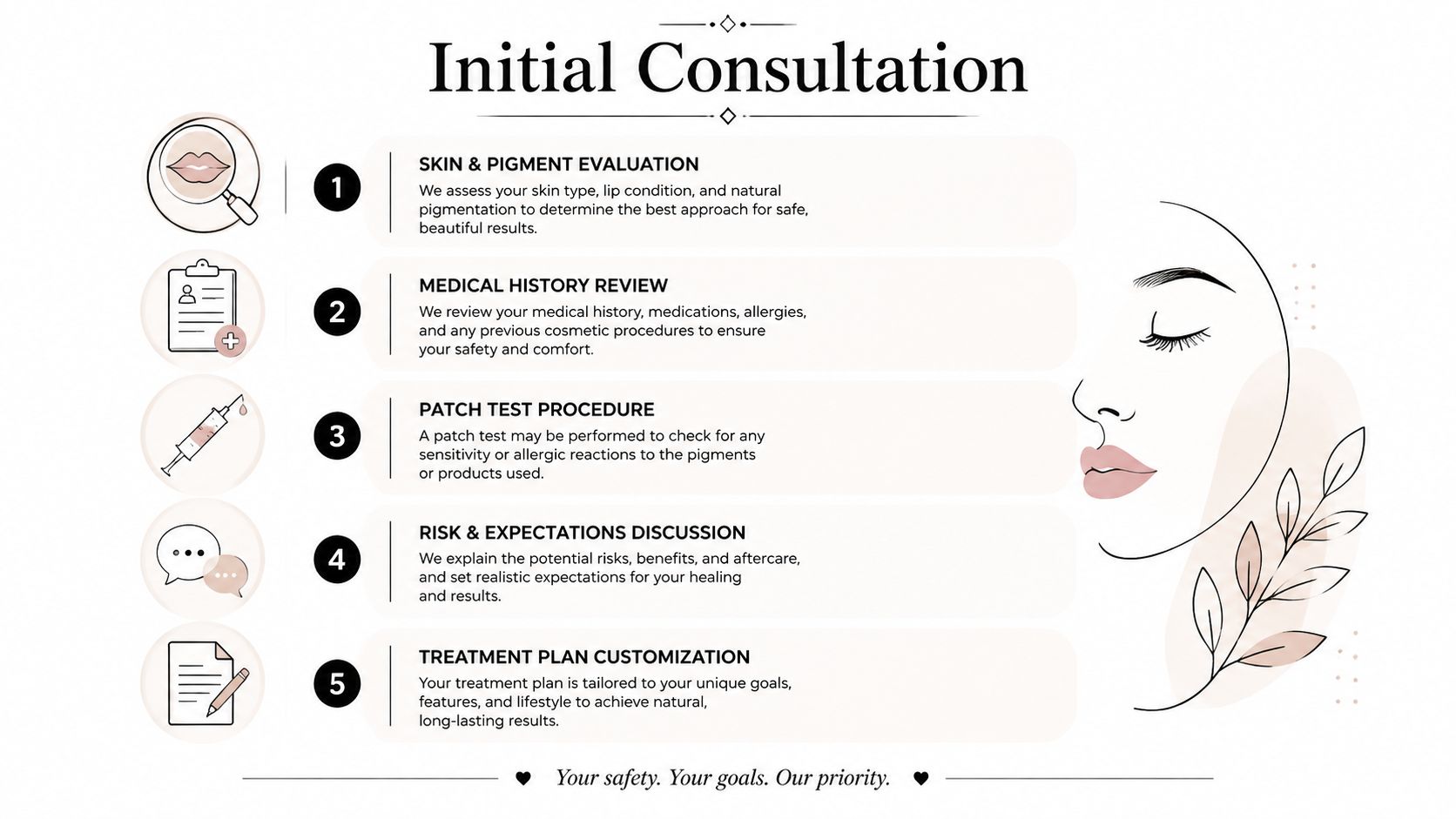
The assessment before treatment
Expect the evaluation to cover:
- Pigment identification: The practitioner assesses colour families, layering, density, and possible titanium dioxide or other light pigment components. Titanium-dioxide blends can darken paradoxically after laser exposure, so pale or flesh-toned ink needs particular caution.
- Placement and depth: Outer lip skin, the vermilion border, and inner mucosa heal differently and require different handling. The provider should map the visible pigment precisely rather than treating beyond its edges.
- Skin response: Skin tone, a tendency toward hyperpigmentation, previous hypopigmentation, and reactions to cosmetic procedures help determine how conservatively to work.
- Medical history: Disclose HSV-1 cold sores, allergies, active skin conditions, medications, immune concerns, and any history of keloid or raised scarring.
- Your objective: Full clearance, softening, or preparation for a new cosmetic tattoo may require different endpoints and treatment choices.
A cold-sore history matters because laser irritation can reactivate HSV-1. Ask whether preventive antiviral medication should be discussed with your physician before treatment. Do not self-prescribe or assume an over-the-counter product replaces medical guidance.
Why a test spot matters
A test spot shows how the pigment and surrounding tissue respond before the entire border or lip is treated. It is particularly useful for mixed, faded, cosmetic, or pale pigment. The area may lighten, develop an unexpected dark cast, or produce more inflammation than expected. That response helps the practitioner adjust the plan before treating a larger area.
The consultation should set realistic expectations about healing, colour changes, and the possibility that removal will require staged reassessment rather than one appointment. Be cautious if someone guarantees complete removal, dismisses pigment darkening, skips medical-history questions, or recommends aggressive treatment without examining the tissue. Review how to prepare for tattoo removal before your appointment, especially if you need to discuss medications, previous procedures, or timing requirements.
The Laser Removal Process and Session Timeline
A cosmetic lip tattoo can look simple, yet its removal requires careful staging. Practitioners commonly use a Q-switched or picosecond laser to deliver short energy pulses that fragment pigment, after which the body clears the particles gradually. Picosecond systems can be useful for difficult colours, while Q-switched devices remain established for black ink, as discussed in the systematic review of picosecond laser tattoo removal.
Cosmetic pigment needs extra caution. Titanium-dioxide-containing blends and some pale, pink, beige, or flesh-toned formulations can darken paradoxically after laser exposure. A test spot is sensible before treating the entire lip border, particularly when the formulation or previous treatment history is unclear.
Treatment is staged. The practitioner selects a wavelength and conservative fluence, treats the area, then waits for healing before judging what remains. Repeated sessions are usually safer and more predictable than forcing rapid clearance with one aggressive pass.
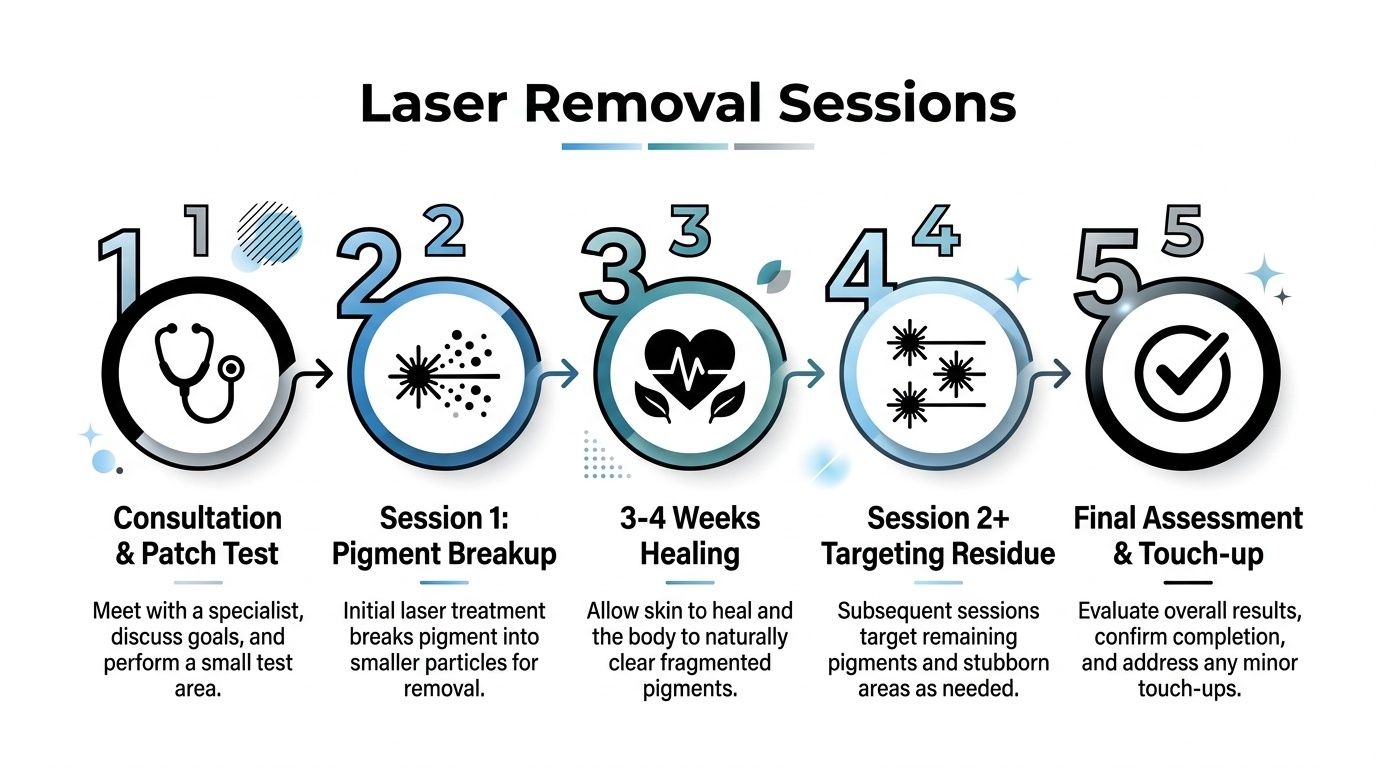
What the timeline can look like
The first treatment may cause immediate whitening, known as frosting, followed by redness, swelling, or tenderness. This reaction does not mean the pigment has disappeared. Fragmented particles still need to clear during healing, and the colour can continue to change after the visible surface reaction settles.
Published results show why a single appointment is an unrealistic expectation. A systematic review reported that 69% to 100% of tattoos achieved more than 70% pigment clearance after one to 10 treatments (systematic review). A separate Q-switched 1064/532 nm clinical series found an average of 4.6 ± 2.5 sessions, with 51.9% of patients reporting the highest satisfaction score (clinical series).
Facial cosmetic tattoos can behave differently from standard body tattoos. One study reported an average of three treatments for satisfactory results, with 66% rated “very much improved” and 34% rated “much improved”. These findings describe study outcomes, not a guarantee for an individual lip tattoo.
Progress may slow because of ink density, pigment age, colour, formulation, and tissue response. A retrospective analysis reported cumulative success of 47.2% after 10 sessions and 74.8% after 15 sessions (retrospective laser analysis). Reassess the plan if the colour stops changing, becomes darker, or leaves a resistant border requiring a different approach.
For neutral research when comparing local providers, a Glowmi clinic directory entry can help identify questions about equipment, experience, and consultation standards.
Risks and Complications Specific to Lip Tissue
A lip tattoo can look minor until swelling affects eating, speaking, or closing the mouth. The colour may also change in a way that is more noticeable than a temporary reaction on an arm. Cosmetic pigments require particular caution because light, beige, pink, and flesh-toned blends may darken after laser exposure instead of fading.
Some cosmetic tattoo colours are harder to remove and can become darker during treatment. The overview of laser tattoo removal risks also identifies hypopigmentation, hyperpigmentation, infection, and allergic reactions as possible outcomes.
The complications to discuss first
Paradoxical darkening deserves a specific discussion before treating cosmetic lip pigment. Titanium-dioxide-containing blends, along with some red or flesh-toned formulations, can turn dark gray, blue, or nearly black after laser exposure. A test spot and conservative settings help reveal how the pigment responds, although neither can guarantee a predictable result. If darkening occurs, the treatment plan may need to change rather than continue at the same settings.
HSV-1 reactivation is a lip-specific concern. Tell the practitioner if you have ever had cold sores. Laser trauma can trigger an outbreak, so discuss antiviral prevention and treatment timing with a physician before the appointment.
Pigmentary change and scarring require realistic consent, particularly with darker skin tones or a personal history of abnormal healing. Laser treatment can produce lighter or darker areas, redness, soreness, pinpoint bleeding, infection, and scarring. Review this discussion of laser tattoo removal scars if texture change is a major concern.
Lip Tattoo Removal Risks at a Glance
| Complication | Incidence Rate | Lip-Specific Concern |
|---|---|---|
| Overall complications | 8.1% of laser treatment sessions (complication review) | A reaction on the visible lip can affect eating, speaking, and appearance |
| Edema | 3.0% | Swelling can be particularly noticeable around the mouth |
| Blistering | 1.9% | Blisters can interfere with drinking and need careful protection |
| Hematoma | 0.7% | Bruising or blood collection can be conspicuous on the lip |
| Hypo- or hyperpigmentation | About 0.6% in practitioner-reported sessions | Border discolouration may remain visible after the tattoo fades |
| Hypertrophic scarring | 0.2% | Raised scars are difficult to disguise on a lip outline |
| Paradoxical darkening | 0.2% | Cosmetic pigment can become darker instead of lighter |
| Infection | 0.1% | The mouth is exposed to moisture, friction, and food |
| Patient-reported hypopigmentation | Nearly half in one survey | Lightened areas can contrast with surrounding lip tissue |
| Slightly visible scarring | 24% in one patient survey | Even subtle texture change may matter cosmetically |
| Important scarring | 8% in one patient survey | The impact can exceed the original concern |
These figures come from different datasets, so they cannot predict an individual appointment. They show why a test spot, conservative settings, full disclosure of cold-sore history, and informed consent matter before treating lip tissue.
Aftercare and Healing for Lip Tattoo Removal
A treated lip can feel hot and look swollen within minutes. Redness, tenderness, and a frosted coating over the pigment are common early reactions. Leave that surface undisturbed. Do not scrape or rub it. Follow the clinic's instructions for any ointment or dressing, and avoid adding products that were not recommended.
Protect the treated area
Clean the area only as directed. Picking crusts or blisters creates friction, delays closure, and can increase pigment disturbance or scarring. Keep lipstick, lip liner, gloss, fragranced products, and exfoliating ingredients away from the site until the surface has healed and your provider approves their use.
Eating and drinking can be uncomfortable while the tissue is tender. Choose items that do not burn the area or repeatedly touch it, take small movements, and limit activities that cause rubbing or contamination. Do not share lip products, towels, or utensils during healing.
During healing: Less interference is usually safer. Protect the tissue instead of repeatedly cleaning, rubbing, or changing products.
Plan for cold-sore prevention
Tell the provider about any previous HSV-1 outbreak before treatment. Laser energy can reactivate cold sores, so the provider may direct you to discuss an antiviral protocol with a medical professional before and after the appointment. Contact a medical professional promptly if tingling, clustered blisters, spreading pain, or familiar outbreak symptoms appear.
Mention a history of dark marks after inflammation as well. Once the skin has closed, follow instructions for sun protection and do not deliberately tan the healing area. A darker skin tone does not make removal impossible, although it calls for careful discussion of fluence, wavelength, test spots, and pigment-change risk.
Know when to call
Some redness, swelling, tenderness, and crusting can be part of normal healing. Contact the clinic if pain increases instead of settling, swelling becomes severe, drainage appears, redness spreads, or the area stops improving.
Do not book another session solely because the surface looks calmer. Lip tissue may still be recovering beneath the visible crust, and pigment can continue changing after the skin appears settled. The provider should confirm that healing is complete before setting the next treatment date.
Deciding Between Full Removal and Fading for a Cover-Up
If you want the original lip tattoo gone and do not plan to replace it, set full removal as the goal. Dense, layered, older, or color-shifting pigment can require repeated treatments. Fading may be the better plan when a qualified cosmetic tattoo professional confirms that a new design can be placed safely after the unwanted color has softened.
Your decision should account for pigment response, skin tone, healing history, and deadline. Wedding plans, travel, enlistment, or work requirements are poor reasons to rush treatment. Swelling, crusting, paradoxical darkening, or uneven fading can affect your appearance while the tissue heals. Ask for a conservative timeline based on healing and pigment clearance, not a promised final date.
Fading naturally can be reasonable when the color is already faint and removal is not urgent. Laser treatment is more useful when the pigment is uneven, visibly cool-toned, or blocking a suitable cover-up. Cosmetic pigment may respond unpredictably, especially if a titanium-dioxide blend darkens after laser exposure. A practitioner should identify that risk before treatment, as explained in this guide to permanent makeup removal.
A consultation should determine whether observation, controlled fading, or complete clearance fits your tissue and design plans. Ask what happens if the pigment darkens, how long each healing interval may take, and when a cover-up can be considered.
EradiTatt Tattoo Removal offers consultations and progressive laser removal for unwanted lip pigment, including plans for full removal or fading before a cover-up. Visit EradiTatt Tattoo Removal to discuss the pigment, risks, and treatment plan.