You're staring at an old tattoo and weighing the same quiet question a lot of Raleigh residents ask after a job change, a breakup, a move, or just a shift in taste, do I live with this, fade it for a cover-up, or finally remove it? Laser tattoo removal in Raleigh, NC can solve that problem, but it's not a quick erase button. It's a stepwise medical process shaped by ink color, skin type, and North Carolina's supervision rules, and that's exactly why a realistic first conversation matters more than any glossy before-and-after photo.
Table of Contents
- Why Raleigh Residents Choose Laser Tattoo Removal
- How Laser Tattoo Removal Actually Works
- Laser Tattoo Removal Costs and Session Counts in Raleigh
- Understanding Laser Types and Skin Considerations
- What to Expect During Treatment and Aftercare
- Choosing a Reputable Raleigh Tattoo Removal Clinic
- Common Questions About Tattoo Removal in Raleigh
Why Raleigh Residents Choose Laser Tattoo Removal
A woman in Raleigh can walk into her thirties with a sleeve she loved in her twenties and realize it no longer fits the version of herself that shows up to work, parent-teacher nights, or wedding photos. A man might want a clean slate before a career move, or someone else may want to make room for a new design that sits better over faded ink. Those are ordinary reasons, and they're a lot more common than people admit.
Tattoo regret is part of the backdrop here. ABC11 reported that a Pew Research study found 24% of people with tattoos now report regret, and a Raleigh med-spa cited a survey of 600 people in which 75% regretted at least one tattoo (ABC11 report on tattoo regret). The exact story behind the regret varies, but the decision point usually sounds the same, the tattoo still exists, and the person wants a path forward that won't create a worse problem on the skin.
Why the goal matters
Some people want complete removal. Others want fading for a cover-up, which can be a smarter target when the main goal is improving a new tattoo's canvas rather than making the old one disappear entirely. That choice matters because lighter fading may take fewer treatments and can fit better with how laser removal works in real life.
Practical rule: the right goal is the one that matches your skin, your ink, and your timeline, not the one that sounds most dramatic on a clinic page.
The removal journey starts to make sense once you accept that it's progressive, not instantaneous. Ink doesn't vanish in a single session, and Raleigh providers commonly describe the process as a series of visits spread out over time. That's not a sales tactic, it's the biology of how the body clears shattered pigment.
How Laser Tattoo Removal Actually Works
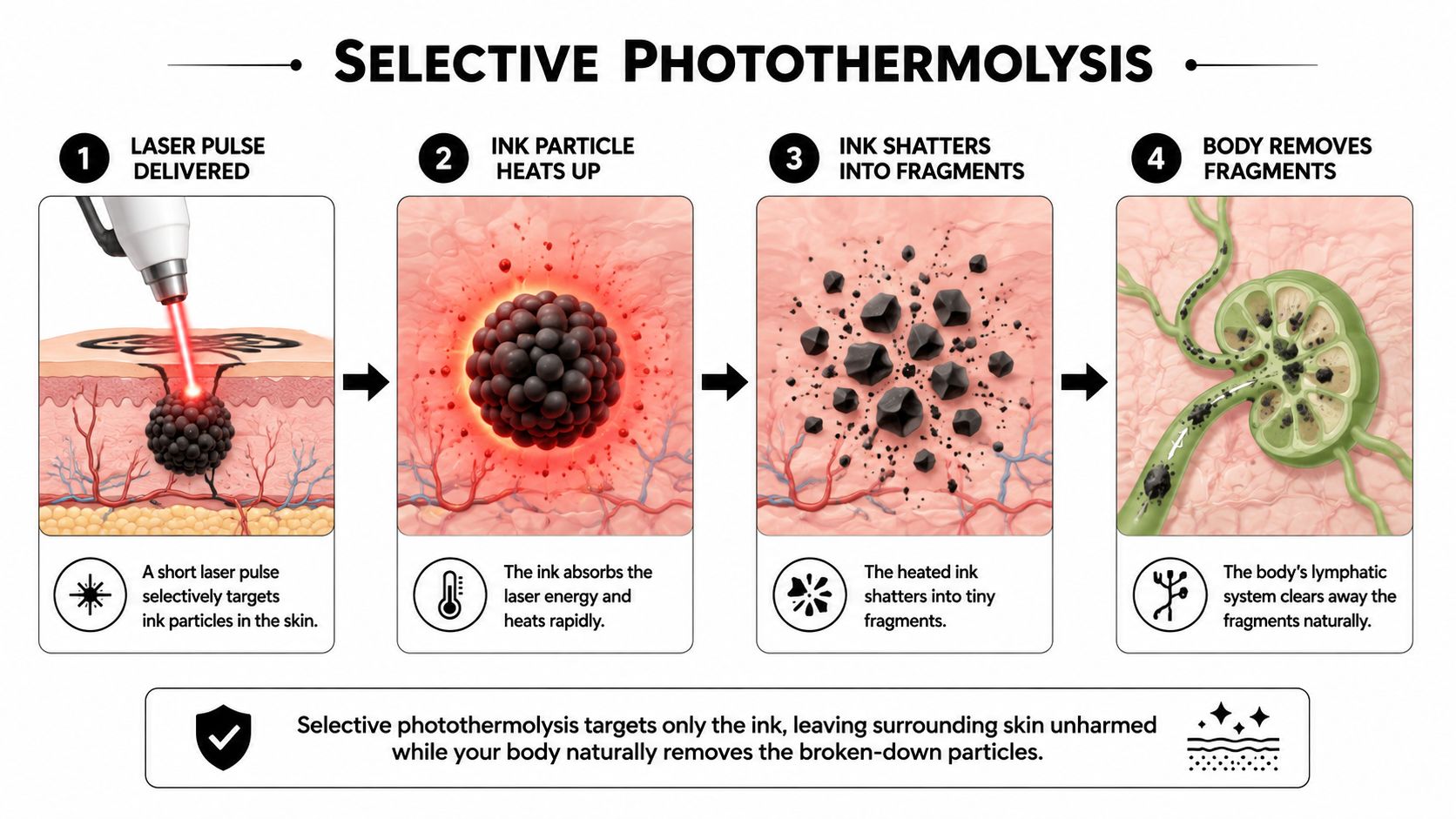
Laser tattoo removal depends on selective photothermolysis, a technical term that sounds complicated but describes a simple idea, the laser delivers energy to the ink while trying to spare the surrounding skin. A Raleigh plastic surgery source explains that Q-switched systems use nanosecond pulses short enough to fracture tattoo pigment into smaller fragments while limiting heat spread, and the body then clears those particles over the following weeks (Carolina Plastic Surgery on tattoo removal). That pulse duration is the reason modern lasers can target ink more precisely than older thermal methods.
Think of the tattoo like a cluster of pebbles under the skin. The laser doesn't lift them out, it cracks them into smaller pieces. After that, the immune system and lymphatic clearance do the slow cleanup work.
Why one session can't finish the job
The laser can only break up a portion of the pigment each time. The body then needs time to move the fragments away before the next pass can make real progress. That's why treatment spacing matters and why the process feels slow even when the laser itself is precise.
A simple consultation should explain three things clearly:
- What the laser is doing: it's fragmenting ink, not scraping or burning it off.
- What your body is doing: it's clearing those fragments between visits.
- Why timing matters: the skin needs recovery time before the next session.
The most common misunderstanding is expecting a tattoo to fade the way a stain lifts from fabric. Skin isn't fabric, and ink is being processed by living tissue, not washed away.
An easy way to judge a clinic conversation is whether staff explain the biology in plain English. If they can connect the laser pulse, the skin response, and the immune cleanup without jargon, you're likely hearing a realistic plan rather than a sales pitch.
This deeper breakdown of how tattoo removal works is useful for first-timers, especially if you're trying to understand why the process takes patience.
Laser Tattoo Removal Costs and Session Counts in Raleigh
A first consultation often starts with the same practical question, how much will this take, and how long will it last? In Raleigh, that answer usually reflects a repeated medical service rather than a one-time cosmetic touch-up. Local pricing summaries place laser tattoo removal at roughly $250 to $800 per session, with the final price shaped by tattoo size, complexity, and how many visits are needed. One Raleigh cost overview also notes that this range sits above the American Society of Plastic Surgeons' average laser skin-treatment cost of $697 for laser tattoo removal (Raleigh cost overview).
A broader North Carolina scan found an average starting price of $182 per session, prices reaching $481, and the lowest listed starting price at $100 per session in Raleigh and Charlotte (Raleigh cost overview). Those numbers are easier to understand once you look at the biology behind them. Bigger tattoos take longer to treat, dense multicolor ink usually takes more work than simple black lines, and a plan aimed at complete clearance usually costs more over time than one aimed at fading for a cover-up.
Raleigh tattoo removal cost factors
| Factor | Impact on Cost | Typical Sessions Needed |
|---|---|---|
| Tattoo size | Larger tattoos generally cost more per visit because they take longer to treat | More sessions are often needed when the treated area is larger |
| Complexity and color mix | Multicolor or heavily saturated tattoos usually raise the treatment burden | More sessions are often needed because each pass clears only part of the pigment |
| Removal goal | Full removal usually costs more overall than fading for a cover-up | Fading may need fewer treatments than complete clearance |
| Skin type and ink behavior | More cautious settings can mean a slower pace when safety is the priority | Session count can rise when treatment has to be gentler |
| Tattoo age and placement | Older ink and easier-to-treat locations may respond more predictably | Session count varies by the tattoo's characteristics |
Session count is the other number people often underestimate. A Raleigh provider says tattoos often need 8 to 12 treatments for complete removal, while a clinical review cited by ABC11 reported an average of 6 sessions in a study of 116 patients, with a range from 2 to 20 sessions. An earlier clinical review also reported that 7 to 10 treatments are often needed (ABC11 clinical discussion and cited review). The message is consistent, removal is usually a course of care, not a single appointment.
Budgeting tip: ask whether the clinic prices per session, by package, or by treatment zone before you commit. A quote that looks simple at first can change fast once the work starts.
Timeline expectations can differ even more when you compare decorative tattoos with cosmetic tattoos. One Raleigh provider says average tattoo removal takes 10 to 12 sessions under nominal conditions, while another local clinic says most cosmetic tattoos can be treated in 2 to 4 treatments depending on ink saturation, location, skin type, and ink type (Raleigh removal overview). Those categories are not interchangeable, and mixing them up can lead to the wrong expectations.
This cost-and-planning guide helps first-timers think through the financial side of removal, especially if you are deciding between full removal and fading a tattoo enough for a cleaner cover-up.
Understanding Laser Types and Skin Considerations
Laser tattoo removal isn't one machine doing one job for every tattoo. Different lasers interact with different ink colors and depths, and the safest settings also depend on the patient's skin tone. That's why a thoughtful consultation should sound more like a medical match-up than a generic service menu.
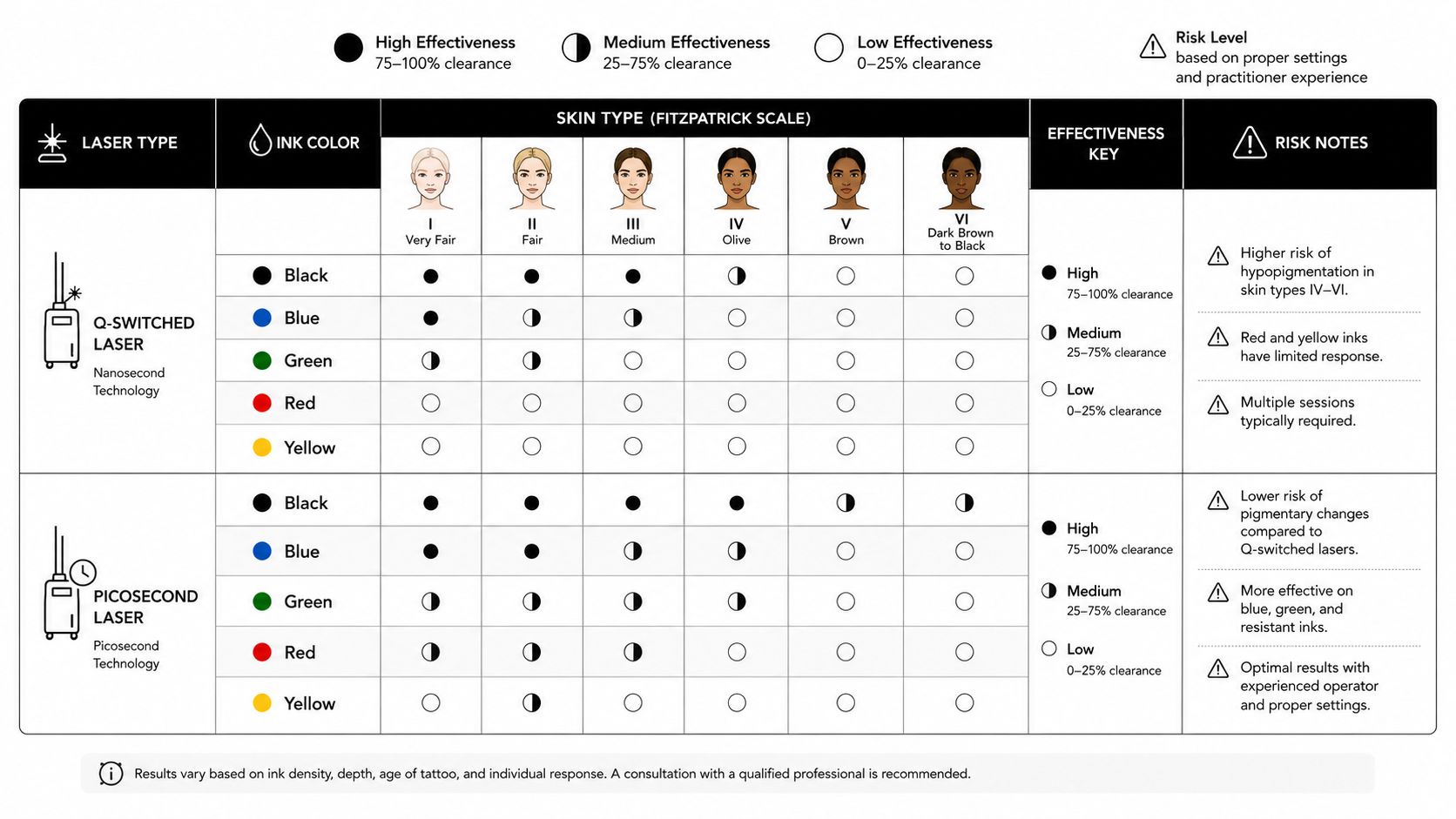
Black pigment is generally easier to clear, while multicolor or heavily saturated tattoos need more planning because each pass only removes part of the pigment load. In Raleigh-area practice descriptions, providers also note that complete removal commonly takes roughly 8 to 12 treatments for many tattoos, which makes the first treatment plan more important than the first pulse (Pleasant Valley Raleigh provider overview).
Why skin tone changes the conversation
Higher melanin skin can be treated, but it usually requires more careful parameter selection so the clinician reduces the risk of pigment changes or scarring. That's the core reason a one-size-fits-all promise doesn't hold up. The clinician has to balance clearing ink against protecting the patient's native skin pigment.
Different systems can help with that balancing act. Q-switched devices have been part of the standard toolset for years, while newer picosecond platforms can offer additional precision in how energy is delivered. The right question is not which machine sounds flashiest, but which device and settings fit your tattoo's colors, depth, and skin type.
A good consultation talks about risk, not just results. If the skin tone conversation is missing, the treatment plan is missing too.
People researching laser tattoo removal Raleigh NC often focus on ink color first, but the safer order is skin first, tattoo second. That's especially true if the tattoo sits on a sensitive area, includes mixed pigments, or has already been treated before.
EradiTatt Tattoo Removal offers laser tattoo removal using its PiQo4 laser system as one treatment option, and that kind of equipment discussion is exactly what first-time patients should ask about when comparing clinics. The important part isn't the brand name alone, it's whether the provider can explain why the device and settings fit your specific tattoo.
What to Expect During Treatment and Aftercare
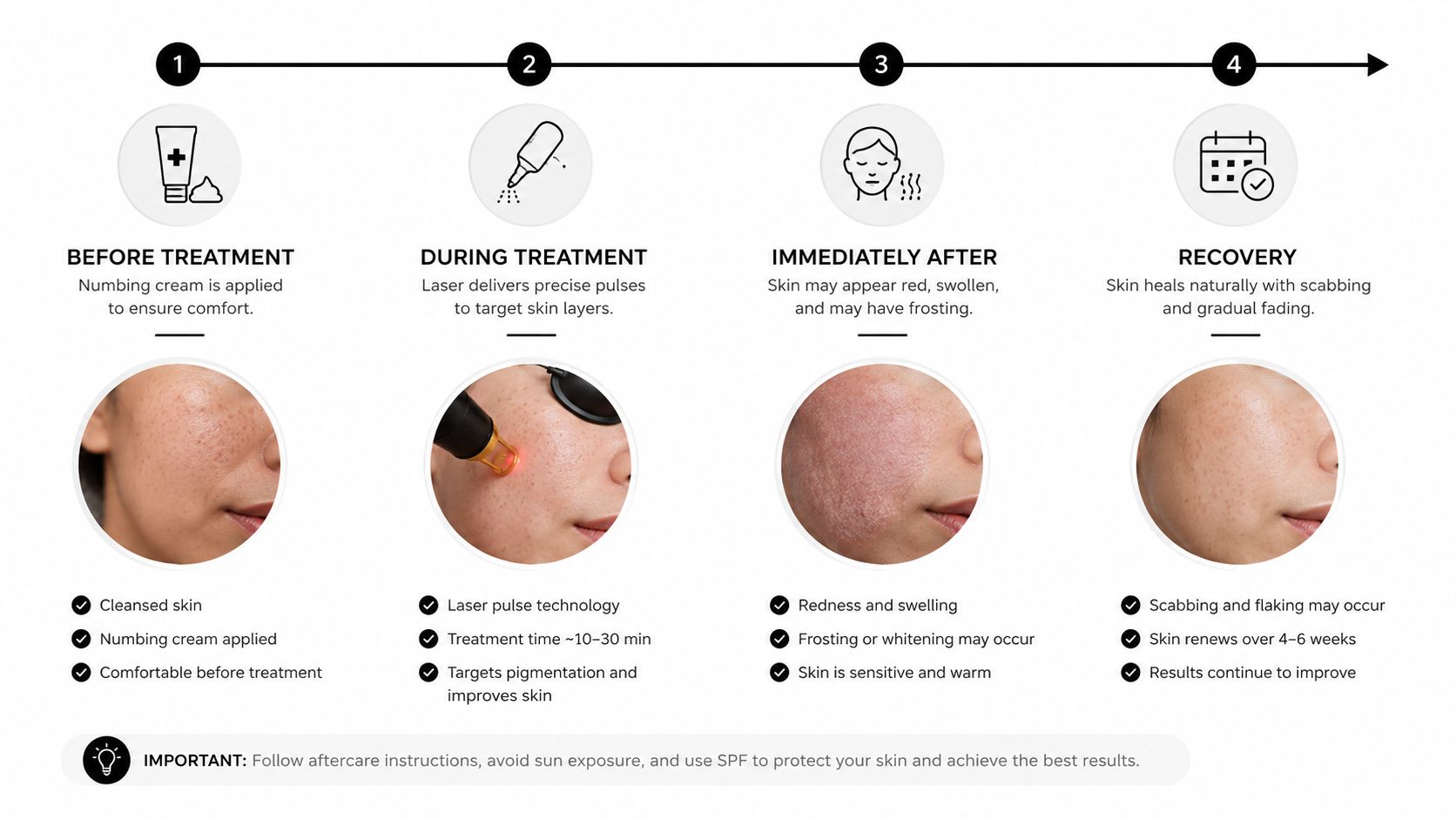
A first laser session usually feels more straightforward than people expect. The skin is cleaned, the area is protected, and the provider moves the laser over the tattoo in short passes. The sensation is often described as snapping or stinging, more like a rubber band against the skin than a deep ache, and it tends to fade as soon as the pulse passes.
Treatment planning is not one-size-fits-all. Raleigh-area guidance notes that sessions are typically spaced several weeks apart, and the total number depends on tattoo size, age, colors, and skin type (Nuderma Health Raleigh overview). For someone with darker skin or a tattoo packed with stubborn ink colors, the provider may move more carefully to protect natural pigment and lower the chance of unnecessary irritation. That is one reason the commonly discussed 8 to 12 treatments range should be read as a starting point, not a promise, since skin tone and ink color can both push a plan toward the lower or higher end.
The first 48 hours matter most
Right after treatment, moderate redness, mild swelling, and possible crusting within 24 to 48 hours are common (Nuderma Health Raleigh overview). Those changes usually mean the skin is reacting in the expected way, not that the session went badly. The main job after treatment is simple: keep the area clean, reduce friction, and let the skin do the work of clearing the broken ink particles.
A practical aftercare routine often includes:
- Keep the area clean and dry: gentle washing helps, but scrubbing can slow healing.
- Avoid picking at crusting: lifting it early can irritate the skin and leave it inflamed longer.
- Protect the tattoo from sun exposure: treated skin is more reactive while it recovers.
- Use the products your provider recommends: some clinics suggest soothing topicals for sensitive skin, and a resource on cica benefits for sensitive skin helps explain why calming ingredients can be useful after a procedure.
If the skin looks irritated for a day or two, that can be normal. If pain, drainage, or redness keeps getting worse, call the clinic.
Aftercare is part of the treatment, not an extra step. A clear handout and a provider who explains what to expect between visits can help you spot normal healing versus a reaction that needs attention, which is why This aftercare guide explains why post-treatment care matters so much is worth a close look for first-time patients. For many people, the goal is not instant perfection. It is steady fading, clean healing, and enough improvement to make the next session safer or to leave space for a cover-up later.
Choosing a Reputable Raleigh Tattoo Removal Clinic
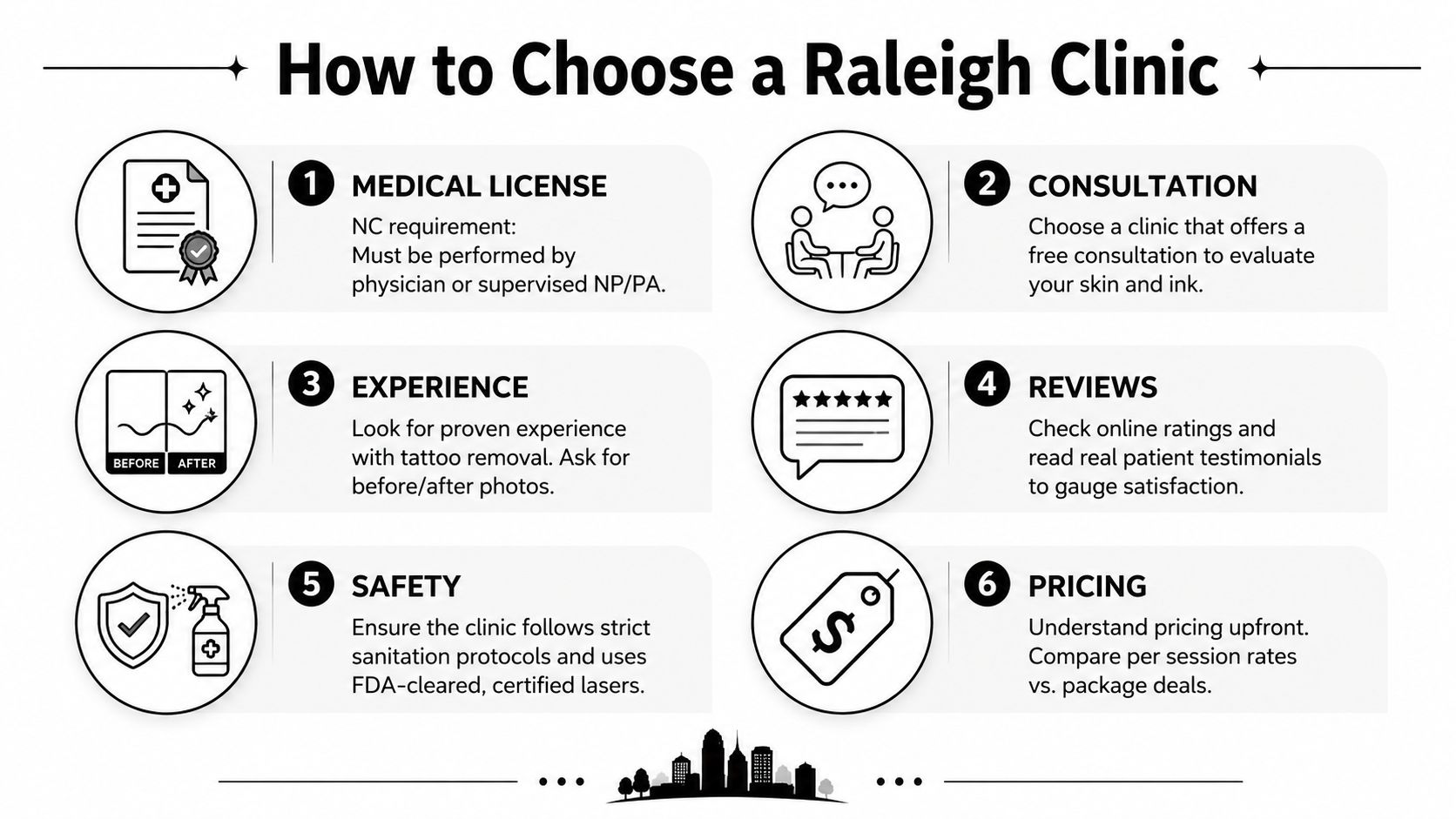
North Carolina has a rule many consumers never hear before they book: laser tattoo removal must be performed by a licensed physician or under direct physician supervision (North Carolina supervision requirement). That fact should change how you evaluate every clinic in Raleigh, because it puts credentials and oversight at the center of the decision, not the background.
A good clinic doesn't hide the supervision chain. It tells you who is responsible for your care, how treatment decisions are made, and how your skin type and tattoo characteristics influence the plan. If the conversation feels vague, that's a sign to slow down.
Questions worth asking before you book
- Who is supervising the procedure? You want a clear answer about physician oversight.
- How do you adjust for skin type? The provider should talk through risk, not just speed.
- What does your consultation include? A real consult should assess the tattoo, the skin, and the likely number of visits.
- How are pricing and packages structured? Ask whether you're paying per session or buying a package upfront.
- What happens if my tattoo responds slowly? Good clinics explain how they adjust treatment rather than overpromise.
Red flag: if the consultation sounds like a sales pitch and not a skin evaluation, keep looking.
A thoughtful clinic also explains when full removal may not be the smartest outcome. Fading for a cover-up can be more practical, especially if the ink is dense, multicolor, or sitting in a high-risk area for pigment change. That kind of honesty matters more than a dramatic promise.
Readers who like seeing real treatment portfolios can also learn from an established visual archive such as the Aloha Tattoo Waikiki portfolio, because before-and-after examples can help you judge whether a clinic shows consistent work across different tattoo types. The point isn't copying another market's style, it's learning how to read real outcomes.
Common Questions About Tattoo Removal in Raleigh
Complete removal is possible for many people, but it isn't guaranteed for every tattoo. The answer depends on ink type, color, depth, skin tone, and how your body clears fragmented pigment over time. For some patients, especially those planning a new tattoo over the area, fading for a cover-up ends up being the better outcome.
Older tattoos often respond more predictably than fresh, heavily saturated work, but that doesn't mean every old tattoo disappears quickly. Skin type still matters, and darker skin tones need more careful treatment selection to protect natural pigment. That's why the same tattoo can behave differently from one person to the next.
One more useful question is whether the clinic knows how to shift the plan if progress slows. Real tattoo removal sometimes plateaus, and that's where experienced providers earn trust. A treatment plan should leave room for adjustments, not just a fixed script.
EradiTatt Tattoo Removal focuses on laser tattoo removal with a clear, consultation-based approach for people who want either full removal or meaningful fading. If you're comparing options for laser tattoo removal Raleigh NC, visit EradiTatt Tattoo Removal to learn how a thoughtful treatment plan can fit your skin, your tattoo, and your goals.