
You walk out of a first laser tattoo removal session feeling fine, then look down an hour later and see a dark purple-blue patch where the ink used to be. That can feel unsettling, especially if you expected redness and nothing more. In most cases, though, laser tattoo removal bruising is part of the normal short-term skin response, not a sign that something went wrong.
Table of Contents
- Why You Might Bruise After a Laser Tattoo Removal Session
- How the Laser Creates Bruising Under the Skin
- What a Normal Bruising Timeline Looks Like Day by Day
- Risk Factors That Make Bruising More Likely
- Evidence-Based Prevention and At-Home Care
- When Bruising Signals Something More Serious
- Planning Around Bruising, Sessions, Cover-Ups, and Event Deadlines
- Common Questions About Laser Tattoo Removal Bruising
Why You Might Bruise After a Laser Tattoo Removal Session
A client can sit through the session, hear the snap of the laser, and leave thinking the skin just looks a little red. Then an hour later, the tattoo area looks darker, almost like someone pressed a thumbprint under the skin. That shift is common enough that clinics talk about it as part of the expected acute reaction pattern, alongside edema, erythema, pruritus, blistering, and pinpoint bleeding NCBI clinical reference.
Bruising happens because the treatment doesn't only affect ink. It also nudges the tiny vessels around the pigment, especially if the skin is already inflamed or more sensitive. In that sense, the bruise-like color is the skin's vascular response to energy, not a separate mystery problem.
What that dark patch usually means
People want two answers right away. First, is this normal? Second, how long will it last? The reassuring answer is that bruising can appear in the hours after treatment and usually settles quickly, often within the same general 1 to 2 week window that other immediate effects fade NCBI clinical reference.
That doesn't mean every dark patch looks the same. Some areas show a flat purple-blue blush, while others look more speckled or tender. The pattern depends on how much vessel irritation happened under the ink, where the tattoo sits, and how reactive your skin is.
Practical rule: if the area looks bruised but the color is gradually changing instead of spreading aggressively, that's usually the healing pattern you want.
A small amount of bruise-like change is common enough that it's usually discussed as part of the expected response, not a separate long-term complication. The rest of this guide helps you read that change correctly, so you can tell the difference between a normal temporary bruise and a pattern that deserves a call to the clinic.
How the Laser Creates Bruising Under the Skin
Laser tattoo removal bruising happens when the laser affects more than ink. The pulse is meant to shatter pigment, but it also sends a sharp burst of energy through the surrounding tissue, and that can stress the skin's smallest vessels until a little blood leaks into the dermis PMC review.
The vascular mechanism in plain language
The first step is the ink absorbing the laser energy. That absorption creates rapid heating and pressure changes, which break the pigment into smaller fragments. That is the intended effect. The same photoacoustic force can also irritate nearby capillaries, which is why some people develop pinpoint bleeding or purpura-like discoloration after treatment PMC review.
Inflammation then adds another layer. Once the skin reacts, vessels can become leakier and the treated area can swell, so the bruise may look darker or wider than the tattoo itself. Thin skin and areas with a denser vessel network, such as the ribs, wrists, ankles, or inner arms, often show that change more clearly.
Why settings matter
Pulse duration changes how much surrounding tissue gets involved. Tattoo pigment is usually targeted with nanosecond to picosecond delivery, which keeps the heat more tightly focused around the ink granules PMC review. If the energy is too aggressive, or if pulses overlap too much, more of the nearby skin gets caught in the reaction. Bruising can look stronger, and recovery may feel more noticeable than the treatment goal itself.
A later clinical comparison found that picosecond lasers produced transient reactions that were less pronounced and shorter-lasting than nanosecond lasers, especially for blistering, itching, and burning sensation Wiley study. Bruising follows the same general pattern. Better-controlled energy usually means less collateral irritation, which is one reason bruise severity can matter when a clinic is spacing sessions, planning a cover-up, or helping someone judge an event deadline.
Bruising is vascular first, cosmetic second. It reflects how much the skin's tiny vessels were stressed, not whether the treatment worked.
For a side-by-side example of how color changes can settle over time, see this day-by-day Fraxel recovery reference, which helps explain why a bruise can look more dramatic before it starts to fade.
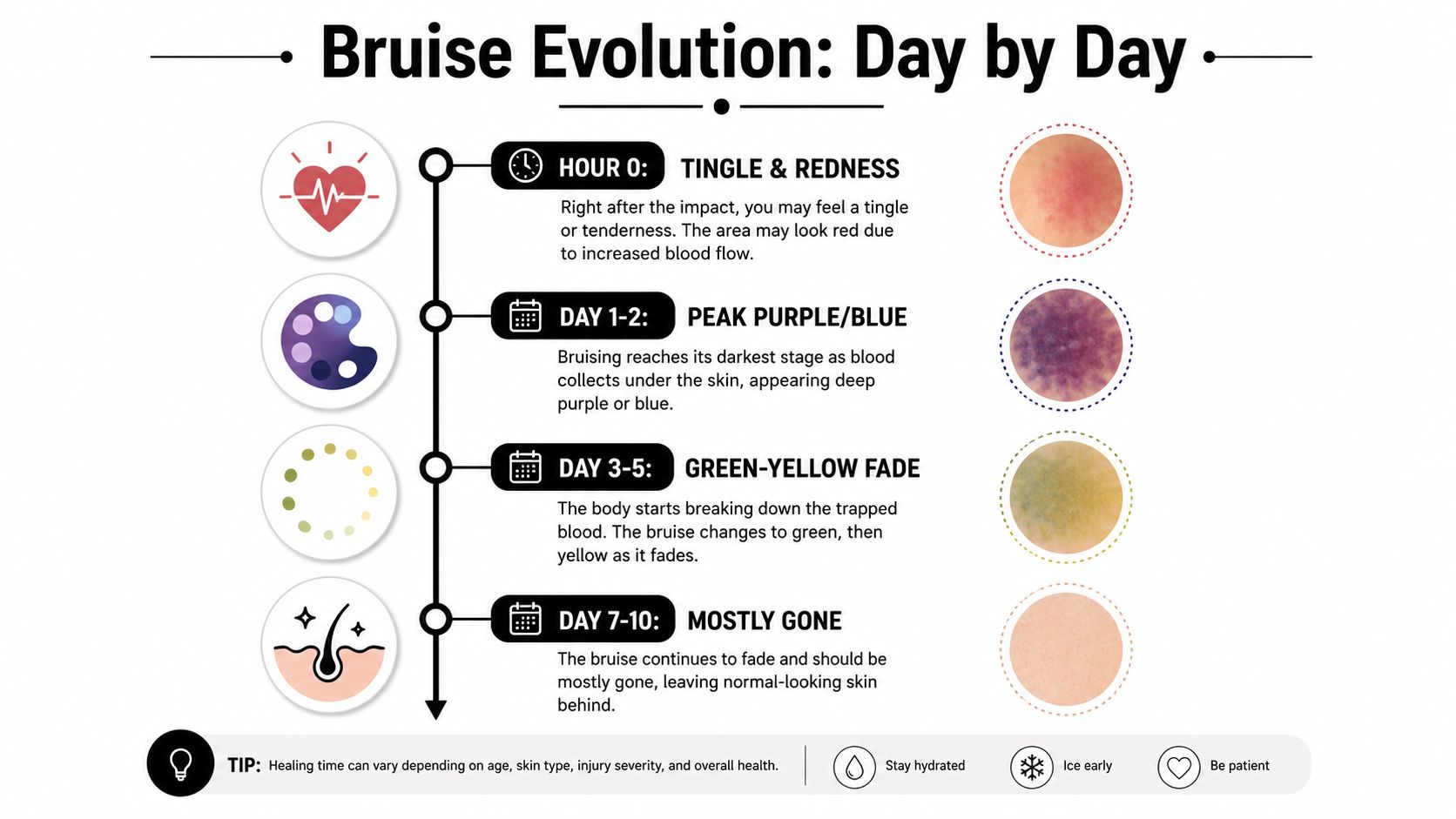
If the treated skin only looks red at first, that can still fit the same early response. A closer look at redness after laser tattoo removal can help separate ordinary surface irritation from a true bruise under the skin.
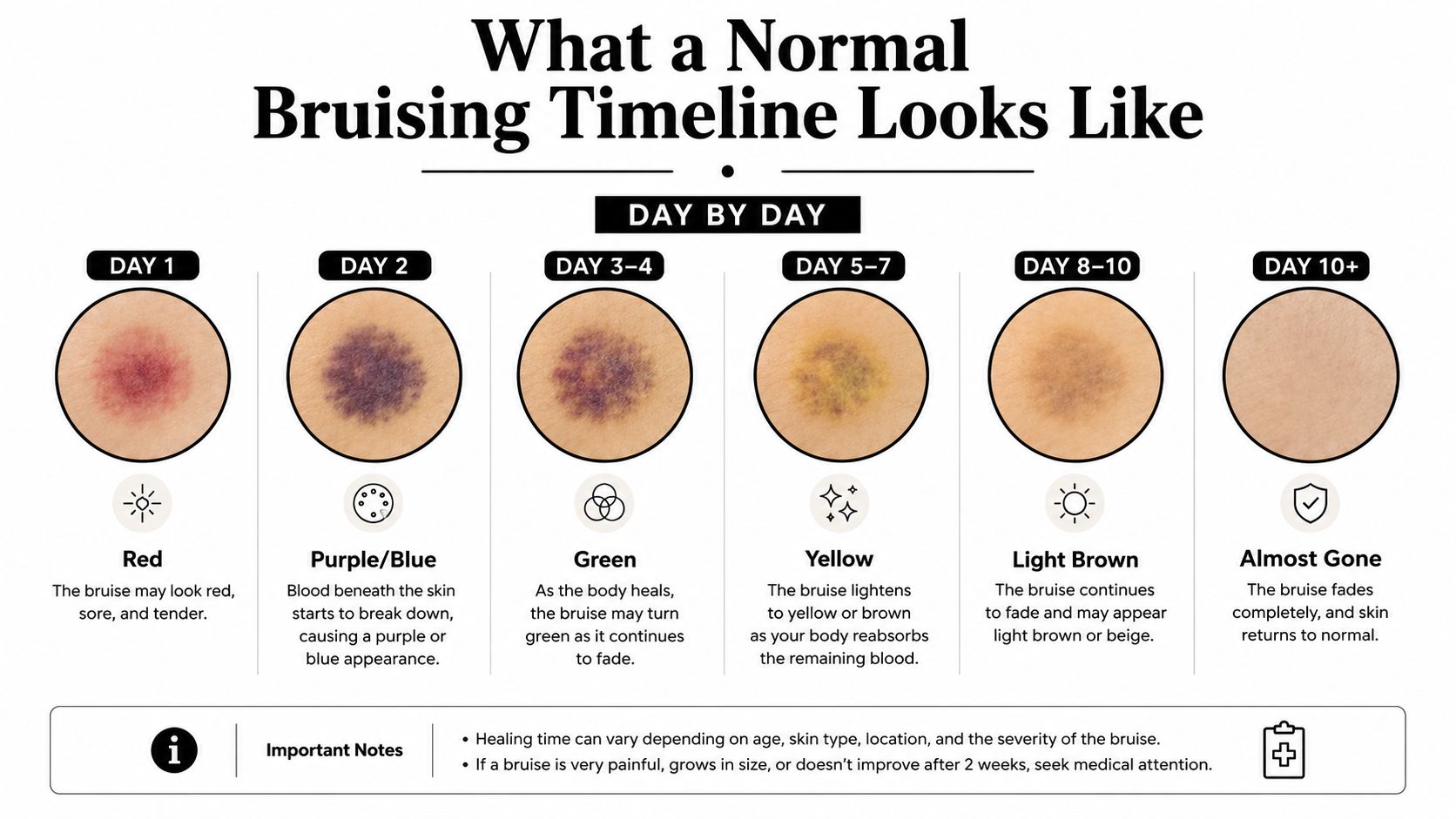
What a Normal Bruising Timeline Looks Like Day by Day
The first few hours can look deceptively calm. A tattoo may seem only a bit red, then later in the day take on a deeper bruise-like shade. That delayed look is why people often panic at home, even when the reaction is within the expected healing pattern described in clinical references NCBI clinical reference.
Hours 0 to 24
Right after treatment, you may see redness, warmth, swelling, and sometimes a darkening patch that resembles a fresh bruise. Some people also notice pinpoint bleeding or a fine speckled look in the treated area NCBI clinical reference. A patient-facing guide on tattoo removal notes that bruising can show up in the hours after treatment and usually resolves quickly aftercare guide.
Days 1 to 3
This is often the most dramatic window. Purple-blue color can look stronger before it starts to soften, and mild swelling can make the area seem larger than it really is. If the site is in a sensitive location or the tattoo is dense, the bruise may look more obvious than it felt on day one.
Days 4 to 7
The color usually starts to shift, with bruises moving through the familiar fading pattern that many people compare to a healing banana peel. Some people see green or yellow tones as blood products break down under the skin. That change is usually a sign that the bruise is resolving, not worsening.
Days 7 to 14
Most bruising should be fading by this point, with tenderness easing and the skin looking closer to normal. A dermatology review notes that bruising with laser-associated vascular injury commonly fades within 7 to 10 days, while clinical guidance on tattoo removal describes light bruising as resolving in roughly 1 to 2 weeks Rosenfluh PDF.
For readers comparing recovery after other procedures, a day-by-day Fraxel recovery guide can be helpful because the timeline language is similar, even though the treatment is different. If you're also checking redness patterns, this redness after laser tattoo removal resource gives another useful reference point for what skin looks like as it calms down.
Risk Factors That Make Bruising More Likely
Bruising isn't random. Some people are more likely to show it because of where the tattoo sits, how dense the ink is, or how the skin reacts to laser energy. The point isn't to blame the person on the table. It's to help you and your clinician predict what kind of recovery the skin is likely to have.
Tattoo and body-site factors
Dense ink, older tattoos, layered cover-ups, and high-color complexity can all make treatment more forceful at the skin level. That doesn't mean they're bad candidates, just that the skin may need a more careful approach. Areas with thinner skin and richer blood supply, such as the ribs, wrists, ankles, and behind the ear, also tend to show bruising more easily.
Skin and lifestyle factors
Fair skin often shows bruising more visibly because the color contrast is easier to see. Darker skin may not always show the bruise as sharply, but once the acute color fades, post-inflammatory pigment change can be more noticeable, so conservative settings matter. Blood-thinning medications, recent alcohol use, NSAIDs, vitamin E, fish oil, and recent sun exposure can also make the skin less forgiving.
Technical factors
Aggressive fluence, pulse overlap, and inadequate cooling can all tilt the balance toward more bruising. Those are treatment decisions, not personal failures. They're worth discussing before the session if you know you bruise easily or if the tattoo sits in a sensitive zone.
| Category | Higher-Risk Examples | Why It Matters |
|---|---|---|
| Tattoo density | Older tattoos, layered cover-ups, complex color work | More energy may be needed, which can stress nearby vessels |
| Body location | Ribs, wrists, ankles, behind the ear | Thin skin and visible vessels bruise more easily |
| Skin tone | Very fair skin, darker skin with pigment-change risk | Bruising may show more clearly, or pigment change may follow |
| Medications and habits | Blood thinners, NSAIDs, alcohol, fish oil, vitamin E | These can increase bleeding or make bruising more visible |
| Technique | High fluence, pulse overlap, limited cooling | More thermal and vascular stress can mean more discoloration |
If you already bruise easily in daily life, say so before treatment. That single detail can change the plan more than people expect.
Evidence-Based Prevention and At-Home Care
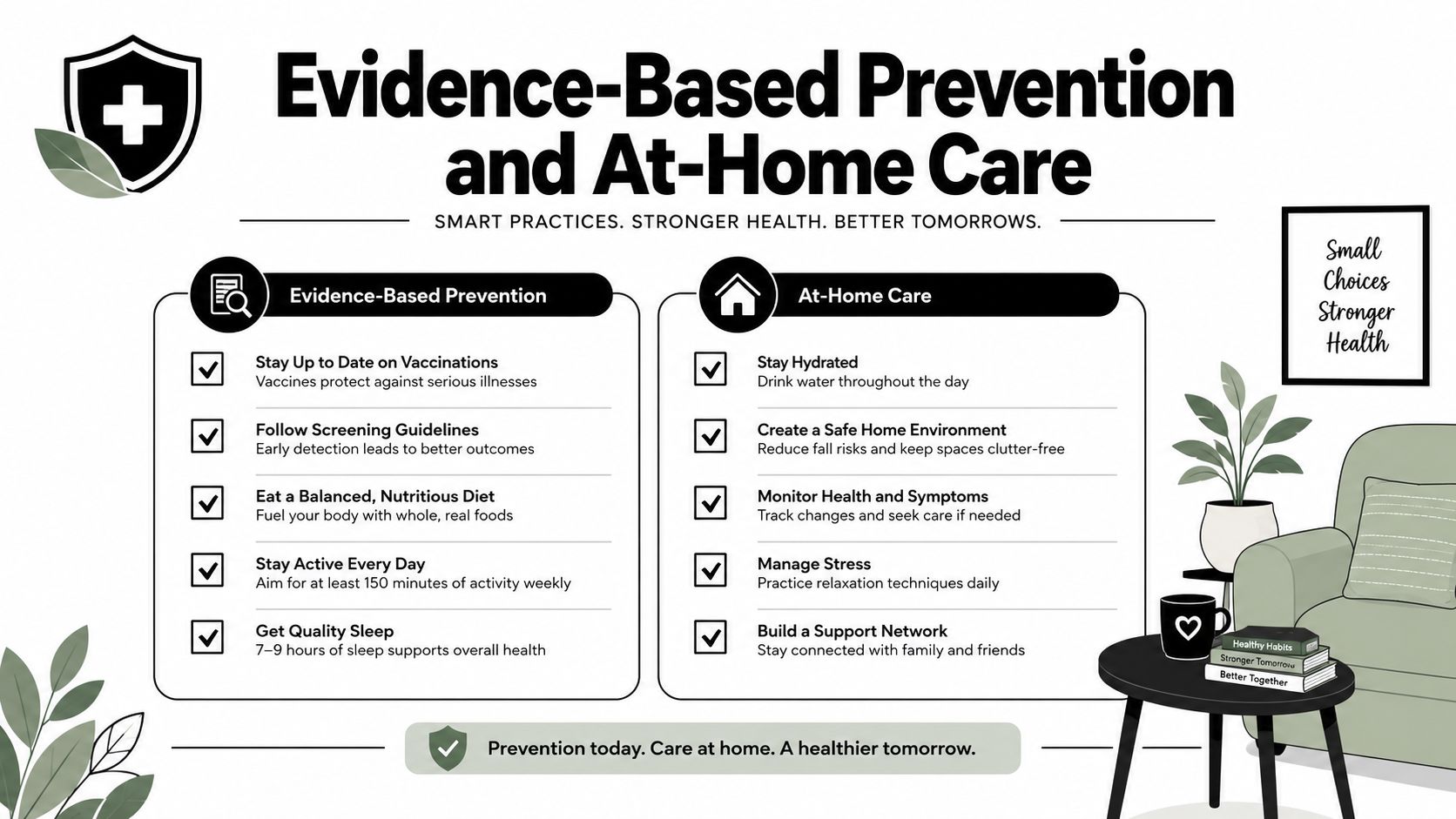
The first 72 hours are about protecting the treated skin like it's a very shallow wound. Gentle care reduces friction, keeps swelling calmer, and helps the area move through the bruising phase without extra irritation aftercare guide. If you want a broader overview of why aftercare matters across the full healing cycle, this why aftercare is important after laser tattoo removal page is a useful companion.
What to do first
Use cool compresses wrapped in cloth, not ice directly on the skin. Raise the area if you can, especially if the tattoo is on an arm or leg, because that helps swelling drain more comfortably. Keep the skin clean with a fragrance-free cleanser, and wear loose, breathable clothing so fabric doesn't rub the bruise or blister-prone skin.
What to avoid
Do not pick, scratch, pop blisters, soak in hot tubs or pools, or exfoliate the area while the skin is still healing. Friction and moisture can convert a small reaction into a longer recovery. Tight waistbands, bra straps, and compressive athletic wear are common troublemakers because they rub exactly where the skin is most sensitive.
When to return to normal routines
Showering is usually fine if you keep the stream gentle and avoid scrubbing. Workouts, saunas, shaving, and any activity that causes heavy sweating or friction are better delayed until the skin has clearly settled. Sun protection matters once the skin is closed, because UV exposure can worsen pigment change after the bruise fades.
The same aftercare guide notes that blisters, crusts, or scabs may appear within 12 to 72 hours and can last 1 to 2 weeks or more, so the skin may look more dramatic before it looks better aftercare guide. That's normal wound behavior, not a reason to over-handle the area.
When Bruising Signals Something More Serious
Most bruising after tattoo removal is temporary and fades on its own. The tricky part is knowing when the skin is following a normal healing arc and when the pattern has changed enough to call the clinic. That distinction matters because bruising can look dramatic even when it's harmless, but some changes deserve a closer look.
Normal changes that still fit expected healing
Bruising that softens over several days, shifts in color, and fades within the 7 to 14 day range still fits the usual pattern. Mild swelling that gradually improves is also expected. Small intact blisters can happen too, and they're generally managed with basic wound care rather than panic.
Red flags that deserve a call
A bruise that hardens into a dense lump, expands well beyond the tattoo border, or comes with severe pain that doesn't calm down needs assessment. So do signs of infection like warmth, pus, fever, or a worsening smell from the area. Bruising that hasn't even started to fade by the end of week two, or blistering that turns into open wounds, should also be checked infection warning guide.
People who should be more cautious
If you take blood thinners, have a bleeding disorder, or know your skin tends to react strongly, your threshold for calling should be lower. Darker skin types also deserve a more careful read because a bruise-like reaction can settle into pigment change that takes longer to sort out. That doesn't mean something is wrong, only that it's smarter to monitor closely.
Call sooner rather than later if the pain climbs, the area feels hotter instead of calmer, or the bruise changes in a way that doesn't match the usual fading pattern.
Planning Around Bruising, Sessions, Cover-Ups, and Event Deadlines
Bruising isn't just a wound-care footnote. It can change the way you schedule the rest of your tattoo removal plan, especially if you're removing ink for a cover-up or trying to land on a fixed date like a wedding or job deadline. People often assume the visible bruise is the whole story, but the skin can keep working through inflammation after the color looks better.
Session spacing and slower responders
Clinical guidance commonly recommends at least 4 to 6 weeks between sessions, because the skin needs time to heal and the immune system needs time to clear fragmented ink Bluebird tattoo FAQ. If you bruise heavily, longer spacing can make sense because the tissue may need a bit more time before it's ready for another pass. The point is not to rush the calendar just because the surface looks fine.
Cover-up timing and deadlines
If you're planning a cover-up, the skin needs to look calm and stable, not still shifting through bruise colors. A practical rule is to leave extra time after a bruising-prone session before booking the new tattoo, especially if the area also had swelling or blistering. For people working toward a deadline, starting earlier than the “math” suggests is usually the safer move.
A clinic option for planning
EradiTatt Tattoo Removal offers consultations across multiple Florida locations, including Orlando, Bradenton/Sarasota, St. Petersburg, Palm Harbor, and Tampa. If you're trying to map out a removal plan around a fixed date, that kind of local scheduling flexibility can matter as much as the laser itself.
Common Questions About Laser Tattoo Removal Bruising
Does more bruising mean the laser worked better?
Not necessarily. Bruising mostly reflects how your vessels and tissue reacted to the session, not how much ink was cleared. A cleaner healing response can still produce excellent fading.
Can I cover bruising with makeup?
Wait until the skin is fully closed and there are no blisters, scabs, or open spots. Once the surface is healed, a gentle mineral product is safer than heavy or fragranced makeup.
Is bruising more common with certain laser types?
Modern systems are designed to control heat more precisely, and a 2022 split study found picosecond devices produced less pronounced, shorter-lasting transient reactions than nanosecond lasers in several categories Wiley study. That doesn't guarantee no bruising, but it helps explain why newer platforms are often easier on the skin.
Should I skip my next session if I bruised heavily?
Possibly, if the skin hasn't fully settled or if your clinician wants more time for recovery. Heavy bruising is worth discussing before you rebook, especially if you're aiming for a cover-up or a specific event date. For more context on broader treatment pathways, Chernoff Cosmetic Surgery's tattoo removal overview can help you compare how clinics frame timing and recovery.
If you're trying to plan tattoo removal around work, travel, a cover-up, or a big life event, EradiTatt Tattoo Removal can help you map out the healing window and the next session with that timeline in mind. Visit EradiTatt Tattoo Removal to learn what your bruise pattern means for your next step and to arrange a consultation at a Florida location that fits your schedule.