
You're staring at a tattoo you don't want anymore, and the questions arrive fast. Will it fade cleanly, will it scar, will it take years, and how do you plan for something that affects your skin, your schedule, and your confidence all at once? Personalized treatment planning answers those questions by replacing a fixed protocol with a plan built around your tattoo, your skin, and your goals.
For tattoo removal, that matters more than many expect. Two tattoos that look similar on the surface can respond very differently once a clinician weighs skin tone, ink depth, color complexity, body location, healing history, and the goal you're trying to reach. EradiTatt's Florida clinics use that logic to build a structured path from consultation to follow-up, so the process feels less like guesswork and more like a managed decision.
Table of Contents
- Why One-Size-Fits-All Removal Rarely Works
- What Personalized Treatment Planning Means
- Clinical Factors That Shape Every Plan
- How a Personalized Plan Is Built Step by Step
- Matching the Plan to Your Goal and Timeline
- Prep and Aftercare That Adapt to Your Tattoo
- How EradiTatt Delivers Personalized Plans Across Florida
- Questions Readers Ask After Reading the Main Sections
Why One-Size-Fits-All Removal Rarely Works
A lot of people begin with the same quiet worry. They look at an old tattoo and wonder whether removal will leave a mark, drag on forever, or blow past the budget they had in mind. That hesitation is normal, and it's exactly why a generic approach falls short.
A fixed protocol assumes every tattoo behaves the same way. In real life, the body doesn't cooperate that neatly. Skin reacts differently, some inks break apart faster than others, and the same tattoo can respond differently depending on where it sits on the body and how well the person heals.
Practical rule: a good removal plan should change when the skin changes, not wait until the client feels stuck.
That is where personalized treatment planning comes in. Instead of starting with a preset script, the clinician starts with your tattoo, your skin, and your target outcome. The plan then becomes a working document, not a promise carved in stone.
For someone who wants complete removal, the plan may prioritize steady clearing and conservative spacing. For someone trying to fade a tattoo for a cover-up, the endpoint is different, so the strategy changes too. In both cases, the question is not “How many sessions does tattoo removal take?” but “What is the right next step for this specific tattoo on this specific body?”
That is also why consultations matter so much. A strong consultation turns a vague hope into a route you can follow. If you want a plain-language overview of the variables that shift progress, EradiTatt has a helpful overview of 6 factors that can affect tattoo removal progress, which lines up with the same individualized thinking used in a real treatment plan.
By the time someone leaves a good consult, they should know what the plan is aiming for, what the next checkpoint is, and what would count as normal progress. That clarity lowers anxiety fast.
What Personalized Treatment Planning Means
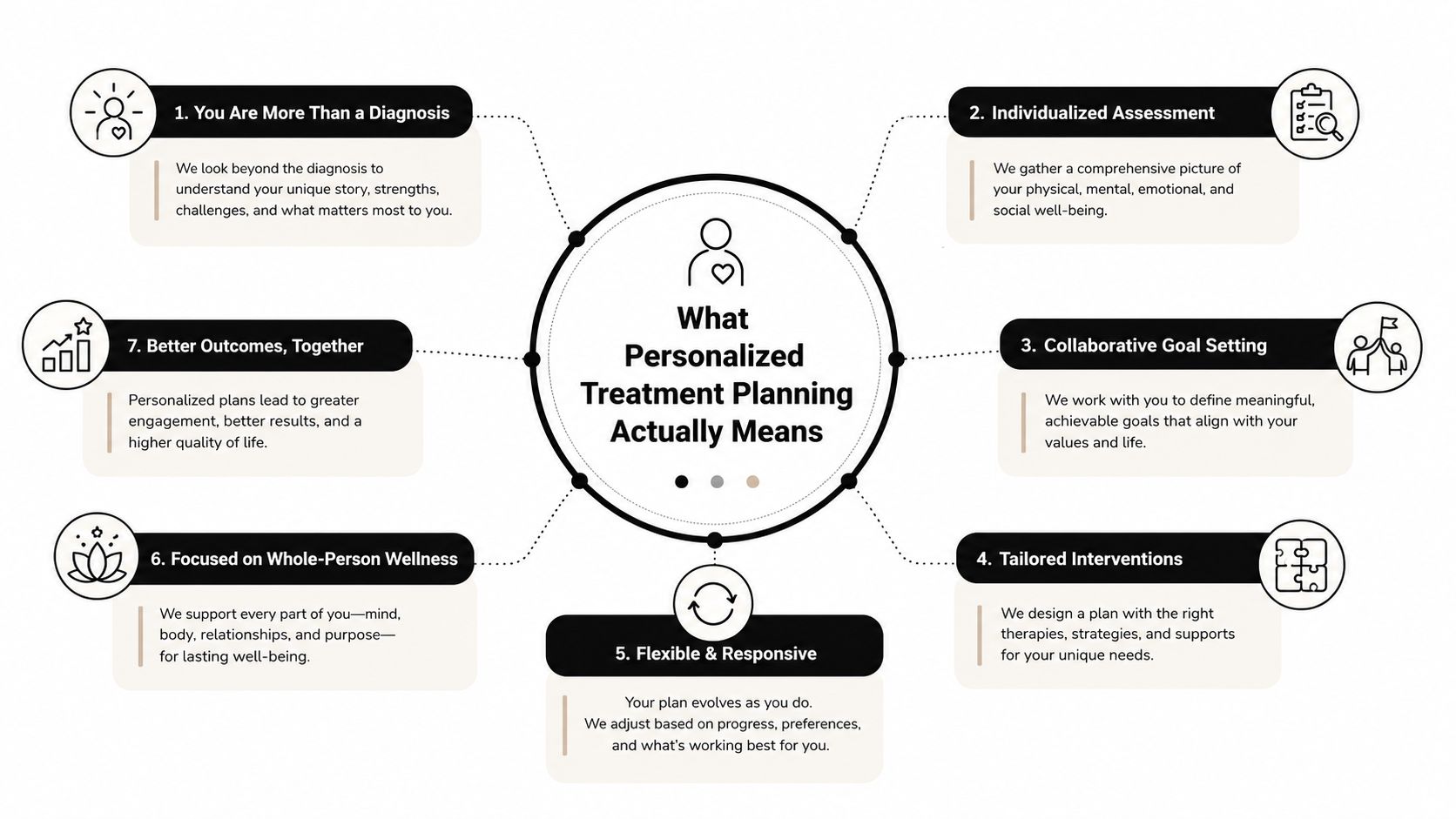
A first consult should feel more like reviewing a map with a clinician than being handed a fixed script. The clinician listens to where you want to end up, checks the tattoo in front of them, and then builds a plan that can change as your skin responds.
In tattoo removal, that starts with a clear goal. Some people want full clearance. Others want enough fading for a cover-up, a professional setting, or a personal reset. Once the goal is set, the clinician looks at the tattoo itself, including skin type, ink density, color mix, placement, and healing history.
The strongest way to understand this is the four-stage pipeline used in personalized planning more broadly, cohort extraction, outcome definition, prediction, and optimization. In plain language, the process groups relevant cases, defines the outcomes that matter, predicts how different treatment choices may perform, then adjusts the plan around those results and constraints. That is what turns treatment into a data-driven process instead of a protocol-driven one, especially when the plan has to balance skin safety, ink clearance, and future options. For the underlying framework, see the review on personalized treatment planning.
What the consultation is really doing
At EradiTatt, that framework becomes a practical conversation. The clinician assesses the tattoo, talks through your goals, explains what the timeline may look like, and decides how to build the first phase of care. That matches the logic used in more advanced personalized planning, where integrated data, interpretability, and ongoing updates matter. It also fits the same thinking behind new technology in tattoo removal, since better tools still need a plan designed for the person in front of the clinician.
A helpful part of care is building a routine that matches your own skin type and healing needs. If you want a simple outside resource for that kind of daily care, creating a routine for your skin type is a useful idea to keep in mind because aftercare should match the person, not just the procedure.
EradiTatt's PiQo4-based approach across Florida clinics fits this model because it supports a consultation tied to the tattoo in front of you, not an abstract average case. The plan comes first, the procedure follows it.
Clinical Factors That Shape Every Plan
A tattoo can look nearly identical from across the room and still call for a different removal plan once it is examined up close. The reason is simple. Skin type, tattoo age, ink depth, color complexity, body placement, and healing pattern all change how the skin will respond, so the plan has to fit the person in front of the clinician.
Why the tattoo itself matters
Older tattoos often respond differently from newer ones because the ink has already lived in the skin longer and may have settled into a different pattern over time. Deeper ink usually calls for a more cautious approach, since the clinician has to balance energy delivery with skin safety at every visit. Color matters too, especially when a tattoo includes stubborn blues and greens that can be harder to clear than simpler black ink.
Skin tone changes the equation as well. In darker skin, the plan has to protect the surrounding pigment while still targeting the tattoo, which is why a careful strategy matters more than a generic promise. For readers who want a closer look at that part of care, tattoo removal on dark skin shows how pigment, safety, and treatment choices fit together.
Clinical takeaway: the right setting is the one that fits the skin in front of the clinician, not the setting that worked on the last client.
Why placement and lifestyle matter
The location of the tattoo changes healing speed. Areas with more motion, friction, or slower circulation usually need more patience than areas that stay calmer during recovery. A wrist or ankle tattoo can behave differently from one on the shoulder or back because the body handles those sites differently while healing.
Lifestyle matters too. Someone who works outdoors, trains hard, or cannot easily keep the area away from sun and friction may need a plan that builds in more caution and closer follow-up. That is part of why personalized planning has to stay practical. The clinician is not only treating ink, the clinician is also fitting care around daily life.
The AAMC also notes that access barriers are real, especially for Black, Hispanic or Latino, American Indian or Alaska Native, low-income, uninsured or underinsured, and rural patients, because underrepresentation in research, testing cost, and lower provider awareness can all limit access to advanced care. For tattoo removal, that access question matters just as much as the technical one, because a good plan still has to work in the context of the person living with it. See the discussion of access and equity in personalized medicine.
How a Personalized Plan Is Built Step by Step
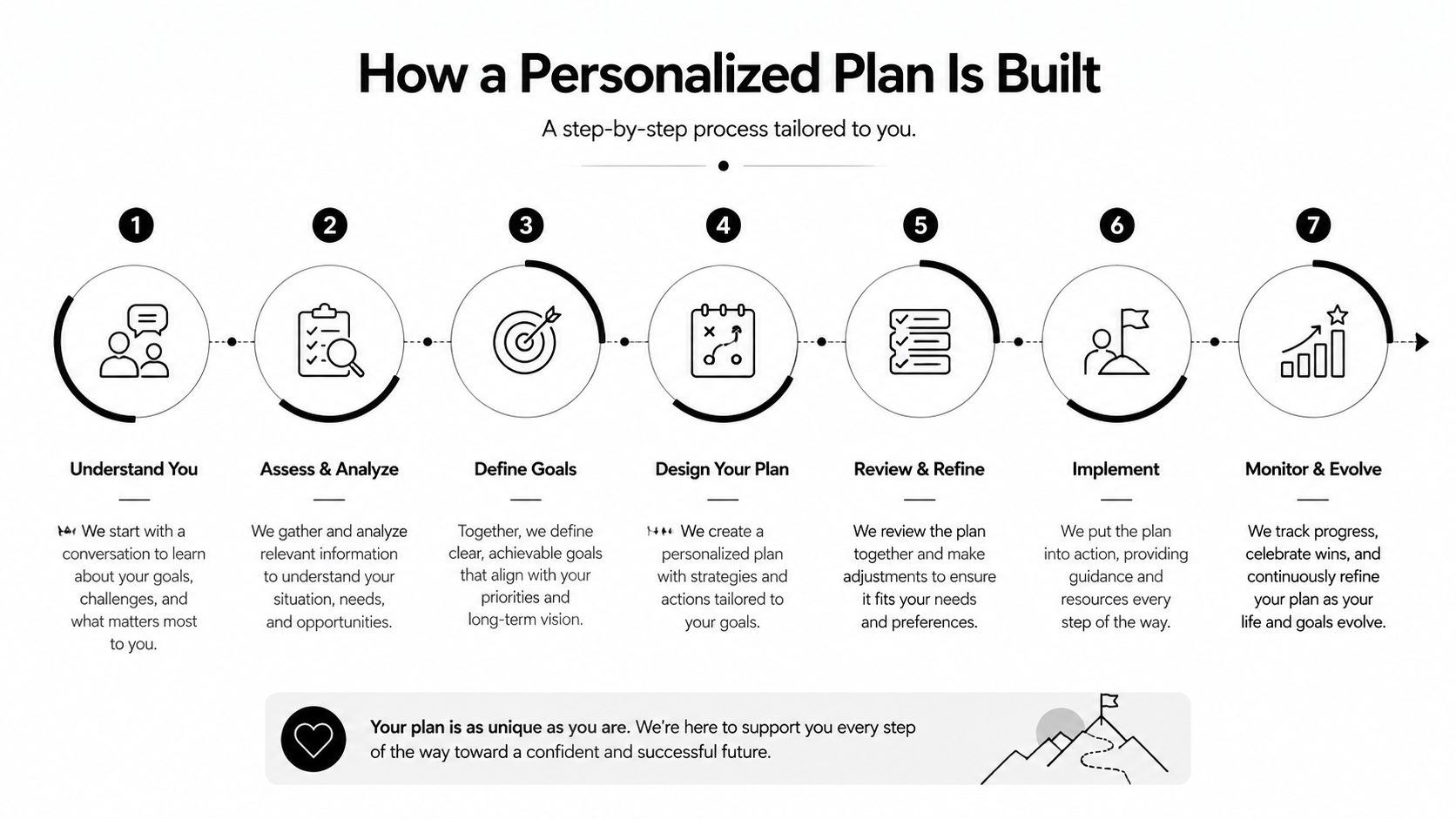
The first call usually starts with a simple question, what do you want the tattoo to become? That answer drives the rest of the process. A removal plan for full clearance looks different from a fade plan for a future cover-up, and the consultation should reflect that from the first conversation onward.
From intake to first session
The intake conversation collects the basics, tattoo age, body location, likely goal, and any skin concerns that could affect treatment. The in-person visit then adds the details that can't be captured over the phone, including skin condition, tattoo characteristics, and how the area is likely to respond.
A thorough written plan should include a substantiated assessment, short- and long-range goals, the specific treatment modality used, and the responsibilities of each team member. That documentation makes the process auditable and helps every provider involved stay on the same page. A published treatment-planning guide lays out those elements clearly in the context of coordinated care.
Typical spacing is often built around recovery, with sessions commonly separated by 6 to 8 weeks, though the exact schedule depends on how the skin responds and what the goal is. The point is not to rush. The point is to let the body clear pigment and calm down before the next pass.
What happens after the first session
A strong plan does not stop when the laser stops. The first reassessment looks at fading, redness, swelling, blistering if it occurs, and the client's comfort level. If the response is slower than expected, or the skin needs more time, the clinician adjusts rather than pushing ahead on autopilot.
That matches the broader personalized-care principle that plans should be reviewed and updated. It's also why written goals matter, because you can't revise what you never defined. A clear first session gives both the clinician and the client a reference point for the next decision.
Matching the Plan to Your Goal and Timeline
The goal changes everything. A person trying to erase a name completely is not working toward the same endpoint as someone fading a tattoo for a cover-up or lightening ink for a professional setting. Good planning treats those as different projects, not different versions of the same project.
| Goal | Typical Sessions | Spacing Between Sessions | Best For |
|---|---|---|---|
| Complete removal | Varies by tattoo and skin response | Commonly 6 to 8 weeks, adjusted as needed | People who want the most clearing possible |
| Cover-up fading | Varies by tattoo and the new design | Commonly 6 to 8 weeks, with the last session timed before new ink | People planning a new tattoo over the old one |
| Professional or personal lightening | Varies by desired endpoint | Commonly 6 to 8 weeks, reviewed regularly | People who want the tattoo less visible without full clearance |
The right schedule also needs regular review. In mental health treatment planning, guidance commonly uses 30, 60, or 90 day review cycles, and the same logic fits tattoo removal because measurable progress only matters if someone checks it consistently. The objective should be concrete, not vague, for example, “fade enough to support a cover-up” is clearer than “see how it goes.” A treatment-plan review that includes measurable objectives keeps expectations grounded and makes the next step easier to choose.
A timeline for a wedding, enlistment, or job start is only realistic if the plan is tied to the tattoo's actual response, not wishful thinking.
A cover-up goal often has a different endpoint than complete removal, and it also changes the final timing because the new ink needs a clean enough canvas. That's why collaborative planning is so useful. The client brings the deadline, the clinician brings the skin assessment, and together they shape a plan that is ambitious but still believable.
Prep and Aftercare That Adapt to Your Tattoo
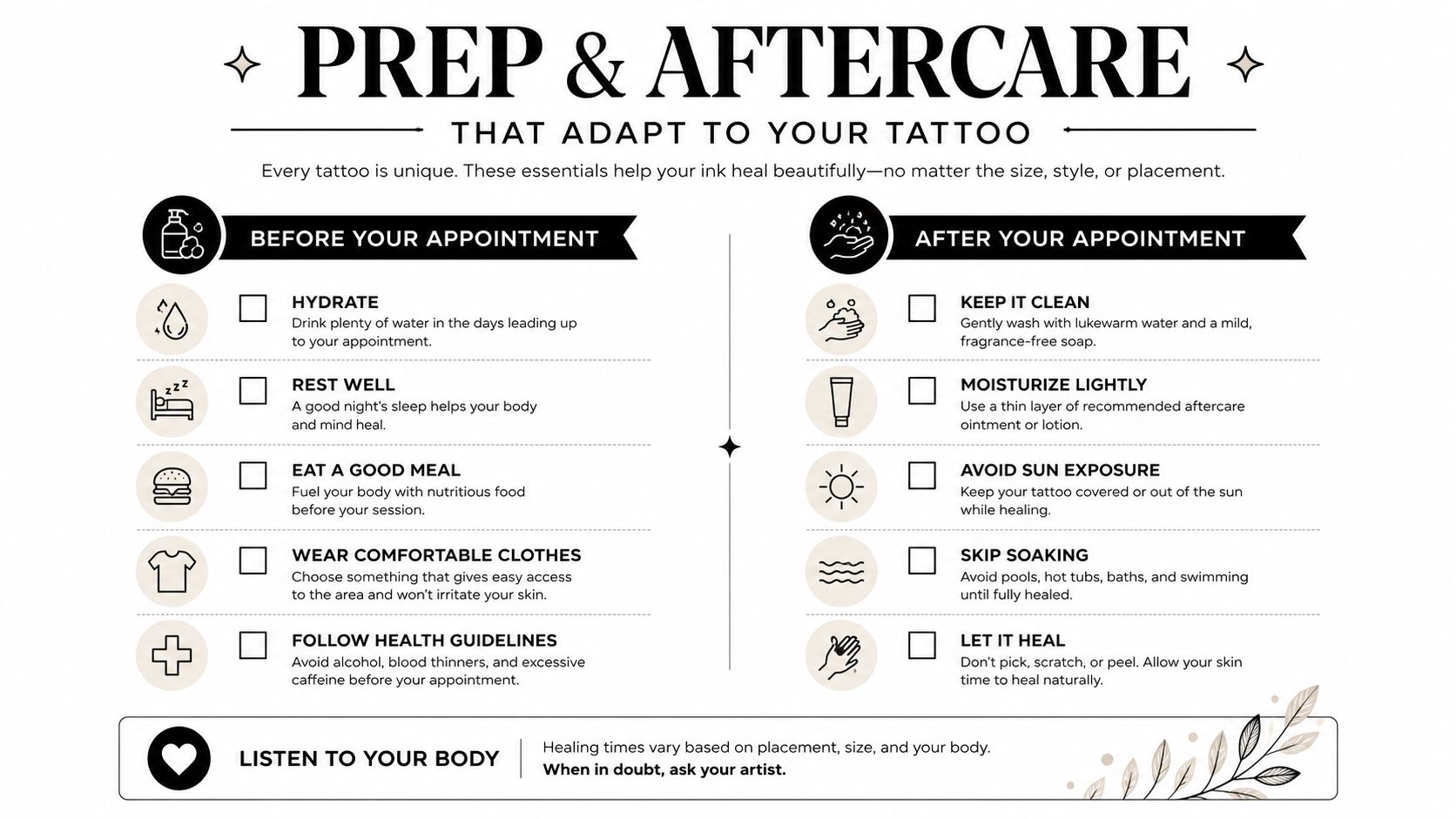
What you do before and after a session can help the plan work the way it should. Pre-session prep usually includes avoiding excess sun, keeping the skin hydrated, and steering clear of harsh skincare products near the treatment area. Aftercare usually focuses on gentle cleaning, ointment if advised, no soaking, and loose clothing that doesn't rub the site.
Why the same advice doesn't fit every tattoo
A wrist tattoo and a shoulder tattoo don't heal in exactly the same way because the wrist sees more motion, friction, and everyday contact. A large design can also need more careful protection because there's more treated surface to manage. That's why prep and aftercare should be personalized, not copied from a generic checklist.
The care-planning evidence base backs that up. More detailed and intensive care programs produce better results than low-intensity approaches, and integrated care works better than a one-off conversation. A systematic review found benefits for blood glucose, depression, self-efficacy, and self-care activities, with no evidence of harms, which reinforces the value of clear follow-up and structured guidance in care planning. See the review on personalized care planning.
Normal healing can include temporary frosting, mild swelling, or small blisters that settle with routine care. That said, anything that looks more intense, more painful, or more persistent than expected should trigger a call to the clinic, because the feedback loop is part of the plan. The best plans aren't the ones that never need attention, they're the ones that tell you when attention is needed.
How EradiTatt Delivers Personalized Plans Across Florida
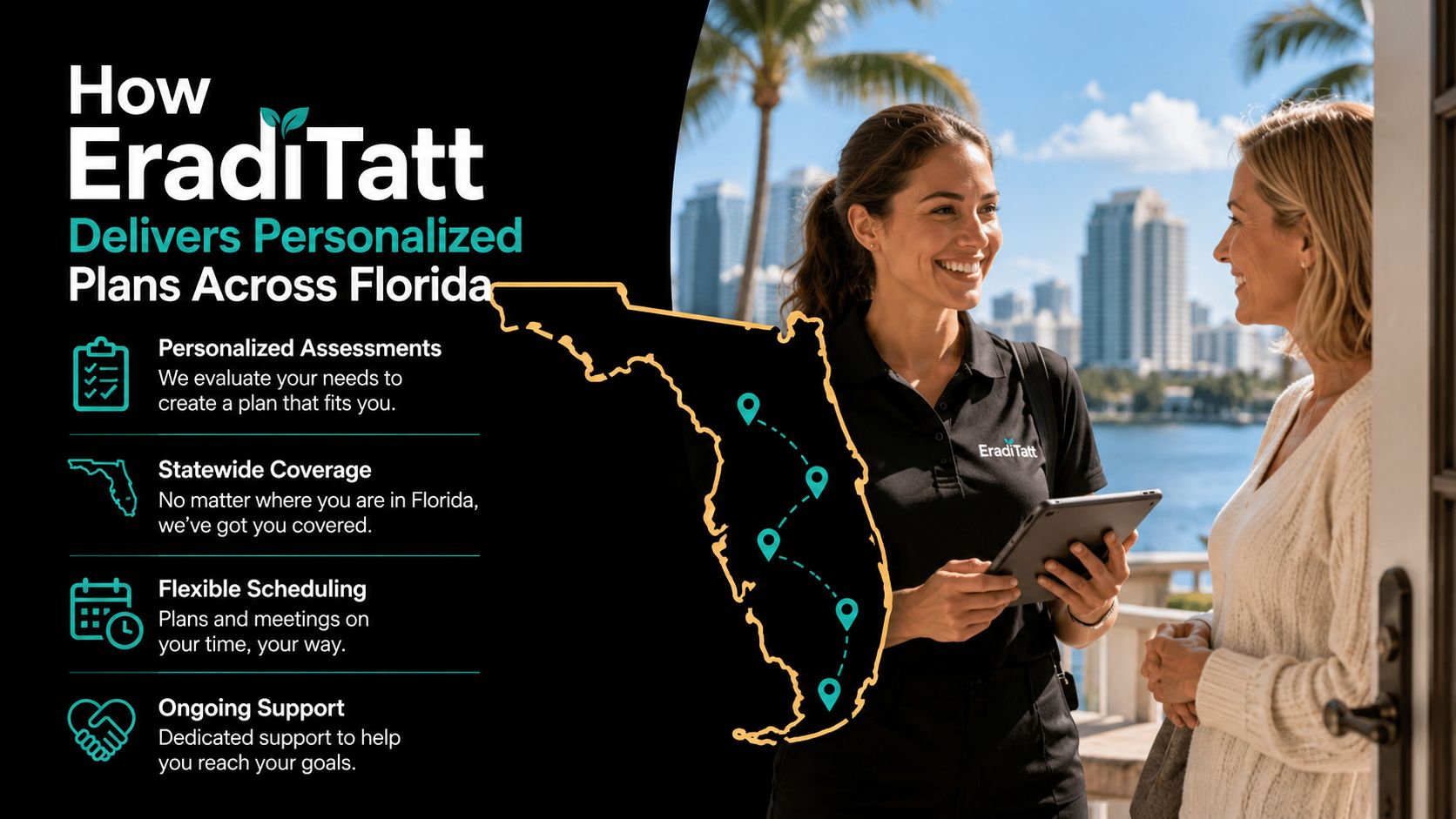
A good plan has to be accessible, or it isn't really a plan at all. EradiTatt makes that easier by letting prospective clients call a central 844 number or reach a specific clinic directly in Orlando, Bradenton/Sarasota, St. Petersburg, Palm Harbor, or Tampa to set up a consultation. That gives people a practical starting point, whether they want the closest location or the quickest appointment.
How the consultation carries across locations
At the consultation, the clinician assesses the tattoo, sets goals, documents the plan, and schedules the first session. If a client later needs to reschedule or move between Florida clinics, the plan can follow that person because the treatment is organized around the individual case, not just a single appointment slot.
That matters for busy clients who need flexibility. It also matters for clinic communication, since a smooth handoff depends on the details being recorded clearly. If you want a useful outside read on contact workflows, improve customer service with AI receptionist is a relevant example of how responsive scheduling support can make the experience easier to manage.
PiQo4 supports the personalized model because it's designed to work across different ink colors and skin types, which helps the clinician match treatment to the tattoo rather than forcing the tattoo into one setting. That's the practical version of personalization. The promise isn't just faster booking, it's a structured path that supports the actual goal, whether that's fading, full removal, or something in between.
Questions Readers Ask After Reading the Main Sections
Bring your ID, a list of medications, clear notes on your goals, and photos of the tattoo if it has changed since the last time you saw it. If you've had any recent skin irritation, that's worth mentioning too, because small details can change the plan.
You can usually start soon after the consultation if the skin is a good candidate and the schedule works. The exact start date depends on the tattoo's condition, the location, and whether the clinician wants to adjust prep first. The point of the consultation is to remove uncertainty before treatment begins.
If you miss a session, don't treat it as a failure. Call the clinic, reschedule, and let the clinician decide whether the next visit should stay on the same timeline or be pushed back so the skin has enough recovery time. That adjustment is part of the personalized framework.
After two or three visits, realistic fading usually means you can see a change, but not a finish line. The skin still needs time between sessions, and the tattoo may clear unevenly depending on ink color and depth. Measurable progress matters more than dramatic expectations, because the plan is built around actual response, not a guess.
For the next step, call the central number or your nearest Florida clinic and ask for a consultation. A clear conversation at the start makes the rest of the process easier to follow, and it puts your removal plan on a real calendar instead of in your head.
EradiTatt Tattoo Removal helps clients build tattoo removal plans around skin type, tattoo detail, and personal goals, then track progress with care. If you're ready for a structured approach that adapts as your skin responds, visit EradiTatt Tattoo Removal to schedule a consultation and start mapping out your next step.