If you're looking in the mirror and feeling unsure about your brows, you're not alone. Maybe the shape feels dated, the pigment turned warmer than expected, or one brow healed differently than the other. Cosmetic eyebrow tattoos can look great at first, but they don't always age the way people hoped.
For many Bradenton clients, the hardest part isn't the removal itself. It's figuring out what's realistic, what's safe near the eye area, and who to trust with a treatment that needs precision. Eyebrow tattoo removal is a small-area procedure, but it carries big cosmetic stakes. That means the right plan matters just as much as the right laser.
Table of Contents
- Regretting Your Eyebrow Tattoo You Have Options
- How Laser Eyebrow Tattoo Removal Works at EradiTatt
- Setting Realistic Expectations for Your Removal Journey
- Key Factors That Influence Removal Success
- What to Expect During and After Your Session
- How to Start Your Removal Journey in Bradenton
Regretting Your Eyebrow Tattoo You Have Options
A lot of people sit with brow regret longer than they need to. They assume they're stuck with the color, shape, or placement because it's on the face and feels too risky to change. In practice, removal is often the step that gives people back a sense of control.
That feeling is more common than many clients realize. Nearly 30% of people in the U.S. have at least one tattoo, and as many as 25% of those tattooed individuals express regret, according to laser tattoo removal information cited by a Bradenton-area medical practice. Cosmetic tattoos are part of that conversation because style trends change, facial symmetry matters, and pigments can shift over time.
The problem isn't always the tattoo itself
Sometimes the issue is obvious. The brows healed too dark. The front bulb looks too square. The tails drifted warmer than you wanted.
Other times, the tattoo isn't bad. It just isn't you anymore.
- Style changes: A shape that fit a past trend can feel heavy or overly defined now.
- Color shifts: Cosmetic pigments may heal or age in ways that don't match your natural brow tone.
- Life changes: Career goals, weddings, photos, and personal reinvention often push removal higher on the priority list.
Eyebrow tattoo removal isn't about admitting failure. It's about adjusting something visible and personal so it fits your face and your life now.
Some people don't want full removal. They want enough fading to make a correction or redesign possible. If you're still deciding between fading and replacing, this roundup of Tattoo cover up ideas for 2026 can help you think through what comes after the old pigment softens.
A calm, local path forward
For eyebrow tattoo removal Bradenton clients usually need two things right away. Clear answers and a conservative treatment plan. The brow area doesn't reward rushed decisions.
At our Bradenton clinic, the process starts with skin, pigment, and goal assessment, then builds from there. If your brows feel dated or overdone, our detailed guide on removing outdated eyebrow tattoos safely and effectively is a useful next read before booking.
How Laser Eyebrow Tattoo Removal Works at EradiTatt
A good brow removal plan starts with restraint. In Bradenton, I see plenty of clients who are tempted to treat cosmetic pigment like a standard body tattoo and push too hard, too fast. The brow area does not respond well to that approach.
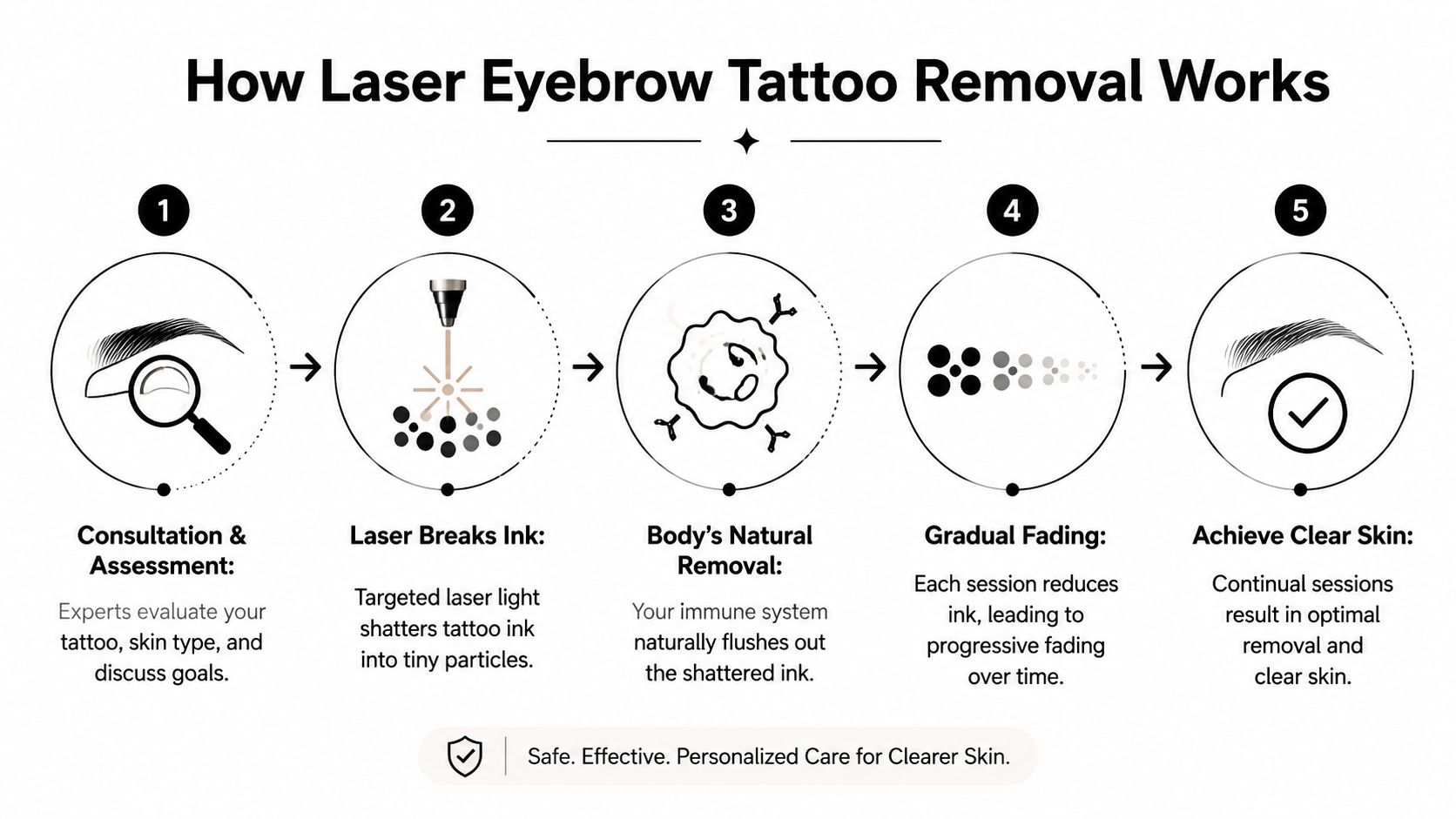
Laser eyebrow tattoo removal works by breaking pigment into smaller particles that the body clears over time. Results develop between sessions, not just during them. That slower fade is part of safe treatment, especially on thin facial skin.
Why the brow area needs precision
Eyebrow tattoos often contain blended cosmetic pigments rather than one simple shade. Some lighten cleanly. Others shift before they fade. That is one reason brow removal requires careful settings, test-based judgment, and a plan that can be adjusted as the skin and pigment respond.
Placement matters too. The skin is delicate, the area is highly visible, and your natural brow hair needs to be respected throughout the process. At EradiTatt Bradenton, we use the PiQo4 picosecond platform because it gives us more control across a wide range of pigment colors and skin types. For cosmetic work like microblading, powder brows, and older permanent makeup, that control matters more than speed alone.
The treatment process
A professional session usually follows a clear sequence:
- Assessment comes first. We look at pigment tone, saturation, placement, skin type, brow hair, and whether your goal is full removal or enough fading for a correction.
- Protective prep is done. The treatment area is cleaned, the eyes are protected, and the laser settings are chosen for your specific brow tattoo.
- Targeted laser energy is delivered. Short pulses are directed into the pigment without treating the area aggressively just for the sake of intensity.
- Pigment particles fracture. The laser breaks the ink into smaller fragments.
- Your body clears the debris over time. That part happens between visits as your immune system processes the shattered pigment.
Practical rule: The laser breaks up the ink. Your body removes it. Spacing sessions properly is part of the treatment plan.
One option for this service in the Bradenton area is EradiTatt Tattoo Removal, which uses the PiQo4 platform for facial and body tattoo fading and removal. If you want a closer look at how we approach cosmetic pigment, this article on microblading and eyebrow tattoo removal with PiQo4 explains the brow-specific process in more detail.
Setting Realistic Expectations for Your Removal Journey
A Bradenton client might walk in hoping one session will erase brows that have bothered her for years. That is rarely how cosmetic tattoo removal works, especially on the face where the goal is clean, careful fading rather than pushing the skin too hard.
Across more than 1.6 million tattoo-removal treatments, the average full removal course is 8 to 12 sessions, usually spaced 6 to 8 weeks apart, and average small-tattoo removal costs fall around $1,500 to $2,000, according to Removery's tattoo removal facts page. Brow work is more specialized than general tattoo removal, but those numbers help set a realistic starting point.

Full removal and strategic fading are different goals
The first expectation to set is the finish line.
Full removal aims for little to no visible remaining pigment. That usually takes more sessions, more waiting between visits, and more tolerance for gradual progress.
Strategic fading aims to lighten the old brow tattoo enough for corrective work. That can be the smarter route if the shape needs adjustment, the color has turned off-tone, or a brow artist needs a cleaner base to work from.
I tell clients this upfront because the wrong goal creates a lot of frustration. Someone preparing for a brow correction often does not need every trace gone. Someone who wants bare skin should expect a longer course and closer monitoring.
Progress is often uneven
Eyebrow tattoo removal rarely fades in a perfectly tidy pattern. One area may lift first. Another may hold onto warmth, ash tones, or deeper saturation for longer.
That does not always mean something is wrong.
Cosmetic pigment is often blended, layered, and placed with technique variations across the brow. Real progress can look patchy before it looks polished. On facial treatments, patience usually gives a better cosmetic outcome than trying to force a dramatic change in one visit.
A few practical expectations help:
- Visible change happens between sessions. The appointment starts the process, but your body does the clearing afterward.
- Some colors can shift before they fade further. That is one reason test spots and conservative treatment matter around the brows.
- The plan may change as the pigment responds. Good removal is adjusted session by session, not locked in on day one.
The cleanest eyebrow removals usually come from controlled treatment, careful spacing, and honest reassessment after each visit.
Skin response matters as much as ink response
The brow area is small, but it is still facial skin. That means aftercare and pigment behavior both matter. Temporary redness, frosting, and mild swelling can happen. In some cases, post-inflammatory color change is part of the risk discussion, particularly in melanin-rich skin, which is why understanding resources on treating PIH on darker skin can be useful alongside provider guidance.
At EradiTatt Bradenton, realistic expectations are part of the consultation, not an afterthought. We assess whether your goal is complete removal or enough fading for fresh work, then build the schedule around skin safety and visible progress rather than promises that sound good on day one.
Key Factors That Influence Removal Success
No two eyebrow tattoos behave exactly the same under laser treatment. One person has soft, older pigment that fades in an orderly way. Another has dense cosmetic ink with more than one tone layered into the skin. The treatment category is the same, but the response can be very different.
That's why personalized planning matters more than generic promises.
Ink characteristics matter first
The tattoo itself gives the first set of clues. Color, density, age, and the depth of the pigment all affect how removal unfolds.
A lighter, older brow tattoo may behave more predictably than a newer, heavily saturated one. Cosmetic eyebrow pigments can also contain blended tones, which is one reason this area needs careful assessment before treatment starts.
| Factor | Impact on Removal | How EradiTatt Manages It |
|---|---|---|
| Ink color | Mixed cosmetic pigments can fade unevenly or respond in stages | Treatment is adjusted based on visible pigment behavior across sessions |
| Ink density | Heavier saturation usually takes more patience to lighten cleanly | Conservative settings help reduce unnecessary skin stress |
| Tattoo age | Older pigment may already be partially broken down by the body | The plan is built around current visibility, not assumptions |
| Placement depth | Deeper pigment can be slower to clear | Session spacing allows gradual response tracking |
| Previous work | Touch-ups and layered brow tattoos can create uneven removal patterns | Brow mapping and close visual review guide each pass |
Skin response shapes the pace
The skin isn't just a surface the laser passes over. It's active tissue that needs time to recover between treatments. In facial areas, especially around the brow, that matters even more.
Different skin types can also raise different aftercare considerations. For readers who want a broader skin-health perspective, this guide to treating PIH on darker skin is a useful resource on post-inflammatory hyperpigmentation and why cautious treatment matters.
Your habits can help or slow the process
The laser session is only part of the job. What happens between visits affects the overall result.
- Sun exposure: Recently irritated or sun-stressed skin is harder to manage safely.
- Picking or friction: Disturbing the area can interfere with clean healing.
- Skipping aftercare: Brow skin usually does better when it's left alone and protected while healing.
Good candidates for eyebrow tattoo removal aren't people with perfect skin. They're people who follow the plan, protect the area, and give the skin time to recover.
What to Expect During and After Your Session
Most clients are surprised by how short the actual appointment feels. Eyebrow tattoo removal is a focused treatment, and a typical session usually lasts 15–30 minutes, with treatments scheduled 6–8 weeks apart so the body can clear fragmented ink and the skin can heal, according to Elite Body and Laser's eyebrow tattoo removal overview.

During the appointment
Treatment day is usually straightforward. You arrive, review the plan, protect the treatment area appropriately, and then the laser work begins. Sensation varies, but many people describe it like quick snaps against the skin.
Because the brows are small, the session itself moves quickly. The focus is accuracy, not speed for its own sake.
A typical visit includes:
- Pre-treatment review: Any skin changes, recent sun exposure, or healing issues are checked first.
- Focused laser passes: The practitioner treats the pigment based on how it currently presents.
- Immediate skin response check: The area is observed before you leave so aftercare instructions match what your skin did that day.
After the session
The skin can look irritated right after treatment, and that's expected. Temporary redness and swelling are common in laser tattoo removal generally. Some people also notice a whitish reaction on the surface right away. That immediate response doesn't mean the tattoo is gone. It means the skin and pigment have reacted to treatment.
What helps most after a brow session is restraint.
- Keep the area clean: Gentle handling is better than over-cleansing.
- Don't pick or scrub: Let any healing changes settle on their own.
- Protect the skin: Avoid avoidable irritation while the area recovers.
If a session feels quick but the healing window feels slow, that's normal. The appointment is the short part. Recovery between sessions is where much of the visible progress develops.
How to Start Your Removal Journey in Bradenton

A consultation turns a general idea into a treatment plan that fits your brows, your skin, and your actual goal. Some clients want the pigment gone. Others want enough fading to make a correction possible. Those are different plans, and the difference matters at the start.
At EradiTatt in Bradenton, I use the consultation to look closely at pigment color, saturation, placement, past touch-ups, and how the skin is presenting now. Brow tattoos can be less predictable than body tattoos because cosmetic pigments are often layered and may shift in tone as removal progresses. That is why an honest assessment matters more than a quick estimate.
The Bradenton clinic is at 3825 E State Rd 64, Suite 200, Bradenton, FL 34208, and visits are by appointment only. That setup gives clients a quieter visit and enough time for a focused evaluation instead of rushing through questions.
What to have ready before you book
A little background helps. If you have old photos from when the brows were first done, bring them. If you know whether you had microblading, powder brows, combination brows, or multiple touch-ups, mention that too.
It also helps to be clear about timing. If you are planning around photos, travel, or a future brow refresh, say so early. Removal works on a schedule your skin can tolerate, not on a deadline, so it is better to map that out at the beginning.
If cost is one of your first questions, this guide to tattoo removal cost in Bradenton explains what usually affects the plan.
How to make the consultation more useful
Come in with a goal, but stay open to adjustment. In practice, the first plan sometimes changes once I see how the pigment responds after a session or two.
A good consultation should answer a few practical questions:
- Is full removal realistic, or is strategic fading the better option?
- Does the pigment show signs of layering or color variation that may affect the process?
- Are there any skin factors that call for extra caution around the brow area?
- What kind of spacing between sessions makes sense for healing and visible progress?
If your current brows no longer fit your face or your style, guessing usually creates more frustration. A careful consultation gives you a clearer picture of what can likely improve, what may take patience, and how to start safely with EradiTatt Tattoo Removal.