
You're probably reading this because the tattoo that once felt right now feels urgent to remove. Maybe it's tied to a job policy, a wedding date, military plans, a cover-up, or the point where you're done explaining it. The frustrating part is that tattoo removal has a reputation for being slow, and people often assume the only option is to wait it out.
That isn't quite true. You can't force skin to heal on command, but you can make smarter decisions that help your body clear ink more efficiently. In practice, how to speed up tattoo removal comes down to two things working together: the laser technology used in clinic, and what you do between appointments.
Table of Contents
- Understanding What Controls Your Removal Speed
- Your Pre-Treatment Checklist for Faster Results
- Maximizing Fading and Healing Between Sessions
- Common Habits That Sabotage Removal Speed
- Why Your Clinic Choice Is the Biggest Accelerator
Understanding What Controls Your Removal Speed
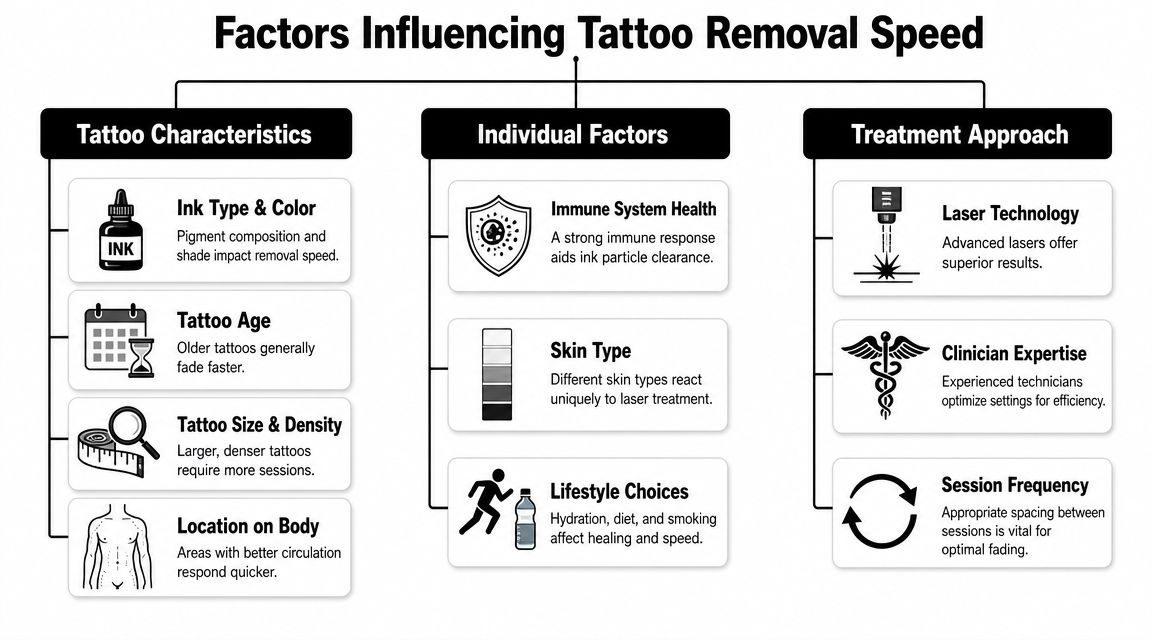
A client comes in with two tattoos they want gone on the same timeline. One is a faded black piece on the upper back. The other is a dense, multicolor tattoo on the ankle. Even with the same technician, the same schedule, and the same laser platform, those tattoos usually will not clear at the same rate.
That gap matters because faster removal is not luck. It is the result of two systems working together. The clinic has to deliver the right wavelength, pulse duration, and treatment plan. The client has to give the body a good environment to clear what the laser breaks apart.
The laser breaks the ink, your body removes it
The treatment room starts the process. Clearance happens afterward.
That is why removal speed varies so much from one client to another. The laser fragments pigment, but the body still has to process and carry away those smaller particles over the following weeks. Good circulation, steady healing, and consistent aftercare all affect how much fading shows up between sessions.
In practice, I tell clients to judge progress by what happens after the appointment, not just during it. A strong session helps, but a body that heals well and stays on schedule usually gets better momentum over the full course of treatment.
Tattoo traits change the timeline
Some tattoos are built for a shorter course. Others have several built-in slowdowns.
Location is one of the clearest examples. A clinical review published in the Journal of Clinical and Aesthetic Dermatology reported that tattoos on the upper trunk cleared in fewer sessions on average than tattoos on the hands and fingers, which are farther from the body's core and often have less favorable circulation, according to this clinical review of tattoo removal outcomes.
We see the same pattern in clinic. A lightly shaded tattoo on the chest, shoulder, or upper back often responds more efficiently than a heavily saturated design on the hand, ankle, or foot.
The main variables are usually these:
- Ink load: Heavier saturation gives the laser more material to break apart and gives the body more debris to clear.
- Placement: Areas closer to the torso often progress better than extremities.
- Tattoo depth: Professional work is often placed more evenly and at a greater depth than amateur work.
- Color mix: Black usually responds more readily than many lighter or mixed pigments.
If you want a fuller breakdown before setting expectations, this guide on factors that can affect tattoo removal progress covers the main variables clients should understand.
Technology changes the pace
Laser type has a direct effect on how efficiently ink can be fragmented. That changes how much work the body has to do between sessions.
A split-tattoo clinical trial published in Dermatologic Surgery found that a picosecond alexandrite laser achieved greater tattoo clearance than a Q-switched alexandrite laser when the two were compared side by side on the same tattoos, according to this published comparative study of picosecond and Q-switched tattoo removal. That does not mean every tattoo clears in a fixed number of visits, but it does explain why newer picosecond platforms often produce faster visible fading when they are used well.
At EradiTatt, that is why technology selection matters. A platform like PiQo4 gives technicians more flexibility with wavelength and pulse duration, which helps match the treatment to the ink rather than forcing every tattoo into the same approach.
Here is the practical picture:
| Factor | Tends to speed removal | Tends to slow removal |
|---|---|---|
| Ink load | Light shading, less saturation | Dense fill, packed linework |
| Location | Upper trunk, areas with better circulation | Hands, fingers, feet, ankles |
| Technology | Picosecond laser platforms | Older Q-switched systems |
| Body response | Strong healing and steady aftercare | Inconsistent recovery habits |
The fastest cases usually have both sides working in sync. The tattoo is favorable, the laser is appropriate for the ink, and the client gives their body a good chance to clear pigment efficiently between sessions.
Your Pre-Treatment Checklist for Faster Results
A faster result often starts before the first pulse. Clients who prepare well usually heal more smoothly, stay on schedule, and give their bodies a better chance to clear fragmented ink efficiently.
The biggest mistake is thinking prep only matters on appointment day. It matters in the weeks before.

Build the right routine before session one
A simple routine beats a heroic one. The goal is to support circulation, hydration, and healing capacity without creating extra stress on the body.
One study cited in this lifestyle-focused tattoo removal article found that patients who followed lifestyle advice such as 3L+ water per day, 150 minutes of moderate exercise per week, and not smoking required 22% fewer sessions on average, 6.2 vs. 8.0.
That doesn't mean you need a perfect wellness plan. It means the basics matter.
Use this checklist:
- Hydrate consistently: Don't try to “catch up” the night before treatment. Steady hydration supports circulation and recovery better than one heavy day of water intake.
- Exercise moderately: Walking, cycling, and other moderate activity support blood flow without beating up the body.
- Stop smoking if you can: If you can't stop completely yet, reducing smoking is still a meaningful step.
- Eat for healing: Focus on regular meals with enough protein and whole foods so your skin has what it needs to recover.
- Sleep like it matters: If your body is under-recovered, healing usually looks slower too.
Healthy habits don't make laser treatment optional. They make each treatment work harder.
If you want a more appointment-specific prep list, review this page on how to prepare for tattoo removal.
What to avoid before treatment
Clients usually focus on what they should add, but what you remove matters too. Irritated, dehydrated, or stressed skin is not a great setup for efficient treatment.
Try to avoid these common pre-treatment issues:
- Recent sun exposure: Tanned or sun-stressed skin can complicate treatment decisions and aftercare.
- Heavy alcohol use: It can leave you dehydrated and feeling worse going into treatment.
- Aggressive skin products on the area: Harsh exfoliants or irritating topicals can make skin more reactive.
- Showing up run down: If you're sick or worn down, it's worth talking to your provider before treating.
How to arrive ready
Appointment-day prep should be simple. Eat beforehand, drink water, wear clothing that won't rub the treated area afterward, and come in with clean skin on the tattoo.
A good consult should also set realistic expectations. Some tattoos respond quickly at first. Others need a few sessions before the change becomes obvious. That isn't failure. It's the difference between surface fading and actual ink burden.
Maximizing Fading and Healing Between Sessions
A common scenario in the clinic goes like this. Two clients get treated with similar settings on similar tattoos. One fades faster over the next two months. The difference usually is not luck. It is what happens between appointments.
That period matters because the laser shatters ink, but your body still has to clear the fragments. Faster removal comes from both sides working together. We do our part with precise treatment and the right technology. You help the process by giving the skin time to recover and the body the conditions it needs to keep clearing ink.

What to do in the first days after treatment
The first goal is uneventful healing. If the area gets irritated by heat, friction, picking, or random products, progress often slows because the skin has to spend more time calming down and repairing itself.
Keep the routine simple and boring. That usually works best.
In the first few days after treatment:
- Cool the area if your technician recommends it: This can reduce post-treatment heat and discomfort.
- Use only the aftercare products you were told to use: More products does not mean better healing.
- Leave blisters, scabs, and flaking skin alone: Picking creates avoidable inflammation.
- Reduce friction on the area: Tight waistbands, gym equipment, and rough fabrics can keep the site irritated.
- Keep it out of the sun: Sun exposure can complicate healing and affect future treatment decisions.
Clients sometimes want to speed things up by adding extra creams, exfoliants, or home remedies. That usually backfires. Calm skin responds better at the next session than skin that has been repeatedly irritated.
Support the clearing phase after the skin calms down
Once the surface reaction settles, the fading phase continues over the following weeks. This is the part many clients underestimate. A tattoo can look healed on top while the body is still processing the previous treatment underneath.
That is why steady habits matter more than dramatic ones.
A practical between-session routine looks like this:
- Drink water consistently: Day-to-day consistency is more useful than trying to catch up the day before treatment.
- Move regularly: Walking, light cardio, and normal activity support circulation without beating up the treated area.
- Sleep enough to recover well: Poor recovery tends to show up as slower, messier healing.
- Eat in a stable way: Skin and immune function do better when your basics are in place.
- Keep follow-up timing consistent: Removal usually moves faster over the full course when each session builds on a fully recovered previous one.
I tell clients to judge progress by the full treatment cycle, not by how the tattoo looks in one week. Good removal is cumulative. Some of the best fading shows up well after the initial redness is gone.
Why spacing affects speed
This is one of the biggest trade-offs in tattoo removal. Booking too soon feels aggressive, but aggressive is not always efficient.
Surface healing and internal clearing are not the same thing. Skin can look ready before it is ready to respond well to another session. If treatment is rushed, the result can be more irritation, less productive fading per visit, and a longer overall course.
At EradiTatt, technology and client choices meet in a very practical way. Advanced platforms such as PiQo4 can deliver strong fragmentation across multiple ink colors and skin types, but the body still needs time to clear what the laser breaks apart. Better technology improves the opportunity each session creates. Good spacing, solid aftercare, and steady lifestyle habits help convert that opportunity into visible fading.
The clients who finish faster usually are not doing anything extreme. They heal cleanly, protect the area, stay consistent, and let each session do its full job before the next one.
Common Habits That Sabotage Removal Speed
A lot of delays come from good intentions. Clients want faster fading, so they book too close together, spend time in the sun because life doesn't stop, or assume a tattoo that “looks healed” is ready for more laser. Those choices can stretch the timeline instead of shrinking it.
The biggest hidden problem is impatience disguised as action.
The hidden slowdowns clients don't expect
The clearest example is treatment spacing. Shorter intervals feel aggressive and efficient, but they often work against the biology of tattoo removal.
According to this clinical explainer on tattoo removal success factors, rushing treatment intervals to less than 6 weeks can increase the risk of scarring and require 15% to 20% more sessions. The same source notes that sun exposure can reduce the laser's efficacy by 30% to 50% because it lowers contrast between the skin and the ink.
That's a major trade-off. Faster booking can produce slower progress.
Other common mistakes include:
- Treating every fading phase like an emergency: Removal is cumulative, not instant.
- Ignoring sun protection: Even brief repeated exposure can complicate the process.
- Returning to activities that irritate the area too soon: Friction and overheating don't help healing.
- Doing inconsistent aftercare: One careful day followed by neglect usually shows up in the skin.
If you want the shortest overall timeline, don't chase the shortest gap between appointments.
What to do instead
Think in terms of clean, efficient cycles. Treat. Heal. Clear. Repeat.
That means waiting until the skin and the underlying immune response have both had time to do their jobs. It means keeping the area protected from UV exposure, even if the rest of your routine stays busy. It also means being honest about habits that slow healing, rather than hoping technology will cancel them out.
A slower-looking plan often wins because it avoids wasted sessions.
Why Your Clinic Choice Is the Biggest Accelerator
A client can show up hydrated, protect the area from sun, follow aftercare closely, and still lose time if the clinic is using older equipment or weak treatment planning. I see that trade-off often. Good habits help your body clear fragmented ink, but the clinic determines how effectively that ink gets broken up in the first place.
That is why clinic choice has such a large effect on total removal time.

Older systems and newer systems don't perform the same
The biggest technical gap is pulse duration. Picosecond lasers deliver energy in shorter pulses than older Q-switched nanosecond systems, which can improve ink fragmentation and often leads to more efficient clearance over a full treatment plan. A clinical review in Lasers in Medical Science found stronger clearance with picosecond-domain treatment in several tattoo studies, especially for resistant pigment and multicolor work (systematic review of picosecond laser use in tattoos and pigment).
In practice, that can mean fewer sessions, better response on stubborn colors, or both. It does not mean every tattoo disappears quickly. Dense professional black ink, layered cover-ups, and lower-leg placement still take time. Better technology improves the odds that each session does meaningful work.
That difference matters when the deadline is real. Cover-up prep, military enlistment, professional licensing, and wedding timing all benefit from a clinic that can remove more ink burden per visit without pushing the skin too hard.
What a skilled clinic changes
The device matters. The operator matters just as much.
A faster plan comes from matching wavelength, spot size, fluence, and interval timing to the tattoo in front of you. Poor settings can leave progress on the table. Overaggressive settings can create extra inflammation, force longer recovery, and slow the overall schedule.
A good clinic evaluates the variables that change speed:
| Clinic factor | Why it affects speed |
|---|---|
| Laser platform | Newer picosecond systems can improve ink breakup, especially on difficult colors |
| Assessment quality | Ink density, layering, placement, and skin type affect how ambitious the plan should be |
| Session timing | Sessions need enough spacing for skin recovery and immune clearance |
| Aftercare guidance | Clear instructions reduce setbacks that can delay the next treatment |
At EradiTatt Tattoo Removal, we use the PiQo4 for full-color tattoo removal and controlled fading for cover-ups. That matters because different inks respond differently, and a single tattoo may need more than one wavelength over the course of treatment. If you are comparing local providers, this guide on the best tattoo removal clinic in Tampa shows what to ask before you commit.
Florida locations and how to get started
Logistics affect speed more than clients expect. If getting to appointments is difficult, people reschedule, stretch intervals too far, or stop midway through a strong fading phase.
EradiTatt serves clients across Florida, including Orlando, Bradenton/Sarasota, St. Petersburg, Palm Harbor, and Tampa. That helps clients stay consistent while balancing work, travel, family schedules, and event deadlines.
Before you book, ask direct questions:
- What laser platform do you use for black ink and for color?
- How do you plan dense, layered, or cover-up tattoos?
- How do you decide whether a tattoo is ready for the next session?
- What aftercare instructions do you give in writing?
- Can you plan for complete removal and partial fading, depending on the goal?
The fastest removal plans are usually the most efficient ones. Strong technology, accurate settings, realistic spacing, and steady client follow-through work together. That is the partnership that shortens the timeline.
If you're ready to start with a realistic plan for faster fading, book a consultation with EradiTatt Tattoo Removal. The team can evaluate your tattoo's location, density, colors, and goals, then map out a removal or cover-up fading plan that fits your timeline and your skin.