
If you’ve ever looked at an old tattoo and wished it could just be erased, you know how frustrating it can be—especially if it’s full of vibrant colors. For years, removing colorful tattoos was a major challenge, often leaving behind faint traces of green, blue, or red ink. The arrival of advanced systems like the Quanta Q-Plus C laser has completely changed the game.
The Quanta Q-Plus C isn't just another laser. Think of it less like a blunt tool and more like a highly precise instrument built for one job: to shatter tattoo ink without harming the surrounding skin.
A True Multi-Color Solution
So, how does it work? The laser delivers incredibly short, powerful pulses of light that are absorbed by the ink pigment embedded deep in your skin.
This rapid absorption of energy instantly heats the ink particles, causing them to shatter into microscopic fragments. Once broken down, your body’s own immune system gets to work, naturally flushing these tiny particles away over the following weeks.
Why Three Wavelengths Are Better Than One
Here’s what really sets the Quanta Q-Plus C apart: its versatility. Different ink colors absorb different wavelengths of light. A laser with only one or two wavelengths might work great on black ink but will barely make a dent in bright reds, stubborn blues, or greens.
To effectively clear a colorful tattoo, you need a machine that can switch between different "channels" of light. The Quanta Q-Plus C is one of the only lasers on the market equipped with three true wavelengths, making it a comprehensive powerhouse for even the most complex, multi-hued tattoos.
- 1064nm Wavelength: This is the workhorse for targeting blacks and dark blues, the most common ink colors.
- 532nm Wavelength: This wavelength is specifically designed to go after warmer tones like reds, oranges, and yellows.
- 694nm Ruby Wavelength: This is the specialized tool for tackling notoriously difficult greens and light blues that other lasers often miss.
This multi-wavelength capability is a major reason why clinics focused on complete and efficient removal invest in this technology. As we dive deeper into laser tattoo removal technology, you’ll see exactly how the science translates to real-world results and what it means for your journey to clear skin.
How The Quanta Laser Erases Tattoo Ink
Ever wonder how a beam of light can make a tattoo disappear? It’s a fascinating process that’s more about precision and physics than magic. The Quanta Q‑Plus C laser uses highly targeted light energy to break down ink particles without harming the surrounding skin.
Think of it like this: the laser sends out incredibly fast flashes of light—we’re talking nanosecond pulses, which last just billionths of a second. This intense energy is absorbed only by the tattoo ink. The rapid absorption creates a shockwave effect that instantly shatters the large ink particles into microscopic fragments. Once they’re small enough, your body’s own immune system can finally grab onto them and flush them away naturally. It's a team effort between technology and your body.
If you want to dive deeper into how your immune system does the heavy lifting, we have a complete breakdown of how tattoo removal works that explains it all.
The Power Of Three True Wavelengths
A multi-colored tattoo isn't just one layer of ink. It’s a complex mix of different pigments sitting at various depths in your skin. To tackle this, you need a versatile tool. The Quanta Q‑Plus C laser is the gold standard because it’s the only laser on the market built with three distinct, true wavelengths in a single device.
Each wavelength acts like a specialized key, designed to unlock and shatter a specific range of ink colors.
- 1064 nm Wavelength: This is the workhorse. Its infrared light penetrates deepest into the skin to target dark pigments like black and dark blue.
- 532 nm Wavelength: This green light is perfectly tuned for the brighter, warmer colors that sit closer to the surface, like reds, oranges, yellows, and purples.
- 694 nm Ruby Wavelength: This is the specialist. The ruby wavelength is legendary for its ability to eliminate stubborn light blues and greens that other lasers simply can't touch.
This is how the laser can provide a full-spectrum treatment, ensuring no color gets left behind.
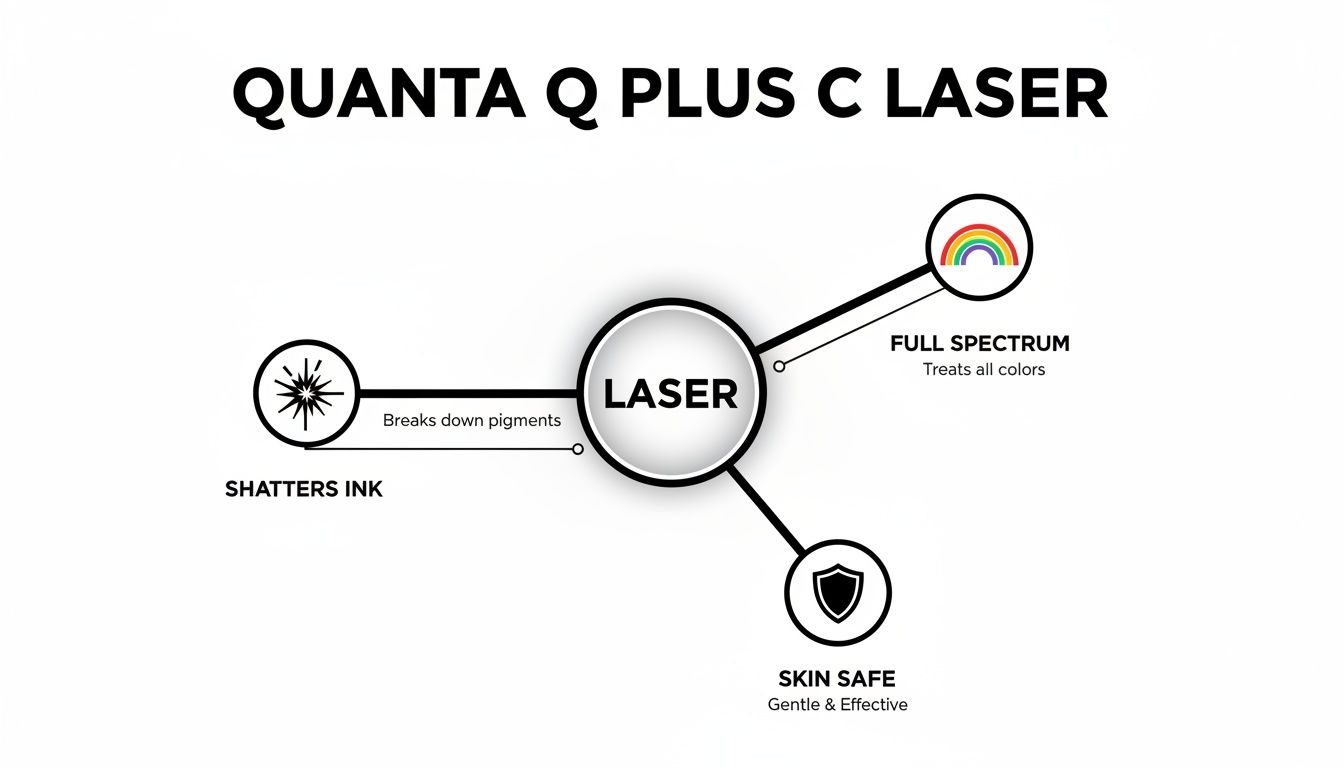
The table below breaks down exactly which wavelength targets which colors and at what depth.
Quanta Q Plus C Laser Wavelengths and Their Targets
| Wavelength | Primary Ink Colors Targeted | Skin Depth |
|---|---|---|
| 1064 nm (Nd:YAG) | Black, Dark Blue, Dark Brown | Deepest |
| 532 nm (KTP) | Red, Orange, Yellow, Purple | Superficial |
| 694 nm (Ruby) | Light Blue, Light Green, Lime Green | Mid-depth |
Having all three wavelengths in one machine means we can effectively switch between them during a single session to treat every part of your unique tattoo.
Ensuring Safety With Square Beam Technology
When it comes to laser tattoo removal, how the energy is delivered is just as important as how much. Many older lasers use a standard circular beam. The problem? Circular beams cause uneven energy distribution, creating hot spots where the laser overlaps and missed spots in between. This increases the risk of skin damage and leads to inconsistent results.
The Quanta Q‑Plus C solves this problem with its advanced square beam profile.
Instead of a spotty, overlapping circular beam, Quanta’s square beam delivers energy evenly across the entire treatment area, like using a perfectly smooth paint roller instead of a can of spray paint.
This flat-top beam ensures every bit of skin receives the exact same amount of energy. It eliminates dangerous energy spikes, which dramatically reduces the risk of side effects like blistering or scarring. More importantly, this uniform coverage means more effective ink shattering with every pulse. For you, that translates to safer treatments and better clearance in fewer sessions.
The Quanta Legacy: A History of Precision
When it comes to tattoo removal, the technology matters just as much as the technician holding the device. You're putting a lot of trust in the equipment, and at EradiTatt, we take that responsibility seriously. That’s why we rely on the Quanta Q-Plus C laser, a machine built by a company with a truly incredible history of engineering excellence.
The story starts in Italy, where Quanta System was founded way back in 1985. For decades, they’ve been hand-crafting some of the world's most advanced laser systems, earning a rock-solid reputation for quality and reliability. Before they even entered the North American aesthetic market around 2010, their technology was already proven in fields that demand absolute perfection.
More Than Just Aesthetics
Long before the Q-Plus C became a gold standard in tattoo removal, Quanta’s lasers were trusted for some of the most delicate and high-stakes jobs imaginable.
This is the same company whose lasers have been used to:
- Restore priceless works of art inside the Vatican, where a single mistake is not an option.
- Conduct atmospheric research in the extreme, unforgiving environment of Antarctica.
- Partner with international space agencies on critical projects that require flawless engineering.
This diverse and impressive background shows a deep-rooted commitment to quality that runs through every single device they build. You can learn more about their four-decade journey of innovation and how it shapes their products on their official company history page. The same meticulous standards that make a laser right for preserving ancient art are built into the Quanta Q-Plus C we use in our Florida clinics.
This means that when you're getting treated at EradiTatt, the device working on your skin is a direct descendant of technology proven in some of the most challenging applications imaginable.
That history gives both our practitioners and our clients immense confidence. Whether you’re looking for a clean slate with full removal or just fading a piece for a new cover-up, you can be sure the equipment is backed by decades of world-class innovation.
The Quanta Q-Plus C laser isn't just another machine; it’s a piece of a legacy built on precision, reliability, and an unwavering commitment to excellence.
What To Expect During Your Removal Journey

Starting your tattoo removal is a big decision, and we believe you should know exactly what the path looks like from start to finish. It all begins with a one-on-one consultation where our specialists get to know you, your skin, and the tattoo you want to address. This isn't a cookie-cutter service; it's a strategic plan built just for you.
During that first meeting, we'll dig into the key factors that will shape your treatment. We look at your skin type on the Fitzpatrick scale, the tattoo's age, where it is on your body, and of course, the colors and density of the ink. This detailed assessment lets us give you a realistic estimate of how many sessions you’ll likely need and what kind of results you can expect.
Your First Treatment Session
With a clear plan in place, you’re ready for your first session with the Quanta Q-Plus C laser. People are often surprised by how quick the actual treatment is—it can take just a few minutes, depending on the tattoo's size. As for the sensation, many clients say it feels like a rubber band snapping against the skin. It's sharp, but it's over in a flash.
Right after the laser fires, you’ll see a temporary whitening effect on the skin, which we call "frosting." Don't be alarmed; this is a great sign! It means the laser energy hit its target—the ink pigment—and the removal process is officially underway. The frosting usually fades within a few minutes.
Afterward, we’ll soothe the area and apply a bandage. You'll leave with simple, clear aftercare instructions to help your skin heal perfectly and get it ready for your next appointment.
The journey to clear skin is a marathon, not a sprint. Each session with the Quanta Q-Plus C laser builds on the last, progressively breaking down ink particles so your body can clear them away.
Progressive Results And Session Spacing
Tattoo removal is a team effort between our advanced laser and your body’s own immune system. The laser shatters the ink, and your body flushes it out. That's why sessions are typically spaced 6 to 8 weeks apart. This isn't just about letting your skin heal; it’s about giving your immune system the time it needs to do its part and carry away the fragmented ink.
So, how many sessions will you need? It really depends. If you’re just fading a tattoo for a cover-up, you might only need 3-5 sessions. For a complete removal of a dark, professional tattoo, it could take 10-15 sessions or more.
Here’s a quick breakdown of what affects that timeline:
- Tattoo Age & Quality: Older, faded tattoos and amateur ink tend to break down faster than fresh, densely packed professional work.
- Ink Colors: Black is the easiest ink to remove. Those stubborn colors like bright blues and greens are where the Quanta Q-Plus C laser really shines, but they’ll still need a bit more time and patience.
- Body Location: Tattoos on your torso, where circulation is strongest, often fade quicker than ink on your ankles or wrists.
Understanding these factors from the get-go helps you approach the process with the right expectations. You can feel confident knowing that with each session, you're getting one step closer to your goal.
Safety, Aftercare, and What to Expect
When you're trusting someone with your skin, safety should always be the top priority. The Quanta Q‑Plus C laser was engineered with exactly that in mind, and one of its most important features is its advanced flat-top square beam.
Older lasers often use a circular beam, which can create uneven "hot spots" where energy overlaps. Think of it as a stamp that applies pressure unevenly. The Q-Plus C’s square beam, however, delivers energy uniformly across the skin. This smooth, controlled application drastically reduces the risk of skin trauma and ensures a safer treatment from start to finish.
Understanding The Healing Process
After a session, it’s completely normal to see some temporary side effects. These aren't signs of a problem; they’re signals that the laser did its job and your body's natural healing process is kicking into gear.
Here’s what’s common and totally manageable:
- Temporary Redness and Swelling: The treated area will likely feel warm and look red, almost like a sunburn. This usually calms down within a few hours to a couple of days.
- Mild Blistering or Scabbing: It’s normal for small blisters or scabs to form over the tattoo. This is just your body’s way of pushing out the shattered ink particles. Whatever you do, don't pick at them.
- Itching: An itchy feeling is a classic sign of healing skin. It’s annoying, but it means things are on the right track.
These reactions are simply your body repairing the skin and clearing away the ink. How you care for the area during this stage is what makes all the difference.
Your Guide to Proper Aftercare
What you do after leaving our clinic is just as important as the laser treatment itself. A solid aftercare routine is your best bet for smooth healing, preventing infection, and getting the clear results you’re after.
Proper aftercare is non-negotiable for a successful outcome. Your diligence in these first few weeks directly impacts the quality of your final results and helps prevent complications like scarring or infection.
For the first few days, your main goals are to keep the area clean and protected. Gently wash it with a mild soap and water, pat it dry (don’t rub!), and apply a thin layer of the aftercare ointment we provide. Keep it covered with a sterile bandage.
Most importantly, shield your skin from the sun. UV exposure can mess with the healing process and cause unwanted pigmentation changes. For a deeper dive, check out our guide on why aftercare is important after laser tattoo removal.
Booking Your Consultation at EradiTatt in Florida
Now that you understand how the Quanta Q-Plus C laser works, the next step is seeing what it can do for your tattoo. Whether you’re looking for a clean slate or just fading your ink for a cover-up, it all starts with a conversation.
A no-pressure consultation is the best way to get a personalized plan. One of our expert technicians will sit down with you, assess your tattoo, and explain exactly what you can expect. We’ll answer all your questions and make sure you feel confident and informed.
Your Local EradiTatt Florida Clinics
We’ve made it easy to get started. You can book a free consultation at any of our five convenient locations across Florida.
- Tampa: 4004 S. MacDill Ave. Suite A, Tampa, FL 33611 – (813) 333-1888
- St. Petersburg: 3275 66th St. N. Suite 4, St. Petersburg, FL 33710 – (727) 210-9191
- Palm Harbor: 34950 US Hwy 19 N. Suite B, Palm Harbor, FL 34684 – (727) 228-1111
- Orlando: 4720 S. Kirkman Rd. Suite 106, Orlando, FL 32811 – (407) 704-5996
- Bradenton/Sarasota: 5201 Manatee Ave. W. Suite 103, Bradenton, FL 34209 – (941) 909-3222
You can also call our central booking line at (844) 437-2348 to schedule at any clinic. We're here to help you take that first step toward achieving your goals.
Frequently Asked Questions
It’s completely normal to have a lot of questions before starting any kind of cosmetic treatment. We get it. Here are some straightforward answers to the questions we hear most often about tattoo removal with the Quanta Q-Plus C laser.
Is Tattoo Removal With the Quanta Q-Plus C Laser Painful?
Most of our clients say it feels like a quick snap from a rubber band. While you'll definitely feel it, the sensation from each laser pulse is over in an instant, and most sessions only last a few minutes.
To keep you as comfortable as possible, we use advanced skin-cooling methods during the entire procedure. Everyone’s pain tolerance is different, and the location of your tattoo can also affect the sensation, but the discomfort is temporary and very manageable for the vast majority of people.
How Many Sessions Will I Need?
This is the big question, and the honest answer is: it’s different for everyone. The number of sessions you'll need depends on a few key things about you and your tattoo.
Here’s what we look at:
- The Tattoo Itself: Its age, size, how dense the ink is, and the specific colors all matter.
- Your Skin Type: Different skin tones respond uniquely to laser treatment.
- Tattoo Location: Tattoos on your torso tend to fade faster than those on your hands or feet because of better blood flow.
An old, faded, amateur tattoo might be gone in just 3-5 sessions. On the other hand, a brand new, dark, multi-colored professional tattoo could take 10-15 sessions or even more to clear completely. We’ll give you a realistic timeline during your free consultation after we’ve had a chance to assess your specific tattoo.
Will the Laser Leave a Scar?
When a skilled, trained technician is using a top-tier machine like the Quanta Q-Plus C, the risk of scarring is incredibly low. The laser is designed to do one thing very well: shatter ink pigment without harming the healthy skin around it.
Its unique square beam profile is a major safety advantage, as it prevents the dangerous "hot spots" or overlaps that can cause skin damage with other lasers.
Honestly, the biggest risk for scarring comes from what you do after the session. Following our aftercare instructions is the single most important thing you can do to ensure your skin heals perfectly. That means protecting it from the sun and absolutely no picking at scabs or blisters.
Ready to start your journey to clear skin? At EradiTatt, our experts are here to create a personalized plan just for you. Book your free consultation today by visiting us at https://eraditatt.com.