You're looking at an unwanted tattoo and wondering whether booking now means missing out on a better price later. Perhaps you've searched “will tattoo removal get cheaper,” compared clinic quotes, and thought about waiting until next year to save money.
That instinct makes sense. Technology improves, more providers offer laser treatment, and competition can create attractive deals. But tattoo removal has a different cost pattern from a product that becomes cheaper when manufacturers produce it at scale. The treatment usually requires multiple appointments, and each clinic must recover the cost of specialized equipment, training, maintenance, and staff time.
The more useful question is often not “Will tattoo removal get cheaper per session?” It's “Which treatment plan is likely to cost less from the first appointment to the final result?” A higher-priced session may reduce the number of visits, while a cheaper session may require more appointments. Your tattoo's colors, ink density, size, skin type, and goal, complete removal or fading for a cover-up, all affect that calculation.
Table of Contents
- Why Waiting for a Price Drop Feels Tempting Right Now
- How Tattoo Removal Pricing Really Works
- How Laser Technology Has Changed and What It Means for Cost
- Why Newer Lasers Can Cost More Per Session but Less Overall
- Market Forces That Keep Prices Steady Even as Tech Improves
- Should You Book Now or Wait Real World Scenarios to Guide You
- Making a Smart and Confident Choice About Your Removal Timing
Why Waiting for a Price Drop Feels Tempting Right Now
You find a clinic quote, see the per-session charge, and wonder whether waiting could make the same treatment cheaper. If you have no deadline, delaying feels sensible. Newer lasers may also seem likely to become affordable once more clinics adopt them.
Tattoo removal pricing does not behave like the price of a phone or appliance. A clinic cannot purchase a faster machine, treat more people, and pass every saving to clients. Each appointment still includes equipment costs, clinical space, trained staff, maintenance, tattoo assessment, treatment time, and aftercare.
That makes a dramatic short-term drop unlikely. The American Society of Plastic Surgeons reports an average fee of USD 697 per session, while many patients need 5 to 8 visits for satisfactory clearance. A complete course can therefore cost several thousand dollars before discounts, touch-ups, or complications. Mordor Intelligence's tattoo removal market overview describes independent U.S. pricing summaries that place many laser sessions between USD 200 and USD 700. Advanced picosecond treatments can reach USD 300 to USD 1,000 per session.
The lower quote is not always the lower final bill. A basic session may cost less but require more visits, like choosing a cheaper repair that needs repeated trips. A higher per-session fee can sometimes reduce the number of treatments, making the full course less expensive.
What waiting can and can't change
Waiting may help if a nearby provider introduces a package, a new clinic opens, or a temporary promotion appears. These savings depend on your local market and may disappear before you book. They do not guarantee that treatment costs across the market will fall.
Delay also pushes back the result. If you want removal for work, a personal event, or a future cover-up, the extra time can matter even when it does not appear on an invoice.
Start with a consultation and request a course estimate, not only a session price. Ask how many visits the provider expects, which technology fits your tattoo, whether color or ink density changes the quote, and whether a package lowers the total. Comparing the expected final bill gives you a clearer basis for deciding whether waiting is likely to help.
How Tattoo Removal Pricing Really Works
A tattoo removal quote usually covers one appointment, while the result requires a course of treatments. A laser breaks up some pigment during each visit. Your body then clears those fragments as the skin recovers, so another session must wait until the area has healed.
A car-wash comparison makes the pricing easier to understand. A basic wash may cost less than a detailed service, yet a heavily soiled vehicle might need several basic visits. The lower fee per visit can produce the higher bill overall. Tattoo removal follows the same pattern.
The building blocks inside a session price
The fee includes much more than the minutes spent using the laser. Clinics account for:
- Equipment: FDA-certified tattoo removal systems can cost about USD 100,000 to USD 175,000, according to industry coverage of laser tattoo removal costs.
- Training: Staff must select settings that support ink clearance while protecting the surrounding skin.
- Maintenance: Specialized devices require upkeep and technical support.
- Labor and space: A trained professional assesses the tattoo, prepares the area, performs treatment, and explains aftercare.
- Clinical overhead: Rent, insurance, scheduling, supplies, and administrative work also shape the fee.
Clinics spread these expenses across appointments over time. A provider using newer equipment may charge more because the device represents a large investment. A lower-priced clinic may have different equipment, lower operating costs, or another service structure. The session price alone cannot show which plan offers better value.
This explanation of why tattoo removal is so expensive describes how equipment and other operating costs affect treatment fees. The number beside “per session” is only one part of the financial picture.
Practical rule: Compare the estimated cost of the entire treatment course, not the price of the first appointment.
Why the total course matters
Suppose one clinic charges less per visit but expects more treatments, while another charges more and expects fewer. Both providers need to estimate visits for the same goal before you can compare their plans fairly. Paying more for each session may lower the final bill if the treatment reaches that goal with fewer appointments.
The goal also changes the estimate. Full clearance takes a different plan from fading a tattoo enough for a cover-up. RealSelf reports that complete removal typically takes 10 to 12 sessions, while about three sessions are often enough to fade a tattoo for a cover-up. Its guide places the average single-session price at USD 200 to USD 500. RealSelf's tattoo removal cost guide explains these distinctions.
A provider should not promise an exact final number before seeing how your ink and skin respond. A responsible consultation gives a likely range and explains what could raise or lower the total, including ink color, density, tattoo size, and the technology selected. Ask for the expected course cost, not only the first-session fee.
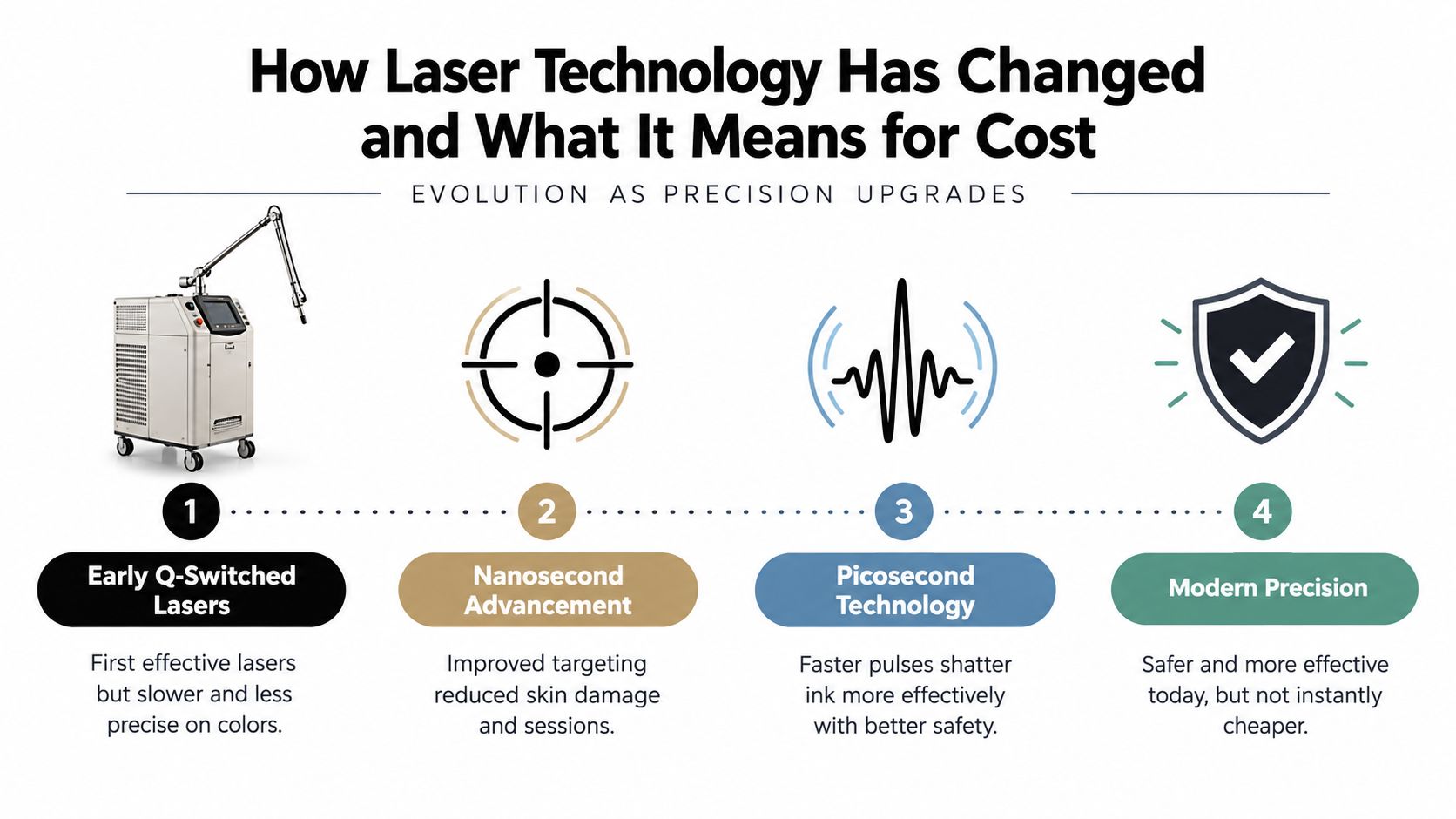
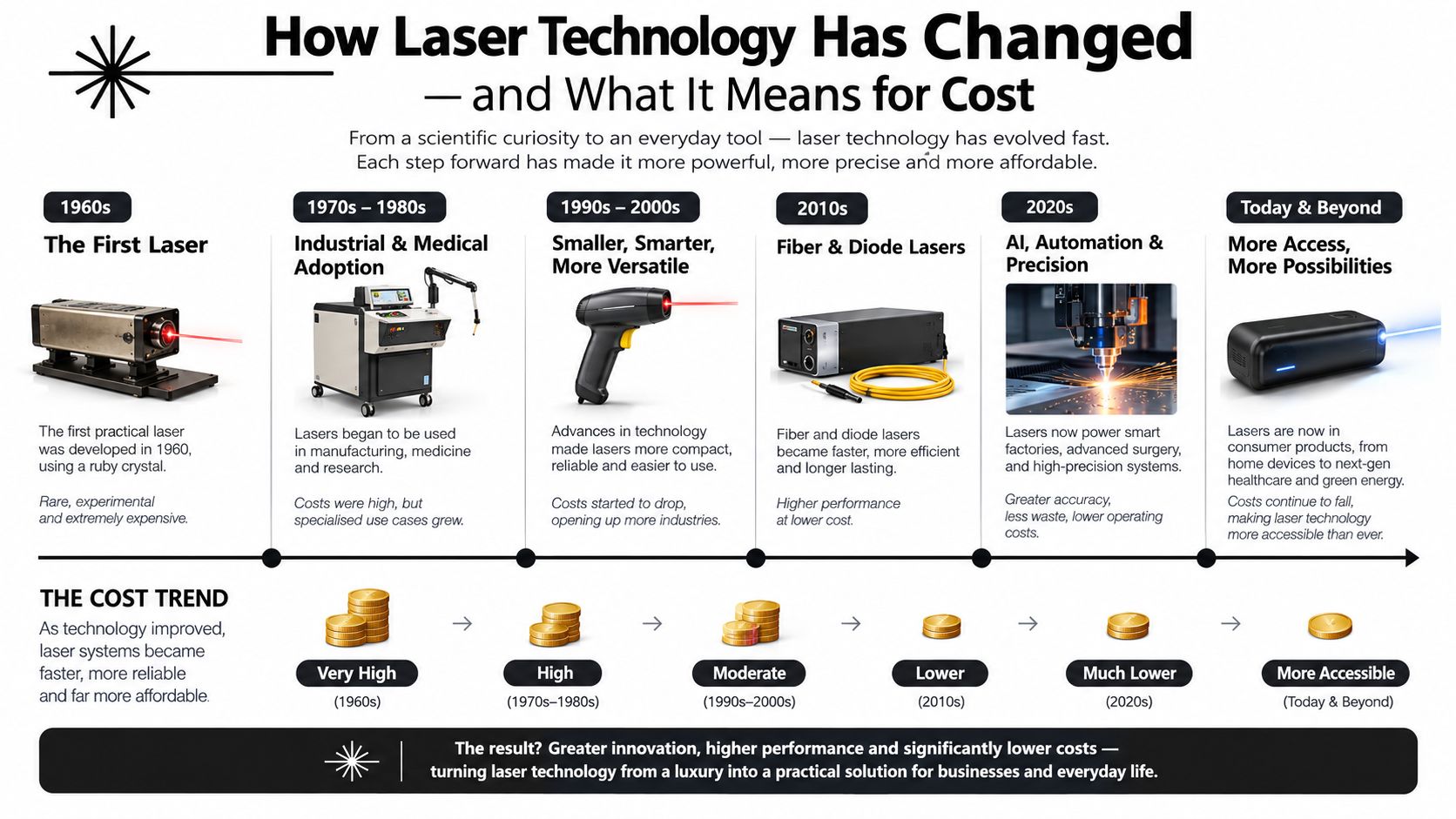
How Laser Technology Has Changed and What It Means for Cost
A person booking tattoo removal today may compare a lower-priced older laser with a newer system that charges more per visit. The meaningful comparison is the full treatment course. Technology can change how efficiently ink is treated, so a higher session fee may still lead to a lower final bill.
Laser development has mainly improved precision, safety, and effectiveness rather than causing an immediate fall in prices. In 1967, Dr. Leon Goldman used ruby and Nd:YAG lasers in an early widely cited example of successful laser tattoo removal. Those systems showed that laser energy could target tattoo pigment, although treatment was less refined than it is now.
A major advance came in the early 1990s, when short-pulsed lasers and selective photothermolysis improved pigment targeting while limiting unnecessary heating of nearby skin. The basic idea is similar to using a focused tool instead of applying heat across an entire surface. The laser delivers energy that preferentially affects ink, breaking it into smaller particles while exposing surrounding tissue to less direct damage.
Progress improves the treatment experience first
Modern picosecond systems use extremely short pulses. For some tattoos, they may break down pigment more effectively, especially where the ink is dense or contains difficult colors. These picosecond laser removal insights explain how pulse duration can affect treatment.
Improved performance does not remove a clinic's equipment costs. A newer platform may require a higher purchase price, specialist training, and continuing maintenance. Staff may also need to adjust wavelengths and settings for different ink colors, densities, and skin responses.
The result resembles other medical technology. A newer device can improve targeting and treatment options before competition makes it inexpensive. Patients may gain access to more capable care, while the clinic still has to recover its investment through treatment fees.
Demand is expanding alongside capability
Market forecasts generally point toward continued expansion rather than a sudden universal price drop. One report projects the global tattoo removal market rising from USD 327.5 million in 2025 to USD 577.8 million by 2034, at a 6.32% compound annual growth rate. Another projects growth from USD 487.91 million in 2023 to USD 3,985.73 million by 2035, with a 19.1% compound annual growth rate. These reports use different methods and should not be combined into one forecast. The history and development of tattoo removal adds context about the field's technological and market development.
Growing demand can give clinics more appointments without forcing them to cut prices sharply. Patients may see wider access, more technology choices, and occasional local discounts. A guide to new tattoo removal technology also shows why the newest option is not automatically the least expensive over the full course.
Why Newer Lasers Can Cost More Per Session but Less Overall
You receive two quotes for the same tattoo. One clinic charges less per visit with an older Q-switched laser. Another charges more with a picosecond platform. The lower first price may look safer, but the more useful comparison is the estimated cost of the full treatment course.
Industry coverage suggests picosecond systems can cost 20% to 30% more per session than older Q-switched lasers. If the newer system helps reduce the number of appointments, however, that higher session price may still produce a lower final bill. Clinics may also charge more because FDA-certified systems can cost roughly USD 100,000 to USD 175,000, as noted earlier.
A simple comparison
| Laser Type | Typical Per Session Price | Device Cost Range | Sessions Needed |
|---|---|---|---|
| Older Q-switched laser | Often lower than newer systems, exact price varies by clinic and tattoo | Lower than newer platforms, no universal verified range provided | May require more visits, depending on ink and clearance goal |
| Picosecond laser | USD 300 to USD 1,000 per session according to Bookedin's tattoo removal cost overview | More than USD 50,000 to USD 100,000 for some devices, according to the same source | May require fewer visits for some tattoos |
A per-session quote is like comparing the cost of one train ticket without checking how many trips you need. The cheaper ticket wins only when the extra appointments do not erase the initial saving. Compare the full course, not just the first payment.
When the premium can make sense
The break-even point depends on your tattoo and treatment goal. Ink color affects how well pigments respond to laser energy. Density matters because a heavily saturated tattoo contains more pigment to process. Fading a design for a cover-up may require fewer visits than aiming for complete clearance.
Ask each provider for:
- The price per session.
- The likely number of sessions.
- The expected total cost range.
- Whether the estimate covers fading or full clearance.
- Whether a package changes the effective price.
A session estimate is a planning range, not a guarantee. Ask what could extend treatment, such as the tattoo's pigment, density, or response between visits. A clinic that explains its assumptions gives you a clearer basis for comparing total-course costs than one that advertises a low introductory price without describing the complete plan.
Market Forces That Keep Prices Steady Even as Tech Improves
A clinic's price reflects more than the laser's speed. Buying a device can cost USD 50,000 to USD 100,000 or more, and the clinic must also cover training, maintenance, staff, treatment space, supplies, and appointment time.
Those expenses remain after a machine becomes more efficient. A newer laser may help some clients reach their goal in fewer visits, yet the provider still needs enough revenue to recover the equipment investment and keep the clinic operating. The result can be a higher fee per appointment with a lower total course cost.
Competition creates local variation
Two clinics can quote different prices for similar tattoos because their operating conditions differ. Rent, staffing, local demand, provider experience, regulations, and equipment choices all shape the final fee. A city with several providers may offer more package options, while a smaller market may have fewer clinics competing for each client.
A high quote still needs an explanation. Ask how much experience the provider has with tattoos like yours, whether the equipment fits your ink colors, and what support is included between appointments. Compare the expected course, not just the advertised session price.

Why demand may not force prices down
A growing treatment market can bring in more clients and clinics, but growth does not guarantee lower consumer prices. Providers may use stronger demand to open locations, buy advanced systems, hire staff, or increase appointment capacity instead of cutting fees.
Lower session prices may appear in some areas, especially through packages or new-client offers. Check whether the discount changes the total amount you are likely to pay. A guide to tattoo removal machine pricing shows why equipment remains part of a provider's pricing equation.
The practical expectation is gradual improvement rather than a universal drop. Technology can shorten treatment for some tattoos, clinics can become easier to access, and packages may improve overall value. Even when picosecond treatment costs more per visit, fewer visits can make the final bill lower. The underlying costs still make a sharp, nationwide price reduction unlikely.
Should You Book Now or Wait Real World Scenarios to Guide You
Your best booking date depends on the result you need and the date you need it. Someone preparing for a cover-up faces a different decision from someone seeking complete clearance for work, enlistment, or a personal milestone. Compare the likely total-course cost, not only the price of one appointment.

Scenario one, complete removal for a deadline
If you need full clearance for a job, enlistment, wedding, or another life event, waiting delays the whole process. Tattoo removal usually develops over multiple appointments, so starting earlier may matter more than holding out for a possible lower session price.
Ask for a consultation focused on your deadline. The provider should explain what may be achievable by that date, whether complete removal fits the available time, and how your tattoo's size, colors, density, and placement shape the plan. A cheaper appointment later does not help if the schedule leaves too little time for healing and follow-up treatments.
Scenario two, fading before a cover-up
A cover-up usually needs the old design lightened, not erased completely. RealSelf reports that about three sessions are often needed for cover-up fading, compared with 10 to 12 sessions for typical complete removal. Its cost guidance shows why your quote should match the result you want.
The useful timing question is when your tattoo artist needs the area ready. Starting sooner can give you more room for treatment and healing, even if the session price stays unchanged. A picosecond system may cost more per visit, yet fewer visits can reduce the final bill.
Scenario three, a low-urgency regret tattoo
If the tattoo is small, does not affect work or relationships, and your budget is limited, waiting may be reasonable. You can watch local package offers and book a consultation when treatment fits your finances.
Check the possible saving against the delay. A future discount may lower the bill, but it may be smaller than expected or unavailable for the technology your tattoo requires. Waiting also postpones every later step, including healing and any cover-up plan.
Use this quote checklist
- State the goal: Confirm whether the plan is fading or complete removal.
- Ask about technology: Find out whether a Q-switched or picosecond system is recommended and why.
- Request a range: Get an estimated session count and total-course price range.
- Check the package terms: Ask whether bundled sessions reduce the effective cost and whether unused sessions expire.
- Discuss your tattoo: Review color, ink density, size, age, placement, and previous cover-up.
- Clarify aftercare: Learn what supplies, healing support, and follow-up guidance are included.
A clear quote helps you choose based on the likely final cost instead of chasing an uncertain price drop.
Making a Smart and Confident Choice About Your Removal Timing
The right timing depends less on guessing future prices and more on understanding your likely total-course value. A clinic may charge more for each appointment when it uses newer equipment, but fewer appointments can make the final bill lower. A cheaper session can cost more overall if your tattoo needs many additional visits.
Technology, ink, and your treatment goal all affect that calculation. Complete removal may require a different plan from fading before a cover-up, and results vary by person. A consultation gives you a starting point without promising an exact outcome.
Questions to bring to a consultation
Ask the provider to review your skin type, ink colors, tattoo density, size, placement, and clearance goal. Request a realistic session range and an estimated total-course price, rather than relying on a single-visit quote. Clarify whether the plan may change if your tattoo responds faster or slower than expected.
Check the practical terms too. Ask how packages compare with pay-as-you-go visits, whether unused sessions expire, what happens after rescheduling, and which aftercare supplies or follow-up support are included.
Florida residents can consult EradiTatt Tattoo Removal at locations including Orlando, Bradenton/Sarasota, St. Petersburg, Palm Harbor, and Tampa. The clinic provides personalized planning for complete removal or fading before a cover-up, based on tattoo features and lifestyle timing.
If you are waiting for a dramatic price drop, a consultation can show whether that saving would change your final cost. You may still decide to wait, but you will have a clearer course, budget, and timeline.
To discuss your treatment goal, estimated sessions, and total-course value, schedule a consultation with EradiTatt Tattoo Removal. You can compare complete removal with cover-up fading and plan around your budget.