
You got home after your first laser session, leaned into the mirror, and saw brows that look angrier than they did when you left the clinic. They're warm, a little red, maybe shiny or blotchy, and you're wondering whether this is the start of healing or a sign that something went wrong.
That reaction is common. The microblading laser removal healing process can look confusing in the first few days because the skin calms faster than the pigment clears, so the early mirror check rarely tells the whole story.
Table of Contents
- What the Microblading Laser Removal Healing Process Looks Like From Day One
- Why Calm Skin Does Not Mean the Pigment Is Gone
- A Realistic Day-by-Day and Week-by-Week Healing Timeline
- Step-by-Step Aftercare That Actually Speeds Healing
- Factors That Change How Your Healing Unfolds
- How Many Sessions and How Much Total Time You Should Plan For
- Normal Delayed Recovery Versus Signs You Should Call Your Clinic
What the Microblading Laser Removal Healing Process Looks Like From Day One
The first night is usually the hardest because the face tells a story before the body has finished it. You may see redness, warmth, swelling, frosting, pinpoint bleeding, or tiny blisters, and that can feel alarming when all you wanted was a clean correction.
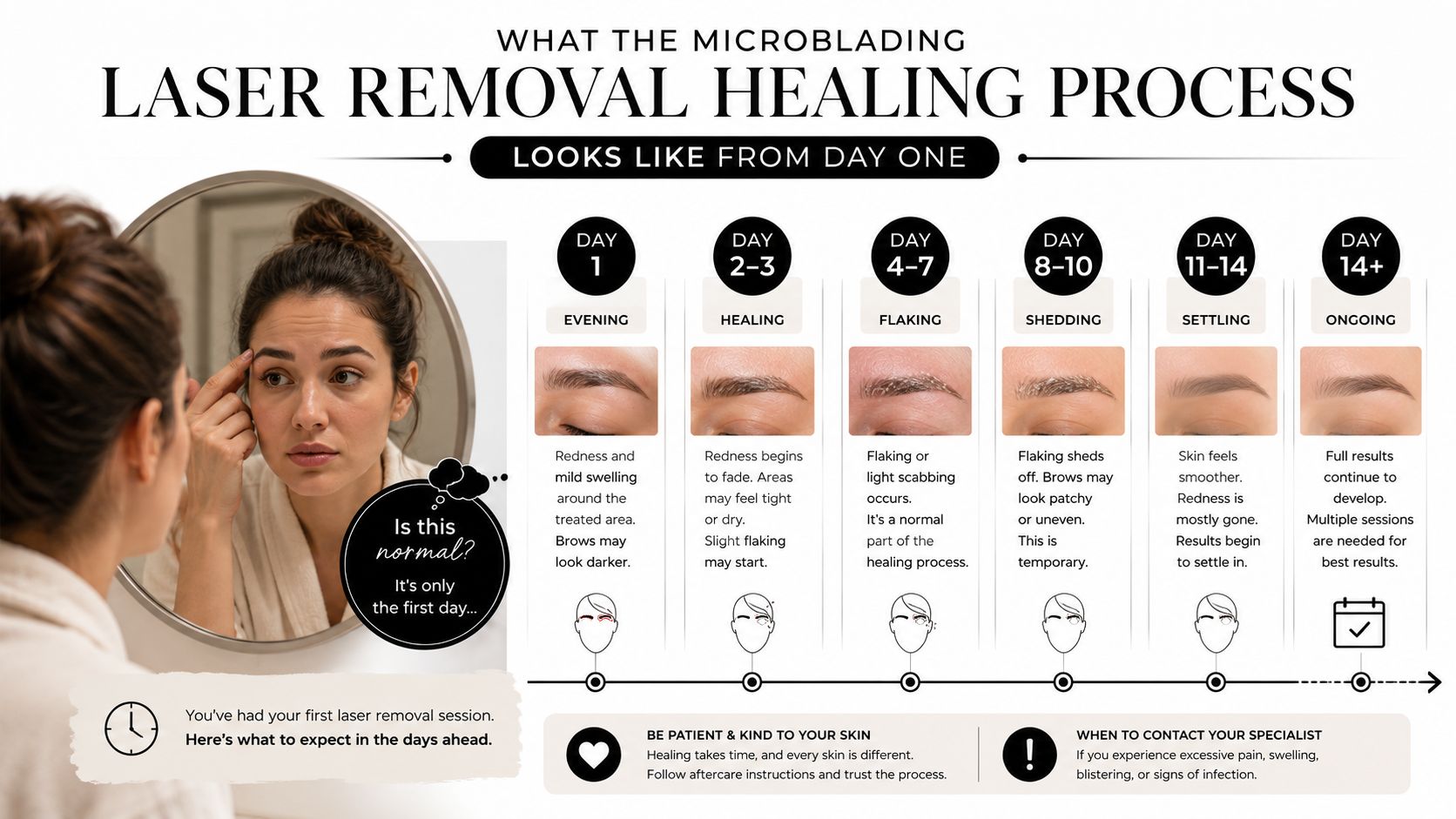
What the first 48 hours usually feel like
Laser removal triggers an acute inflammatory phase, so the brow area often looks more reactive before it looks improved. Visible irritation usually settles within 24 to 48 hours, but that does not mean the pigment has finished moving out of the skin, because the body keeps clearing fragmented pigment for weeks through the lymphatic system. That is why the skin can seem only slightly better on day one, then continue fading later.
A client often checks the mirror that evening, sees a brow that looks a bit darker or blotchier, and assumes the session failed. In reality, early darkening can be part of the normal sequence, and one source notes that the treated skin may look darker before it begins to slough off, usually within a week after treatment, while redness or swelling generally subsides within a day or two (eyebrow tattoo and microblading removal healing process).
Practical rule: judge the treatment after the first inflammatory wave has passed, not while the skin is still hot and reactive.
What usually happens before the week is over
By days three to seven, some clients notice light flaking or a thin crust as the skin renews itself. Others see very little surface change and worry that nothing is happening, but the cleanup is still underway under the surface.
That's why the first session is a poor place to judge final success. The visible face of healing moves quickly, but the pigment removal process moves on a slower biological clock.
Why Calm Skin Does Not Mean the Pigment Is Gone
The skin can look settled while pigment is still being processed below the surface. That's the core mismatch in the microblading laser removal healing process, and it's where a lot of confusion starts.
Surface recovery and pigment clearance are different jobs
The laser doesn't erase pigment in one instant. It fragments the ink into smaller particles, and the body then carries those particles away over time through the lymphatic system. The skin can stop looking irritated long before that deeper cleanup is complete, which is why a calm brow is not the same thing as a finished result.
This is also why people misread temporary frosting, grayness, or darkening as damage. Those changes can happen while the body is still sorting out the broken pigment, and the actual answer often shows up later, not during the first few days.
The scab can be gone while the bruise is still fading. Brow laser removal works in a similar way, visible recovery and true clearance do not happen on the same schedule.
Why week three is the honest checkpoint
A useful way to think about it is this, the surface reaction is the short story, while pigment clearance is the longer chapter. Clinicians generally advise judging the outcome after the inflammatory phase has passed rather than on day one, and the most honest comparison is often around week three or later, when the skin has had time to calm and the color has had time to settle.
That matters because many people decide too early that the session didn't work. In real practice, the skin's appearance on day three tells you how the tissue reacted, not how much pigment the body has cleared. The better question is whether the area is progressively softening over the following weeks, because that's the pattern that usually reflects true progress.
For readers who want a related breakdown of post-treatment redness, the discussion at redness after laser tattoo removal helps separate expected inflammation from the kind that deserves closer attention.
A Realistic Day-by-Day and Week-by-Week Healing Timeline
The easiest way to stay calm is to know what each phase can look like before it happens. The timeline below follows the usual healing arc after the session, from the first hours through the weeks when the pigment keeps clearing.
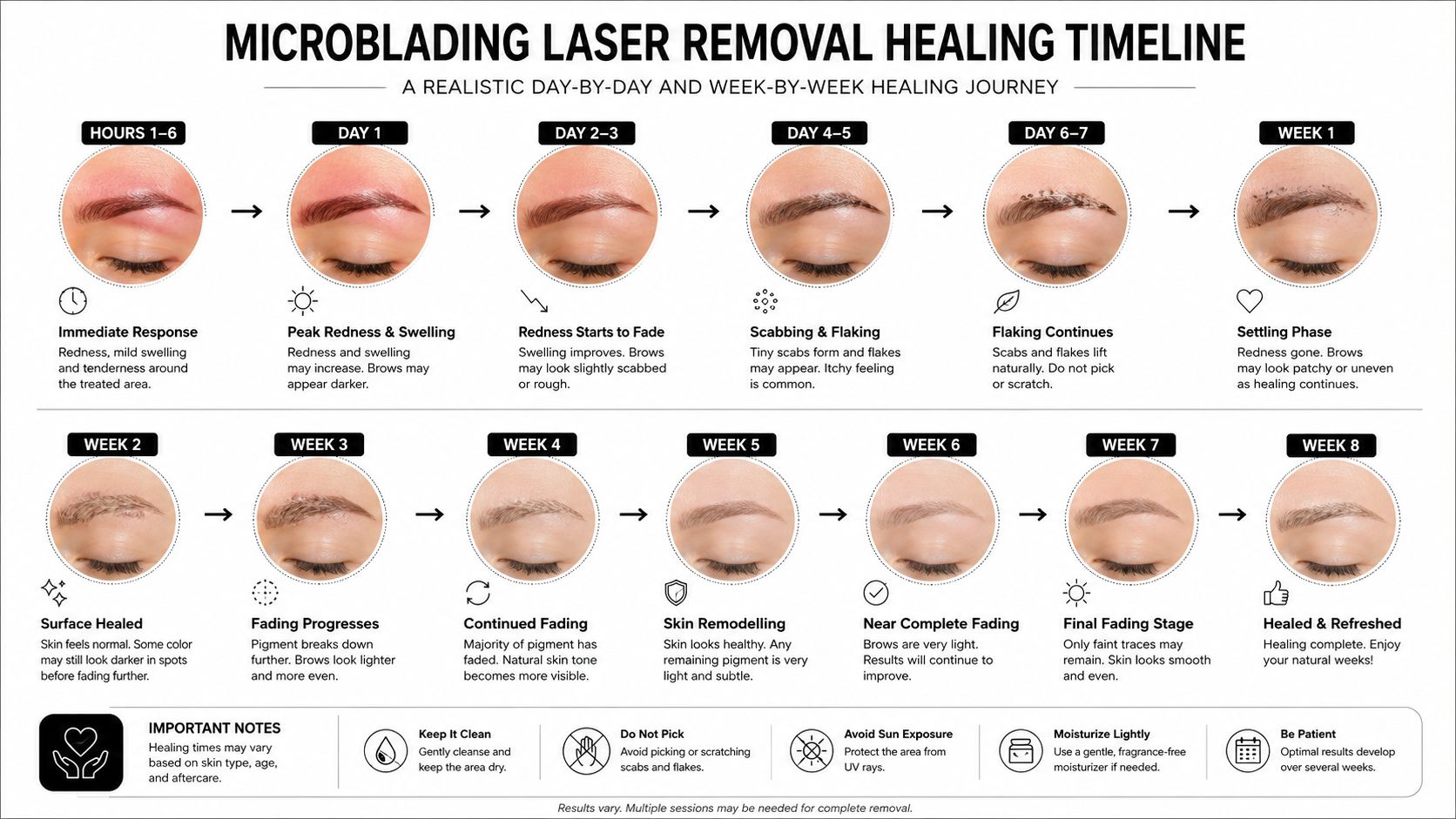
Hours to day three
In the first hours, the brow may feel hot, tight, or tender. Redness and swelling are common, and the area can look frosted or slightly pale before it shifts again. By day two or three, that initial reaction usually starts easing, although the skin may still feel sensitive to touch.
A lot of people panic here because the brow doesn't look finished. It isn't finished. The body is still managing the inflammatory response, and that visible response often settles much faster than the pigment disappears.
Days three to seven
This is the phase where flaking, light scabbing, or a dry surface can show up. Some clients also notice the area looks darker before it starts to shed, which can be unsettling if you weren't warned ahead of time.
That darker stage doesn't mean the laser added pigment. It often means the broken pigment is still trapped near the surface while the skin is moving through its normal recovery pattern.
Week two
The surface usually looks calmer by the second week, but the color can still shift. You may see softer edges, less redness, and a more even tone, though the treated area can still look unfinished compared with the eventual result.
Week three and beyond
Week three is where the mirror becomes more informative. The surface reaction has usually settled enough that you can compare the brows more accurately, and the change from the session becomes easier to see.
By weeks four through eight, the lighter look can continue as the body clears more fragmented pigment. One clinical source describes a healing cycle of roughly 3 to 10 sessions spaced about 6 to 8 weeks apart, while another cites 8 weeks of healing between sessions and says full results can take several months to over a year (microblading healing overview). A separate detailed timeline places complete removal at 8 to 20 months, depending on pigment depth, prior sessions, skin type, and pigment color, with 5 to 10 sessions common and each session lasting about 30 to 60 minutes (microblading removal timeline).
For a related note on why redness can linger longer than people expect, see why aftercare is important after laser tattoo removal.
Step-by-Step Aftercare That Actually Speeds Healing
Aftercare doesn't make the laser work faster in a magical sense, but it does help the skin recover cleanly so the next stage of fading can happen without extra irritation. The goal is simple, protect the brows while the skin is doing repair work.
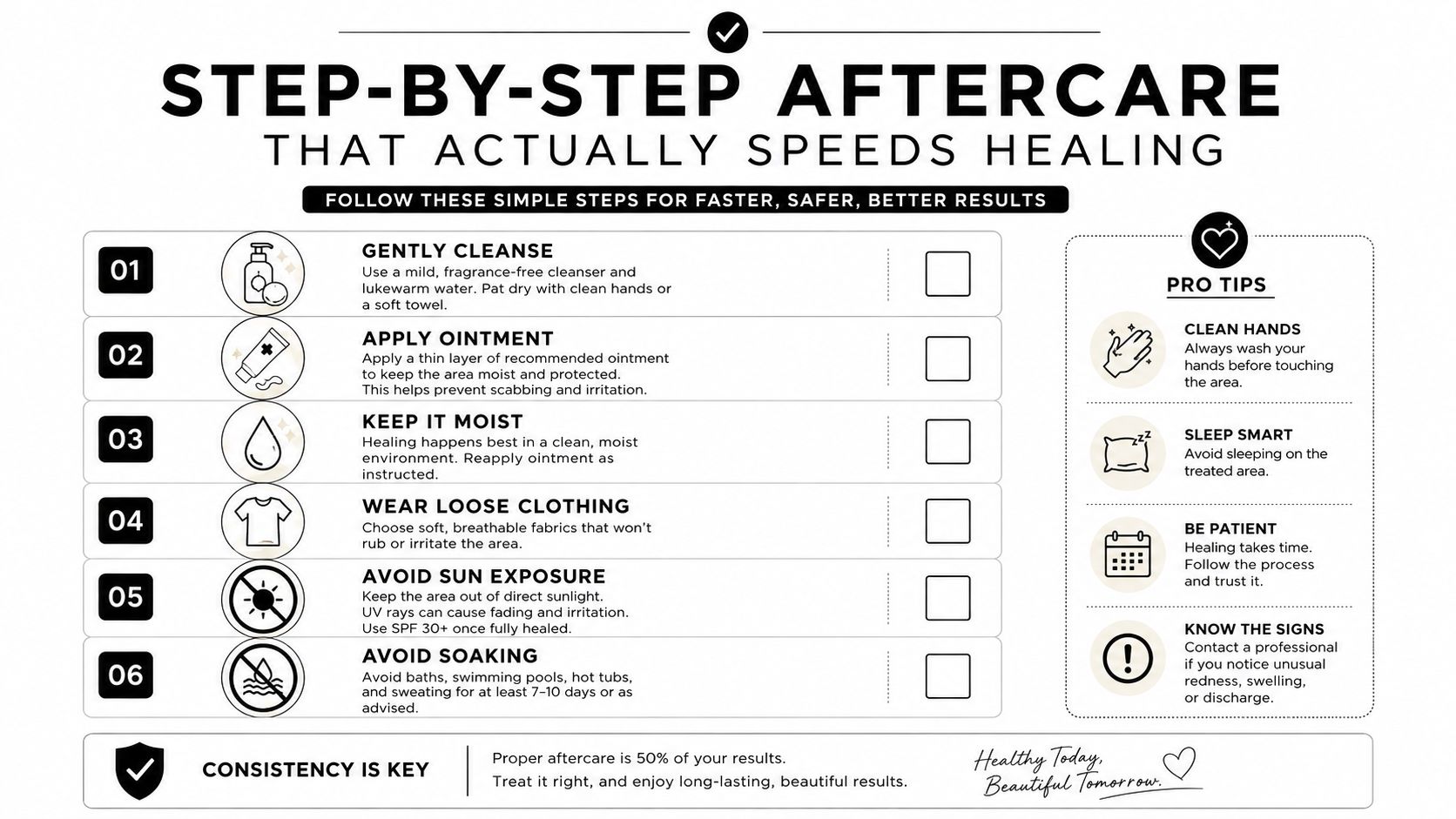
What to do in the first two weeks
Start with gentle cleansing. Use clean hands, mild water, and a soft touch around the brow area so you don't strip the healing surface. If your clinician gives you an ointment or healing balm, apply only as directed, because overusing occlusive products can make the area feel too damp.
If a blister forms, leave it alone. Popping or picking can slow healing and increase the chance of lingering marks, which is exactly what you're trying to avoid.
What to avoid near the brow
Skip makeup on the treated area until your clinician says it's safe. Keep workouts, saunas, pools, and direct sun exposure off the schedule for the early healing window, and be cautious with retinoids and exfoliating acids around the brows because they can add irritation when the skin is already recovering. Sleeping face-down can also rub the area and delay calm healing.
Brow placement changes the rules a little. Products that might be fine elsewhere on the face can creep toward the eye area, so be careful with makeup removers, brow serums, and anything that stings near the hairline.
Brow-specific reminder: if a product would make your skin feel hot, tight, or tingly, it probably isn't a good idea while the laser-treated area is still settling.
For clients looking for general skin support options, vitamin E skin care cream from AloeCure is the kind of product people often ask about, but it should only be used if your provider says it fits your aftercare plan.
If you like to keep track of recovery with a checklist, a local clinic handout can help, and so can a simple reminder system for the first 14 days. The key is consistency, not complicated routines.
Factors That Change How Your Healing Unfolds
No two brows heal at exactly the same pace because the brow, the pigment, and the laser all interact differently from person to person. The timeline is real, but it's not universal.
What changes the pace
Skin type matters. Lower fluence and longer spacing are often used on darker skin tones to protect against pigment shifts and excess irritation, which can slow the visible pace of recovery even when the treatment is going well. Pigment depth also matters, because deeper or denser color can take more sessions to break down and clear.
Laser type matters too. Picosecond and nanosecond devices don't behave identically, and the choice of platform can influence how the pigment fragments and how the skin responds. Session intensity matters as well, because overly aggressive settings can lengthen healing instead of shortening the overall plan.
How those differences show up in real life
A client with shallower microblading pigment may see the brows soften sooner than someone with older, denser strokes. Another client may need gentler settings and more time between visits because the skin is more reactive, even if the pigment itself is easy to treat.
| Factor | Typical Effect on Healing | What to Watch For |
|---|---|---|
| Skin type | More reactive skin may need gentler settings and longer recovery gaps | Prolonged redness, uneven tone, or extra sensitivity |
| Pigment depth | Deeper pigment often takes longer to clear | Slow fading, stubborn dark spots, or a need for more sessions |
| Laser type | Different device types can change how the pigment fragments | Differences in swelling, frosting, or speed of visible change |
| Session intensity | Too much energy can irritate the skin and stretch recovery | Longer inflammation, blistering, or delayed calm-down |
One practical option some clients consider for cosmetic tattoo correction is EradiTatt Tattoo Removal, which provides laser tattoo removal that can be used on cosmetic tattoo pigment as part of a broader removal plan.
The main takeaway is simple. Your timeline should be personal, not borrowed from someone else's brows.
How Many Sessions and How Much Total Time You Should Plan For
Clients typically want an upfront answer regarding the planning before delving into the specifics. They need to know the actual number of visits required and if the process can accommodate their work, travel, or event schedules.
The realistic treatment arc
For eyebrow microblading laser removal, a cross-sectional study found that 78 patients underwent laser removal, 52 of them, or 66.7%, achieved complete removal after laser sessions, and 18 patients, or 23.1%, experienced complications (laser removal study). The same study reported that 27 patients needed only 1 session, 25 needed 2 sessions, and 17 needed 3 sessions, which shows that multiple treatments are common rather than unusual. It also reported that 58 patients, or 74.4%, were satisfied with the result (laser removal study).
That study gives a helpful real-world snapshot, but planning still needs the longer view. A detailed timeline says complete removal can take 8 to 20 months, with 5 to 10 sessions common and 6 to 8 weeks needed for full healing before the next appointment (microblading removal timeline). That spacing isn't a delay tactic, it's part of how the skin and lymphatic system process the pigment.
How to plan around life events
If you're timing removal for a wedding, a new job, a military deadline, or a cover-up appointment, build around the healing interval instead of trying to compress it. The safest sequence is simple. Let the skin calm, let the pigment settle, then book the next pass.
Rushing sessions tends to create more inflammation, not faster removal. When the skin isn't ready, the next treatment has less room to work cleanly.
Planning rule: a brow that looks ready in the mirror can still be biologically busy underneath.
Normal Delayed Recovery Versus Signs You Should Call Your Clinic
Some brows look a little pink longer than expected and still end up healing normally. Other brows send signals that need a clinician to take a look, and the difference matters.
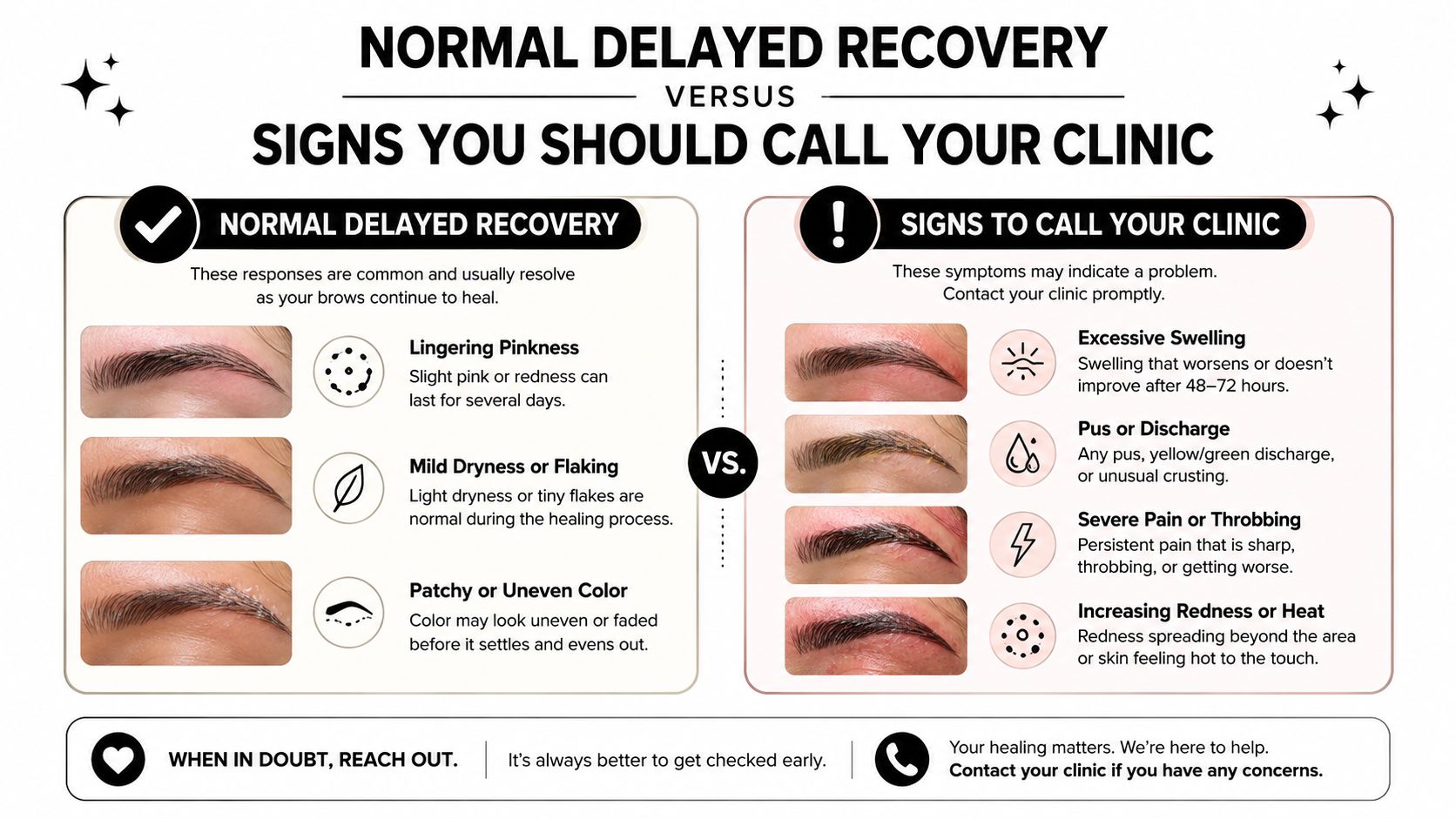
What can be normal when healing is slow
A lingering pink tone, mild dryness, or a surface that just seems slower to settle can still fit within delayed recovery. People are often surprised when redness lasts for weeks, and sometimes even longer, because the skin's inflammatory response doesn't always move on the same schedule as the visible crust or flake.
That's not the same as active injury. The issue is whether the area is gradually improving or getting more irritated over time.
What deserves a call
Spreading redness, hot swelling, yellow crust, severe pain, or pigment changes outside the treated zone need clinical attention. So do signs that look like infection rather than ordinary healing.
For readers who want a deeper look at that distinction, signs of infection after tattoo removal is a useful reference point. If you're trying to sort normal irritation from a true problem, in-person reassessment beats guessing at home.
If you want practical help from a clinic team that handles removal questions every day, manage beauty spa phone calls is the kind of support many practices use to keep follow-up communication organized, especially when clients are worried about downtime and healing.
If your brows are still changing and you want a calm, professional read on what's normal, EradiTatt Tattoo Removal can help you plan the next step with a treatment approach that fits your skin and your timeline. Visit EradiTatt Tattoo Removal to book a consultation and get clear guidance on laser removal, healing, and follow-up care.