
You're a few hours or a day out from treatment, and the area won't stop nagging at you. It isn't necessarily painful. It's just itchy enough to keep pulling your attention back to it. Most clients describe the same moment. They wonder whether they're healing normally or whether something is starting to go wrong.
In clinic, that question comes up constantly because itching after laser tattoo removal is common. It's also one of the easiest symptoms to misread. Sometimes it means your skin is doing exactly what it should. Other times, especially when the itch gets stronger instead of calmer, it can point to an ink allergy or a healing problem that needs a closer look.
Table of Contents
- That Unmistakable Itch Your First Sign of Healing
- Why Your Skin Itches After Laser Tattoo Removal
- The Typical Itching Timeline and What to Expect
- Safe and Effective At-Home Itch Relief Strategies
- Red Flags When Itching Is Not Normal
- When to Contact Your Provider for Expert Guidance
That Unmistakable Itch Your First Sign of Healing
The first itchy phase usually catches people off guard. They leave expecting redness or warmth, then later that day or the next morning the treated skin starts to prickle, tighten, and itch in a way that feels oddly specific. Not random. Not subtle. Just constant enough to tempt scratching.
That reaction is usually part of normal healing.
A lot of new clients assume itching means the skin is irritated in a bad way. In practice, mild to moderate itch often shows up because the area is recovering. The skin has been exposed to a controlled laser injury, the pigment has been disrupted, and your body has started cleanup and repair. That combination creates inflammation, dryness, and nerve stimulation, which is why the sensation is so noticeable.
What most people feel first
Common descriptions sound like this:
- Tight and dry: The skin feels stretched, almost like a healing sunburn.
- Tickly or prickly: The itch comes in waves instead of staying perfectly steady.
- More obvious at night: Once you stop moving around, you notice it more.
- Hard not to scratch: Even when it's not severe, it can be persistent.
Practical rule: If the itch feels annoying but the area is otherwise following a normal healing pattern, that's usually expected. If the itch becomes more intense, more inflamed, or more reactive as days pass, pay attention.
The important part is context. A normal healing itch tends to show up with other expected symptoms like mild redness, dryness, or light swelling. A problem itch usually arrives with signs that don't match the usual course, such as escalating inflammation, unusual bumps, or symptoms that linger well past the expected window.
That distinction matters because “tattoo removal itchy” isn't one single issue. It can describe normal recovery, a masked allergic response, or a slower long-term healing problem. Knowing which one you're dealing with changes what you should do next.
Why Your Skin Itches After Laser Tattoo Removal
A client will often tell me the same thing a day or two after treatment. “It looks about how I expected, but why is it so itchy?” The short answer is that itching is one of the ways healing skin behaves after the laser has disrupted ink and stirred up an immune response.
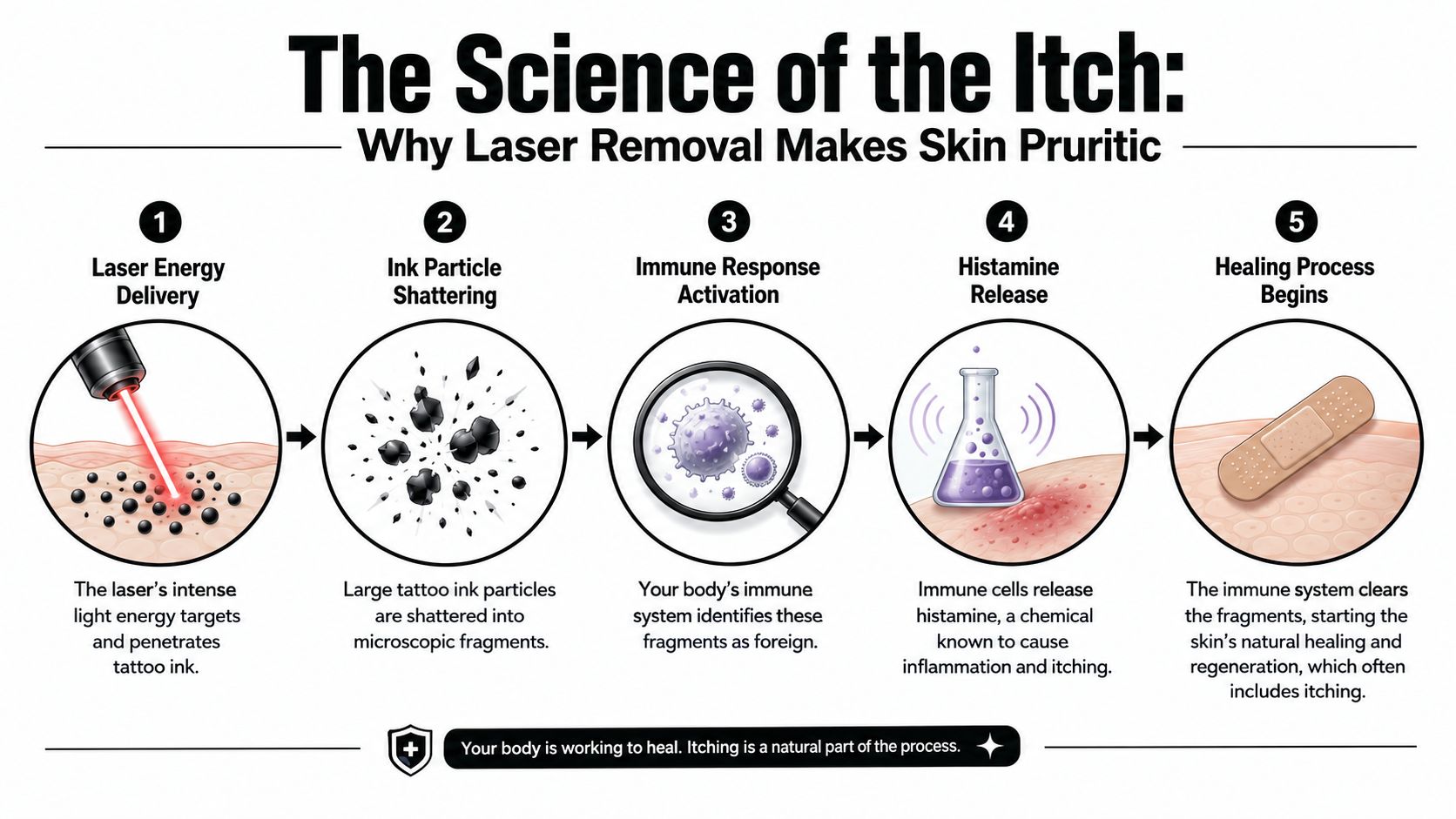
The laser does two things at once. It fractures pigment below the surface, and it stresses the outer skin barrier above it. Your body then has to manage both jobs. It starts clearing ink fragments through the immune system while also repairing dry, irritated tissue at the surface. That combination is why itching can feel surprisingly intense even when the treatment site still looks normal.
The itch usually comes from inflammation, dryness, and nerve irritation
After treatment, the area often becomes inflamed in a controlled way. Blood flow increases. Immune cells move in. Chemical signals involved in healing, including histamine, can irritate local nerve endings and create that prickly, hard-to-ignore sensation.
Dryness adds another layer. Laser-treated skin commonly loses moisture for a period of time, and a dry skin barrier is less able to protect nerve endings from friction, heat, and everyday irritation. A shirt rubbing the area, a hot shower, or sweating can suddenly make the itching feel worse.
That is one reason why aftercare matters after laser tattoo removal. Good aftercare does not just make you more comfortable. It limits avoidable irritation while the skin barrier rebuilds.
Here's the process visually:
Ink color and body chemistry can change how the itch behaves
Two clients can receive a similar treatment and report very different sensations. That does not automatically mean one result is off course. Skin sensitivity varies. So does barrier strength. Pigment composition also matters, because some inks create a more reactive cleanup process than others once they are broken apart.
This is also where people get confused. A normal healing itch tends to improve as the skin calms, even if it is annoying in the meantime. An itch that keeps intensifying, becomes bumpy or widespread, or returns well after the surface should have settled deserves more caution. In practice, that pattern can point to more than simple dryness.
Normal healing itch and reaction-type itch are not the same thing
A standard post-laser itch stays centered in the treated area and usually tracks with other expected healing signs such as mild redness, tightness, flaking, or light swelling. It may feel stronger at night or after heat exposure, but the overall trend should be gradual improvement.
A reaction-type itch behaves differently. It may look more raised, more blotchy, or more inflamed than expected. It can spread beyond the treatment borders, linger longer than the usual healing window, or show up with hives, unusual bumps, or persistent swelling. That kind of itch can reflect an allergic response to released ink particles or a delayed healing problem rather than ordinary recovery.
That distinction matters because the wrong response can make things worse. Scratching, overheating the area, or using random products may irritate healing skin that needs moisture. Those same choices can also mask a reaction that should be assessed by your provider. If you want general skin-soothing options outside the tattoo-removal context, you can discover remedies for irritated skin.
The useful question is not just, “Is itching normal?” The better question is, “Is my itch following a normal healing pattern?” That is how I tell clients to judge it.
The Typical Itching Timeline and What to Expect
Clients do better when they know what “normal” looks like. Without a timeline, every sensation feels suspicious. With one, it's much easier to judge whether your skin is recovering on track.
In patients undergoing Q-switched laser removal, itching typically develops within the first 24 hours after treatment as part of a hypersensitivity reaction and subsides within 1 to 2 weeks according to this review of laser tattoo removal complications and healing patterns.
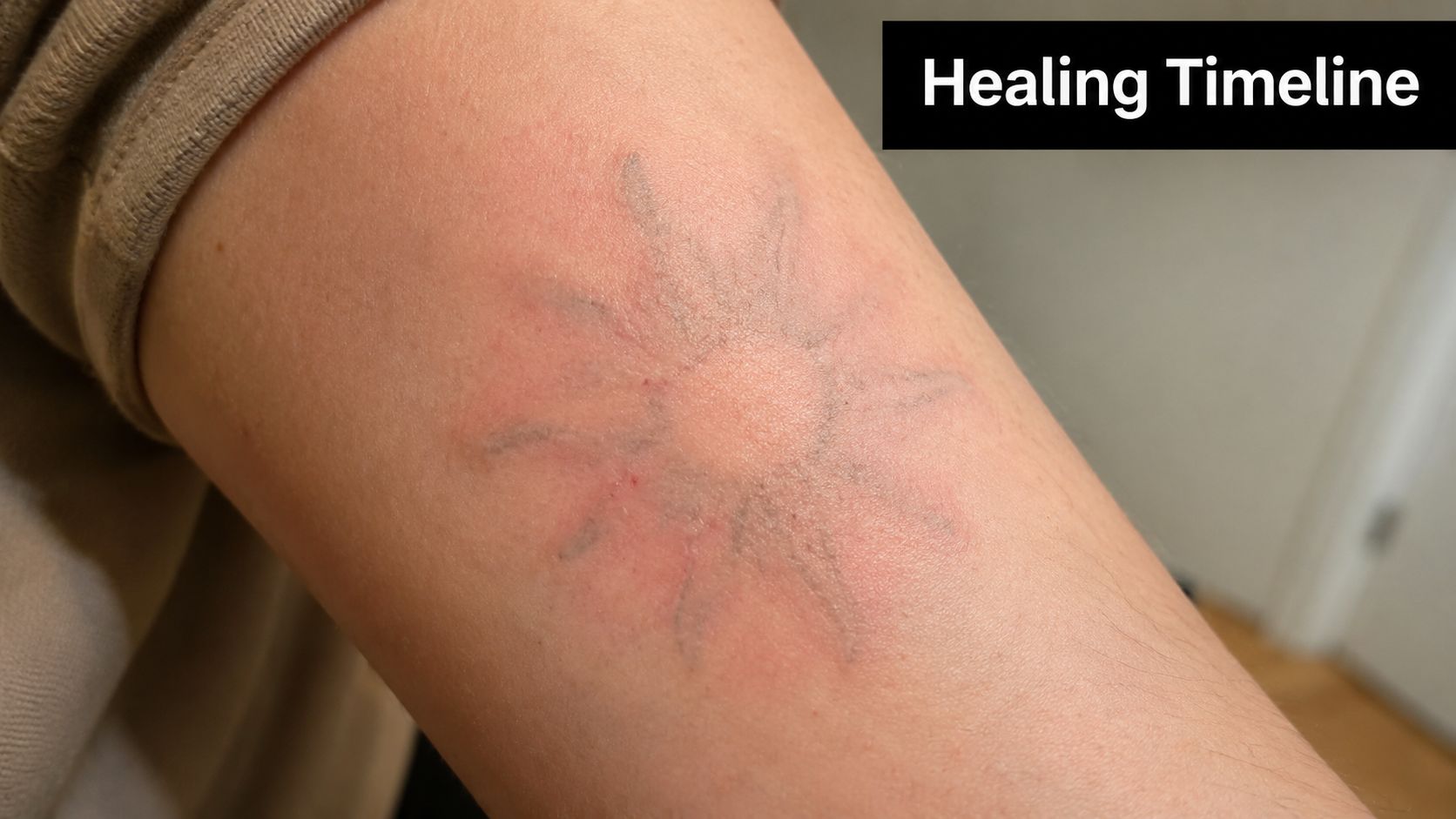
What the first two weeks usually feel like
A practical healing pattern often looks like this:
- First 24 hours: The area may feel warm, dry, tight, and reactive.
- Early days after treatment: Itching often becomes more noticeable as redness and swelling settle into the healing phase.
- Through the next stretch of recovery: The itch should gradually calm rather than build.
- By the end of the normal window: Clear improvement is typically observed, even if the skin still feels a bit dry or sensitive.
Redness often overlaps with itching, so if you're also noticing color change in the treated area, this guide on redness after laser tattoo removal can help you tell expected inflammation from something that needs attention.
What should not happen
The key question isn't whether you itch. It's whether the itch is trending in the right direction.
A normal itch may be annoying, but it should slowly become less dramatic. It shouldn't keep intensifying long after the initial healing phase. It also shouldn't disappear and then return much later with new bumps, scaling, or swelling unless something else is going on.
Skin that heals normally looks calmer over time, even if it doesn't feel perfect right away.
People often judge healing by a single day, which is misleading. One day can feel itchier than the previous one and still be normal. The overall pattern across the recovery window provides a more accurate assessment. If the trend is down, that usually supports normal healing. If the trend is up, or if symptoms drag on past the expected window without improvement, it's time to stop guessing.
Safe and Effective At-Home Itch Relief Strategies
A common mistake shows up around day three or four. The area starts itching hard enough to distract you, the swelling is down, and the skin looks dry, so people reach for whatever sounds soothing. That is usually when healing gets irritated by scratching, over-moisturizing, heat, or a product that was never meant for freshly treated skin.
The goal at home is simple. Reduce itch without adding friction, heat, or chemical irritation. Good aftercare supports the skin barrier while the treated area is still vulnerable.
What actually helps
A cool compress is one of the safest tools you can use. Keep it wrapped, keep it brief, and never put ice directly on the skin. Cooling takes the edge off inflammation and gives temporary itch relief without disturbing the surface.
Moisture also matters, but more is not better. A thin layer of a fragrance-free product such as Aquaphor or plain aloe vera can reduce the dry, tight feeling that makes itching feel louder than it is. If the area becomes soggy, overly shiny, or more irritated after repeated applications, back off. Skin heals better with light protection than with heavy layering.
Tapping or pressing around the itch can help more than clients expect. Scratching creates tiny breaks in skin that is already healing, and those breaks can prolong recovery. Light pressure interrupts the itch cycle without tearing tissue.
Sun and heat make itchy skin more reactive. Keep the area covered from direct sunlight, skip hot showers on the treated spot, and avoid saunas until your provider says the skin has recovered enough. If you want a broader list of gentle ways to calm irritated skin, discover remedies for irritated skin.
Basic hydration helps too. It will not erase itching on its own, but skin that is dry and neglected usually feels worse during recovery.
Products that may help, but only with approval
Some clients do well with an oral antihistamine if the itch feels excessive, especially at night. Hydrocortisone cream can help in select cases, but I do not recommend using it automatically. Steroid creams can quiet irritation, yet they can also blur the picture if the skin is reacting to pigment, aftercare products, or early infection. If you are not sure what is driving the itch, ask before you apply it.
That trade-off matters. A product that masks symptoms can delay the right response.
What usually makes itching worse
These are the patterns that keep treated skin irritated longer than necessary:
- Scratching or rubbing: This damages fragile skin and raises the risk of scabbing, texture change, and delayed healing.
- Hot water and heat exposure: Heat increases inflammation and often makes itching spike.
- Fragranced lotions or harsh actives: Scent, acids, and exfoliating ingredients can sting and trigger more irritation.
- Tight clothing or repeated friction: Constant rubbing keeps the area activated.
- Heavy product layering: Too much ointment can trap heat and moisture against skin that needs to breathe.
Keep the area clean, cool, and lightly protected. That approach is boring, but it works.
For a clearer picture of how these choices affect healing quality, read why aftercare matters after laser tattoo removal.
A firm rule on shortcuts
Do not use tattoo removal creams, acids, scrubs, or DIY kits on skin that is healing from laser treatment. As noted earlier in the article, the FDA has not approved at-home tattoo removal creams or kits for safety or effectiveness. In practice, these products often turn a manageable itch into a chemical irritation, burn, or scar risk.
If the itch feels intense, the answer is not a stronger product. The answer is choosing the safest relief while paying attention to whether the skin is calming down or showing signs that the itch is coming from something other than normal healing.
Red Flags When Itching Is Not Normal
Most healing itch is inconvenient. Problem itch behaves differently. It escalates, lingers, or comes with other changes that don't fit the expected recovery pattern.
One of the most overlooked issues is the masked allergic reaction. Laser removal can expose a pigment problem that sat in the skin for a long time, sometimes activating severe hypersensitivity reactions to certain pigments (such as red, black, or green) that were previously unproblematic. Individuals might then misinterpret an intensifying itch as typical recovery, rather than a symptom of acute contact dermatitis according to this discussion of tattoo removal side effects and allergy flare-ups.
Is Your Itching Normal Healing vs. Red Flags
| Symptom | Normal Healing | Potential Red Flag |
|---|---|---|
| Itch pattern | Mild to moderate and gradually settles | Intensifies, returns, or keeps building |
| Skin appearance | Light redness, dryness, expected irritation | New rash, unusual bumps, scaling, or angry inflammation |
| Timing | Follows the early healing window and trends better | Persists beyond the usual recovery window or flares later |
| Touch and behavior | Sensitive but manageable with aftercare | Increasing tenderness, reactivity, or obvious worsening |
| Pigment link | General post-treatment discomfort | Strong reaction in certain colors, especially if the site becomes very inflamed |
Clues that point toward allergy or complication
Certain tattoo pigments, especially red and yellow, are known to trigger allergic reactions that can appear as itchy papules, nodules, or scaly plaques. When those pigments are shattered by laser treatment, the released allergen can intensify the reaction and, in rare situations, become more widespread, as outlined in this medical review of tattoo complications and allergic reactions.
That's why a worsening itch deserves respect. The issue isn't just discomfort. Continued treatment on actively inflamed skin can increase the risk of poor healing and unwanted texture change.
Watch closely if you notice any of these patterns:
- The itch is getting stronger, not weaker
- The skin develops papules, nodules, or scaly patches
- A specific color area reacts much more dramatically than the rest
- The irritation persists past the expected healing window
- The area starts looking infected rather than merely irritated
If you're unsure whether you're seeing ordinary irritation or a true complication, this guide to signs of infection after tattoo removal can help you sort through the difference.
Worsening is the word that should catch your attention. Normal healing calms down. Complications tend to gather momentum.
When to Contact Your Provider for Expert Guidance
There's a point where home care stops being the right move. If the itch is excessive, some people do get relief from over-the-counter antihistamines such as Benadryl or Zyrtec. But if itching worsens or persists beyond two weeks post-treatment, patients should consult their tattoo removal specialist rather than continuing self-management according to this guidance on itching after laser tattoo removal.

Reach out if any of these apply
- The itch keeps escalating: Especially if the skin looks angrier each day.
- You're past the expected healing window: Persistent itching needs a professional read.
- You see signs of a pigment reaction: Raised, scaly, bumpy, or unusually inflamed areas need evaluation.
- Blisters become large or concerning: Aftercare guidance advises seeking medical treatment if blisters form larger than a dime.
- You suspect infection or severe allergy: Don't try to tough that out at home.
The right provider would always rather hear from you early than after a preventable problem gets worse. That's especially true with tattoo removal, where the line between normal inflammation and an allergic flare can be easy for a client to miss.
If you're in Florida and want experienced support through the full removal process, EradiTatt Tattoo Removal offers consultations across Orlando, Bradenton/Sarasota, St. Petersburg, Palm Harbor, and Tampa. Whether you want complete removal or fading for a cover-up, the team can help you understand what your skin is doing, what aftercare matters most, and when itching is just healing versus when it needs expert attention.