If you're reading this before a laser appointment, you're probably thinking about one thing first. How much is this going to hurt?
That concern is normal. Individuals don't call a clinic worried about laser wavelengths or pigment response. They worry about the sting, the heat, and whether they'll tense up halfway through the session and regret booking it.
A tattoo removal numbing cream can help, but it isn't a simple yes-or-no decision. Comfort matters. Results matter too. In practice, the core question isn't just whether numbing cream works. It's whether it helps enough, safely enough, without getting in the way of the treatment itself.
Table of Contents
- Is Tattoo Removal Painful And Can Numbing Cream Help
- What Is Inside a Tattoo Removal Numbing Cream
- The Critical Trade Off Between Comfort and Effectiveness
- Safety Risks and Who Should Avoid Numbing Creams
- A Step-by-Step Guide to Applying Numbing Cream Correctly
- Pain Management Alternatives Offered in a Clinic Setting
- Our Numbing Policy and Your EradiTatt Appointment
Is Tattoo Removal Painful And Can Numbing Cream Help
The honest answer is yes, laser tattoo removal can be painful. People describe it in different ways. Some say it feels hot and sharp. Others compare it to repeated snaps on sunburned skin. The sensation also changes based on the tattoo's location, your skin sensitivity, and how dense the ink is.
For a nervous client, that fear can feel bigger than the appointment itself. A lot of people are perfectly ready to remove the tattoo. They just aren't sure they can sit through the treatment.
That's where numbing cream enters the conversation. It can reduce the edge of the pain and make the session feel more manageable. It doesn't make the process vanish, but it can take the surface sting down enough that many clients feel far more in control. If you want a broader overview of managing tattoo removal discomfort, that resource does a good job explaining the range of options people consider before treatment.
What most clients actually want
Individuals aren't asking for zero sensation. They're asking for this:
- Less anticipatory fear: They want to walk in calmer.
- A steadier session: They don't want to jump, flinch, or stop early.
- A realistic plan: They want to know what helps without creating new problems.
That last point matters. Some pain relief strategies are simple and low-risk. Others can change how the skin responds during treatment. For those curious whether the process is tolerable in real life, this breakdown of whether laser tattoo removal hurts in Tampa gives helpful context around what the session feels like from start to finish.
Most clients do better when they know what to expect. Uncertainty usually creates more anxiety than the treatment itself.
A tattoo removal numbing cream can be useful. It just needs to be chosen and used carefully, because comfort isn't the only variable that matters.
What Is Inside a Tattoo Removal Numbing Cream
Most products sold as tattoo numbing creams are topical anesthetics. That means they work at the skin level. They don't remove ink. They don't change the tattoo itself. Their job is to dull the nerve signals coming from the treatment area for a limited time.
A commonly recognized ingredient is lidocaine. Some clinical products also use combinations such as lidocaine and prilocaine. The basic idea is simple. The cream sits in the skin and temporarily blocks part of the pain signal from traveling the way it normally would.
How topical anesthetics actually work
A simple way to think about it is a lock and key. Nerves send pain signals through channels in the skin. A numbing agent fits into that process and blocks the channel, so the signal doesn't pass through as strongly. The skin isn't unconscious. It's just less reactive.
That distinction matters because it explains why people still feel something during laser sessions. Numbing cream usually softens the sensation. It doesn't create complete absence of pain.
There's also a safety line that many online sellers blur. The U.S. Food and Drug Administration approves topical lidocaine at a 4% concentration for over-the-counter use, while higher concentrations of 5% and 6% remain unapproved and carry documented risks according to this review of how lidocaine concentrations affect tattoo numbing safety. That same source notes that 4% lidocaine is the recommended standard for dulling the sensation of laser sessions without the more serious risks tied to unapproved high-strength alternatives.
Numbing Cream Concentrations Compared
| Lidocaine Level | FDA Approval Status (OTC) | Typical Use | Associated Risk |
|---|---|---|---|
| 4% | Approved for OTC use | Temporary skin numbing before procedures | Lower risk when used appropriately |
| 5% | Not approved for OTC use | Often sold online as stronger numbing | Documented toxicity concerns |
| 6% | Not approved for OTC use | Marketed as extra strength | Documented risk of toxicity and chemical burns |
A lot of clients assume stronger always means better. In practice, stronger often just means less regulated and less predictable.
Practical rule: If a cream is marketed aggressively on pain promises but seems vague about concentration, ingredients, or safe use, that's a reason to stop before putting it on your skin.
If you want another example of how patients are taught to evaluate topical pain products more carefully, this guide for Illinois back pain sufferers is useful because it shows how ingredient scrutiny matters across pain-relief creams, not just tattoo-related ones.
The Critical Trade Off Between Comfort and Effectiveness
This is the part many people never hear until they're already in the treatment chair. A tattoo removal numbing cream may help with comfort, but it can also create a treatment trade-off.
Some creams don't just sit harmlessly on the surface. Depending on the formula and how heavily it's applied, they can change the skin environment the laser is working with. That's why some clinics are cautious about them, and why others only allow specific products or very specific application methods.
Why some creams can interfere with laser work
There are two main concerns.
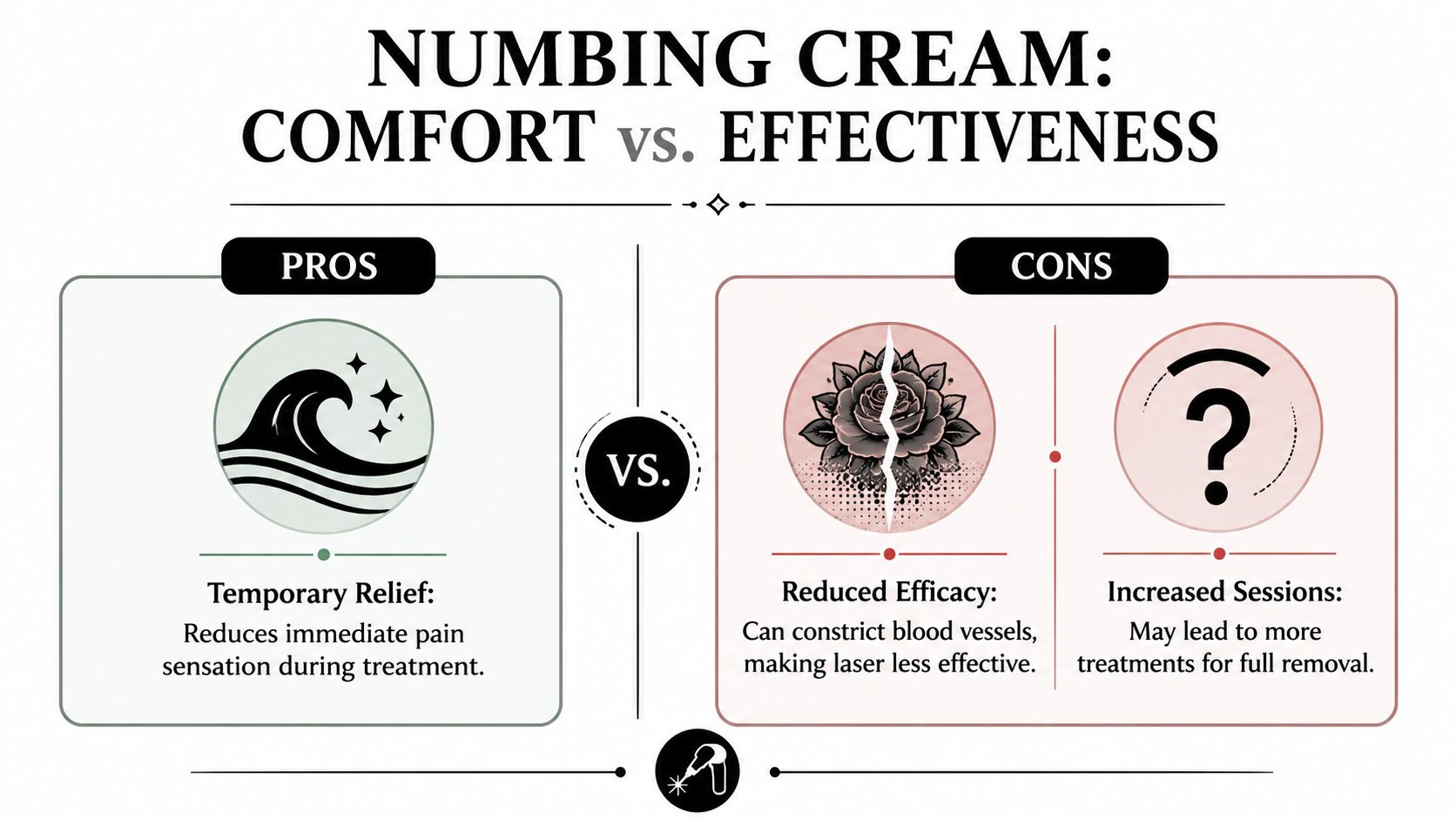
First, some lidocaine-based ingredients can absorb or reflect laser light, which means less energy reaches the ink. Second, occlusive numbing products may temporarily reduce superficial blood flow, which can alter the thermal response the laser depends on for effective pigment targeting. That summary aligns with the clinical consensus discussed in this community review of numbing cream and laser interaction.
A simple analogy helps. Imagine attempting to get full sun exposure through a layer of product on the skin. Even if the light still gets through, the conditions aren't exactly the same. Laser tattoo removal is more precise than suntanning, of course, but the principle is similar. Surface conditions matter.
Another concern is practical, not theoretical. A cream that's applied too thickly can act like a barrier. If too much residue remains on the skin, treatment accuracy can suffer. That doesn't mean every small amount of cream ruins a session. It means sloppy application can work against the goal.
When the trade-off may be worth it
This is where clinical judgment comes in. Some clients are so pain-sensitive that without some form of numbing, they tense up, move, or stop early. In that situation, modest pain control can make the session smoother and more tolerable.
At the same time, numbing creams can slow down treatment efficacy because ingredients may reduce the blood flow necessary for the laser to heat ink particles effectively, and case data suggests clients who use them can experience less fading per session, potentially leading to more treatments and higher overall costs, as discussed in this breakdown of why numbing cream may affect tattoo removal progress.
So the question isn't "Does it numb?" It usually does, at least to a degree. The better question is whether the pain relief is worth the possibility of slower visible progress for your particular tattoo and tolerance level.
A balanced way to consider it:
- If comfort is the priority: A carefully managed cream may help you get through treatment.
- If efficiency is the priority: Minimal interference with the skin often makes more sense.
- If your tolerance is uncertain: Start by learning the difference between true laser treatment and topical myths. This article on whether tattoo removal creams work clears up a lot of confusion.
Some clients need less pain. Some need the fastest possible fading. Most need an honest explanation of the trade-off so they can choose on purpose.
Safety Risks and Who Should Avoid Numbing Creams
There are safe ways to use topical anesthetics, and there are unsafe ways that can create real harm. The biggest problems usually happen when people buy unapproved high-strength products online, apply too much, treat a large area, or leave the product on without guidance.
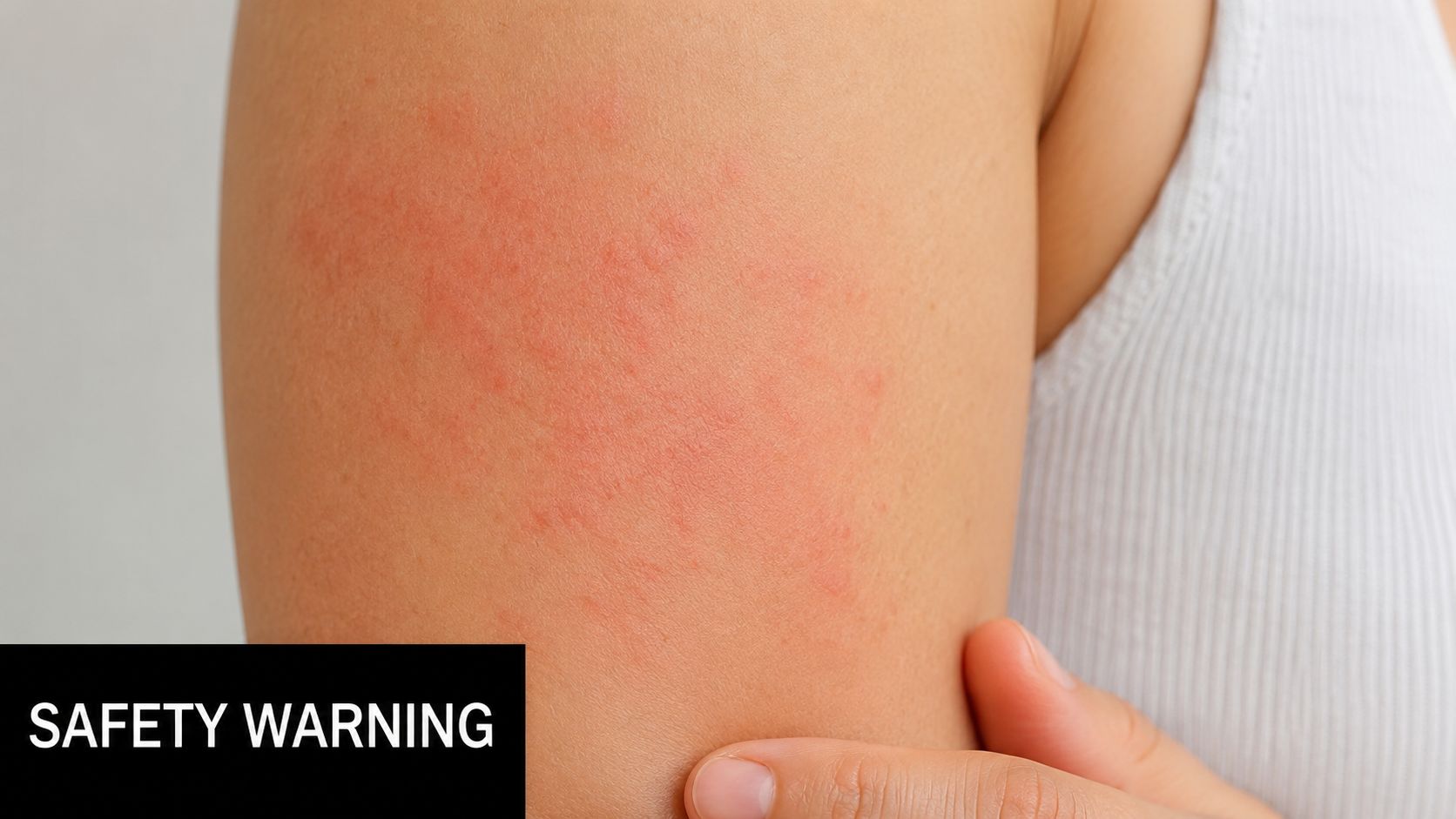
At the skin level, reactions can include irritation, redness, rash, and in more serious cases, burns. At the systemic level, the risk becomes more serious if too much lidocaine is absorbed into the bloodstream. That's one reason concentration and application area matter so much.
The line between numbing and removal claims
A lot of people searching for relief end up seeing products that blur two separate ideas. One is a numbing cream meant to reduce discomfort before a procedure. The other is a so-called tattoo removal cream, which is a completely different claim.
The FDA has not approved any ointments or creams for do-it-yourself tattoo removal and warns that these products may cause skin rashes, burns, or scars because their ingredients can't reach tattoo pigment in the deeper dermis. That warning is stated clearly in the FDA's consumer guidance on tattoo removal options and results.
That means any product promising to fade or remove a tattoo at home with a cream should be treated with serious skepticism.
Who should pause and ask first
Certain people should be especially careful before using any tattoo removal numbing cream:
- Anyone with a known allergy to local anesthetics: If you've reacted badly to lidocaine or other "caine" products before, don't guess.
- People with irritated, broken, or inflamed skin at the treatment site: Damaged skin can absorb products differently and react more aggressively.
- Clients planning to cover a very large area: More surface area can mean more absorption risk.
- Anyone using a product with vague labeling or inflated strength claims: If the seller doesn't make safe use clear, that's not a product to trust.
If you want a plain-language overview of general precautions, this article on how to use lidocaine cream safely is worth reading because many of the same side-effect principles apply across topical lidocaine products.
Safety isn't the boring part of this conversation. It's the part that prevents a comfort tool from becoming a complication.
A Step-by-Step Guide to Applying Numbing Cream Correctly
Most confusion around tattoo removal numbing cream comes from inconsistent advice. One person says to apply it lightly. Another says to pile it on thick. One source says under an hour. Another pushes much longer. That inconsistency is exactly why people end up either undernumbed or overdoing it.
Clinical studies support a narrower window. Topical anesthetics must be applied under occlusion for 45 to 60 minutes prior to laser tattoo removal to achieve effective pain reduction, and a controlled study found that an application for exactly 60 minutes significantly reduced pain levels, according to this review of topical anesthetic timing before laser tattoo removal.
A practical clinic style protocol
Use a method that is simple, controlled, and easy to reverse if needed.
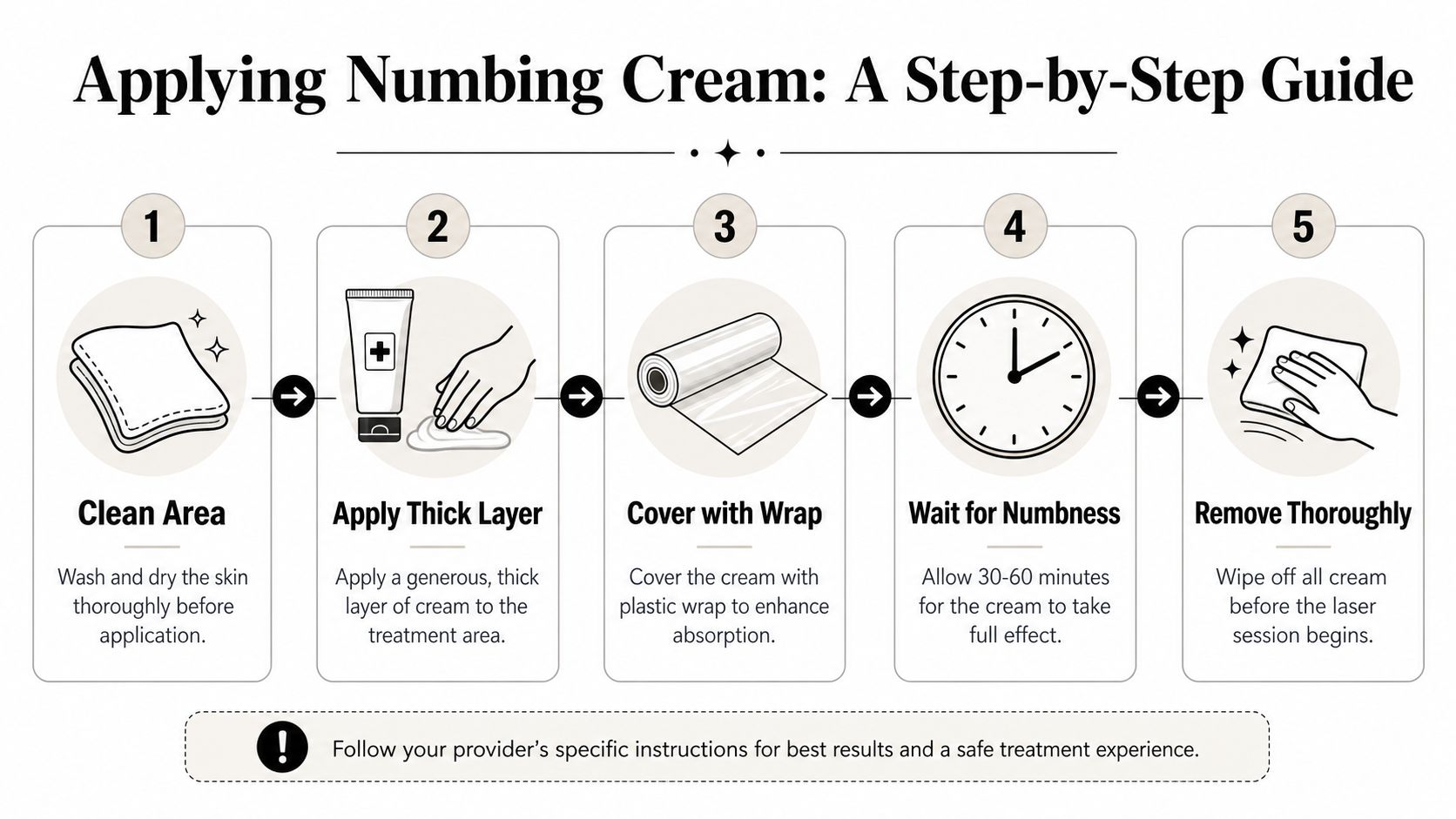
Start with clean skin. Wash the area and dry it fully. Lotions, oils, and sweat can change how evenly the cream sits on the surface.
Apply the cream so the treatment area is fully covered. It should be enough to coat the skin evenly, but not so excessive that it becomes a messy, shifting layer likely to remain during treatment.
Use occlusion. Cover the area with plastic wrap. The reason is straightforward. Occlusion helps the anesthetic penetrate more effectively, which is why the clinical studies above used that approach.
Time it carefully. Aim for the clinically supported window of 45 to 60 minutes before treatment. If the timing runs too short, numbing may be incomplete. If the product sits too long, the effect may fade before the laser starts, depending on the formula.
Remove the wrap and wipe the skin thoroughly before the session. A clean treatment surface matters.
Common mistakes that create problems
Not every error comes from carelessness. Most come from trying too hard to avoid pain.
- Applying it far too early: People think more time equals more numbness. It often doesn't.
- Leaving heavy residue behind: The skin should not go into treatment with cream still acting like a surface barrier.
- Using mystery products bought on hype: A safe protocol can't rescue an unsafe formula.
- Coating a very large area without guidance: More product and more skin can raise risk.
A few practical points help keep the process sensible:
| Issue | Better approach |
|---|---|
| Cream feels weak after rushed application | Give it the full 45 to 60 minutes under wrap |
| Skin still looks heavily coated when you arrive | Wipe thoroughly so the treatment area is clean |
| Seller recommends extreme application times | Follow conservative, clinic-guided timing instead |
| Product strength is unclear | Skip it until you can confirm what it is |
The best application protocol is the one that reduces discomfort without creating a second problem for the laser to work around.
Pain Management Alternatives Offered in a Clinic Setting
A lot of clinics prefer not to rely heavily on topical anesthetics at all. That's not because comfort doesn't matter. It's because there are in-clinic options that can reduce pain without putting a product layer between the laser and the skin.
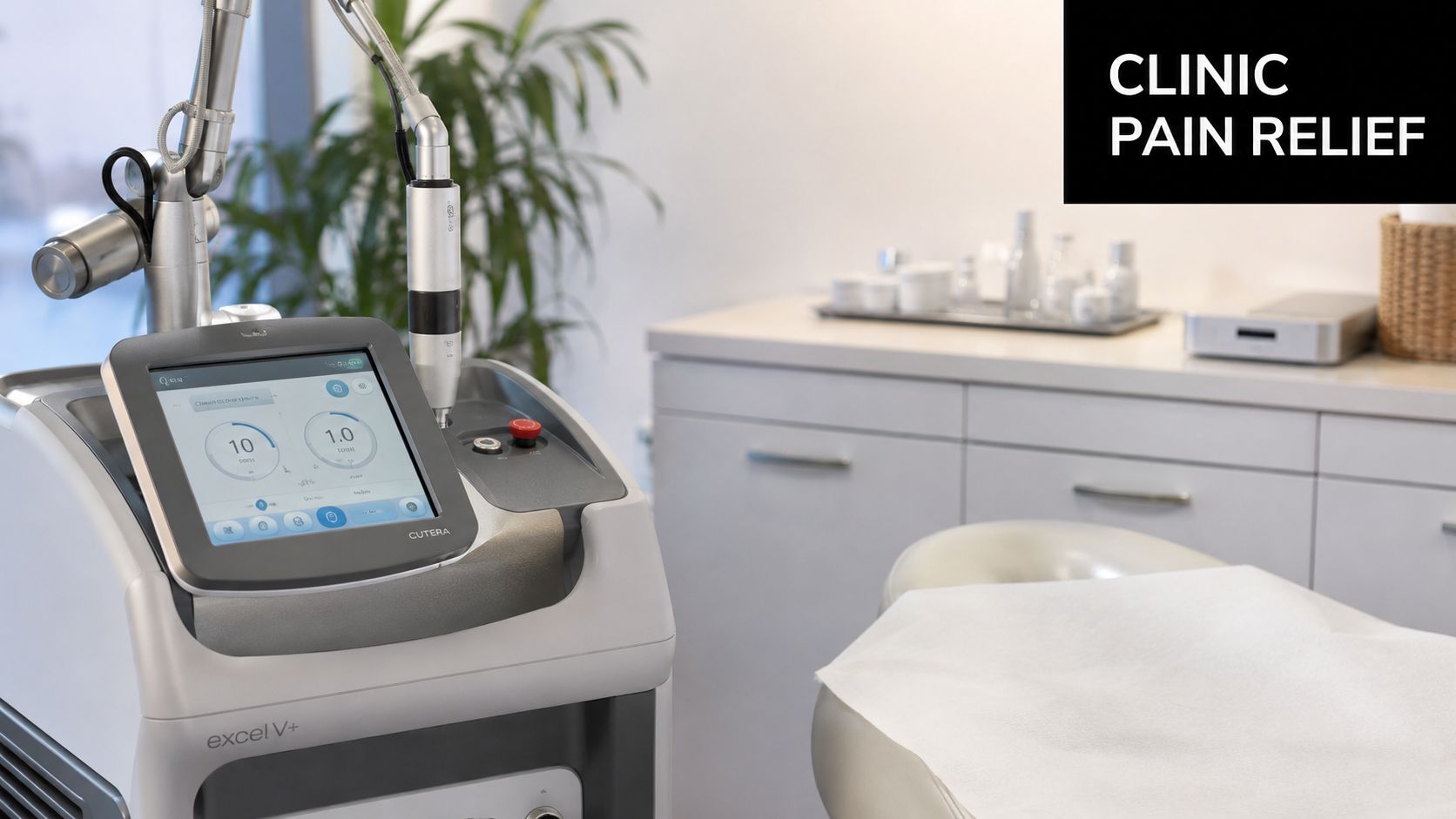
One of the most useful examples is cold-air cooling, often delivered through a device such as a Zimmer Cryo-Cooling system. Instead of numbing the skin chemically beforehand, the system blows very cold air onto the treatment area before, during, and after laser pulses. That can make the session feel far more tolerable while keeping the treatment surface clean.
Why clinics often prefer device-based comfort methods
Cooling has a practical advantage. It doesn't depend on guessing timing at home, hoping the product is legitimate, or dealing with residue at the appointment. The technician can adjust it in real time based on how your skin responds and how sensitive the area is.
That's especially helpful for clients with low pain tolerance, first-time nerves, or tattoos in sharper-feeling locations. Cooling can also continue after a pass, which helps settle the heat sensation that some clients find more bothersome than the initial snap.
How cooling compares with topical numbing
The difference is less about which method sounds stronger and more about which one creates fewer variables.
- Topical cream: Useful for surface comfort, but technique matters and misuse can complicate treatment.
- Cold-air cooling: Immediate, adjustable, and doesn't leave product on the skin.
- Combined planning: Some clients may still use cream in a limited way, but many do well with professional cooling alone.
If you want a closer look at non-cream options, these ways to manage pain during laser tattoo removal outline the kinds of comfort measures clinics commonly use during treatment.
A good clinic doesn't just ask whether you're brave enough for laser. It gives you a pain-management plan that protects both comfort and results.
Our Numbing Policy and Your EradiTatt Appointment
The clearest approach is this. Comfort matters, but it can't outrank safety or interfere unnecessarily with removal progress.
That's why the starting point at EradiTatt is controlled in-clinic comfort support rather than assuming every client should arrive coated in numbing cream. For many people, cooling methods are enough. They reduce the immediate sting without adding extra uncertainty to the session.
If a client still wants to use a tattoo removal numbing cream, the right move is to discuss it before the appointment. Product choice, application timing, treatment area, and skin condition all matter. The treatment area will also be cleaned before laser work begins, because a clean surface is part of safe, consistent treatment.
The best appointments usually start with a simple conversation. How anxious are you about pain? How sensitive is the area? Is your goal maximum comfort, fastest visible progress, or a balance of both? Once those answers are clear, the plan gets much easier.
If you aren't sure whether numbing cream is a good fit for your situation, ask before your session instead of experimenting on your own.
If you're considering laser treatment and want a pain-management plan that fits your skin, tattoo, and goals, book a consultation with EradiTatt Tattoo Removal. The team can talk through comfort options, explain what to expect during treatment, and help you choose the safest path toward fading or full removal.