
You grab your shirt out of the hamper and see a pen streak across the pocket. Or you notice a dark smudge on the arm of the couch right before guests arrive. That moment feels worse than it should. Ink looks permanent, expensive, and personal all at once.
The good news is that getting ink out of fabric usually comes down to matching the right method to the right kind of ink. Panic leads people to scrub, soak, and spread the stain deeper. A calm, targeted approach works better.
I've handled enough ink messes to know one thing for sure. Unwanted ink is a solvable problem when you identify what landed on the fabric first. That's true whether the ink came from a ballpoint pen, a marker, a printer cartridge, or somewhere else entirely. Different surface, same principle. The right remover, the right pressure, and some patience matter more than force.
Table of Contents
- That Sinking Feeling of a Fresh Ink Stain
- Your First-Aid Kit for Ink Stains
- Removing Ballpoint and Water-Based Inks
- Tackling Tough Permanent Marker and Printer Ink
- Aftercare and Troubleshooting Lingering Stains
- When to Trust a Professional Cleaner
That Sinking Feeling of a Fresh Ink Stain
A fresh ink stain always seems to show up at the worst time. It's on the blouse you were about to wear, the school uniform you just washed, or the chair cushion that isn't supposed to have any marks on it at all. The initial impulse is often to rub at it with a wet paper towel, only to watch the mark spread and then assume the fabric is ruined.
That reaction makes sense. Ink is designed to stay put. On paper, on labels, on packaging, on skin, it's made to leave a mark. But fabric gives you more of a fighting chance than people think.
The first thing to know is that most ink stains are removable or at least improvable when you respond based on the ink type instead of guessing. Ballpoint ink behaves differently from washable marker ink. Permanent marker needs a different plan than a gel pen. Treating them all the same is where people get into trouble.
Ink looks final when it first hits fabric. It usually isn't.
The second thing to know is that speed helps, but technique matters more. A stain that happened this morning can still come out if you stop rubbing, support the fabric properly, and use a cleaner that lifts the ink instead of driving it deeper into the fibers.
Your First-Aid Kit for Ink Stains
Before you touch the stain again, gather your tools. Effective stain removal begins here. If you improvise with whatever is closest, you're more likely to smear the ink, bleach the fabric, or leave a larger ring than the original mark.
What to do before the stain spreads
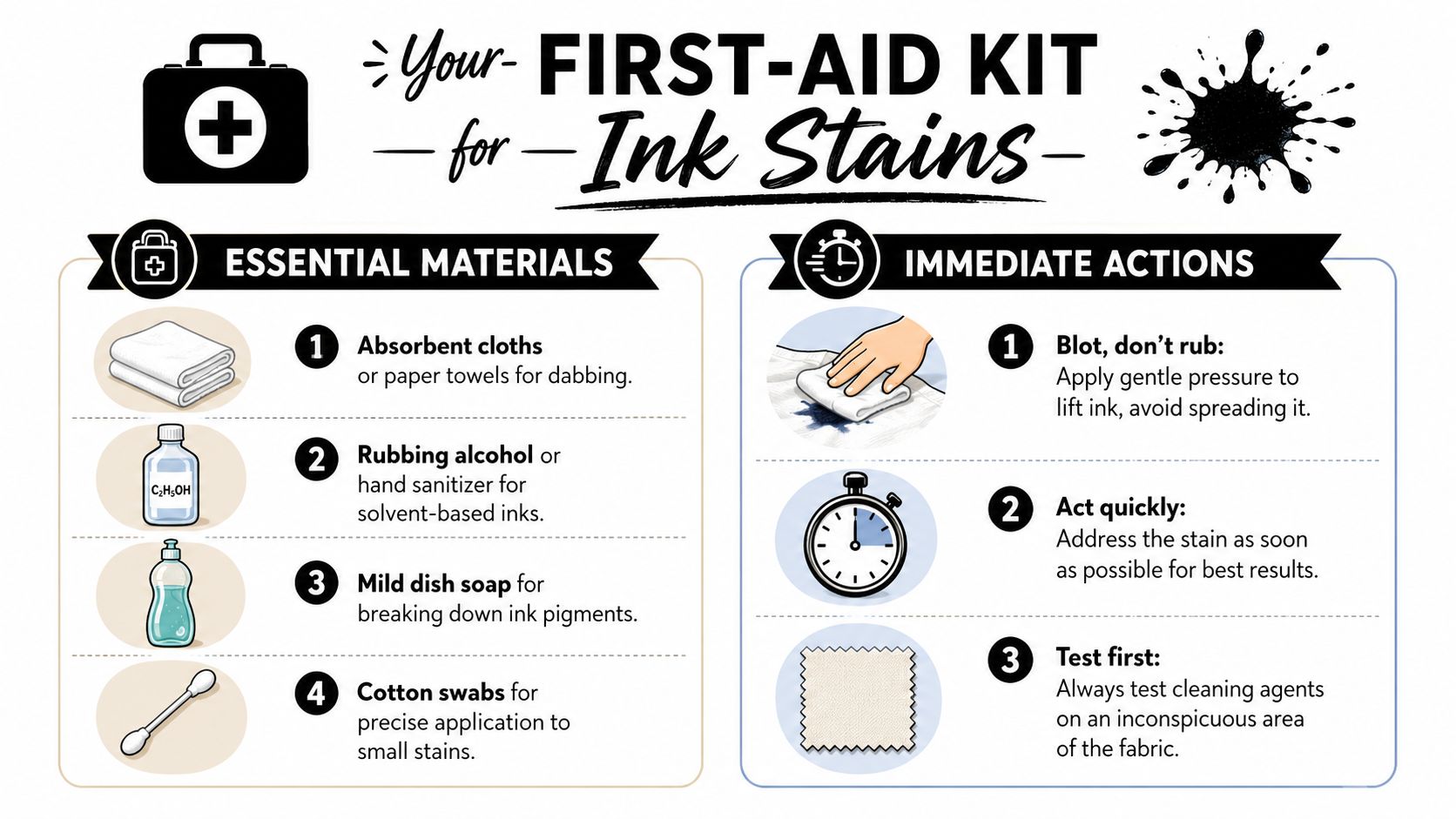
Start with three immediate actions.
- Blot gently: Press with a clean white cloth or plain paper towel. Don't scrub in circles.
- Put something behind the stain: A folded cloth under the fabric catches ink as it lifts out, instead of letting it migrate deeper.
- Patch test first: Try your cleaner on an inside seam, hem, or hidden corner before using it on the visible area.
That patch test rule matters more than people expect. Rubbing alcohol, hand sanitizer, dish soap, and vinegar can all help in the right situation. They can also affect dyes, finishes, or delicate fibers. Testing first saves you from turning an ink stain into a color-loss problem.
What to keep within reach
A small household kit handles most fabric ink accidents well.
- White cloths or paper towels: These let you see whether ink is lifting.
- Rubbing alcohol: Often the first thing I reach for with pen ink and many marker stains.
- Alcohol-based hand sanitizer: Useful when you need thicker, controlled application on a small area.
- Mild dish soap: Good for the washout stage and for breaking residue after solvent use.
- White vinegar: Better as a follow-up option than a first strike.
- Cotton swabs or cotton balls: Helpful for tight spots, seams, and precise application.
If you like keeping stain supplies together instead of chasing them around the house, a compact organizer works well. A travel-style pouch like a makeup removal kit setup is a practical way to store cloths, swabs, and spot-treatment basics in one place.
Here's the quick-reference version.
Ink Stain Treatment Cheat Sheet
| Ink Type | Best Household Solvent | Notes |
|---|---|---|
| Ballpoint ink | Rubbing alcohol | Blot slowly and replace backing cloth often |
| Gel ink | Rubbing alcohol or hand sanitizer | Can need repeated passes because the pigment is dense |
| Rollerball or water-based ink | Mild dish soap, then rubbing alcohol if needed | Often lifts more easily when fresh |
| Washable marker | Cool water and dish soap | Avoid over-wetting upholstery |
| Permanent marker | Rubbing alcohol first | May need a stronger specialty remover after patch testing |
| Printer ink | Rubbing alcohol or specialty stain remover | Messy and easy to spread, so work in small sections |
Practical rule: If you don't know the ink type, begin with the least aggressive option that still has a chance of lifting it.
Removing Ballpoint and Water-Based Inks
Ballpoint, gel, and rollerball stains are the ones frequently encountered. A pen leaks in a bag. Someone forgets to cap it. A child decorates a sleeve. These stains look dramatic, but they're often the most responsive when treated correctly.
The basic method that works on most fresh pen stains
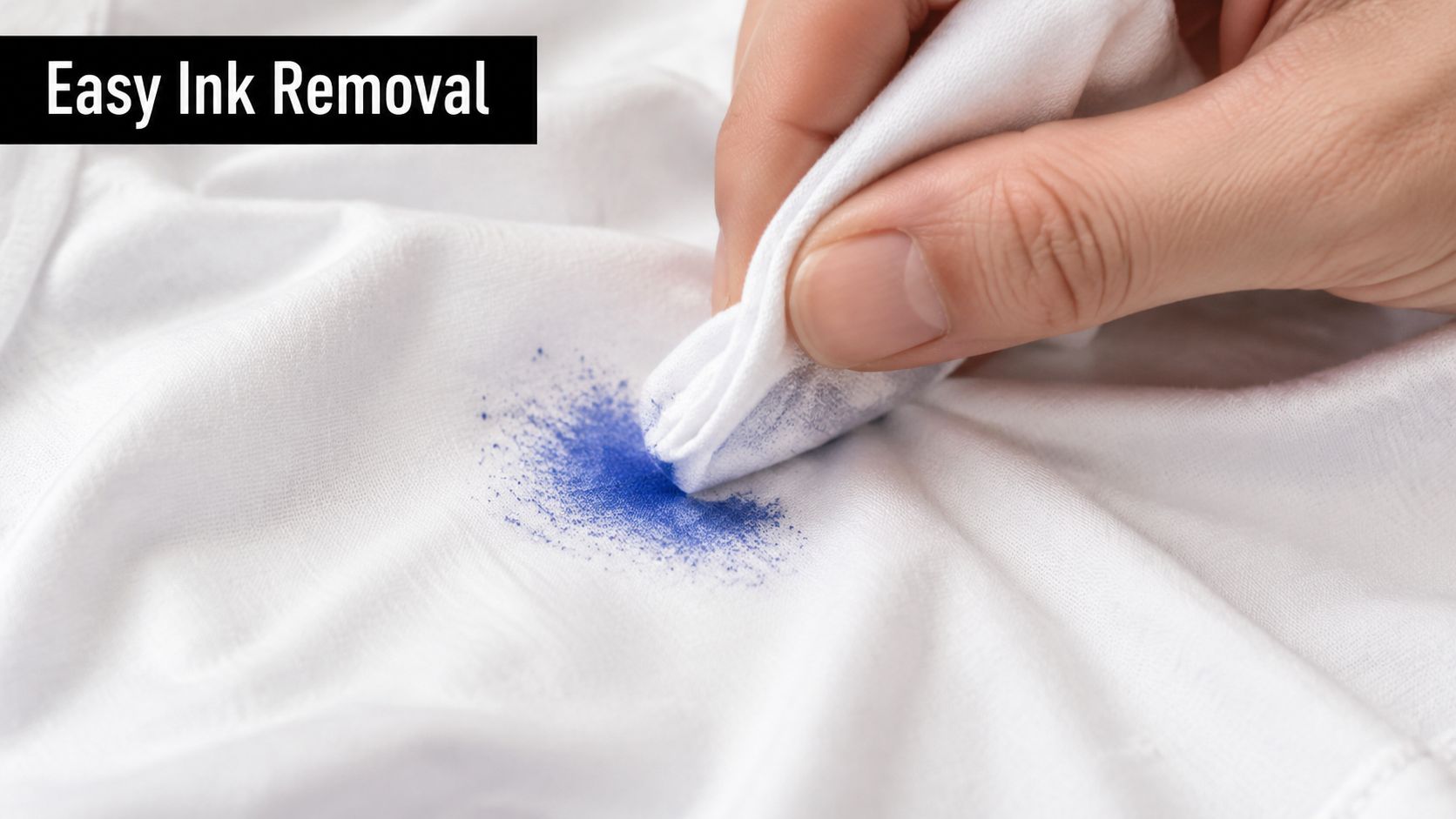
Lay the fabric flat. Put a folded white cloth or paper towel underneath the stain. This lower layer matters because it catches dissolved ink as it moves out of the top layer.
Then follow this sequence:
Blot the surface first
Lift any wet ink sitting on top. Don't press hard. You're trying to remove loose material before adding any cleaner.Apply rubbing alcohol with control
Use a cotton ball, cotton swab, or corner of a white cloth. Dab the alcohol onto the stain instead of pouring it over the whole area.Watch the transfer
As the ink loosens, it should move into the cloth beneath the fabric and into the cloth in your hand. Shift to clean sections often.Repeat, don't scrub
Several gentle rounds work better than one aggressive attack.Rinse the treated area with cool water
Once the stain has lightened, flush out the solvent and loosened ink.Work in a little dish soap
This helps remove residue before laundering or final rinsing.Wash according to the care label, then air-dry
Don't move to heat until you're sure the stain is gone.
Work from the outside edge toward the center when the stain has a defined border. That keeps it from feathering outward.
Gel pens can be trickier than basic ballpoint because the ink often sits thicker and darker in the fibers. The method is the same, but patience matters. Let the alcohol do the work. If you rush and rub, the stain usually gets wider before it gets lighter.
What usually goes wrong
The biggest mistake is over-saturating the fabric. People see a small ink mark and then flood the entire area with cleaner. That creates a halo and spreads the stain into clean fabric.
Another common problem is using colored towels. If the towel transfers dye while you're trying to remove ink, the job gets complicated fast. Stick with white cloths only.
If you're trying to get ink out of fabric on upholstery, reduce the amount of liquid you use. Furniture padding holds moisture, and a soaking wet seat cushion is harder to dry evenly than a shirt or pair of jeans.
Tackling Tough Permanent Marker and Printer Ink
Permanent marker and printer ink are a different category. They're more stubborn, more concentrated, and more likely to smear into a larger blot if handled carelessly. You can still improve them at home, but exercising restraint is essential.
Why these stains fight back
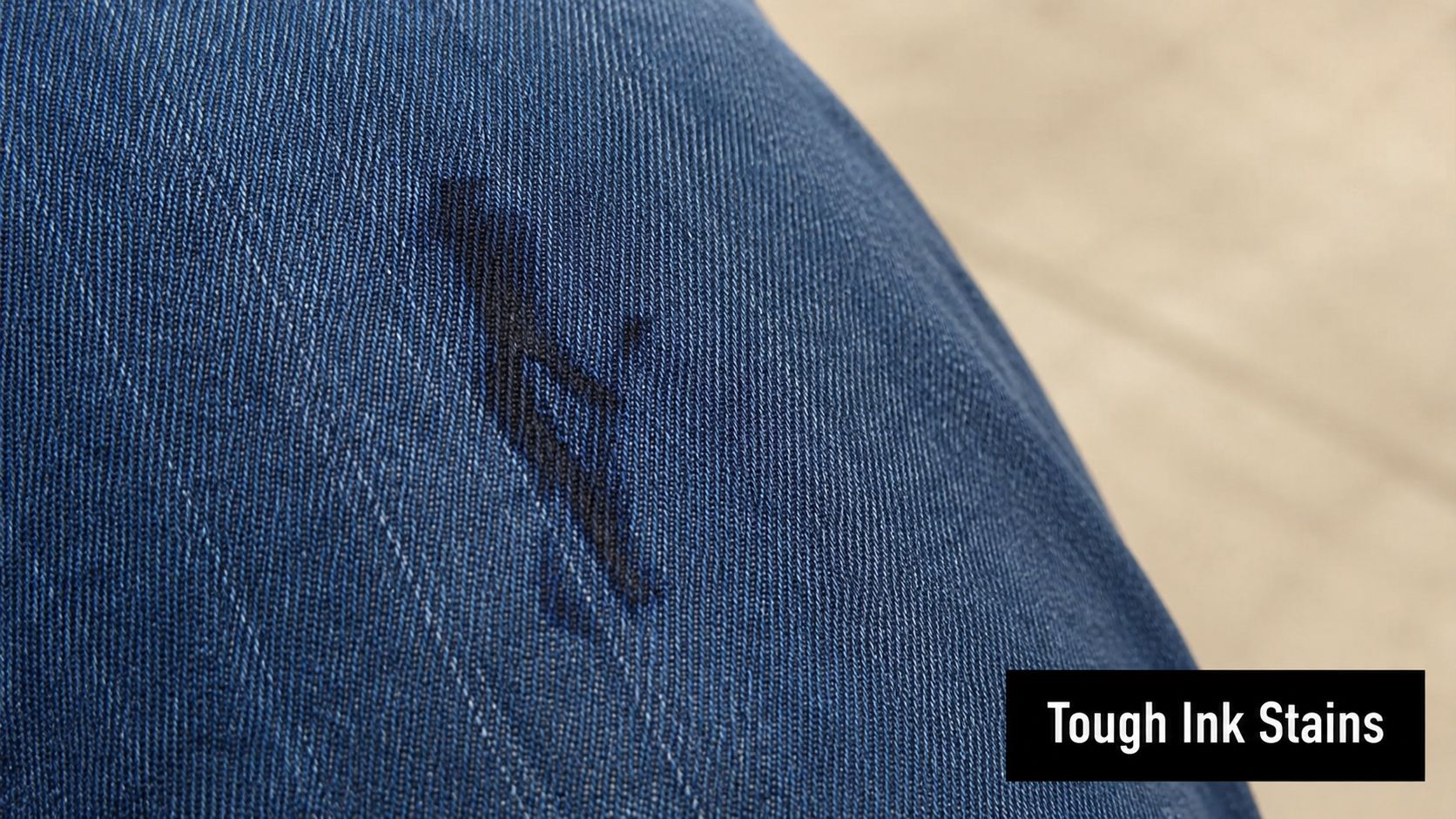
Permanent markers are made to resist casual cleanup. Printer ink is heavily pigmented and can spread with the lightest touch. Denim, canvas, and synthetic blends often hang onto these stains longer than smooth cotton does.
That doesn't mean you should attack harder. It means you should work smaller.
Use a hidden-area patch test first, then gather these items:
- Rubbing alcohol or denatured alcohol: Start with the milder option you already have before moving stronger.
- Cotton swabs: Better than a large rag for staying precise.
- A protective backing cloth: Essential for dark, heavy stains.
- A specialty stain remover labeled for ink: Useful when household options stall.
If the stain is on carpet or a fabric-covered floor runner, the same principles apply, but the backing and drying challenges are different. For broader surface care, these effective carpet cleaning tips are worth reviewing before you start.
A safer way to use stronger solvents
Ventilation matters here. Open a window, protect the surface underneath, and wear gloves if your skin is sensitive. Stronger solvents can irritate skin and affect finishes around the stain.
Use this approach:
- Dab, wait, blot: Give the solvent a little contact time.
- Change pads often: Printer ink especially likes to redeposit.
- Keep the stain area small: Don't chase faint spreading with more liquid than necessary.
Use patience, not pressure. Permanent marker often fades in rounds, not all at once.
If a stain starts to lighten but leaves a shadow, that's progress. Stop before the fabric looks stressed. Fraying, color loss, or a shiny spot on upholstery means the cleaning is becoming more damaging than the original mark.
One more warning. Never mix cleaning agents together to make them “stronger.” That's how people damage fibers, produce fumes, or create a bigger cleanup problem than the ink stain itself.
Aftercare and Troubleshooting Lingering Stains
A lot of ink stains don't disappear in one pass. They fade to a dull shadow, a soft gray cast, or a faint colored halo. That doesn't mean you failed. It means the top layer is gone and what remains needs a gentler finishing approach.
How to treat the shadow left behind
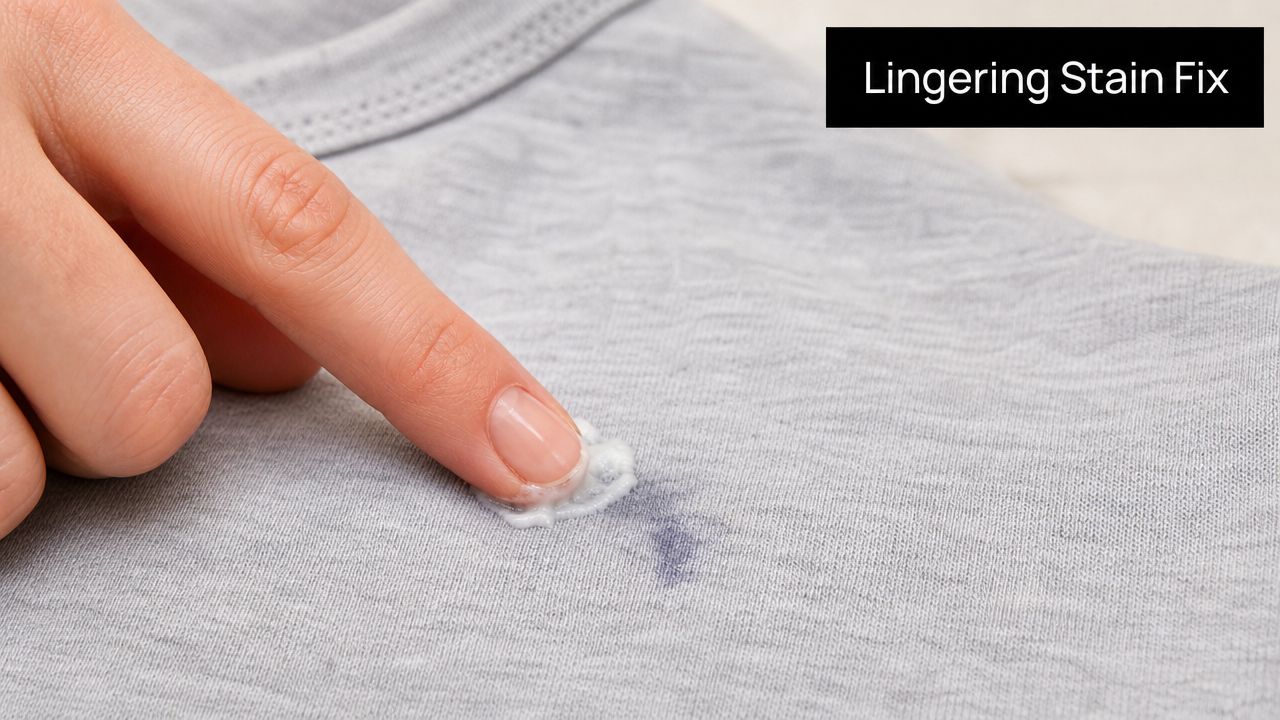
For lingering residue, try one of these options after the main ink removal step:
- A baking soda paste: Mix baking soda with a small amount of water until it forms a spreadable paste. Apply lightly, let it sit briefly, then blot and rinse.
- A diluted vinegar solution: Use this as a mild follow-up, not a flood treatment.
- A second round of dish soap: Sometimes what's left is cleaner residue mixed with loosened pigment.
Use a soft touch. At this stage, the fabric is more vulnerable than the stain is strong. If you scrub now, you can rough up the weave and create a worn patch that catches the light even after the ink is gone.
For larger household fabrics like cushions and sofas, moisture control becomes part of stain removal. If you need broader maintenance guidance while handling upholstery, these tips to clean a fabric couch are useful for keeping the surrounding fabric even and avoiding water marks.
A lot of people also ask whether cream-based removers help with stubborn pigment. Some do, but you still need to think about surface sensitivity and realistic expectations, which is a useful mindset in other ink-removal contexts too, including questions around whether tattoo removal creams work.
The mistake that sets the stain for good
Never put a garment with any visible ink residue into a hot dryer.
Heat can lock that leftover pigment in place. A stain that might have lifted with one more careful round can become dramatically harder to move after high heat. This is the point where many salvageable items become permanent casualties.
Air-dry first, then inspect in natural light before you call it clean.
Natural light shows shadows that indoor lighting hides. Check seams, textured weaves, and the edge of the treated area. If the stain is still there, repeat a mild version of the method that got the best result the first time. Don't jump to a harsher product just because you're frustrated.
When to Trust a Professional Cleaner
Some ink stains should stay out of the DIY lane. That's not defeat. It's judgment.
Fabrics that deserve caution
Silk, wool, leather, rayon blends, and vintage textiles can react badly to home stain treatment. So can anything labeled dry-clean only. These materials don't always show damage immediately. Sometimes the texture changes after drying, or the dye shifts only where the solvent touched.
Items with sentimental or financial value also belong in this category. A wedding garment, custom jacket, heirloom quilt, or expensive upholstered chair isn't the place to experiment.
If the stain is on a rug, carpet, or other large fabric surface and you're weighing whether to keep going, reading about expert ink stain removal in Birmingham can help you judge when specialty equipment and experience make more sense than another round of blotting.
When DIY stops being the smart move
Call a professional cleaner when the stain is old, heat-set, unusually large, or sitting on a delicate fabric. Also stop if your cleaning attempts are changing the color or texture of the material faster than they're reducing the ink.
There's also a simple reality here. Some forms of unwanted ink come out best with household tools and patience. Others need specialized products, training, and controlled methods. The same principle applies in other areas of ink removal too. Some problems respond to home care. Some are better handled with dedicated technology, as you'll see in discussions around new technology in tattoo removal.
Trust your eyes. If the stain is improving and the fabric still looks healthy, continue carefully. If the fabric is losing the fight, stop before you turn one problem into two.
If unwanted ink has become a bigger concern than a stained shirt or sofa, EradiTatt Tattoo Removal helps people remove or fade unwanted ink from skin with a supportive, professional approach. Whether you want a full fresh start or fading for a cover-up, their team offers personalized treatment across convenient Florida locations.