You're probably reading this at the end of a long day, standing at the sink with half-removed mascara under your eyes, foundation still clinging around your nose, and a washcloth that now looks worse than your face did. A quick wipe seems like it should solve the problem, but the next morning tells the truth. Tight skin, dullness, leftover liner, and that familiar feeling that your face was never fully clean.
That's why a good makeup removal kit isn't just a bag of products. It's a system. When the steps, formulas, and tools work together, makeup comes off more completely, your skin barrier stays calmer, and the rest of your skincare routine performs better.
Table of Contents
- Why Your Skin Needs More Than Just a Wipe
- Building Your Essential Makeup Removal Kit
- Customizing Your Kit for Your Skin Type
- The Pro-Level Makeup Removal Routine
- Troubleshooting Common Removal Challenges
- Makeup Removal FAQs and Critical Warnings
Why Your Skin Needs More Than Just a Wipe
Most makeup removal problems start with a false assumption. People think the goal is to get visible makeup off the skin. The actual goal is broader. You need to dissolve makeup properly, lift it away without friction, and leave the skin surface intact enough to recover overnight.

A single wipe often fails because it tries to do too many jobs at once. It has to loosen sunscreen, break down long-wear pigments, remove eye makeup, and physically pull everything off the skin in one pass. That usually means either leftover residue or too much rubbing. Neither outcome is good for pores, texture, or sensitivity.
Makeup removal is a skin health step
Makeup removers work through dissolution or solubilization. In plain terms, the remover has to break the bond between makeup and skin, then keep that makeup from settling right back onto the surface. That's why generic face washing alone often struggles with long-wear foundation, sunscreen, and oil-based products. The chemistry matters, not just the wiping.
Practical rule: If you have to scrub hard to remove makeup, your system is wrong.
There's also a clear market signal that people are looking for better removal methods, not just faster ones. The global market for makeup remover products was valued at approximately US$ 3,443.9 million in 2024 and is projected to reach US$ 6,827.3 million by 2034, with wipes, pads, and cloths expected to hold 51.7% market share by 2034, according to Fact.MR's makeup remover product market analysis. That tells you something useful: consumers increasingly want convenient kit-based components, but convenience only helps when the kit is built correctly.
What a proper system changes
A well-built makeup removal kit does three things better than a random assortment of products:
- It separates tasks: One product breaks down makeup, another cleans away residue.
- It reduces friction: Better tools mean less dragging across the skin.
- It protects consistency: You're more likely to remove makeup thoroughly when the routine is simple and repeatable.
The shift that matters most is this one. Stop shopping for a single “best remover” and start building a makeup removal kit that fits the way your skin behaves after daily wear.
Building Your Essential Makeup Removal Kit
A strong kit doesn't need to be complicated. It needs the right categories in the right order. When I evaluate someone's routine, I'm not looking for the biggest collection. I'm looking for gaps. Most ineffective routines are missing one of the basics, usually an oil-based first step, a dedicated eye product, or a gentler removal tool.
The five non-negotiables
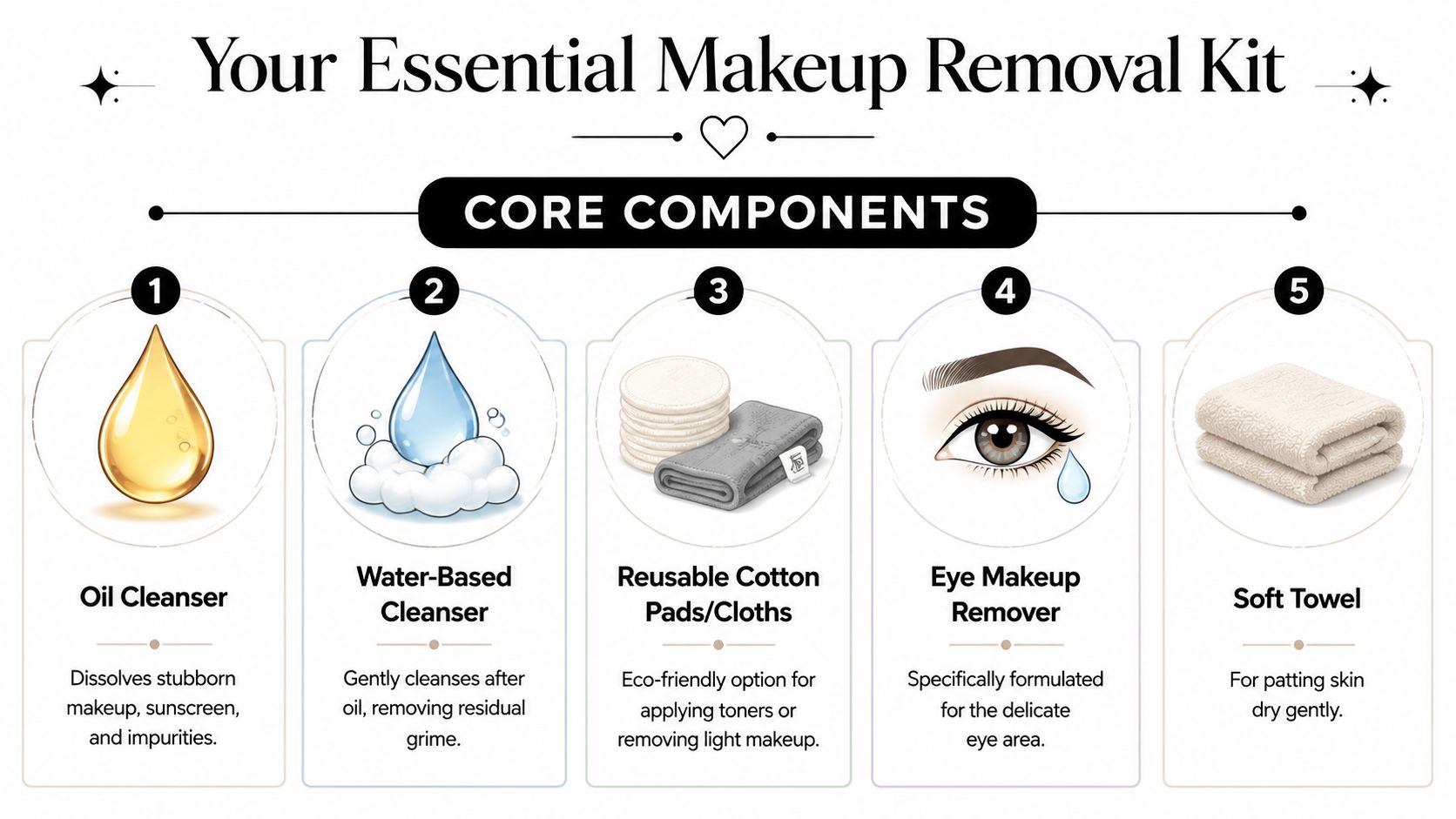
Every practical makeup removal kit should include these core pieces:
- Oil cleanser: This is your first step for dissolving sunscreen, foundation, sebum, and stubborn pigments.
- Water-based cleanser: This removes leftover residue after the oil step.
- Reusable pads or cloths: Useful for targeted removal and delicate sweeping, especially around the eyes and lips.
- Eye makeup remover: The eye area needs its own product category.
- Soft towel: Not for scrubbing. Only for gentle patting dry.
If you're building from scratch and want a broad starting point before narrowing down formulas, this roundup of best drugstore makeup removers can help you compare accessible options by texture and use case.
Why the first cleanse should be oil-based
Oil dissolves oil-soluble makeup more efficiently than a basic water cleanser. That includes many sunscreens, long-wear foundations, and waterproof formulas. Applied to dry skin, an oil cleanser has direct contact with the makeup film instead of getting diluted too early.
The most common mistake here is choosing a foaming cleanser and expecting it to do everything. It usually won't. You may get a cleaner feel, but not cleaner skin.
The right first cleanse should make makeup slide, not smear.
Why your removal tool matters more than most people think
The pad or cloth in your kit isn't an accessory. It changes how much pressure you use and how much irritation your skin absorbs. The choice of pad is critical. Lint-free microfiber pads with a 300 GSM density achieve a 92% removal rate of makeup particulates in a single pass with gentle motions, compared to 65% for standard cotton pads, which often require aggressive rubbing and lead to a 50% increase in post-removal redness.
That difference shows up fast in real life. With the wrong pad, people keep wiping the same area again and again. Eyelids get red. Cheeks feel hot. Skin starts to confuse “clean” with “stripped.”
What each item should actually do
Oil cleanser
Look for a cleanser that spreads easily over dry skin and rinses clean without leaving a heavy film. This step should break down the bulk of your makeup load, not force you into repeated rubbing.
Water-based cleanser
The second cleanser should remove the residue left after the oil step. Think of it as cleanup, not heavy lifting. A gentle gel, cream, or low-foam wash usually works best depending on skin type.
Eye makeup remover
This deserves a place of its own in the kit. Waterproof eye products behave differently from face makeup, and the eye area tolerates friction poorly.
Reusable pad or cloth
Choose a soft, lint-free option that can hold product without dripping. Reusable woven cotton can work well for lighter removal, but for stubborn makeup and minimal friction, microfiber is usually the more efficient tool.
Soft towel
Use one that's reserved for your face. Pat. Don't rub. The towel should finish the process, not become another exfoliating step.
What doesn't belong in a good kit
Some routines fail because they include too much. Others fail because they include the wrong thing entirely.
- Harsh washcloths: They increase friction when the makeup hasn't been fully dissolved first.
- One-step-only routines: These often leave behind sunscreen, long-wear pigments, or oily residue.
- General face cleanser for waterproof eyes: That usually leads to tugging.
- Rough disposable pads: They can drag product across the skin instead of lifting it cleanly.
A good makeup removal kit should feel boring in the best way. Predictable. Calm. Efficient. If every night feels like a fight with your mascara, the fix usually isn't stronger rubbing. It's better setup.
Customizing Your Kit for Your Skin Type
The basic kit stays the same, but the formulas should change with your skin. Dry skin doesn't need the same finish that oily skin does. Sensitive skin won't tolerate the same fragrance load or cleansing intensity that resilient skin can handle. Personalizing your makeup removal kit is what turns a decent routine into one your skin likes.
Makeup remover selection by skin type
| Skin Type | Step 1 Cleanser (Oil-Based) | Step 2 Cleanser (Water-Based) | Key Ingredients to Look For |
|---|---|---|---|
| Dry | Cleansing balm or richer oil cleanser | Cream cleanser or low-foam lotion cleanser | Plant oils, soothing humectant-focused formulas |
| Oily | Lightweight cleansing oil or micellar oil format | Gel cleanser | Lightweight, easy-rinsing textures |
| Combination | Balanced oil cleanser | Gentle gel-cream cleanser | Flexible textures that don't leave heavy residue |
| Sensitive | Minimal-ingredient oil cleanser | Fragrance-free cream or very gentle gel cleanser | Calm, simple formulas with low irritation potential |
| Acne-prone | Lightweight oil cleanser that rinses clean | Gentle gel cleanser | Non-heavy textures and non-irritating support ingredients |
That table isn't about trendiness. It's about matching the finish of the cleanser to the way your skin behaves after removal. A rich balm can feel restorative on dry skin and suffocating on an oily T-zone. A foaming gel can feel fresh on oily skin and too depleting on skin that already runs tight.
How to choose without overcomplicating it
If your skin feels tight after cleansing, start by changing texture before changing everything else. Move from a thin, quick-evaporating remover to a balm or cushiony oil. If your skin feels coated after removal, do the opposite. Keep the first step effective, but choose a lighter rinse-off texture and a cleaner second cleanse.
Sensitive skin needs the fewest variables. That means simple formulas, less fragrance, and very gentle mechanical handling. If you're comparing oil options for reactive skin, Ella & Eden's advice for sensitive skin is a helpful reference for thinking through which oil types tend to feel calmer on delicate skin.
With sensitive skin, the “best” remover is often the one that removes enough without leaving you red, hot, or tight afterward.
Signs your current match is wrong
Your products may technically remove makeup and still be a poor fit. Watch for these clues:
- Dry skin warning: Skin feels squeaky, stretched, or flaky after cleansing.
- Oily skin warning: You feel a waxy film or notice congestion building despite washing well.
- Sensitive skin warning: Stinging, diffuse redness, or warmth shows up during removal.
- Combination skin warning: Your cheeks feel stripped while your forehead still feels coated.
A customized makeup removal kit should leave your skin clean, comfortable, and neutral. Not greasy. Not raw. Not over-cleansed. That neutral finish is what allows your moisturizer, treatment serum, or recovery products to do their job afterward.
The Pro-Level Makeup Removal Routine
Technique matters as much as product choice. Even a well-built kit underperforms when it's rushed. The professional difference is usually not a secret ingredient. It's contact time, order, and pressure control.
Start with dry skin and the right chemistry
The double-cleansing protocol is technically superior. A dedicated oil-based cleanser can dissolve 98% of sebum-soluble impurities like waterproof mascara and long-wear foundation in under 30 seconds of gentle massage. Following this with a water-based cleanser ensures a 95% success rate in removing all makeup traces without disrupting the skin's lipid barrier.
That first step only works properly when applied to dry skin. If the skin is already wet, you dilute the solvent phase too soon. Instead of dissolving makeup thoroughly, the product starts slipping before it has done enough chemical work.
Follow the full cleansing window
Effective cleansing often takes longer than anticipated. The standard protocol requires a minimum of 60 seconds, and the first 30 seconds mainly allow the product to begin breaking down makeup bonds, as explained in Strip Makeup's cleansing facts and FAQs. The practical test is simple. Keep cleansing until your pad or cloth comes away clean.
A workable nightly sequence
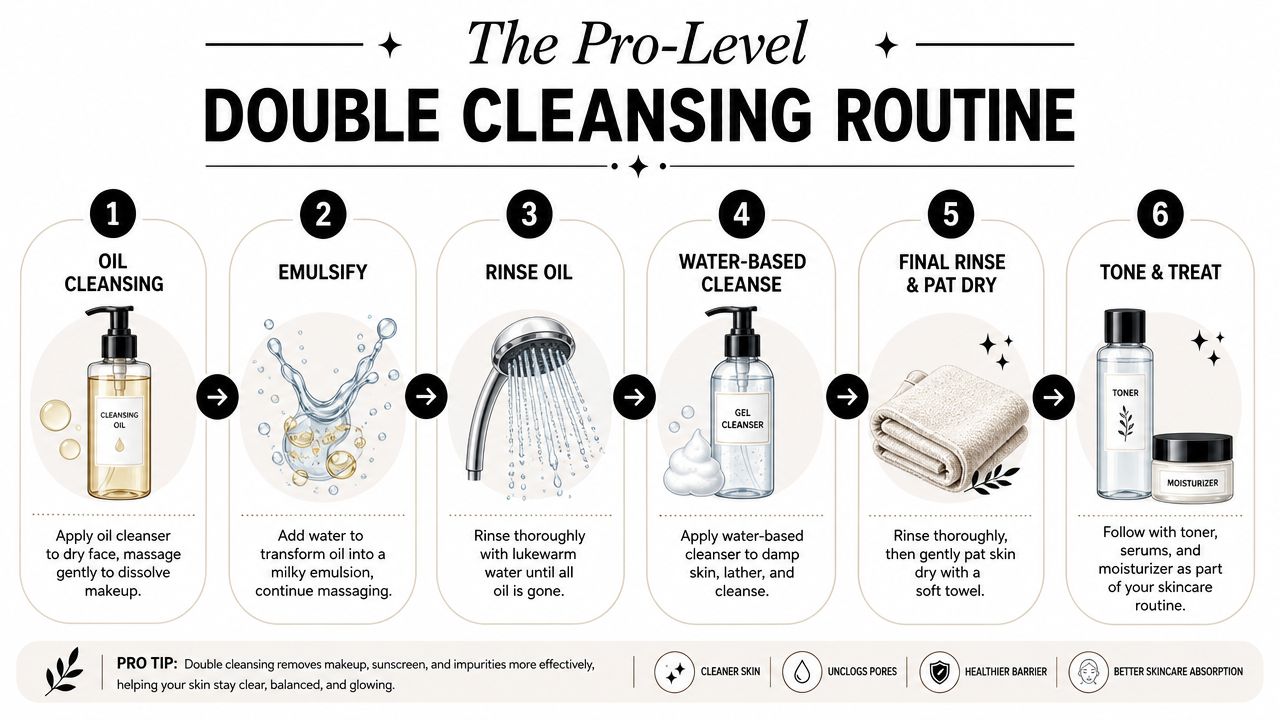
- Apply oil cleanser to dry hands and dry skin. Spread it over the face first, then work into foundation, sunscreen, and contour.
- Massage gently. Don't scrub. Let the cleanser do the dissolving.
- Give stubborn makeup a little time. Hold product over areas with heavier buildup instead of increasing force.
- Rinse or emulsify according to the formula. Then remove thoroughly.
- Cleanse again with a water-based formula. This takes away residual film and debris.
- Pat dry with a soft towel. Follow with the rest of your evening skincare.
Clean skin should feel comfortable, not punished.
Where most routines break down
The biggest failure points are speed and friction. People rush the first step, then try to compensate with pressure. That's backwards. More rubbing doesn't fix incomplete dissolution.
The same principle applies after professional skin procedures. Barrier support depends on respecting tissue, following a calm routine, and not confusing force with effectiveness. That same skin-first mindset is clear in this guide on why aftercare is important after laser tattoo removal, even though the treatment context is different.
A better way to handle stubborn areas
Some zones need technique changes, not stronger products.
- Around the nose: Let oil cleanser sit briefly before sweeping away loosened product.
- Lip color: Press the remover in place first, then wipe in one direction.
- Lash line: Use a saturated soft pad and short controlled motions, never fast back-and-forth rubbing.
- Hairline and jawline: These are common residue zones, so make one intentional pass there before rinsing.
When your makeup removal kit is paired with a steady routine, skin usually looks clearer not because you added more actives, but because you finally stopped leaving behind residue and stopped overworking the surface.
Troubleshooting Common Removal Challenges
Even a good routine hits specific problems. Waterproof mascara behaves differently from tinted sunscreen. Liquid lipstick clings in a different way than cream blush. The trick is to solve the exact problem in front of you instead of attacking your whole face with more pressure.
When waterproof mascara won't move
This is the classic late-night struggle. You cleanse the face, most of the makeup comes off, and the lashes still look dark. Then comes the rubbing. That's the step that causes trouble.
The skin around the eyes is anatomically distinct and more sensitive, requiring a product specifically formulated for it. A proper eye makeup remover must be oil-based to dissolve waterproof mascara's hydrophobic film without aggressive tugging, according to Uniprix's guidance on proper makeup removal and cleansing.
Use a saturated pad, press it gently over the closed eye, wait a moment, and sweep downward. Repeat with patience, not force. If you regularly wear heavy waterproof formulas, a product guide focused on addressing Swiss clientele's mascara needs can be useful for understanding why some mascara textures demand a more solvent-driven removal approach.
When long-wear lipstick stains the lips
Liquid lipstick often leaves behind pigment even after the glossy surface is gone. In practice, a dry wipe makes this worse because it drags color across the lip line. Instead, coat the lips with your oil cleanser or remover, let it sit briefly, then use a soft cloth or pad to lift the color away in one direction.
If you're still staining the skin around the mouth, the issue is usually overworking after the pigment has already loosened. Once the color starts to move, switch from rubbing to lifting.
When skin turns red during removal
Redness during removal usually means one of three things. The cleanser is too harsh for your skin, the pad is too rough, or you're repeating passes long after the makeup should have been dissolved.
If your face looks freshly exfoliated after taking makeup off, your removal method is too aggressive.
That matters even more when pigment is involved and people start looking for stronger DIY fixes. Cosmetic makeup sits on the skin surface. Tattoo ink does not. Anyone dealing with old brow pigment or similar concerns should understand the difference before trying to scrub harder. This overview of outdated eyebrow tattoos and safe removal options speaks directly to that line.
Makeup Removal FAQs and Critical Warnings
Can a makeup removal kit remove tattoo ink
No. Tattoo ink resides in the dermis, far below the epidermis where cosmetic makeup sits. Consumer inquiries about “tattoo removal kits” have surged 35%, but professional consensus is clear that no at-home kit can safely or effectively remove deep dermal ink. Only professional laser treatment can.
That distinction matters because people often assume “stronger remover” means “deeper removal.” It doesn't. A makeup removal kit is designed for surface cosmetics, sunscreen, sebum, and debris. It is not built to reach implanted pigment.
Can a makeup removal kit fade permanent makeup
A standard cosmetic removal kit may clean the skin around the area, but it won't remove implanted pigment in the way people hope. If the concern is old cosmetic tattooing or permanent makeup, the right next step is professional assessment, not more aggressive cleansing at home. For people comparing options and expectations, this page on permanent makeup removal cost is a useful starting point.
What should I keep in a travel makeup removal kit
Keep it simple. Bring a small oil cleanser, a gentle second cleanser, one dedicated eye remover, a few soft reusable pads, and a clean face towel. Travel routines fail when people reduce everything to wipes and then scrub to compensate.
How do I know my skin is actually clean
Your skin should feel free of residue but not tight. Your pad or cloth should stop picking up color. The face should look calm, not shiny from leftover product and not inflamed from over-cleansing.
If you're dealing with pigment that goes deeper than surface makeup, including unwanted tattoos or permanent makeup that won't respond to any at-home routine, EradiTatt Tattoo Removal offers professional guidance and treatment focused on safe, progressive removal.