
You're probably here because you've looked at an old tattoo one too many times and thought, “I'm ready for this to go.” For some people, that decision is about work. For others, it's about a cover-up, a relationship change, or just wanting their skin to match who they are now. When you search for laser tattoo removal near me Sarasota, what you really want is a straight answer about how this works, how long it takes, and how to handle the process in a place where sun exposure is part of everyday life.
That local detail matters more than most articles admit. Sarasota isn't a generic market. People here plan around beach days, outdoor jobs, workouts, boat weekends, and year-round UV. Tattoo removal can work very well, but the best results usually come from smart timing, realistic expectations, and good aftercare. If you're comparing options in the area, this guide to tattoo removal clinics near Sarasota helps you see what to look for before booking.
Table of Contents
- Your Guide to Laser Tattoo Removal in Sarasota
- Understanding the Science of Erasing Ink
- Your Tattoo Removal Journey Session by Session
- Choosing Your Goal Fading or Full Removal
- Preparing for Your Appointment in Sarasota
- Ready to Start Your Tattoo Removal Journey
Your Guide to Laser Tattoo Removal in Sarasota
A lot of Sarasota clients start in the same place. They've had a tattoo for years, or maybe not that long, and something changed. A new job opportunity comes up. A wedding is on the calendar. A tattoo artist recommends lightening an older piece before building a cover-up on top of it. The first step is usually a search on a phone late at night, trying to figure out whether removal is realistic.
The answer is usually yes, but not in the way social media sometimes makes it look. Laser tattoo removal is usually a process, not a one-visit fix. Good treatment planning starts with the tattoo itself. Where it sits, how dense the ink is, how old it is, and whether your goal is fading or full removal all affect what the process will look like.
In Sarasota, the practical side matters just as much as the laser side. A teacher may want appointments spaced around school breaks. Someone who works outdoors may need a tighter aftercare plan. A beach regular may need to be more strategic about timing.
Most frustration in tattoo removal comes from mismatched expectations, not from the technology itself.
That's why the best consultations don't just look at the ink. They look at your schedule, your skin, and what result you want. If you're trying to remove a visible tattoo before a professional milestone, that plan should be different from someone who only needs enough fading to give a tattoo artist a cleaner canvas.
Understanding the Science of Erasing Ink
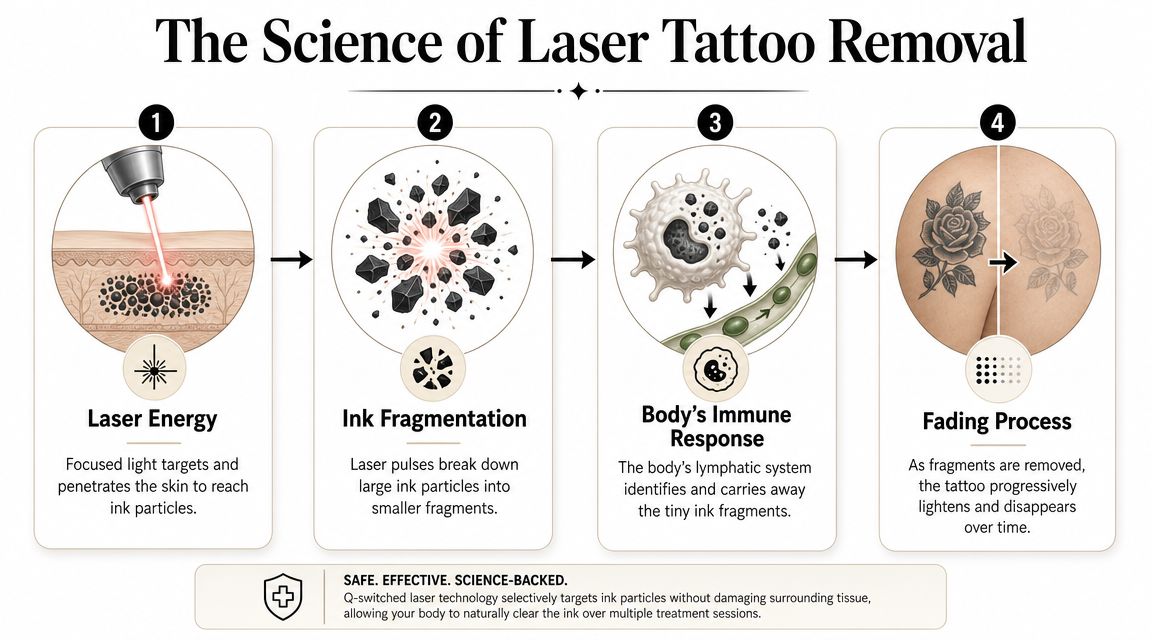
Tattoo removal makes more sense once you understand what the laser is trying to do. It isn't scraping ink out of the skin. It isn't burning away the tattoo. It's using very short bursts of energy to break pigment into smaller fragments so your body can gradually clear them.
Why tattoo ink stays put
Tattoo ink is placed deep enough in the skin that it does not readily wash away or shed off with normal skin turnover. That's why the tattoo stays visible for years. The ink particles are too large and too stable to disappear on their own in any meaningful way.
A simple way to think about it is a pile of rocks. Large rocks are hard to move. Break those rocks into pebbles, and cleanup becomes much easier. Laser treatment works on that same basic principle. The tattoo pigment is the rock. The laser breaks it down. Your body then does the clearing.
What the laser actually does
Modern laser tattoo removal relies on selective photothermolysis, where ultra-short, high-energy pulses are tuned to tattoo pigment so the ink absorbs more energy than surrounding skin, fragmenting particles for later clearance. Wavelength choice affects which pigment colors break down, which is why multi-wavelength treatment matters for more complex tattoos, as described in this overview of laser tattoo removal technology.
Some tattoos are straightforward. Others are layered, heavily saturated, or made up of multiple colors that respond differently. That's one reason treatment plans need to be individualized. The laser settings used on a small black script tattoo aren't the same as the approach used for a bright, dense, multi-color design.
If you're interested in how newer systems approach this, this page on new tattoo removal technology is a useful reference. It gives you a better sense of why device choice and wavelength flexibility matter.
There's also a lesson here for anyone considering a future tattoo. Looking at Axl Rojas masterclass testimonials can be useful because you can see how much craftsmanship, layering, and saturation go into professional tattooing. Those same qualities often influence how removal behaves later.
Practical rule: The laser does the fragmentation. Your body does the fading. That's why results appear over time, not all at once.
Your Tattoo Removal Journey Session by Session
A lot of Sarasota clients start with the same concern. They are not only asking how many sessions removal takes. They are also asking how to fit those sessions around sun exposure, pool days, boating, and beach weekends without making healing harder.
The consultation and your plan
The first visit is where the project gets defined in practical terms. The tattoo gets evaluated for age, placement, ink density, color, and how your skin responds to sun and irritation. Your goal matters just as much. A cover-up fade calls for a different endpoint than full removal.
Body location affects pace. A study published at PubMed Central found an average of 6 sessions, with a range from 2 to 20 sessions, and it showed clear differences by location. Hand and finger tattoos averaged 7.8 sessions, while upper-trunk tattoos averaged 4.3 sessions.
That lines up with what clients usually notice in practice. A finger tattoo often tests your patience more than a shoulder tattoo. For a closer look at planning and timing, this guide on how many laser tattoo removal sessions may be needed explains what changes the number.
What treatment day feels like
Treatment day is usually straightforward. The laser portion can be brief, especially on smaller tattoos, but the appointment also includes skin prep, eye protection, photos, and aftercare instructions.
Most clients describe the sensation as quick snapping heat. Some areas are easy to tolerate. Others, like ribs, ankles, hands, and the upper lip, tend to feel sharper. Right after treatment, the tattoo may turn white or chalky for a short time. That frosting response is common. Redness, warmth, and mild swelling can follow, especially in Florida heat if you head straight back outside.
Plan the rest of the day accordingly. If you have a beach afternoon, a long walk in direct sun, or a sweaty workout scheduled, it is usually smarter to book your session for another day.
What happens between visits
The time between sessions is where fading develops. The skin calms down first. Then your body gradually clears the fragmented ink over the following weeks.
Spacing matters for two reasons. The skin needs recovery time, and treating too soon can increase irritation without giving you better fading. In Sarasota, sun exposure adds another layer. Freshly treated skin and strong UV do not mix well, so clients who spend a lot of time outdoors often do better with a removal schedule that works around vacations, boat days, and peak beach season.
Here's what usually helps between appointments:
- Keep the area covered from sun: Use clothing, a bandage during early healing if advised, and avoid direct exposure while the skin is irritated.
- Do not pick or scrub: Blisters, flaking, or dryness need time. Disturbing the area can slow healing and raise the risk of texture changes.
- Expect uneven-looking progress: One section may fade before another, and some sessions produce more visible change than others.
- Stick with consistent spacing: Regular appointments usually work better than rushing in early or disappearing for many months unless sun exposure or healing makes a longer break the better call.
In Sarasota, timing matters almost as much as treatment. Starting removal in fall or winter often gives clients an easier aftercare window because the treated area is less likely to compete with constant sun, swimsuits, and outdoor events.
Choosing Your Goal Fading or Full Removal
A client might sit down in our Sarasota clinic with a tattoo they are tired of seeing, but the real question is more specific. Do you want clean skin in that spot, or do you want the old piece light enough for a strong cover-up? That decision changes the treatment plan, the stopping point, and how success should be measured.
When fading makes more sense
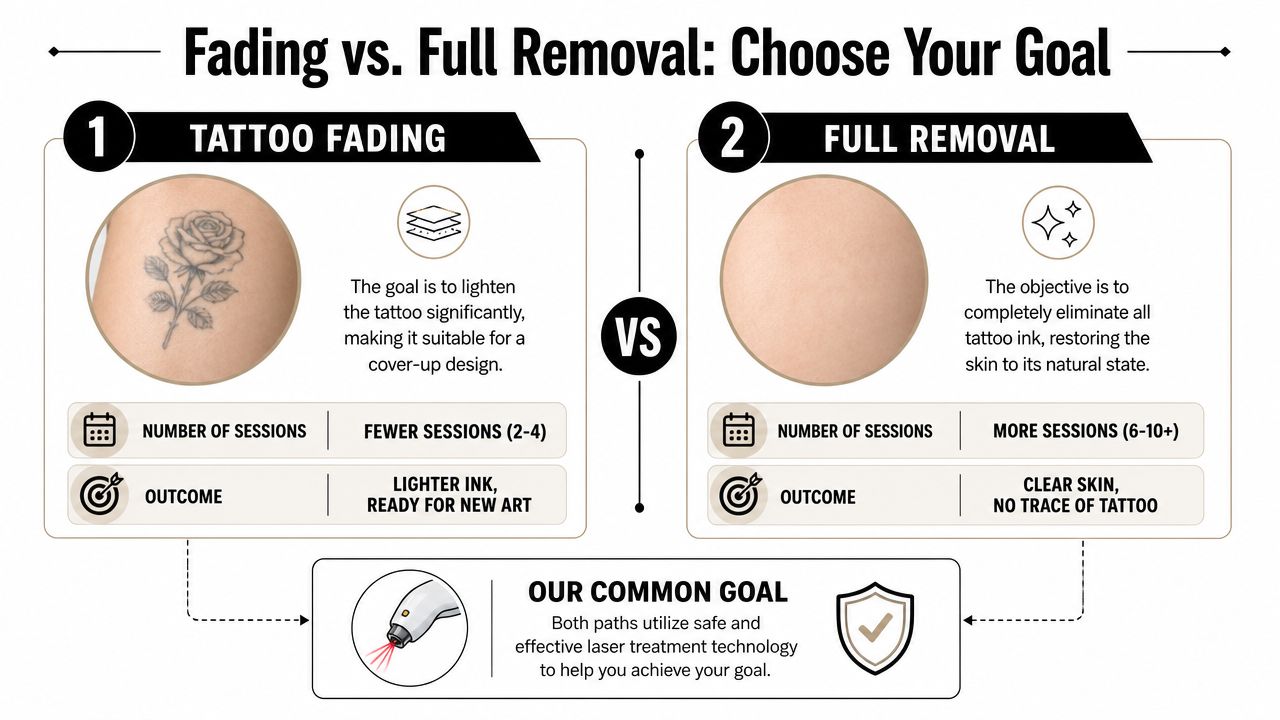
Fading is usually the better route if you already plan to put new artwork over the area. The target is not perfect clearance. The target is enough reduction that your tattoo artist can work with better contrast, cleaner line options, and less need to force a very dark cover-up.
This approach often saves time and sessions. It also gives you more flexibility if you are trying to plan around Sarasota life, especially if the tattoo is on a part of the body that sees a lot of sun in tank tops, swimsuits, or boat clothes. If the piece only needs to reach "cover-up ready," you may be able to stop before the longest stretch of the process.
That matters in Florida.
For cover-up fading, I usually tell clients to involve their tattoo artist early. Some artists are comfortable covering a piece that still looks obvious to you. Others want it much lighter before they start. Getting that answer first prevents overtreating a tattoo that did not need full removal in the first place.
When full removal is the better fit
Full removal fits clients who do not want replacement ink and want the area as clear as their skin and tattoo characteristics will allow. This path asks for more patience because the finish line is different. You are waiting for progressively lighter sessions, not just enough fading to hand the skin back to an artist.
It also requires more discipline outside the treatment room. In Sarasota, full removal can be harder to schedule casually because repeated sun exposure can interfere with timing. A beach weekend, a fishing trip, or a tan that builds up over time can push a session back if the skin is too exposed or irritated. For that reason, some clients choose to start full removal after summer or during a stretch when covering the area is realistic.
A visible tattoo can add another practical factor. If it is on the forearm, shoulder, ankle, or upper chest, ask yourself how easy it will be to protect that spot again and again in Florida weather. The right goal is not just what you want eventually. It is what you can realistically stick with.
A simple comparison helps:
| Goal | Best for | Mindset |
|---|---|---|
| Fading | Cover-up preparation | Stop when the tattoo is light enough for new art |
| Full removal | Clearer skin without replacement ink | Commit to a longer process and protect the area consistently |
The wrong plan usually starts with a vague goal. If you say you want it "gone" but really mean "light enough to redo," the treatment can continue longer than needed. If you ask for fading but in fact want the tattoo fully cleared, you may underestimate the time, spacing, and sun management required. Clear goals make the whole process more efficient.
Preparing for Your Appointment in Sarasota
Preparation matters more in Florida than in many other places. In Sarasota, your skin is more likely to be dealing with regular UV exposure, outdoor humidity, and lifestyle habits that affect healing. A good result starts before the laser turns on.

How to get your skin ready
Come in with skin that's calm and as close to your baseline tone as possible. Fresh tanning and irritated skin make treatment planning harder. If the area has been heavily exposed to sun, it may be smarter to wait and let the skin settle before your visit.
A few simple habits help:
- Avoid sun buildup: Don't treat the appointment like a race from the beach to the clinic.
- Keep the area clean: Skip anything harsh or irritating on the tattooed skin before treatment.
- Dress for access: Wear clothing that makes the area easy to reach without friction afterward.
- Know your goal: Fading for a cover-up and full removal should not be treated like the same request.
How to schedule around Florida sun
Sarasota clients benefit from thinking ahead. If you know you spend a lot of time outdoors in certain months, plan appointments so aftercare doesn't collide with heavy sun exposure. That may mean avoiding treatment right before a beach trip, boating weekend, long sports event, or a stretch of outdoor work.
In Florida, the laser session is only part of the job. Sun management is part of the treatment plan.
This is also where a local provider can be helpful. EradiTatt Tattoo Removal offers tattoo removal appointments in the Bradenton and Sarasota area, and local scheduling tends to work better when the provider understands how much daily sun exposure shapes healing decisions.
What to know about cost and logistics
Pricing for tattoo removal in the Sarasota area is broad because tattoos vary so much in size and complexity. One Sarasota-area provider page states a range of $85 to $500 per session, with 6 to 10 treatments often needed for significant fading or complete removal, depending on the tattoo, as noted on this Sarasota tattoo removal pricing page.
That range is useful for planning, but your consultation is where the estimate becomes practical. A small tattoo and a dense multi-color piece should not be priced or scheduled as if they're the same project.
For local visits, the Bradenton and Sarasota area location operates by appointment. If you're searching for laser tattoo removal near me Sarasota, it helps to choose a clinic time that doesn't send you straight back into a full day of sun, sweat, and friction on the treated area.
Ready to Start Your Tattoo Removal Journey
A Sarasota tattoo removal plan has to fit real life. If you spend weekends on the water, work outside, or want progress before a wedding or cover-up, those details matter just as much as the laser settings. Good results come from clear goals, sensible timing, and aftercare that matches Florida conditions.
The biggest mistake I see is treating sun exposure like a minor detail. In Sarasota, it is part of the treatment plan. Freshly treated skin needs protection from direct UV, heat, and friction, especially during the weeks after a session. That is why many clients do better when they map treatments around beach trips, vacations, boat days, and long stretches outdoors instead of squeezing sessions in whenever they have a free afternoon.
A key consideration in this area is protecting treated skin from direct sun and using proper coverage to reduce irritation and hyperpigmentation risk in Florida's high-UV climate, as discussed on the Bradenton and Sarasota tattoo removal page.
If you're still comparing local options online, it can help to understand how clinics think about search intent and patient questions in the first place. This overview of med spa transactional search optimization is useful because it shows why some pages answer real booking questions better than others. For a client, that means you can spot the difference between generic marketing and information that helps you prepare.
Book a consultation, bring your questions, and talk through the tattoo you want to fade or remove. A good plan should feel honest from the beginning. You should leave knowing what is realistic, how your sessions fit around Sarasota sun exposure, and whether your best treatment window is before beach season, after it, or during a stretch when you can keep the area covered and calm.
If you're ready to take the next step, contact EradiTatt Tattoo Removal to schedule a consultation and get a treatment plan built around your tattoo, your skin, and your Sarasota routine.