You've probably already made the decision emotionally. The tattoo that once fit a season of your life now feels out of place. Sometimes it's a name, an old style, a rushed piece, or ink that no longer matches who you are when you walk into work, head to the beach, or get dressed for an important event in Sarasota.
What usually comes next is the hard part. You search for tattoo removal clinics in Sarasota and run into the same promises over and over. Advanced technology. Fast results. Free consults. Fewer sessions. That doesn't help much if what you really need is a clear way to judge who will treat your skin safely, plan transparently, and give you realistic expectations from the first visit.
This guide is built for that moment. If you're still deciding, start with practical guidance on how to get rid of tattoos in Sarasota. If you're ready to compare clinics more carefully, the framework below will help you ask better questions and spot the difference between polished marketing and sound laser practice.
Table of Contents
- Your Fresh Start Begins in Sarasota
- How to Identify a Top-Tier Removal Clinic
- Key Questions for Your Tattoo Removal Consultation
- The Treatment Process from Start to Finish
- Planning Your Budget and Schedule
- Connect with EradiTatt in Bradenton and Sarasota
Your Fresh Start Begins in Sarasota
A lot of people walk into a consult with the same expression. They're ready, but cautious. They want the tattoo gone, or at least faded enough for a cover-up, but they also don't want to trade one regret for another.

In Sarasota, that decision often comes with a very practical reason. A client may be changing careers, entering a professional setting with stricter appearance standards, preparing for a wedding, or moving on from an old relationship or identity. Others want clean skin again. All of those reasons are valid, and none of them require an apology.
What a good start actually looks like
The best first step isn't booking with the first clinic that mentions a laser. It's understanding what a competent removal plan should look like before anyone points a device at your skin.
A strong clinic should help you answer questions like:
- Is full removal realistic: Some tattoos clear well. Others are better approached as a fade-first plan for a cover-up.
- What makes my tattoo harder or easier: Ink color, ink density, placement, age, and layering all matter.
- What does safe progress look like: You should expect a staged process, not a rushed promise.
- Who is treating me: The answer should be a licensed medical professional, not an undefined “tech.”
The right clinic doesn't try to win you over with speed first. It earns trust by showing you how the process really works.
That matters because tattoo removal is usually less about finding a flashy machine and more about finding a provider who knows when to push treatment and when to hold back. Sarasota clients do best when they choose a clinic that plans carefully from day one.
Why this matters before you book
Most bad tattoo removal experiences start with one of two problems. The clinic either overpromises, or it treats every tattoo as if the same approach works for everyone.
Neither is good medicine, and neither leads to a smoother outcome.
How to Identify a Top-Tier Removal Clinic
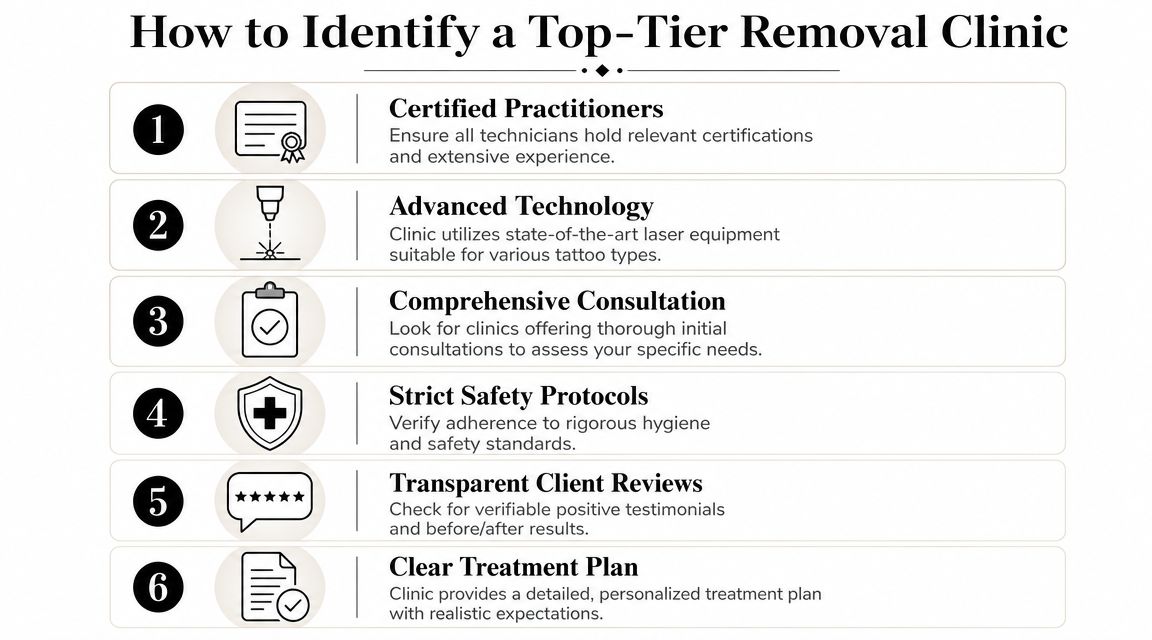
A Sarasota client often walks in after doing what many people do first. They compare prices, scan before-and-after photos, and assume the clinics look roughly the same. They are not the same. The clinic you choose affects skin safety, treatment pace, comfort, and how candidly your case is planned from day one.
Essential Clinic Standards
Start by judging the clinic on standards you can verify.
A strong tattoo removal clinic should use picosecond laser technology, have treatment performed by licensed medical professionals, and follow appropriate spacing between sessions so skin can recover and the body can clear fragmented pigment. If a provider is vague about any of those points, that usually signals a weak process behind the scenes.
Use this framework when comparing tattoo removal clinics in Sarasota:
- Ask for the exact laser platform: A qualified clinic should name the device and explain how it handles different ink colors, skin types, and treatment goals.
- Confirm who treats patients: Medical oversight and hands-on medical treatment are different things. Ask who is in the room, who sets parameters, and who is responsible if your skin reacts poorly.
- Look for disciplined timing: Clinics that push treatments too close together often create more irritation without improving clearance.
- Study before-and-after examples carefully: Good portfolios show consistency across different tattoo styles, not a few dramatic photos with no timeline or context.
- Listen for realistic planning: Experienced providers explain variables, likely response patterns, and limits. They do not promise a fixed number of sessions before evaluating your tattoo.
- Check whether the plan is case-specific: The right clinic assesses ink density, color mix, location, layering, and skin response before discussing the path forward.
Evaluate the clinic's process, not just its sales pitch
A polished consultation has structure. The provider should examine the tattoo closely, document a baseline, review medical history that could affect healing, and explain what they will watch for after each session.
Communication matters too. A clinic may use digital intake forms, automated reminders, or even an AI assistant for medical practices to keep clients informed and on schedule. That can improve follow-up. It should never replace clinical judgment, clear consent, or direct answers from the treating professional.
One practical rule helps here. If you cannot get a straight answer before treatment starts, expect the same problem once you are committed to the plan.
What separates careful clinics from careless ones
The difference usually comes down to decision-making.
Careful clinics explain why settings may change over time, why a slower plan can protect skin quality, and why fading for a cover-up may be more realistic than chasing full clearance in every case. Careless clinics tend to sell speed, use generic estimates, and treat every tattoo as if the same protocol applies.
That is why the smartest way to choose a provider is to compare standards, not slogans. If you want a local benchmark for that comparison, this guide to the best tattoo removal clinic standards in Sarasota shows what a transparent, medically grounded process should look like. EradiTatt fits that model by focusing on technology, safety protocols, and clear treatment planning rather than broad promises.
Key Questions for Your Tattoo Removal Consultation
A consultation shouldn't be a quick price quote with a few reassurances. It should help you understand risk, timing, likely response, and whether the provider has considered your tattoo as an individual case.
Ask about your tattoo, not tattoo removal in general
One of the most useful questions is simple: Based on my tattoo's colors and location, what makes this case easier or harder?
That question matters because color and placement change treatment difficulty. Clinical guidance notes that tattoos on the feet or hands often need more treatments than tattoos on the back or chest, while green, blue, and yellow inks are generally more resistant than black ink, according to clinical guidance on tattoo removal success factors.
If the answer sounds generic, the consult probably is.
Ask questions that reveal planning quality
Here's a consultation checklist worth bringing with you:
| Question Category | What to Ask |
|---|---|
| Skin assessment | How does my skin type affect laser settings, healing, and pigment-change risk? |
| Tattoo difficulty | Which parts of my tattoo will likely respond first, and which colors may be slower? |
| Location factors | Does this placement usually heal or clear more slowly than other body areas? |
| Removal goal | Am I a better candidate for full removal or fading for a cover-up? |
| Session planning | What will determine whether we stay conservative or increase intensity later? |
| Side effects | What temporary reactions are normal, and what would make you want me to call the clinic? |
| Provider credentials | Who will perform my treatment, and what is their role in adjusting settings? |
| Aftercare | What should I avoid after treatment so I don't interfere with healing? |
Listen for specifics in the answers
A good provider should be able to explain the likely behavior of your tattoo in plain language. For example, layered work may respond unevenly. Dense professional ink often takes more patience than lighter amateur work. Extremities can be stubborn. None of that means poor results. It means the plan has to fit the case.
You should also ask how your skin tone changes the treatment approach. Some patients face a higher risk of pigment changes and scarring, especially with darker skin tones. That's exactly why conservative settings, skilled assessment, and medically supervised care matter.
Don't leave a consult with only a price. Leave with a reasoned treatment strategy.
Questions that often uncover red flags
Some answers should make you pause:
- “Everyone responds about the same.” They don't.
- “We'll know more after we start.” Some uncertainty is normal, but basic planning should happen before the first pulse.
- “We can probably get it out fast.” Speed talk without discussion of skin response is a warning sign.
- “The size tells us everything.” Size matters, but it's only one variable.
Clients who ask better questions usually make better clinic choices. That's especially true when comparing tattoo removal clinics in Sarasota, where many pages sound similar on the surface.
The Treatment Process from Start to Finish
The first appointment is usually less dramatic than people expect. Most of the work is in planning, protecting the skin, and then letting the body do its part between visits.
What happens during a session
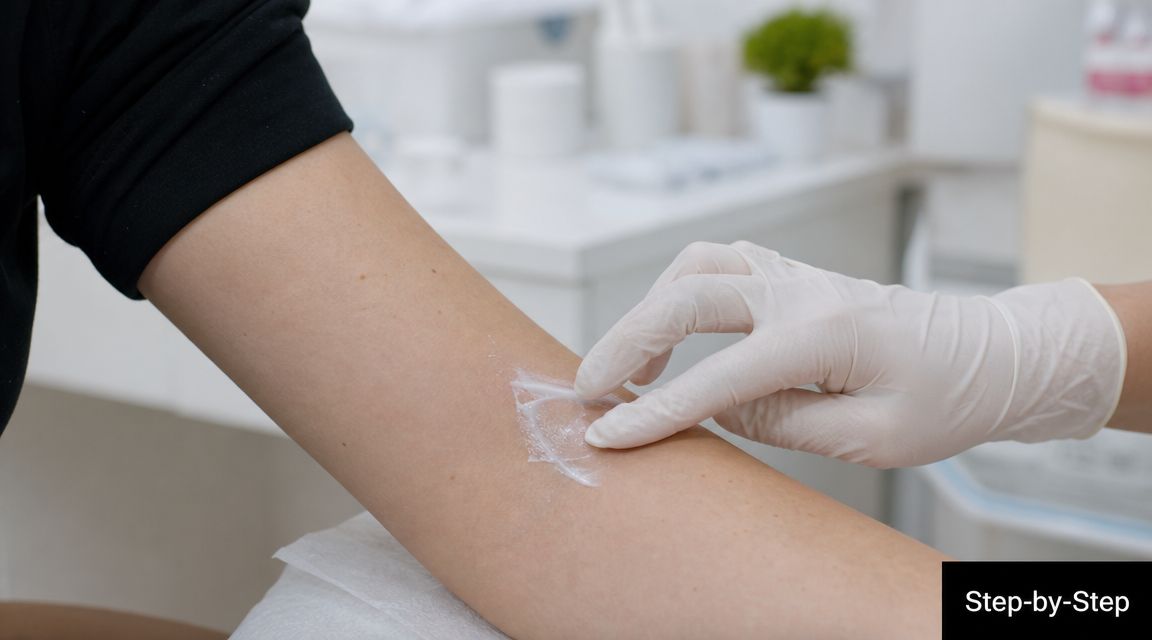
Once the area is assessed and prepared, the provider applies treatment in a controlled pattern across the tattoo. During laser exposure, many clients describe the feeling as sharp and quick. Comfort measures can help, but the bigger factor is that treatment is brief and deliberate.
Right after treatment, the skin often shows a temporary whitening effect sometimes called frosting. That visual change doesn't mean the tattoo is gone. It reflects an immediate tissue reaction and tells the provider that the skin needs to settle before anything further is considered.
There's also an important protocol point that many clients never hear about. In the R20 method, the operator performs multiple passes in one visit with roughly 20-minute intervals, allowing whitening to subside before treating the same area again. In the PubMed-indexed clinical study, the authors reported that this technique was “much more effective than conventional laser tattoo treatment” and concluded it could be used without requiring new laser hardware, as shown in the R20 clinical study on PubMed.
What happens after you leave
Patience is important. The laser disrupts the pigment, but your body handles the clearing. That's why visible improvement continues after the appointment rather than ending when the session ends.
A prospective study of 116 patients treated between January 2020 and June 2024 found an average of 6 sessions, with a range of 2 to 20 sessions. In that same study, low-density tattoos averaged 3.2 sessions, while high-density tattoos averaged 9.0 sessions, according to the clinical study on laser tattoo clearance.
That's the part many people underestimate. The session is one event. The removal process is a sequence.
What works and what slows people down
The clients who do well usually follow a few habits:
- They protect healing skin: Picking, friction, and unnecessary irritation can set recovery back.
- They keep follow-up timing realistic: Progress compounds over a properly spaced series, not by rushing visits.
- They judge progress over time: Some tattoos lighten unevenly before they lighten evenly.
- They stay goal-focused: Full removal and cover-up fading are different endpoints.
Healing is part of treatment, not the pause between treatments.
If you understand that early, the process feels much less frustrating.
Planning Your Budget and Schedule
A client comes in wanting a tattoo gone before a wedding, a new job, or beach season. The first thing I clarify is timing. Tattoo removal works on a medical schedule, not a deadline you can compress.
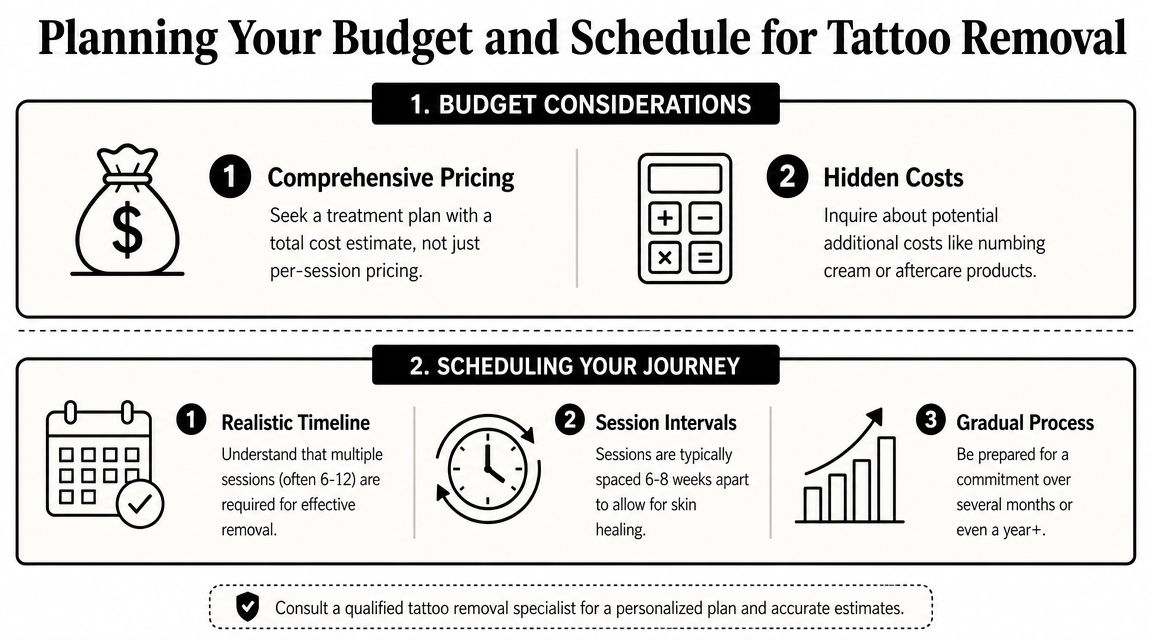
A good Sarasota clinic should give you a planning framework, not just a per-session quote. Session pricing matters, but it does not tell you what the full project will cost, how long it may take, or what could change along the way. The better standard is a written estimate built around your tattoo, your skin, and your goal.
Ask the clinic to map out these points clearly:
- Your treatment goal: Complete removal, partial fading, and cover-up prep follow different timelines and price ranges.
- The factors that affect session count: Ink density, color variation, layering, age of the tattoo, and placement on the body all influence how much work is involved.
- What is included in the quoted cost: Aftercare products, numbing options, follow-up checks, and touch-up visits should be discussed upfront.
- How the clinic handles slower clearance: Some tattoos fade evenly. Others clear in patches first. You want a clinic that plans for that reality instead of acting surprised by it.
This is one of the easiest ways to judge tattoo removal clinics Sarasota clients are comparing. A strong clinic explains uncertainty clearly. It does not promise a fixed number of sessions before examining the tattoo closely.
Scheduling deserves the same level of attention. Treatments are usually spaced well apart so the skin can recover and the body can clear fragmented ink over time. In practice, that means people should plan in months, not in a string of back-to-back appointments.
For many clients, the schedule affects the budget just as much as the laser fee does. Time off work, travel to appointments, and aftercare all add up. If cost is a major concern, this guide to laser tattoo removal cost in Sarasota helps you compare estimates in a more informed way.
The clinics worth considering are the ones that show their planning standards early. Clear pricing, realistic spacing, and honest expectations usually tell you more about treatment quality than a low session quote ever will.
Connect with EradiTatt in Bradenton and Sarasota
By the time you're ready to book, the decision should feel straightforward. You want a clinic that uses modern picosecond technology, relies on licensed medical professionals, spaces treatment appropriately, and gives you a plan that matches your tattoo rather than a script.
That's the standard clients should use with any of the tattoo removal clinics Sarasota search results put in front of them. It's also the standard that EradiTatt Tattoo Removal presents through its Bradenton and Sarasota service offering, including PiQo4 laser treatment for different ink colors and skin types at its local location.
A good next step is to contact the Bradenton and Sarasota clinic directly, ask who will perform your treatment, and request a consultation focused on your tattoo's colors, density, placement, and your goal. If you want complete removal, say that. If you want fading for a cover-up, say that too. The plan should change based on the destination.
You should also ask for the full clinic address, direct local phone number, and the central 844 scheduling number when you book, so you have clear contact options and know exactly where you're going before your first appointment.
The right clinic won't make the process sound effortless. It will make it feel manageable.
If you're ready for a clear, medically supervised plan, EradiTatt Tattoo Removal is a practical place to start. Reach out for a consultation, bring your questions, and get a treatment strategy built around your tattoo, your skin, and your end goal.