
You catch a glimpse of an old tattoo while getting dressed for work, heading to dinner downtown, or packing for a beach day in Sarasota. It may not be a bad tattoo. It may be a tattoo that no longer fits your life. That's usually the underlying issue. The design belonged to a different season, and now you want a clean slate, a softer version for a cover-up, or a professional appearance that feels more like you.
That decision carries more weight than people expect. Some clients want total removal before a career change. Others want selective fading so a new artist has room to work. Many just want a clear answer to one practical question: how do you get rid of tattoos in Sarasota safely, without guessing?
The short answer is that modern tattoo removal is usually laser-based, medically paced, and highly dependent on the tattoo itself. The better answer is a framework. You need to know which path fits your goal, what technology matters, what realistic treatment looks like, and how to avoid wasting time on methods that don't do much beyond irritate the skin.
At EradiTatt Tattoo Removal, the process is approached as progressive treatment, not a quick cosmetic fix. That mindset matters. It keeps expectations realistic and puts safety first. If you're researching how to get rid of tattoos in Sarasota, this guide will help you decide whether you want full removal or fading, how to choose a provider, and what your treatment journey is likely to look like from the first consultation through aftercare.
Table of Contents
- Your Fresh Start From Unwanted Ink in Sarasota
- Understanding Your Tattoo Removal Options
- How to Choose a Trusted Removal Clinic in Sarasota
- What to Expect From Your First Call to Final Session
- Decoding Timelines Costs and Realistic Results
- Your Guide to Pre and Post-Treatment Care
- Frequently Asked Questions About Tattoo Removal
Your Fresh Start From Unwanted Ink in Sarasota
A lot of people wait longer than they need to. They tell themselves the tattoo doesn't bother them enough to deal with it. Then something shifts. A wedding gets closer. A new role opens up. A visible forearm piece starts feeling out of place in client meetings. A name, symbol, or old style becomes a reminder you're done carrying.
That's often the moment tattoo removal starts to feel less cosmetic and more practical.
In Sarasota, that decision usually isn't about perfection. It's about alignment. You want your skin to reflect your life as it is now, not as it was when the tattoo was new. Some people want complete clearance. Others just want enough fading to hand the area back to a cover-up artist with more options and fewer limitations.
The real first step is choosing the right goal
The biggest mistake people make is assuming every tattoo should be treated the same way. It shouldn't.
A small black tattoo with light ink saturation may be a strong candidate for full removal. A dense multicolor piece may be better approached as staged fading first, then reassessed. Cosmetic tattoos and unusual pigments can introduce another layer of planning. Your objective matters just as much as the machine being used.
Practical rule: Don't start with “How fast can this come off?” Start with “What outcome do I actually want?”
That changes everything about the treatment plan.
Sarasota patients usually need clarity, not hype
If you're searching for how to get rid of tattoos in Sarasota, you probably don't need a dramatic promise. You need a straight answer about what works, what doesn't, and what your tattoo is likely to require.
A good removal process should leave you feeling informed, not pressured. You should understand whether the tattoo is a strong candidate for full removal, whether fading makes more sense, and what kind of healing commitment you're signing up for. Once those pieces are clear, the next step gets much easier.
Understanding Your Tattoo Removal Options
Modern tattoo removal has moved a long way from the older methods people still hear about. Today, laser treatment is the main professional path because it targets pigment more precisely than approaches that remove or abrade layers of skin.
Why laser became the standard
The American Society for Dermatologic Surgery notes that Q-switched lasers became the foundation of tattoo removal because their short, high-energy pulses can shatter pigment while limiting damage to surrounding skin, which made them safer and more targeted than older methods like dermabrasion, as summarized in this tattoo removal overview citing ASDS guidance.
That historical shift matters because it explains why laser remains the reference point. The goal isn't to scrape the tattoo away. The goal is to break ink into smaller particles so the body can gradually clear them.
At a practical level, newer systems build on that principle with more flexibility. A platform like PiQo4 is useful because tattoo ink isn't uniform. Different colors respond differently, and treatment works better when the provider can match the technology to the pigment rather than forcing one setting onto every tattoo.
When fading makes more sense than full removal
Not every client needs total clearance. In fact, some of the smartest treatment plans stop short of that.
If your goal is a cover-up, controlled fading can be the better move. That approach gives a tattoo artist more freedom with shape, color, and placement. It can reduce the need for a larger, darker redesign. For some clients, that's the win. They don't want bare skin. They want better options.
There are also non-laser approaches people ask about, including saline-based fading for very specific cosmetic situations. But for broad tattoo removal, especially when deeper dermal pigment is involved, laser remains the method widely considered for initial evaluation.
Older methods may sound simple, but simple isn't the same as targeted. For most unwanted body art, the more precise option is usually the safer one.
Tattoo Removal Methods at a Glance
| Method | Best For | Mechanism | Typical Goal |
|---|---|---|---|
| Laser tattoo removal | Most unwanted body tattoos, especially when full removal or major fading is the goal | Light energy breaks pigment into smaller particles for gradual clearance by the body | Full removal or progressive fading |
| Saline fading | Select cases where softening pigment for a future cosmetic correction is the main goal | Solution-based lifting response in the treated area | Partial lightening |
| Dermabrasion | Rarely chosen when compared with modern laser care | Mechanical abrasion of skin layers | Aggressive removal attempt |
| Surgical excision | Limited cases where cutting out the tattoo is medically appropriate | Physical removal of tattooed skin | Immediate removal of a small area |
How to Choose a Trusted Removal Clinic in Sarasota
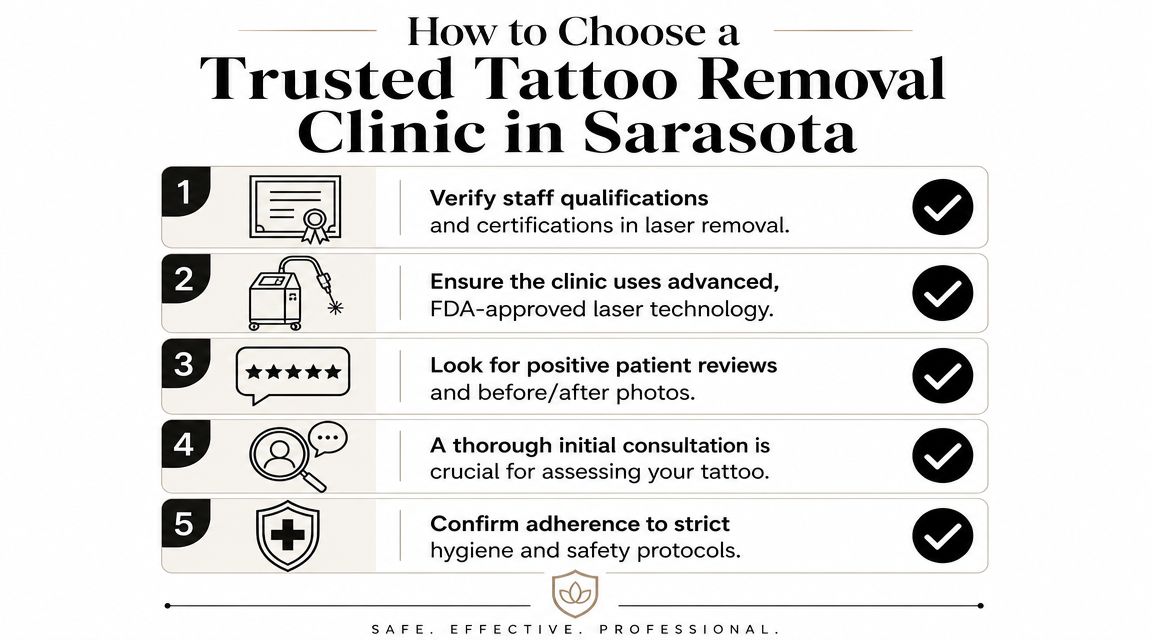
Choosing a clinic isn't just about location or convenience. It's about whether the provider can safely match the treatment to your tattoo instead of forcing your tattoo into a one-size-fits-all package.
The biggest quality marker is usually the consultation. If the conversation feels rushed, if your tattoo isn't assessed closely, or if the provider talks like every tattoo comes off the same way, keep looking.
What technology should do for you
The FDA emphasizes that tattoo inks contain a wide range of pigments, and removal depends heavily on the technology used. Black ink is often easiest to treat, while green, blue, and yellow may require specific wavelengths, which makes the clinic's device capability a critical factor, as summarized in this Sarasota tattoo removal technology explainer.
That's exactly why the machine matters. A multi-wavelength platform like PiQo4 gives a provider more options across different colors and treatment goals. You don't need to become a laser physicist before booking a consultation, but you should expect the clinic to explain how their technology matches your ink profile, skin response, and intended outcome.
If you want a useful benchmark for evaluating local providers, this guide on what to look for in the best tattoo removal in Sarasota gives you a practical checklist to compare against.
What to demand in the consultation
A good consultation should answer more than “Can you remove it?” It should answer “What's the smartest path for this tattoo?”
Look for these signs:
- Clear goal setting: The provider should ask whether you want complete removal, strategic fading, or a partial lightening plan for a cover-up.
- Ink-specific assessment: They should evaluate color mix, density, age of the tattoo, placement, and the apparent depth of the ink.
- Skin-aware planning: Your skin tone and healing pattern should be part of the discussion, not an afterthought.
- Transparent limitations: You should hear what may be stubborn, what may take longer, and where complete clearance may be less predictable.
- Clean clinical process: Gloves, eye protection, skin prep, device safety, and aftercare instructions should feel standardized and consistent.
A trustworthy clinic doesn't promise a miracle. It explains trade-offs before treatment starts.
One mention is enough here. EradiTatt Tattoo Removal offers laser tattoo removal and fading plans in the Sarasota area using PiQo4, which makes it relevant for people comparing local options based on technology, treatment flexibility, and consultation quality.
What to Expect From Your First Call to Final Session
Most anxiety about tattoo removal comes from not knowing what the process looks like. Once people see the steps, it feels much more manageable.
The first consultation sets the plan
Your first call usually covers the basics. Where is the tattoo, how large is it, what colors are in it, and what outcome are you after. That conversation should lead to an in-person assessment where the provider looks at the tattoo directly and maps out a treatment strategy.
The plan should be personalized. Tattoo age, color range, saturation, body location, and your skin response all influence the approach. Some tattoos are treated with full removal in mind from day one. Others are intentionally faded to a level that makes a cover-up easier and cleaner.
What a treatment day usually feels like
The appointment itself is usually straightforward. The area is cleaned, protective eyewear is used, and the laser is applied in passes across the tattoo. Many people describe the sensation as a quick snapping feeling against the skin. It's not usually confused with a relaxing facial, but it's also not mysterious once you've done it.
Right after treatment, it's common to see temporary whitening or “frosting,” along with redness, warmth, or swelling. Those early responses are part of the skin's reaction to treatment and are usually discussed ahead of time so they don't catch you off guard.
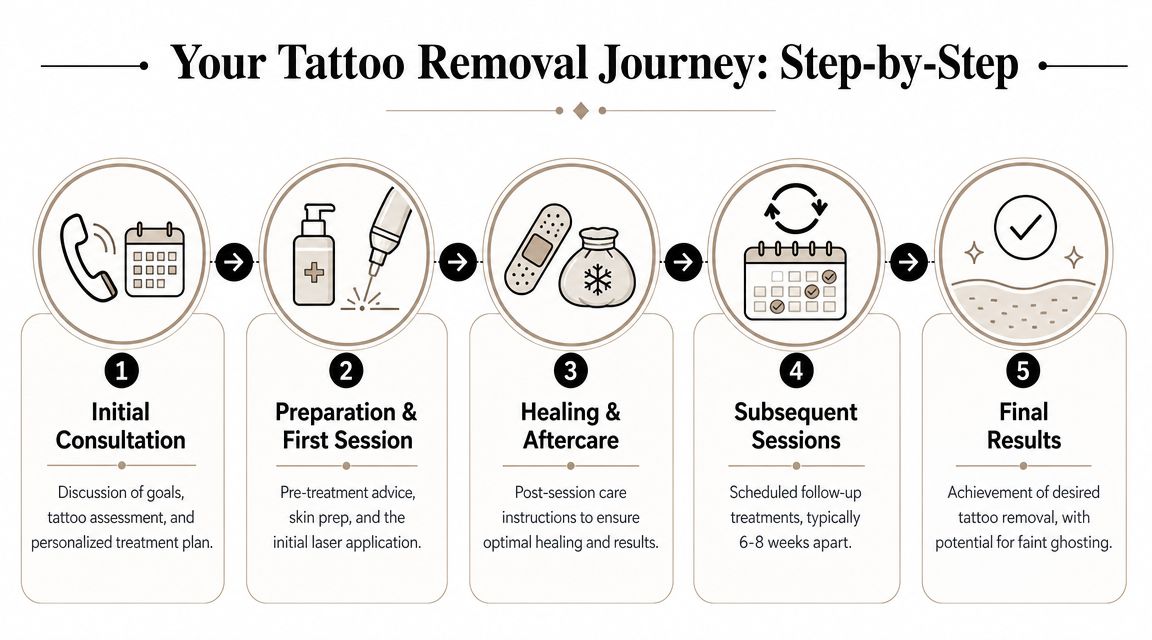
This visual gives a simple overview of the treatment path:
Healing between sessions matters
The FDA clarifies that professional laser tattoo removal is a multi-step medical procedure. Sessions need to be spaced several weeks apart so the skin can heal and the immune system can clear fragmented ink over time, as reflected in this Cleveland Clinic tattoo removal guide summarizing FDA-aligned care.
That part is easy to underestimate. The session itself is only one piece. Much of the fading happens in the weeks after, not in the treatment room.
A normal course often looks like this:
- Consultation and planning: Decide whether the goal is full removal or fading.
- First treatment: Establish how the skin and tattoo respond.
- Healing phase: Follow aftercare, protect the area, and let the body process the ink.
- Repeat visits: Build fading gradually over a series of sessions.
- Final review: Stop when the tattoo is removed to your satisfaction or faded enough for the next step.
The body does the clearing. The laser starts the process.
Decoding Timelines Costs and Realistic Results
Expectations need to be grounded. Tattoo removal is rarely a one-visit event, and cost only makes sense when you understand the treatment arc behind it.

What controls the timeline
Clinical guidance from major sources places full tattoo removal in a multi-visit range. Cleveland Clinic cites 6 to 12 visits for final results, and a 6 to 8 week healing interval between sessions is commonly recommended so skin can recover and the body can flush out ink particles, as summarized in this laser tattoo removal timeline breakdown.
That gives you a useful benchmark, but not a universal promise. Some tattoos move faster. Some take longer. Several factors shape the timeline:
- Color complexity: Black usually responds more readily than resistant colors.
- Ink density: Heavily packed tattoos tend to need more work than lighter ones.
- Tattoo depth: Deeper pigment can slow the process.
- Body location: Some areas fade more predictably than others.
- Skin response: Healing pattern and immune clearance play a real role.
Why cost varies from one tattoo to another
Cost follows complexity. A tiny black symbol on the ankle and a saturated multicolor sleeve don't belong in the same pricing conversation.
Most clinics build pricing around treatment size, the expected difficulty of the tattoo, and the number of sessions likely needed. That's why flat promises can be misleading. Lower upfront pricing can become expensive if the treatment path is inefficient, poorly matched to the ink, or interrupted by avoidable healing issues.
If you want a clearer local framework, this page on laser tattoo removal cost in Sarasota helps break down what typically affects the investment.
What realistic results look like
Realistic doesn't mean pessimistic. It means honest.
Some tattoos clear impressively well. Others leave faint residual pigment or subtle ghosting. Some colors fade unevenly before they fade more fully. And some clients decide midway that they've reached the exact level of fading they wanted for a cover-up, which means “done” looks different than complete bare-skin removal.
Here's the decision lens I'd use:
| Situation | Most realistic goal |
|---|---|
| Small, older black tattoo | Strong candidate for full removal |
| Dense multicolor tattoo | Gradual fading with reassessment |
| Cover-up planned | Partial fading to open design options |
| Unusual pigments or resistant colors | Conservative plan with flexible expectations |
The safest providers don't sell certainty where biology doesn't allow it.
Your Guide to Pre and Post-Treatment Care
Good removal results don't come only from the laser. They also come from how you show up before the appointment and how carefully you treat the area afterward.
Before your appointment
Preparation starts with protecting the skin. Avoid showing up with irritated, sun-stressed, or compromised skin over the tattoo. Clean, calm skin gives the provider a better starting point and reduces unnecessary setbacks.
Use this as a practical checklist:
- Keep the area out of heavy sun: Sun-exposed skin is harder to treat safely.
- Arrive with clean skin: Skip heavy lotions, oils, or self-tanner on the treatment area.
- Share relevant history: If your skin has reacted strongly to treatments before, say so.
- Ask questions early: Clarify your goal before the session, especially if you want fading for a cover-up rather than total removal.
For a more detailed appointment checklist, this guide on how to prepare for tattoo removal is worth reviewing before your visit.
After your session
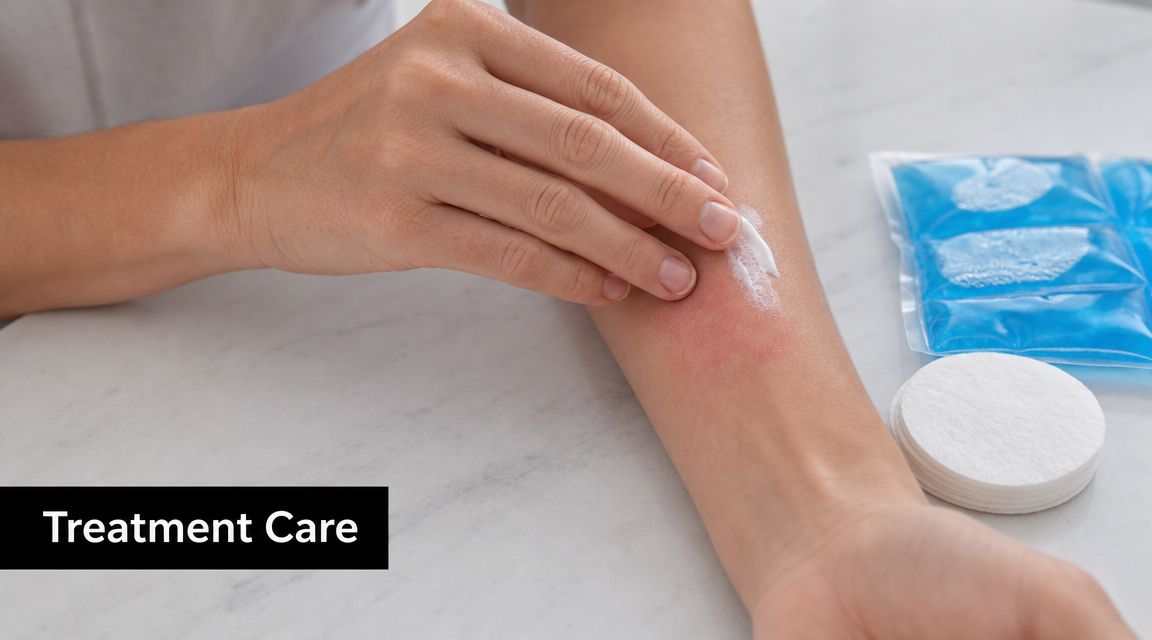
The treated area usually needs simple, disciplined care. Think gentle cleaning, protection, and leaving the skin alone while it recovers.
The basics matter most:
- Keep it clean: Follow the cleansing instructions your provider gives you.
- Use recommended aftercare only: Don't improvise with harsh products.
- Don't pick or peel: If the skin blisters or scabs, let it heal naturally.
- Reduce friction: Tight clothing and repeated rubbing can irritate the area.
- Protect it from the sun: Freshly treated skin needs extra caution.
Healing isn't downtime. It's part of the treatment.
When clients are consistent with aftercare, the process tends to feel smoother and more predictable.
Frequently Asked Questions About Tattoo Removal
Does tattoo removal hurt
It is described as quick, sharp snapping against the skin. The exact sensation depends on the area being treated, the tattoo itself, and your personal tolerance. It's usually more manageable once you know what to expect and how brief each pass can feel.
Can every tattoo be completely removed
No. Removal difficulty varies by ink color and skin tone. The FDA notes that black inks generally respond best, while green, blue, and fluorescent inks can be more resistant, which is why a consultation matters before anyone gives you a treatment outlook, as summarized in this Sarasota-focused explanation of tattoo removability.
Is partial fading possible for a cover-up
Yes. In many cases, partial fading is the smartest move if your end goal is new artwork rather than bare skin. It can give your tattoo artist more room to design something cleaner and less heavy.
Is scarring a risk
Any skin procedure has some level of risk, especially if aftercare is ignored or if the skin is repeatedly irritated. That said, modern laser tattoo removal is designed to target ink more selectively than older removal methods. Good technique, appropriate spacing, and careful aftercare all help reduce complications.
Can colored tattoos be treated
Often, yes, but they usually require a more specific approach than simple black ink. Resistant colors tend to demand better wavelength matching and more patience. That's one reason consultation quality matters so much.
How long should I wait between sessions
Your provider should set the schedule based on healing and tattoo response. Rushing treatments usually doesn't improve the outcome. It just gives the skin less time to recover.
Should I remove the whole tattoo or just fade it
That depends on your actual goal. If you want clear skin, full removal may make sense. If you're planning a cover-up, fading may be the more efficient path. The right answer isn't always “remove everything.”
If you're ready for a clear, pressure-free plan, EradiTatt Tattoo Removal can help you evaluate whether your tattoo is a better candidate for full removal or strategic fading, and what that process is likely to look like in the Sarasota area.