
Yes, laser tattoo removal does work in Bradenton. For a typical multi-colored tattoo, complete removal averages 8 to 12 sessions spaced 6 to 8 weeks apart, while fading for a cover-up often takes 3 to 6 sessions. It works best when the right laser technology is used, the tattoo's ink and depth are evaluated accurately, and your skin type is matched to the treatment plan.
If you're reading this, you're probably looking at a tattoo that doesn't fit your life the way it used to. For some people, it's about work. For others, it's a name, a symbol, or a design that doesn't belong anymore. That's common in Bradenton, and the answer usually isn't guesswork. It's choosing a method that matches the tattoo you have.
The biggest mistake I see is assuming all tattoo removal is basically the same. It isn't. The laser matters. Your skin tone matters. The color of the ink matters. The age of the tattoo matters. Florida sun exposure also matters, because recently tanned or irritated skin can change how and when treatment should be done.
Real results come from understanding how the laser breaks apart ink, how your body clears it, and what kind of timeline makes sense for your goal. If your goal is complete removal, the plan looks different than if you only want enough fading for a cover-up. If you have darker skin, the technology choice matters even more.
Table of Contents
- Your Guide to Effective Tattoo Removal in Bradenton
- How Laser Technology Erases Tattoo Ink
- The Technology Behind the Results Pico vs Q-Switched Lasers
- Factors That Influence Your Tattoo Removal Results
- What to Expect Timeline Sessions and Cost in Bradenton
- Safety Aftercare and Your Next Step in Bradenton
- Frequently Asked Questions About Tattoo Removal
Your Guide to Effective Tattoo Removal in Bradenton
If you want the direct answer to "does laser tattoo removal work Bradenton," the answer is yes, but not in the same way for every tattoo. A simple black tattoo on one client may respond steadily. A dense, layered, multi-colored piece on another client may take more patience and a more technical approach.
Tattoo removal works because the laser targets pigment that your body can't clear on its own. Once the ink is broken into much smaller fragments, your immune system gradually carries those fragments away. That's why removal is a process, not a one-day fix.
A good consultation should answer a few practical questions right away:
- What is the goal: full removal or fading for a cover-up
- What's in the tattoo: black ink only, mixed colors, heavy saturation, or cover-up layers
- How does your skin respond: especially if you have more melanin or a history of pigmentation changes
- How realistic is the timeline: based on your tattoo, your skin, and your ability to protect the area from sun
Practical rule: The best laser tattoo removal plan is personalized. Fast isn't the same as rushed, and aggressive isn't the same as effective.
Bradenton clients often ask whether climate affects results. Indirectly, yes. Heat, sweating, and sun exposure don't stop removal from working, but they do affect healing. That means timing treatment around beach days, outdoor work, and recent tanning often makes the process smoother.
What works is a careful pairing of laser settings, skin assessment, and enough time between visits for the body to do its part. What doesn't work is treating every tattoo the same, overpromising speed, or ignoring skin tone and ink color.
How Laser Technology Erases Tattoo Ink
Why tattoos stay in the skin
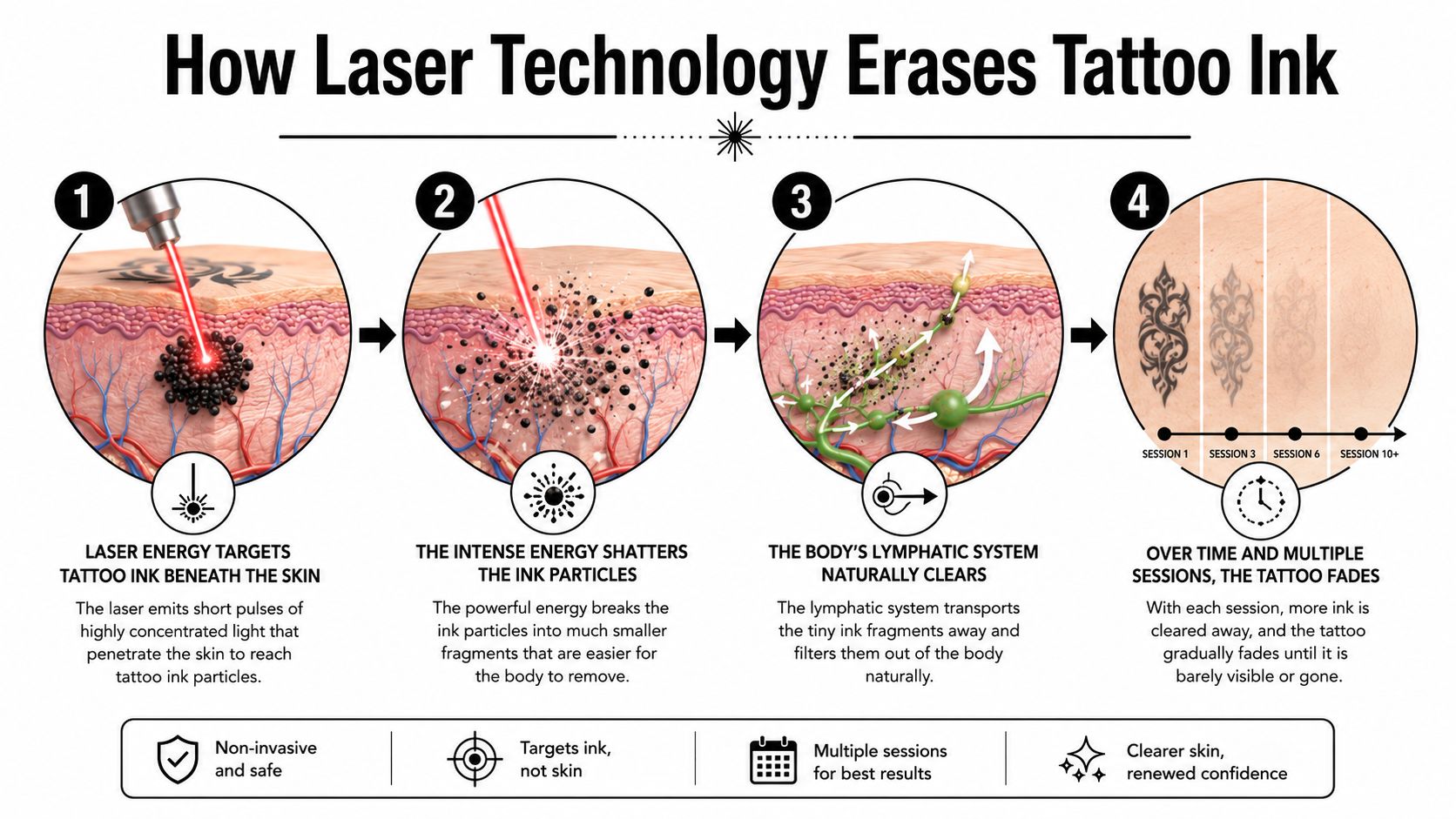
A tattoo is permanent because the ink sits in the dermis, which is deeper than the outer layer of skin. The particles are too large for the body to clear naturally, so the design stays visible year after year.
That's why scrubs, creams, and home remedies don't remove a professional tattoo. They may irritate the skin surface, but they don't reach the ink in a controlled, effective way.
To make the process easier to visualize, think of each ink particle as a boulder buried under the skin. Your body can't haul away a boulder. It can clear smaller debris.
What the laser actually does
The laser sends energy into the skin that targets the tattoo pigment. That energy shatters large ink particles into much smaller fragments. Once that happens, the body's cleanup system can gradually remove them over time.
That's why fading continues after the appointment is over. The treatment session starts the process. Your body finishes the work in the weeks that follow.
A few practical points help clients understand what to expect:
- The laser targets pigment, not just skin surface issues. Tattoo removal is deeper and more selective than a superficial exfoliating treatment.
- Clearance is gradual. You won't judge a session accurately the next day.
- Spacing matters. Your body needs time to process the shattered ink.
- Different pigments respond differently. Some colors are straightforward. Others are more stubborn.
If you've ever looked into other cosmetic laser treatments, the basic concept of selective targeting is similar to how clinics approach fading sun spots with professional lasers. The purpose is different, but the core principle is the same. The device is chosen to target a specific unwanted pigment while protecting surrounding skin as much as possible.
The laser does not “pull” ink out of the skin. It breaks ink apart so your body can remove it naturally.
That distinction matters. It's the reason hydration, healing, sun protection, and proper treatment intervals can all affect how smoothly the process goes.
The Technology Behind the Results Pico vs Q-Switched Lasers
Older systems and newer systems work differently
A client in Bradenton might come in with a black script tattoo, a colored cover-up, or ink that has been through years of Florida sun. The laser choice affects how efficiently that ink breaks apart, how the skin responds after treatment, and how much flexibility the technician has during the plan.
Older Q-switched lasers deliver energy in nanoseconds. They have been used for years in tattoo removal and can still clear some tattoos well, especially straightforward black ink. In practice, they rely more on a photothermal effect, which means more heat is involved as the laser disrupts pigment.
Picosecond lasers fire in much shorter pulses. That shorter pulse creates a stronger photoacoustic effect, so the ink is fractured into finer particles with less dependence on heat alone. For many tattoos, that gives us better control, especially when we are treating mixed colors, finer line work, or clients with skin types that need a more careful setting strategy.
Clinical takeaway: Finer fragmentation usually supports cleaner fading between sessions and gives the skin a better margin for recovery.
The PiQo4 platform is a picosecond system with four wavelengths, 1064 nm, 532 nm, 585 nm, and 650 nm. That range matters because tattoos rarely behave like one uniform target. Black outline, red fill, and stubborn blue or green areas can each require a different approach. If you want a closer technical explanation of how those wavelengths are used, this guide to PiQo4 laser tattoo removal explains the treatment process in more detail.
Why wavelength range matters
In the treatment room, the question is not merely whether a laser can remove tattoos. The better question is whether it can be adjusted correctly for your ink, your skin tone, and your treatment goal.
That matters in Bradenton. Regular sun exposure, recent tanning, and year-round outdoor activity can affect how we schedule sessions and how aggressively we treat. For clients with darker skin tones, wavelength selection and pulse behavior also play a large role in reducing unwanted pigment changes while still pushing the tattoo to fade.
A multi-wavelength pico platform gives the technician more options. More options means fewer compromises. Instead of forcing different pigments through the same limited setup, the treatment can be matched more closely to the actual tattoo.
One option available locally is EradiTatt Tattoo Removal, which uses the PiQo4 system for full removal and for controlled fading before a cover-up. The practical advantage is precision. Modern pico technology gives us more control than older Q-switched systems on a wider range of tattoos commonly seen in Bradenton clinics.
Factors That Influence Your Tattoo Removal Results
What affects speed and clearance
A common Bradenton scenario is this: two clients walk in with forearm tattoos that look similar in size, but one fades much faster than the other. The difference usually comes down to the tattoo itself, the skin it sits in, and how carefully the treatment plan is matched to both.
Ink color plays a major role. Black ink usually clears more efficiently because it absorbs laser energy well. Light blue, green, teal, and mixed-color tattoos often take more planning and more patience, especially if the piece includes shading, touch-ups, or cover-up work layered over older ink.
Tattoo age and ink density matter too. Older tattoos often respond more predictably because some pigment has already started breaking down over time. Newer tattoos, heavy saturation, and repeated passes in the same area usually slow the process because there is more ink for the body to clear.
Skin tone changes how we treat. In Bradenton, that matters year-round. Sun exposure, recent tanning, and Florida heat can affect when a session should be scheduled and how aggressive the settings should be. For darker skin tones, the goal is to break up tattoo ink while protecting the surrounding pigment, which is one reason modern platforms like PiQo4 are useful in a real clinic setting. They give us more control over how treatment is delivered.
Key Factors Affecting Tattoo Removal Speed
| Factor | Easier to Remove | More Challenging to Remove |
|---|---|---|
| Ink color | Black ink | Mixed colors, especially stubborn shades |
| Tattoo age | Older tattoos | Newer tattoos with fresh, dense pigment |
| Ink density | Lighter saturation | Heavy packing or layered cover-up work |
| Skin type match | Laser matched carefully to skin tone | Poor technology match or overly aggressive settings |
| Body location | Areas with stronger circulation | Areas that tend to clear more slowly |
A few practical details come up in almost every consultation:
- Sun exposure: Recently tanned skin can delay treatment or require more conservative settings.
- Body location: Hands, ankles, and lower legs often fade more slowly than areas with better circulation.
- Treatment goal: Full removal usually takes longer than fading a tattoo enough for a cover-up.
- Healing habits: Picking, rubbing, high-friction clothing, and poor aftercare can slow progress and increase the chance of irritation.
One more point matters. Comparing your tattoo to someone else's result usually leads to the wrong expectation. Ink brand, depth, layering, placement, immune response, and time between sessions all affect what happens on your skin.
If you want a more detailed explanation before starting, review these factors that affect tattoo removal progress.
What to Expect Timeline Sessions and Cost in Bradenton
How long the process usually takes
A Bradenton client often walks in hoping the tattoo can be removed fast, especially if a wedding, a new job, beach season, or a cover-up appointment is already on the calendar. The honest answer is that removal works in stages. The laser treats the ink in minutes, but your body does the clearing over the weeks that follow.
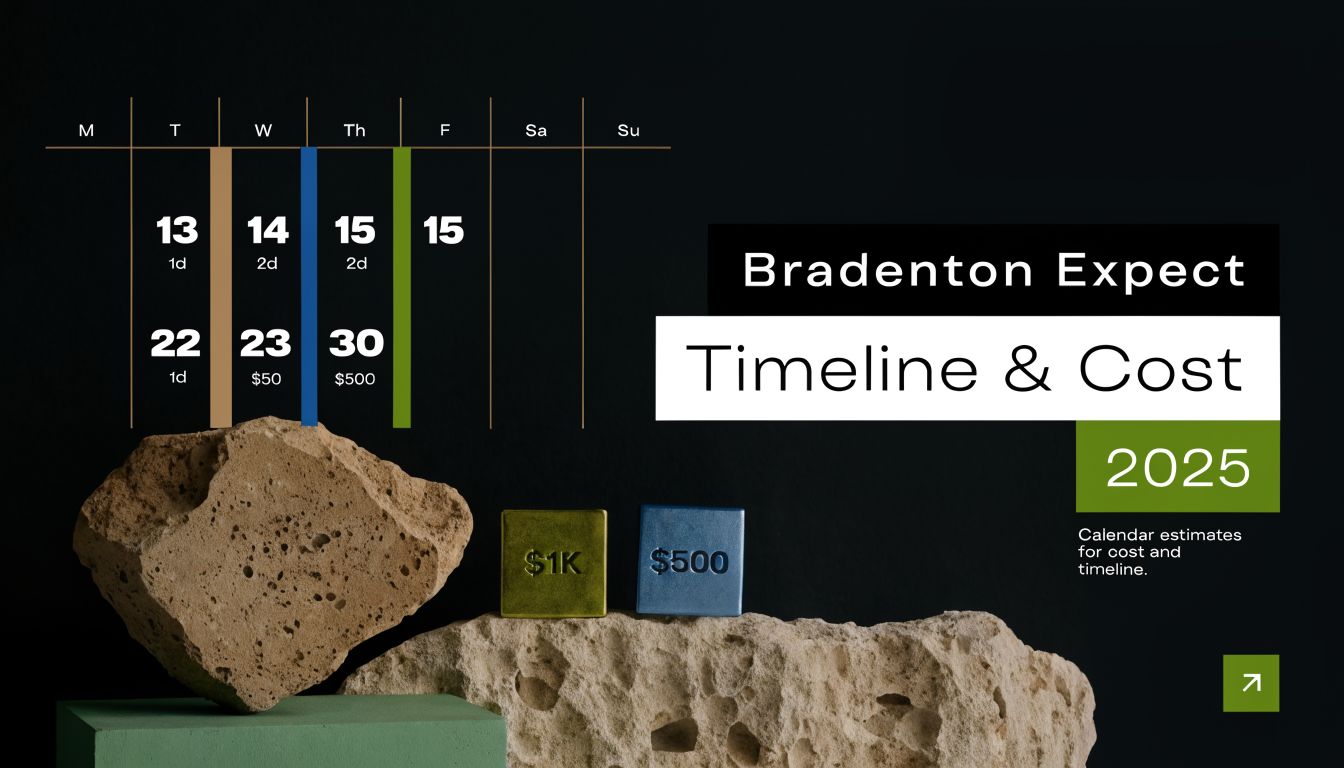
For a typical multi-colored tattoo, complete removal often falls in the range of 8 to 12 sessions spaced 6 to 8 weeks apart. If the goal is fading for a cover-up, 3 to 6 sessions is common, according to Bradenton tattoo removal session and cost guidance.
That schedule protects your skin and gives the immune system time to clear shattered pigment. In Florida, recent sun exposure can slow the plan down because tanned skin usually requires more conservative settings. That matters in Bradenton, where outdoor time is part of daily life for many clients.
At EradiTatt, I set expectations by treatment goal first. Full removal is a longer process. A cover-up fade is shorter, but the fading still has to be even enough for the tattoo artist to work cleanly over it. Multi-color pieces also tend to clear unevenly, so one part of the tattoo may lighten faster than another.
What affects the total cost
Session pricing in Bradenton usually depends on tattoo size, color complexity, density, and how much of the piece needs to be treated at each visit. The same local guidance notes a typical range of $200 to $500 per session.
That number only tells part of the story.
A small black script tattoo and a layered, saturated forearm piece are different jobs. The laser choice matters too. PiQo4 technology gives us more flexibility across ink colors and skin types, which is especially useful here in Bradenton where sun exposure, tanning, and a wide range of skin tones all affect treatment planning. Better technology does not make every tattoo easy, but it can make treatment more precise and help avoid wasted sessions from outdated settings.
Questions to ask during a consultation include:
- Am I planning for full removal or fading for a cover-up
- Is pricing based on size, complexity, or both
- Which colors in my tattoo may take longer
- Will recent sun exposure affect my timeline
If you want a local breakdown of how session pricing is usually structured, this Bradenton tattoo removal cost guide explains what clinics are typically factoring into the quote.
Safety Aftercare and Your Next Step in Bradenton
What normal healing looks like
Laser tattoo removal is generally very safe when it's performed by a trained technician using modern equipment and proper settings. After treatment, it's normal to see temporary redness, swelling, and frosting, which is the pale, chalky look that can appear immediately after the laser pass.
The area may also feel warm and sensitive for a short time. Some clients develop small blisters or light scabbing as the skin heals. That can be part of a normal response if it's managed correctly.
Healing well is part of getting a good result. The session doesn't end when you leave the clinic.
Aftercare that helps your skin recover well
Good aftercare is simple, but it matters. The goal is to protect the skin while it calms down and repairs itself.
- Keep it clean: Gently cleanse the area as instructed and avoid unnecessary friction.
- Keep it dry when needed: Don't soak the area early in healing.
- Use the recommended ointment: Follow the product guidance given after your session.
- Stay out of the sun: Florida sun can irritate healing skin and complicate pigmentation.
- Leave blisters or scabs alone: Picking slows healing and can increase the chance of unwanted skin changes.
If you're considering treatment in Bradenton, the next step should be a consultation that looks at your tattoo in person. A proper assessment can tell you whether your tattoo is a strong candidate for full removal, whether fading makes more sense, and how your skin type affects the plan.
Frequently Asked Questions About Tattoo Removal
Does tattoo removal work on all ink colors
Laser tattoo removal can work on many ink colors, but not all pigments respond at the same pace. Black usually clears more predictably. Mixed-color tattoos often require more strategy because some shades are more stubborn than others.
Does laser tattoo removal leave a scar
The laser itself is designed to target ink, not create scars. The bigger scar risk usually comes from poor technique, improper settings, or picking at blisters and scabs during healing. Existing scar tissue inside the tattoo can also affect how the skin looks as the ink fades.
Can I get treatment if I have a darker skin tone
Yes, but the device and settings matter. Darker skin contains more melanin, so the treatment approach needs to account for that carefully. This is exactly why modern picosecond technology and an individualized consultation are so important in a Florida market like Bradenton.
Can I remove only enough for a cover-up
Yes. Many clients don't want complete removal. They want enough fading so a tattoo artist can work with a cleaner, lighter base. In those cases, the plan is built around controlled reduction rather than total clearance.
If you're ready to find out what your tattoo will realistically take, start with a consultation and a straightforward treatment plan instead of generic promises.
If you want a personalized answer for your skin type, ink colors, and removal goal, schedule a consultation with EradiTatt Tattoo Removal. You'll get a realistic assessment of whether full removal or cover-up fading makes more sense, what the process will look like in Bradenton, and how to move forward safely.