
That old tattoo usually becomes a problem in ordinary moments first. You catch it in the mirror before work, in the car with your hand on the steering wheel, or while packing for a beach day in Tampa. It may not be a bad tattoo. It just may not fit your life anymore.
That’s common, and it’s one reason more people are learning how to remove a tattoo in Tampa with a medical laser process instead of trying to hide unwanted ink forever. The broader demand is real. The U.S. tattoo removal industry is valued at $1.86 billion, with 11% annual growth projected through 2030, and that demand is tied to the fact that 33% of American adults have tattoos while 24% express regret and seek removal according to tattoo removal market data from Marketdata Enterprises.
Thinking About a Fresh Start From Your Tattoo

People start removal for different reasons. Some need a cleaner look for work. Some want to fade an old piece before a cover-up. Some are done carrying around a name, symbol, or style from another chapter.
In practice, the emotional part matters just as much as the technical part. A client may come in saying they want complete removal, then realize what they really want is enough fading to give a tattoo artist clean room to work. Someone else may think they need removal immediately, but they first need a plan that fits sun exposure, travel, and healing time in Florida.
What tattoo removal actually means
Laser tattoo removal isn’t a one-day reset. It’s a controlled process that breaks ink into smaller particles so the body can clear them over time. The safest approach is progressive and deliberate.
Removing a tattoo well usually means choosing patience over shortcuts.
That’s why realistic guidance matters at the beginning. If you're searching for how to remove a tattoo in Tampa, what helps most is knowing two things early. First, laser removal works on a wide range of tattoos. Second, success depends on matching the treatment plan to the tattoo, your skin, and your routine.
Good candidates usually share one thing
They’re ready to commit to the full process.
That doesn’t mean every client has the same goal. Some want complete clearance. Others want visible fading with skin integrity preserved. The common thread is that they understand removal is a series, not a single event, and that proper spacing, aftercare, and sun protection affect the outcome.
Your First Step A Consultation Checklist
Your consultation should answer more than “Can this tattoo be removed?” It should clarify what kind of removal makes sense, what could slow progress, and what you need to change before the first session.
A proper assessment is not optional. Tattoo age, size, color, depth, location, skin tone, medical history, and healing capacity all matter. Sun exposure matters too. Clients need to avoid sun exposure and self-tanning products for 2 to 3 weeks before treatment, and medications such as Accutane must be disclosed during screening according to this pre-treatment laser tattoo removal guide.
Bring these answers with you
Walking in prepared saves time and leads to a cleaner treatment plan.
- Your goal: Do you want full removal, or do you want the tattoo light enough for a cover-up?
- Your timeline: Are you working around a wedding, a job requirement, travel, or beach season?
- Your sun habits: If you spend time outdoors often, say so. In Tampa, that changes scheduling and aftercare planning.
- Your medical history: Current conditions, healing issues, and medications need to be discussed clearly.
- Your tattoo history: Was it done professionally or not, and has it been reworked or layered over time?
Ask practical questions, not just price questions
A good consultation should give you a treatment map, not just a quote.
Ask questions like these:
- How will my skin tone affect settings and timing?
- Which ink colors may respond faster or slower?
- Should I remove it completely or fade it for a cover-up?
- What should I stop doing before the first session?
- What will aftercare look like in Tampa’s sun and humidity?
If you want a deeper look at prep, review this guide on how to prepare for tattoo removal.
Practical rule: If your skin is tanned, irritated, or recently exposed to heavy sun, that’s something to discuss before you schedule laser time, not after.
What a technician is looking for
The tattoo itself tells part of the story. Older ink may behave differently than newer ink. Dense professional ink can take more work than lighter, more superficial ink. Placement matters too, because different body areas heal and clear fragmented pigment at different speeds.
Your consultation should feel specific. If it feels rushed or generic, you still don’t have a real plan.
How Advanced Lasers Erase Ink
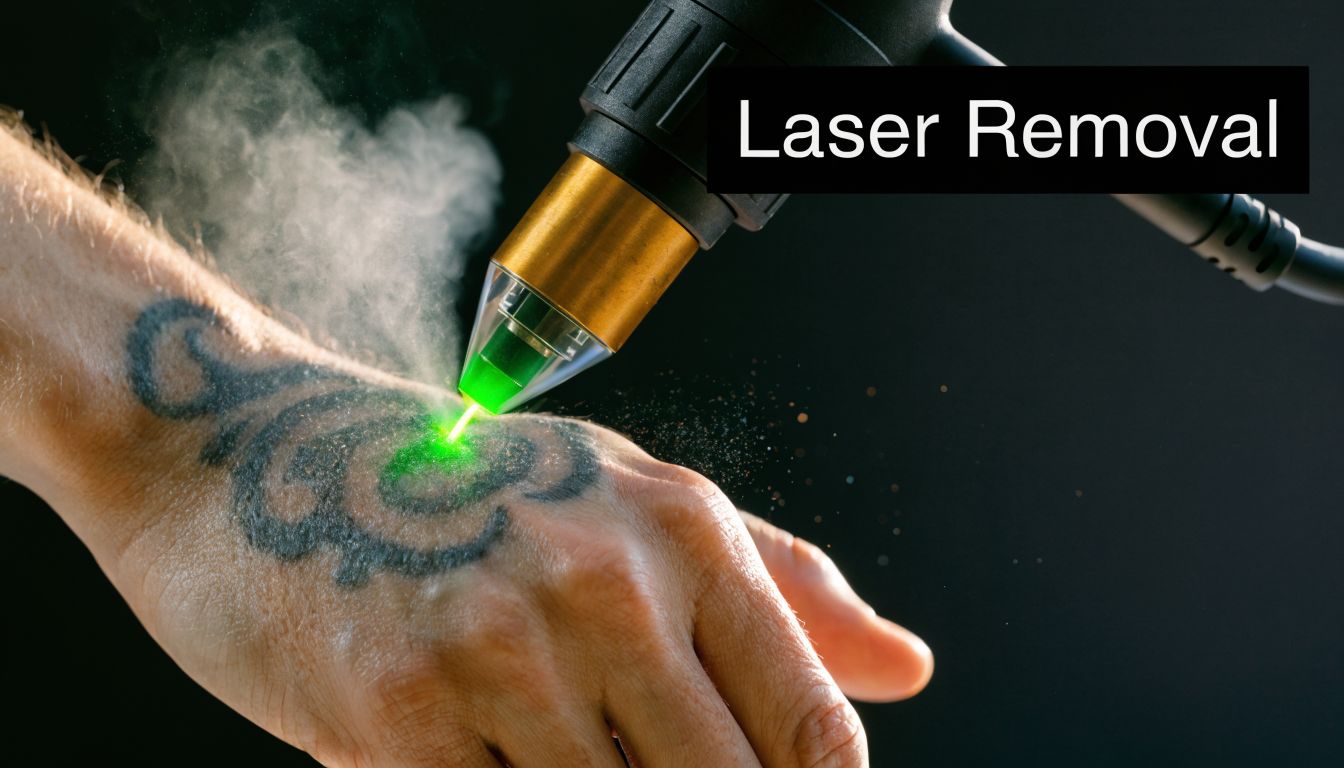
The core idea is simple. The laser targets tattoo pigment, breaks it apart, and leaves the body to do the cleanup. The difference between mediocre results and efficient results often comes down to the device, the settings, and the judgment behind them.
The system used in Tampa for advanced tattoo removal is the PiQo4, and its value is in how it delivers energy. According to EradiTatt’s overview of new tattoo removal technology, the PiQo4 combines picosecond and nanosecond pulses, treats all ink colors across all skin tones, and uses ultrafast bursts of light that shatter very small ink particles while keeping appointments typically under 20 minutes.
Why pulse speed matters
Older systems can still affect tattoo ink, but they generally don’t break particles down as efficiently as modern picosecond-capable systems. The shorter burst helps target smaller fragments more effectively.
That matters most with tattoos that have stubborn detail, layered work, or color variation. It also matters when you want strong fading without over-treating the surrounding skin.
How different ink colors respond
Not all pigment behaves the same way. Black ink usually responds more easily. Lighter shades and more resistant tones can take more persistence.
Here’s the practical view:
| Ink characteristic | What it usually means for treatment |
|---|---|
| Black ink | Often responds fastest |
| Lighter colors | May need more sessions and careful wavelength selection |
| Dense professional ink | Usually takes longer than shallow, lighter ink |
| Multi-colored tattoos | Need a system that can address different pigments deliberately |
In this scenario, technology must match technique. A machine can have multiple capabilities, but the operator still has to read the tattoo correctly.
The laser does the fragmentation. Your body does the clearing. Good removal depends on both.
What the appointment feels like
Clients often expect a long treatment. Most are surprised by how brief the session itself is. The active treatment time is short compared with the healing time afterward.
The feeling is usually sharp and fast rather than deep and lingering. The skin may show immediate whitening, often called frosting, right after treatment. That reaction is expected and temporary.
What works and what doesn’t
What works is modern laser treatment with enough spacing for the body to respond. What doesn’t work is chasing speed at the expense of healing.
Things that often slow outcomes include inconsistent scheduling, tanning, picking at the area, and expecting every color to fade at the same rate. A careful plan beats an aggressive plan almost every time.
If you’re comparing options, EradiTatt Tattoo Removal uses the PiQo4 system in Tampa for complete removal and cover-up fading.
The Treatment Timeline What to Expect Session by Session
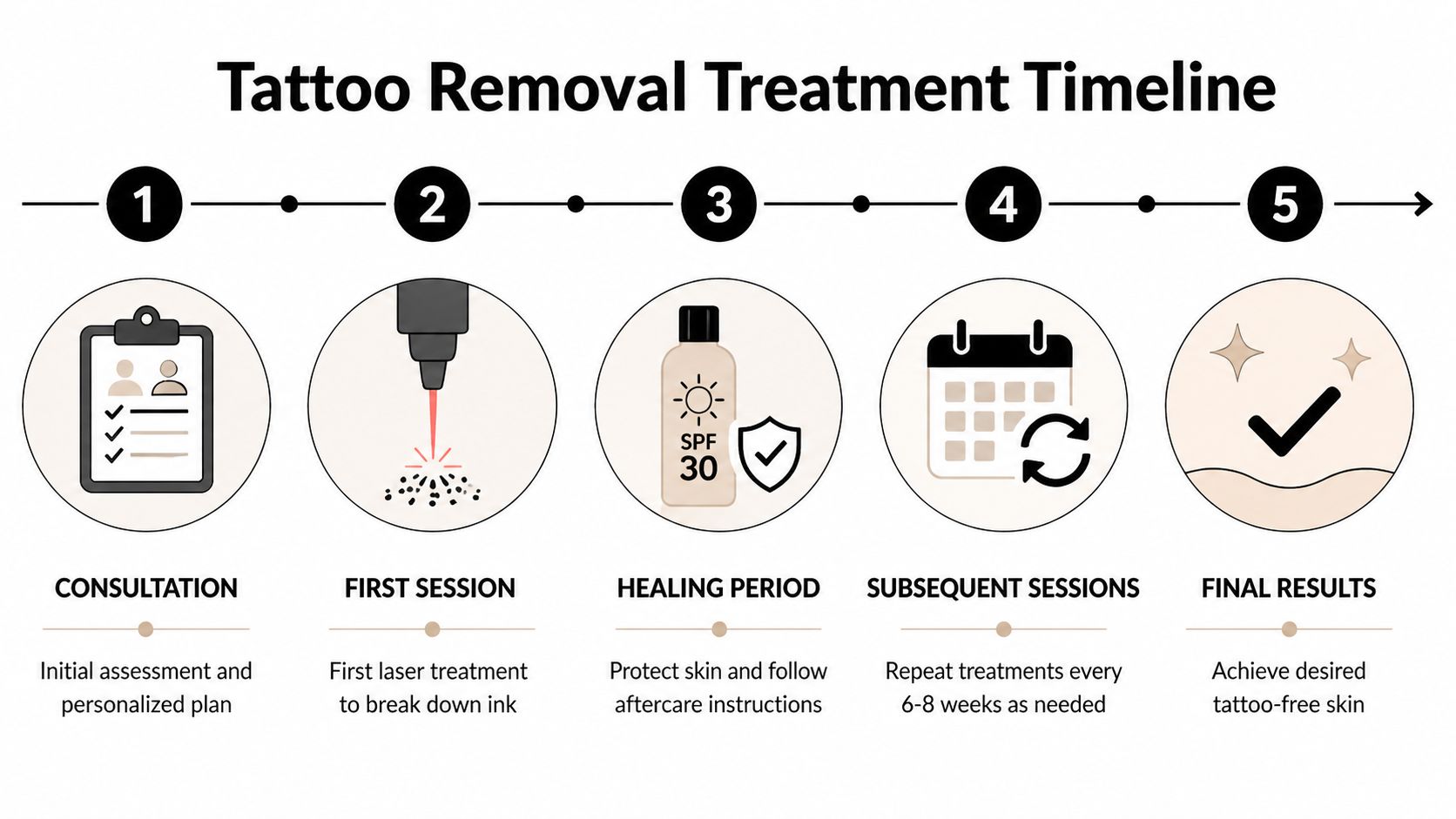
A common question is: how long is this going to take? The honest answer depends on the tattoo, but there is a normal rhythm to the process.
In Tampa, laser tattoo removal typically takes 5 to 12 sessions, and advanced picosecond systems such as the PiQo4 can reduce the session count by 20% to 50% compared with older lasers, sometimes getting even complex goals done in fewer than 10 sessions according to this Tampa tattoo removal session guide.
The first appointment
The skin is examined, cleaned, and prepped. During treatment, the laser passes over the tattoo in controlled bursts. Right away, many clients see frosting, which is a brief whitening effect on the skin after the pulse hits the ink.
After that, the area may feel like a superficial burn. Mild swelling can happen early and commonly settles within about a day. The treated skin then enters the healing phase.
The weeks after one session
Here, individuals often become impatient, but the work is still ongoing. You won’t judge the session by the first day. You judge it over the next several weeks as the body processes fragmented pigment.
A practical timeline often looks like this:
- Immediately after treatment: Frosting appears for a short time, and the area can feel warm and irritated.
- Early healing: Mild swelling may show up, then settle.
- Visible change: Fading may begin around 3 to 4 weeks after treatment.
- Skin recovery: Healing typically occurs within about 4 weeks, though individual variation is normal.
- Next session planning: Treatments are commonly spaced 6 to 8 weeks apart.
Why two tattoos can follow different timelines
A small linework tattoo on the forearm doesn’t behave like a large, colorful professional piece on the leg. Session counts change based on size, color, ink density, age of the tattoo, placement, and immune response.
Some patterns are predictable:
- Small, simple tattoos often need 5 to 8 sessions.
- Medium tattoos often need 6 to 10 sessions.
- Large or multi-colored tattoos often need 8 to 12 or more sessions.
Professional tattoos often take longer because the ink is denser and placed deeper. Older tattoos may fade more readily because the body has already begun breaking pigment down over time.
If your goal is a cover-up, you may not need to erase every trace of the old tattoo. You may only need enough fading to give a tattoo artist clean space.
What complete removal does not look like
It usually does not look like total clearance in two or three visits. That expectation causes frustration more than anything else.
Good treatment is cumulative. One session starts the process. Repeated sessions build on the previous work. The spacing is not wasted time. It protects the skin and gives the immune system time to clear the fragmented ink.
Mastering Aftercare in the Florida Climate
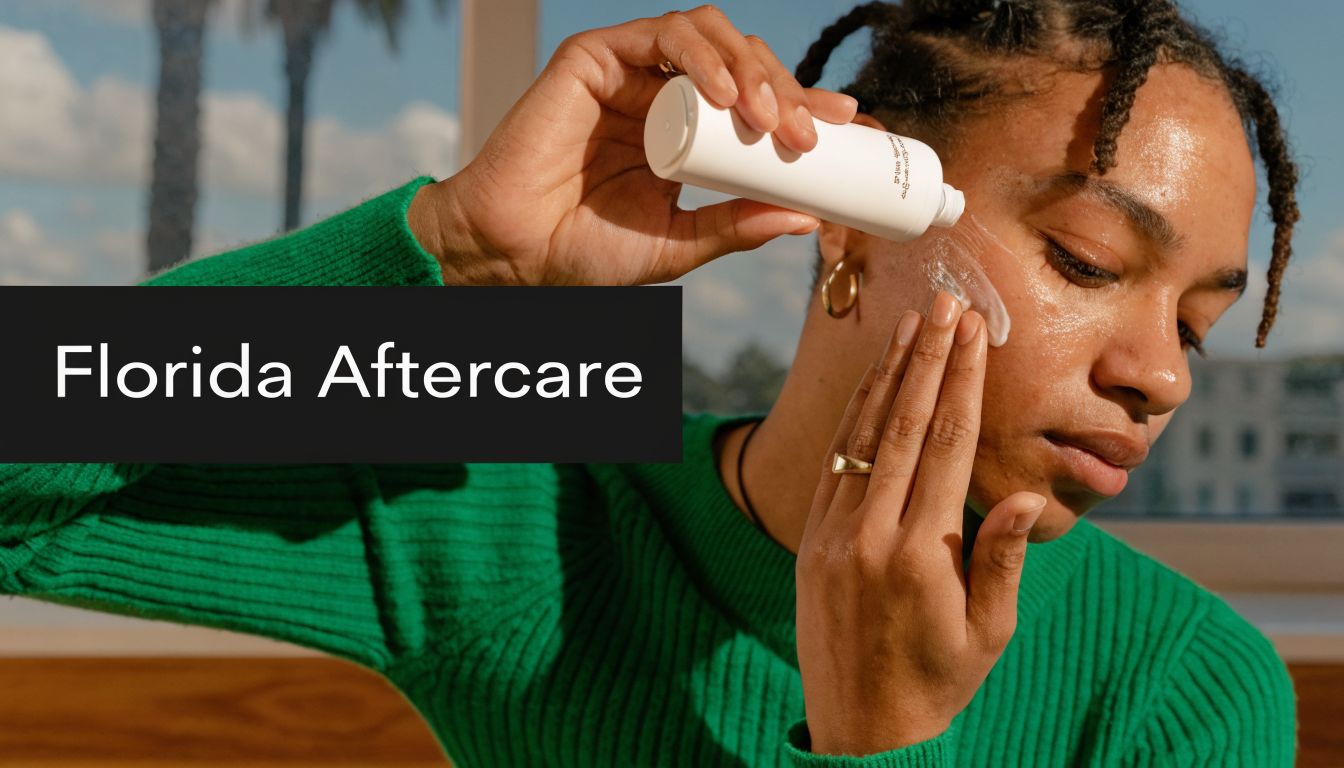
The laser session gets the attention, but aftercare has just as much influence on the final cosmetic result. In Tampa, sun and humidity can complicate healing fast if you treat the area casually.
That’s why Florida-specific aftercare matters. A study in sunny regions found 28% hyperpigmentation incidence in patients who didn’t follow a strict sun-protection routine, compared with 8% in those who consistently reapplied broad-spectrum SPF 50+ four times daily, according to this Tampa laser tattoo removal aftercare discussion.
Your first job is protection
Treat the area like healing skin, because that’s exactly what it is. Heat, friction, sweat buildup, pool exposure, and direct sun all deserve more caution than one might initially expect.
In practical terms:
- Keep it clean: Follow the wound-care instructions you’re given and avoid unnecessary irritation.
- Keep the sun off it: Clothing coverage helps. Sunscreen matters once appropriate in your healing stage.
- Avoid picking: Blisters, flaking, and texture changes need patience, not scratching.
- Watch sweat and friction: Tight waistbands, gym gear, and damp fabric can irritate treated skin.
- Plan around Florida living: Beach days, boating, and long outdoor events can interfere with recovery if timed poorly.
Tampa-specific mistakes that slow healing
The most common one is underestimating incidental sun. People think they avoided the beach, but they still got enough daily exposure through errands, driving, outdoor lunches, or weekend sports to irritate healing skin.
The second is letting humidity trap sweat against the area. Moisture itself isn’t the goal. Clean, protected healing is the goal. If the treated spot sits under rubbing fabric all day in hot weather, irritation can build.
Healing in Florida goes better when clients schedule sessions around real life, not ideal life.
A simple aftercare mindset
Think in layers. Protect the skin. Follow cleaning instructions. Limit heat and friction. Stay consistent.
If you do that, your results are usually steadier and your risk of avoidable pigment issues is lower. If you ignore aftercare and rely on the laser alone, you make the process harder than it needs to be.
Start Your Tattoo Removal Journey in Tampa
If you're ready to figure out how to remove a tattoo in Tampa, start with a consultation and a realistic plan. The right first step isn’t guessing how many sessions you’ll need. It’s getting the tattoo, your skin, and your goal evaluated together.
For Tampa appointments, the clinic location is 1715 N. Westshore Blvd, Suite 100, Tampa, FL. You can also call the central booking team at 844-374-9288 or contact the local Tampa clinic directly at 813-544-5054 to schedule a consultation and discuss whether you want full removal or fading for a cover-up.
Bring clear goals, your medical information, and an honest picture of your schedule and sun exposure. That gives the technician what they need to build a treatment plan that fits your life, not just your tattoo.
If you're ready to take the next step, book a consultation with EradiTatt Tattoo Removal and get a personalized plan for safe laser tattoo removal in Tampa.