
A lot of people searching for tattoo removal boca raton fl are in the same moment. The tattoo isn’t necessarily a mistake. It just doesn’t match your life anymore. Maybe it belonged to a different job, a different relationship, a different version of you, or it’s standing in the way of a cover-up you’d rather wear now.
That decision is more common than one might expect. Approximately 17% of people with tattoos have thought about getting at least one removed, according to Dermatology of Boca. In practice, the reasons are usually practical. A cleaner look for work. Better placement for a wedding. Less visible ink for a professional setting. Or a fresh start that feels more current and more personal.
For Boca Raton residents, the process shouldn’t feel mysterious. It should feel organized, safe, and realistic from the first consultation onward. If you’re comparing providers in your area, it also helps to understand how local visibility works for clinics and mobile service businesses. This short guide on local SEO for service area businesses is useful if you want to see why some providers appear more clearly in nearby searches than others.
Your Fresh Start Begins in Boca Raton

A Boca Raton client often starts with a simple question. “Can this come off cleanly?” Usually, that question sits underneath a bigger one. “If I start, what am I really committing to?”
The honest answer is that laser tattoo removal is a process, not a single appointment. But it’s a controlled process, which can be a relief. Once you understand the technology, the expected timeline, and the skin care involved, the unknowns start to shrink.
Why people start now
The reasons tend to be less dramatic than people expect:
- Career pressure: A visible tattoo may not fit a new role or workplace policy.
- Style changes: What looked right years ago may feel dated now.
- Relationship shifts: Names, initials, and shared symbols often age poorly.
- Cover-up planning: Many people don’t want bare skin. They want a cleaner canvas.
Some clients want full removal. Others only want enough fading to give a tattoo artist room to work. Both goals are valid, but they require different treatment plans and different expectations.
The best consultation starts with your actual goal, not with a generic promise of “complete removal.”
Boca Raton convenience matters
Local treatment also matters more than people realize. Because sessions are spaced out and healing is part of the result, choosing a nearby clinic makes follow-up easier. Consistency matters in tattoo removal. If appointments are inconvenient, people delay them, sun exposure becomes harder to manage, and momentum drops.
If you’re comparing Florida locations before booking, this guide to tattoo removal locations in Florida can help you figure out what’s most practical for your schedule.
How Modern Lasers Erase Unwanted Ink
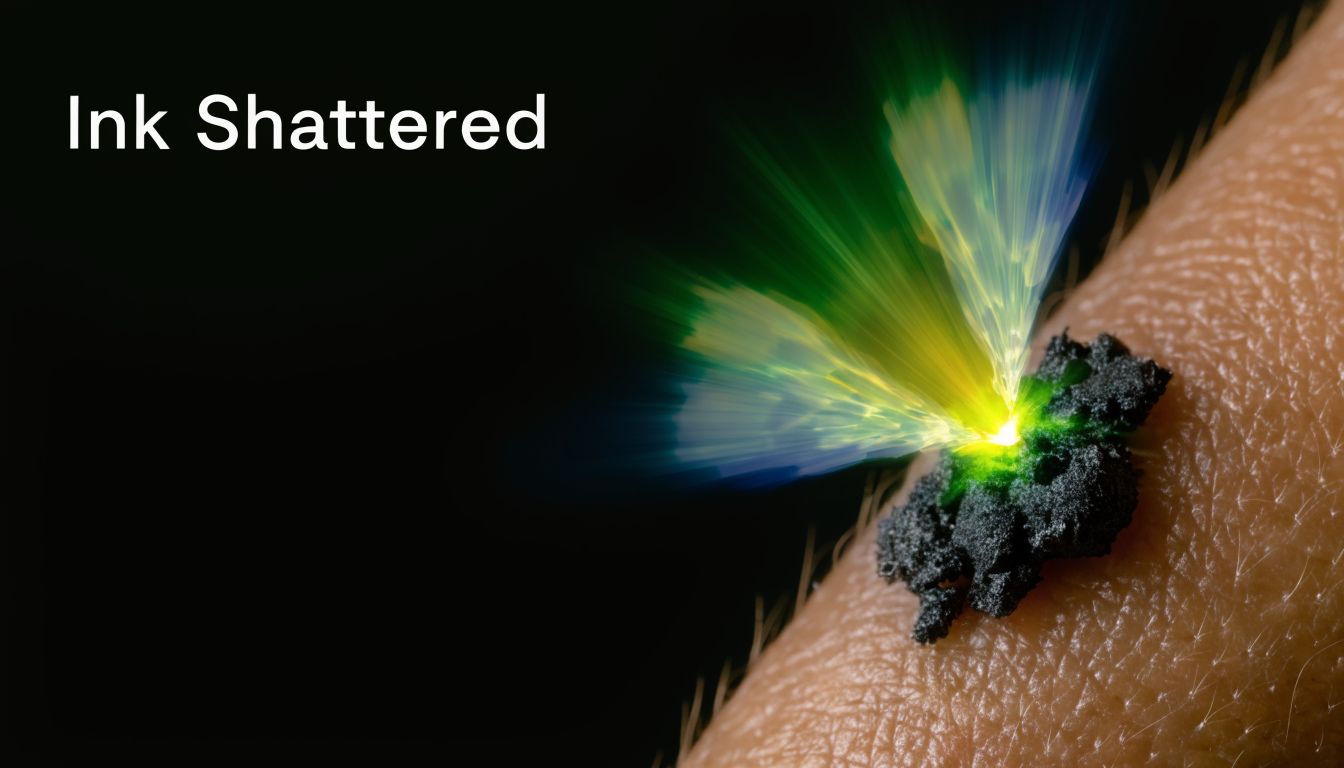
Laser tattoo removal works best when you stop thinking of it as “burning off” ink. That’s not what a modern system is designed to do. A better comparison is breaking a large rock into tiny fragments that your body can finally carry away.
What the laser is actually doing
Tattoo ink sits in the skin in particles that are too large for the body to clear efficiently on its own. A modern laser delivers energy in extremely short pulses that shatter ink particles through photomechanical force, not primarily through heat. Once those particles are smaller, your body’s cleanup systems can gradually remove them.
That distinction matters. If the treatment were mostly about heat, surrounding skin would take more collateral damage. Better technology aims to disrupt ink while preserving normal tissue.
According to LifeGaines, the PiQo4 laser system uses ultra-short picosecond pulses and has been shown in clinical studies to achieve 75-90% clearance of black inks in 4-6 sessions, which is a meaningful improvement over older nanosecond lasers.
Why wavelength choice matters
Not all tattoos behave the same way under a laser. Black ink usually responds most efficiently because it absorbs laser energy well. Blues, greens, and mixed-color tattoos can be more stubborn, which is why advanced systems use multiple wavelengths rather than a one-setting approach.
That’s where modern platforms stand apart from older equipment. The better the match between wavelength and ink color, the more useful each session becomes.
A good treatment plan usually accounts for:
- Ink color mix: Black is typically more responsive than lighter or mixed shades.
- Tattoo density: Packed, saturated ink can take longer to break down.
- Tattoo depth: Professional work often sits more consistently and at a greater depth than amateur ink.
- Skin response: The laser settings have to respect your skin, not just the pigment.
What works and what doesn’t
What works is targeted treatment with enough time between sessions for healing and immune clearance. What doesn’t work is chasing fast results with aggressive settings that irritate skin without improving the long-term outcome.
Practical rule: The body removes the fragmented ink between sessions. The laser starts the process, but healing time finishes it.
If you want a deeper look at how newer devices differ from older platforms, this article on new technology in tattoo removal is a useful technical overview.
Key Factors for a Successful Tattoo Removal
A client in Boca Raton might walk into our clinic with a small black tattoo on the shoulder and expect a quick fix. Another client may have a similar-sized piece on the ankle with layered color and old cover-up work. Those two cases can end up on very different timelines, with different pricing, healing patterns, and cosmetic limits. That difference starts with the tattoo itself, not with marketing claims.
What changes the result
Color still matters, but so do several other details that clients often do not see at first glance. Black ink usually fades more predictably. Color blends, white highlights, cosmetic pigments, and heavily saturated professional work often take more planning and more sessions.
Location matters for a practical reason. Tattoos on areas with stronger circulation often clear more steadily than tattoos on the hands, feet, or lower legs. If you live an active outdoor lifestyle in Boca Raton, sun exposure also becomes part of the equation because recently tanned skin can delay treatment and increase the need for caution.
The history of the tattoo matters too. Older tattoos may have already lost some pigment over time. Cover-ups, scar tissue, or textural changes can slow clearance and affect how clean the final result looks, even with good laser work. I tell clients this early because honest expectations protect you from frustration later.
Skin tone changes the treatment strategy
Skin tone does not rule out laser tattoo removal. It changes how the treatment is planned. On darker skin, the settings need to respect natural melanin while still targeting the ink. That usually means a more measured approach, careful test spots when appropriate, and enough spacing between sessions to watch how the skin recovers.
That slower pace is not a drawback if the goal is a better cosmetic result. Pushing too hard to save a session or two can increase the risk of pigment changes and unnecessary irritation. Good removal is controlled removal.
This is also why clinic experience matters beyond the laser itself. Clear communication, realistic scheduling, and reliable follow-up improve the overall care process. For a broader look at why that matters in healthcare settings, this article on improving patient experience is useful.
A realistic self-check before you start
Use this table as a starting point before your consultation:
| Factor | Usually easier | Usually more challenging |
|---|---|---|
| Ink color | Black or simple linework | Mixed colors, bright tones, cosmetic pigment |
| Tattoo age | Older, naturally faded | Newer, heavily saturated |
| Ink density | Light to moderate packing | Dense professional fill or cover-up work |
| Body location | Upper arms, chest, back | Hands, feet, ankles, lower legs |
| Skin considerations | Skin that allows a wider treatment range | Skin that needs slower, more cautious settings |
One final point often gets overlooked. Success does not always mean every trace disappears. In some cases, success means major fading, safer skin recovery, and a result that lets you move on without the tattoo drawing attention anymore. That is the standard a good consultation should set from the start.
Your Tattoo Removal Journey with EradiTatt
The first appointment usually feels easier once you know the sequence. Most clients arrive with three concerns. They want to know whether the tattoo is a good candidate, how the session will feel, and what they’ll be looking at afterward.
Your consultation and treatment plan
The consultation should be direct. The technician examines the tattoo’s size, colors, density, age, location, and your skin tone. The goal is to decide whether you’re aiming for complete removal or enough fading for a cover-up, because those are two different paths.
The provider should also review anything that could affect healing, including sun exposure, skin sensitivity, and prior reactions in that area. If a consultation skips those basics and goes straight to a sales pitch, that’s a bad sign.
A dedicated local clinic should make the logistics easy too. Scheduling, directions, and follow-up communication matter because tattoo removal isn’t a one-time service. It’s an ongoing clinical relationship. If you’re interested in how healthcare businesses think about that side of care, this piece on improving patient experience is a useful read.
What the first session feels like
The treatment room should feel clean, calm, and procedural. Protective eyewear goes on first. The skin is prepared. The laser is adjusted to your tattoo and skin rather than used as a preset template.
The sensation is often described as a quick snapping feeling. Some tattoos are easier than others, and some locations are noticeably more sensitive. The key difference from older methods is precision. Modern systems are designed to target pigment efficiently while limiting unnecessary trauma to surrounding skin.
Immediately after treatment, many clients notice a temporary whitening or “frosting” effect. That early response is normal. It doesn’t mean the tattoo is gone on the spot. It means the laser has interacted with the pigment and the skin is beginning its healing cycle.
Why technician expertise matters
This isn’t a treatment where the machine does all the work. The operator’s judgment matters. Boca Raton’s market reflects that. Salary.com notes that the average annual salary for a Laser Tattoo Removal Technician in Boca Raton is $38,798, or $19 per hour, as of April 1, 2026, which reflects the specialized skill required to operate these systems safely.
The most useful thing a skilled technician does is not “go stronger.” It’s choosing the right settings, knowing when to stay conservative, and recognizing when skin needs more time.
The weeks between appointments
The visible treatment session is only part of the process. The fading happens after you leave. Your body gradually clears the disrupted pigment, and that takes time.
That’s why disciplined aftercare matters. So does patience. Clients who expect dramatic overnight changes often misread the process. Good removal looks progressive, not rushed.
Setting a Realistic Timeline for Your Results
A Boca Raton client often walks into EradiTatt with a date in mind. A wedding, a beach trip, a new job, or an appointment with a tattoo artist for a cover-up. That deadline matters, but the skin sets the pace, not the calendar.
Full removal versus fading
The first timeline question is simple. Are you trying to remove the tattoo as fully as possible, or do you want to fade it enough for a cover-up?
Those are different treatment plans. Full removal usually takes longer because each round leaves less pigment behind, and the last traces can be the slowest to clear. Fading for a cover-up is often shorter because the goal is not perfect clearance. The goal is to reduce contrast enough for your tattoo artist to work cleanly over the area.
That difference affects more than scheduling. It changes the total cost, the number of visits, and how we judge progress from one appointment to the next.
What the timeline usually feels like
Progress rarely looks dramatic after one visit. Early changes can be patchy. One area lifts faster, another holds color, and some ink tones stay visible longer than clients expect.
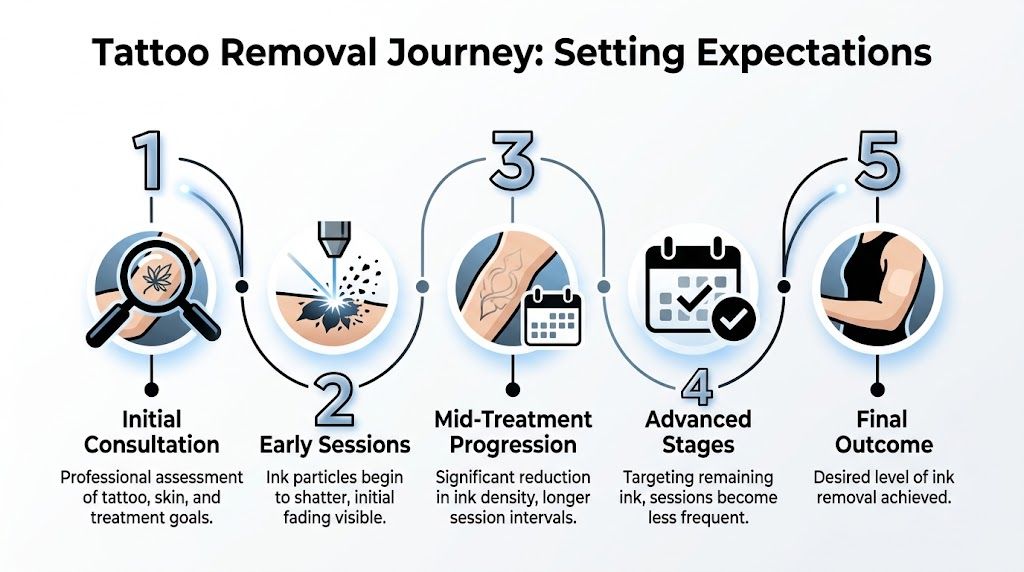
A typical course looks like this:
- Consultation and treatment plan: We examine the tattoo, review your skin history, discuss your goal, and map out a realistic schedule for Boca Raton living, including sun exposure and upcoming travel.
- First treatments: You may see initial lightening, but the tattoo often looks uneven before it looks better.
- Middle phase: The overall design starts to break up and soften, and clients often recognize the process is working, even if stubborn sections remain.
- Later sessions: Remaining pigment tends to fade more slowly, especially dense outlines or layered work.
- End point: We stop when you reach your goal, whether that is clear skin or a lighter base for new artwork.
The process is gradual by design.
Why the timeline can change
Two tattoos of the same size can finish on very different schedules. Ink color, ink density, skin tone, where the tattoo sits on the body, how old it is, and whether there is scar tissue all affect the pace.
Lifestyle matters too. Boca Raton clients spend time outdoors, and sun exposure can delay treatment if the skin is tanned or irritated. Travel schedules also matter. A client who can stay consistent with appointments and aftercare usually has a smoother course than someone who has to keep spacing visits farther apart.
I tell clients to expect a range, not a promise. That is the honest way to plan.
Why waiting is part of the treatment
The weeks between sessions are productive. Your body is still clearing fragmented pigment and your skin is still repairing itself. Treating again too soon can increase irritation without giving you the full benefit of the previous session.
That is why we build treatment plans around skin recovery, not impatience. If you want to stay on schedule and avoid preventable delays, review these tattoo removal preparation guidelines before your next visit.
A realistic timeline protects your skin, your budget, and your final result.
Preparing for Treatment and Caring for Your Skin
A strong result depends on more than the laser. Skin condition before treatment and skin care after treatment affect comfort, healing, and how smoothly you can stay on schedule.
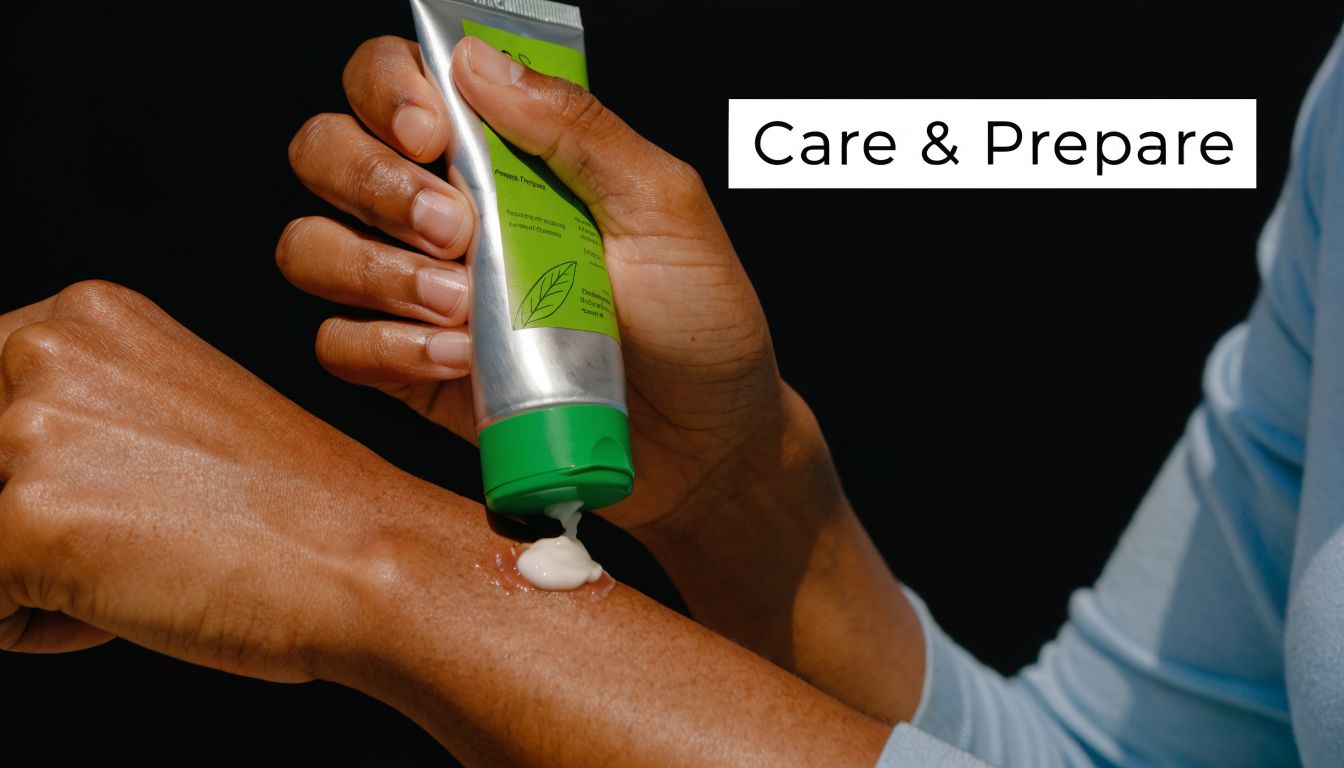
Before your session
Come in with calm skin. That means avoiding unnecessary irritation beforehand and keeping the treatment area clean.
Use this checklist:
- Avoid strong sun exposure: Tanned or recently sun-stressed skin is harder to treat safely.
- Arrive with clean skin: Skip lotions, creams, and makeup on the area unless your provider tells you otherwise.
- Share medication updates: Let the clinic know about anything new that could affect skin response or healing.
- Reduce avoidable irritation: Don’t scrub, pick, or over-treat the area before your appointment.
After your session
Right after treatment, it’s normal to see redness, warmth, and some swelling. Some people also develop mild blistering or scabbing. What matters most is not turning a normal healing response into extra trauma.
Follow these basics:
- Keep it clean: Wash gently when instructed, and don’t use harsh products.
- Protect the area: Cover it if needed, especially if clothing rubs on the site.
- Don’t pick at blisters or scabs: Picking increases the risk of texture change.
- Avoid excess heat: Hot showers, saunas, and heavy friction can aggravate fresh skin.
- Guard against sun: Freshly treated skin is more vulnerable to pigment changes.
Clean, dry, protected skin heals better than skin that’s constantly being rubbed, soaked, or “checked” all day.
If you want a more detailed pre-appointment checklist, this guide on how to prepare for tattoo removal covers the practical basics clearly.
What not to do
The biggest mistakes are simple. Don’t assume irritation means the session failed. Don’t restart workouts or heat exposure too aggressively if the area feels inflamed. And don’t compare your healing to someone else’s tattoo in a different location with different ink.
Healing is part of treatment. Respect it.
Common Questions About Laser Tattoo Removal
Does laser tattoo removal leave a scar
A properly performed treatment aims to remove ink while protecting surrounding skin. The bigger scar risk often comes from the tattoo itself, past trauma to the area, picking during healing, or treatment that’s too aggressive for the skin. If the tattoo already has raised areas or textural change, those may still be visible after the ink fades.
Is black ink easier to remove than colored ink
Yes. Black generally responds best to laser treatment. Multicolored tattoos are often more complicated because different pigments respond differently to laser wavelengths, and some shades are slower to break down.
Can darker skin tones be treated safely
Yes, but the approach should be more careful. The provider has to protect your natural pigment while targeting the ink, which often means more conservative settings and a longer course of treatment. That trade-off is normal and often worth it for a safer cosmetic result.
How much should I expect to pay
Pricing depends on the tattoo’s size, complexity, placement, color mix, and whether you want full removal or fading for a cover-up. In Boca Raton, treatment costs are commonly described as starting around the lower end for small tattoos and moving higher for larger or more intricate work, but your consultation should determine your specific treatment plan rather than a generic quote.
How many sessions will I need if I only want a cover-up
Usually fewer than full removal. The exact number depends on how dark the tattoo is, how much space your artist needs, and what style of new tattoo you want over it. A good removal plan for a cover-up should involve your end goal, not just maximum fading.
Can every tattoo be erased completely
Some can come very close. Some won’t. Ink composition, tattoo depth, skin tone, placement, age, and existing scar tissue all affect the finish line. Honest providers say that upfront. They don’t guarantee a perfectly blank result without seeing the tattoo.
Does the body really remove the ink after treatment
Yes. The laser breaks the pigment into smaller fragments. Your body then clears those fragments gradually over time. That’s why the period between sessions matters so much.
What’s the best way to choose a clinic
Look for clear explanations, realistic timelines, attention to skin type, and aftercare instructions that are specific rather than vague. A good clinic should be willing to discuss trade-offs. If someone promises “quick removal” without talking about healing, skin tone, or tattoo variables, keep looking.
If you're ready to talk through your options with a team focused only on tattoo removal, schedule a consultation with EradiTatt Tattoo Removal. Whether you want full removal or fading for a cover-up, they’ll help you understand the safest path, the likely timeline, and what your tattoo may realistically do over time.