
You may be looking at a tattoo that once felt right and now feels out of step with your life. Sometimes it's a name, a symbol from another chapter, or a piece that doesn't fit your work, your style, or the way you want to feel in your own skin.
That feeling is common. People usually aren't confused about whether they want change. They're confused about what tattoo removal in Tampa involves, how long it might take, and whether they need full removal or just enough fading to make a cover-up possible.
Modern laser tattoo removal gives you a practical path forward. The process is structured, medical in nature, and built around gradual change rather than instant results. If you want a clearer understanding of what progress can look like, these before-and-after tattoo removal examples in Tampa can help you set expectations visually.
Table of Contents
- That Tattoo Isnt You Anymore
- How Laser Tattoo Removal Actually Works
- Key Factors That Influence Your Removal Results
- Complete Removal vs Fading For A Cover-Up
- Your Journey What To Expect In Cost and Timeline
- Start Your Journey at EradiTatt Tampa
- Frequently Asked Questions About Tattoo Removal
That Tattoo Isnt You Anymore
A tattoo can gradually become a problem. You stop choosing sleeveless clothes. You angle your wrist away in meetings. You start thinking about engagement photos, job interviews, military requirements, or whether the artwork still feels like you.
That doesn't mean getting the tattoo was a mistake. It means your life changed.
Many Tampa clients come in with one of two goals. They want the tattoo gone, or they want it light enough that a tattoo artist can build something better over it. Those are different goals, and they lead to different treatment plans.
A realistic tattoo removal plan starts with the outcome you want, not with a generic promise of “removal.”
Many people get tripped up assuming every unwanted tattoo needs the same approach. It doesn't. A small black design you want fully cleared is one type of project. A dense older tattoo that only needs to fade for a cover-up is another.
A good consultation should slow that down and sort through the details. You should leave understanding what kind of progress is reasonable, what may make your tattoo easier or harder to treat, and what timeline fits your life.
Why people often delay the decision
Some people worry it will take too long. Others assume the process is too technical or too expensive to even explore. Often, the bigger issue is uncertainty. They don't know what questions to ask.
A simpler way to think about tattoo removal in Tampa is this:
- Start with the goal: blank skin or better cover-up canvas.
- Assess the tattoo: color, age, density, and placement matter.
- Plan around healing: progress happens between sessions, not just during them.
- Protect the skin: skin condition and timing affect safety and results.
Once you understand those four ideas, the process becomes much less intimidating.
How Laser Tattoo Removal Actually Works
Laser tattoo removal sounds complicated until you picture what's happening under the skin. The tattoo ink sits there in particles that are too large for your body to clear efficiently. The laser's job is to break those particles into much smaller fragments so your body can gradually remove them.
What the laser is doing
Think of the tattoo ink like a pile of rocks. The laser doesn't scoop the rocks out. It breaks them down into tiny pebbles. Once the pieces are small enough, your body can start carrying them away over time.
That's why removal is gradual. The treatment creates the opportunity for fading, but your body does the clearing in the weeks that follow.
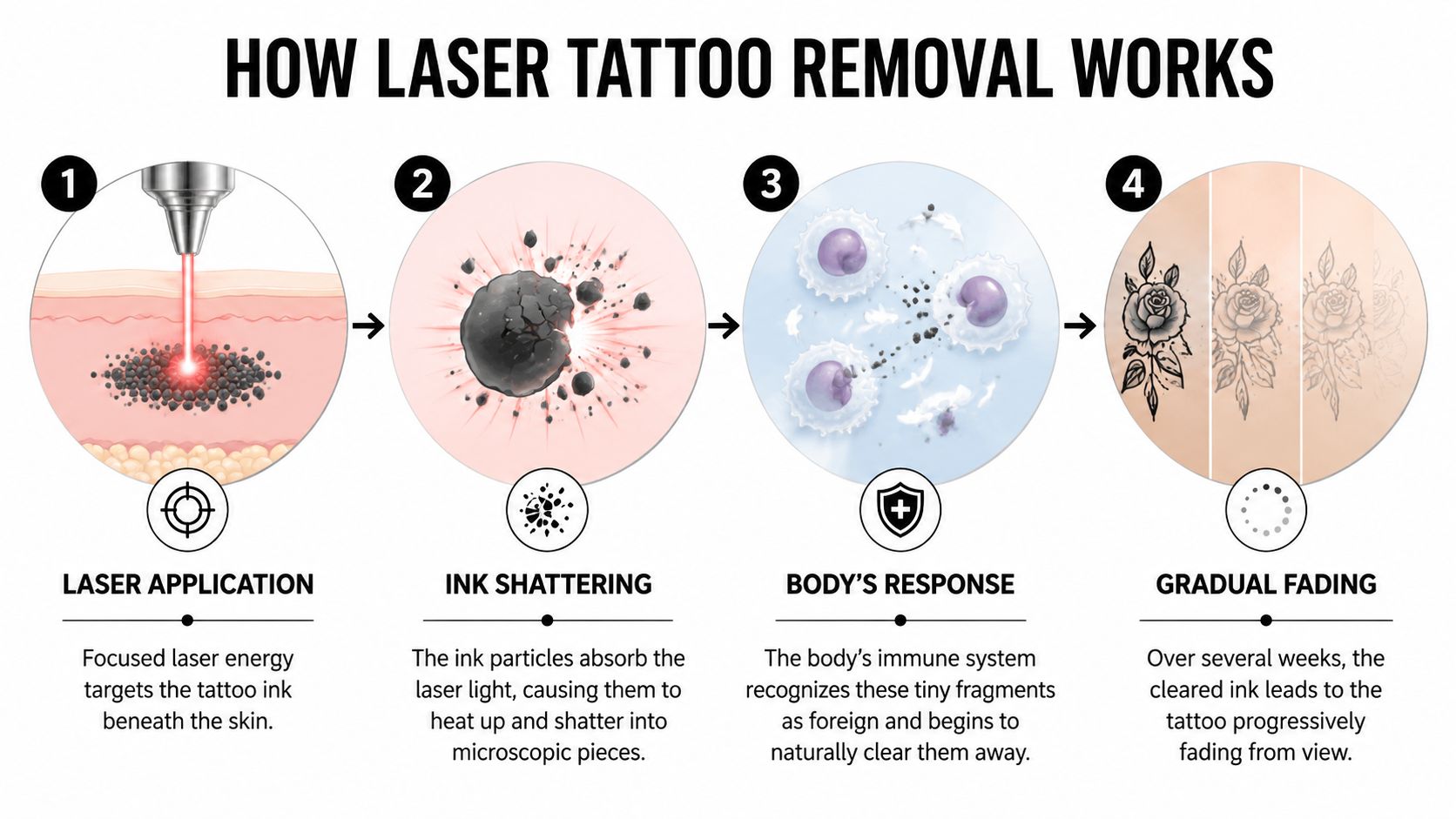
For tattoo removal in Tampa, one clinically useful point is that laser treatment can produce immediate whitening, followed by swelling, with visible fading typically beginning in 3 to 4 weeks and healing usually complete within 4 weeks, according to laser tattoo removal guidance from Arviv Aesthetics.
What you may notice after treatment
Right after a session, the treated area may look lighter or chalky for a short period. People often notice swelling after that. Those early reactions can be alarming if no one explained them first, but they're part of the normal treatment pattern described above.
What matters more is what happens later. The visual change usually shows up gradually, not overnight.
Practical rule: Judge progress after healing time has passed, not in the first few days.
Another point that often surprises people is how much pre-treatment skin condition matters. If your skin is suntanned or self-tanned, many providers will delay treatment because pigment in the skin can raise the chance of complications. That means timing your sessions around beach days, vacations, and sun exposure is part of the process, especially in Tampa.
If you understand one thing about laser removal, let it be this. The session is only one part of the work. The rest happens during healing, when your skin recovers and your body starts clearing disrupted ink.
Key Factors That Influence Your Removal Results
Two people can both want tattoo removal in Tampa and have completely different treatment experiences. The reason is simple. Tattoos don't behave the same way.
Why two tattoos can behave very differently
A light, older tattoo may respond differently than a newer tattoo packed with dense ink. A simple black design can be more straightforward than a tattoo with multiple colors. Even the location on the body can affect how the fading appears over time.
Skin tone also changes the conversation. Safety and cosmetic outcome depend on matching the treatment plan to the person, not just the tattoo. If your main concern is pigment change rather than discomfort, that should be part of the first discussion, not an afterthought.
Questions worth asking at a consultation include:
- What is my actual goal? Full clearance and partial fading are not the same endpoint.
- How dense is the tattoo? Heavily packed ink often behaves differently than lighter line work.
- What colors are present? Color complexity can change the strategy.
- What is my skin type? This matters for safety, laser selection, and expectations.
- Is my skin currently tanned? Recent sun exposure can affect whether treatment should wait.
For a deeper look at the variables that shape progress, this guide to factors that affect tattoo removal progress is a useful companion.
Tattoo Removal Factors at a Glance
| Factor | Easier to Remove | More Challenging to Remove |
|---|---|---|
| Ink density | Lighter saturation | Dense, layered, heavily packed ink |
| Goal | Partial fading for a cover-up | Complete clearance to bare skin |
| Color profile | Simple, limited color range | Complex, multi-color designs |
| Tattoo age | Older, already softened tattoos | Newer tattoos with crisp, concentrated pigment |
| Skin condition before treatment | Untanned, stable skin tone | Suntanned or self-tanned skin |
| Planning style | Flexible schedule with room for healing | Tight deadline with little recovery time |
What clients often misunderstand
The biggest misunderstanding is thinking one factor decides everything. It doesn't. A tattoo can be small but dense. It can be old but colorful. It can be in a good location for treatment but sit on skin that's recently been tanned.
The right question isn't “How hard is tattoo removal?” It's “What makes my tattoo simpler or more complex to treat?”
That mindset helps you ask better questions and avoid disappointment. Tattoo removal is customized care, not a one-size-fits-all service. The more specific you are about your tattoo and your end goal, the more useful your treatment plan will be.
Complete Removal vs Fading For A Cover-Up
A lot of people say they want removal when what they really want is freedom. Sometimes freedom means blank skin. Sometimes it means making room for a new tattoo that fits who you are now.
When full removal makes sense
Complete removal is usually the right path when you don't want any visible trace of the old tattoo if possible, or when a future cover-up isn't part of the plan. This route often calls for patience because you're aiming for the most clearance possible, not just enough change to make the old design workable.
That matters for expectations. If you want a cleaner slate, your provider has to chase a different endpoint than someone who only needs strategic fading.
When fading is the smarter goal
Fading for a cover-up can be more practical when the existing tattoo is too dark, too large, or too busy for your tattoo artist to work over cleanly. In that situation, you don't necessarily need the old tattoo erased. You need it lighter, softer, and less dominant.
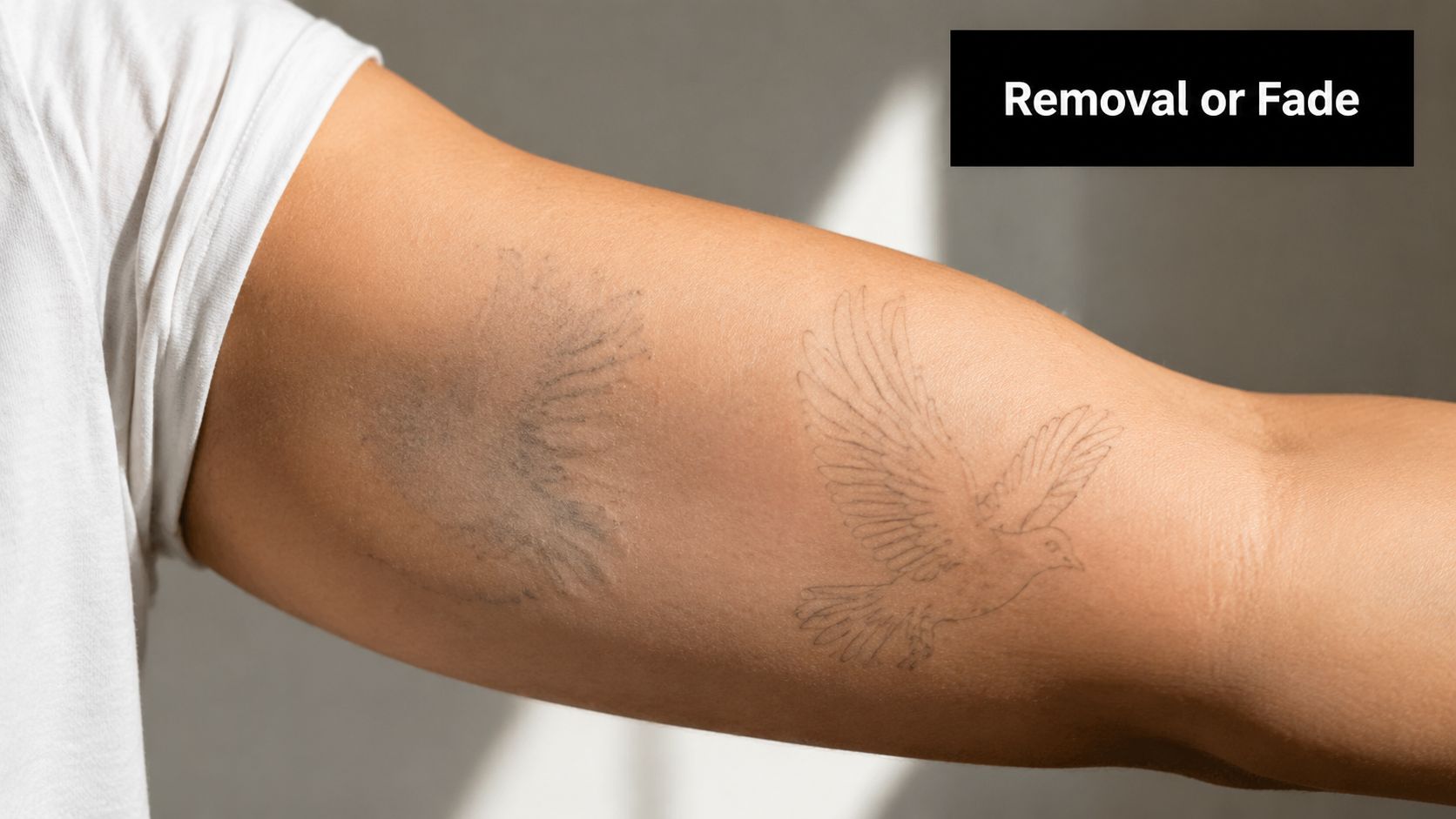
One Tampa-area FAQ notes that the process is adapted to the objective, whether full clearance or partial fading for a cover-up, with sessions typically spaced 6 to 8 weeks apart to allow for healing and ink clearance, as described in this tattoo removal FAQ resource.
That single distinction changes almost everything. It changes how you measure progress, how soon you might be ready to work with a tattoo artist, and how much fading is “enough.”
Here's a simple comparison:
- Choose full removal if: you want the tattoo gone rather than redesigned.
- Choose fading if: your tattoo artist only needs the old piece lightened to build over it.
- Choose based on timing: if you're working toward a life event, your schedule may matter as much as your aesthetic goal.
- Choose based on skin response: sometimes a conservative fading plan is the more sensible path.
Some clinics offer laser tattoo removal using systems such as PiQo4 with skin-cooling support like the Zimmer Cryo 6. For example, EradiTatt Tattoo Removal lists those devices for Tampa treatments, which is relevant because the technology used should match the treatment goal and skin considerations.
Your Journey What To Expect In Cost and Timeline
Understanding the rhythm of tattoo removal can bring a sense of ease. It isn't random. It follows a pattern of consultation, treatment, healing, reassessment, and repeat sessions until you reach your goal.
A typical treatment path
A first visit should focus on the tattoo itself and on you. The provider looks at color, density, location, skin tone, and whether you want full removal or cover-up fading. That conversation matters because the plan should fit your actual objective, not a generic template.
After treatment, the skin needs time. The body needs time too. If you're trying to plan around work, travel, a wedding, or enlistment timing, this is why session spacing matters so much.
If you want a more detailed look at scheduling expectations, this article on how many tattoo removal sessions Tampa clients may need can help you think through the calendar side of the process.
What cost usually depends on
The cleanest way to think about cost is per session first, then total project second. A common U.S. benchmark for professional tattoo removal is $200 to $500 per treatment, according to this pricing page for tattoo removal services. That same page also notes an average pay-per-session model of $100 to $375 per session and presents removal as a structured outpatient appointment service.
Your total cost depends on what drives your session count, including:
- Your end goal: Full clearance usually requires a longer plan than partial fading.
- The tattoo's complexity: Dense or multi-color tattoos often need a more involved approach.
- How your skin heals: Good spacing supports safer progress and clearer evaluation.
- Whether your schedule is realistic: Rushing the process usually doesn't help.
Budget for the whole journey, not just the first appointment.
There's also a broader market signal worth noticing. In Tampa, the estimated average annual pay for a tattoo-removal professional is $97,247, which is about $46.75 per hour, $1,870 per week, or $8,103 per month as reported by ZipRecruiter's Tampa tattoo removal salary page. That doesn't tell you what your tattoo will cost, but it does suggest this is a specialized service tied to training, equipment, and clinical judgment.
Start Your Journey at EradiTatt Tampa
Once you know your goal, the next step is simple. Book a consultation and bring useful information with you. Clear photos of the tattoo, a rough idea of when you got it, whether you want a cover-up, and whether you've had recent sun exposure can make the conversation more productive.
The contact page is the easiest starting point if you want to ask about Tampa appointments, clinic details, or next steps.

What to have ready before you book
You don't need to prepare anything complicated. A few basics help:
- Photos of the tattoo: natural light is best.
- Your goal: full removal or fading for a cover-up.
- Skin status: mention if you've been tanning or using self-tanner.
- Your timeline: say if you're planning around a job change, ceremony, travel, or another deadline.
A strong consultation should leave you with a plan that makes sense for your skin, your tattoo, and your schedule. You can use the EradiTatt contact page to reach the Tampa team and ask about availability, clinic information, and what to expect at your first visit.
Frequently Asked Questions About Tattoo Removal
Is tattoo removal safe for darker skin tones
It can be, but this is one area where experience and technology matter a great deal. Safety isn't only about whether a laser can target ink. It's also about how the provider manages the risk of unwanted skin pigment changes.
For safety, especially with darker skin tones, the provider's experience and the specific laser technology used are critical to minimizing risks like hyperpigmentation, hypopigmentation, or scarring, according to this dermatologist guidance on laser tattoo removal questions.
If you have darker skin, ask direct questions. Ask how your skin type affects planning, what the treatment goal should be, and whether conservative fading makes more sense than pushing aggressively for full clearance.
What should I do after a session
Follow the aftercare instructions your provider gives you. Keep the area protected, avoid picking at healing skin, and don't treat it like regular cosmetic irritation. It's a healing wound, even when it looks mild.
Be honest about your routine too. If you spend time outdoors, exercise heavily, or tend to forget sun protection, say so. Those details can affect how you schedule sessions and how you protect the treated area afterward.
Healing is part of treatment, not downtime that doesn't matter.
Does an older tattoo come off more easily
Sometimes it can, but age alone doesn't decide the outcome. Older tattoos may already look softer or less dense, which can help. But color mix, depth, prior touch-ups, and your skin's response can still make the process more complex than expected.
That's why two tattoos of the same age can still behave differently. The better approach is to think in combinations of factors, not one magic predictor.
Can I remove a tattoo quickly if I have a deadline
Realistic planning is paramount. Tattoo removal works over time, and the healing intervals are part of the process. If you have a wedding, job deadline, enlistment date, or travel event coming up, tell your provider early.
Sometimes the smartest move is to shift the goal. Partial fading may be more realistic than complete removal when time is limited.
Why do consultations matter so much
Because tattoo removal isn't only about the tattoo. It's about matching the tattoo, the skin, and the goal. A useful consultation should cover the likely endpoint, the type of laser being used, timing between sessions, and the risks that matter for your skin type.
That kind of discussion helps you make a decision with your eyes open. And that usually leads to a better experience.
If you're ready to talk through your options, EradiTatt Tattoo Removal can help you evaluate whether full removal or cover-up fading makes the most sense for your tattoo, your skin, and your timeline.