
Tattoo removal results in Palm Harbor usually come from a series of treatments, not a single visit. Clinical data reports an average of 6 sessions, with cases ranging from 2 to 20, and another review found that most tattoos take about 8 to 10 sessions spaced 6 to 8 weeks apart for full removal.
If you're reading this, there's a good chance you've got a tattoo that doesn't feel like you anymore. Maybe it's a name from another chapter, a design that aged poorly, or a visible piece that suddenly matters more at work, at family events, or just every time you catch it in the mirror.
That's the part people rarely talk about. Removal isn't instant, but it can bring great satisfaction because the change builds session by session. You don't wake up one day and watch ink vanish. You notice it softening, breaking apart, and losing its grip on your skin over time.
In Palm Harbor, that gradual process matters because people want honest expectations, not hype. Good tattoo removal results come from smart planning, the right laser settings, careful skin management, and patience between sessions.
Table of Contents
- Your Guide to Tattoo Removal in Palm Harbor
- The Science Behind Your Results How PiQo4 Erases Ink
- What Determines Your Final Tattoo Removal Outcome
- Mapping Your Journey Timelines and Session Expectations
- Maximizing Your Results An Essential Aftercare Guide
- Your Questions Answered and How to Start in Palm Harbor
Your Guide to Tattoo Removal in Palm Harbor
A lot of people start the same way. They touch an old tattoo absentmindedly, then think, “I'm just done with this.” Not angry about it. Not dramatic. Just ready for a change.
That's especially common with visible tattoos. A forearm piece that once felt bold can start to feel limiting. A hand tattoo can become the first thing people notice before they notice you. If you're researching local options, this guide to tattoo removal clinics in Palm Harbor is a useful next step when you want to compare what the process involves.
What most people want to know first
Usually, the main questions are simple:
- Will it fade well? In many cases, yes, but the pace depends on your ink, skin, and treatment plan.
- How long will this take? Think in months, not days.
- Can I remove it fully or just lighten it for a cover-up? Both are possible, depending on your goal.
- Will my case look like someone else's? Probably not. Tattoo removal is very individual.
Palm Harbor clients often come in with practical goals. Some want complete removal. Others want enough fading to give a tattoo artist a clean base for a cover-up. Some just want a visible tattoo to stop drawing attention.
Practical rule: The best tattoo removal results in Palm Harbor usually come from matching the treatment plan to your real goal, not from chasing a one-size-fits-all timeline.
What a solid removal journey feels like
A good clinic experience should feel calm, clear, and honest. You should know what's happening, why the spacing matters, what your skin may look like after treatment, and what kind of fading is realistic over time.
That's the mindset to bring into the process. Not “How do I erase this by next week?” but “How do I get the safest, cleanest fade possible?” When people take that approach, the journey feels much less confusing and much more manageable.
The Science Behind Your Results How PiQo4 Erases Ink
A Palm Harbor client often notices the biggest change after leaving the clinic, not during the appointment. The laser session starts the process. Your skin and immune system keep working on the ink for weeks afterward.
That timing matters because good tattoo removal results are not about blasting ink away in one visit. They come from breaking pigment into pieces small enough for the body to carry off gradually, while giving the skin enough recovery time between sessions.
For a closer look at wavelengths, pulse duration, and how our device is chosen for different ink colors, this guide to PiQo4 laser tattoo removal and fading unwanted ink explains the technology in more detail.
What the laser does
Tattoo ink sits in the skin in concentrated pigment particles. PiQo4 sends very short bursts of energy that target those particles and fracture them into much smaller fragments. Smaller fragments are easier for the body to clear over time.
Older technology can still fade tattoos, but picosecond systems are built to create a stronger photoacoustic effect. In plain terms, the energy hits fast enough to shatter pigment more efficiently instead of relying as heavily on heat alone. That difference can matter with stubborn ink and multicolor tattoos, which is one reason Palm Harbor clients often ask specifically about PiQo4 during consultations.
A Palm Harbor laser overview explains that picosecond platforms can improve clearance of difficult colors such as blue and green because ultra-short pulses create stronger pigment fragmentation. That same overview notes that black ink is usually the most straightforward to treat because it absorbs a wide range of wavelengths, while multicolor tattoos need wavelength selection matched to each pigment (Palm Harbor laser tattoo removal overview).
Why color changes the plan
Two tattoos of the same size can respond very differently if the colors are different. Black ink often fades more predictably. Blue and green may need a more targeted wavelength approach. Mixed-color work often has to be treated in stages, with settings adjusted to what is left after each session.
Dense, layered tattoos can also take longer because there is more pigment to break apart. That is true for many cover-ups, reworked pieces, and tattoos with heavy saturation.
Here is the practical way to read it:
| Tattoo factor | What it often means for removal |
|---|---|
| Black ink | Usually responds more predictably because it absorbs a broad range of wavelengths |
| Blue and green | Often need more specialized wavelength and pulse strategy |
| Mixed-color tattoos | Need color-by-color planning, not one standard pass |
| Dense layered ink | Can take longer because there is more pigment to break apart |
Published research on modern laser tattoo removal has reported that picosecond systems can shorten treatment courses compared with older Q-switched devices, and PiQo4 has shown strong clearance in some difficult pigments. In day-to-day clinic work, that does not mean every tattoo fades quickly. It means the technology gives us more precision when we build a treatment plan around your ink, your skin, and your goal.
One option people consider locally is EradiTatt Tattoo Removal, which offers PiQo4-based tattoo removal in Palm Harbor for full removal or fading before a cover-up.
The laser breaks the ink. Your body clears it. Strong results depend on both parts working together.
What Determines Your Final Tattoo Removal Outcome
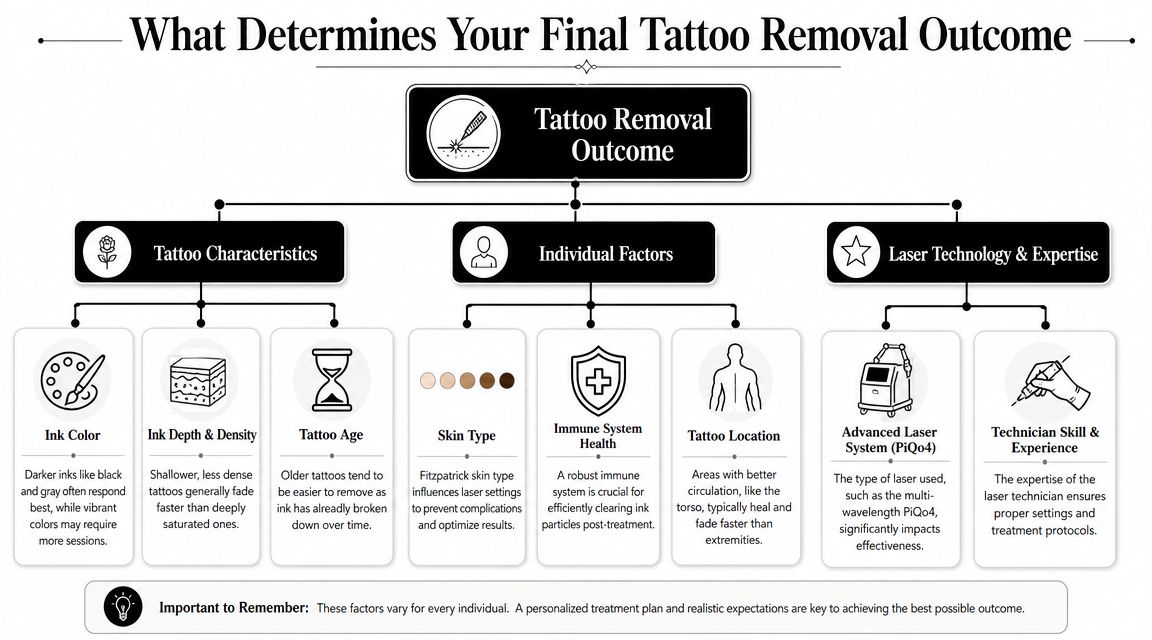
Two tattoos can look similar at first glance and behave very differently once treatment begins. That's why experienced technicians don't predict results from size alone.
The strongest tattoo removal results in Palm Harbor come from understanding three things together: the ink, the skin, and the plan.
If you want a fuller overview of case variables, this article on factors that affect tattoo removal progress is helpful background.
The tattoo itself
Ink density matters more than many people expect. A lightly shaded tattoo and a heavily packed tattoo of the same size can move at very different speeds. More pigment usually means more work for the laser and more clearing work for the body afterward.
Placement matters too. A forearm tattoo may heal and fade differently than a tattoo on the ankle, where circulation is often less favorable. Older tattoos can also behave differently than newer, more saturated work.
A 2025 global analysis of more than 200,000 tattoo-removal patients found that people aged 18 to 39 accounted for two-thirds of all removal seekers, visible areas such as forearms and hands were the most commonly treated sites, black ink remained the most frequently removed pigment, and Fitzpatrick skin types III and IV made up 63% of the sample combined (global tattoo removal trend analysis).
Your skin and body response
Your skin tone affects how a technician sets energy and spacing. The goal isn't just ink clearance. It's ink clearance while protecting the surrounding skin.
Your immune response also plays a real role. Since your body clears the fragmented pigment after treatment, healing quality matters. That doesn't mean you need to be perfect. It means your home care, patience, and session timing matter.
- Skin type: Medium skin tones need thoughtful parameter selection to reduce unnecessary irritation while still treating effectively.
- Healing behavior: Some people calm down fast after a session. Others stay pink or tender longer.
- Lifestyle consistency: Following aftercare makes the process smoother and helps protect your result.
Technique changes the path
People often oversimplify tattoo removal. They assume any laser plus enough time equals the same result. It doesn't.
Pulse duration, wavelength choice, cooling, and treatment judgment all influence how cleanly a tattoo fades. That's especially true for color-rich tattoos, cosmetic ink, and tattoos in visible areas where skin appearance matters just as much as pigment removal.
A technician isn't just firing a laser at ink. They're balancing pigment response, skin safety, and long-term cosmetic outcome at the same time.
Mapping Your Journey Timelines and Session Expectations
You come in for a consultation in Palm Harbor, roll up a sleeve, and ask the question nearly everyone asks first. “How long is this going to take?”
The honest answer depends on how your tattoo is built and how your skin responds between visits. A tattoo removal plan works a lot like sanding layers of paint off wood. A light, weathered layer comes off sooner. A thick, densely packed layer takes more passes, more care, and more time between passes so the surface stays in good shape.

What progress often looks like
Fading usually happens in stages, not in a straight line. After an early session, many Palm Harbor clients notice that the tattoo looks softer before it looks dramatically lighter. Sharp borders start to blur. Solid fills begin to look grainy. A few areas may respond fast while other spots seem to hold on.
That uneven look can be frustrating if you were expecting the whole tattoo to fade at the same speed. It is also common.
Here are patterns we often explain at the clinic:
- Dense black linework: It may break apart first, then lighten more noticeably over later sessions.
- Older, sun-faded tattoos: These often show earlier visible change because some pigment has already weakened over time.
- Layered or cover-up tattoos: These usually take longer because there is more than one deposit of ink in the skin.
- Color tattoos: Different pigments respond on different schedules, so one shade may clear while another stays visible longer.
PiQo4 matters here because it gives us more flexibility with wavelength and pulse selection. In plain terms, that helps us match the treatment more closely to the ink we are seeing in front of us. The goal is not speed at any cost. The goal is steady fading with good skin recovery.
Why two tattoos can follow very different timelines
Size matters less than many people expect. A small tattoo packed with heavy professional ink can outlast a larger design with lighter, older pigment.
Three factors often shape the timeline more than people realize:
Ink load
More concentrated pigment usually means a longer journey.Tattoo history
Cover-ups, touch-ups, and layered work tend to slow the process because the laser is dealing with multiple depths and densities.Body location
Areas with stronger circulation often clear fragmented ink more efficiently than spots farther from the body's central blood flow.
That last point causes a lot of confusion. Clients sometimes compare an ankle tattoo to a friend's shoulder tattoo and expect the same pace. The comparison usually does not hold up. Different body areas clear differently, even when the ink color looks similar.
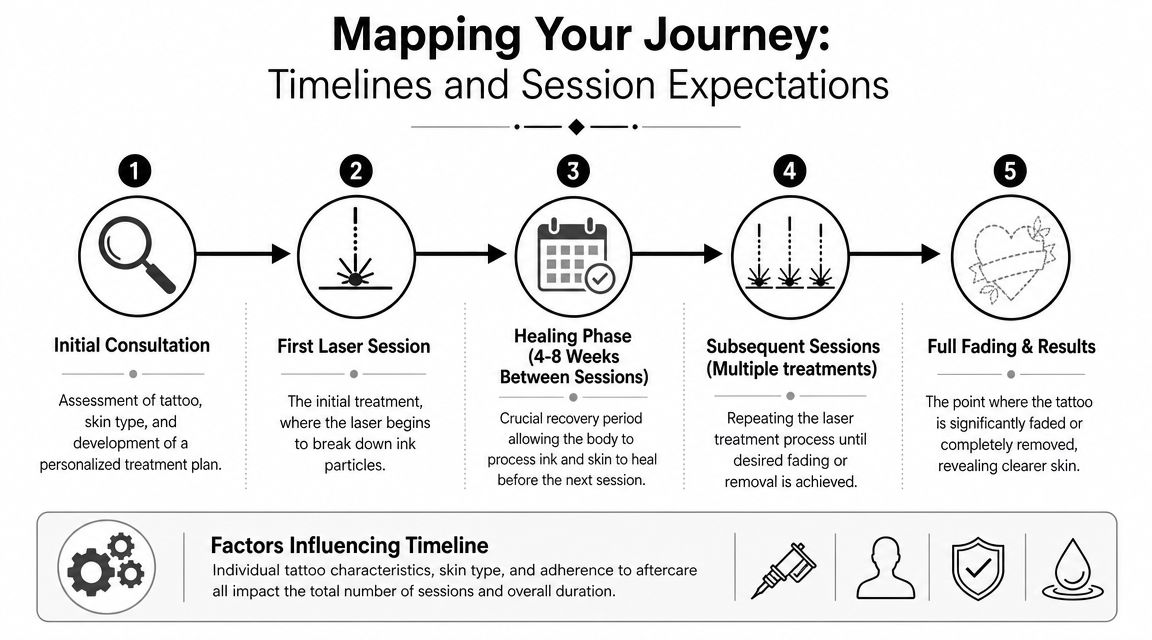
Why spacing between sessions matters
The laser session is only one part of removal. The weeks after treatment are when your body does the cleanup.
A useful way to picture it is a demolition and hauling job. The laser breaks the ink into smaller pieces. Your immune system carries those pieces away over time. If you rush back too soon, you may be treating skin that is still recovering while the clearing process is still underway.
That is why we build spacing into the plan at our Palm Harbor clinic. Enough time between sessions helps us read the true response of the tattoo, protect the skin, and decide whether the same settings still make sense or need adjustment.
A realistic session-by-session view
Most removal plans follow a pattern like this:
Consultation
We examine the tattoo, review your skin history, and talk through your end goal, whether that is full removal or fading for a cover-up.First treatment
This gives us your tattoo's real-world response, which is more useful than guessing from a photo.Healing and clearance period
Redness settles, the skin repairs itself, and gradual fading continues below the surface.Follow-up assessment
We compare photos, check skin recovery, and adjust the next treatment if a certain color or section is lagging.Repeat sessions with refinement
As the tattoo changes, the plan often changes with it.
That last part matters. Session six is not always a repeat of session one. Good tattoo removal is a guided process, not a copy-and-paste schedule.
Patience is part of the treatment plan. Cleaner results usually come from giving the skin and immune system enough time to do their share of the work.
Maximizing Your Results An Essential Aftercare Guide
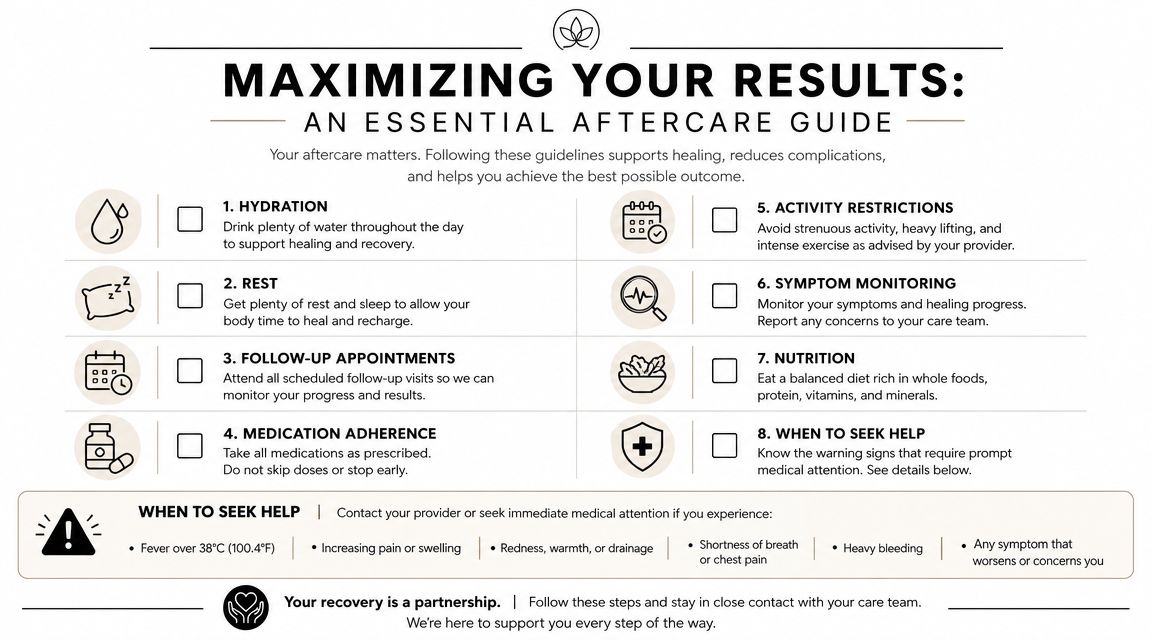
The laser session is your clinic work. Aftercare is your homework. Both matter.
If you want cleaner fading and fewer avoidable problems, what you do in the hours and days after treatment matters a lot. The skin needs calm, protection, and time.
What to do right away
Treat the area gently. It may look red, feel warm, and seem slightly raised after the session. That can be part of the normal short-term response.
Focus on the basics:
- Keep it clean: Use gentle cleansing as instructed and avoid scrubbing.
- Keep it dry when advised: Don't soak the area too early.
- Use the dressing or ointment you were told to use: Don't swap in random products.
- Leave blisters or scabs alone: Picking can interfere with healing and skin appearance.
One mistake people make is assuming “more product” means better healing. Usually it means more irritation. Follow the plan you were given, not internet guesses from people with different skin and a different tattoo.
What helps between visits
Good aftercare doesn't stop after the first day. The weeks between sessions matter too.
A few habits make a real difference:
| Aftercare habit | Why it matters |
|---|---|
| Sun protection | Helps reduce the chance of unwanted pigment changes in healing skin |
| Hydration and routine wellness | Supports your body's normal recovery and clearing process |
| Hands off healing | Protects the skin surface while it repairs |
| Prompt communication | Lets the clinic guide you if something doesn't look normal |
If the area seems more irritated than expected, check in. That's not being dramatic. That's being smart. Quick guidance can prevent a small issue from turning into a longer delay.
Your body does the fading after the appointment. Aftercare gives your skin the best chance to keep up with that process.
Your Questions Answered and How to Start in Palm Harbor
It's common to reach this point with a few final concerns. That's normal. Tattoo removal sounds straightforward until it's your own skin, your own schedule, and your own tattoo.
Common questions
Does tattoo removal hurt
It's usually uncomfortable rather than easy, but sessions are brief. Many people say the anticipation is worse than the treatment itself. Cooling support and good technique can make the experience more manageable.
Can you remove only part of a tattoo
Yes, partial removal or selective fading can be possible depending on the design. That's common when someone wants to keep part of the artwork or prepare the area for a cover-up.
What happens during a consultation
A proper consultation looks at the tattoo's colors, density, location, and your skin response risk. You should leave knowing the likely pace, what healing may look like, and whether your goal is full removal or strategic fading.
Are visible tattoos common to remove
Yes. In broad removal trends, visible areas such as forearms and hands come up often, which matches what many people in Palm Harbor are concerned about in daily life and work settings.
If you're ready to talk through your specific case in person, the Palm Harbor location is at 3343 Tampa Road, Palm Harbor, FL 34684 and the direct clinic phone is (727) 223-6788. Appointments are by appointment only, which gives you a more private visit and time to ask detailed questions without feeling rushed.
The first step doesn't need to be a big decision. It can just be a conversation about what your tattoo is likely to do, what kind of fading is realistic, and what timeline makes sense for your skin and your goals.
If you're ready to explore your options, EradiTatt Tattoo Removal offers consultations where you can discuss complete removal or fading for a cover-up, see what's realistic for your tattoo, and get a clear plan for next steps.
One Response